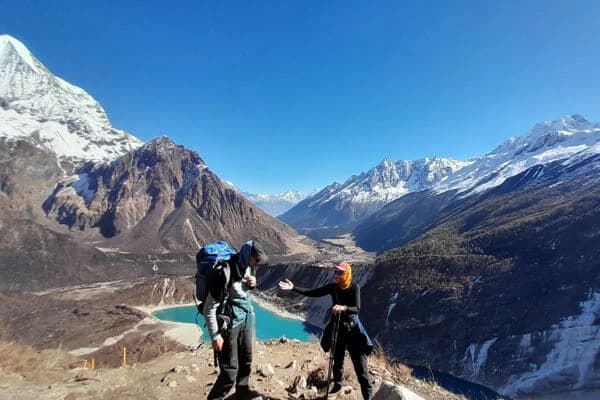
When people start comparing Mount Denali Climbing vs Everest Expedition, one of the first things that comes to mind is which climb is more challenging and what makes each mountain so unique. It’s a fair question because both are legendary peaks, but the experience of climbing them is completely different. One takes you deep into the frozen wilderness of Alaska, while the other leads you into the heart of the Himalayas, surrounded by some of the tallest mountains on Earth.
Mount Denali (6,194m), the highest peak in North America, is known for its harsh weather, remote setting, and physically demanding expedition style. In contrast, Mount Everest (8,848m), the highest mountain in the world, is famous for its extreme altitude, long climbing duration, and technical mountaineering challenges. Both climbs require serious preparation, strong endurance, and mental resilience, but the kind of challenge each mountain offers is very different.
That’s what makes this comparison interesting. It’s not simply about altitude or which mountain is taller, it’s about understanding the climbing conditions, difficulty level, route options, weather, and overall expedition experience. Before choosing either adventure, it helps to look closely at what each mountain truly demands and what kind of journey you want to take on.
In this blog Mount Denali Climbing versus Everest Expedition, we try to discuss various aspects related to these extremes of North America and the world. Let’s take a quick look into those related factors.
Overview of Mount Denali and Mount Everest
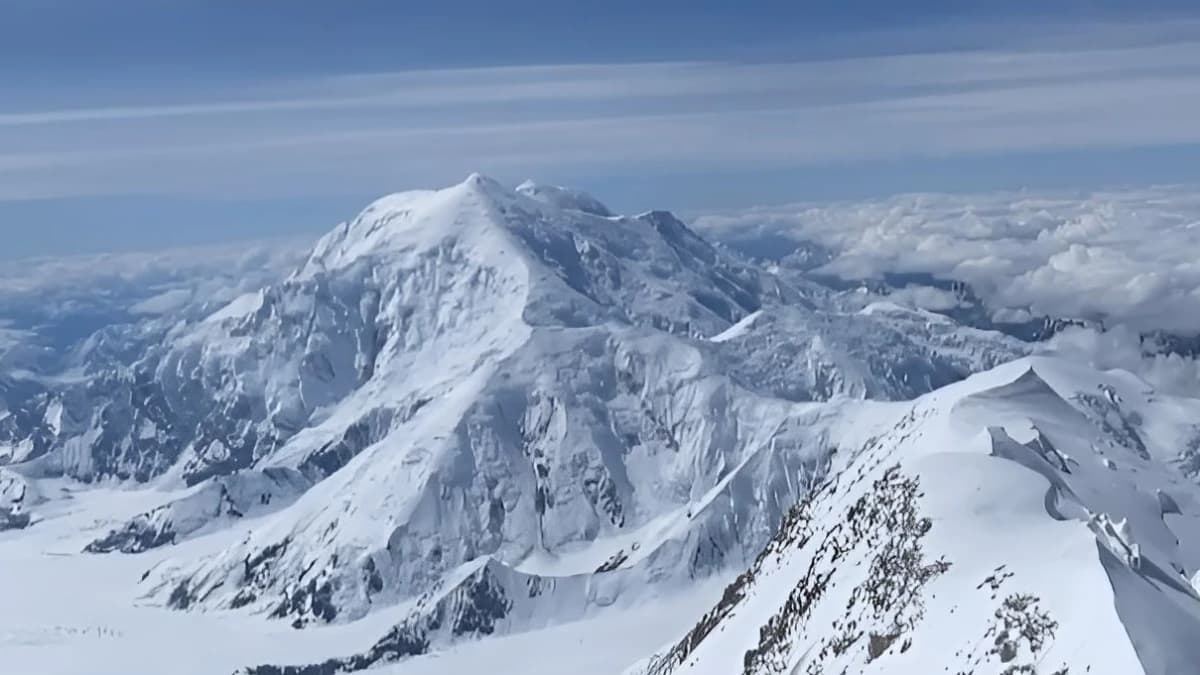
Mount Denali (6,194m) is the highest peak in North America. It is located inside the Denali National Park and Reserve in the US State of Alaska. It is some 290 kilometers away from Anchorage, Alaska’s largest city. Climbing Mt. Denali is a lifetime experience of trekking to the highest peak of the North American Continent.
You get to witness the biodiversity richness of the national park that extends between 24,464 sq. km. Although one of the coldest and most isolated peaks in the world, you can try out some adventure sports activities during the Denali climbing expedition. Dog sledding, snow skiing, and winter camping are some of the rewards of Denali expeditions.
Denali Peak is the highest mountain of the Alaska Range extending within estimated 650 km from Alaska to Yukon Canada. During the Denali climbing trip, you will see other peaks such as Mount Foraker, Mt. Silverthrone, Mt. Hunter, Mt. Huntington, Mt. Dickey, and the Moose’s Tooth respectively.
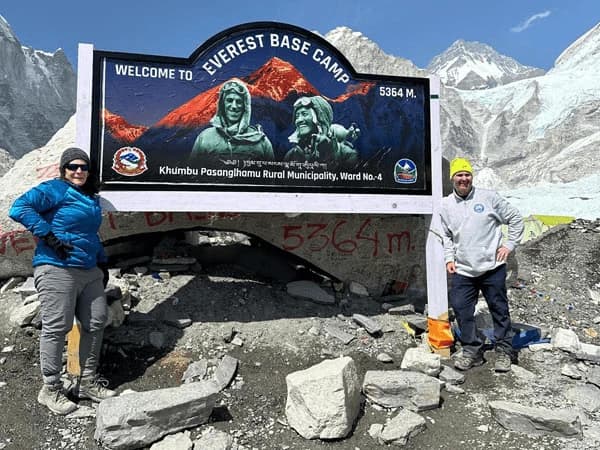
Similarly, Mount Everest (8,848m) is the highest peak in the world. The Great Mountain stands as the bordering wall between the Tibetan Autonomous Region and Province No. 1 of Nepal. Thousands of international trekkers and climbers are attracted by this peak every year. Due to challenges and difficulties, very less people dare Everest Climbing. Some 35,000 people trek to Everest Base Camp (5,364m). Everest Trekking is far more popular than the Everest Expedition.
The Everest trekking or Everest climbing begins after the Kathmandu Valley City Tour. You take a scenic flight to the Lukla Airport, also called the Tenzing Hillary Airport. Traversing through the Sherpa villages along the rugged trails inside the Sagarmatha National Park, you reach EBC. Until Everest Base Camp Trek, you get teahouses for food and accommodation services.
Higher than the base camp, the journey is far more challenging and demands good physical fitness with mental and psychological stamina. More importantly, you must have good training in mountaineering skills to avoid unsupportive circumstances.
Success Rate and Statistics in Mt.Denali Climbing vs Everest Expedition
When comparing Mount Denali Climbing vs Everest Expedition, success rate and climbing statistics offer a clear way to measure how often climbers reach the summit.
Mount Denali sees roughly 1,000 to 1,200 climbers attempt the summit each year. Historically, the average summit success rate has been around 50% to 60%, though this can vary from season to season depending on weather conditions and route access. In some years, success rates have dropped significantly because of prolonged storms and extreme cold.
In comparison, Mount Everest attracts a larger number of climbers, with several hundred summit attempts each climbing season, mainly during the spring window. In recent years, Everest has recorded a higher summit success rate, often around 60% to 70% or more among climbers who reach high camp and make a summit push. Improved logistics, weather forecasting, and expedition support have contributed to this higher success percentage.
Best season for climbing Mt. Denali and Mt. Everest
Hiking trekking or climbing a peak higher than 5,000m is not possible throughout the year. The high-altitude regions remain frigid in the winter and the lower regions remain slippery due to heavy rainfalls.
Mount Denali is famous for its cold temperature throughout the year. Therefore, the best season to climb Denali is the summer, especially, May, June, and July. During these months, the average daytime temperature remains about 19 Degrees Celsius in the lower region while often below zero at night and in higher altitude regions.
Winter climbing of Denali is a lifetime experience of cross-country skiing, dog sledding, and winter camping. Besides this, if you love getting pristine wilderness experience, you can do Denali expedition in off seasons as well.
Likewise, the best time for the Everest expeditions is late spring, early summer, and early autumn. Months of April, May, June, September, October, and November offer stable temperatures, clear skies, low or no rain, and less chance for snowfall.
For Everest Base Camp Trek, the times except the heavy snowfalls and rainfalls, are suitable. However, spring and autumn are the most popular and peak seasons for EBC Trek in Nepal. Due to the clear skies and bright days, the scenery of the Great Himalayas and the Himalayan landscapes is just jaw-dropping!
Difficulty level of climbing Mountain Denali Climbing vs Everest Expeditions
Climbing both Mt. Denali and Mt. Everest is not that easy. You need good physical fitness with enough stamina and proper technical training for expeditions. For Denali climbing, you have to deal with altitude gain and extreme weather. Moreover, carrying sleds with supplies for food and accommodation as well as climbing gear is more challenging.
To unfailingly reach Denali, you need good training. Of course, you need avalanche and crevasse training plus skills to using ropes, ice-axe, crampons, and harness. Be prepared for winter camping and keep enough time for proper acclimatization.
Similarly, Mt. Everest climbing is also full of challenges from natural to physical and psychological. The Southeast Ridge route to the Summit of Everest goes along deep crevasses, icefalls, snow slopes, and the rolling glacial valleys.
While ascending and descending, you might face some avalanches, snow slides, and rockfalls besides the extreme weather. Other specific challenges of the Everest expeditions are atmospheric pressure, Khumbu Icefall, traffic jams, altitude sickness, tough trails, and summit fever.
How to overcome the challenges of climbing Mt. Denali and Mount Everest?
- Proper acclimatization & supplemental oxygen
- Carrying plenty of snacks, bars, high-fiber vegetables, refined starches, high-carbohydrate food, and enough water to maintain the body's calories
- Tracking the weather forecast to avoid snow slides and moving glaciers
- Proper training to increase physical fitness and technical skills in using mountaineering equipment
- Preparing well with necessary trekking essentials such as trekking poles, crampons, ice-axe, harness, and proper clothing items
- Routes to Mount Denali and Mount Everest
- To reach the summit of Mount Denali (6,194m), there exist 4 main routes. They are West Buttress, Muldrow Glacier, West Rib, and Cassin Ridge respectively.
Route Options of Mount Denali and Mount Everest
Among the main routes on Mount Denali, the West Buttress route is the most commonly used by climbers. It begins from the Kahiltna Glacier base camp, where expeditions are typically accessed by aircraft. This route is widely preferred because it has comparatively lower avalanche risk and fewer crevasse hazards, making it the most practical and frequently chosen line to the summit.
On the other hand, the highest mountain in the world, the Everest expedition can be done via 17 different climbing routes from all around. However, only 2 routes: the North Ridge from Tibet and the Southeast Ridge from Nepal, are most commonly used. The Southeast Ridge is the line created by Tenzing Norgay and Edmund Hillary in the 1953 Everest Expedition. It starts from Lukla, the gateway to Everest Base Camp Trek.
There are several routes to reach to the Lukla Airport. But most commonly, 2 routes are used by the majority of climbers and trekkers. The first and foremost way to reach the trailhead is a domestic flight to Lukla from Kathmandu. Via a scenic flight, you reach the Lukla Valley in about 30 minutes.
The other is a drive from Kathmandu to Jiri, Dolakha, a part of Rolwaling Valley Trek. Jiri Everest Base Camp Trek route was the one used by Hillary and Tenzing during the 1953 Everest Expedition. So, choosing this route means following the footsteps of Tenzing and Hillary plus exploring the Rolwaling Valley.
From the Lukla Village, you ascend higher across the Sherpa settlement areas inside the Sagarmatha National Park. Besides the regular Everest Base Camp Trekking route, there are also many other side routes to move ahead.
Expedition Duration and Acclimatization Process in Denali vs Everest Climbing
When comparing Mount Denali Climbing vs Everest Expedition, expedition duration and acclimatization requirements are two of the most important factors that define the overall difficulty and structure of each climb.
The Mount Denali expedition typically takes around 17 to 22 days, depending on weather conditions and acclimatization progress. Climbers usually follow a self-supported schedule, carrying their own loads and gradually establishing higher camps on the mountain. Acclimatization on Denali is done in stages, with climbers rotating between camps to adjust to altitude and extreme cold while also managing physical exhaustion from hauling heavy gear.
In contrast, the Everest Expedition is significantly longer, usually lasting around 6 to 10 weeks (approximately 50 to 70 days). The extended duration is mainly due to the extreme altitude and the need for multiple acclimatization rotations between base camp and higher camps. Climbers spend considerable time adjusting to low oxygen levels, often moving up and down the mountain several times before making a summit push.
Cultural and Environmental Experience During Denali and Everest Climbing
The cultural and environmental setting of each mountain plays a major role in shaping the overall journey, and both offer completely different atmospheres.
Mount Denali is located in the remote wilderness of Alaska inside Denali National Park and Preserve. The experience here is mostly defined by vast, untouched landscapes and extreme isolation. There are very few permanent human settlements near the climbing routes, so the journey feels more like moving through pure wilderness.
Cultural interaction is minimal, but the presence of Alaska Native heritage and the history of exploration in the region adds a subtle cultural layer to the expedition. Environmentally, Denali is raw and unpredictable, with glaciers, tundra, and rapidly changing weather dominating the landscape.
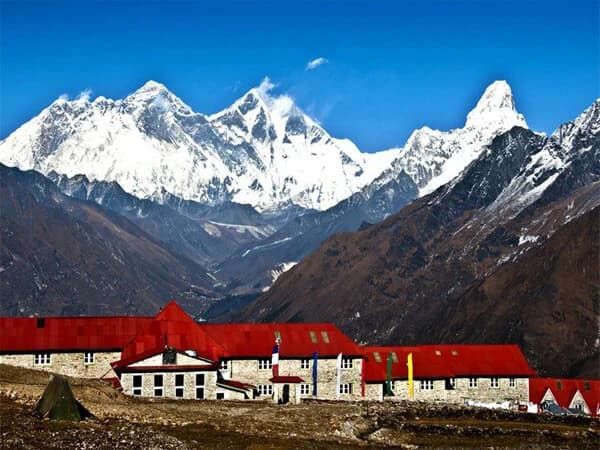
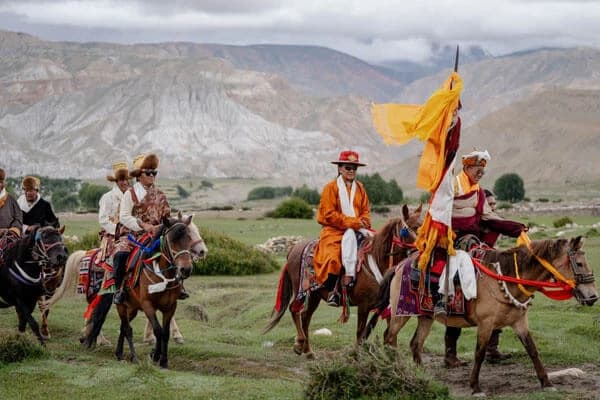
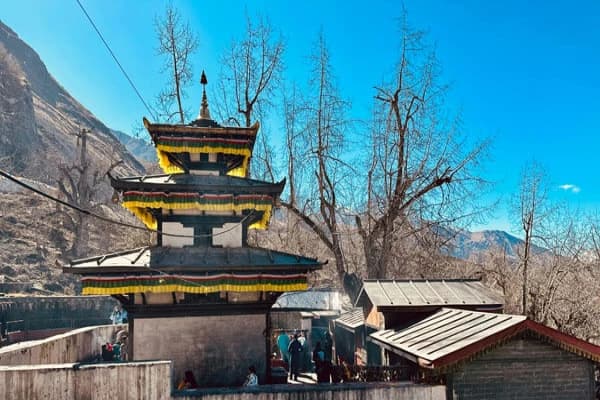
But, Mount Everest provides a deeply cultural experience alongside its extreme environment. The journey passes through Sherpa villages in the Khumbu region, where local traditions, monasteries, prayer flags, and Tibetan-influenced culture are an integral part of the trekking and climbing route.
Climbers are constantly exposed to living mountain culture before reaching higher camps. Environmentally, Everest lies within the Sagarmatha National Park, a UNESCO World Heritage Site, where biodiversity, alpine forests, and high-altitude glaciers create a layered ecological experience before transitioning into the harsh, icy climbing zone above base camp.
Biodiversity of Denali National Park and Sagarmatha National Park
Mount Denali (6,194m) lies inside the Denali National Park which extends over 24,464 sq. km. The conservation park is famous for its rich wildlife and vegetation. Denali NP has conserved 8 species of trees, 50 species of shrubs, and 25 species of dwarf shrubs.
You can see 169 species of birds and animals such as bears, marmots, mountain goats, wolves, beavers, otters, and caribou. Except for the hibernating wood frog, amphibians and reptiles are very rare in the Denali Conservation Area due to extreme cold temperatures.
Mount Everest (8,848m) is located inside the Sagarmatha National Park spread over 1,148 sq. km. Sagarmatha National Park is one of the world’s highest-placed conservation areas and a UNESCO World Heritage Site of Nepal. The diverse landscapes of the national park range from 2,845m at Monjo to the world’s highest peak Mount Everest at the altitude of 8,848m above sea level.
Sagarmatha National Park has thick forests of plant species such as pine, hemlock, fir, birch, juniper, and rhododendron. The forests are inhabited by some 118 species of birds including the Impeyan pheasant, snow cock, blood pheasant, red-billed cough, etc. The conservation area is home to mammals like red pandas, snow leopards, musk deer, Himalayan tahr, marten, Himalayan mouse hare, etc.
Cost Comparison of Mount Denali Climbing vs Everest Expedition
When comparing Mount Denali Climbing vs Everest Expedition, cost becomes one of the most practical factors that directly affects the overall difficulty of the journey. Both expeditions are expensive, but the structure of expenses is quite different because of logistics, location, and level of support required.
Mount Denali climbing generally falls in a lower cost range compared to Everest. A standard Denali expedition usually ranges around $8,000 to $15,000+ per climber, depending on guiding services, permits, gear rental, and logistics such as air transport into the mountain. Since Denali is a self-supported style expedition, climbers often carry more of their own loads, which reduces guided support costs but increases personal gear and preparation expenses.
On the other hand, Mount Everest expeditions are significantly more expensive. A typical Everest climb from Nepal usually ranges from $40,000 to over $100,000 per climber, depending on the level of service, oxygen support, Sherpa assistance, and expedition package. The high cost is mainly driven by government permits, long expedition duration, logistics at extreme altitude, and full support teams required for safety and summit success.
Conclusion: Mount Denali Climbing vs Everest Expedition
We have tried to shed some light on Mount Denali Climbing versus Everest Expedition. It is believed that this blog had helped you choose which mountain to climb and in which season.
There is no simple answer to which one is “better” or “easier,” because both demand serious commitment and preparation.Both the mountains have some similarities and differences. It is not that easy to recommend either of the journeys to the Himalayas. It’s all in your hands which trip to book and when.