Tilicho Mesokanta Pass Trek

Tilicho Mesokanto Pass Trek

Duration18 Days
Trip GradeChallenging
CountryNepal
Maximum Altitude5221 M
Group Size1-12
StartsKathmandu / Pokhara
EndsPokhara / Kathmandu
ActivitiesTrekking / Hiking
Best TimeMarch to May & Sept to Dec

Every famous trekking route has a point where most people stop. On this one, that point is Tilicho Lake. The Tilicho Mesokanto Pass Trek continues beyond it, crossing Mesokanto Pass before descending to Jomsom. It replaces a familiar return journey with a route that demands more planning, better mountain judgment, and a willingness to leave the busiest section of the Annapurna region behind.

For experienced trekkers, that is exactly where the appeal begins. The route is not famous because it is easier or more comfortable. It stands out because it offers a different way to experience the Annapurna region, connecting Manang, Tilicho Lake, and Jomsom in a single crossing that relatively few trekkers choose.

Tilicho Mesokanto La Pass Trek Overview

The Tilicho Mesokanta Pass Trek follows a route that many trekkers know about but relatively few complete. Starting from Manang, it heads to Tilicho Lake before crossing Mesokanta Pass at around 5,330 meters and finishing in Jomsom. Instead of returning to the Annapurna Circuit after visiting the lake, you continue into a more remote section of the Annapurna region, where the trail, facilities, and daily routine feel noticeably different.

This is a trek where preparation matters. Reaching Tilicho Lake is only part of the journey because the crossing over Mesokanto Pass is what determines the rest of the route. Weather, snow conditions, and proper acclimatization all have a direct impact on whether the pass can be crossed safely. That is why this trek is generally recommended for people who already have experience with high altitude trekking rather than those attempting their first Himalayan adventure.

What makes the Tilicho Mesokanta Pass Trek memorable is not a single viewpoint or landmark. It is the way the landscape changes from the villages around Manang to the rocky terrain surrounding Tilicho Lake, then into the broad, windswept valleys leading to Jomsom. By the time the trek ends, you've crossed one of Nepal's highest trekking passes and experienced a side of the Annapurna region that many visitors never reach.

Tilicho Mesokanta Pass Trek Highlights

  • Visit Tilicho Lake (4,919 m), one of the world's highest alpine lakes.
  • Cross Mesokanta Pass (approximately 5,330 m) and descend into Jomsom instead of returning to the Annapurna Circuit.
  • Experience both teahouse trekking and remote camping, depending on the itinerary and seasonal trail conditions.
  • Walk through the changing landscapes of the Marshyangdi Valley and the Kali Gandaki Valley.
  • Pass traditional villages influenced by Gurung, Manangi, and Thakali cultures.
  • Travel through the Annapurna Conservation Area, home to diverse Himalayan vegetation and wildlife.
  • Enjoy views of Annapurna II, Annapurna III, Gangapurna, Tilicho Peak, Nilgiri, Dhaulagiri, and surrounding Himalayan peaks.

Tilicho Mesokanta Pass Trek Itinerary

Tilicho Mesokanta Pass TrekItinerary on average ranges from 15 days to 21 days. The standard 18 day itinerary starts in Kathmandu with sightseeing and trek preparation before driving to Besisahar.

You can shorten this Nepal trekking itinerary by starting this trek right from Manang or Jomsom as well. You can reach Manang from Kathmandu within 12/13 hours in a local bus. If you hire a private vehicle, it takes even shorter than this.

Likewise, you can fly to Pokhara and then to Jomsom in a domestic flight. This way, you can always make the trek itinerary short or extend it as well.

From Jomsom, you can trek along the routes of the Annapurna Circuit Trek. There is a chance of doing Annapurna Sunrise View Trek and Ghandruk Trek. You need to add more than a week to the proposed itinerary.

Mesokanto Pass Trek Cost

Tilicho Mesokanto Pass Trek Cost depends upon different factors. Food and accommodation services you take, itinerary and a number of guides plus porters determine the cost. Next, the mode of transportation is also important to consider while calculating the Nepal trekking price.

The Tilicho Mesokanto Trek cost is USD 1,365 per person with Nepal Trekking Routes. This is the published price for our 18 day Tilicho Mesokanto Trek package, starting and ending in Kathmandu or Pokhara according to the selected itinerary.

The cost covers the arrangements included in our standard Nepal trekking package for the journey from Manang to Tilicho Lake, across Mesokanta Pass and onward toward Jomsom. The high route requires camping support because there is no continuous teahouse service across the Mesokanto crossing.

The Mesokanto La Pass Trek cost is different from the price of a regular Tilicho Lake Trek because the itinerary continues beyond the lake and crosses a pass above 5,000 meters. Camping equipment, food supplies and crew support are needed for the high country.

Personal expenses such as international airfare, Nepal visa, travel insurance, personal purchases and tips are separate from the trekking package.

For Tilicho Mesokanto Trek booking, we confirm the itinerary, services and travel arrangements with you before the trek begins. Private trips or changes to the standard itinerary may have a different price.

Mesokanto Pass Trek Map

Trekking in Nepalbegins with Kathmandu sightseeing and a drive to Besisahar. The walking route starts at Bahundanda and follows the Marsyangdi Valley through Chamje, Bagarchhap, Chame, Pisang and Manang. You spend an acclimatization day in Manang, with time to visit Gangapurna Glacier Lake, Milarepa’s Cave or Braga Monastery.

The trail from Manang heads to Khangsar Village and Tilicho Base Camp before reaching Tilicho Lake at 4,919 meters. You spend the night at a tented camp near the lake. The next day takes you across Mesokanta La before descending to Kaisang, where you spend another night at camp.

Kaisang to Jomsom takes about six hours through pine and rhododendron forest. A flight from Jomsom takes you to Pokhara, where you have free time around Phewa Lake and Lakeside. You return to Kathmandu from Pokhara by road or flight before your final departure from Nepal.

Mountain Peaks Seen During Tilicho Mesokanto Pass Trek

The Tilicho Mesokanta Pass Trek takes you through the Annapurna region, with some of the highest peaks in Nepal visible from different points along the trail. The mountains associated with the trek include Manaslu (8,163 m), Annapurna I (8,091 m), Dhaulagiri I (8,167 m), Annapurna II (7,937 m), Annapurna IV (7,525 m), Khangsar Kang (7,485 m), Gangapurna (7,455 m), Tarke Kang (7,231 m), Tilicho Peak (7,135 m), Tare Kang (7,069 m), Nilgiri Himal North (7,061 m), Thorong Peak (6,144 m) and Pisang Peak (6,091 m).

Tilicho Peak, Khangsar Kang, Gangapurna and Tarke Kang are prominent around the Tilicho Lake area, while the higher route also opens views toward the Annapurna and Dhaulagiri ranges. These impressive Himalayan peaks are a major highlight of trekking in Nepal and add to the experience of crossing the Mesokanta Pass.

Who Should Do the Mesokanto Trek?

Tilicho Mesokanto is a serious step up from the regular Tilicho Lake Trek. Tilicho Lake itself lies at 4,919 meters, while Mesokanto La takes the trek above 5,000 meters. The high route includes tented nights, long days on rough ground and a pass crossing where snow and weather may affect the route.

Experience on high altitude routes such as the Annapurna Circuit or Manaslu Circuit is useful here. You need to be comfortable walking for long hours above 4,000 meters and spending nights in a tent away from the normal teahouse network. The pass day is not a good place to discover that high altitude trekking is not for you.

The difference from the standard Tilicho Lake Trek becomes obvious after the lake. Instead of returning by the usual route, the itinerary heads toward Mesokanto La and crosses into the Jomsom side of the Annapurna region. Some itineraries use different camps and different pass elevations, so the planned route should be checked carefully before booking.

For a high altitude pass trek in Nepal, this route gives you much more than a visit to Tilicho Lake. The Mesokanto La Pass crossing is the part that defines the trek.

Itinerary

This is an 18 day Tilicho Mesokanto Pass Trek starting in Kathmandu and following the Annapurna trail through Besisahar, Manang and Khangsar to Tilicho Base Camp. After visiting Tilicho Lake at 4,919 meters, the route crosses Mesokanta La at 5,330 meters and continues to Kaisang and Jomsom before flying to Pokhara.

The main highlights are Tilicho Lake, the Mesokanta La crossing, Manang Valley, high altitude camping and the mountain scenery around Annapurna, Dhaulagiri, Manaslu and Tilicho Peak. The route also gives you a different way to reach Jomsom instead of returning from Tilicho Lake by the usual trail.

If you have your own travel dates or want to change the number of trekking days, we can customize the itinerary for you. Contact us with your plans and we will help arrange the trek accordingly.

Trip PlanExpand All

On you arrival day, the member staff of NTR receives you at the Kathmandu Airport. Then, he takes you to the hotel. After you become fresh, you can take a stroll around Thamel area on your own.

The tour guide takes you for Kathmandu tour after having breakfast. You will be visiting the Monkey Temple, Patan Durbar Square, Pashupatinath Temple and Bouddhanath Stupa. The art and architecture of these UNESCO Sites are really alluring.

When you return to the hotel, the trekking guide gives you detailed information about Tilicho Lake Mesokanta La Pass trek itinerary. Now, it’s time you manage the required trekking gears by consulting with the team leader.

You begin the journey to Besisahar by driving along the Prithvi Highway up to Dumre. From here, the vehicle moves northwards along the Dumre-Besisahar Road. Finally, you reach Besisahar, which is the gateway to Annapurna Circuit trek.

During the drive, you enjoy the snowcapped peaks of Manaslu, Ganesh Himal and Annapurna region during the trip. The road moves through the banks of the Trishuli River and the Marsyangdi River.

The trail continues along the banks of the Marsyangdi River. You move past some Gurung ethnic villages by enjoying the beautiful sceneries of the snowcapped mountains. After traversing for about 5 hours, you reach Bahundanda. It is the very place, which is discussed in detail by John Wood in this famous book ‘From Microsoft to Bahundanda”.

Ascending and descending along the windy trail, you hike towareds Syange village. After that, enjoying the gurgling natural springs, you cross a hanging bridge over the Marsyangdi River to reach Jagat. Here onwards, you move up for a few hours to reach Chamje at the end of the day.

You gradually gain the altitude along the rugged trail up to Tal. Then, you walk across Dharapani at the end of a valley to reach Bagarchhap. This is a mountain village having typical stone roofed houses located on the Marsyangdi River Valley.

Going up onwards the pine and oak forests, you across Dhanaque to reach Timang. Timang is the village situated at the bottom of Lamjung Himal. Moving up further for a few hours, you reach Chame, which is the administrative headquarters of Manang district. Chame provides all types of modern amenities for the trekkers on the way to and from Tilicho Lake Mesokanta La Pass trek.

Noticing the mesmerizing outlook of Lamjung Himal (6,893m), you follow the steep trail alongside the pine and fir forests. Entering into a V-shaped valley, you walk past Bratang Village. Then, by observing the breathtaking view of Mt. Annapurna II (7,937m) and Pisang Peak (6,091m), you end up the trip at Pisang.

While climbing upwards along the steep path, you will see the glimpses of the Manang Valley and Tilicho Peak (7,145m). Then, the trail goes downwards the Hugde Airstrip of Manang district towards the Sabje Khola Valley.

Watching Mt. Annapurna IV (7,525m), you go across Mungji Village to reach Manang Village. It is the largest village in the whole Manang Valley having many hotels, lodges, souvenir shops, cafes and restaurants.

As this is acclimatization day, you will stroll around Manang Village and talk with the local people. You can also hike to Gangapurna Glacial Lake that is situated at the bottom of Mt. Gangapurna (7,454m).

You can also visit the Milarepa’s Cave. There is the Culture Museum reflecting the true lifestyle, customs and costumes of the Manangse people. You can also visit the Himalayan Rescue Association (HRA), which trains people for emergency rescue while in trekking.

Yet another option you have is to visit Braga or Braka Village that has one of the oldest monasteries in the region. The evidence shows that the Braga Monastery was built in the 13th centuries. You can consult with the team leader for what to do to make this rest day more enjoyable.

Walking along the Jarsang Khola banks, you continue going along the trail that crosses a suspension bridge. Finally, by crossing the  pine forests and wheat fields, you reach Kangsar Village.

Kangsar is a Gurung Village of the Manang Valley highly influenced by the Tibetan culture and tradition. Some monasteries, chortens, mani walls and prayer flags are the attractions of this village. It is also the oldest village of Manang Valley.

By leaving a local monastery and small chortens behind, you enter into the dense juniper forests. Crossing the small streams, you reach Tilicho Base Camp. From here, you watch the alluring view of Pisang Peak (6,091m) and other peaks around it.

Today is the most remarkable day of the entire Tilicho Lake Mesokanta La Pass trek. After having breakfast, you will trek to Tilicho Lake as early as you can. Because in the later part of the morning, the strong wind may disturb the trekking.

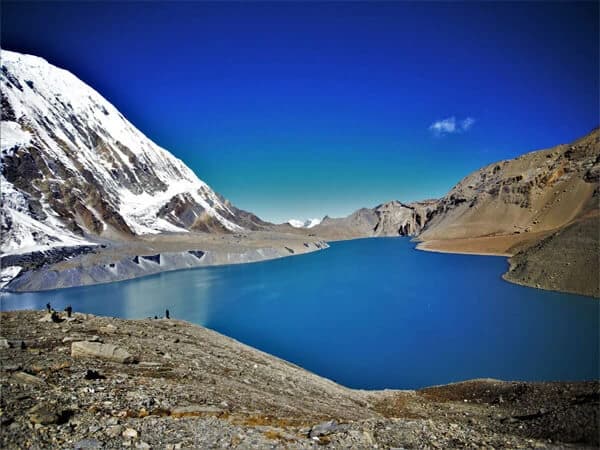
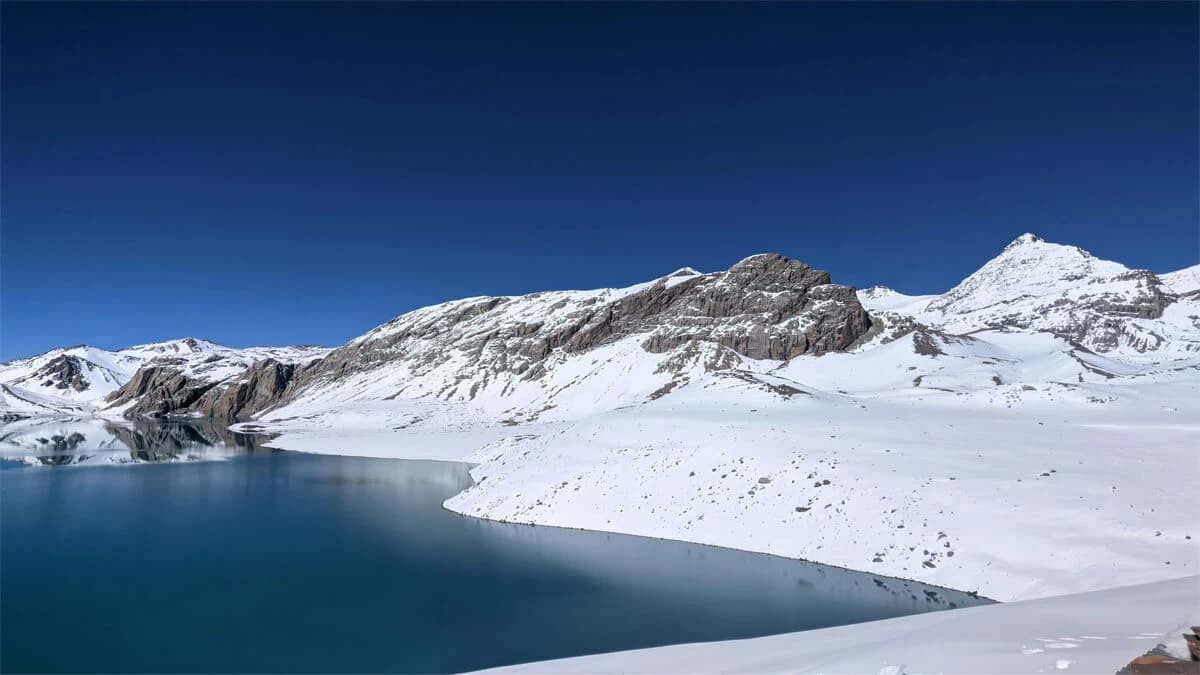
Tilicho Lake is the highest altitude lake in the world located at the elevation of 4,919m. From Tilicho Lake, you will have the breathtaking vistas of the snowcapped peaks and Himalayan valleys. Mt. Gangapurna (7,455m), Tarkekang (7,069m), Tilicho Peak (7,135m), Mt. Nilgiri (7,061m), Thorung Peak (6,144m) and Kangsar Kang (7,485m). You spend the night at a tented camp

You should begin today’s trek as early as you can in the morning. It is the most challenging day of the entire Tilicho Lake Mesokanta La Pass trek. If you don’t walk past Mesokanta La Pass (5,121m) in the morning, the strong wind may be a great challenge.

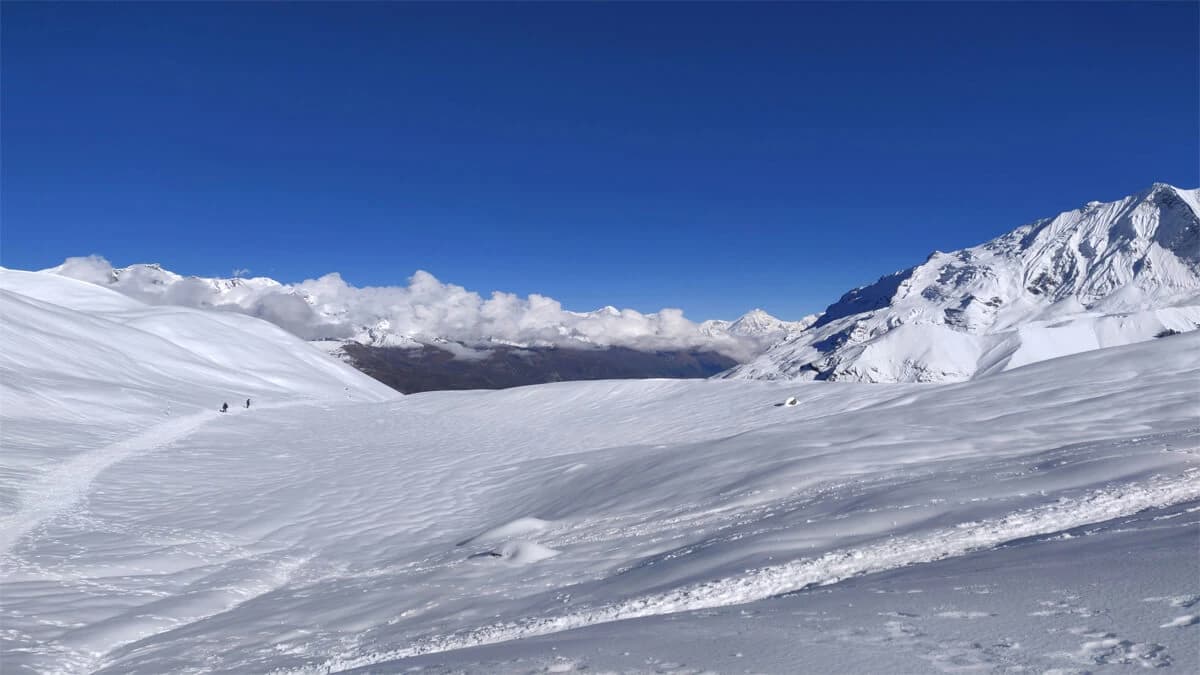
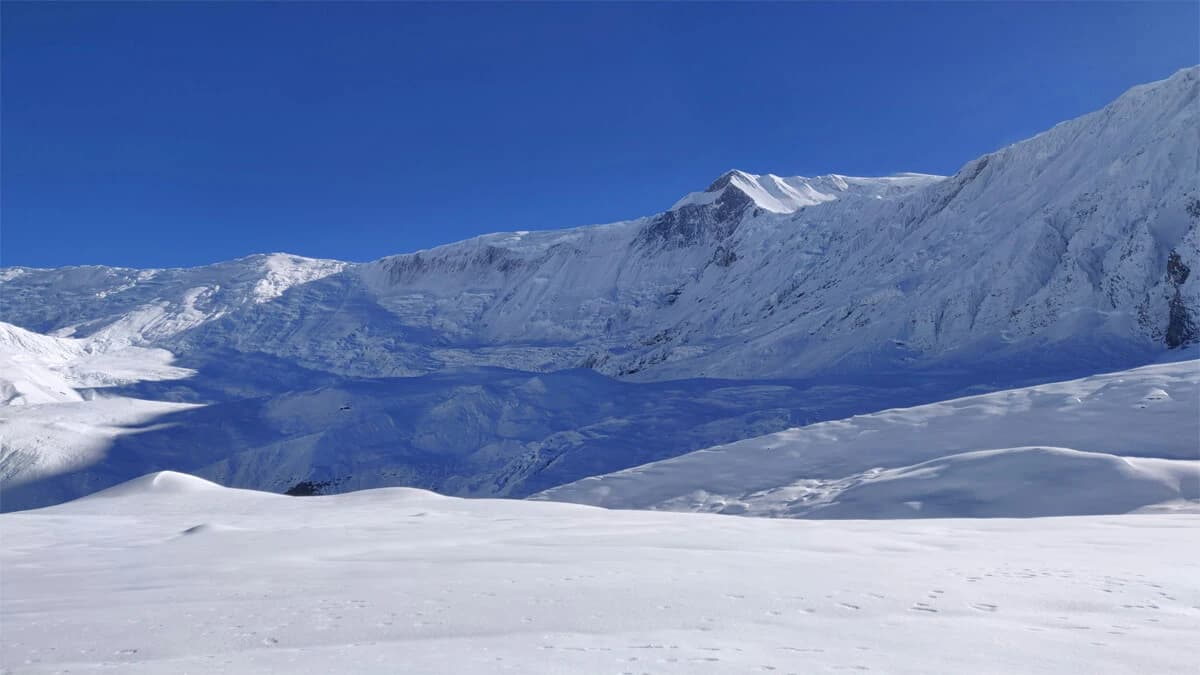
Although the trekking to the top of this pass is a bit difficult, the view from the top is really rewarding! You have the stunning vistas of Manaslu ( 8,163) region, Annapurna (8,091m) Massif and and Dhaulagiri (8,167m) Massif from here.

Then, you descend towards Kaisang Village by enjoying the snowcapped peaks and mountain valleys. You spend the night at a tented camp in the complete wilderness.

You begin today’s trek from Kaiang to Jomsom after having breakfast. Walking past the dense forests of pine and rhododendron, you move further by witnessing the enchanting view of the green hills and beautiful slopes.

Finally, you reach Jomsom, the district headquarters of Mustang. It is a beautiful town situated in front of Mt. Nilgiri and Dhaulagiri Massif. You spend the night at a lodge by enjoying the typical Thakali dish.

You fly back to Pokhara after having breakfast. During the flight, you will have the aerial view of the snowcapped peaks, bizarre landscapes of Upper Mustang and lovely Pokhara Valley.

When the plane lands at the Pokhara Airport, you will head towards the hotel. In the leisure time, you can visit the most attractive places there. You can try some adventure activities like boating on the Phewa Lake, hot air ballooning, paragliding, zip flying, etc.

The evening time around the Lakeside is something you must not miss. It’s really awesome, you know!

As per the itinerary, you can either fly or drive back to Kathmandu. By flying, it takes around 25 minutes while driving takes nearly 6 hours. After you arrive in Kathmandu, you will be relocated to the hotel. In the evening, we invite you to farewell dinner at some cultural restaurant. You will indeed enjoy the food and cultural shows while staying there.

Today, the representative of NTR helps you for departure transfer according to the flight schedule. We hope you had a good time here in Nepal.

Plan An Amazing Private and Tailor-Made HolidaysNot satisficed with this itinerary? Share your idea with our travel Expert. We make your dream come true.
Customize Trip
Cost Details
Includes
  • Airport pick up and Drop off service
  • All kind of Grounded  transport
  • Trekking permit for Annapurna region
  • TIMS card and other necessary permit
  • All paper work and Documentation
  • Kathmandu heritage sightseeing service with private vehicle and tour guide
  • Three time meal with a cup of hot drink during the trek
  • Two night tent camp with full board plan
  • Trekking Guide and Trekking Porter(1 Porter : 2 Traveler)
  • Kathmandu to Besisahar and Jomsom to Pokhara public bus service ,
  • Pokhara to Kathmandu tourist bus service
  • Kathmandu 3 Nights  and Pokhara1 Night 3 star hotel accommodation
  • Insurance, food, salary  for trekking crew
  • first aid kit box carried by our staff
Excludes
  • Nepal entry visa fee
  • Heritage entry fee during the sightseeing
  • Travel insurance and international airfare
  • bar bill drink laundry and personal expenses
  • Tips for trekking crew
Essential Information

Best Time for Tilicho Mesokanto Trek

The best season for Tilicho Mesokanto Pass Trek is spring and autumn, with April to May and October to early November being the main periods for the complete crossing. Snow at Mesokanto La is the biggest seasonal concern. Winter snowfall can block the pass, while monsoon rain affects the trail, visibility, and camping conditions.

Tilicho Lake also changes with the weather. After a cold winter, large areas of ice may still cover the lake in April. During May, the ice starts breaking apart and open water becomes more visible. October has clearer views and little surface ice, while November brings colder nights around Tilicho Base Camp and the high camps.

Tilicho Mesokanto Pass Trek in Spring Season

March still has winter conditions around Mesokanto La. Snow may cover the high camps and parts of the trail, while Tilicho Lake can have extensive ice.

April has better trail conditions from Manang through Khangsar and Shree Kharka toward Tilicho Base Camp. Snow can still sit around Mesokanto La, so checking the latest Mesokanto La Pass weather and snow conditions is necessary before the crossing. Parts of Tilicho Lake may also remain frozen.

May has warmer temperatures around Manang and more open water at Tilicho Lake. Rhododendron flowers appear along the lower trails. Rain and cloud start increasing toward the end of the month as the monsoon approaches.

Tilicho Mesokanto Pass Trek in Autumn Season

Late September may still have wet ground after the monsoon. October has drier trails, clearer mornings, and better views of Tilicho Lake and the Annapurna mountains.

October is a strong month for the Mesokanto La Pass crossing. Winter snow has not yet built up around the pass, and the weather is suitable for high altitude trekking.

Early November is also suitable for the trek, but temperatures drop quickly after sunset. Fresh snow becomes a greater concern later in November, especially around Mesokanto La and the high camps.

Tilicho Mesokanto Pass Trek in Summer Season

June, July and August fall within the monsoon season. Manang receives less rainfall than many areas south of the Annapurna range, but rain still affects the route toward Tilicho Lake.

Wet ground and loose rocks can create difficult trail conditions around Shree Kharka and Tilicho Base Camp. Cloud can hide Tilicho Lake and the surrounding mountains. Poor visibility around Mesokanto La also makes navigation harder during the high altitude pass crossing.

A remote camping trek Nepal itinerary is harder to operate during these months because rain, cloud, and unstable trails affect the remote mountain route.

Tilicho Mesokanto Pass Trek in Winter Season

December, January and February bring heavy snowfall and freezing temperatures around Mesokanto La. Snow can cover the pass and high camps, while deep accumulation may stop the crossing.

Tilicho Lake may also freeze during winter. Snow around the camping areas can make route finding harder, and very cold nights require proper high altitude trekking preparation.

Tilicho Mesokanto Trek Route and Trail Conditions 

The Tilicho Mesokanto Trek route uses the Manang side of the Annapurna region, with Khangsar, Shree Kharka and Tilicho Base Camp forming the main way to the lake. The trail between Shree Kharka and Tilicho Base Camp crosses an exposed slope with loose rock and a risk of rockfall. Tilicho Lake lies at 4,919 meters.

Tilicho Base Camp is the point where the regular Tilicho Lake Trek and the high route toward Mesokanto La differ. The trail to Mesokanto La enters remote part of the trail with high camps and no regular teahouse network. Camping equipment, food and cooking supplies are required for this part of the journey. Snow, ice and poor visibility may affect the Mesokanto La Pass crossing, particularly around the higher camps and pass.

The Tilicho Lake to Mesokanto La route crosses a pass above 5,000 meters. Published sources give different elevations for Mesokanto La, including figures around 5,300 meters, so an exact elevation should be confirmed against the planned route. Depending on the itinerary, the descent reaches Yak Kharka and later Jomsom, making the Tilicho Lake to Jomsom journey a remote camping route rather than a normal lodge based trek.

Tilicho Mesokanto Trek Permits

The Tilicho Mesokanto Trek lies within the Annapurna Conservation Area, so an Annapurna Conservation Area entry permit is required. A TIMS card and a licensed trekking guide are also required for the route. The current TIMS fee is NPR 2,000 for non SAARC nationals and NPR 1,000 for SAARC nationals.

A separate restricted area permit is not required for the standard Tilicho Mesokanto route through the Annapurna Conservation Area toward Jomsom. Special trekking permits apply to designated restricted areas such as Upper Mustang.

At Nepal Trekking Routes, we arrange the required permits before the trek starts. We collect your passport details and photographs in advance and complete the permit process in Kathmandu.

Tilicho Mesokanto Trek Accommodation and Camping

Teahouses cover the villages from Manang toward Khangsar and Tilicho Base Camp, but they do not form a continuous lodge network across the high route to Mesokanto La. Once the trek enters this remote area, tents become the main overnight accommodation. Food, cooking equipment and camping gear also have to be carried for this part of the journey.

Teahouse Accommodation in the Annapurna Region

Manang, Khangsar and Tilicho Base Camp have basic teahouse accommodation. Rooms have beds and basic bedding, while bathrooms are often shared. Dining rooms serve meals, although facilities become more limited at higher elevations. The standard Tilicho Lake Trek uses lodge accommodation around this part of the route, while the Mesokanto itinerary requires camping beyond the established teahouse network.

Remote Camping on the Mesokanto La Route

There are no regular teahouses along the high route toward Mesokanto La. Tents, food and cooking supplies therefore need to be carried by the trekking crew. Published itineraries use different overnight locations around the high country, including camps near Tilicho Lake, the Mesokanto area and the descent toward Yak Kharka or Jomsom. The exact camping locations depend on the itinerary, weather and conditions during the crossing.

Camping in the Annapurna Region

A supported camping setup is needed for the high pass crossing. The crew carries tents, sleeping mats, sleeping bags, food, fuel and cooking equipment for nights away from the lodges. A dining or kitchen tent may also be used depending on the group and camping arrangement. There are no regular lodge services in the high country, so supplies for the remote camping trek in Nepal need to be carried with the group.

The Mesokanto route is also a form of alpine trekking in Nepal and an off the beaten path trek in Nepal. Camping replaces lodge accommodation for part of the journey, with fewer facilities and no regular shops along the high pass route.

Gear for Camping at High Altitude

Cold nights, strong winds and snow are possible around the higher camps and Mesokanto La. A warm sleeping bag, insulated sleeping mat, headlamp, warm layers and footwear suitable for snow and ice should be included in the packing list. Camping at high altitude requires equipment suited to freezing conditions rather than the lighter gear used around the lower villages. 

Tilicho Mesokanto Trek Food and Water

Food is available at teahouses from Manang to Tilicho Base Camp. Dal bhat, noodles, rice, potatoes, eggs, soup, Tibetan bread and other basic meals are common choices. Breakfast, lunch and dinner are available along this part of the trek.

Food During the Mesokanto La Crossing

The food arrangement changes once the trek leaves the lodge network. The camping crew carries rice, lentils, vegetables, noodles, snacks, fuel and cooking equipment for the remote days. Meals are prepared at camp because there are no regular shops or teahouses along the high route. The crew carries the food, fuel and cooking equipment needed for the camping days. 

Water During the Trek

Boiled or filtered water is available at many teahouses. During the camping days, water may come from streams or other natural sources and should be filtered or treated before drinking. A reusable bottle or hydration bladder, together with purification tablets, drops or a reliable filter, should be carried.

During the Mesokanto La Pass crossing, drinking enough water is important even in cold weather when thirst may be less noticeable. The amount needed depends on the walking hours, temperature and access to water along the day's route.

Tilicho Mesokanto Trek Packing List

The Tilicho Mesokanto Trek packing list needs to cover cold camping nights, the exposed trail toward Tilicho Base Camp and the high crossing of Mesokanto La. You do not need a huge amount of clothing, but everything you carry should be suitable for snow, wind, rain and freezing temperatures.

Clothes and Footwear

  • Two or three trekking T shirts
  • One or two warm long sleeve shirts
  • One warm fleece or wool sweater
  • One warm down jacket for high camps
  • One waterproof jacket with a hood
  • One or two trekking trousers
  • One pair of waterproof trousers
  • Warm trousers for sleeping and evenings
  • Four or five pairs of trekking socks
  • Warm gloves
  • Warm hat or beanie
  • Sun hat or cap
  • Neck warmer or scarf
  • Waterproof trekking boots with good ankle support
  • Camp shoes or sandals
  • Gaiters when snow is expected

Sleeping and Trekking Equipment

  • Warm sleeping bag suitable for freezing nights
  • Insulated sleeping mat if your trekking company does not supply one
  • Trekking poles
  • Headlamp with spare batteries
  • Two to three litres of water capacity
  • Water purification tablets, drops or a reliable filter
  • Backpack with rain cover
  • Duffel bag if porter service is included
  • Dry bags or strong plastic bags to protect clothing and sleeping equipment

Camping becomes necessary once the trek leaves the established lodge network toward Mesokanto La. The sleeping bag should be suitable for the expected temperatures at the high camps. The exact requirement depends on the season and camping plan.

Personal Items

  • Sunglasses with strong UV protection
  • Sunscreen
  • SPF lip balm
  • Small towel
  • Toiletries
  • Toilet paper and wet wipes
  • Hand sanitizer
  • Personal medicines
  • Small first aid kit
  • Power bank
  • Phone and charging cable
  • Passport and copies of important documents
  • Travel insurance details
  • Nepali cash for personal expenses
  • High energy snacks for the pass crossing

Do You Need Crampons and an Ice Axe?

Do not add crampons, an ice axe, a harness or other climbing equipment to every Tilicho Mesokanto packing list. Equipment requirements depend on the route, season and snow and ice conditions. Crampons, an ice axe or other technical equipment may be required if snow and ice conditions affect the pass. Your guide should confirm the equipment needed for the planned crossing before the trek.

Your guide or trekking company should confirm the required equipment before the pass crossing. Taking unnecessary climbing gear adds weight, while leaving out equipment that is required for the actual conditions is a safety concern.

Keep the Pack Practical

There is no need to carry several changes of casual clothes or equipment that you will not use. Focus on warm clothing, waterproof protection, good boots, a suitable sleeping bag, water treatment and the personal items you need every day.

Mesokanto La Pass weather can change quickly at high elevation, and Mesokanto La Pass snow depends on the season and current conditions. Check the conditions before leaving Kathmandu and confirm the final equipment list with the trekking team.

Tilicho Mesokanto Trek Safety and Altitude

The Tilicho Mesokanto altitude reaches 4,919 meters at Tilicho Lake and rises above 5,000 meters at Mesokanto La. Many itineraries list different elevations for the pass, including 5,099, 5,121 and 5,330 meters, so the exact figure depends on the route used.

Mesokanto La Pass Difficulty

The real Tilicho Mesokanto difficulty starts when the trek leaves the regular Tilicho trail. The path toward the pass becomes faint in places, with loose rock, steep ground and limited water. Some route descriptions also record snowfields near the pass, even outside the main winter period.

The trail between Shree Kharka and Tilicho Base Camp has its own rockfall risk on the exposed scree slope. This combination of high altitude, route finding and remote camping gives remote Annapurna trekking a very different character from the standard Tilicho Lake Trek.

What to Watch on the High Route

Headache, nausea, dizziness and unusual tiredness should be reported early. If symptoms worsen, descending is the correct response rather than continuing toward Mesokanto La. Weather also matters because snow can hide markings and make route finding harder.

This is a Himalayan wilderness trek, not just a longer Tilicho Lake walk. The trekking guide needs to judge the pass conditions, snow, water availability and condition of the group before the crossing.

FAQs

The standard Tilicho Mesokanta Trekking itinerary takes 18 days. It starts in Kathmandu and includes Besisahar, Manang, Khangsar, Tilicho Lake, Mesokanta La, Kaisang, Jomsom, and Pokhara. An acclimatization day in Manang is included before reaching the higher parts of the route.

It can require technical equipment, especially when snow and ice cover the pass. Mesokanta La is crossed at high altitude, and conditions may include steep ground, snow, and ice. Some current equipment lists for the pass include crampons, an ice axe, a harness, and other climbing equipment. The exact gear should be confirmed with the guide after checking the route and conditions for the planned crossing.

Yes, but you will need to carry your own personal gear while the trekking crew handles the group camping supplies. The high part of the route involves tents, food, cooking equipment, and other group equipment, so this is not the same as carrying a small backpack on a regular teahouse trek in Nepal. If you choose not to use a porter, keep your personal load within what you can safely carry at high altitude.

The pass should not be crossed when snow or weather makes it unsafe. Your trekking guide should check the conditions before the crossing and decide whether to wait, change the route, or return by a safer option. There is no honest way to guarantee a pass crossing on a particular date because snow and weather conditions at more than 5,000 meters can change.

Yes, you should have travel insurance that covers high altitude trekking and emergency evacuation. Check the policy before travelling and make sure the altitude limit covers Mesokanta La and that emergency medical treatment and helicopter evacuation are included. 

You need TIMS Card and Annapurna Conservation Area Project (ACAP) Entry Permits for Tilicho Lake Mesokanta La Pass Trek.

Spring and autumn are the two seasons considered the best for Tilicho Lake Mesokanta La Pass Trek. Nevertheless, you can make this trek all times of the year except while it’s heavy snowfall there. The heavy snowfall blocks the way to the lake.

No, Tilicho Lake is not the highest lake in the world. At 4,919 meters, it is one of the highest lakes in the world. The claim that Tilicho Lake is the highest lake on Earth is not accurate because there are lakes at higher elevations.

Tilicho Lake has an average depth of about 85 meters (279 feet). It lies at 4,919 meters above sea level in the Annapurna region.

Tilicho Lake is in the Manang District of Nepal, in the Annapurna region. It is reached by trekking from Manang through Khangsar and Tilicho Base Camp.

Tilicho Lake is reached by trekking from Manang via Khangsar and Tilicho Base Camp. It takes several days to reach the lake, with the exact walking distance depending on the starting point and route used.

20 years of Adventure
Why Travel with Nepal Trekking Routes?
We Care for Your Safety
Nepal Trekking Routes always focus on safety, and satisfaction of our valued clients. Our Trekking guides are highly experienced and trained to operate various group trekking trip in high Himalaya.
Provide Financial Protection
NTR prioritize healthy financial safety for clients, ensuring proactive safeguarding of client interest. Our commitment strengthens our role as trusted partners maintaining standards with dedication and Excellence.
100% Local Guide
100% Local Guide
Traveler looking for experience authentic insights through trekking in Nepal NTE offer your 100% local guide who help you to experience unique perspective ensuring and enriched journey customize to your interest.
Personalized Service
We always provide one guide and one porter to two guests in order to meet our standard of providing standard service. Impeccable hospitality and quality services are guaranteed while traveling with us.
Know More
You May Also Like
Gokyo Lake Trek
FromUS$1150US$1550
Everest Gokyo Cho La Pass Trek
FromUS$1800US$2250
Book Now