Gosainkunda Helambu Trek

Gosainkunda Helambu Trek

Duration8 Days
Trip GradeDifficult
CountryNepal
Maximum Altitude4710
Group Size1-12
StartsKathmandu
EndsKathmandu
ActivitiesTrekking/Hiking
Best TimeMarch to May & September to December

The Gosaikunda Helambu trek looks short like a short trek in Nepal on paper or any travel website you see, but it doesn’t really play out like that. The climb starts early and doesn’t really ease up as you move toward Gosaikunda. If you’re reading a gosaikunda helambu trek itinerary or checking the difficulty, this is where reality starts to differ from what the map suggests.

With that being said, it’s not really something you need to stress about. You just can’t rush the whole feel of trekking in Nepal, that’s the main thing. The part near Lauribina Pass is where most people slow down anyway, altitude just hits there. After that it drops into Helambu and it honestly feels a bit lighter, like a different trail almost.

People check the gosaikunda helambu trek cost and distance and try to figure everything out from that, but on the trail it doesn’t really stay that simple. It’s somewhere in the middle I guess, not easy, not something crazy either.

Where is the Helambu and Gosaikunda region in Nepal?

It’s in the northern part of Nepal, just above Kathmandu, mostly around Rasuwa District and Sindhupalchok District. Up higher you get the Gosaikunda side, and lower down is Helambu with villages and farmland.

They’re not really one proper region. It’s more like two different areas connected by the same trekking route, one going up into the high mountains and the other coming back down into lower hills.

Gosainkunda Helambu Trek Overview

Gosainkunda Helambu Trek is a popular trekking route in Nepal that kind of feels like you’re slowly leaving Kathmandu behind without realizing it, especially once you start heading toward Gosaikunda.

The Gosainkunda Helambu Trek walk begins from Dhunche, and at first it feels like any other hill trail, forest around you, long uphill climb (typical Nepalese trek behavior), nothing that immediately stands out.

From Dhunche, the trek takes you through the Langtang National Park, which is home to a wide variety of flora and fauna, including the endangered red panda. The trek also takes you through beautiful rhododendron forests, which bloom in various colors during the spring season.

One of the major highlights of the Gosainkunda Helambu Trek is the holy Gosainkunda Lake. The lake is located at an altitude of 4,380 meters and is considered one of the most sacred lakes for both Hindus and Buddhists.

Gosaikunda is believed in Hindu stories to be created by Lord Shiva when he struck the mountain with his trident. Science, on the other hand, says it’s a glacial lake formed when old ice carved a hollow that later filled with water.

This trekking in Nepal also takes you through the Helambu region, which is known for its unique culture and traditions. Helambu feels pretty different after the higher part of the Gosaikunda Helambu trek. It’s more normal life again, small villages, fields, people just doing their thing. Most trekkers end up searching for the Helambu trekking route after Gosaikunda because it’s just a calmer stretch compared to what comes before.

It’s strange in a way, you start from Kathmandu thinking you know what this trek is, and somewhere along the way it just turns into something completely different in your head.

Gosaikunda Helambu Trek Route Explained from Dhunche to Helambu and Gosaikunda Lake 

The Gosaikunda Helambu Trek route in Nepal starts from Dhunche. From there you move through paths full of trees and small stops/resting places like Thulo Syabru and Chandan Bari, following a climb more into the Langtang side.

After Chandan Bari, the path continues to move towards Gosaikunda, which is the main destination for which you were trekking for days. The area feels open and far more exposed compared to the lower section.

From Gosaikunda, the route goes over to Tharepati and then starts dropping into Helambu. It continues through Gul Bhanjyang and Chisapani before reaching Kathmandu again. This way you can complete your Gosaikunda trek with Helambu in one continuous route.

Gosainkunda Helambu Trekking Highlights

  • Gosainkunda Lake: The trek takes you to the holy Gosainkunda Lake, which is believed to have formed when Lord Shiva plunged his trident into the ground to quench his thirst. 
  • Helambu Region: The Helambu region is known for its unique culture and traditions. You will get to experience the traditional lifestyle of the Sherpa and Tamang people, taste local food, and witness colorful festivals.
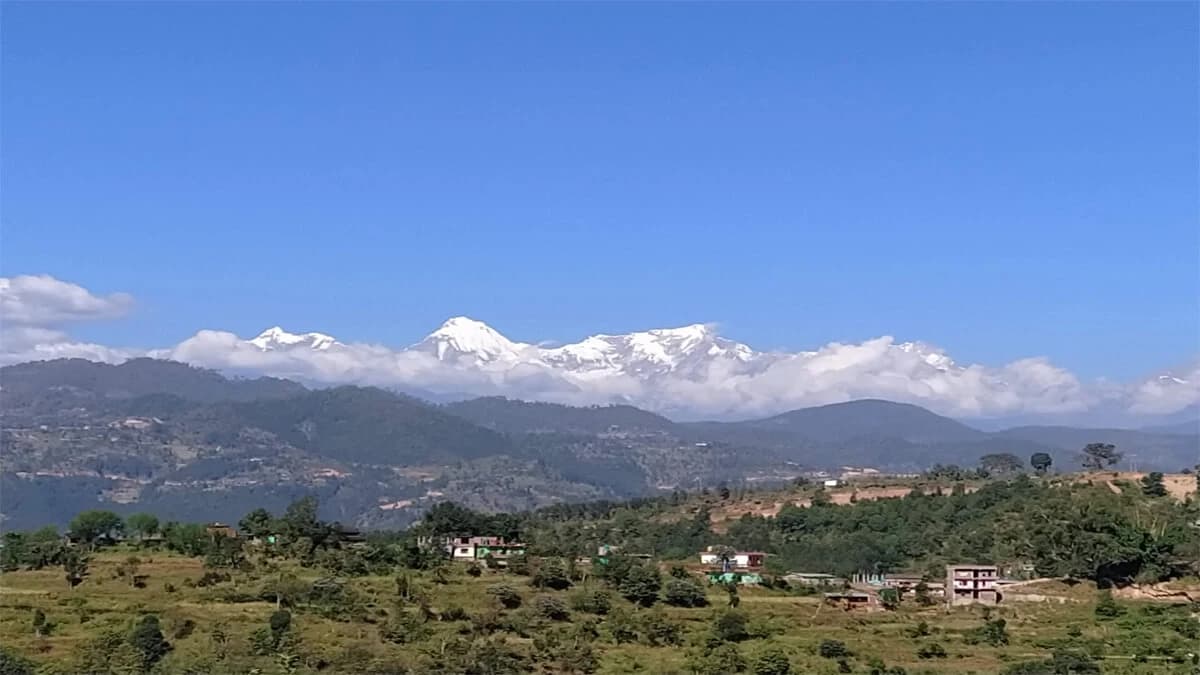
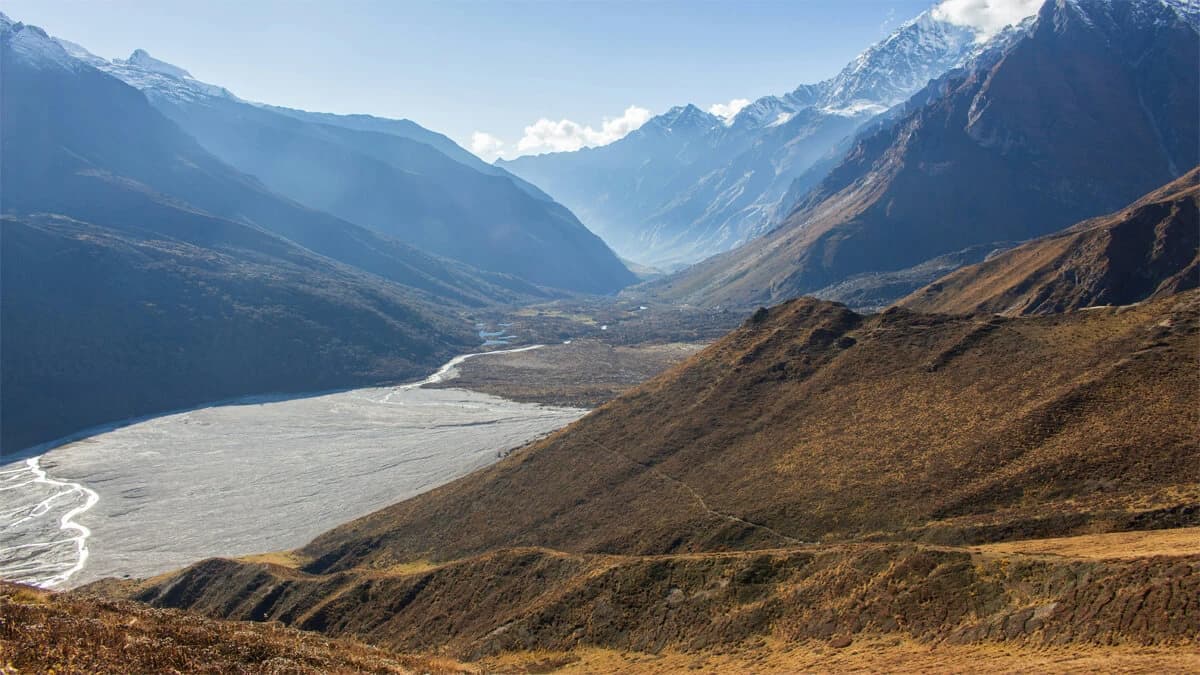
  • Stunning Views: The trek offers stunning views of the Himalayan mountain range, including Langtang Lirung, Ganesh Himal, and Manaslu. You will also get to see the beautiful sunrise and sunset from different viewpoints.
  • Rhododendron Forests: The trek takes you through beautiful rhododendron forests, which blooms in various colors during the spring season.
  • Chisapani: Chisapani is a popular viewpoint that offers panoramic views of the Himalayan range. It is a great place to witness the sunrise and sunset.
  • Shivapuri National Park: The trek takes you through the Shivapuri National Park, which is home to a wide variety of flora and fauna, including the endangered red panda.

What It Is Really Like to Trek to Gosaikunda Lake and Continue to Helambu

After leaving Dhunche, you will just focus on walking for days, stopping here and there for rest, then moving again. There's no as such real clear moment where things change, it just slowly gets higher.

At Gosaikunda around 4,380 meters, every pain you went through becomes worthy. You'll get to see the long anticipated lake for which you've been walking for days. But soon enough the reality hits you. Just the lake, cold air, and open ground around it. People don’t usually stay long there.

After that, the route goes the other way down into Helambu. Around Helambu, you start seeing villages again, people working, fields, normal life coming back along the trail.

Gosaikunda Helambu Trek Cost in Nepal

The Gosaikunda Helambu trek cost in Nepal really depends on how you do the trip. If you’re doing it yourself, everything is separate like transport to Dhunche, permits, and whatever you spend on food and staying in lodges along the way up to Gosaikunda.

It stays reasonable at lower sections, but once you go higher, prices slowly go up since everything has to be carried there and it's really difficult if you think about it deeply.

If you take a full arrangement, the Gosaikunda Helambu trek package cost is USD 1275 per person in Nepal Trekking Routes, and that already includes guide, porter, permits, meals, accommodation, and transport.

Most people just end up choosing which Gosaikunda Trek package suits them the most, based on convenience. Either you manage everything yourself on the trail or just take a package from Nepal Trekking Routes and not think about it much.

9-Day Gosaikunda Helambu Trek

Day 1: Kathmandu to Dhunche (drive)
Day 2: Trek to Sing Gompa (Chandanbari)
Day 3: Trek to Gosaikunda (4,380m)
Day 4: Cross Lauribina La Pass and trek to Ghopte
Day 5: Trek to Melamchi Gaon
Day 6: Trek to Tarkeghyang
Day 7: Trek to Sermathang
Day 8: Trek to Melamchi Bazaar
Day 9: Drive back to Kathmandu

Permits for the Gosaikunda with Helambu Region Trek 

As you move forward, you have to gather some permits to legally enter any trekking region of Nepal. For the Gosaikunda Helambu trek in Nepal, you need the Langtang National Park permit because the route goes through Langtang National Park. They usually check it around Dhunche before you continue toward Gosaikunda.

You also need a TIMS card, which is just a basic registration for the Gosaikunda Helambu trek route for your own safety.

If you are going with Nepal Trekking Routes, these Gosaikunda Helambu trek permits are already managed by our team, so you don’t need to handle anything yourself before starting the trek.

Culture of the Helambu Region

Helambu is mostly home to the Hyolmo (Yolmo) people, and you also find a few Tamang villages along the way. Life here focuses on farming mostly and daily routines, and Buddhism is a big part of it in a very natural way.

While walking through the Helambu trekking route, you keep seeing small monasteries, prayer flags on the hills, and chortens near villages. In places like Tarkeghyang and Sermathang, people still go to the monasteries for prayers in the morning or evening, which is part of their daily life.

Festivals like Lhosar are a big thing here too. Families get together, cook food, wear traditional clothes, and spend time with each other. Even with famous treks in Nepal bringing more visitors through the area, Helambu still feels very local and grounded, like people just living their normal mountain life.

Who Is This Trek Suitable For?

The Gosaikunda to Helambu route in Nepal is for people who want a proper mountain trek without any climbing. It is a few days of walking in the Himalayas with changing scenery.

This Langtang region trekking journey is fine for beginners if you are okay with some effort. The main challenge comes near Gosaikunda because of the altitude, not the trail itself.

It also suits people who want both mountain views and local life in one trip. You stay in tea houses and see how people live in the area along the way.

Compared to difficult treks in Nepal like Everest Three Passes or Manaslu Circuit, those are much tougher. This one is more in the middle. Not too easy, not extreme, just a normal Nepal trekking experience.

Why book with Nepal Trekking Routes?

We’re a local company in Nepal, and we try to keep the Gosaikunda Helambu trek in Nepal simple and good value for money. Most things like permits, guide, porter, transport, food, and accommodation are already sorted before you start, so you don’t really have to stress about planning anything.

It just makes things easier on the trail. You focus on the walk toward Gosaikunda and through the Helambu side, and we handle the rest behind the scenes. So the choice is yours.

Itinerary

This is a 10-day Gosaikunda Helambu trek itinerary in Nepal starting from Kathmandu and ending back in the city after a full loop through the Langtang region.

The trip goes by road to Dhunche, then continues on foot through Thulo Syabru, Chandan Bari, and up to Gosaikunda. After exploring the lake area, the trail crosses over to Tharepati and then goes down through Helambu villages like Gul Bhanjyang and Chisapani before returning to Kathmandu.

Nepal Trekking Routes can also customize this trekking in Nepal itinerary depending on your time, adding extra days or changing stops on your requirement.

Trip PlanExpand All

After arriving at Tribhuvan International Airport, you will be greeted by your tour operator or guide and transferred to your hotel. The drive from the airport to your hotel will give you a glimpse of the city’s streets and the local way of life.

Take a taxi or local bus to the main bus station in Kathmandu. Purchase your bus ticket to Dhunche from the counter. Board the public bus and enjoy the scenic journey through the Himalayas, passing through small towns and villages along the way. The bus makes several stops for passengers to stretch their legs, use the restroom, and grab some food or drinks. Admire the stunning views of the Himalayan range as the bus climbs higher into the mountains.

The bus ride ends in Dhunche, where you can check into your hotel or guesthouse and acclimatize to the altitude.

Start your trek from Dhunche, following the trail that runs alongside the Trishuli River. You will cross several suspension bridges along the way.The trail climbs steeply uphill through dense forests, passing by small waterfalls and streams. You will get occasional glimpses of the Langtang range and other snow-capped peaks. After about 3 hours of hiking, you will reach the small village of Dimsa. Take a break here and enjoy some refreshments. Continue your hike uphill, passing through the village of Barbal and the town of Cholangpati. You will see several teahouses and guesthouses along the way.

The trail becomes steeper as you near Thulo Syabru. The final climb will take you through a dense rhododendron forest, which is especially beautiful in the spring when the flowers are in full bloom. After 5-6 hours of hiking, you will reach Thulo Syabru, a picturesque village situated at an altitude of 1,950 meters.

You can rest and enjoy the stunning views of the surrounding Himalayan peaks. Overnight in Thulo Syabru at a teahouse or guesthouse.

Begin your trek from Thulo Syabru, passing through the village and crossing a suspension bridge over the Langtang River. The trail follows an uphill climb through forests of oak and rhododendron. You’ll pass by a few teahouses and small settlements along the way, offering refreshments and stunning views of the Himalayas. The final stretch of the trek takes you through a narrow trail that leads to Chandan Bari, where you can rest and prepare for the next day’s trek to Gosainkunda. Overnight in Chandan Bari at a teahouse or guesthouse.

In conclusion, the trek from Thulo Syabru to Chandan Bari is a moderate hike that offers breathtaking views of the Himalayas. The route takes you through dense forests and charming villages, making it an unforgettable experience.

The trek from Thulo Syabru to Chandan Bari is a moderate hike that offers breathtaking views of the Himalayas. The route takes you through dense forests and charming villages, making it an unforgettable experience. Begin your trek from Thulo Syabru, passing through the village and crossing a suspension bridge over the Langtang River. The trail follows an uphill climb through forests of oak and rhododendron. You’ll pass by a few teahouses and small settlements along the way, offering refreshments and stunning views of the Himalayas.

The final stretch of the trek takes you through a narrow trail that leads to Chandan Bari, where you can rest and prepare for the next day’s trek to Gosainkunda. Overnight in Chandan Bari at a teahouse or guesthouse.

After reaching Gosainkunda, there are several places to explore in the area. Here are some of the top spots to check out,

Gosainkunda Lake: The main attraction in the area, Gosainkunda Lake is a sacred site for both Hindus and Buddhists. The lake is surrounded by snow-capped mountains and offers stunning views of the Langtang range.

Lauribinayak Pass: The pass is located above Gosainkunda Lake and offers panoramic views of the surrounding Himalayan peaks. It is a popular spot for sunrise and sunset views.

Sing Gompa: A Buddhist monastery located in the village of Chandan Bari. The monastery is believed to be over 400 years old and houses a large statue of Guru Rinpoche.

Bhairav Kunda: A holy lake located above Gosainkunda, Bhairav Kunda is named after the fierce Hindu god Bhairav. The lake is surrounded by rocky terrain and is considered a challenging trek.

Tamang Heritage Trail: A cultural trek that passes through several Tamang villages in the area. The trail offers a glimpse into the traditional way of life of the Tamang people and their unique culture.

Wildlife spotting: The area is home to several species of animals, including musk deer, red panda, and Himalayan black bear. Keep an eye out for these elusive creatures while trekking in the area.

In conclusion, there are several places to explore around Gosainkunda, ranging from natural wonders to cultural experiences. The area is rich in both natural and cultural diversity, making it a must-visit destination for any trekker in Nepal.


Start your trek from Gosainkunda, following a trail that climbs uphill to the Laurebina Pass (4,610m). The pass offers panoramic views of the Himalayas, including Langtang Lirung, Ganesh Himal, and Manaslu. From the pass, the trail descends steeply through forests of rhododendron and juniper, passing by several small streams and waterfalls. You’ll pass through the village of Ghopte, which has a few teahouses and guesthouses, before continuing on to Tharepati. The final stretch of the trek takes you through a lush forest of bamboo and oak trees, with occasional views of the surrounding peaks.
After 6-7 hours of hiking, you will reach Tharepati, a small village located at an altitude of 3,650 meters. You can rest and enjoy the stunning views of the surrounding mountains. Overnight in Tharepati at a teahouse or guesthouse.

In conclusion, the trek from Gosainkunda to Tharepati is a challenging hike that takes you through some of the most stunning scenery in Nepal.

The trail offers breathtaking views of the Himalayas and passes through several charming villages along the way. It is an unforgettable experience for any trekker looking for an adventure in the mountains.

Start your trek from Tharepati, following a trail that descends through a forest of rhododendron and oak trees. You’ll pass through several small villages along the way, including Magen Goth and Kutumsang. The trail offers stunning views of the Himalayan peaks, including Langtang Lirung, Ganesh Himal, and Manaslu.

After 5-6 hours of hiking, you will reach Gul Bhanjyang, a small village located at an altitude of 2,130 meters. The village has a few teahouses and guesthouses, where you can rest and enjoy the local cuisine. Overnight in Gul Bhanjyang at a teahouse or guesthouse. In conclusion, the trek from Tharepati to Gul Bhanjyang is a moderate hike that takes you through some of the most beautiful landscapes in Nepal.

The trail passes through charming villages and offers stunning views of the Himalayas, making it a must-visit destination for any trekker in the region.

Start your trek from Gul Bhanjyang, following a trail that climbs up and down through forests of oak and rhododendron trees. You’ll pass through several small villages along the way, including Thotung Danda and Chipling, where you can stop for tea or a snack. The trail offers beautiful views of the surrounding mountains and valleys, including the Langtang range and the Kathmandu Valley. After 4-5 hours of hiking, you will reach Chisapani, a small village located at an altitude of 2,140 meters. The village has a few teahouses and guesthouses, where you can rest and enjoy the local cuisine. In the evening, you can watch the sunset over the Himalayas, which is a beautiful and memorable experience. Overnight in Chisapani at a teahouse or guesthouse.

In conclusion, the trek from Gul Bhanjyang to Chisapani is a relatively easy hike that takes you through some beautiful forests and charming villages. The trail offers stunning views of the Himalayas and the Kathmandu Valley, making it a must-visit destination for any trekker in the region. Chisapani is also a great place to relax and enjoy the natural beauty of the area.

Start your trek from Chisapani, following a trail that descends through forests of oak and rhododendron trees.You’ll pass through several small villages along the way, including Burlang Bhanjyang and Mulkharka. The trail offers beautiful views of the Kathmandu Valley and the surrounding hills. After 4-5 hours of hiking, you will reach Sundarijal, a small town located on the outskirts of Kathmandu. Sundarijal is famous for its waterfalls and is a popular spot for day hikes and picnics.

From Sundarijal, you can take a local bus or taxi back to Kathmandu. Overnight in Kathmandu at a hotel or guesthouse.

In conclusion, the trek from Chisapani to Kathmandu is a relatively easy hike that takes you through some beautiful forests and charming villages. The trail offers stunning views of the Kathmandu Valley, making it a great way to escape the hustle and bustle of the city. Sundarijal is a great place to relax and enjoy the natural beauty of the area before heading back to Kathmandu.

Plan An Amazing Private and Tailor-Made HolidaysNot satisficed with this itinerary? Share your idea with our travel Expert. We make your dream come true.
Customize Trip
Cost Details
Includes
  • Airport pick-up and drop off service ,
  • Trekking Guide and Trekking porter(Two participant 1 porter, Porter carry 25 Kg )
  • Round trip transport service Kathmandu to Dhunche and Chisapani to Kathmandu
  • Private transport to and from trekking starting and ending point
  • Lunch, Dinner, Breakfast, accommodation during the trekking
  • Hotel Thamel Park or equal level hotel  in Kathmandu (BB) plan (Three night only ) and 2 nights Pokhara accommodations
  • Sleeping bags, down jackets, duffel bags and trekking sticks (if required)
  • Trekking permit of National park,
  • TIMS(Trekking Information Management System )
  • Insurance, food and equipment for the trekking staffs
  • First aid kit
  • Farewell dinner in Kathmandu with cultural program in typical Traditional Nepali restaurant
  • Arrangement of Emergency Helicopter service which will be paid by your Travel Insurance Company.
Excludes
  • Personal expenses
  • Heritage entry fee during the sightseeing in Kathmandu and other
  • Drinks, beverages, hot shower, extra accommodation in Kathmandu and Pokhara
  • Travel insurance, Visa fee
  • Tips for guide and porter
  • Heritage entry fee during the sightseeing and during the trekking
  • Extra Meals & hotel accommodation in Kathmandu other than mentioned in Itinerary
Essential Information

Gosaikunda Helambu Trek Difficulty Level | Real Situation on the Trail

The Gosaikunda Helambu trek difficulty level in Nepal is moderate, but that label doesn’t really explain it well. The walk is long, and things feel different once you get up to Gosaikunda at 4,380 meters. That’s where altitude starts to matter more than anything else.

You should go for this trek if:

  • You’re okay walking for hours on most days
  • Going above 4,000 meters doesn’t worry you too much
  • Simple tea houses and basic food are fine
  • You’re fine with a long route instead of something short and easy

The Gosaikunda Helambu trek difficulty is about the long walking and the height doing its thing rather than climbing or technical parts. Helambu feels easier after Gosaikunda, but by then your legs already know what they’ve been through.

Gosaikunda Helambu Trek in Spring

Spring is when the route starts feeling active again after the colder months, especially as you move closer to Gosaikunda. The lower parts feel easier to move through, and you notice more people on the trail again.

Pros of trekking in spring

  • walking feels more manageable than winter
  • trail has more activity, not too empty
  • lower hills feel fresh after dry months

Cons of trekking in spring

  • popular season, so you won’t be alone
  • higher areas can still get quite cold at night
  • busier stops on main overnight points

Gosaikunda Helambu Trek in Autumn

Autumn is usually the most preferred time for the best time for Gosaikunda Helambu trek, and most people plan around it because the route from Dhunche all the way toward Helambu feels more predictable during this period.

Pros of trekking in autumn

  • conditions stay more steady across the route
  • easier to plan daily walking and stops
  • visibility tends to be better overall

Cons of trekking in autumn

  • trail gets busy in peak weeks
  • accommodation fills up fast in key places
  • less quiet compared to other seasons

Gosaikunda Helambu Trek in Summer (Monsoon)

Summer brings a very different rhythm to the Gosaikunda Helambu trek weather conditions, especially in the lower forest sections before reaching Gosaikunda. Things don’t stay consistent for long during the walk.

Pros of trekking in summer

  • very few trekkers on the route
  • lower hills feel greener than other seasons
  • quieter overall experience

Cons of trekking in summer

  • rain affects walking in many sections
  • trails can get slippery in forest areas
  • views come and go because of clouds
  • leeches in lower parts of the trail

Gosaikunda Helambu Trek in Winter

Winter feels a bit different near Gosaikunda, mainly because of the cold once you go higher up. The trail itself is still there, but conditions change a lot compared to other seasons.

Pros of trekking in winter

  • very quiet, almost no crowds
  • clear days do happen in lower sections
  • peaceful overall experience

Cons of trekking in winter

  • strong cold in higher altitude areas
  • snow can slow or block sections
  • some lodges may not be open
  • walking feels tougher due to temperature

Food and Accommodation during this Trekking Route Near Kathmandu

On the Gosaikunda Helambu trek in Nepal, you stay in small tea houses from Dhunche up to Gosaikunda and then down to Helambu. This is how trekking in Nepal works in most mountain areas.

Near Dhunche and lower sections, food is normal trekking meals like dal bhat, noodles, fried rice, eggs, chapati, and potatoes. Rooms are normal, with beds and blankets.

As you go higher near Gosaikunda, the same items are available but with fewer choices. Mostly dal bhat, noodles, soup, and tea. Prices are sort of expensive in comparison because everything is carried up.

In Helambu, food feels a bit more available again, with similar items like dal bhat, noodles, eggs, rice dishes, and tea.

Gosaikunda Helambu Trek Packing List

For the Gosaikunda Helambu trek packing list in Nepal, you don’t need anything over the top. This trekking route in Nepal keeps changing in temperature and conditions, so you should be ready for that.

  • A couple of light t shirts or quick dry tops for walking days
  • A warm jacket for higher parts of the Gosaikunda Helambu trekking route
  • One rain or wind layer for sudden weather changes
  • Comfortable trekking pants for long walking days
  • A warm layer for nights at higher altitude
  • Hat and gloves for colder sections near Gosaikunda
  • Well used trekking shoes (new ones usually cause problems)
  • A few extra socks
  • Slippers or sandals for tea houses
  • Small backpack for day use
  • Water bottle
  • Sunscreen and lip balm (sun feels stronger above 3,000m)
  • Sunglasses
  • Basic first aid items
  • Toiletries
  • Power bank for charging
  • Headlamp or small torch
  • Cash since there are no ATMs on the Gosaikunda Helambu trek route in Nepal
  • Snacks like chocolate or energy bars for long walking sections

That’s usually enough for most people trekking in Nepal in the Gosaikunda region. Keeping things light really matters here, because you feel every extra kilo after a few days on the trail and trust us, you don't want that.

Altitude and Acclimatization on the Helambu Trek

What catches most people on the Gosaikunda Helambu trek in Nepal isn’t the walking, it’s how your body reacts once you get close to Gosaikunda at 4,380 meters. Some people go up and feel fine, others start getting headaches, feel off, or just don’t have much energy. It’s not always obvious at first, which is why people don’t take it seriously.

Every year, there are trekkers on the Gosaikunda Lake trek who end up turning back because of that. They keep going thinking it’s nothing, and then it gets worse higher up.

There’s nothing much up there in terms of help, so it really comes down to going at your own strength and not ignoring how you feel. If it gets worse, you go down. That’s it. No second thoughts. Once you start heading down toward Helambu, things feel normal again pretty quickly.

Transportation for Gosaikunda Helambu Trek

Most people begin the Gosaikunda Helambu trekking route by leaving Kathmandu on a bus or shared jeep toward Dhunche. The drive takes a long time and the road can feel bumpy in parts, but that’s the usual way everyone reaches the point where the walking starts toward Gosaikunda.

After finishing the trek from the Helambu side, it’s again just a local bus or jeep from the lower villages back to Kathmandu.

Is Travel Insurance Needed for This Trek?

Yes, it’s worth having for the Gosaikunda trek in Nepal, even though some people don't even bother to think about it. Once you go up toward Gosaikunda, you’re in a remote area where things aren’t easy to deal with if something goes wrong. You can’t just quickly get help or move around like in the city.

Most trekkers take insurance that covers health issues during Himalayan trekking in Nepal and Helicopter evacuation in Nepal. So don't think about it much and get yourself a good travel insurance for the Gosaikunda and Helambu trek.

How should I manage my money on this trek if everything is included in the package?

If you’re doing the Gosaikunda Helambu route in Nepal with a full package, things like meals, accommodation, guide, porter, and transport are already covered by our team. So you don’t really need a big budget for daily spending.

Still, carrying some cash is important. Along the way to Gosaikunda, there are small shops where you might want to buy tea, snacks, or even a souvenir like a bracelet or something local for family back home. It’s better to have that option than to miss out and think about it later. So yeah, bring some cash and carry it safely.

Realistic Safety Tips for the Gosaikunda Helambu Trek

Before you go into the Gosaikunda Helambu trek in Nepal, it’s just good to know a few simple things. Take a look at these:

  • Don’t rush the climb, go slow especially above 3,000m
  • Drink water often, even if you don’t feel thirsty near Gosaikunda
  • If you feel headache or dizziness, stop and rest
  • Keep a steady pace, don’t push too hard
  • Carry warm clothes, it gets cold quickly on the Helambu trekking route
  • If you feel worse with altitude, going down is always the safer choice
  • Stay on the main trail and ask if you are unsure
  • Eat properly even if you don’t feel hungry
  • Avoid alcohol during the trek
  • Keep cash and valuables safe during the trekking in Nepal journey 
FAQs

Most people take around 8 to 12 days. It really depends on how fast you walk and how you feel once you start gaining height near Gosaikunda.

Not really technical, but it’s not super easy either. If you’re okay with walking uphill, you’ll be fine. The only part that feels harder is the altitude.

Spring and autumn are the main seasons people choose. The weather and the trail feel more comfortable compared to other seasons.

It can happen, yes. Some people feel it above 3,000 to 4,000 meters. Usually it starts with feeling tired or a bit off. Most people slow down or adjust their plan if that happens.

Yes, beginners do this route quite often. If you can handle a few days of walking and don’t mind basic mountain conditions, this trek in Nepal is a good starting point for a real Himalayan experience.

Most people start from Kathmandu and take a bus or jeep toward Dhunche. From there, the walking part of the journey begins.

The highest point is Gosaikunda at about 4,380 meters. This is where altitude is felt the most.

It’s not compulsory, but many people still go with a guide for safety and easier direction, especially in the upper section and during bad weather.

Yes, many people do it solo. But you need to be prepared for basic facilities and be comfortable managing things alone.

20 years of Adventure
Why Travel with Nepal Trekking Routes?
We Care for Your Safety
Nepal Trekking Routes always focus on safety, and satisfaction of our valued clients. Our Trekking guides are highly experienced and trained to operate various group trekking trip in high Himalaya.
Provide Financial Protection
NTR prioritize healthy financial safety for clients, ensuring proactive safeguarding of client interest. Our commitment strengthens our role as trusted partners maintaining standards with dedication and Excellence.
100% Local Guide
100% Local Guide
Traveler looking for experience authentic insights through trekking in Nepal NTE offer your 100% local guide who help you to experience unique perspective ensuring and enriched journey customize to your interest.
Personalized Service
We always provide one guide and one porter to two guests in order to meet our standard of providing standard service. Impeccable hospitality and quality services are guaranteed while traveling with us.
Know More
You May Also Like
Gokyo Lake Trek
20% OFF
FromUS$1150US$1550
Annapurna Base Camp Trek
20% OFF
FromUS$955US$1540
Tilicho Lake Trek
20% OFF
FromUS$1390US$1790
Book Now