Lower Mustang Trek
Lower Mustang Trek
Lower Mustang Trek

Lower Mustang Trek

Duration10 Days
Trip GradeEasy
CountryNepal
Maximum Altitude3760 M
Group Size1- 12
StartsKathmandu / Pokhara
EndsPokhara / Kathmandu
ActivitiesTrekking / Hiking
Best TimeMarch to May & September to December

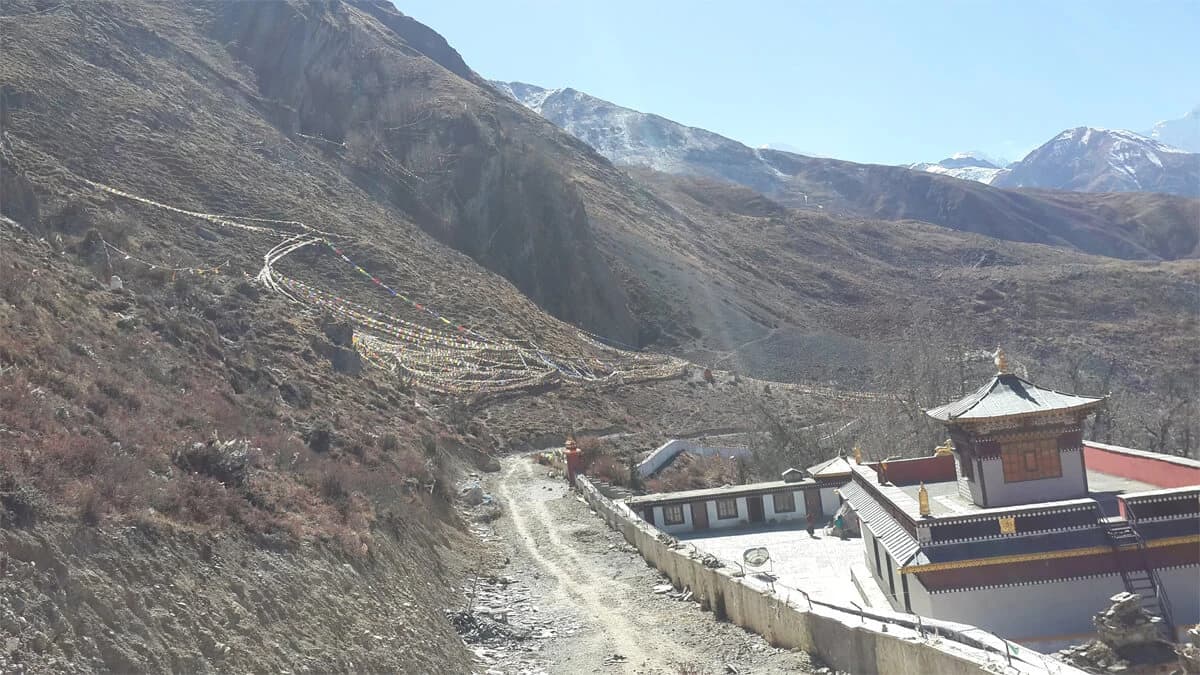
The first thing to understand about the Lower Mustang Trek is that it is not the untouched Himalayan wilderness some trekking websites make it sound like. Roads now reach deep into Mustang, and on some parts you will walk alongside jeeps and local traffic. That is just how the region is today. The attraction is everything around you with old Thakali villages, stone houses, apple orchards, Buddhist monasteries and the broad Kali Gandaki Valley running between the mountains.

A Lower Mustang trekking route can take you through Tatopani, Kalopani, Marpha, Tukuche and Jomsom, with Kagbeni and Muktinath included on longer itineraries. Each place has something different to see, from Marpha’s traditional houses and apple products to the busy streets of Jomsom and the old settlement of Kagbeni. This is not the trek to choose if you want days of walking far from roads and vehicles. It is a better fit if you want to explore Mustang on foot while also seeing its villages, local food, culture and the everyday reality of life in the Kali Gandaki Valley.

Lower Mustang Trek Overview 

Lower Mustang Trekking in Nepal takes you through the Mustang district within the Annapurna region, with Jomsom, Kagbeni, Muktinath, Marpha and Tukuche among the main places visited. It is also connected with the wider  Annapurna circuit trek, although roads now reach many places that were once connected mainly by foot trails. This has changed the way Nepal trekking is done in Mustang, with walking and road travel often used together.

Muktinath is sacred to both Hindus and Buddhists. The temple complex has 108 sacred water spouts where pilgrims take a ritual bath. The Kali Gandaki River is also known for Shaligrams, fossil stones regarded as sacred by Hindus. Muktinath remains an active pilgrimage site, so you will meet pilgrims as well as trekkers there.

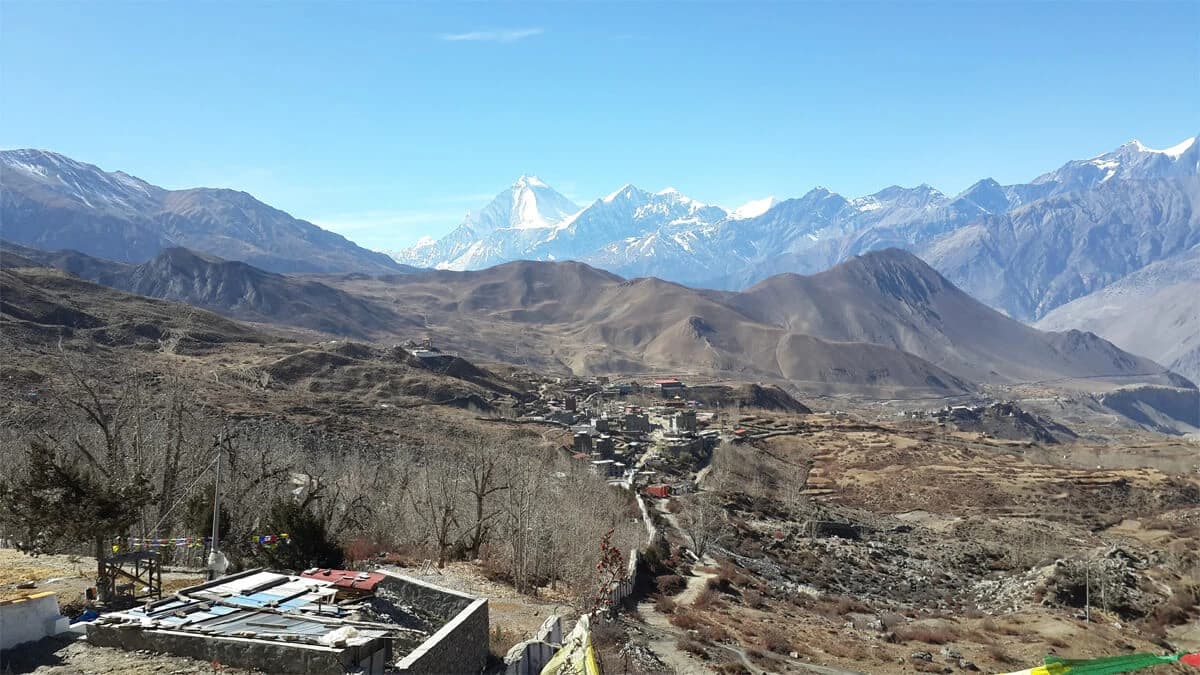
The Kali Gandaki runs between the Dhaulagiri and Annapurna ranges, forming the gorge widely described as the deepest in the world. Jomsom is the administrative headquarters of Mustang District and an important place for travelling around the valley. The Lower Mustang Trek from Pokhara normally begins with the journey to Jomsom before the walking starts.

Thakali communities have a strong connection with the Kali Gandaki Valley, particularly around the Thak Khola region. Marpha and Tukuche are known for Thakali food, traditional houses and local customs. The trek is within the Annapurna Conservation Area, which covers Mustang along with Kaski, Lamjung, Manang and Myagdi and protects a wide range of Himalayan habitats and wildlife.

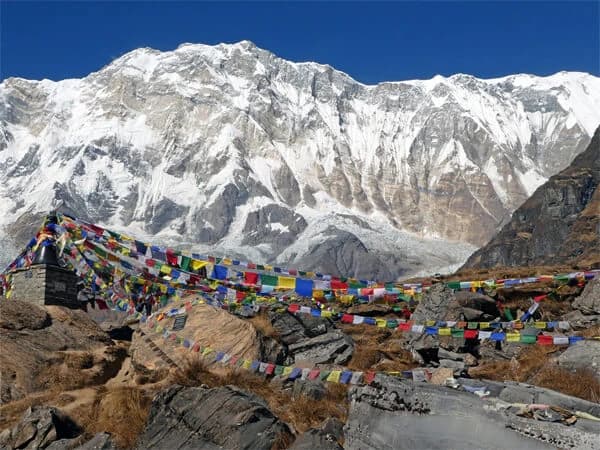
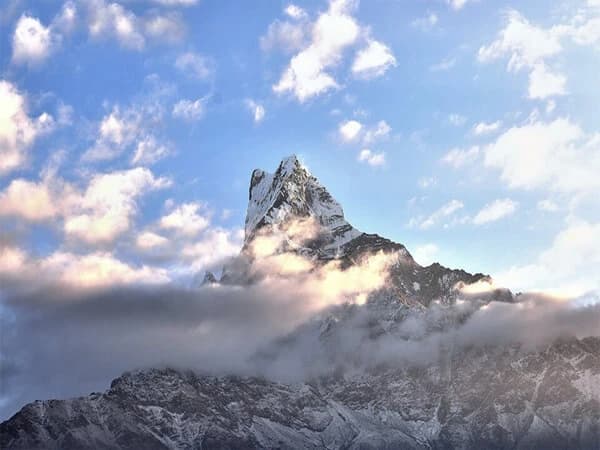
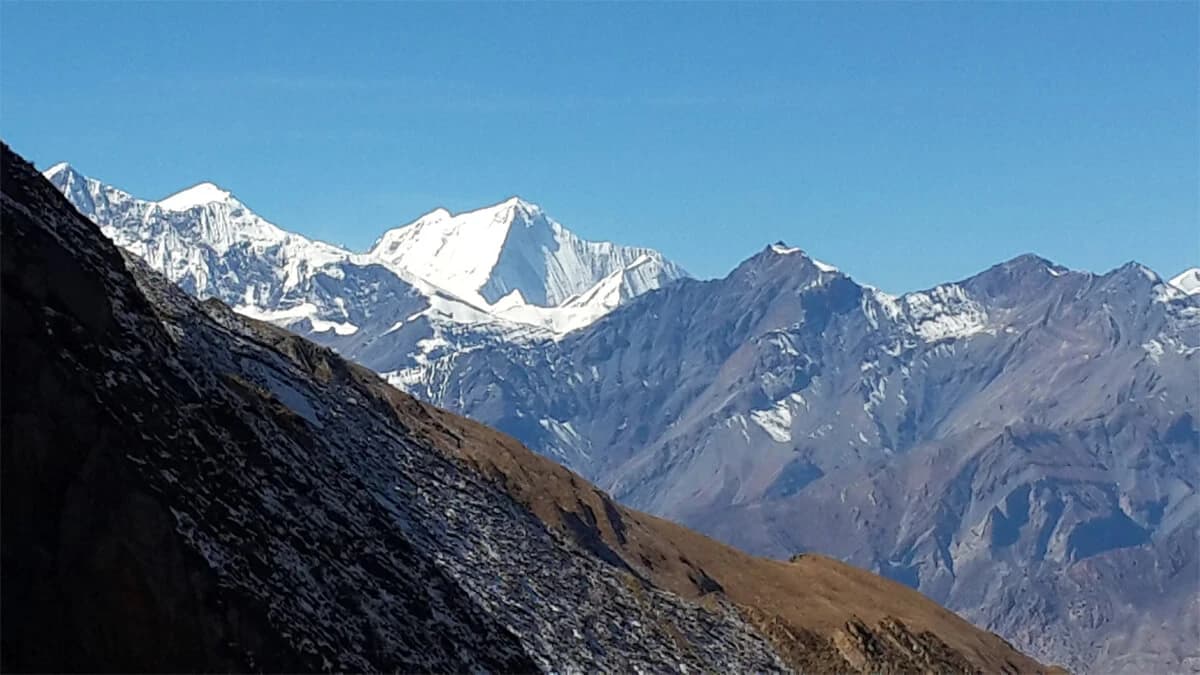
Dhaulagiri, Annapurna, Nilgiri and Tukuche Peak can be seen from different places along the trek. The 10 day program described on this page begins in Kathmandu, continues through Bhaktapur, Pokhara and Jomsom, and then follows the planned Lower Mustang trekking route before returning to Kathmandu.

Why Trek Lower Mustang?

Lower Mustang is best known for places such as Kagbeni, Muktinath, Marpha and Tukuche. Kagbeni has old mud houses and narrow lanes, Marpha has apple orchards and Thakali food, and Muktinath is an important pilgrimage site for both Hindus and Buddhists. These villages, along with the local food, monasteries and traditional houses, are a big part of the Lower Mustang Trek.

The land around Jomsom and Kagbeni is dry and sparsely covered with vegetation. Farther south, you see more trees, farmland and waterfalls around Marpha, Tukuche, Kalopani and Ghasa. Dhaulagiri and Nilgiri are visible from several places, while the Kali Gandaki runs through the valley before the trail reaches Tatopani and its natural hot springs.

Lower Mustang gets much less monsoon rain than Pokhara because the Annapurna and Dhaulagiri ranges block much of the moisture coming from the south. For this reason, the area can be trekked during the summer months when many other parts of Nepal are wet. Rain can still affect the lower sections, and flights between Pokhara and Jomsom can be cancelled when there is poor visibility or strong wind.

Lower Mustang Trek Route

The trek starts at Jomsom after the flight from Pokhara. From Jomsom, you walk beside the Kali Gandaki to Kagbeni, then head through Khingar and Jharkot to Muktinath. Muktinath is around 3,800 metres and is the highest overnight stop in this itinerary. Kagbeni and Muktinath are also two of the main places on this part of the Lower Mustang trekking route.

From Muktinath, the Lower Mustang route heads south to Marpha and Tukuche. Larjung, Kalopani and Lete come after Tukuche, with Dhaulagiri, Tukuche Peak and Nilgiri visible from different parts of the walk. 

Ghasa, Dana and Tatopani follow Lete on the southern part of the itinerary. Rupse waterfall is near Dana, and Tatopani lies at about 1,190 metres beside the Kali Gandaki. The lower valley is warmer and greener than the country around Jomsom and Kagbeni, and the natural hot springs at Tatopani are the last major stop before the journey back to Kathmandu.

Lower Mustang Trek Itinerary

The 10 day Lower Mustang trekking itinerary starts with Kathmandu and Bhaktapur before heading to Pokhara. From Pokhara, you fly to Jomsom and walk to Kagbeni on the first trekking day. The following morning, you head towards Muktinath through Khingar and Jharkot. After Muktinath, the trek drops towards Marpha, followed by Tukuche, Larjung, Kalopani and Lete. The last day of walking takes you through the lower Kali Gandaki area to Dana and Tatopani, with Rupse Chhahara on the way.

There are six trekking days in the itinerary, with about three hours of walking on the first day and around four to six hours on the following days. Muktinath is the highest overnight stop at approximately 3,800 metres. From there, you will mostly walk downhill as you lose altitude towards Tatopani. After the trek, you travel back to Kathmandu and leave Nepal the following day.

Lower Mustang Trek Cost 

The Lower Mustang Trek cost is USD 1,075 per person with Nepal Trekking Routes for the 10 day package. The price includes the trekking permit, TIMS, insurance and equipment for the trekking staff, a first aid kit, and the farewell dinner in Kathmandu with a traditional Nepali cultural program. The package also covers the services and arrangements listed in the itinerary.

International airfare, travel insurance, personal expenses, drinks, hot showers and tips for the guide and porter are separate. Any change to the standard program, such as different hotels or private transportation, can also change the final Lower Mustang Trek price. For the standard Lower Mustang trekking package, the listed cost is the one that you'll pay.

Lower Mustang Trek Cost for Nepalese Citizens

The Lower Mustang Trek Cost for Nepalese Citizens is usually around NPR 20,000 to NPR 35,000 per person for a 6 to 8 day trip covering Jomsom, Marpha, Kagbeni and Muktinath. This mostly covers local transportation, simple teahouse accommodation and meals. The final amount depends on your choice of transport, accommodation and the number of days you spend in Lower Mustang. 

Lower Mustang Trek Cost for Indian Citizens

The Lower Mustang Trek Cost for Indian Citizens is around INR 25,000 to INR 40,000 per person for a 6 to 8 day trip covering Jomsom, Marpha, Kagbeni and Muktinath. This budget is suitable for local transportation, teahouse accommodation and meals along the route. The final expense depends on the transport, accommodation and itinerary you choose. Indian citizens can enter Nepal without a visa, and the standard Lower Mustang route does not require the restricted area permit used for Upper Mustang.

Lower Mustang Trek Permits

Lower Mustang Trek permits and fees mainly involve the Annapurna Conservation Area Permit (ACAP). The permit covers entry into the Annapurna Conservation Area, which includes the Lower Mustang trekking area.

TIMS is used on trekking routes covered by the current TIMS rules. The ordinary Lower Mustang route is not separately named on the current mandatory TIMS route list, so the requirement depends on the exact trekking program. A registered trekking agency in Nepal can confirm this when arranging the trek.

There is no Upper Mustang Restricted Area Permit for the usual Lower Mustang trek. That additional permit applies when travelling beyond the Lower Mustang area into Upper Mustang.

Lower Mustang Trek Map

The Lower Mustang Trek map follows the Kali Gandaki corridor through Jomsom, Kagbeni, Muktinath, Marpha, Tukuche, Kalopani, Lete, Ghasa and Tatopani. It also marks the roads and the air route between Pokhara and Jomsom, showing how transport is connected with the trekking route. The current map separates the main trail, secondary trails, roads and air route.

The Jomsom to Marpha Trek and Marpha to Tukuche Trek cover parts of the route around Jomsom and the nearby Thakali villages. The Kagbeni Trek connects Jomsom with the route towards Muktinath. These sections can be combined into a longer Lower Mustang program rather than treated as completely separate routes.

The exact walking line depends on the itinerary because roads now run through much of the valley. Some parts can therefore be walked while other sections may be covered by vehicle. Trekking map in Nepal gives a useful picture of how the different parts fit together without suggesting that the whole route is still a continuous foot trail. 

Lower Mustang Trek Duration

The Lower Mustang Trekking duration depends on how much of the valley is included and how much of the route is covered by vehicle. A short trip around Jomsom, Kagbeni and Muktinath can take around 4 to 7 days, while longer programs add Marpha, Tukuche, Kalopani, Ghasa and Tatopani.

So, how many days for Lower Mustang Trek? The 10 day itinerary described here includes Kathmandu, Pokhara, the flight to Jomsom, six trekking days and the return to Kathmandu. That gives enough time to cover the planned route without adding extra trekking days.

A 7 day Lower Mustang Trek itinerary is more suitable for a shorter program focused on the main northern section. Twelve or fourteen day programs are also available, but they usually add different stops, side trips, road transfers or extra days rather than following exactly the same 10 day walking itinerary.

Itinerary

This is a 10 day Lower Mustang Trek itinerary covering Kathmandu, Bhaktapur, Pokhara, Jomsom, Kagbeni, Muktinath, Marpha, Tukuche, Kalopani, Lete, Ghasa, Dana, and Tatopani. It follows the Lower Mustang trekking itinerary from Pokhara through the Kali Gandaki Valley, with five days of trekking and road or air travel connecting the main places.

The major highlights include the walk from Jomsom to Kagbeni, the Kagbeni to Muktinath Trek, traditional Thakali villages in Marpha and Tukuche, the Kali Gandaki Valley and gorge, views of Dhaulagiri, Annapurna, and Nilgiri, Rupse Waterfall, and the hot springs at Tatopani.

Nepal Trekking Routes can help you shorten, extend, or change this itinerary according to your available time, interests, and travel plans. We can arrange the walking, transport, and overnight stops to make the Lower Mustang Trek fit the way you want to travel.

Trip PlanExpand All

Upon arrival at Kathmandu International Airport transfer to your hotel in Kathmandu or Bhaktapur. A short briefing will follow concerning the necessary formalities and your itinerary. Depending upon your arrival time you may spend free time visiting nearby sanctuaries or resting.

Half day sightseeing around UNESCO Bhaktapur / Kathmandu. Your guide will escort you on a tour of Buddhist and Hindu temples and shrines that reflect the ancient local traditions. There is time to explore the city’s many places of interest on your own or take a rest while trekking permits are finalised. In the evening sample a delicious traditional Nepali dinner. Overnight in Kathmandu.

Drive or fly to Pokhara, where the afternoon is free to enjoy the views of Lake Phewa. Take an optional boat trip on the lake or a microflight to see the Himalayas up close.

If the weather is clear, you will be called by your guide for a ride to a local hilltop for a spectacular sunrise view of the Annapurna and Dhalagiri ranges. Then fly to Jomsom, where we begin our trek to Kagbeni. The trail follows the river to Eklai Bhatti and then on to the medieval-looking town of Kagbeni. This town has closely packed mud houses, dark tunnels and alleys and a large ochre-coloured gompa perched above the town. We will stay in one of the guesthouses operated by the hospitable Thakali people of this region. (3 hrs).

today we will ascend 900 metres to Muktinath, an important pilgrimage place for Hindus and Buddhists. We will first walk through Khingar (3400m) and then to Jharkot (3500m), which is an impressive fortress- like village. We will continue our way to the first part of Muktinath, known as Ranipauwa, where we will stay the night. There will be time to explore the area and see some of the holy Hindu places such as Jwala Mai Temple, with a spring and an eternal flame fed by natural underground gas (4 Hours).

Today’s trek bring us to Marpha, home to many apple orchids as well as all the various food products made from the fruit. Apple Brandy is a local specialty that you may be lucky enough to taste en route (6 hrs).

This day will be a rewarding day when we trek further down the Kali Gandaki valley alongside the Kali Gandaki river to Ghasa. We will pass the villages of Tukuche (2580m) and Larjung (2560m). We then cross the Kali Gandaki river on a high suspension bridge and continue through an area covered with fir, juniper and cypress trees. Near the village of Kalopani (2530m) we will have splendid 360Ëš views of Dhaulagiri, Tukuche Peak, the three Nilgiris, Fang and Annapurna I. After crossing another very long suspension bridge (107 metres long) we will reach Lete/Ghasa, our base for this night (6 hrs).

Today our trek leads us through the steepest and narrowest part of the Kali Gandaki valley. Much of the way is cut through solid rock and subject to frequent landslides. Before we reach the village of Dana (1450m) we pass the Rupse Chhahara (beautiful waterfall). Descending farther down past several landslides we will reach Tatopani, meaning hot water, which is situated on the riverbank. We will stop here to make the most of a well deserved bath in the hot springs (be sure to bring a bathing costume). (5 hrs).

Fly or drive back to Kathmandu.

As per your program you will move to another tour program or flight back to you home

Plan An Amazing Private and Tailor-Made HolidaysNot satisficed with this itinerary? Share your idea with our travel Expert. We make your dream come true.
Customize Trip
Cost Details
Includes
  • Airport pick-up and drop off service ,
  • Trekking Guide and Trekking porter (Two participant=1 porter =Maximum 25 kg of luggage )
  • Breakfast, Lunch, Dinner & Tea house accommodation during the trekking
  • Three star level Hotel Accommodation during the Kathmandu and Pokhara stay
  • Pokhara to Jomsom Flight fare,
  • Naya pul to Pokhara private vehicle transfer
  • Kathmandu to Pokhara and Pokhara to Kathmandu Round trip tourist bus service
  • Sleeping bags, down jackets, duffel bags and trekking sticks if required,
  • Trekking permit of National park,
  • TIMS (Trekkers' Information Management System )
  • Insurance and equipment for the trekking staffs
  • First aid kit
  • Farewell dinner in Kathmandu with cultural program in typical Traditional Nepali restaurant
Excludes
  • Personal expenses
  • Lunch dinner Drinks, beverages, hot shower,
  • Travel insurance and International airfare
  • Tips for Guide and porter (trekking staff)
  • Meals & hotel accommodation in Kathmandu (without itinerary )
Essential Information

Lower Mustang Trek Difficulty 

The Lower Mustang Trek difficulty is moderate. In this itinerary, the Kagbeni to Muktinath day is the one most likely to test you. Kagbeni is around 2,800 metres and Muktinath is about 3,800 metres, with four hours between the two. The distance is not particularly long, but the altitude is a different matter. Some people get a headache or feel unusually tired as they gain height, while others have no real problem.

The old Jomsom and Muktinath hiking route has changed since the road came through the valley. Jomsom was already accessible by air after the airport opened in 1976, but road access later brought vehicles much farther north and changed parts of the old walking journey. For Lower Mustang Trek for beginners, this is worth knowing because the difficulty of the present trip is not the same as descriptions written before the roads reached the area.

Best Time for Lower Mustang Trek

Lower Mustang has a climate of its own. Pokhara can be receiving heavy rain while Jomsom and Kagbeni remain dry because the Annapurna and Dhaulagiri ranges block much of the moisture coming from the south. That difference is the main thing to understand when choosing the season.

Lower Mustang Trek in Spring Season

March to May brings warmer days to the valley, with more greenery around Tatopani, Ghasa and the lower Kali Gandaki area. Marpha also starts to look different as the apple orchards develop through spring.

The higher villages around Kagbeni and Muktinath still remain colder, particularly in the morning. The combination of lower temperatures at altitude and warmer conditions farther south make spring one of the best months for Lower Mustang Trek for beginners.

Lower Mustang Trek in Autumn Season

September to November is when the dry Mustang landscape is at its clearest. October and November are particularly good for views of Nilgiri, Dhaulagiri, Annapurna and the surrounding peaks.

The Lower Mustang Trek from Jomsom also starts with dry conditions around Kagbeni and Muktinath before dropping towards Marpha, Tukuche and the warmer southern valley.

Lower Mustang Trek in Winter Season

December to February is a cold season for trekking in Nepal, especially around Kagbeni and Muktinath. Nights can become very cold at Muktinath's elevation. Snow can affect the higher parts of the area.

Good Lower Mustang Trek preparation matters more in winter. Warm layers, gloves, proper footwear and protection from cold nights are important, particularly for the Muktinath section.

Lower Mustang Trek in Summer Season

June to August falls during the monsoon in most of Nepal, but Lower Mustang is protected by the surrounding mountains and receives much less rainfall. The dry landscape around Jomsom, Kagbeni and Muktinath can therefore remain accessible during months when other trekking areas are much wetter.

The Lower Mustang Trek from Pokhara needs more attention during summer because rain on the southern side can affect the road and flights to Jomsom. The Mustang valley itself may be dry while the approach from Pokhara is wet.

Lower Mustang Trek Distance

The Lower Mustang Trek distance depends on the places included in the itinerary. Jomsom to Kagbeni is about 10 to 11 km, while Kagbeni to Muktinath is about 10 to 15 km. From Muktinath, the trail continues towards Marpha, Tukuche, Kalopani and Tatopani.

The total distance changes when side trips, different walking trails or road transport are included.

Lower Mustang Trek Accommodation and Food

Lower Mustang Trek accommodation changes from village to village. Jomsom has hotels and guesthouses with private bathrooms, WiFi and more room choices. Kagbeni has smaller lodges around the old village, while Marpha and Tukuche have family run guesthouses connected with the local Thakali community. Muktinath and Ranipauwa have more lodging because of the pilgrims visiting the temple.

Homestays are also available in places such as Marpha and Thini. They are less common than guesthouses, but staying with a local family means eating food prepared in the household and seeing more of everyday village life.

Dal bhat, Thakali set meals, momo, thukpa, noodles, soup and eggs are common. Marpha and Tukuche are known for Thakali food, while Marpha is also known for apples, dried fruit and other apple products. Kagbeni has more Tibetan influenced food and drinks.

For Lower Mustang Trek accommodation and food, Jomsom and Marpha have more facilities than the smaller villages. Hot showers may cost extra, and shared bathrooms are still common in smaller lodges.

Do You Need a Guide for the Lower Mustang Trek?

A Lower Mustang Trek with guide can make the trip easier, especially when the old walking trails and jeep roads separate around Jomsom, Kagbeni and the villages farther south. A local guide also knows the village routes, local customs and places where road transport can replace part of the walk.

A Lower Mustang Trek without a guide is possible on the open Jomsom, Marpha, Kagbeni and Muktinath route according to current route information. You would need to handle your own accommodation, permits, transport and route decisions.

A trekking guide becomes more useful when the itinerary includes less travelled village paths, side trips or a longer walk towards Tatopani. If the trip continues north from Kagbeni into Upper Mustang, the rules change and a licensed guide is required for the restricted area.

Lower Mustang Trek Packing List

The Lower Mustang Trek packing list needs to cover cold conditions around Kagbeni and Muktinath as well as warmer weather farther south. Your Lower Mustang Trek preparation should also match the trekking season, especially if you are travelling in winter.

  • Trekking shoes with good grip
  • 2 to 3 trekking shirts
  • 2 trekking trousers
  • Thermal inner layer
  • Fleece or warm jacket
  • Down or insulated jacket
  • Waterproof and windproof jacket
  • 3 pairs of trekking socks
  • Warm hat
  • Lightweight gloves
  • Sun hat or cap
  • UV protection sunglasses
  • Sunscreen and lip balm
  • Refillable water bottle
  • Water purification tablets or filter
  • Headlamp
  • Basic first aid kit
  • Personal medicines
  • Basic toiletries
  • Sleeping bag for colder months

Muktinath lies at high altitude, so warm layers should not be left out even when the lower part of the route feels warm. A sleeping bag is more important in colder trekking season conditions. 

Lower Mustang Trek Preparation

There is not much special equipment or training to arrange before this trip. The more useful preparation is knowing how the route works today and leaving enough room for changes once you are in Mustang.

Check the exact itinerary

Do not assume every program follows the same walking route. Some itineraries use the Jomsom to Kagbeni section, while longer programs continue south through Marpha, Tukuche, Kalopani and Tatopani. Road access now reaches many of these places, so some programs combine walking with vehicles rather than following the old foot route throughout.

Plan around the valley wind

The Lower Mustang Trek weather deserves attention even during the dry season. The Kali Gandaki corridor around Jomsom is known for strong winds, particularly later in the day. If you are flying from Pokhara, keep the morning schedule in mind and do not build an important onward connection around an exact flight arrival time.

Carry enough cash

Take Nepalese rupees before heading into the smaller villages. Jomsom has more services, but you should not assume that every lodge, restaurant or small shop will accept cards or have reliable access to banking services.

Check your insurance

For trekking in Nepal, check that your travel insurance covers the activities and highest elevation included in your actual itinerary. Emergency evacuation coverage is also important to check before departure rather than assuming it is included.

Know what has changed

Older descriptions of Nepal trekking in this area often present the entire Kali Gandaki route as a foot trail. That is no longer an accurate picture. Roads now reach much of the valley, and vehicles share sections that were once travelled almost entirely on foot. If you prefer walking away from the road, check the itinerary carefully to see which alternative trails are actually being used. 

How to Reach Jomsom

To reach Jomsom, you can take a morning flight from Pokhara, travel by private or shared jeep, or take a local bus by road through Beni. The flight is the quickest option, while the road journey takes most of the day and follows the Kali Gandaki Valley. Regular flights and road services connect Pokhara with Jomsom.

You can also combine road travel with trekking, depending on how much of the valley you want to explore on foot. Nepal Trekking Routes can arrange the transport and walking plan around your itinerary, including private jeep travel, shared transport or flights.

Best Alternatives to Lower Mustang Trek

For a different Himalayan trip, Upper Dolpo Trek, Lower Dolpo Trek, Nar Phu Valley Trek, Manaslu Circuit Trek and Tsum Valley Trek are worth looking at. Upper and Lower Dolpo are more remote, while Nar Phu, Manaslu and Tsum Valley take you into different mountain valleys and villages.

If you prefer travelling by road, the Upper Mustang Jeep Tour is another choice. You can also consider a Lower Mustang Trek from Kathmandu with a mix of trekking and jeep travel, depending on your available time.

FAQs

Yes, it can be, but the lower Mustang trek itinerary should suit the people traveling. Road access makes it possible to use vehicles on parts of the valley instead of walking the whole route. Families should pay particular attention to the higher parts of the trek between Kagbeni and Muktinath when deciding how much walking to include.

Yes. You can visit the main places by combining shorter walks with road transport. The Mustang Jeep tour is useful if you want to see Jomsom, Marpha, Kagbeni, or Muktinath but do not want to spend several days covering the whole route on foot.

Yes. A Lower Mustang Trek itinerary can be shortened and can come in variations like: 5 day Lower Mustang Trek Itinerary. These shorter programs concentrate on Jomsom, Kagbeni, and Muktinath rather than covering every section included in a longer itinerary. 

Yes. The Lower Mustang area connects with the northern part of the Annapurna trekking network, so it can be included in longer Annapurna itineraries. The exact combination depends on the direction of travel and whether road transport is used for some sections.

Upper Mustang lies north of Kagbeni and is a restricted trekking area. Foreign trekkers entering the restricted area need the required special permit and must follow the applicable regulations. The usual Lower Mustang route around Jomsom, Marpha, Kagbeni, and Muktinath does not require the Upper Mustang restricted area permit.

Yes. This is common because roads now connect many places in the valley. A Lower Mustang trekking package in Nepal can therefore be designed with selected walking sections and vehicle transfers between others. When comparing programs, look at the actual walking days rather than assuming that the entire itinerary is on foot.

The Lower Mustang Trek is easy to moderate in difficulty, suitable for beginners and families.

20 years of Adventure
Why Travel with Nepal Trekking Routes?
We Care for Your Safety
Nepal Trekking Routes always focus on safety, and satisfaction of our valued clients. Our Trekking guides are highly experienced and trained to operate various group trekking trip in high Himalaya.
Provide Financial Protection
NTR prioritize healthy financial safety for clients, ensuring proactive safeguarding of client interest. Our commitment strengthens our role as trusted partners maintaining standards with dedication and Excellence.
100% Local Guide
100% Local Guide
Traveler looking for experience authentic insights through trekking in Nepal NTE offer your 100% local guide who help you to experience unique perspective ensuring and enriched journey customize to your interest.
Personalized Service
We always provide one guide and one porter to two guests in order to meet our standard of providing standard service. Impeccable hospitality and quality services are guaranteed while traveling with us.
Know More
You May Also Like
Annapurna Base Camp Trek
FromUS$955US$1540
ABC Mardi Himal Trek
FromUS$1090US$1250
Book Now