Everest Panorama View Trek

Everest Panorama View Trek For Senior Citizens

Unforgettable Vistas: Everest Panorama Trek
Duration13 Days
Trip GradeEasy
CountryNepal
Maximum Altitude3890 M
Group Size1-12
StartsKathmandu
EndsKathmandu
ActivitiesTrekking/Hiking
Best TimeMarch to May & Sept to Dec

If you have been putting off an Mount Everest Panorama View Trek because of your age, you are not the only one. We regularly meet travelers in their 60s who never imagined they'd be walking in the Everest region until they actually did. We understand, planning your first trek in the Everest region can feel like a big step and that's exactly why Nepal Trekking Routes created this 13 Day Everest Panorama View Trek for Senior Citizens

It gives active older travelers the opportunity to experience the Everest View Trek 8 days itinerary that focuses on the places that have shaped the history and culture of the Khumbu region as much as its mountain scenery.

Everest Panorama View Trek Overview

Everest Panorama View Trek for Senior Citizens is a specially designed package of Everest Trek. In many cases, the age hinders the desire to reach the world’s highest peak, Mt. Everest (8,848m). This trek facilitates those willing hearts for adventurous journeys even after their retirement.

What we believe is that growing age shouldn’t be a reason that you skip trekking to Everest region! Trekking above 4,000m may not be possible for the respectable senior citizens all the time. Nevertheless, you can fulfill the dream of stepping on the Everest trekking trail, even if you are not attempting the Summit or the base camp.

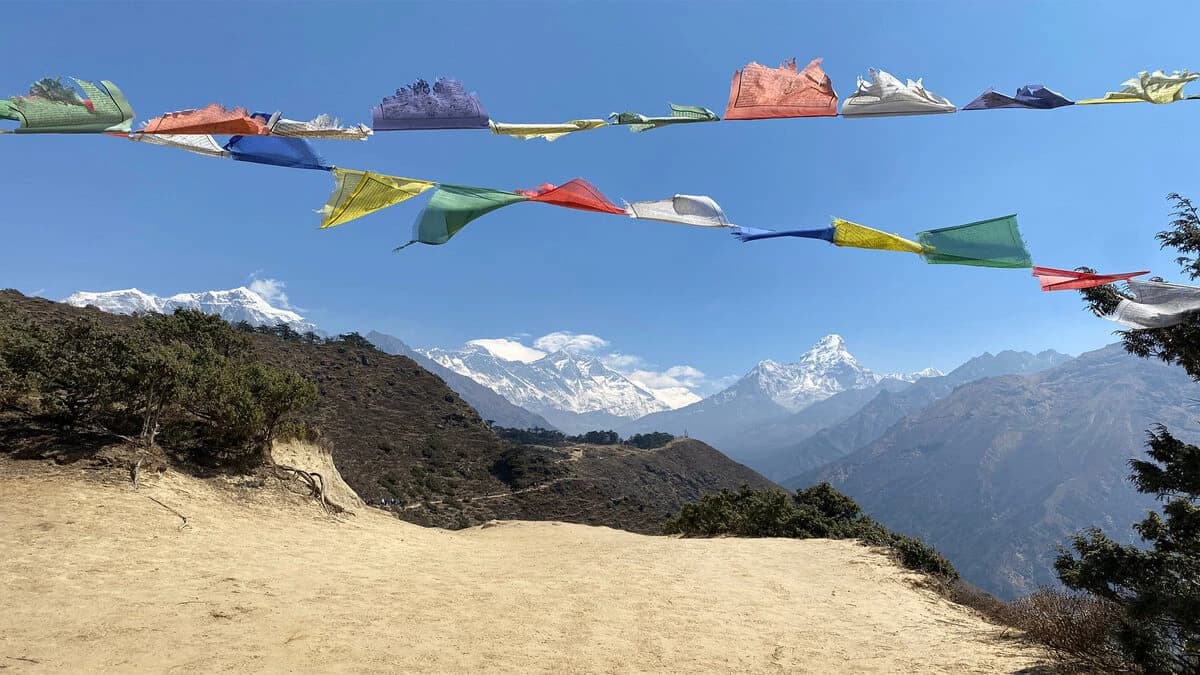
Everest Panorama View Trek for Senior Citizens rewards you with the wonderful combination of the culture and nature of the concerned region. Amazing vistas of the Great Himalayas including Mount Everest are awaiting you all the time! The sunrise and sunset views of Mt. Lhotse (8,516m), Mt. Cho Oyu (8,188m), Mt. Ama Dablam (6,812m), Mt. Nuptse, Mt. Khumbila and many more will provide you with unforgettable experiences.

The biodiversity of Sagarmatha National Park, UNESCO World Heritage Site of Nepal, pleases you even more with pine, oak, cypress, and rhododendron forests; and the birds and animals inhabiting them are other attractions of the region.

You will explore all the major Sherpa settlement areas of the Khumbu region trek. This not only gives you joy but also the firsthand experience of their lifestyle, culture, and tradition. The major monasteries, chortens, and mani walls of the region further welcome you. Thame Monastery, Khumjung Monastery, Pangboche Monastery, and Tengboche Monastery are the famous monasteries in the Everest region.

Moreover, the seasonal feasts and festivals of the Sherpa communities make the Everest Panorama View Trek for Senior Citizens more meaningful. The Yeti Scalp of Khumjung Monastery is the most unique experience in a lifetime.

Everest Panorama View Trek Highlight

  • Fly to Lukla and begin trekking in the Khumbu
  • Explore Namche Bazaar, Thame, Khumjung, Phortse, and Tengboche
  • Views of Mount Everest, Lhotse, Cho Oyu, Ama Dablam, and other Himalayan peaks
  • Visit Tengboche Monastery, the largest monastery in the Everest region
  • See the famous Yeti scalp kept at Khumjung Monastery
  • Experience everyday life in Sherpa communities
  • Guided by experienced local trekking guides

Everest Panorama View Trek for Senior Citizens Difficulty

While designing the package, we have tried to minimize the Everest Panorama Senior Citizens trek difficulty at best. The trail condition, altitude, availability of services, and Nepal trekking duration per day determine any trek difficulty.

The trials of Everest Panorama View Trek for Senior Citizens are well maintained as they are mostly frequented all year around. There won’t be any difficulty caused by the food and accommodation facilities. You find good quality hotels and lodges providing you best quality of food and accommodation. You get to choose the food of your appetite from a large variety of menus.

Yes, this trek starts from the place above 2,500m. Therefore, there is a chance for altitude sickness during this trek. However, the trekking hours per day is not much longer to minimize the threat of this physical health. You have to walk for about 6 hours along the slightly steep up and down trail every day.

Your safety is important to us throughout the trek. Our experienced trekking guides keep an eye on every group member and check for any signs of altitude related illness along the way. They also carry a first aid kit to provide basic treatment if needed. If anyone develops serious symptoms of Acute Mountain Sickness (AMS) or another medical emergency, we arrange an immediate evacuation to a lower altitude or the nearest medical facility.

Everest Panorama View Trek Cost for Senior Citizens

To estimate the overall Everest Panorama View Trek Cost for Senior Citizens, we have to discuss the responsible factors individually. The Nepal trekking permits, trek duration, services and transportation modes are the most decisive factors. Right now, the Everest Panorama View trek cost in Nepal Trekking Routes is USD 1685 on a discounted price. 

You need two permits and that adds to the cost as well. Trek duration is always a matter of customization: you can extend or cut short as well which obviously affects the cost. If you want to add up Everest Base Camp trek, the proposed itinerary is insufficient. Likewise, if you have already visited the world Heritage Sites, you can avoid visiting them again.

Everest Trek is popular for quality food and accommodation services. You can find all types of food items from the typical Nepali to continental, Chinese, and Indian as well. It means it is all up to you what standard of food and accommodation facilities you want to have.

Last but not the least, you have to use domestic flight services to begin and end the Everest Panorama View Trek. The Kathmandu to Lukla flight ticket cost is comparatively higher than a bus or private vehicle.

As a whole, it is all up to you how much you want to spend during a Nepal visit. And that determines the overall Everest Panorama View Trek for Senior Citizens! Don’t worry Nepal Trekking Routes assist you to get the best services with satisfaction at the most reasonable cost!

Everest Panorama View Trek Itinerary for Senior Citizens

Nepal Trekking Routes offers a 13 Day Everest Panorama View Trek Itinerary for Senior Citizens that follows the Luxury Everest View Trek route through Phakding, Namche Bazaar, Thame, Khumjung, Phortse, Tengboche, Monjo, and Lukla. Along the way, you'll visit Sherpa communities, Buddhist monasteries, and viewpoints with clear views of the surrounding Himalayan peaks. The itinerary also includes time in Kathmandu before and after the trek for arrival, preparation, and departure.

Everest View Trek Permit Requirements

Two permits are required for this trek: the Sagarmatha National Park Entry Permit and the Khumbu Pasang Lhamu Rural Municipality Entrance Permit. Both are mandatory for entering the Everest region. When you book with Nepal Trekking Routes, we'll take care of the permit arrangements, so you can focus on enjoying your trek.

Best Season for the Everest Panorama Trek for Senior Travelers

The best season for Everest Panorama Trek is different for senior citizens than it is for someone simply looking for the best mountain photographs. Weather affects energy, recovery after a day's walk, flight schedules and overall comfort, which is why spring and autumn are usually the first choice for this trek.

Everest Panorama Trek in Spring Season

Spring is often the easiest season for many senior trekkers. The cold of winter has started to ease, so mornings are more comfortable and the body usually warms up more quickly after you begin walking. Rhododendron forests around the lower part of the Everest region are in bloom, but many older trekkers appreciate the moderate temperatures more than the scenery. Lukla flights can still be delayed by changing mountain weather, so keeping an extra day in your travel plan is always a sensible decision.

Everest Panorama Trek in Autumn Season

Autumn is the busiest trekking season in the Everest region, and there is a reason for that. After the summer rains, the air is often much clearer, making it easier to enjoy long mountain views from places like Hotel Everest View and Tengboche. Days are generally stable for walking, but tea houses and flights are also at their busiest, so booking early becomes more important than it is during other seasons.

Everest Panorama Trek in Monsoon Season

Monsoon brings the most uncertainty. Rain can delay Lukla flights, mountain views often disappear behind cloud, and wet trails demand more attention throughout the day. The forests are at their greenest during this time, but for most senior citizens, the changing weather and frequent travel delays outweigh that advantage.

Everest Panorama Trek in Winter Season

Winter offers some of the clearest mountain views of the year, but it also brings freezing mornings and colder evenings throughout the Everest region. Many senior trekkers find that the first part of the day feels harder until the body warms up. The route remains possible with proper winter clothing and good preparation, although most older travelers find spring or autumn more comfortable overall.

Everest Panorama View Trek Map

Everest Panorama View Trek Map for Senior Citizens starts from Lukla, Tenzing Hillary Airport. It takes only 30 minutes for a flight from Kathmandu to  Lukla to enjoy the aerial view. You trek for about 3 hours on the first day just up to Phakding, an important stop of Everest Base Camp Trek.

Then, the trek proceeds to Namche Bazar, where you spend an extra day for exploring its natural and cultural wonders. From here, you move towards Thame, Khumung, and Phortse Village. After visiting all the major Sherpa settlement areas of the Everest region trek, you trek down to Tengboche, Monjo, and Lukla. From Lukla then you fly back to Kathmandu again witnessing the aerial view.

Why Choose This Everest Panorama View Trek?

Not every Everest View Trek follows the same route. This itinerary doesn't stop at Namche Bazaar and Tengboche. It also includes Thame, Khumjung, and Phortse, which gives you a chance to spend time in different parts of the Khumbu. If you're looking for a 13 day Everest trekking in Nepal that includes mountain views, Sherpa villages, monasteries, and a route that goes beyond the usual highlights, this itinerary is well worth considering.

  • 13 day itinerary with one acclimatization day in Namche Bazaar.
  • Overnight stays in Phakding, Namche Bazaar, Thame, Khumjung, Phortse, Tengboche, Monjo, and Lukla.
  • Views of Mount Everest, Lhotse, Ama Dablam, Cho Oyu, and other Himalayan peaks.
  • Visit Tengboche Monastery and Khumjung Monastery.
  • Explore several Sherpa villages across the Khumbu.
  • Permits, accommodation, domestic flights, and experienced trekking guides arranged by Nepal Trekking Routes.
Itinerary

This is a 13 day itinerary that begins in Kathmandu and continues through Lukla, Phakding, Namche Bazaar, Thame, Khumjung, Phortse, Tengboche, Monjo, and back to Lukla before returning to Kathmandu.

The route includes well known stops and villages, with time to explore Namche Bazaar before heading farther into the Khumbu. You'll also visit Tengboche Monastery and Khumjung Monastery along the way.

If you'd like to make changes to the itinerary, Nepal Trekking Routes can customize the trek to suit your schedule and travel plans. Please let us know what you have in mind, and we'll be happy to assist you.

Trip PlanExpand All

On your arrival day, we welcome you as per the Nepali culture at the Kathmandu Airport. Then, we assist you for getting the on-arrival visa for which you shouldn’t forget to keep USD 50 and 2 copies of passport sized photos.

Then, we transfer to the hotel booked for your comfortable accommodation. After becoming fresh, you take a stroll around Thamel Bazar, the most vibrant township with a crowd of international tourists.

Max Altitude: 1350 m Accommodation: deluxe hotel

Today, our tour guide takes you for Kathmandu City Excursion after you have healthy and delicious breakfast. He/She will usher you to 4 of the 7 UNESCO World Heritage Sites in Katahmandu. You will visit the Monkey Temple, Patan Durbar Square, Pashupatinath Temple and Bouddhanath Stupa. The guide will make the schedule to visit these cultural sites by consulting with you.

When you come back to the hotel, the team leader meets you and describes about Everest Panorama View Trek for Senior Citizens itinerary. Take enough food, water and sleep to keep yourself physically fit and mentally sound. Do your regular workouts in your time, too!

Max Altitude: 1350 m Meals: BreakfastAccommodation: Deluxe Hotel

After breakfast, a private jeep or taxi drops you at the Kathmandu Airport so that you can catch morning flight. By enjoying the aerial view of the Himalayas, plains and green forests, you reach Lukla in about 30 minutes.

Lukla, which is also called the gateway to Everest Base Camp, is a small Sherpa town of Everest region. From here, you have the first glimpses of the Mighty Mountains.

Then, you formally begin the trek along the trail that move across the Dudhkoshi River Valley. Walking leisurely through the uphill and downhill trail, you reach Phakding to end up today’s trip. After becoming fresh, visit the local monastery decorated with the colourful prayer flags and prayer wheels!

Max Altitude: 2860 m Meals: Breakfast, Lunch, DinnerAccommodation: Tea house

Today is the second day of trekking in Everest region. The journey begins after you have warm and energetic breakfast while enjoying the sunrise view. Following the snaky trail, you walk up to Monjo, where you get your trekking permits checked. From here, you enter into Sagarmatha National Park, one of the 10 UNESCO World Heritage Sites of Nepal.

While moving through the dense forests of subalpine forests, you might have glimpses of birds and animals. If you make this trip in spring, the entire area looks pretty beautiful due to the multi-colour rhododendron flowers.

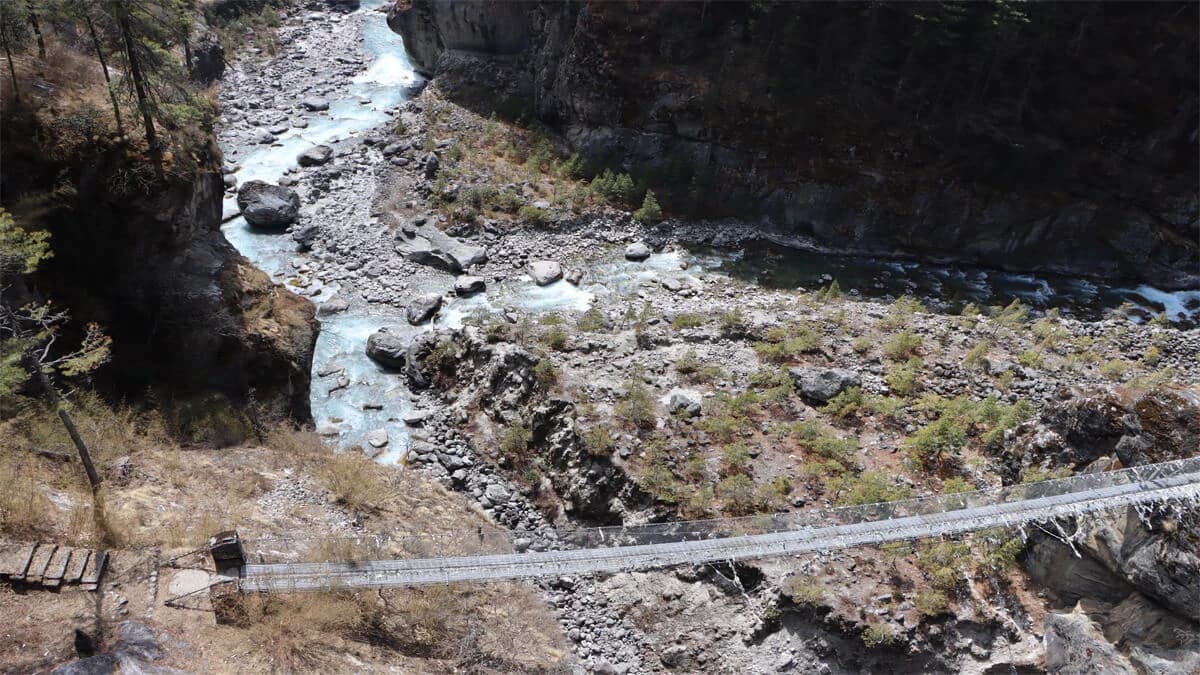
Crossing a few suspension bridges including the Hillary Suspension Bridge, named in reverence to Sir Edmund Hillary, you reach Namche Bazaar. This Himalayan town is also called the Sherpa Capital as it is the main trading center of Khumbu region. All types of modern services are available here. Visit the township crowded by the people going to or returning from Everest trek. The town looks really vibrant and lively due to the movement of thousands of people in most of the months of the year.

Max Altitude: 3440 m Meals: Breakfast, Lunch, DinnerAccommodation: Tea house

Today is allocated for acclimatization purpose as you have already arrived above 3,000m. It is not only for acclimatization but for exploring the nature and culture of the surrounding area.

First, you will hike to Everest View Hotel, one of the highest placed hotels in the world. From here, you can see Mt. Everest (8,848m) and other peaks looming with it. Imagine the scenery that you enjoy while having your breakfast or lunch!

Then, you have the Sherpa Museum that is a gallery of the photos of Everest Expedition right from 1953. The Hall of Fame has preserved the photos from the 1953 Everest Expedition led by Sir Edmund Hillary and Tenzing Norgay. On the other hand, the museum has preserved the culture and tradition of the Sherpa ethnic communities.

There is a 300 years old monastery in Namche Bazar to make the day more memorable!

Max Altitude: 3440 m Meals: Breakfast, Lunch, DinnerAccommodation: Tea house

Following the easy trail along the pine and rhododendron forests, you move towards Thame Village. On the way, you go across a few Sherpa villages that have typical housing style and potatoes-growing fields. The splendid view of Mt. Cho Oyu (8,188m) makes the trip more interesting.

This route used to be the ancient trading route between Everest region and Tibet via Nangpa La Pass (5,809m). Moving further along the little snaky trail along the thick forests, you go across Sanasa and Samden villages. Together with Thamserku (6,608m) and Kusum Kangru (6,389m), you enjoy the close up view of Kongde Ri Peak (6,187m). It is one of the most difficult trekking peaks of Nepal.

Upon crossing a suspension bridge over the Bhotekoshi River, you reach Thame village. It is the home of Ang Rita Sherpa, also known as the Snow Leopard, who climbed Mt. Everest without oxygen. And, Tenzing Norgay spent his childhood in this mountain village as well. There is Thame Monastery where a few monks and nuns live to visit after you reach there.

Max Altitude: 3800 m Meals: Breakfast, Lunch, DinnerAccommodation: Tea house

Have some breakfast first and then, today’s trek begins following yesterday’s trail for some time. Thereafter, you leave the trail going to Namche Bazar and follow the one going to other side i.e. to Khumjung village. Walking for about 5 hours along the trail sometimes up and the other times down, you reach Khumjung Village.

This village is also called the sister village of Khunde as Hillary Foundation has done many developmental activities to facilitate the society. Here, you can visit a community school established by Sir Edmund Hillary in 1961.

The astounding appearance of Mt. Khumila (“Khumbu Yul Lha” meaning “God of Khumbu”) is the most pleasant sight from here. Khumjung Monastery is one of the prominent Tibetan Buddhist shrines of Everest region. Here, you can see the Yeti Scalp as the major attraction and also meet some monks and nuns.

Max Altitude: 3790 m Meals: Breakfast, Lunch, DinnerAccommodation: Tea house

Enjoying the superb view of Mt. Everest, Mt. Lhotse, Mt. Cho Oyu and close up view of Mt. Khumbila (5,761m), you continue towards Sanasa Village. Crossing a little tough trail, you reach Mong La Pass (3,973m).

Then, the trail goes through the dense rhododendron and pine forests until you cross the Phortse Tanga River. While on walk, you might have the glimpses of some birds and animals of the Himalayan ecosystems. Then, waking for short time, you reach the destination, Phortse Village, which is an agricultural village.


Max Altitude: 3840 m Meals: Breakfast, Lunch, DinnerAccommodation: Tea house

Have your breakfast by enjoying the stunning view of Mt. Khumbila and other peaks. Now, you begin the retreat journey towards Tengboche walking along the Imja Khola Valley by witnessing Taboche Peak (6,367m).

Walking downhill, you arrive in Pangboche Village, another popular Sherpa village of the Imja Valley. Here, you visit Pangboche Monastery, which is the oldest monastery of the entire Mt. Everest region. It is also popular for the best view of Mt. Ama Dablam (6,812m).

Afterwards, you trek down across the Milingo Village where you can visit a nunnery. Then, by crossing some forested lands, you finally come down to Tengboche Village.

Tengboche Village is named after Tengboche Monastery, which is the largest Tibetan Buddhist site of Khumbu region. Meet the Guru Rinpoche and talk with him about their lifestyle, culture and tradition.

Max Altitude: 3867 m Meals: Breakfast, Lunch, DinnerAccommodation: Tea house

Take a round of Tengboche Monastery to take the firsthand experience of worshipping before you begin the retreat journey. Then, have some warm and yummy breakfast so that you can cover the distance easily.

Following the downhill trail, you walk past the forests of Sagarmatha National Park and some Sherpa cultural villages. The enchanting view of the Everest and other peaks keeps on inspiring you to move your pace further.

Descending lower, you arrive in Namche Bazar where you spent a couple of nights enjoying the food and excursion side by side. If you want to buy something as a token from Everest region, you can stop at this Sherpa Capital. Or else, the trek continues along the Dudhkoshi River banks across Jorsalle Village and finally at Monjo. Monjo is the place where the Sagarmatha National Park office is located. Visiting the gallery of this office, you can know about the biodiversity of this Himalayan conservation center.

Max Altitude: 2835 m Meals: Breakfast, Lunch, DinnerAccommodation: Tea house

After having breakfast, you begin the last day’s trek in Everest region down to Lukla, Tenzing Hillary Airport. Following the main trail of Everest Base Camp trek, you walk past Chumoa Village. Then, the trail leads you across the Dudhkoshi River and some villages like Benkar, Phakding and Chuthawa. The view of the Himalayas, green forests and river valleys looks familiar as you have already done Everest trek!

This is the last night you are going to stay in Khumbu region. Therefore, why not you make some celebrations with the fellow trekkers! Cheers! (If only you like, hmmm….!)

Max Altitude: 2860 m Meals: Breakfast, Lunch, DinnerAccommodation: Tea house

Relishing the silvery peaks of Mt. Everest region for the last time this session, you take a flight back to Kathmandu from Lukla. During the flight, you will again see the same mesmerizing sight you did a few days back.

When the plane lands at the Kathmandu Airport, you will be guided up to the hotel. Take rest for some time and take a visit of Thamel Bazar so that you can buy some handicraft products of Nepal. They can really be good presents to your people back in the home country.

In the evening, we invite you for farewell dinner at restaurant in the Thamel Vicinity. Enjoy the typical Nepali delicacy and cultural shows.

Max Altitude: 1350 m Meals: BreakfastAccommodation: Deluxe Hotel

Your Nepal trekking journey comes to an end here. Our representative will drop you off at the airport 3 hours prior to your flight. We hope you had a great time here. Thank you for choosing Nepal Trekking Routes.

Max Altitude: 1350 m Meals: Breakfast
Plan An Amazing Private and Tailor-Made HolidaysNot satisficed with this itinerary? Share your idea with our travel Expert. We make your dream come true.
Customize Trip
Cost Details
Includes

Transport Service

  • Round-trip airport transfer (Domestic and International)
  • Kathmandu sightseeing by Comfortable Private vehicle
  • Kathmandu to Ramechhap Round Trip Sharing Mini bus service

Hotel Accommodation 

  • Hotel Kailash Kutee in Kathmandu 3 nights with twin sharing basis in BB plan
  • Basic Tea House Accommodation during the Trek

Tour/Trekking Guide & Porter

  • Government certified Tour Guide during the Heritage Sightseeing in Kathmandu 
  • Government certified Trekking Guide during the Trekking 

Trekking Permits

  • All necessary trekking permits and documentation.

Flight 

  • Round Trip Domestic flight ticket from Kathmandu to Lukla & Lukla to Kathmandu or 
  • Ramechhap to Lukla and Lukla to Ramechhap

Food

  • Meals: (12 breakfasts, 10 lunches, 11 dinners)

Reward and other service

  • Achievement certificate provided by your travel company in Kathmandu
  • Arrangement of Emergency Helicopter service which will be paid by the Travel insurance company.
  • Medical supplies (first aid kit will be available
  • All government taxes and service charges.
Excludes
  • Personal expenses & Travel insurance
  • Heritage entry fee during the sightseeing in Kathmandu and other
  • All bar bills and personal expenses (phone calls, laundry service, battery recharge, bottles of water, hot water, etc.)
  • Extra hotel accommodation in Kathmandu other than mentioned in Itinerary
  • Tips for guide and porter
Essential Information

Why the Everest Panorama Trek Explores a Different Side of the Khumbu Region?

The Everest Panorama Trekking in Nepal follows the same route as the Everest Base Camp Trek 15 days until Namche Bazaar. From there, the trail turns towards Thame, Khumjung Village and Phortse, passing through some of the oldest Sherpa villages in the Khumbu region. These villages are known less for mountaineering and more for their history, culture and daily life.

Thame was once an important stop on the historic trade route linking Nepal and Tibet through Nangpa La. Khumjung Village is home to the school founded by Sir Edmund Hillary in 1961, while nearby Khunde is home to Khunde Hospital, a medical centre established with Sir Edmund Hillary's support.. Phortse has gained recognition for producing a remarkable number of experienced high altitude guides in Nepal and Everest climbers.

Although this route does not continue to the classic EBC trail, it still offers classic Himalayan scenery from several viewpoints along the trail. The combination of mountain landscapes, Sherpa villages and cultural landmarks gives the Everest Panorama Trek a different character from routes that focus only on reaching Base Camp.

Hotel Everest View: Why It Is One of the Most Visited Places in the Everest Region

Many trekkers visit Hotel Everest View without booking a room. The hike from Namche Bazaar is part of the acclimatization day on both the Everest Panorama Trek and the EBC Trekking 14 days. Visitors stop for tea, lunch or a short break before walking back to Namche Bazaar. Everest helicopter breakfast tours also include the hotel, bringing visitors who want to enjoy the Himalayan landscape without a multi day trek.

Built in 1971 at 3,880 metres, Hotel Everest View became well known because of its uninterrupted mountain panorama. Mount Everest, Lhotse, Ama Dablam, Nuptse, Thamserku and Kongde Ri are all visible from the terrace in good weather. Few viewpoints in the Everest region bring all of these peaks into one frame after a relatively short walk from Namche Bazaar.

Early mornings are the best time to visit because the mountains are easier to see before clouds build over the Khumbu. For many trekkers, Hotel Everest View is the first close panorama of Mount Everest and the surrounding Himalayan peaks during the trek, which is why it remains one of the best known landmarks in the Everest region.

Daily Life of Monks in Tengboche Monastery in the Everest Region

Tengboche Monastery is included in the Everest Panorama Trek for Senior Citizens as part of the descent towards Tengboche while trekking in Nepal through the Everest region. It is also used as the breakfast point of Everest Base Camp Helicopter tour for those who want some cultural insights of the Khumbu region.

Monastic life here starts with early morning prayer inside the main hall with chanting and drum sounds, while the rest of the day moves between study, prayer practice, and basic upkeep of the monastery spaces. 

Buddhist texts in Tibetan language are used for study and recitation as younger monks learn by repeating verses with guidance from senior monks, often inside the prayer hall or nearby quiet spaces within the complex. Around the monastery, prayer flags are maintained and replaced when needed, especially during trekking season in the Khumbu region when visitor flow increases.

Sherpa families from nearby villages come for blessings and personal prayers at different times of the year. Mani Rimdu festival brings masked dances and gatherings inside the courtyard, while most days remain focused on regular monastic practice. Nepal Trekking Routes have Sherpa Festivals Trek for traveler who want to experience Sherpa culture in Everest Region

For the Everest Panorama Trek for Senior Citizens, Tengboche represents a living monastery where daily Buddhist practice continues alongside trekking activity in the Everest region rather than a place separated from local life.

Wildlife Along the Nepal Trekking Trail in Sagarmatha National Park

You can see most wildlife on this Everest trekking trail between Namche Bazaar and Tengboche, in the forest part of the trail inside Sagarmatha National Park.

Birds are most visible during early morning. Himalayan monal is sometimes seen near the trees, blood pheasant stays hidden, and snow pigeon moves across higher ground. Smaller birds are present but rarely noticed during walking.

Himalayan tahr can appear on slopes above Phortse side of the trail and musk deer stays inside forest and is rarely seen. Once trekking starts and the trail gets busy, the appearance of birds and animals takes place very rarely. Most people remember bird movement more than animals from this part of trekking in Nepal.

Acclimatization For Senior Citizens in the Everest Region 

For senior citizens trekking in the Everest region, altitude after Namche Bazaar becomes very evident, and breathing feels a bit heavier and walking taking more effort compared to lower parts of trekking in Nepal.

People in this age group naturally slow down on their own here. You have to understand that it is not a sudden issue, it's just your body reacting to thinner air and needing more time between stops.

Namche is used as a break point at this height, and the short walk towards Hotel Everest View is something many can still manage while getting used to the elevation before going higher. Most senior trekkers cope better when they stop comparing it with walking at lower altitude and let their pace settle naturally on the trail.

Everest Panorama Trek vs Everest Base Camp Trek for Senior Travelers

The main difference between these two treks is how far and how high you go, and how long your body has to deal with altitude. For senior travelers in the Everest region, this matters more than scenery because tiredness builds differently at higher elevations.

Everest Base Camp Trek is harder for senior travelers. It goes higher and you stay there longer. After Namche Bazaar, walking starts feeling more tiring. Sleep is not always good, food sometimes feels less, and recovery between days takes longer.

Everest Panorama Trek changes direction after Namche Bazaar and goes through Thame, Khumjung Village, and Phortse. It stays lower compared to Base Camp and does not keep you at the same altitude for many days.

Base Camp also uses the same trail on the way back, so you end up walking the same path again. Panorama does not do that, the villages and routes change more. However, lukla flights affect both treks, but Base Camp gets more affected because the schedule is tighter deeper in the region.

Essential Gear for Senior Citizens Trekking in the Everest Region

A big question that comes up often is what to pack while trekking to Nepal and that confusion is valid, especially for senior citizens planning short trek in Nepal.

Walking shoes end up being the one thing that actually decides comfort on the trail. If they are not right, nothing else matters much, since walking between villages takes time and the ground changes often in feel and condition.

Layers work way better than anything heavy. People mostly figure this out after the first day when the weather shifts while moving higher in the Everest region and carrying too much becomes unnecessary.

A walking pole turns out to be a great decision, especially when going down longer paths where balance starts to matter more than speed.

A warm jacket gets used later in the day once the air turns colder around Tengboche and above. Sunglasses and sunscreen still matter even when it feels cold because the light at altitude is strong.

Personal medication should be carried if it is something you already take regularly, since there is no easy replacement along the Nepal trekking trail.

A detailed Nepal trekking packing list is already included in the information section of our website for anyone who wants everything broken down properly before the trek.

Can Senior Citizens Complete the Everest Panorama Trek?

One of the first questions people ask is whether they are too old for this trek. In reality, age is only one part of the picture. Good general health, regular walking before the trip and enough time to adjust to the altitude have a much bigger impact than age alone.

The Everest Panorama Trek is chosen by senior travelers because it does not climb as high as any other Everest region treks like Gokyo Lakes Trek or Everest Three Passes Trek, while still reaching well known Sherpa villages and mountain viewpoints in the Namche trekking region. That makes it a realistic option for many older trekkers, although it still requires several days of walking at altitude.

Anyone with a history of heart disease, serious lung conditions or other medical concerns should speak with their doctor before travelling. Taking extra days to recover after long days of walking and listening to your body is far more important than trying to keep up with other trekkers on the trail.

Food and Drinking Water on the Everest Panorama Trek for Senior Citizens

Nobody comes to the Everest region expecting restaurant food, and that is probably the right attitude. The meals are basic with Lukla, Phakding and Namche Bazaar having the widest menus because supplies are easier to move there. Once you go beyond Namche, the choices start to shrink even if you book the luxury Everest Panorama trek. That is not a problem with the tea houses; it is just the reality of getting food, gas and vegetables into the Khumbu.

Dal Bhat is still the safest and most dependable meal on the trail. It is cooked fresh, it fills you up properly, and the refills make it one of the few things on the trek that actually feels worth the money. You will also find fried rice, noodles, thukpa, soups, eggs, porridge, Tibetan bread, potatoes and pancakes. If you are a picky eater, eat well when the menu is good, because it gets more limited as you go higher.

Tap water should not be drunk straight, and stream water is not a shortcut. The safest option is boiled water from a tea house, although it usually costs extra. Purification tablets or a filter also work, and many trekkers carry a reusable bottle and refill it instead of buying plastic bottles at every stop. That is cheaper, cleaner and less annoying once you have been on the trail for a few days.

Internet, Mobile Network and Charging on the Everest View Trek for Senior Travelers

A lot of people want to know if they can stay in touch with family during the trek. The answer is yes, but the connection is not something to rely on throughout the journey.

NTC generally provides better mobile coverage than Ncell in much of the Everest region, although both networks become less reliable depending on the village, surrounding terrain and weather conditions. A signal in the morning does not always mean there will still be one later in the day.

Most tea houses provide WiFi for an additional charge which works well enough for messages and checking emails, but video calls and large file uploads are very slow.

Charging phones, cameras and power banks is available in most tea houses, usually for a separate fee once you are higher in the Khumbu. Carrying a fully charged power bank is still one of the easiest ways to avoid running out of battery during the trek and that's probably the smartest move you can pull.

What Are the Best Trekking Alternatives for Senior Travelers in Nepal?

The Everest region isn't the only place where senior travelers can enjoy trekking in Nepal. If you're looking for a different route, there are several options that offer shorter walking, lower elevations, or easier access while still giving you plenty to see along the way.

  • Ghorepani Poon Hill Trek for mountain views and traditional villages.
  • Langtang Valley Trek for a quieter trail and beautiful valley scenery.
  • Helambu Trek for lower elevations and villages close to Kathmandu.
  • Royal Trek for a short trek near Pokhara.
  • Australian Camp Trek for travelers with limited time.
  • Panchase Trek for peaceful trails and views of the Annapurna range.
FAQs

Yes, provided they are in good health and physically prepared for the trek. Many older travelers choose Everest treks each year, but the right itinerary is important. Routes that don't go up too quickly and give you time to recover are a better fit for senior trekkers than more demanding itineraries. If you have any existing medical conditions, it's best to consult your doctor before traveling.

The highest point on this itinerary is Tengboche, at 3,867 meters. It is known for Tengboche Monastery and clear views of Everest, Lhotse, and Ama Dablam.

The Everest region is one of the most popular trekking regions of Nepal due to the world’s highest peak, and is entirely done as a teahouse trek in Nepal as there are all types of hotels and lodges en route. So camping is not what many people think of. 

We understand why this question comes up. There are several companies offering Everest region treks, and it can be hard to tell the difference.

With Nepal Trekking Routes, we provide a fixed 13 day itinerary, handle permits, flights, and accommodation, and assign experienced local guides who stay with you throughout the trek. If you need changes to the plan, we can also customize the itinerary based on your requirements.

Yes, many people over 60 do this trek. It depends more on daily activity and comfort with walking than age itself. If someone is already used to walking for a few hours, they usually manage well. The first few days feel different because of the trail and altitude, but most people settle into it after that.

Of course, a guide is always helpful, whether you are a senior or a young traveler. Most people on this trek travel with one. The route between villages can take time to follow, and daily arrangements like rooms, meals, and timing become easier when someone already knows how things work along the trail.

Yes. Many people do this trek without any previous experience. First time trekkers are common on this route. Regular walking before coming to Nepal makes a difference. The early days feel different because of the altitude and the trail conditions, then things become more familiar after a short time.

Yes. Insurance is needed for this trek. Medical care in villages like Namche, Thame, or Tengboche is limited, so serious cases are handled in Kathmandu, and that is why it should include high altitude trekking and helicopter evacuation.

Most policies also need a high altitude limit that matches trekking above 3,500 meters. Helicopter rescue coverage is important because it is the only way to move quickly in emergencies from these areas. It also helps to have coverage for trip delays, since flights to and from Lukla are sometimes affected by weather.

There is one ATM in Namche Bazaar, but it does not always work properly. Even when it does, there can be waiting lines. Because of that, most people carry cash from Kathmandu for the whole trek.

Yes. The plug points are not the same in every teahouse. Some use standard two or three pin sockets, others have older or mixed fittings depending on what has been installed locally. Make sure you carry a universal adapter, as the plug type changes from place to place.

Charging is mostly done in the dining area, not in the rooms. Electricity is limited, and sometimes charging is not available when you expect it.

Yes, but not for everyone in the same way. Some senior travelers complete it comfortably, especially those who walk regularly at home. Others find the uphill days more difficult than expected. The walk is mostly about how the body handles continuous walking at altitude over several days.

Great experience and well managed trip

I was a solo trekker with my guide Deepen who was very knowledgeable and managed everything very well from handling the permits to Lukla airport travel arrangment. His support and...

read more +
Jon Shen - Canada
22 Apr, 2024
J
20 years of Adventure
Why Travel with Nepal Trekking Routes?
We Care for Your Safety
Nepal Trekking Routes always focus on safety, and satisfaction of our valued clients. Our Trekking guides are highly experienced and trained to operate various group trekking trip in high Himalaya.
Provide Financial Protection
NTR prioritize healthy financial safety for clients, ensuring proactive safeguarding of client interest. Our commitment strengthens our role as trusted partners maintaining standards with dedication and Excellence.
100% Local Guide
100% Local Guide
Traveler looking for experience authentic insights through trekking in Nepal NTE offer your 100% local guide who help you to experience unique perspective ensuring and enriched journey customize to your interest.
Personalized Service
We always provide one guide and one porter to two guests in order to meet our standard of providing standard service. Impeccable hospitality and quality services are guaranteed while traveling with us.
Know More
Book Now