Jomsom Muktinath Trek

Jomsom Muktinath Trek

Duration10 Days
Trip GradeEasy
CountryNepal
Maximum Altitude3740
Group Size1-12
StartsKathmandu
EndsPokhara
ActivitiesTrekking/Hiking
Best TimeThrough out year

If you want Mustang without spending two weeks deep in the mountains, the Jomsom Muktinath Trek should be the one on your Nepal Travel list. The route runs through the Kali Gandaki Valley, linking Jomsom with Marpha, Kagbeni and Muktinath, where the landscape turns drier and the influence of Tibetan culture becomes prominent. Add the Muktinath Temple, ancient villages and views toward the Annapurna and Dhaulagiri ranges, and this short trek offers far more than its distance suggests.

But there is a catch: this is no longer a pure foot trail. Roads and jeeps have changed parts of the Jomsom to Muktinath Trek, and travelers expecting an untouched Himalayan route may find that disappointing. Lower Mustang trekking, a Muktinath pilgrimage, mountain scenery and a shorter alternative to the Annapurna Circuit are the main reasons to choose this route. The road also makes it possible to cover Jomsom, Kagbeni and Muktinath in a shorter itinerary.

Overview of Jomsom Muktinath Trek

Jomsom Muktinath Trek takes you to Jomsom and Muktinath Temple in the Lower Mustang region. Jomsom is the administrative headquarters of Mustang District.

Jomsom lies in the Kali Gandaki Valley, which is famous for Shaligrams. These black fossil stones are considered sacred by Hindus and are associated with Lord Vishnu.

Jomsom (2,743 m) is a beautiful Himalayan town situated in front of Mt. Dhaulagiri (8,167 m) and Mt. Nilgiri (7,061 m) on its backdrop. It also has an airport with regular flights connecting Jomsom with Pokhara.

Jomsom Muktinath Trek takes you through the Kali Gandaki Valley, with views of the Annapurna and Dhaulagiri mountain ranges. This region is populated by diverse ethnic communities spread in a wide type of landscapes from subtropical to arid.

Although it lies in Nepal, Mustang has strong Tibetan cultural influence in its lifestyle, culture, architecture, and Buddhist traditions. Even the landscapes of the Upper Mustang region resemble that of the Tibetan Plateaus.

The route forms part of the wider Lower Mustang Trek, area and gives you a chance to see Mustang’s famous apple orchards. Making Jomsom Muktinath Trek in spring is a brilliant idea to have the beautiful coverage of colorful rhododendron flowers to this region.

The highest point of the Muktinath trek route is Muktinath Temple at about 3,800 meters, one of Nepal’s major pilgrimage sites for Hindus and Buddhists. Jwala Mai, the natural flame, and the 108 sacred water spouts are the main attractions. From Muktinath, the Jomsom trekking route continues through Marpha, Ghasa and Tatopani before reaching the greener hills of the Annapurna region.

The Mustang trekking route takes you through Thakali and Tibetan Buddhist communities around Jomsom, Kagbeni, Marpha and Muktinath. The trail then reaches Ghorepani, Tadapani and Ghandruk, where Gurung culture, forested hills and views of the Annapurna range become part of the journey.

Highlights of Jomsom Muktinath Trek

Here are some of the highlights of the Jomsom Muktinath Trek:

  • Muktinath Temple: Muktinath is a sacred site for both Hindus and Buddhists. The temple complex at Muktinath is one of the main highlights of the trek. The temple is situated at an altitude of 3,800 meters and is dedicated to Lord Vishnu. There are also 108 water spouts around the temple, which are believed to cleanse the sins of those who bathe in them.
  • Kali Gandaki Gorge: The trek takes you along the banks of the Kali Gandaki River and offers stunning views of the gorge and the surrounding mountains.
  • Kagbeni and Mustang villages: Kagbeni is one of the most interesting villages on the route, with old stone houses, narrow lanes and strong Tibetan Buddhist influence. The village also marks the gateway towards Upper Mustang.
  • Traditional villages: The trek takes you through traditional Thakali and Gurung villages, where you can experience the local culture and way of life. You can also sample the delicious local cuisine, which includes thukpa (noodle soup), momos (dumplings), and dal bhat (rice and lentils).
  • Scenic mountain views: The Jomsom Muktinath Trek offers stunning views of the Annapurna and Dhaulagiri mountain ranges. The trek takes you through the world's deepest gorge, and you'll get a chance to see some of the world's highest peaks, including Annapurna and Dhaulagiri.

Jomsom Muktinath Trek Itinerary

The 14 day Jomsom Muktinath Trek begins in Kathmandu and takes you to Pokhara before the flight to Jomsom. The trail starts beside the Kali Gandaki River and reaches Kagbeni, where old stone houses, narrow lanes and a small monastery give the village its distinct character. Kagbeni also sits on the route to the Upper Mustang Trek. From Kagbeni, the walk to Muktinath passes through the dry hills of Mustang and ends at the well known pilgrimage site shared by Hindu and Buddhist traditions.

The trek has plenty more to see after Muktinath. Marpha is known for its apple orchards and traditional Thakali houses, while the walk through Ghasa and Tatopani brings forests, waterfalls and the natural hot springs at Tatopani. The trail later climbs toward Ghorepani and Poon Hill, then passes through Tadapani and Ghandruk before reaching Nayapul. After a drive back to Pokhara, the trip ends with the journey to Kathmandu. Those with extra days can add the Annapurna Circuit Trek, Annapurna Base Camp trek and Mardi Himal trek to the trip. 

Jomsom Muktinath Trek Permits

Two permits are required for the journey through the Kali Gandaki Valley: the Annapurna Conservation Area Permit (ACAP) and the TIMS Card. The route from Jomsom through Kagbeni to Muktinath lies within the Annapurna Conservation Area, so trekkers need an ACAP before entering the area.

Annapurna Conservation Area Permit

The ACAP permit covers the protected area around Jomsom, Kagbeni and Muktinath. The fee is NPR 3,000 for foreign nationals and NPR 1,000 for SAARC nationals, including tax. Children below 10 years do not need an ACAP permit.

You can arrange the permit in Kathmandu or Pokhara, either yourself or through a local trekking agency. For the application, you need your passport details and basic personal information. The permit should be kept with you throughout the trek because it may be checked at different points along the route.

TIMS Card

The TIMS Card contains your trekking information, including your personal details, travel dates and route. The fee is NPR 2,000 for non SAARC nationals and NPR 1,000 for SAARC nationals. A registered trekking agency can arrange the TIMS Card as part of your trekking arrangements.

You need your passport information and trekking details when completing the TIMS registration. Keep the card with you during the journey together with your ACAP permit.

How to Get to Jomsom

The easiest way to reach Jomsom is by flying from Pokhara. Travelers coming from Kathmandu normally fly to Pokhara first and then take the Pokhara to Jomsom flight, which takes around 20 to 25 minutes when weather conditions allow. Jomsom can also be reached by road from Pokhara through Beni, Tatopani, Ghasa, Marpha and Tukuche along the Kali Gandaki Valley. 

From Jomsom, you can continue toward Kagbeni and Muktinath on foot or by local jeep. This route is popular for Mustang trekking in Nepal and fits well into ashort trek in Nepal. After visiting Muktinath, you can return to Jomsom and take a Jomsom to Pokhara flight when available, or travel back to Pokhara by road through the Kali Gandaki Valley.

Jomsom Muktinath Trek Difficulty

The Jomsom Muktinath Trek difficulty is moderate, with the full 14 day itinerary including several five to seven hour walking days and a wide range of elevations. The journey starts with a flight to Jomsom at 2,743 metres, continues through Kagbeni and Muktinath at 3,802 metres, then drops through Marpha, Ghasa and Tatopani. From Tatopani, the trail moves to Ghorepani before the early morning Poon Hill hike at 3,210 metres, followed by Tadapani and Ghandruk. The repeated climbs and descents make good physical preparation important.

The climb from Tatopani to Ghorepani is one of the more physically challenging days of the itinerary, while the early morning Poon Hill trek adds further walking before continuing toward Tadapani. Regular walking and longer hikes before the trip can build useful trekking fitness. Jomsom trek difficulty can feel different from one person to the next, depending on fitness, previous trekking experience and how the body responds to altitude. 

Jomsom Muktinath Trek Cost

The Jomsom Muktinath Trek cost is USD 955 per person with Nepal Trekking Routes. This price is based on the full 14 day itinerary, beginning in Kathmandu and continuing through Pokhara to Jomsom. From there, the trek follows the Kali Gandaki Valley to Kagbeni and Muktinath, then heads south through Marpha, Ghasa and Tatopani before reaching Ghorepani, Poon Hill, Tadapani and Ghandruk. It is therefore quite different from a short Muktinath visit by jeep or a two or three day walk from Jomsom.

The Muktinath Trek price can change when the itinerary or travel arrangements are changed. Extra nights, hotel upgrades, private transportation, changes to the Pokhara to Jomsom flight, or additional sightseeing can add to the total. Group size can also affect the per person rate. The USD 955 Jomsom Muktinath tour package is the published price for this 14 day program, while the final amount is confirmed according to the arrangements made for your trip.

Jomsom Muktinath Trek Cost for Nepalese Citizens

The Jomsom Muktinath Trek cost for Nepali citizens is around NPR 20,000 to NPR 35,000 per person for a comfortable organized trip. A budget Muktinath tour from Kathmandu using local buses or shared jeeps can cost around NPR 8,000 to NPR 15,000, depending on the route, food and accommodation.

Nepali citizens pay only NPR 100 for the Annapurna Conservation Area entry fee. The final Jomsom Muktinath Trek package price depends mainly on transportation, lodge category and whether you travel by road or take the Pokhara to Jomsom flight.

Jomsom Muktinath Trek Cost for Indian Citizens

The Jomsom Muktinath Trek cost for Indian citizens is approximately INR 80,000 to INR 1,00,000 per person for a complete organized trekking package, depending on transportation, accommodation, meals, guide services and group size. The price can be lower for basic arrangements and higher when private transportation or upgraded services are included.

Indian citizens are eligible for the SAARC rate of NPR 1,000 for the Annapurna Conservation Area Permit. The final Muktinath Trek cost for Indians is confirmed according to the services selected and the current exchange rate at the time of booking.

Jomsom Trek Map

The Jomsom Muktinath Trek map follows the Kali Gandaki Valley from Jomsom to Kagbeni and Muktinath, then turns south through Marpha, Ghasa and Tatopani toward Ghorepani, Poon Hill and Ghandruk. This shows the route moving from the dry Mustang landscape into the greener Annapurna foothills. The journey starts in Kathmandu, including the UNESCO World Heritage Sites of Kathmandu, before moving to Pokhara and Jomsom.

Itinerary

This is a 14 day Muktinath Trek itinerary that begins in Kathmandu and takes you to Pokhara before the flight to Jomsom. The trek starts with Kagbeni and Muktinath, then continues through Marpha, Ghasa and Tatopani before reaching Ghorepani, Poon Hill, Tadapani, and Ghandruk.

The highlights include the flight into Jomsom, the old village of Kagbeni, Muktinath and its Hindu and Buddhist pilgrimage sites, Marpha's apple orchards, the hot springs at Tatopani, and the early morning view from Poon Hill. The walk around Tadapani and Ghandruk also brings forest trails, mountain views, and Gurung villages, so the scenery changes quite a lot during the trip.

We can help you adjust the itinerary according to your travel dates, transport preferences, and the places you want to visit. Feel free to contact us if you would like advice or a customized itinerary. This is not a typical Mustang Trek itinerary focused only on the Mustang region. It combines Muktinath with Pokhara, Tatopani, Ghorepani, Poon Hill, and Ghandruk. If you want to explore only Mustang, we can also arrange a separate Mustang trekking itinerary for you.

Trip PlanExpand All

The representative of NTR welcomes you at the Kathmandu Airport and transfers to the hotel. After becoming fresh, you can take a side trip around Thamel Bazar on your own.

The tour guide takes you around the UNESCO World Heritage Sites of the Kathmandu Valley. out of the seven World Heritage Sites, you will visit four. Patan Durbar Square located in Lalitpur is the epitome of the Newari art and architecture of ancient Nepal.

Swayambhunath Stupa (the Monkey Temple) and Bouddhanath Stupa are two Buddhist cultural heritage sites. Pashupatinath Temple is the greatest pilgrimage site of the Hindus dedicated to Lord Shiva.

After breakfast, you begin going towards the Lake City Pokhara in a private jeep or a local bus. You drive along the Prithvi Highway that crosses Dhading, Chitawan and Tanahun to reach Pokhara. If the time and itinerary favours, you can visit Bandipur, the Queen of the Hills en route.

After you reach Pokhara, you can visit the important landmarks. You can go boating on the Phewa Lake or go around Lakeside. Optionally, you can also go to the Devi’s Fall. Night life of the Lakeside is really something to experience in Nepal.

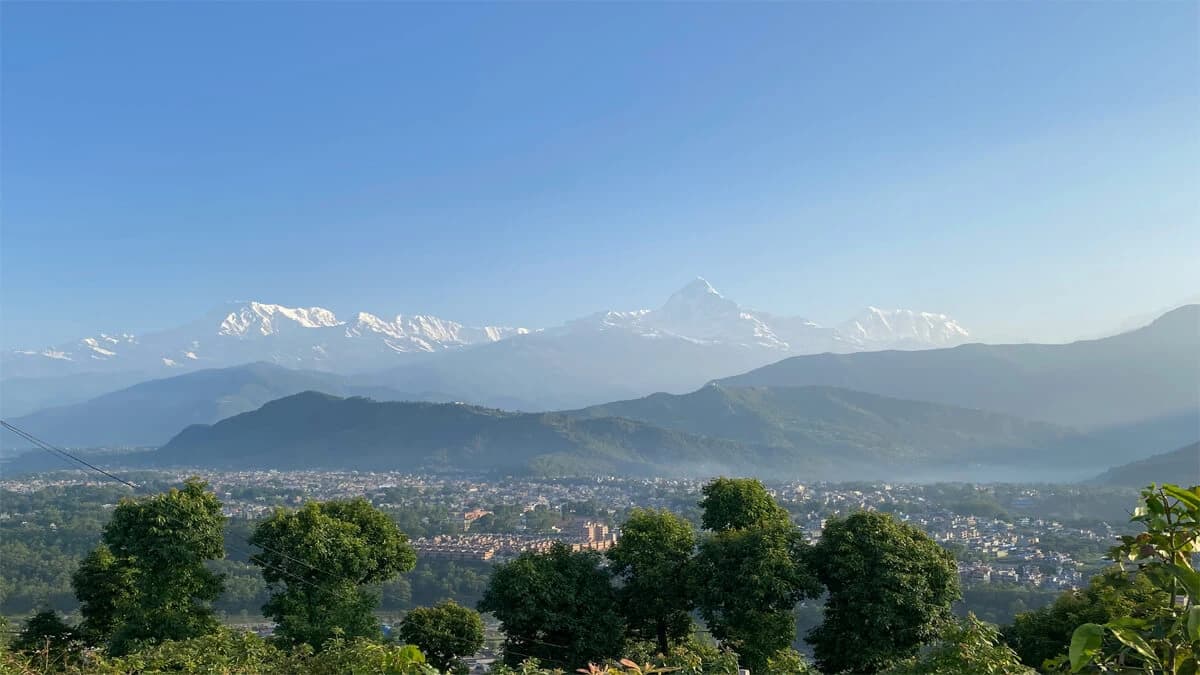
After breakfast, you are transferred to the Pokhara Airport to fly for Jomsom. During 25 minutes’ flight, you enjoy the aerial view of Annapurna (8,091m) and Dhaulagiri (8,167m) Massifs.

From Jomsom, you will walk along the Kali Gandaki River Valley and reach Kagbeni. Kagbeni is a small village known as the gateway to Upper Mustang Trek. Kagbeni also gives you access to Upper Dolpo trek but it is less frequented.

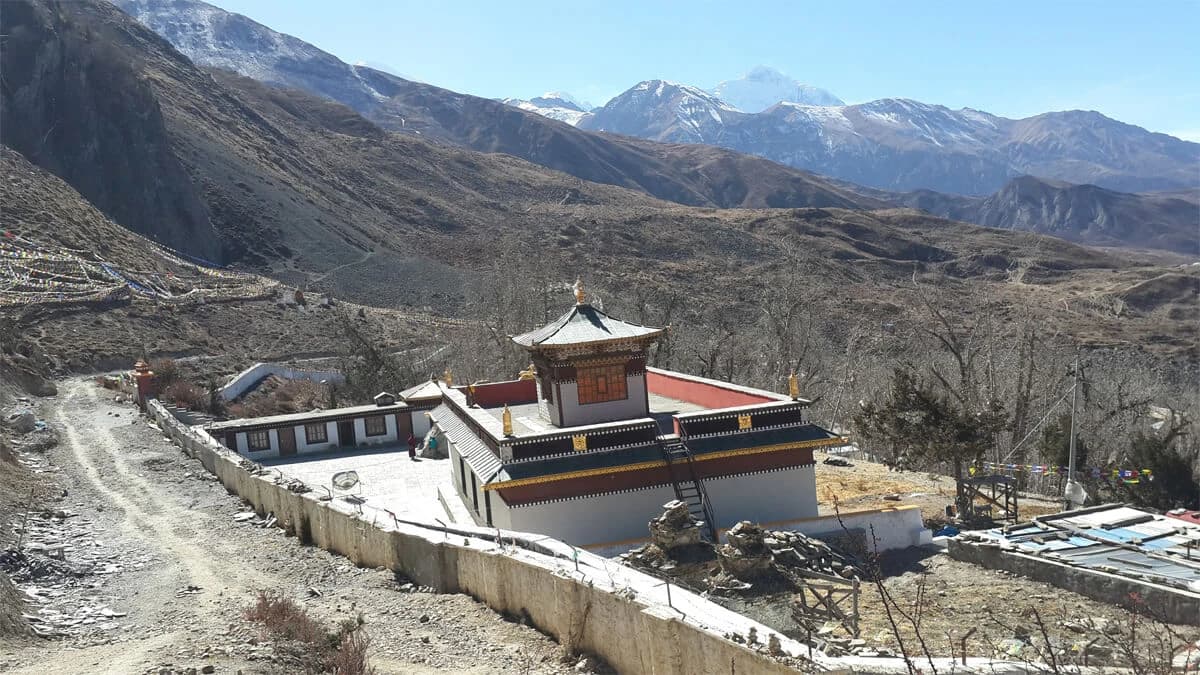
The traditional mud houses with prayer flags hoisted on top, the stone-paved tracks and chortens all make this village a classic vantage. You can also find Kagchode Thubten Sampheling Gompa built in 1429, which is perhaps the oldest monastery of this region.

Following the trail along the Kali Gandaki River Valley moving up and down, you walk past Ekle Bhatti (Lonely Teahouse). From here, leaving the route to Tibet via Upper Mustang, you follow the trial going higher up to Muktinath.

Muktinath Temple is a popular pilgrimage that is made by thousands of Indians and Nepalese every year. The natural gas that continuously keeps burning and 108 water sprouts are the major attractions of this shrine. Visit Bishnu Temple or the Gompa nearby Muktinath Temple to pay the holy place equally for both Hindus and Buddhists.

 You walk past an ethnic village called Ranipauwa which is located below the barren hills and an optional stopovers during Annapurna Circuit trek. You walk along the bizarre landscapes standing above the Kali Gandaki Gorge, the world’s deepest gorge.

Finally, you reach Marpha Village also known as the ‘Apple Capital of Nepal’ for the night station. Here, you can taste different products of apples and if you like tasting local liquor, you can try ‘Marpha’. ‘Marpha’ is the liquor brand made up of apples and it is exported in and out of the country. It is very helpful in improving the economic condition of the local people.

You walk along the track moving ahead from between Annapurna and Dhaulagiri region. Then, it moves forward along graveled riverbed until Larjung Village. Moving ahead from Larjung Village, you reach Kalopani, a small Thakali Village.

From here, you can see the best view of Annapurna I and the entire Annapurna Circuit. Enjoying the 360-degree view of Dhaulagiri, Nilgiri and Annapurna I, you reach Ghasa across the dense forests.

After breakfast at Ghasa, the journey begins along the pine and conifer woodlands between Annapurna and Dhaulagiri ranges. You descend from the dry and arid landscapes to green forests while descending towards the lower elevation.

You will walk across Rupsi village and Dana village which gives a perfect view of Mt. Nilgiri (7,061m). When you reach Tatopani, you can take a bath at natural hot spring to get relaxation from the travel fatigue.

From here, you ascend towards Durbin Danda (Telescope Hill: 1,555m) and then Sikha Village via Ghara Village. Next, after crossing Chaitre Village, the trail runs along some terraced farmlands and rhododendron forests to reach Ghorepani. It is a Gurung village located in Annapurna region.

This is one of the most remarkable moment of the entire Jomsom trek. Get up early in the morning to hike to Poon Hill. Ghorepani Poon Hill trek (Annapurna Sunrise View trek) is popular for the best sunrise view of Annapurna region.

From the top of 3,210m, you will have the amazing panorama of Mt. Dhaulagiri (8,167m), Annapurna South (7,219m), Mt. Fishtail (6,993m) and many more. Then, you will return to Ghorepani and trek further towards Tadapani by crossing the dense rhododendron and pine forests.

Following the trail along the thick rhododendron and pine forests, you continue the trip. By enjoying the stunning view of the natural springs and wonderful landscapes, you reach Ghandruk. On the way, you will also see Annapurna South, Himchuli (6,441m) and Mt. Machhapuchhre.

When you reach Ghandruk village, you can visit the ACAP Entry Permit Office. Similarly, the Gurung Museum is the prime attraction of this Gurung Village. You can get information about lifestyle, culture and tradition of the Gurung ethnic community. If you take a round of the village, you will meet the Brave Gurkhas who fought  bravely in the World Wars.

The trek begins after breakfast by crossing Ulleri, a Magar ethnic village famous for well-maintained trails, clean surrounding and 3,000 stone-paved staircases. Then, you walk past a few villages like Hile and Birethanti to arrive in Nayapul. From here, you drive in a local bus or private jeep to reach Pokhara. Explore the areas you missed previously or celebrate the completion of Jomsom trek.

You have two alternatives to return Kathmandu from Pokhara. If you fly, it takes nearly 35 minutes but the travel fare is high. On the other hand, if you drive along the Prithvi Highway, you can arrive within 6 hours. The bus fare is far too low comparing with the air ticket fare.

Arriving in Kathmandu, you will be transferred to the hotel. In the evening, we invite you to farewell dinner at the cultural restaurant around Thamel.

The staff member of Nepal Trekking Routes will take you to the Kathmandu Airport 3 hours prior to your flight. Hope you had a good time with us.

Plan An Amazing Private and Tailor-Made HolidaysNot satisficed with this itinerary? Share your idea with our travel Expert. We make your dream come true.
Customize Trip
Cost Details
Includes
  • Airport pick-up and drop-off service and Nayapul to Pokhara transfer by private vehicle,
  • 5 Nights Deluxe Hotel accommodation 3 Nights in Kathmandu and 2 Nights in Pokhara
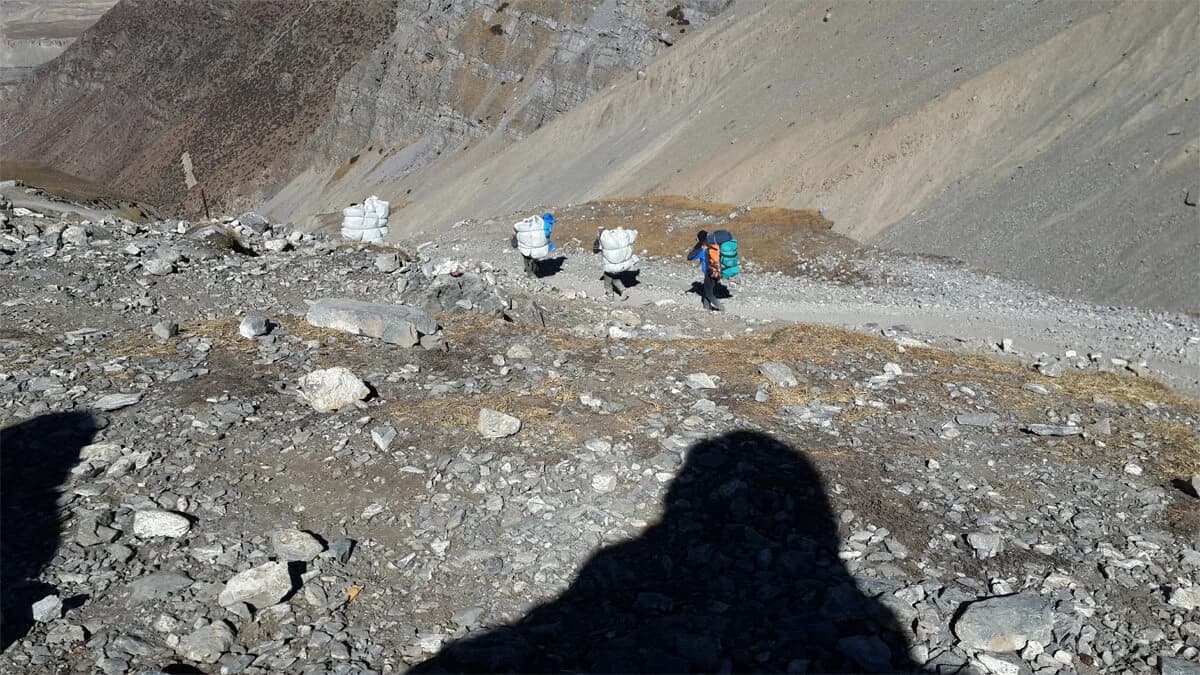
  • Trekking Guide and Trekking porter (Two participants porter = Maximum 25 kg of luggage)
  • Breakfast, Lunch, Dinner & accommodation during the trekking
  • Pokhara to Jomsom flight fare
  • Kathmandu to Pokhara round-trip tourist bus service
  • Sleeping bags, down jackets, duffel bags, and trekking sticks if required,
  • Trekking permit of National Park,
  • TIMS(Trekking Information Management System )
  • Insurance and equipment for the trekking staff
  • First aid kit
  • Farewell dinner in Kathmandu with a cultural program in a typical Traditional Nepali restaurant
Excludes
  • Personal expenses
  • Drinks, beverages, hot shower,
  • Travel insurance & International airfare,
  • Tips for Guide and porter (trekking staff)
  • Meals & hotel accommodation in Kathmandu (without itinerary )
Essential Information

Jomsom to Muktinath Distance

The Jomsom to Muktinath distance is around 18 to 23 km, depending on the road or walking route. The journey passes through Kagbeni before reaching Muktinath, with Jomsom at about 2,720 meters and Muktinath at around 3,800 meters. On foot, the journey takes roughly 4 to 5 hours, although the time depends on the route and how long you stop along the way.

By jeep, Jomsom to Muktinath usually takes around 1 to 1.5 hours in normal road conditions. The road makes the journey much easier than it used to be, but the rise from Jomsom to Muktinath is still substantial. For those walking, Kagbeni is the main stop between the two places.

Jomsom to Muktinath by Jeep

The Jomsom to Muktinath jeep tour covers about 20 to 25 km through the Kali Gandaki Valley. From Jomsom, the road goes through Kagbeni and Jharkot before reaching Ranipauwa below Muktinath Temple. The drive takes about 1 to 2 hours, depending on road and weather conditions.

The Jomsom to Muktinath by road route climbs from 2,743 m at Jomsom to nearly 3,800 m at Muktinath. Parts of the road are paved, while other parts remain rocky and uneven. A jeep is the common choice beyond Kagbeni, especially for the climb to Ranipauwa. This route is part of the Nepal trekking trails around Mustang, with Mustang trekking, Kagbeni, and the Muktinath pilgrimage all tied into the same journey.

Jomsom Muktinath Trek Weather

Jomsom weather is dry, sunny at times, windy and visibly cooler once the sun drops. Mustang lies behind the Annapurna and Dhaulagiri ranges in the Himalayan rain shadow, so it receives far less rainfall than Pokhara and the southern side of the Annapurna region. Around Jomsom and Kagbeni, the open Kali Gandaki Valley allows strong winds to move through the area, while dry air and strong sunlight can make daytime conditions feel quite different from the temperature suggests.

Muktinath weather is colder because the temple stands at about 3,800 meters. Temperatures fall with altitude, and the cold becomes more stronger after sunset and during windy conditions. Snow and freezing temperatures are possible during cold weather around Muktinath. Proper warm clothing is important even when the daytime sky is clear, particularly if you plan to spend time outdoors early in the morning or after sunset. 

Jomsom Muktinath Trek Route

The Jomsom Muktinath Trek route starts with a flight from Pokhara to Jomsom and follows the Kali Gandaki Valley to Kagbeni. From Kagbeni, the trail passes Ekle Bhatti and climbs toward Muktinath at about 3,800 meters. Along the way, you see the dry Mustang landscape, old village houses and mountain views.

For this 14 day itinerary, the trek continues after Muktinath to Marpha, Ghasa and Tatopani. It then heads toward Ghorepani, Poon Hill, Tadapani and Ghandruk before finishing at Nayapul. So this is more than a short Jomsom to Muktinath trek. It combines the dry landscapes of Mustang with the forests and villages of the Annapurna region. 

Jomsom Muktinath Trek Accommodation

The Jomsom Muktinath Trek accommodation includes hotels in Kathmandu and Pokhara and local lodges or teahouses during the trekking route. Jomsom has one of the widest choices of accommodation in Lower Mustang, while Kagbeni has smaller local lodges. At Muktinath, most trekkers stay around Ranipauwa, the village below the temple, where lodges and hotels are available close to the pilgrimage area.

Your itinerary continues through Marpha, Ghasa, Tatopani, Ghorepani, Tadapani and Ghandruk, where lodge and teahouse accommodation is available. Rooms commonly have beds, mattresses, blankets and pillows, while bathroom arrangements depend on the lodge. Hot showers, Wi Fi and charging facilities may be available at some places for an additional charge. Tatopani has natural hot springs near the village. Nights at Muktinath and Ghorepani can be cold, so carrying a sleeping bag is sensible even when blankets are provided.

Best Time for Jomsom Muktinath Trek

The Jomsom Muktinath Trek is possible through most of the year, but the conditions around Jomsom, Kagbeni and Muktinath are different from season to season. Mustang lies in the rain shadow of the Annapurna and Dhaulagiri ranges, so the weather is drier than in Pokhara and much of central Nepal. At the same time, strong afternoon winds around Jomsom, colder nights at higher elevations and changing flight conditions can affect your plans. April, May, October and early November are widely preferred for trekking season for jomsom Muktinath trek, although each period has its own advantages and limitations.

Muktinath Trek in Spring Season

March invites warmer days to Jomsom and the Kali Gandaki Valley, while April and May bring more greenery and spring flowers to the lower parts of the route. Kagbeni and Muktinath are much drier, with the rocky hills and traditional Mustang villages giving the area a very different appearance from the forested parts of the Annapurna region. Mountain views are mostly clear in spring, although the wind around Jomsom tends to become stronger in the afternoon.

April is a good month for combining the Muktinath Trek with a longer Annapurna trek itinerary. From Jomsom, the journey can continue toward Marpha, Ghasa and Tatopani before reaching the greener hills farther south. May is warmer during the day, but starting the walk early is advisable because the afternoon wind can make travel less comfortable around the Kali Gandaki Valley.

Muktinath Trek in Autumn Season

After the monsoon, the skies around Mustang become clearer and the mountains are easier to see. October brings dry walking conditions, pleasant daytime temperatures and clear views of Annapurna, Dhaulagiri and Nilgiri. Kagbeni, Jharkot, Ranipauwa and Muktinath also see more visitors during this period, including trekkers and pilgrims.

For the best month for Muktinath Trek, October would be my first choice. The days are comfortable for walking, the mountain views are good and the severe winter cold has not yet arrived. November can also be good, but temperatures drop quickly in the mornings and evenings, particularly around Muktinath at nearly 3,800 metres.

Muktinath Trek in Monsoon Season

Jomsom and Muktinath receive much less monsoon rain than places such as Pokhara because of the rain shadow created by the Annapurna and Dhaulagiri ranges. Much of Lower Mustang remains relatively dry during summer, so trekking around Kagbeni and Muktinath is still possible when other parts of Nepal are receiving heavy rainfall.

The main issue during these months is transportation. Flights from Pokhara to Jomsom depend on visibility and weather, while heavy rain farther south can affect roads leading toward Mustang. Anyone travelling during the monsoon should allow extra time for flights and road journeys rather than planning tight connections.

Muktinath Trek in Winter Season

Winter brings cold mornings and freezing nights to Jomsom, with much colder conditions around Muktinath. Jomsom can still have sunny days, but temperatures fall quickly after sunset, and snowfall is possible around Muktinath during periods of severe winter weather.

Warm Muktinath Trek clothes are important during these months. Thermal layers, a warm jacket, gloves, warm socks and a good sleeping bag are useful for the cold nights. Some lodges and transport services may also have limited availability in the coldest part of winter, so accommodation and travel arrangements should be checked before leaving Pokhara.

Overall, if you want to see Mustang at its best then October is the most reliable month for your trek.

Jomsom Muktinath Trek Packing List

Packing for the Jomsom to Muktinath route does not require a large amount of equipment, but the weather around Jomsom, Kagbeni and Muktinath can change quickly. The Kali Gandaki Valley is dry and exposed, with strong wind around Jomsom, while Muktinath is much colder at nearly 3,800 metres. Your Jomsom Trekking in Nepal essentials should therefore focus on warm layers, wind protection, sun protection and comfortable equipment for the Nepal trekking trail.

  • Good trekking shoes with a firm grip
  • Thermal layers and a warm jacket
  • Windproof and waterproof outer jacket
  • Comfortable trekking trousers
  • Warm socks and gloves
  • Sun hat, sunglasses and sunscreen
  • Small daypack
  • Reusable water bottle
  • Personal medicines and basic first aid
  • Headlamp
  • Sleeping bag for cold nights
  • Trekking poles if you prefer extra support on rocky paths

These are the main items needed for the route. Add warmer layers in late autumn and winter, while lighter clothing with good wind and sun protection is enough for warmer months.

Jomsom Muktinath Trek Food

Dal bhat, Thakali set, momo, noodles and Tibetan style bread are common choices in Jomsom, Kagbeni and Muktinath. A traditional Thakali set comes with rice, lentils, vegetables, curry and pickles, while buckwheat and potato dishes are also part of local Mustang food. Marpha is known for its apple orchards, and fresh apples, dried apples and other apple products can be found around the village during the harvest season.

Restaurants and lodges in Kagbeni and Muktinath serve thukpa, momo, noodles, soup and basic breakfast dishes alongside Nepali meals. Food in Muktinath is more limited than in Jomsom, although the main dishes needed during a short stay are readily available. Tea, coffee and warm soup are common, particularly in the colder mornings and evenings, and local Thakali cuisine is worth trying whenever it is available.

Can Beginners Do the Jomsom Trek?

The Jomsom Muktinath Trek for beginners is possible, but the full 14 day itinerary asks for decent walking fitness. Jomsom is at 2,743 metres and Muktinath reaches 3,802 metres. The first high altitude days take you from Jomsom to Kagbeni and then to Muktinath. After Muktinath, the trail drops through Marpha, Ghasa and Tatopani before climbing toward Ghorepani and Poon Hill.

The Muktinath Trek altitude is the main point to take seriously. The five to seven hour walking days also add up across the trip, particularly from Tatopani to Ghorepani and during the Poon Hill morning hike. The trek reaches its highest point at Muktinath, while the journey later moves through the dry Kali Gandaki Valley, Marpha apple country and the forested villages around Ghorepani and Ghandruk. This makes the full itinerary quite different from a short Muktinath Trek for beginners focused only on Jomsom, Kagbeni and Muktinath.

Altitude Sickness on the Jomsom Muktinath Trek

Altitude sickness on Muktinath Trek can become a concern after arriving in Jomsom at 2,743 metres and moving toward Kagbeni and Muktinath at 3,802 metres. Headache, dizziness, nausea and unusual tiredness are signs to watch for. Feeling slightly tired after walking is normal; symptoms that keep getting worse are not.

Good Muktinath Trek acclimatization means giving your body time to deal well with the altitude rather than pushing ahead to stay on schedule. Eat properly, drink enough water and avoid alcohol at higher elevations. Tell your guide when symptoms appear, and descend if they become serious. Jomsom Muktinath Trek safety matters more than reaching Muktinath at a fixed time.

Travel Insurance for Jomsom Muktinath Trek

A Muktinath Trek can be affected by circumstances outside the trekking itinerary, particularly when flights, road journeys or a scheduled departure have to be changed unexpectedly. Travel insurance can help protect the money already spent on the trip when covered circumstances lead to cancellation, interruption or additional travel arrangements. For Nepal trekking insurance, check the policy wording for these travel related situations before purchasing rather than choosing a policy based only on its medical cover.

It is also worth keeping receipts, booking confirmations and other travel documents throughout the journey. These can become important when making a claim after an unexpected change to the trip. Your policy should cover the full travel period and the arrangements included in your Jomsom Muktinath Trek, from the initial journey in Nepal through your return home.

Best Alternatives to the Mustang Trek

The Annapurna Circuit Trek is a good alternative to the Mustang Trek if you want more high mountain walking and a longer journey through the Annapurna region. The route crosses Thorong La and passes through Manang and decends toward Mustang. The Nar Phu Valley Trek takes you into a much more remote part of the Annapurna region, with Tibetan influenced villages, ancient Buddhist culture and the high Kang La Pass. It is a harder trek than Jomsom Muktinath.

The Annapurna Base Camp Trek is a shorter option with close views of the Annapurna range, forest trails and Gurung villages. If your main interest is the dry landscape and ancient culture of northern Mustang, the Upper Mustang Trek takes you beyond Kagbeni toward Lo Manthang, with old monasteries, traditional villages and distinctive desert scenery. Upper Mustang is a restricted trekking area and requires a separate trekking permit.

FAQs

Yes. Pokhara is the practical starting point for the trekking part of the journey because the flight to Jomsom leaves from Pokhara. Our standard 14 day program begins in Kathmandu, but the itinerary can be changed for travelers who have already visited Kathmandu. Starting from Pokhara also gives you more time for the Pokhara to Jomsom trek and the Mustang side of the journey.

Yes, a short Muktinath Trek can be arranged by reducing the walking days or using road transport for part of the route. You can visit Jomsom, Kagbeni, and Muktinath and return by jeep instead of continuing through Marpha, Tatopani, Ghorepani, and Ghandruk. 

Yes. Kagbeni is worth more than a short stop for lunch. The old Kagbeni village has narrow stone lanes, traditional houses, courtyards, and Kag Chode Thubten Sampheling Gompa. It also lies at an important point between Lower Mustang and the route toward Upper Mustang. Staying overnight gives you more time to explore the village and its surroundings.

Yes. An extra night in Marpha can be added to a private Marpha village trek itinerary. Marpha is known for its whitewashed houses, stone paved lanes, apple orchards and Thakali culture. It is a pleasant place to spend more time before moving ahead.

Yes. A Mustang Jeep Tour can be added before or after the Jomsom Muktinath Trek, depending on your available days. Jeep travel allows you to reach places farther into Mustang that are difficult to include on foot within the 14 day trekking itinerary. The route can be customized to include areas such as Kagbeni, Muktinath, Marpha, and other parts of Mustang. Road conditions and travel time should be checked before fixing the final itinerary.

Yes. The journey can be arranged by road from Kathmandu to Pokhara rather than taking a flight. Bandipur can also be considered when road travel time allows. This makes the Kathmandu Pokhara road trip part of the holiday rather than treating it only as transportation before the Jomsom flight.

Yes. A private itinerary can be arranged for solo travelers, couples, or small groups. Solo trekking in Nepal on this route gives you more freedom to adjust walking days, add nights in villages such as Kagbeni or Marpha, and change transportation arrangements. A private trekking guide in Nepal can also provide information about the villages, local culture, and religious sites along the route.

Because it gives you a bit of everything in one trip. You get the dry landscapes around Jomsom and Kagbeni, Muktinath, Marpha village, the Kali Gandaki Valley, Tatopani, and later the forests and mountain views around Ghorepani and Ghandruk. It is a good trekking in Nepal option when you want more than just a visit to Muktinath.

Yes. You can do the Jomsom Trek without previous trekking experience. The route is well established, but Muktinath is at nearly 3,800 metres, so altitude is the main thing to take seriously. You can also choose a shorter Jomsom Muktinath Trek if you do not have enough time for the full itinerary.

Yes. You can extend the Jomsom Trek by adding extra days in places like Kagbeni or Marpha, or continue farther into Mustang. You can also add an Upper Mustang Trek or a Mustang Jeep Tour if you have more time.

20 years of Adventure
Why Travel with Nepal Trekking Routes?
We Care for Your Safety
Nepal Trekking Routes always focus on safety, and satisfaction of our valued clients. Our Trekking guides are highly experienced and trained to operate various group trekking trip in high Himalaya.
Provide Financial Protection
NTR prioritize healthy financial safety for clients, ensuring proactive safeguarding of client interest. Our commitment strengthens our role as trusted partners maintaining standards with dedication and Excellence.
100% Local Guide
100% Local Guide
Traveler looking for experience authentic insights through trekking in Nepal NTE offer your 100% local guide who help you to experience unique perspective ensuring and enriched journey customize to your interest.
Personalized Service
We always provide one guide and one porter to two guests in order to meet our standard of providing standard service. Impeccable hospitality and quality services are guaranteed while traveling with us.
Know More
Book Now