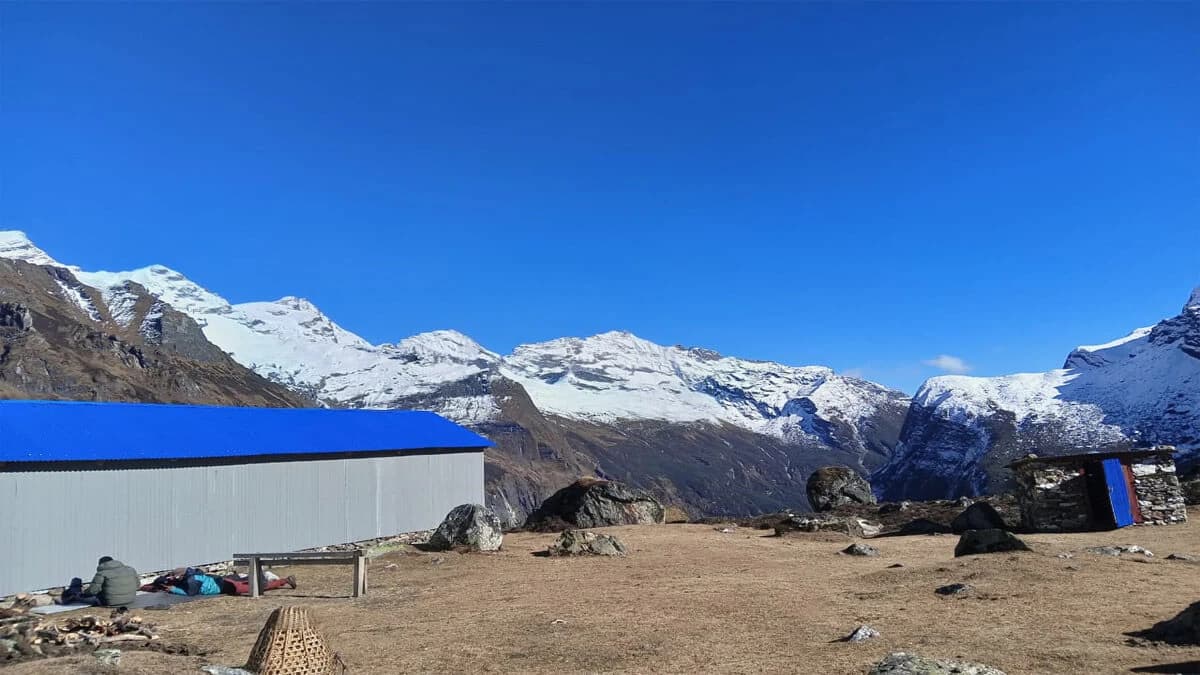
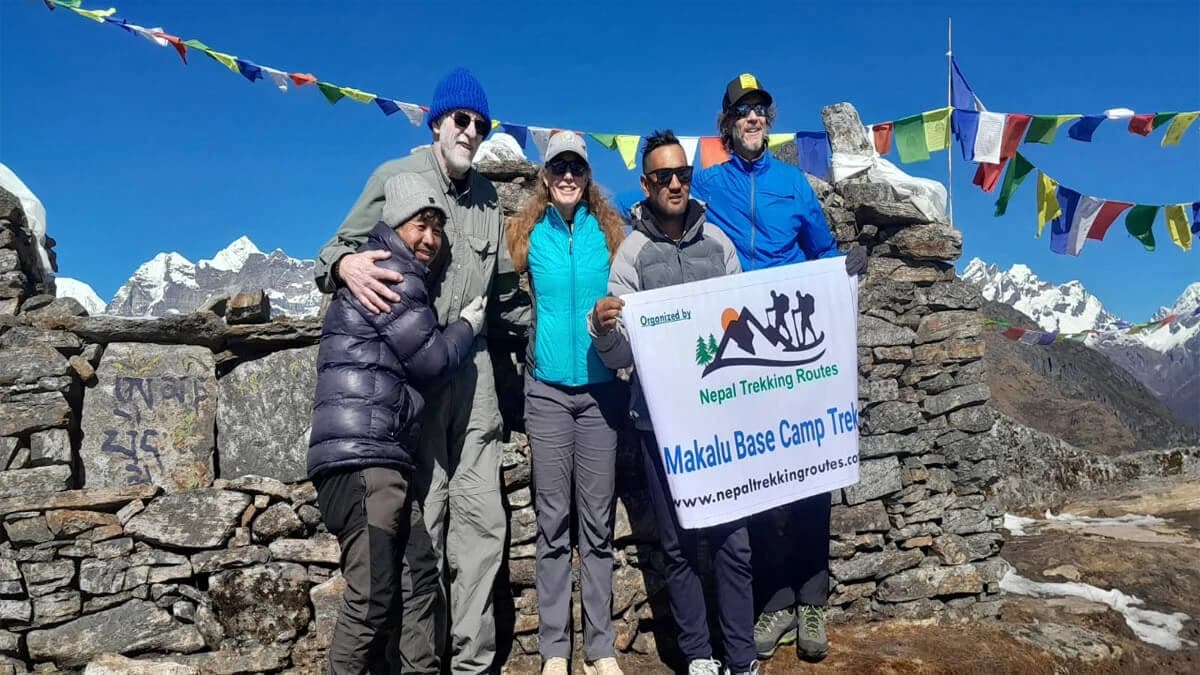
Makalu Base Camp Trek

Makalu Base Camp Trek

Duration23 Days
Trip GradeChallenging
CountryNepal
Maximum Altitude5150 M
Group Size1-12
StartsKathmandu
EndsKathmandu
ActivitiesTrekking/Hiking
Best TimeMarch to May & Sept to Dec

The Makalu Base Camp Trek is a high altitude trekking package in eastern Nepal that takes you to the base of Mount Makalu (8,463 m), the fifth highest mountain in the world. Starting from Tumlingtar, the route passes through Makalu Barun National Park and reaches Makalu Base Camp via places like Num, Tashigaon, and Khongma Danda.

The Makalu trek offers close views of Mount Makalu, Chamlang, Baruntse, and other Himalayan peaks while introducing trekkers to the remote landscapes and cultures of the Makalu region. Compared with popular trekking routes like Everest Base Camp and Annapurna Circuit, this trek sees fewer visitors and is better suited for trekkers with previous mountain walking experience.

Our Makalu Base Camp Trek package is prepared for those looking to explore one of Nepal’s more demanding trekking areas with organized arrangements. It includes a planned route, experienced trekking guide, necessary permits, accommodation, meals, and trekking support throughout the journey. 

Makalu Base Camp Trek Overview

Experience the Makalu Base Camp Trek, one of the remote trekking routes in Nepal that takes you to the base of Mt. Makalu (8,463 m), the fifth highest mountain in the world. Located in eastern Nepal, this trek follows less crowded trails through the Makalu region and offers impressive views of the surrounding Himalayan peaks.

Located in the eastern Himalayas of  Makalu Base Camp Trekking in Nepal is a great choice for trekkers looking for a quieter alternative to the popular Everest and Annapurna trekking regions. The trek is more suitable for experienced trekkers who are comfortable with remote trails, high altitude, and changing mountain conditions.

While walking along the silent Nepal Trekking trails, you can enjoy views of Mt. Makalu, Mt. Everest, Mt. Lhotse, Mt. Chamlang, and other Himalayan peaks while passing through the remote landscapes of the Makalu region.

The Makalu Barun National Park is another major highlight of the trek, known for its rich biodiversity, rare wildlife, and diverse plant species. Trekking through this protected area adds a unique natural element to the Makalu Base Camp Trek.

The Makalu Barun National Park is rich in biodiversity, with around 315 species of butterflies and more than 400 bird species recorded in the area. The variety of forests, valleys, and mountain habitats makes it a great place to observe Himalayan wildlife and plant life during the trek. The park is also home to 3,128 plant species, 43 reptiles, 16 amphibians, 78 fish species, and 88 mammal species, highlighting the ecological diversity of the Makalu region.

The major plant species found here are rhododendrons, primroses, orchids, juniper, and fir. You can find 30 species, and 25 species of rhododendron flowers of Nepal. If you do Makalu Barun Trek in spring, the entire region looks colorful.

The Makalu region is home to Rai and Limbu communities who have preserved their traditional culture, lifestyle, and customs for generations. Meeting these communities adds a cultural aspect to the Makalu Base Camp Trek experience.

Makalu Base Camp Trek highlights

  • Follow the traditional Makalu Base Camp Trek route through the eastern Himalayas, away from the crowded trails of Nepal’s popular trekking regions
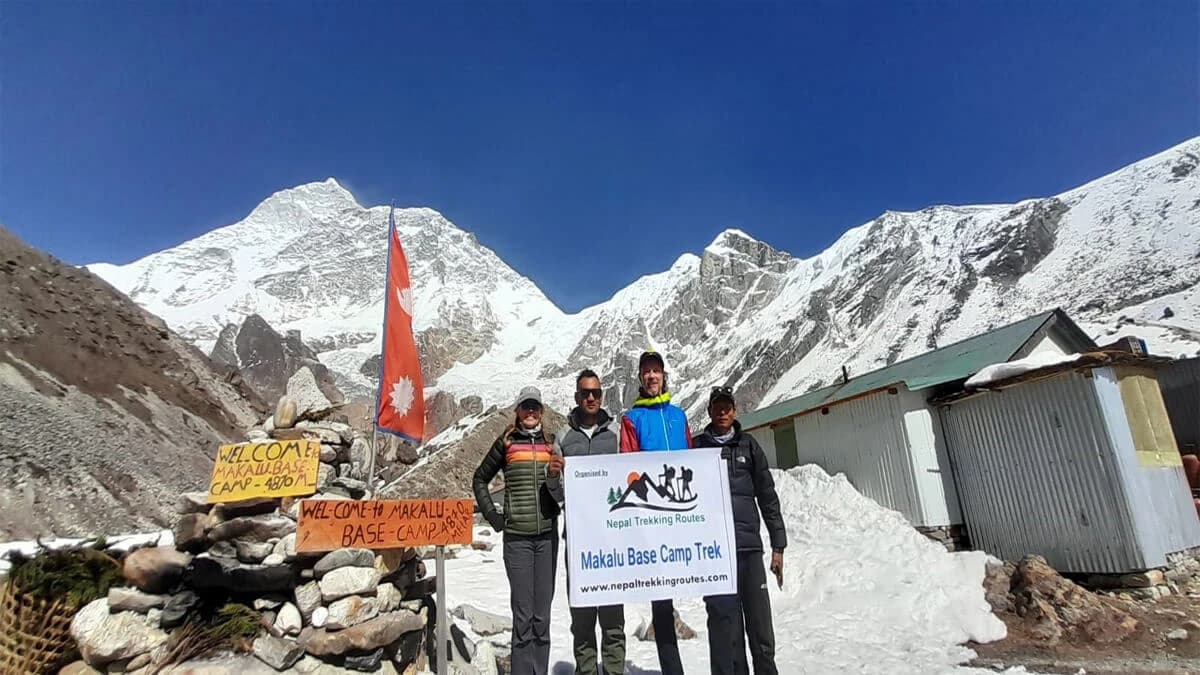
  • Reach Makalu Base Camp at around 4,870 m and enjoy views of Mt. Makalu, Chamlang, Baruntse, and other surrounding peaks
  • Explore the diverse landscapes of Makalu Barun National Park, from lower forest areas to high alpine terrain
  • Cross mountain passes including Keke La and Shipton La while trekking through the remote sections of the Makalu region
  • Visit villages such as Num and Tashigaon to experience the culture and daily lifestyle of Rai and Limbu communities
  • Spend time in the Barun Valley, known for its natural beauty and rich biodiversity
  • Experience a quieter trekking route compared with famous journeys like Everest Base Camp and Annapurna Circuit
  • Stay in local teahouses along the lower sections of the route, with camping required in some higher and more remote areas
  • Take on one of Nepal’s demanding high altitude treks combining mountain views, cultural encounters, and the unique landscapes of eastern Nepal
  • A different experience from that of other popular trekking regions like Everest, Annapurna, and Manaslu Circuit trekking in Nepal

Makalu Base Camp Trek Itinerary

Our 21 Days Makalu Base Camp Trek itinerary begins with your arrival in Kathmandu, followed by a flight to Tumlingtar and a drive to Num. From here, the trek continues through Seduwa, Tashi Gaun, Khongma Danda, Mumbuk, Nehe Kharka, and Sherson before reaching Makalu Base Camp (4,870 m) on Day 10. An acclimatization day at the base camp is included before the return trek.

The return follows Balung, Pukuwa, and Bumling before ending in Tumlingtar for the flight back to Kathmandu. Along the way, you cross Keke La and Shipton La, walk through Makalu Barun National Park, and spend time in the Barun Valley, covering the main locations on the classic Makalu Base Camp route.

Makalu Base Camp Trek Cost for 2026 and 2027

The 21 Days Makalu Base Camp Trek cost starts from USD 1,995 per person. Solo trekkers pay USD 2,290, groups of 2 to 5 people pay USD 1,995 per person, and groups of 6 to 12 people pay USD 1,890 per person. The lower group rate is possible because transportation and operational costs are shared.

The Makalu Base Camp Trek price reflects the logistics of trekking in a region with limited road access and fewer facilities than Nepal's more established trekking areas. The package includes domestic flights, airport transfers, ground transportation, trekking permits, accommodation, meals during the trek, and a licensed trekking guide. A detailed list of inclusions and exclusions is also provided, you can check that out.

How to Reach Makalu Base Camp

There is no direct road to Makalu Base Camp, so reaching the trailhead requires both a domestic flight and a road journey. Most local tour operators arrange a flight from Kathmandu to Tumlingtar, followed by a drive to Num, where the trek begins. This is the quickest and most practical way to reach the Makalu region.

Traveling overland from Kathmandu is also possible, but it adds several hours of road travel before the trek even starts. For this reason, most trekkers choose to fly to Tumlingtar and continue by road to Num before beginning the Makalu Base Camp Trek.

Makalu Base Camp Trek Difficulty

The Makalu Base Camp Trek is not recommended as a first Himalayan trek as it is a challenging trek in Nepal. The route reaches Makalu Base Camp (4,870 m) and includes several nights above 3,500 m, where the lower oxygen level has a much greater effect than many trekkers expect. Although the daily walking time is usually 5 to 7 hours, the elevation gain over consecutive days is what makes this trek more difficult.

The route crosses Keke La (4,170 m) and Shipton La (Tutu La, 4,200 m) before entering the Barun Valley. The climb from Tashi Gaun to Khongma Danda is one of the first days when trekkers begin to feel the altitude because of the significant increase in elevation. Spending enough time acclimatizing, drinking plenty of water, and avoiding unnecessary exertion at higher elevations all help reduce the risk of altitude sickness.

Makalu Base Camp Trek Altitude Profile

The Makalu Base Camp Trek altitude increases from the Arun Valley toward the upper Barun Valley as the route moves closer to Mount Makalu. The trek begins at a lower elevation in Tumlingtar and reaches Makalu Base Camp at 4,870 m after passing through villages and higher mountain stops along the trail.

  • Tumlingtar 428 m
  • Num 1,560 m
  • Seduwa 1,500 m
  • Tashi Gaun 2,100 m
  • Khongma Danda 3,500 m
  • Mumbuk 3,570 m
  • Nehe Kharka 3,700 m
  • Sherson 4,615 m
  • Makalu Base Camp 4,870 m

Makalu Base Camp Trek Permits

The Makalu Base Camp Trek permits are required before starting the trek as the trail passes through Makalu Barun National Park and the Makalu Rural Municipality area.

The required permits include:

  • Makalu Barun National Park Entry Permit
  • Makalu Rural Municipality Permit

Nepal Trekking Routes arranges the necessary permits before the trek begins. Trekkers need passport details and photographs for the permit process, and valid documents should be carried throughout the trek.

Makalu Base Camp Trek Map

The Makalu Base Camp Trek map shows the journey from Tumlingtar to Makalu Base Camp, covering the main villages, valleys, and mountain passes along the way. Starting from the Arun Valley, the trek continues through Num, Seduwa, Tashigaon, Khongma Danda, Mumbuk, Nehe Kharka, and Sherson before reaching the base camp area.

A major part of the trek takes place inside Makalu Barun National Park, with the landscape changing from forest areas and villages to the upper Barun Valley. The journey includes crossings of Keke La and Shipton La while offering views of Mount Makalu, Chamlang, Baruntse, and other Himalayan peaks.

After reaching Makalu Base Camp, the return follows Balung, Pukuwa, and Bumling before ending at Tumlingtar. The exact route may differ slightly depending on the selected package and Nepal trekking plan.

Is Makalu Base Camp Trek Safe?

Yes, the Makalu Base Camp Trek is safe for trekkers who prepare properly for the altitude, weather, and conditions of the region. The main safety concern is the elevation, with Makalu Base Camp located at 4,870 meters, where some trekkers may experience symptoms of altitude sickness.

Understanding altitude sickness prevention Nepal is important before starting the trek. A gradual walking speed, enough rest, proper hydration, and knowing early symptoms such as headache, nausea, dizziness, or unusual tiredness can help reduce risks at higher elevations.

The Makalu trekking in Nepal also requires preparation because some areas have fewer facilities compared with Nepal’s more developed trekking regions. Carrying necessary medication, suitable clothing, and high altitude trekking insurance with emergency evacuation coverage is strongly recommended.

Communication access and charging options are not available everywhere, so trekkers should plan accordingly before entering sections with fewer services. That is when hiring licensed trekking guide for your trek in nepal is necessary. 

Who is Makalu Base Camp Trek suitable for?

This trek is suitable for travelers who have some experience with multi-day mountain trekking and want to explore Makalu region trekking in eastern Nepal. The route reaches 4,870 meters, so preparation for altitude, changing weather, and basic mountain conditions is important before starting.

It is a good option for people interested in eastern Himalaya trekking, traditional villages, and experiencing a less-developed trekking area of Nepal. Previous high altitude trekking experience will be very helpful, especially for those who have not trekked above 4,000 meters before.

Beginners can attempt this journey with proper fitness training and preparation, but it is more suitable for travelers who are comfortable with longer trekking days and high altitude trekking preparation.

This trek is ideal for:

  • Experienced trekkers looking for less crowded trekking routes in Nepal
  • Travelers interested in Nepal mountain trekking and local Himalayan communities
  • People who can adapt to basic accommodation and limited services in some parts
Itinerary

This is a 21 day Makalu Base Camp Trek itinerary that begins with a flight from Kathmandu to Tumlingtar, followed by a drive to Num where the Makalu walking trail starts. The trek continues through Tashigaon, Khongma Danda, Mumbuk, Nehe Kharka, and Sherson before reaching Makalu Base Camp at 4,870 meters.

The journey covers the highlights of the Makalu region, including Makalu Barun National Park, the Barun Valley, Keke La and Shipton La passes, Rai and Sherpa villages, and mountain views of Makalu, Chamlang, and Baruntse.

Nepal Trekking Routes can customize this itinerary with changes to the duration, route, and services to match your trekking plan. 

Trip PlanExpand All

Upon your arrival, the crewmember of the agency welcomes you at the Tribhuvan International Airport. Afterwards, you are taken to the hotel locate nearby Thamel Bazaar. As soon as you are fresh, you can roam around Thamel where you can see the foreign tourists from all around the world.

Accommodation: Deluxe Hotel

The tour guide takes you for an excursion around Kathmandu Valley. You will go around the World Heritage Sites recognized by the UNESCO. Until other provision, you visit Swayambhunath Stupa (the Monkey Temple), Patan Durbar Square, Pashupatinath Temple and Bouddhanath Stupa.

There are still three more such cultural sites in the Kathmandu Valley and other three are out of the Capital City. If the itinerary supports, you can also travel around Kathmand Durbar Square, Bhaktapur Durbar Square and Changunarayan Temple.

After you come back to the hotel after the guided tour around Kathmandu, the team leader meets you there. Then after, he will give briefing about Makalu Base Camp trek itinerary and its challenges.

Meals: BreakfastAccommodation: Deluxe Hotel

After breakfast, you will to the Kathmandu Airport to take Kathmandu Tumlingtar flight. You   reach Tumlingtar, the gateway to Makalu Base Camp trek, in an hour. The mountain flight gives you the enchanting view of the Great Himalayas, and deep valleys surrounded by the green forests.

Then, you formally begin the trekking to Makalu region from Tumlingtar. You walk past a village Chilchila by ejoying the picturesque villages and Himalayan forests. In the end, you reach Num for the night station.


Max Altitude: 1490 M Meals: B.L.DDuration: 5 Hrs
B= Breakfast, L= Lunch, and D= Dinner

Following the banks of the Arun River valley, you march ahead. you will walk past the cultivated farmlands with different crops and vegetables. The trekking from Num to Seduwa takes nearly 7 hours by walking through the steep uphill and downhill trails.

From Seduwa, you enter into Makalu Barun National Park and Conservation Area. Therefore, you should take a permit there. In the leisure time, you can explore the beauty of nature and cultural diversity.


Max Altitude: 1460 M Meals: B.L.DAccommodation: Tea HouseDuration: 5 to 6 Hrs

Early in the morning, you descend along the trail that runs from between the Ispuwa Khola and the Kasuwa Khola. The track moves further alongside the paddy cultivation area and beautiful villages. By enjoying the spellbinding wilderness of Makalu region, you reach Tashi Gaun. It is a beautiful village that serves with the astounding panorama of the Himalayas.


Max Altitude: 2070 M Meals: B.L.DAccommodation: Tea HouseDuration: 6 to 8 Hrs

You begin the trip immediately after having breakfast. The trail stretches along with the grazing meadows of the alpine region. While measuring the rocky trail, you can see the herds of yak and sheep munching the green grass.

The dense forests of oak and rhododendron safeguarding such meadows make the journey more fascinating. By crossing the stone-paved trail until the top of a ridge, you reach Khongma Danda. Enjoy the appealing view of the nearby forests inhabited by the diverse animals and birds. Moreover, the sunset view of the surrounding is equally worthy of observing.


Max Altitude: 3470 M Meals: B.L.DAccommodation: Tea HouseDuration: 6 to 7 Hrs

Today’s trekking is short, yet more challenging as you have to cross a couple of passes above 4,000m. The trail moves along the dense woodlands offering the alluring outlook of the snowcapped peaks. The sight of two natural lakes: Thulo Pokhari and Sano Pokhari adds up to the beauty of the trip.

You should go across Keke La Pass (4,230m) and Tutu La Pass (4,200m). Tutu La Pass is also known as Shipton’s Pass as it was first conquered by Eric Shipton in 1954. The view from these passes are beyond description!

The environment is made up of pine, birch, hemlock and rhododendron forests.  You might have the occasional glimpses of the Himalayan animals and birds as well. When you get to Mumbuk, you end up today’s travel.


Max Altitude: 3570 M Meals: B.L.DAccommodation: Tea HouseDuration: 6 Hrs

The trail moves along the Barun Khola banks and then through some meadows. Some of the sections of the track may be slippery as it lies in the damp side. You have to walk being properly careful to avoid the possible accidents.

On the way, you might also encounter some herds of yaks and sheep grazing in these grassy lands. After you leave Tamatan Kharka and Yangri Kharka, you arrive at Nehe Kharka.


Max Altitude: 3000 M Meals: B.L.DAccommodation: Tea HouseDuration: 6 Hrs

Today’s trekking trail moves along the large prayer wall reflecting Buddhist culture in Makalu region. As the altitude increases, the density of the forests decreases accordingly.

Also called Makalu Lower Base Camp trek rewards you with the rarely magnificent view of the Barun Glacier and Mt. Makalu (8,481m). You move further enjoying the meadows with yaks and sheep grazing in the wonderful reflection of Mt. Baruntse to reach Sherson.


Max Altitude: 4165 M Meals: B.L.DAccommodation: Tea HouseDuration: 7 Hrs

This is the most awaited day as you are going to reach Makalu Base Camp (4,870m). The route follows the Barun Khola banks and a few small passes as well. You will have the captivating outlook of the eight-thousanders of the Eastern Himalayas.

From Makalu Base Camp, you have the panoramic view of Arun Valley, landscapes covered with dense forests and snow-clad peaks. You will also realize the sense of victory over the top  destination in the Himalayas.


Max Altitude: 4870 M Meals: B.L.DAccommodation: Tent/Shepherd HouseDuration: 7 Hrs

To witness the beautiful sunrise view from Makalu Base Camp, you should wake up early in the morning. The output of the challenging off the beaten path trekking to Makalu region comes into your memory.

From here, you also come to see the snowy peaks of the Everest region including Mt. Everest (8,848m). Later in the day, you can take short side trips around Makalu Base Camp. The worth having a look into are the glaciers, small ponds and waterfalls including forests.


Max Altitude: 4870 M Meals: B.L.DAccommodation: Tent/Shepherd House

After storing the lifelong memory in the camera and the mind, you descend through the trail you passed a couple of days back. The splendid sight of Mt. Everest region and dense forests inhabited by birds and animals make the retreat trip more rewarding. Walking for nearly 7 hours, you arrive at Nehe Kharka to wrap up the trekking today.


Meals: B.L.DAccommodation: Tea HouseDuration: 7 Hrs

After breakfast, you begin to descend towards Mumbuk by enjoying the same old view of the Himalayas and green forests. As the trekking down is faster, you cover a comparatively longer distance today.


Meals: B.L.DAccommodation: Tea HouseDuration: 7 Hrs

You end up the trip to Khongma Gaun after walking the downhill trail for about 6 hours.


Meals: B.L.DAccommodation: Tea HouseDuration: 6 to 8 Hrs

After breakfast, you begin the trek up to Tashi Gaun and spend the night there.


Meals: B.L.DAccommodation: Tea HouseDuration: 5/6 Hrs

By walking past the Kasuwa River Valley, you continue the trip along the Arun River banks. While moving ahead, you go across Mulgaun, which has cultivated farmlands with corn and barley.

Running along the rugged trail, you reach Balung Village in the end of the day. This is a beautiful village populated by Rai and Kshetri ethnic people. The friendly people have been living in the best of harmony for ages.


Max Altitude: 760 M Meals: B.L.DAccommodation: Tea HouseDuration: 6 Hrs

Following the banks of the Ishpuwa Khola and crossing a few suspension bridges, you reach Chayang. It is a Rai village where people follow Kirant religion. Then, on the way, you walk past Parangbu village situated on the Arun River banks. You will stay at Pukuwa Village by enjoying the wilderness and beautiful landscapes.


Max Altitude: 550 M Meals: B.L.DAccommodation: Tea HouseDuration: 5 Hrs

After having breakfast, you continue your journey through a trail that passes along dense forests and steep cliffs. En route, you come to go across Tome village in the Arun valley region. By following the Sankhuwa River banks, you will reach Bumling, a Kshetri village to end the trekking today.


Meals: B.L.DAccommodation: Tea HouseDuration: 5 Hrs

Today is the last day of trekking in Makalu region and perhaps the shortest duration as well. Following the rugged trail moving uphill and downhill all the way through the dense forests, you reach Tumlingtar. Enjoy the trekking as far as you can. You can also make a celebration by making party with your fellow travelers.


Meals: B.L.DAccommodation: Tea HouseDuration: 6 Hrs

You fly back to Kathmandu from Tumlingtar after having breakfast. After landing at the Kathmandu Airport, you will go to the hotel. In the daytime, you can go around the market to purchase necessary stuffs.

You can also take rest throughout the day at the hotel or even party with the fellow travelers. In the evening, the agency invites you to farewell dinner at a cultural restaurant around Thamel. You will really enjoy the cultural shows of the restaurant.


Meals: BreakfastAccommodation: Deluxe HotelDuration: 45 Minutes Flights

The crewmember of the agency escorts you up to the Kathmandu Airport as per the flight schedule. We hope you enjoyed Makalu Base Camp trek very much with Nepal Trekking Routes.

Meals: Breakfast
Plan An Amazing Private and Tailor-Made HolidaysNot satisficed with this itinerary? Share your idea with our travel Expert. We make your dream come true.
Customize Trip
Cost Details
Includes
  • Airport pick-up and drop off service ,
  • Trekking Guide and Trekking porter (Two participant=1 porter =Maximum 25 kg of luggage) Porter is not include for solo traveler
  • Breakfast, accommodation during the trekking and Kathmandu following iteniry
  • Sleeping bags, down jackets, duffel bags and trekking sticks if required,
  • Trekking permit of National park,
  • TIMS(Trekking Information Management System )
  • Flight fare Kathmandu to Tumlingtar and Tumlingtar to kathmandu
  • Insurance and equipment for the trekking staffs
  • First aid kit
  • Farewell dinner in Kathmandu with cultural program in typical Traditional nepali resturant
Excludes
  • Nepal arrival Visa fee
  • Travel insurance & International airfare,
  • Bar bill, Drink,
  • Things which is not mention in the include section
  • Tips for trekking crew member
Route Map
Makalu Base Camp Trekking Map
Essential Information

Makalu Base Camp Trek Weather by Month

The Makalu Base Camp Trek weather changes as the route moves from the lower Arun Valley toward Mount Makalu at 4,870 m. April, October, and November are the months most trekkers choose for this route, while the monsoon and colder winter months need more careful planning.

March: March is the start of the spring season in the Makalu region. Days become warmer in the lower areas, but mornings and nights remain cold around the higher parts of the route. Snow may still be present near the upper sections.

April: April is one of the best months for the Makalu Base Camp Trek in spring. Rhododendrons usually bloom in the lower areas of Makalu Barun National Park, and the weather is generally suitable for reaching the base camp.

May: May remains a good month, especially during the first half. Lower elevations become warmer, while clouds may appear more frequently as the monsoon season approaches.

June: June brings increasing rainfall to eastern Nepal. Wet trails and cloudy conditions become more common as the monsoon begins.

July: July is one of the wettest months in the Makalu region. Heavy rainfall can affect trail conditions, and mountain views are less frequent during this period.

August: August continues the monsoon period with regular rainfall. Trekking is possible, but weather conditions can change quickly.

September: September is a transition month. Early September may still receive rainfall, while the later part of the month becomes more suitable for trekking in Nepal.

October: October is one of the most popular months for the Makalu Base Camp Trek in autumn. Many trekkers choose this period because rainfall is lower and the chances of mountain views are higher.

November: November is another excellent month for the trek. Temperatures become colder, especially near Makalu Base Camp, but the month is known for good visibility and fewer weather interruptions.

December: December brings colder winter conditions to the higher parts of Makalu trekking trail. Nights become very cold near Sherson and Makalu Base Camp, and snowfall can affect parts of the route.

January: January is the coldest period for the Makalu Base Camp Trek in winter. Freezing temperatures and snow around higher elevations can make the route more difficult.

February: February remains cold in the upper sections and temperatures slowly begin to improve toward the end of the month.

The best season for Makalu Trek is spring (March to May) and autumn (September to November). April is a great choice for trekkers interested in rhododendron blooms around Makalu Barun National Park, while October and November are commonly selected for lower rainfall and better chances of mountain views.

Food and Accommodation During Makalu Trek

The Makalu Base Camp Trek accommodation is different from the more developed trekking areas of Nepal. Tea houses are available in villages like Num, Seduwa, and Tashi Gaun, while the upper part of the trek has fewer places to stay. At Makalu Base Camp, overnight stays are arranged in tents or available local shelters according to the itinerary.

Meals on the trek are prepared at tea houses and camps. Dal bhat, noodles, soups, rice, potatoes, eggs, and simple breakfast items are the common choices. Food availability becomes more limited near Makalu Base Camp because everything required for the higher area has to be transported from lower villages.

For travelers familiar with Nepal trekking, Makalu feels more remote than Everest Base Camp or Annapurna. Facilities such as WiFi, charging, and hot showers are available only at some stops, so trekkers should expect fewer services during the upper part of the trek.

What to Pack for Makalu Base Camp Trek: Essential Gear and Preparation

The Makalu Base Camp Trek preparation should focus on the equipment needed for colder nights, fewer shopping options, and the long distance between supply points on the Makalu trail. Most personal trekking gear should be arranged before leaving Kathmandu, as finding replacements during the trek can be difficult.

Important items to pack:

  • Down jacket and warm layers for overnight stays around Makalu Base Camp
  • Sleeping bag suitable for cold mountain temperatures
  • Trekking boots with good grip for the Makalu trekking trail
  • Trekking poles for balance and comfort during the trek
  • Waterproof jacket and backpack cover for rain and snowfall
  • Power bank and headlamp because charging facilities are limited in some areas
  • Sunglasses, sunscreen, and personal medicine for high altitude trekking
  • Passport, permits, and travel insurance documents required before starting the trek

A practical Makalu trekking gear setup is more useful than carrying unnecessary items. The Makalu Barun National Park trek has fewer places to buy missing equipment, so preparing the essentials in advance is an important part of the trekking plan.

Can you do Makalu Base Camp Trek without a Trekking Guide?

The Makalu Base Camp Trek without a guide is a question many trekkers ask before planning their trip. This trek requires proper preparation for permits, transportation, accommodation, and other arrangements before and during the trek.

Experienced trekkers with strong planning skills may consider completing the trek independently, but many international trekkers choose guided trekking in Nepal for help with local communication, permit arrangements, accommodation, and on trail support.

Before planning an independent trek, trekkers should confirm the latest permit and guide requirements for the Makalu region, as Nepal trekking regulations can change.

An experienced Makalu trekking agency can help organize the all the required arrangements before and during the trek, especially for permits, transportation, accommodation, and local coordination.

Makalu Barun National Park Trek: Wildlife, Culture, and Landscape

The Makalu Barun National Park covers one of Nepal’s most diverse protected areas, including the Barun Valley ecosystem and surrounding Himalayan landscapes. The area contains forests, rivers, and high mountain habitats that support a wide range of plant and animal species.

The protected area is known for its Himalayan biodiversity, with wildlife such as red panda, Himalayan black bear, and other species found within the conservation zone. These species live across different habitats, although sightings during trekking depend on natural conditions.

Villages around the Makalu region reflect the traditions of Rai and Sherpa communities. Local farming practices, cultural customs, and mountain lifestyles remain an important part of the area.

Key features of the region include:

  • Barun Valley ecosystem: A protected valley with forests, rivers, and varied habitats.
  • Himalayan flora and fauna: Plant and animal species preserved within the conservation area.
  • Rai and Sherpa culture Nepal: Local traditions and communities connected with eastern Himalayan life.
  • Nepal protected areas: Conservation zones created to protect important natural landscapes and wildlife.

The Makalu region brings together conservation, local culture, and Himalayan ecosystems in one protected landscape.

How to Prepare for Makalu Trek

Good preparation before the trek helps you manage the walking, altitude, weather, and conditions found in the Makalu region. Makalu trekking preparation should mainly focus on fitness, essential equipment, and completing important arrangements before leaving for the trek.

  • Build your fitness with regular walking, uphill hikes, and practice carrying a backpack.
  • Learn about the route, elevation changes, weather conditions, and places where services are limited.
  • Prepare Makalu trekking essentials such as warm layers, trekking shoes, personal medicine, documents, and other required gear.
  • Complete permits, travel insurance, and necessary arrangements before starting the journey.
  • Carry a power bank and important personal supplies because charging and shopping options are limited in some areas.

Avoid these common mistakes:

  • Starting the trek without enough physical preparation.
  • Ignoring symptoms related to altitude.
  • Carrying unnecessary items while missing essential gear.
  • Expecting to buy all supplies during the trek.

Proper Nepal trekking preparation makes the journey smoother and helps trekkers deal with the actual conditions of the Makalu region.

Best Alternatives to Makalu Base Camp Trek in Nepal

If you are looking for other Himalayan trekking routes in Nepal, these are the alternatives that are most comparable in terms of mountain scenery, trekking style, and overall experience:

You can also try trekking to Lumba Sumba Pass Trek and Limi Valley Trek.

FAQs

The Makalu Base Camp Trek cost starts from USD 1,995 per person for the standard trekking package. The final price depends on factors such as group size, transportation, accommodation, meals, permits, guide service, and personal expenses during the trek.

Yes, the trek can be customized based on your preferred duration, group size, budget, and services. The itinerary, transportation, accommodation, and trekking support can be adjusted according to your needs.

Yes, experienced trekkers can plan a solo trek, but proper preparation is necessary. You need to arrange permits, transportation, accommodation, and route planning carefully, as the Makalu region has fewer facilities compared with more popular trekking areas.

For many international trekkers, traveling with a guide or organized support is a practical choice because of the remote sections and limited services along the route.

You need two permits for the trek: Makalu Barun National Park Entry Permit and Makalu Rural Municipality Permit. These are required to enter the protected area and trek through the Makalu region.

No, there are no reliable ATM facilities along the trekking route. Trekkers should carry enough Nepalese cash before starting because card payments and banking services are not available in most villages.

Mobile network coverage is available only in some sections of the route and cannot be expected throughout the trek. Carrying a power bank is recommended because charging facilities are limited in some areas.

The required amount depends on your trekking package and personal expenses. Extra cash is useful for drinks, snacks, charging, hot showers, and other personal costs during the journey.

Yes, drinking water is available from tea houses and local sources along the route. Trekkers should use proper purification methods before drinking water from natural sources.

Emergency helicopter rescue is possible when required and when weather conditions allow. Trekkers should have travel insurance that covers emergency evacuation before starting the journey.

Makalu Base Camp is located in Sankhuwasabha district of eastern Nepal. Reaching the area requires travel from Kathmandu to Tumlingtar, followed by road transportation and trekking through the Makalu region.

Both are suitable for trekkers looking for eastern Nepal trekking experiences. Makalu offers views of Mount Makalu and the Barun Valley, while Kanchenjunga focuses on the region around the third highest mountain in the world.

Yes, but proper preparation is important. First time visitors should understand that this is a longer Himalayan journey with fewer facilities compared with Nepal’s more developed trekking areas.

20 years of Adventure
Why Travel with Nepal Trekking Routes?
We Care for Your Safety
Nepal Trekking Routes always focus on safety, and satisfaction of our valued clients. Our Trekking guides are highly experienced and trained to operate various group trekking trip in high Himalaya.
Provide Financial Protection
NTR prioritize healthy financial safety for clients, ensuring proactive safeguarding of client interest. Our commitment strengthens our role as trusted partners maintaining standards with dedication and Excellence.
100% Local Guide
100% Local Guide
Traveler looking for experience authentic insights through trekking in Nepal NTE offer your 100% local guide who help you to experience unique perspective ensuring and enriched journey customize to your interest.
Personalized Service
We always provide one guide and one porter to two guests in order to meet our standard of providing standard service. Impeccable hospitality and quality services are guaranteed while traveling with us.
Know More
You May Also Like
Manaslu Circuit Trek
FromUS$950US$1520
Kanchenjunga Base Camp Trek
FromUS$1795US$1950
Everest Three High Passes Trek
FromUS$1875US$2050
Book Now