Sikles Community Trek

Sikles Community Trek

Duration15 Days
Trip GradeEasy
CountryNepal
Maximum Altitude1980 M
Group Size1-12
StartsKathmandu
EndsKathmandu
ActivitiesTrekking / Hiking
Best TimeThrough out Year

Sikles is a Gurung village in Kaski, northeast of Pokhara, at around 1,980 metres. Gurung culture, traditional village life and the community’s history are closely connected with the identity of Sikles.

The Sikles Community Trek reaches the destination through Bhujung Khola and Ghale Kharka. From there, the route moves to Tangting, Yangjakot and Kalikasthan before returning to Pokhara. The trek focuses on the villages and communities of the Kaski hills, with Sikles as its cultural centre.

The Sikles Trek is a lower altitude trekking route near Pokhara. Its main interest lies in the Gurung heritage and local life along the route, which makes it a distinct cultural trek in Annapurna region.

Sikles Community Trek Overview

The Sikles Community Trekking in Nepal is a moderate village trek in the Annapurna Region. The main route reaches Sikles at around 1,980 metres, making it a lower altitude option compared with Nepal’s high Himalayan treks.

Sikles Trek Nepal centres on the Gurung communities of Gandaki Province, with Sikles being the main cultural stop. The wider area is also home to Magar, Chhetri, Bahun and Dalit communities.

For itineraries that begin in Kathmandu, the Sikles Trek can be combined with the Kathmandu Valley Sightseeing Tour before travelling to Pokhara. This gives you time to visit some of the valley’s major cultural and historical sites before starting the trek.

One day Kathmandu sightseeing can include Pashupatinath Temple, Swayambhunath, Boudhanath Stupa and Patan Durbar Square. You can then take a flight or road trip to Pokhara. Boating, paragliding and other activities are available around the city.

The Sikles Village Trek focuses on Gurung culture, village life, local food and homestays. Families and student groups can include school visits and community activities in their plans. Kapuche Lake is another option for spending more time around Sikles.

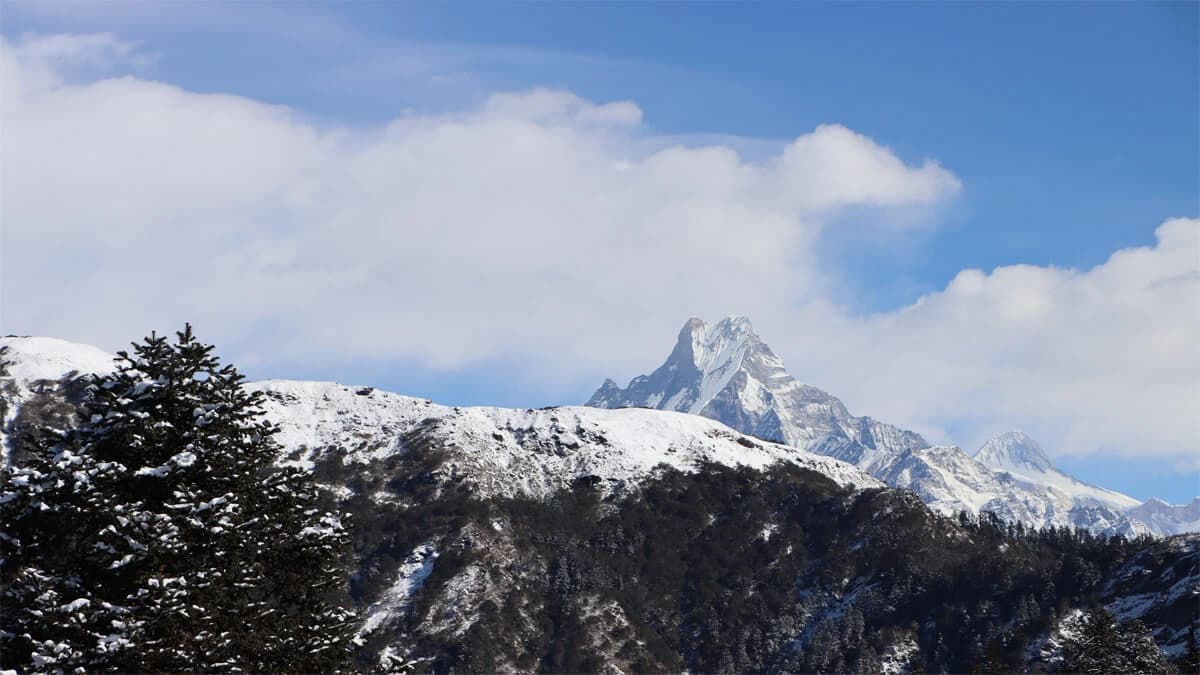
The village lies within the Annapurna Conservation Area. Clear weather brings views of Annapurna II, Annapurna IV, Lamjung Himal and Machhapuchhre from the village.

Sikles has a long history of Gurkha military service. The Sikles Eco Museum covers Gurung culture and local life, while Kapuche Lake is another popular place to visit from the village.

Sikles Community Trek Highlights

  • Homestay experience in Gurung communities
  • Gurung culture and other local communities
  • Mountain views of Annapurna II, Annapurna IV, Lamjung Himal and Machhapuchhre
  • Eco Museum of Sikles
  • Moderate village trekking in the Annapurna region
  • Suitable for families with appropriate preparation
  • Kapuche Lake, a notably low elevation glacial lake near Sikles

Sikles Community Trek Itinerary

The Sikles Community Trek itinerary can be planned according to the time available and the places you want to visit before or after the trek. The Sikles Trekking itinerary can be a short village trek from Pokhara or a longer program that includes Kathmandu, Pokhara and the surrounding villages. A shorter Sikles Village Trek is also suitable for travellers with limited time.

A longer Lamjung Himal Sikles Trekking package allows more time for village visits, walking and exploring the surrounding mountain landscape. The four day Community Kapuche Lake Trek itinerary focuses on the Sikles area and includes a visit to Kapuche Lake. Our extended Sikles Community Trek Itinerary combines the trek with a Kathmandu City Tour and time to explore Pokhara before or after the trek.

Sikles Community Trekking Cost

The Sikles Trek price is USD 1,090 per person with Nepal Trekking Routes. The price is based on the complete trekking program arranged by the company, including the travel and overnight arrangements needed for the route.

Sikles is not a trek where the walking cost tells the whole story. The program involves reaching the villages by road, staying in local accommodation and arranging services along a route where facilities are more limited than in the major trekking areas. Those arrangements are reflected in the Sikles trek package price.

The USD 1,090 price is for the standard program. International flights, travel insurance and personal spending are outside the trekking package. Keep some Nepalese rupees with you for drinks, snacks, charging and other small purchases during the trip.

If the itinerary is changed or additional days are added, the price will be recalculated according to the services required.

Sikles Community Trek Cost for Nepali Citizens

The approximate cost of the Sikles Community Trek for Nepali citizens is NPR 8,000 to NPR 10,000 per person when the trip is arranged independently. This can cover local transportation, village accommodation, meals and basic expenses along the route.

With a guide and local transport arranged as part of the trip, the approximate cost is NPR 15,000 to NPR 25,000 per person. These figures are only estimates and are not fixed rates. The final cost depends on the transport used, accommodation, group size and the number of nights included.

Sikles Community Trek Cost for Indian Citizens

The approximate cost of the Sikles Community Trek for Indian citizens is INR 25,000 to INR 45,000 per person. This can cover transport from Pokhara, village accommodation, meals and trekking services, depending on the package.

Indian citizens receive the applicable SAARC rate for the Annapurna Conservation Area Permit. The price above is an approximate guide, not a fixed rate. The final amount depends on the group size, transport, accommodation, number of trekking days and services included.

Sikles Community Trek Route

The Sikles Community Trek route begins at Bhujung Khola (1,219m). From Pokhara, you travel by road to the trailhead and start walking towards Ghale Kharka. The trail then reaches Sikles Village at around 1,980m, the main Gurung settlement on the trek.

After Sikles, the Sikles Trek route continues to Tangting and then Yangjakot or Hyangjakot. The final section leads to Kalikasthan before returning to Pokhara. These villages are an important part of the trek, with Gurung culture and traditional village life continuing along the route.

Sikles Trek Map

The Sikles Trekking map covers the lower hills of Kaski, linking Bhujung Khola, Ghale Kharka, Sikles, Tangting, Yangjakot and Kalikasthan. Sikles lies at around 1,980m, so this is a lower elevation route compared with the high passes like Everest Three Passes Trek. 

The Sikles trekking route also falls within the Annapurna Conservation Area. Around the villages, the landscape includes cultivated slopes, forest and mountain views, while Gurung communities are especially prominent around Sikles.

Sikles Trek Difficulty

The Sikles Trek difficulty is moderate. The main route reaches about 1,980m, so high altitude is not the main challenge. The walking involves repeated climbs and descents, with the climb from Bhujung Khola to Sikles being one of the more noticeable sections.

The trek is suitable for beginners with basic fitness and regular walking preparation. Previous high altitude trekking experience is not required, but the Sikles Trek for beginners still involves several hours of walking each day and should not be treated as a completely easy village walk.

Sikles Cultural Experience

Sikles is a Gurung village where local traditions, family life and community activities are still part of everyday life. Staying in the village gives visitors time to meet local people, learn about their traditions and understand more about the history of the area.

Gurung culture in Sikles can be seen through local food, songs, dances, language and community activities. The village also has a long history of Gurkha military service, which has influenced many local families. Conversations with senior residents can provide a more personal understanding of this history.

The Sikles Eco Museum is another important place to visit. It displays traditional Gurung objects and materials related to local life, culture and the natural surroundings. The museum is also managed with the involvement of local women.

During the stay, visitors can visit local schools, meet students, talk with senior residents, learn about Gurung traditions and prepare food with a host family. Community programs may also include local songs and dances. The Aama Samuha, a local women's group, is involved in community activities and cultural programs.

Who is This Trek Suitable For?

The Sikles Trek is for travelers interested in Gurung culture, village life, local food and homestays. It can also be planned for families, students and groups visiting Pokhara.

The route is suitable for people who want to spend time in villages and meet local families rather than focus only on reaching a trekking destination. 

Itinerary

This is an 8 day Sikles Community Trek itinerary covering Kathmandu, Pokhara, Bijayapur Khola, Kalikasthan, Lama Khet, Sikles, Neuli Kharka, and Ghale Gaon.

The main highlight is the walk through the traditional Gurung communities around Sikles, with time in Sikles Village, local culture, village life, mountain views, forest trails, and community based tourism. The route also includes Kalikasthan, Lama Khet, Neuli Kharka, and Ghale Gaon, with the trek ending at Hemja and returning to Pokhara.

If you would like a different number of days or want to change the activities, we would be more than happy to help you with the itinerary.

Trip PlanExpand All

After breakfast, the road to Pokhara takes up most of your day. You will cover around 200 km through the Prithvi Highway and travel through the hills toward Pokhara. The drive will take around 6 to 7 hours, which will also depend on traffic and road conditions.

You will reach Pokhara at 820 metres and settle into your hotel. Keep the evening for yourself. Have a good meal, get your trekking bag in order and take some rest before the walking starts tomorrow. The next morning, you drive to Bijayapur Khola, from where the trail leads toward Kalikasthan and the first walking day of your Sikles Community Trek. Overnight.

Once you have had breakfast in Pokhara, you will take a short drive toward Bijayapur Khola. It takes around 1 to 1.5 hours to reach the trailhead, where you leave the vehicle and begin walking. The trail heads toward Kalikasthan, and you have around 4 to 5 hours of walking ahead before reaching the village at about 1,200 metres.

Today is your first day on the Sikles trekking trail, so there is a visible change once you start walking. You are no longer traveling from one city to another; your own feet carry you from Bijayapur Khola toward the first overnight stop. The walk gives you time to settle into the trek and get a feel for the rural side of the Annapurna region without trying to include too much into the day. Overnight.

You will leave Kalikasthan after breakfast and follow the trail toward Lama Khet. You have around 5 to 6 hours of walking, with the route taking you farther into the hills and away from the road network. This is where the Sikles Community Trek starts to feel more like a village to village walk, with the trail linking the communities rather than following a road.

There is a good reason to take this route on foot. You get to see how people in this part of Nepal move between their homes, farms and neighbouring villages, something you miss when travelling only by vehicle. By the time you reach Lama Khet, you have covered around 1,600 metres in altitude and are getting closer to Sikles Village.

After breakfast at Lama Khet, you set off for Sikles. The walk takes about 4 to 5 hours, following the trail through the hills toward the village at 1,980 metres. The route has more climbing than the previous day, but the distance is not excessive, giving you time to walk without rushing and arrive in Sikles during the afternoon.

Sikles is a traditional Gurung village and one of the key places on this community trek. Once you reach the village, the stone built houses, close set lanes and Gurung traditions are right in front of you. This is the place to spend some time walking around, meeting local people and seeing the village as it actually is rather than treating Sikles as just another overnight name on the itinerary.

Sikles is behind you when the trail turns toward Neuli Kharka, with around 5 to 6 hours of walking on the schedule. The route leaves the Gurung village environment and takes you into forested terrain, so the character of the walk changes quite noticeably. There are fewer houses and much more time on the trail itself, making this a useful contrast after spending time in Sikles.

The camp at Neuli Kharka is around 2,300 metres, and some itineraries refer to it as Forest Camp. Your overnight stay here puts you in a more wooded part of the route, with the next destination being Ghale Gaon. The change from a lived in village to a forest camp is one of the more distinctive parts of this particular Sikles trekking itinerary.

After breakfast at Neuli Kharka, you set off through the rhododendron and oak forest with Ghale Gaon as the destination. The walk takes around five hours, and the trail climbs to the highest pass on this route before dropping down toward the village. The change from climbing through the forest to walking downhill gives the day a natural rhythm, with the walking becoming more relaxed once the pass is behind you.

Ghale Gaon is around 2,000 metres and is home to Gurung and Magar communities. The village has a strong connection with community tourism, and its traditional houses and everyday village life are a big part of what makes a stay here different from an overnight stop in a larger tourist town. After reaching Ghale Gaon, you have the rest of the afternoon to enjoy the village at your own pace.

The walk from Ghale Gaon to Hemja takes around 3 hours. You follow the trail downhill through the lower hills, gradually leaving the village environment behind as the route makes its way toward the road. After several days of walking between the communities around Sikles, this final walk brings you back into the lower country around Pokhara without adding another long day on foot.

At Hemja, the vehicle takes you back to Pokhara in about an hour. The Sikles Community Trek finishes here, where the return to Pokhara marks the end of the walking route through the Annapurna region.

Enjoy your last morning in Pokhara before getting on the road for Kathmandu. The journey covers about 200 km and takes around 6 to 8 hours. It is a long ride, so settle in, watch the hills roll past and let the week in the Sikles area sink in.

You should reach Kathmandu later in the day, with the rest of the evening left open for yourself. After days spent walking through the Annapurna foothills, being back in the capital makes for a very different end to the trip.

Plan An Amazing Private and Tailor-Made HolidaysNot satisficed with this itinerary? Share your idea with our travel Expert. We make your dream come true.
Customize Trip
Cost Details
Includes
  • Three NIght Hotel and Two Night Hotel accommodations in Pokhara with breakfast in twin sharing bed and breakfast basis.
  • Teahouse accommodation during the trek with breakfast Lunch and Dinner.
  • Farewell dinners with cultural program.
  • All ground transportation in a comfortable private vehicle as per the itinerary.
  • An experienced, English-speaking and government-licensed trek leader.
  • Staff costs including their salary, insurance, equipment, food and accommodation.
  • Down jacket and sleeping bag (to be returned after trip completion)
  • All necessary paperwork and trekking permits (ACAP, TIMS).
  • Medical kit (carried by your trek leader).
  • All government and local taxes.
Excludes
  • International airfare.
  • Nepal entry visa fee.
  • Travel insurance.
  • Lunch and dinner while you are in Kathmandu and Pokhara
  • Personal expenses.
Essential Information

How to Reach Sikles from Pokhara

Pokhara is the main gateway for the Sikles Trek from Pokhara. The road follows the Madi Valley towards Bhujung Khola, Ghale Kharka and the surrounding villages, depending on the itinerary. A private jeep is the practical choice for trekking groups because parts of the mountain road are rough and unpaved.

The road journey forms the starting point of the Sikles Trek route before the walking section begins. Monsoon rain can affect rural roads, making some sections muddy and slowing vehicle travel. Check the road condition and vehicle arrangement before leaving Pokhara.

Sikles Trek Permits and Trekking Regulations

The route lies inside the Annapurna Conservation Area, so an Annapurna Conservation Area Permit is required. The current ACAP fee is NPR 3,000 for foreign nationals and NPR 1,000 for SAARC nationals. A registered trekking agency can arrange the permit before the trek.

TIMS requirements depend on the exact Sikles trekking route. The Nepal Tourism Board’s current list includes several Annapurna routes under the mandatory guide and TIMS system, but it does not specifically name the Sikles Community Trek. Confirm the applicable TIMS and guide requirements when finalising the itinerary, particularly if the trek includes additional routes.

Money, Mobile Network and Charging

Carry enough Nepalese rupees from Pokhara before starting the Sikles Village Trek because ATM facilities cannot be relied upon along the route. Cash is needed for food, drinks, local services and personal expenses in the villages. Small denominations are useful for purchases in community run settlements.

Mobile coverage differs between villages and parts of the trail, and charging facilities are limited compared with Pokhara. A power bank is useful for phones, cameras and navigation devices. Download offline maps and save important travel information before starting the trek. 

Sikles Trek Best Time

October and November are the best months for the Sikles trek if clear mountain views are the priority. March and April are also good, especially when the rhododendrons are flowering. September can be wet at the beginning, while May becomes wetter as the monsoon approaches. June through August is the wettest period. December through February is cold, but the trek can still be done.

Sikles Community Trek in Spring Season

March and April bring rhododendron flowers to the forests around Sikles. April is the better month for seeing them in bloom. The weather is also suitable for walking, although mornings can still be cold in March.

May is warmer, but rain starts becoming more frequent. Mountain views can also become less consistent as moisture builds in the valleys.

Sikles Community Trek in Autumn Season

September denotes the end of the monsoon season in Nepal, so the weather pattern can be different during the first part of the month. October and November are much drier and give best views of the Annapurna range. Autumn is the considered as the best season for Sikles trek in Nepal. 

October is particularly good for clear skies. November is colder, especially in the morning and evening, but the weather remains suitable for trekking.

Sikles Community Trek in Monsoon Season

June, July and August bring regular rain to the trek area. Trails can become muddy and slippery, and leeches can also be seen in wet forest areas. Rain can also affect the road between Pokhara and Sikles.

Cloud mostly covers the mountains during this period, so Annapurna views are less reliable. The trek is still possible, but weather and road conditions can change quickly.

Sikles Community Trek in Winter Season

December, January and February are cold around Sikles, particularly in the morning and at night. Clear days can still provide good conditions for walking.

Sikles is at about 1,980 metres, so the cold is a bigger issue than altitude. Warm clothes are important, especially for overnight stays in village accommodation. Higher areas around Sikles can receive snow during winter, although snow is not a regular feature of Sikles village itself.

Sikles Trek Accommodation

Accommodation on the Sikles trek is mostly in local homestays, guest houses and small lodges. Sikles has several family run places, while other overnight stops depend on the route. Rooms have beds and basic bedding, with shared bathrooms, which is common in smaller properties. Facilities are different from one house to another.

Sikles Village Homestay

A Sikles village homestay means staying in a house operated by a local family. Meals are prepared at the property, and the arrangement gives you a closer look at the way accommodation works in the village. Some houses have been adapted for visitors, while others have more of their traditional Gurung character.

The facilities are not the same everywhere. Some properties have solar heated water or internet access, but neither should be expected at every homestay. A private bathroom is also not guaranteed, particularly in smaller homes.

Accommodation Beyond Sikles 

Once the route moves into smaller villages, there are fewer places to stay. Depending on the itinerary, the overnight stop may be a homestay, guest house or teahouse. Room availability can be limited when several trekkers arrive at the same time, so accommodation should be checked when the route is being arranged.

Panchase Trek and Ghandruk Trek also include village accommodation, but the places themselves are different. Panchase has a mix of teahouses and homestays, while Ghandruk has a much larger choice of lodges and guest houses.

Hot water availability is different from property to property. Some Sikles homes have solar heated systems, while hot showers become less reliable outside the main village. Winter nights can be cold indoors, so warm sleeping clothes are worth carrying.

Sikles Trek Food 

Food in Sikles reflects the Gurung farming tradition of the village. Millet, maize, potatoes, rice and soybeans have long been part of local food production. Millet is also used for traditional foods and fermented drinks.

At a Sikles homestay, meals can include rice, dal, potatoes, beans, vegetables and leafy greens prepared by the host family. Dal bhat is common, but not every meal is a traditional Gurung dish. Rice and other foods brought from outside are also part of everyday eating in the village.

Gurung food in Sikles can include dhido, millet based dishes and traditional fermented drinks. What is served depends on the household, but these foods still have a place in the local Gurung food tradition.

Sikles Trek Packing List

The essentials for the Sikles Trek are good walking shoes, rain protection, warm clothes for the night, a water bottle, personal medicines, toiletries, sun protection, a power bank and enough cash for personal expenses.

  • Walking shoes with good grip
  • Light rain jacket
  • Warm jacket or fleece
  • Reusable water bottle
  • Sunglasses and sunscreen
  • Personal medicines
  • Basic toiletries
  • Power bank and phone charger
  • Headlamp
  • Small towel
  • Nepalese rupees

A small daypack is enough for the days when you are walking. Keep the rain jacket and water bottle inside it rather than packed away with the rest of your luggage. A waterproof cover is useful during the rainy months.

For winter, bring warmer sleeping clothes. Nights in village accommodation in Nepal can feel cold, particularly in December, January and February.

Sikles Trek Duration

A classic Sikles Trek takes around 4 to 7 days, depending on the route and starting point. Our Sikles Community Trek takes 15 days because it gives more time to experience Sikles and its community rather than focusing only on the walking part.

The itinerary includes five nights in Sikles, with time for school visits, meeting local people, learning about Gurung culture and taking part in community activities. Kathmandu sightseeing and time in Pokhara are also included, which makes the trip longer than a standard Sikles trekking itinerary.

If your main aim is to trek to Sikles and return to Pokhara, a shorter itinerary is enough. If you want to spend more time in the village and experience its local life, the 15 day itinerary gives you that opportunity.

Best Alternatives to Sikles Trek

If you are comparing options for trekking in Nepal, good alternatives to the Sikles Trek include Ghandruk Trek, Panchase Trek, Ghalegaun Trek, Mohare Danda Trek and Dhampus Trek. These routes also include village scenery, local culture and mountain views which makes them suitable for a shorter Nepal trekking experience. 

FAQs

Yes. A Sikles village homestay is a good way to spend more time with local people. You stay in a family home, eat meals prepared there and have time to talk with your hosts. The facilities are more basic than a hotel, and bathrooms may be shared.

Yes. You can reach Sikles by road from Pokhara, so you do not have to do a multi day trek. This is useful if your main interest is the village, Gurung culture and local life rather than spending many days walking.

Pokhara is the common starting point of the trek. The road goes toward the Madi Valley and the Sikles area. A private jeep is a common choice, especially for groups. Depending on the itinerary, you may start walking before reaching Sikles. Road conditions can be difficult during the rainy season though. 

Yes. Kapuche Lake can be added to your trip if you want to spend more time walking in the area. A Sikles Kapuche Lake Trek needs some extra planning because Kapuche Lake is not included in every Sikles Trek itinerary. 

You can visit the Sikles Eco Museum, meet local people, learn about Gurung traditions and local history, visit schools with prior permission, and join community activities. You can also prepare food with a host family and watch local songs and dances when community programs are taking place.

Yes. Sikles is suitable if you want to spend time in a Gurung village rather than just passing through one. Homestays, local food, community activities, traditional culture and conversations with local people are a big part of the experience. The village also has a long history of Gurkha military service. 

A Sikles homestay is a local family home rather than a hotel. Rooms have basic furniture and bedding, and you mostly need to share the bathroom. Meals are prepared by the host family. Hot water, internet and charging facilities depend on the individual homestay, so it is better to ask about them before your arrival.

Yes. Sikles has already been a destination for educational tours organized by schools and colleges in Nepal. Students can learn about Gurung culture, village life, local food, traditional practices and community activities while spending time in the village. 

A trekking guide is useful when the itinerary includes several villages, homestays and community activities. A local guide can help with where to go, communication, and arrangements with local families. Guide and TIMS requirements depend on the exact route and current rules, so these should be checked before the trek.

Both are good options, but they offer different kinds of experiences. Sikles is suitable if you want to spend many days in one Gurung village and have more time for homestays and community activities. Ghandruk is more commonly included in established Annapurna trekking routes and can be combined with other Nepal trekking destinations.

Yes, if you have reasonable fitness. The Sikles route stays at a lower elevation than many well known Himalayan treks, so altitude is less of a concern. You still need to walk uphill and downhill for several hours on some days. Basic preparation and comfortable walking shoes are recommended, so make sure you keep that in mind. 

Yes. Sikles is a good option for Nepal trekking near Pokhara if you want village walking, Gurung culture, homestays and mountain views without going to the higher Himalayan areas. The main attraction is the village experience and time spent with local communities.

20 years of Adventure
Why Travel with Nepal Trekking Routes?
We Care for Your Safety
Nepal Trekking Routes always focus on safety, and satisfaction of our valued clients. Our Trekking guides are highly experienced and trained to operate various group trekking trip in high Himalaya.
Provide Financial Protection
NTR prioritize healthy financial safety for clients, ensuring proactive safeguarding of client interest. Our commitment strengthens our role as trusted partners maintaining standards with dedication and Excellence.
100% Local Guide
100% Local Guide
Traveler looking for experience authentic insights through trekking in Nepal NTE offer your 100% local guide who help you to experience unique perspective ensuring and enriched journey customize to your interest.
Personalized Service
We always provide one guide and one porter to two guests in order to meet our standard of providing standard service. Impeccable hospitality and quality services are guaranteed while traveling with us.
Know More
You May Also Like
Langtang Valley Trek
FromUS$790US$1275
Everest view Trek
FromUS$1200US$1525
Trekkers witnessing sunrise over the Annapurna range
FromUS$600US$1090
Book Now