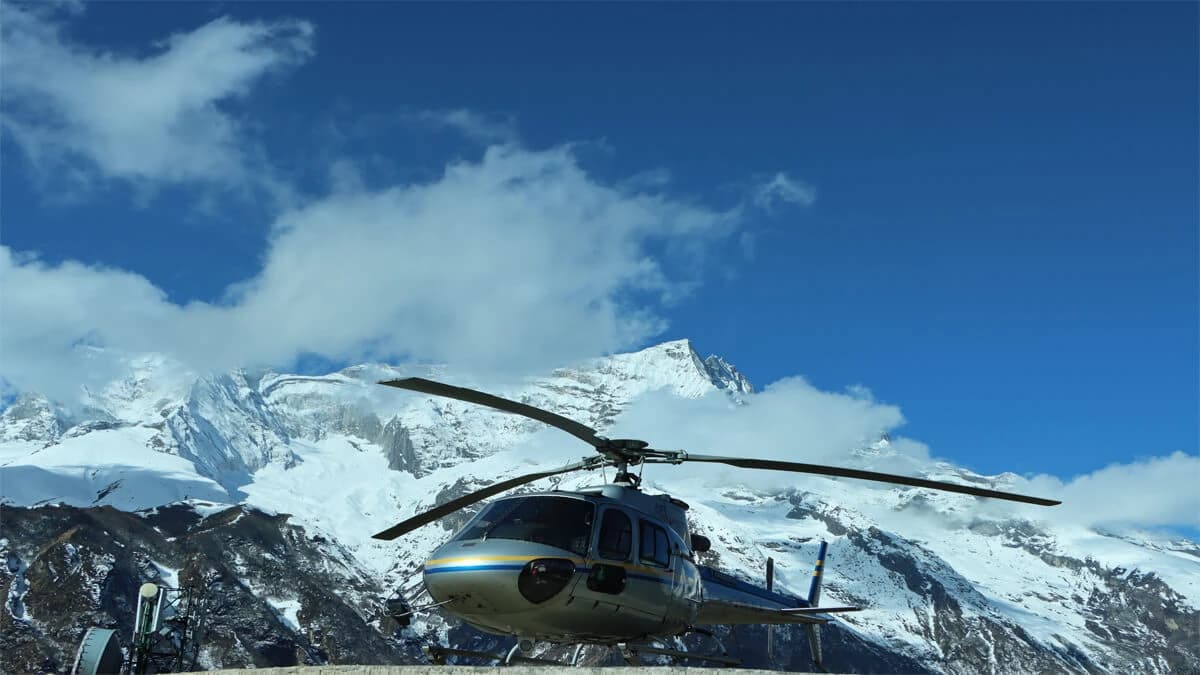
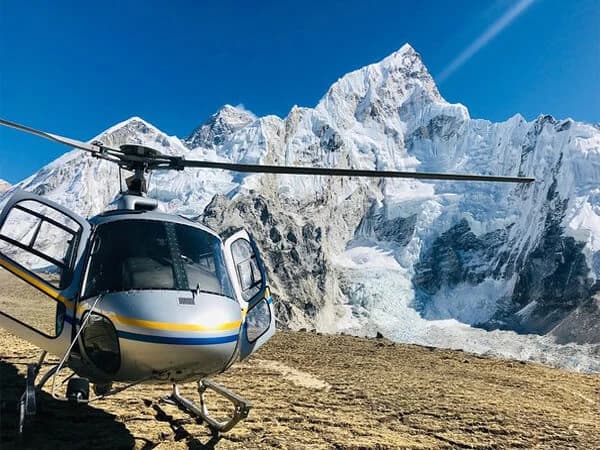
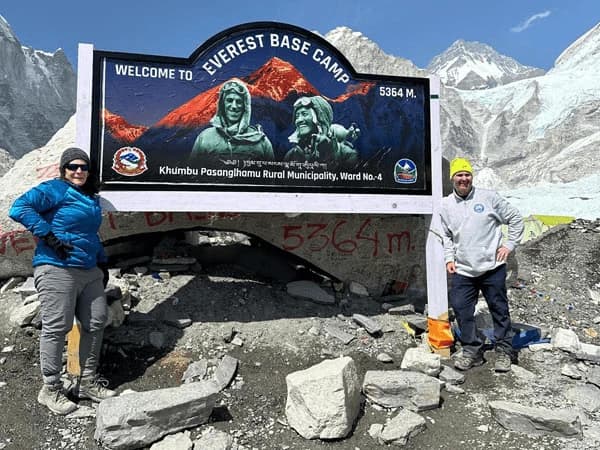
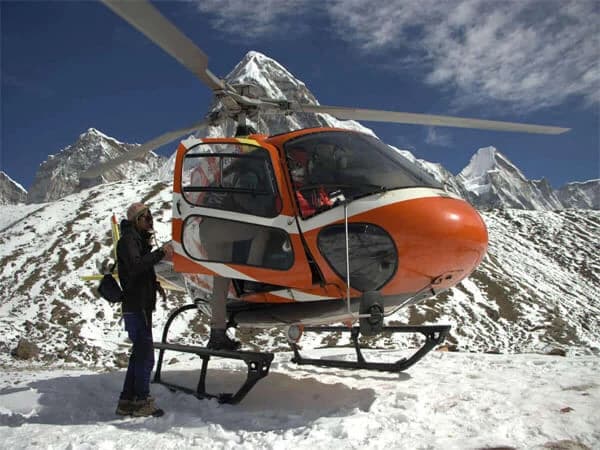
Yes, you can fly into the Everest region by helicopter, but there is an important detail to understand before you book. An Everest Base Camp helicopter tour does not mean landing at Everest Base Camp itself. The flight can take you over Base Camp and, depending on the itinerary and flight conditions, land at Kala Patthar or another permitted location nearby.
For travelers short on time, that difference can make the helicopter tour a practical alternative to spending days on the Everest Base Camp trail. You can leave Kathmandu, see Everest, Lhotse, Nuptse, Ama Dablam and the Khumbu Glacier from the air, and return the same day. What you do not get is the trek itself, with its villages, teahouses, monasteries and long walk through the Khumbu. So the real question is not whether you can go to Everest Base Camp by helicopter. It is whether a helicopter gives you the Everest experience you are looking for.
Does the Helicopter Actually Land at Everest Base Camp?
No. The helicopter does not land at Everest Base Camp as part of a standard sightseeing flight. The aircraft can fly over the Base Camp area, while the actual landing point depends on the tour itinerary, flight conditions and current aviation arrangements.
Everest Base Camp is near Gorakshep, while Kala Patthar is a separate viewpoint above it. Some tour itineraries advertise a Kala Patthar landing, while others use locations such as Syangboche or the Everest View Hotel. Landing arrangements can change because of weather, aviation restrictions and operating conditions, so check the actual itinerary before booking. This is why the itinerary matters more than the name of the package.
If you are looking at an Everest helicopter landing tour, check exactly where the landing is done, whether the flight goes over Base Camp and how long you are allowed to stay at the landing point. Weather and operating conditions can also change the plan on the day.
How Does the Everest Base Camp Helicopter Tour Work?
Your helicopter sightseeing in Nepal starts early in Kathmandu. You head to the domestic airport, complete the check in and board the helicopter for the flight toward the Everest region.
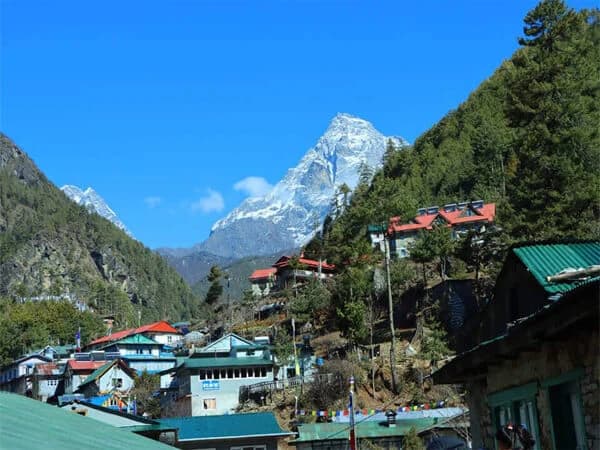
The helicopter may stop at Lukla for refuelling before continuing towards the Everest region trek. From here, the flight takes you past the areas trekkers normally reach on foot, including Namche Bazaar and the upper Khumbu region. You can see Ama Dablam, Lhotse, Nuptse and other major peaks along the route on a clear day.
The helicopter then reaches the Everest area and flies over Everest Base Camp and the Khumbu Glacier. The rest of the flight depends on the helicopter tour package you have booked. A landing may be included at Kala Patthar or another permitted location, while some flights focus on the aerial view and return without the same ground stop.
After the Helicopter sightseeing around Himalayan, the helicopter begins the return to Kathmandu, with Lukla used for refuelling when required. The whole trip can be completed in a few hours, although the exact duration depends on the route, stops, weather and flight conditions.
How Much Does an Everest Base Camp Helicopter Tour Cost?
The current discounted price at Nepal Trekking Routes is US$1,500 per person for one traveler. The per person cost comes down when more people travel together.
- 1 traveler: USD 1,500 per person
- 2 to 5 travelers: USD 1,450 per person
- 6 to 12 travelers: USD 1,400 per person
So the advertised starting price of USD 1,400 applies to groups of 6 to 12 travelers. A solo traveler pays USD 1,500, while groups of two to five pay USD 1,450 per person.
The final price depends on the number of people sharing the flight.The Everest Base Camp helicopter cost is therefore not one fixed amount for everyone. It depends on how many people are sharing the flight.
What Is the Best Time to Take a Helicopter to Everest Base Camp?
October and November are my first choices for an Everest helicopter flight. The monsoon has finished, and these months fall within the main trekking season in Khumbu region. If you want to spend a few hours around Everest and get the most from the flight, this is the period I would choose.
Everest helicopter flights in October are especially popular. November is colder at the higher landing points, but it is still a good month for a flight into the Everest region.
For Everest helicopter flights in spring, I would choose March or April. May can work too, although it is getting closer to the monsoon period. An early morning departure is preferable in spring because conditions around the mountains can change as the day goes on.
I would not choose June to September unless those are the only dates available to you. This is Nepal's monsoon season, and rain and cloud can interfere with flights in the Everest region.
December to February brings much colder temperatures at places such as Kala Patthar. The flight is still possible, but getting out of the helicopter at high altitude in winter is a very different experience from doing it in October or April.
There is no month that guarantees a perfect flight. For me, October and November come first, followed by March and April.
What Can You See on an Everest Helicopter Tour?
From the helicopter, you can see much more than Everest itself. Depending on the route and visibility, the flight can give you views of Ama Dablam, Lhotse, Nuptse, Pumori, the Khumbu Glacier and the valleys below.
The Khumbu Glacier is particularly impressive from above because you can see how the ice runs through the surrounding mountains rather than seeing only the sections visible from the Nepal trekking trail.
The view also changes constantly during the flight. A few minutes can make a visible difference to the angle of Everest, Ama Dablam or the other peaks.
For photography, a wider lens is usually more useful than trying to fill every frame with Everest. Including the glacier, valleys and neighbouring peaks gives the photographs more context.
What Happens If Your Everest Helicopter Flight Is Cancelled?
If your Everest helicopter flight cannot operate on the booked date, the operator will normally look at another available date. If there is no time for another flight in your schedule then whether you receive a refund depends on the company’s cancellation policy.
This is why keeping a spare day in Kathmandu is worth considering when the helicopter trip is an important part of your Nepal itinerary. If the original flight does not operate, you have at least one day to try again instead of losing the trip altogether.
Check the Everest helicopter cancellation policy before you pay. Find out what the company does when the flight is cancelled because of weather, whether you can reschedule and when a refund applies.
The helicopter may fly but use a different route or landing point from the one originally planned. The pilot has the final decision on where the aircraft can safely operate that day.
So, when booking an Everest helicopter trip, leave some flexibility around the flight date and know the refund terms beforehand.
Everest Base Camp by Helicopter or Trek: Which Should You Choose?
The two options give you very different experiences. The helicopter saves most of the time spent on the trail, while the trek lets you explore Sherpa region of Nepal step by step and reach Everest Base Camp on foot. The standard trek from Lukla takes around two weeks and includes time for acclimatization.
Choose the Helicopter Tour if you:
- Have a short Nepal itinerary and cannot spend around two weeks on the Everest Base Camp trekking route.
- Want to see Everest, Pumori, Lhotse, Nuptse and Ama Dablam from the air.
- Want to see Everest Base Camp without trekking experience.
- Would rather spend a few hours around the Everest region than several days walking between mountain villages.
Choose the Everest Trek if you:
- Want to walk to Everest Base Camp rather than see it mainly from the air.
- Have enough time for the full journey through the region.
- Want the days in Namche Bazaar, Tengboche, Dingboche, Lobuche and Gorakshep to be part of the trip.
- Want the trail, teahouses, Sherpa villages and changing mountain scenery to be part of the experience.
- Want reaching Base Camp on foot to be an important part of the trip.
There is also another option. Everest Base Camp trek with helicopter return gives you the walking experience without having to follow the same trail all the way back.
How Long Does an Everest Base Camp Helicopter Tour Take?
An Everest Base Camp helicopter tour from Kathmandu takes around four to five hours, depending on the itinerary, refuelling, weather and whether the flight includes a landing in the Everest region. Most operators schedule the flight in the morning and aim to return to Kathmandu before the afternoon.
The trip is longer than just flying from Kathmandu to Everest and back. The helicopter may stop at Lukla for fuel, continue through Khumbu, fly over Everest Base Camp and make a stop at Kala Patthar or another location included in the package.
The exact timing can therefore be different between tours. A flyover and a tour with a high altitude landing are not the same trip, even if both are sold as Everest Base Camp helicopter tours.
If you are planning other activities in Kathmandu on the same day, leave some room between bookings. Mountain flights do not operate on a fixed city timetable, and a delay in the morning can affect the rest of your day.
Where Does the Everest Base Camp Helicopter Tour Land?
Your helicopter landing at Kala Patthar, stop at another location in the Everest region, or follow a flyover itinerary without a high altitude landing. The exact arrangement depends on the tour you book.
Kala Patthar is one of the most sought after landing points because of its position above Gorakshep and its views toward Everest, Lhotse, Nuptse and Pumori. At about 5,545 metres, however, it is not a place where you normally spend a long time. Current itineraries commonly allow only a short stop before the helicopter leaves.
Some EBC heli tour packages instead include a stop at Everest View Hotel or another location lower in the region. Others focus on the aerial part of the journey and do not offer the same landing experience.
This is where the wording used by tour companies can cause confusion. "Everest Base Camp helicopter tour" describes the destination and overall experience, not necessarily the exact place where the helicopter will touch down.
If you want to land at Kala Patthar, check that the itinerary specifically says so. If you want to see Base Camp from the air, check that the flight route includes a Base Camp flyover. Do not assume one automatically means the other.
What Is Included in an Everest Base Camp Helicopter Tour?
There is no universal list of inclusions for an Everest helicopter tour. The contents of the package depend on the operator and the type of flight you book.
A package can include the helicopter flight from Kathmandu, a pilot guide, a flyover of Everest Base Camp, views of the Khumbu Glacier and surrounding peaks, and a landing at a specified location. Some helicopter tour packages also include airport transfers or a breakfast stop, while certain charges may be listed separately.
Two tours can have different final prices even when their advertised rates look similar. A cheaper helicopter tour is not necessarily cheaper once you add airport transfers, landing fees, meals, permits or other charges that were not included in the headline price.
Read the inclusions before making the payment. Look specifically for transportation to and from the airport, meals, government fees, national park charges, landing charges and any other costs that you might have to pay separately.
It is also worth checking the passenger arrangement if you are booking a shared flight. Helicopter weight limits can affect the number of passengers, baggage and sometimes the way the flight is operated.
The package description should leave you knowing what you are buying. If the itinerary is vague about the landing point or what happens when weather prevents the planned stop, ask the operator before booking.
Is an Everest Base Camp Helicopter Tour Safe?
An Everest helicopter flight is not risk free. The aircraft is operating in high altitude mountainous region, where weather, visibility, wind and the surrounding geography can affect the flight.
The itinerary can change if the weather or other conditions are not suitable. If the weather is unsuitable for a landing, the pilot can change the route or decide not to land. That may mean a shorter flight, a different stop or a cancellation.
Also, Kala Patthar is around 5,545 metres above sea level. You are not spending days acclimatizing there as a trekker would, and you are normally on the ground for only a short period, but the air is still extremely thin at that elevation.
Getting out at that altitude is very different from stopping at a normal viewpoint. Follow the crew's instructions, avoid unnecessary exertion and tell the crew if you feel unwell.
Before booking, pay attention to the operator's cancellation and refund conditions. A company that changes a flight because the conditions are unsuitable is not necessarily providing a poorer service. In the mountains, changing the plan can be the right decision.
Is the Everest Base Camp Helicopter Tour Worth It?
If you have very little time in Nepal, I think it can be worth the money. If you have come specifically to experience the Everest Base Camp trek, I would not replace the trek with a helicopter because the helicopter is faster.
You can leave Kathmandu in the morning, see the Everest region from the air and return without spending days walking between Lukla and Gorakshep.
But that convenience comes with a major trade off. You miss the actual journey through the Khumbu.
You do not spend those days walking into Namche Bazaar. You do not stay in the teahouses along the trail. You do not slowly move through the landscape from the lower valleys toward the high mountains. You also do not get the same sense of distance that comes from walking toward Everest for several days.
The cost makes the decision even clearer. A helicopter tour is expensive compared with the trekking option, particularly when you choose a private flight or a package with a high altitude landing.
So I would look at it this way.
- If you have only a few days and seeing Everest is the priority, take the helicopter.
- If you have enough time and the journey through Khumbu is part of your reason for visiting Nepal for trek.
- If your specific goal is to stand at Everest Base Camp after walking there, a helicopter tour is not the same thing.
The helicopter gives you a fast way into the Everest region. It does not give you the Everest Base Camp trekking experience in a few hours.
What to Know Before Booking an Everest Base Camp Helicopter Tour
First, find out exactly what type of flight you are buying. Some packages are primarily aerial sightseeing flights, while others include a landing at Kala Patthar or a stop elsewhere in the Everest region.
Then check the itinerary rather than relying on the name of the package. Confirm whether Everest Base Camp is included as a flyover, where the helicopter lands and how long you are expected to stay there.
Look at the price in the same way. Find out whether airport transfers, meals, landing charges, permits, national park fees and other government or local charges are already included. Two tours can have very different final costs even when their advertised prices initially look similar.
The cancellation terms deserve attention too. Ask what happens if bad weather prevents the flight, whether you can move the booking to another day and what happens if the helicopter flies but cannot complete the planned landing.
I would also keep the day after the flight reasonably flexible if the Everest trip is particularly important to you. You do not want a delayed or cancelled mountain flight to disrupt a separate booking that cannot be changed.
And do not choose a tour solely because it promises the highest possible landing. At Everest altitude, the weather and operating conditions matter more than what is written on the brochure.
Read the itinerary, check the inclusions, understand the cancellation terms and know where you are actually going to land.
What Should You Wear for an Everest Helicopter Tour?
Kathmandu and the Everest region can feel completely different on the same day. You might leave Kathmandu in comfortable weather and then find yourself in freezing conditions when the helicopter reaches a high altitude landing point.
Carry a warm jacket as it is very essential. A fleece or sweater, thermal layer, gloves and a warm hat are also useful, especially from late autumn through winter. Take sunglasses too. Snow and bright sunlight at high altitude can be hard on your eyes, and sunscreen is worth carrying for the same reason.
If your itinerary includes getting out of the helicopter, wear comfortable closed shoes. There is no need to dress as though you are starting the full Everest Base Camp trek. You are not spending days on the trail, but you should be prepared for the cold during the time you are outside.
A small day bag is enough for most people. Keep your camera or phone, water, personal medication and other essentials with you.
Can You Get Altitude Sickness on an Everest Helicopter Tour?
Yes, you can. Spending only a few hours in the Everest region does not make altitude sickness impossible.
During the Everest Base Camp trek, you gain elevation over several days. On a helicopter tour, you can go from Kathmandu to the Everest region within a few hours.
Kala Patthar, for example, is around 5,545 metres above sea level. At that elevation, some people may experience headache, dizziness, nausea or difficulty breathing normally after getting out of the helicopter.
The stop at high altitude is generally short, but that does not mean you should ignore how you feel. Follow the crew's instructions and tell them if you become unwell. If you have concerns about travelling to high altitude, speak with a qualified medical professional before the trip.
Final Thoughts
An Everest helicopter tour makes sense for travelers who want to see the Everest region but do not have time for a long trek. It is expensive and weather dependent, but it offers something Nepal trekking cannot: a view of the region from above in a single trip. If the journey to Base Camp matters as much as seeing Everest, the trek remains the better choice.