Both the novice and experienced trekkers dream of completing the Everest Base Camp Trek and K2 Base Camp Trek. After all, who doesn’t want to reach the base camps of the world’s first and second-highest peaks? Along with the similarities, there are some differences between the Everest Trek and the K2 Trek.
By comparing Everest Base Camp Trek with K2 Base Camp Trek, you can decide which trek is more suitable for you for a lifelong memory. Natural and aesthetic beauty plus adventure journeys are almost equal in both epic treks.
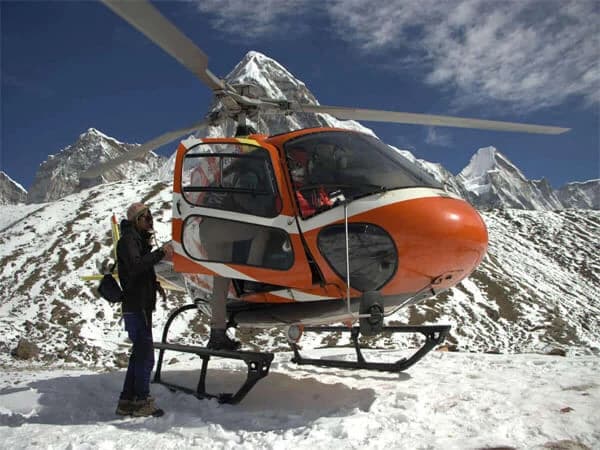
One finds it hard to choose between EBC Trek and K2 Trek. Both are for the daredevils and avid trekkers who want to get something new in their lives on their own. Yes, helicopter rides over Everest and flights over K2 Base Camp are far easier than trekking to either of the base camps. But, trekking is far more interesting and adventurous than getting the aerial views of the Giant Mountains.
Everest Base Camp is the ultimate destination for all the Nepal trekking enthusiasts. This trek begins after exploring Kathmandu, the City of Temples, or the Capital City of Nepal. On the other hand, K2 Base Camp Trek begins after exploring the city of Islamabad and its cultural heritage sites. Both cities have their characteristics and beauties; however, they reward you with different flavors of culture and traditions.
This blog “Comparing Everest Base Camp Trek with K2 Base Camp Trek” aims to give you brief differences between the two destinations.
Overview of Everest Base Camp Trek
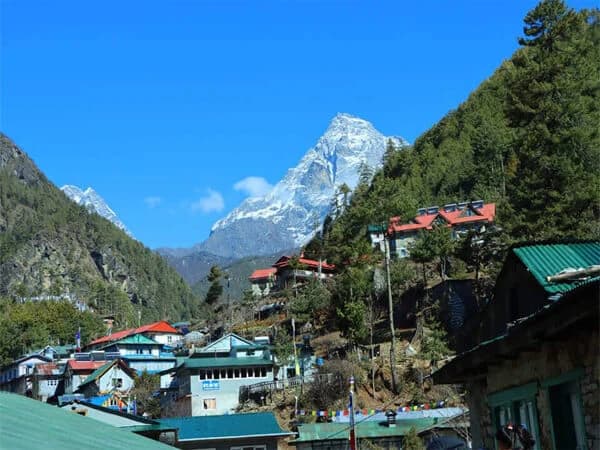
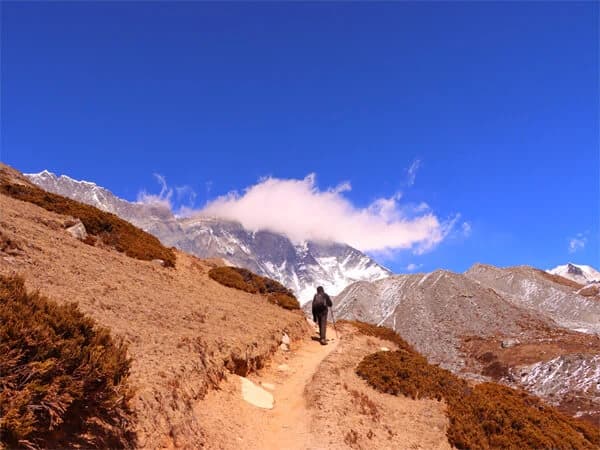
The Everest Base Camp Trek in Nepal is one of the most popular trekking adventures in the world, and for good reason. It takes you right into the heart of the Himalayas, where you walk beneath the shadow of Mount Everest, the world’s highest peak. The journey usually starts with a thrilling flight from Kathmandu to Lukla, which already feels like an adventure on its own. From there, the trail slowly climbs through beautiful Sherpa villages, forests, suspension bridges, and mountain valleys.
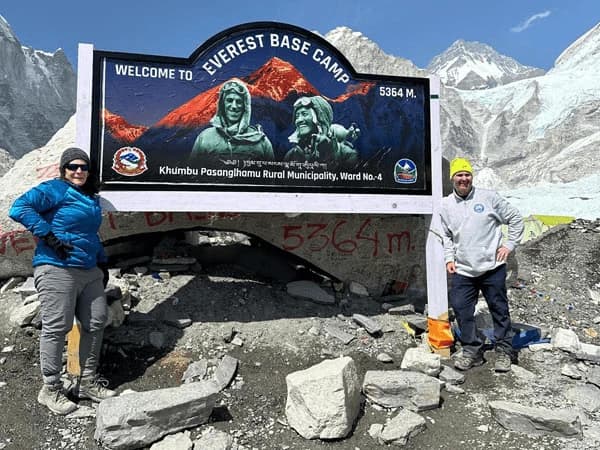
Along the way, places like Namche Bazaar, Tengboche, and Dingboche give you a mix of culture, comfort, and amazing mountain views. The route is well-developed, so you’ll find teahouses, warm meals, and fellow trekkers almost everywhere. The highlight of the trek is reaching Everest Base Camp (5,364 m) and also hiking up to Kala Patthar for that unforgettable sunrise view of Everest. It’s challenging, but very doable for anyone with good preparation and basic fitness.
Overview of K2 Base camp Trek
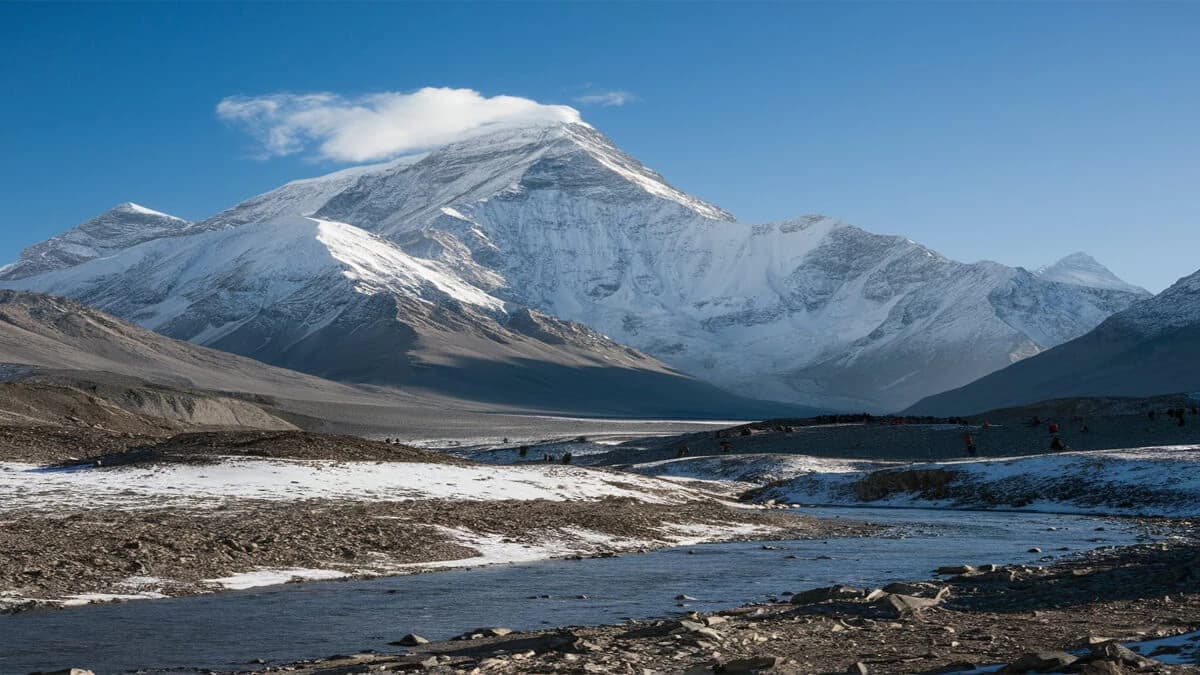
The K2 Base Camp Trek in Pakistan is a whole different level of adventure. It’s wilder, more remote, and far less crowded than Everest. If Everest feels like a popular trekking route, K2 feels like stepping into a true expedition. The journey usually begins from Islamabad, followed by a flight or long drive to Skardu, and then a rough road journey to Askole, the last village before the trek starts.
From there, you enter a completely raw and dramatic landscape. There are no fancy lodges or busy villages just glaciers, massive mountains, and endless silence. The trail goes through the famous Baltoro Glacier, one of the most stunning glacier routes in the world. As you move forward, you reach Concordia, often called the “Throne Room of the Mountain Gods,” where you can see giants like K2, Broad Peak, and Gasherbrum all around you. Finally, you reach K2 Base Camp (5,151 m), a place that feels powerful, isolated, and truly untouched.
Key Differences Between Everest Base Camp Trek vs K2 Base Camp Trek
Nepal and Pakistan are both Asian countries connected by the Himalayas with each other. Along with their sizes, Nepal and Pakistan have some key differences in terms of religions and cultures. Moreover, there are some notable differences between Everest Base Camp Trek and K2 Base Camp Trek.
Fact Check: Everest Base Camp Trek and K2 Base Camp Trek
| Heading |
Everest Base Camp Trek |
K2 Base Camp Trek |
| Elevation |
8848.86M |
8610 M |
| Base Camp Elevation |
5364 M |
5151 M |
| Highest Altitude |
5643 M |
5560M |
| Itinerary |
15 Days |
22 Days |
| Distance |
130 KM |
160KM |
| Average Trekker Per Year |
30,000 Thousand |
1300 |
| Himalayan Range |
Mahalangur(Himalayas) |
Karakoram |
| Country |
Nepal |
Pakistan |
| Conservation Area |
Sagarmatha National Park |
Central Karakoram National Park |
Nepal vs. Pakistan: Cultural Experience
One of the biggest differences between the Everest Base Camp Trek and the K2 Base Camp Trek is the cultural experience that comes with each journey.
The K2 Base Camp Trek begins in Pakistan, a country rich in Islamic culture, history, and traditions. Most trekkers start their journey in Islamabad, the capital city, before heading to Skardu, either by a short flight or a scenic two-day drive. From Skardu, a long drive takes you to Askole, the starting point of the trek.
Once the trek begins, civilization slowly fades behind you. The route toward K2 is remote, wild, and peaceful, offering a true wilderness experience with very limited settlements along the way. This makes the journey feel raw, untouched, and deeply adventurous.
Nepal is a secular country nestled between the Great Himalayas with the majority of Hindu followers. It is a multi-cultural, multi-lingual, and multi-ethnic country existing as an epitome of “a wreath of hundreds of flowers.” During the preparation day of Everest Base Camp Trek, you get to explore the cultural and religious heritage sites. Among these, four of the UNESCO World Heritage Sites will be explored.
Then, you take a flight to Lukla, Tenzing Hillary Airport also called the gateway to Everest Region Trekking. After a 30-minute scenic flight from Kathmandu to Lukla, you ascend towards Phakding along a rugged trail. Throughout the Everest Base Camp Trek trail, you walk through the Sherpa settlement areas of the Khumbu Region.
The Himalayas vs. the Karakorum: Landscape Comparison
The mountain scenery on the Everest Base Camp Trek and K2 Base Camp Trek is stunning in both cases but very different in character.
The Himalayas extend from the Tibetan Plateau in the north up to the plains of the Indian Sub-continent in the south. They connect five Asian countries namely, Bhutan, India, Nepal, China, and Pakistan. The Himalayas own many of the highest peaks of the world including Mount Everest (8,848.86m). The Karakoram also touches five Asian countries – China, India, Pakistan, Afghanistan, and Tajikistan. 15 of its highest peaks including the world’s second highest peak K2 (Mount Godwin Austen: 8,610m) within Pakistan.
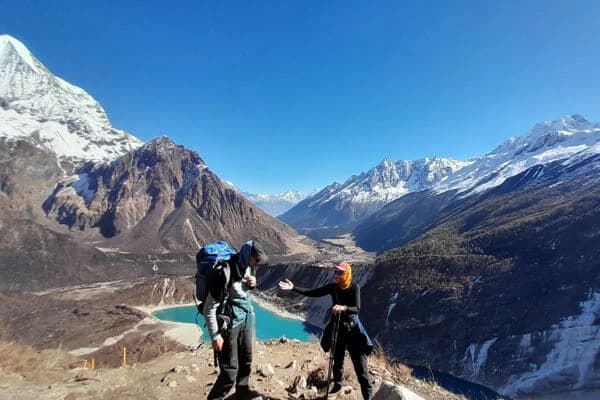
Landscapes of Everest Region Trekking and Karakoram Region Trekking are quite different although they lie in the Himalayas. Mountain scenery rewarded during Everest Base Camp Trek and K2 Base Camp Trek is different, too. The Karakoram Mountains are steeper and vertical rising above the glaciers. The K2 Base Camp Trekking trail goes past the Central Karakoram National Park. As you ascend higher from the Baltoro Glacier, the scenery is more impressive.
The Karakoram Mountains from Trongo Towers (6,286m), Masherbrum (7,821m), Gesherbrum (8,086m), Broad Peak (8,047m), and K2 respectively welcome to their vicinity. Just as the name suggests, the Karakoram Region is made up of the “Black Mountains” rather turning hostile to humankind.
The landscapes of the Everest Region are quite impressive and rather different from those of the Karakoram Mountains. The Everest Base Camp Trekking route goes past the Sherpa settlement areas inside Sagarmatha National Park. The Khumbu Region is green and populated, unlike the K2 Region.
The snowcapped peaks of the Great Himalayas including Mt Everest (8,848.86m) welcome you to their region. The Khumbu Icefalls and the Khumbu Glacier make your trip a lifelong memory and a lifetime achievement. The Everest Region and the mountain scenery of this area look friendlier to climbers and trekkers than the K2 Region.
Best Time for Everest Base Camp Trek vs K2 Base Camp Trek
Everest Base Camp Trek is accessible throughout the year except in excessive snowfalls. Even in the winter season, Everest Base Camp Trekking Route is not always blocked by the layers of the snow. By taking the help of expert tour operators and professional local guides, you can reach the base camp of Everest all year around.
However, spring (March-May) and autumn (September-November) are the best time for Everest Base Camp Trek. In these seasons, the skies remain clear due to stable weather and the mountain scenery is just WOW! Doing an EBC Trekking in the spring or the autumn is the best way to enjoy the sunset and sunrise views of the Great Himalayas.
K2 Base Camp Trek is less frequented in all seasons of the year. July and August are the best time for K2 Base Camp Trek because in this time, the skies are clear due to stable weather. There are records of the trekkers who have reached the K2 Base Camp (5,151m) even in June and late September.
Despite its remoteness and challenges, the base camp of Mt. K2 has been traversed in the winter season as well. However, we don’t recommend you to try out trekking to K2 Base Camp in other times except July and August.
Travel and Accesibility: Getting to EBC vs K2 Base Camp
Getting to the starting point of both treks is an adventure on its own, and the travel experience is quite different for each route.
The Everest Base Camp Trek begins with a scenic flight from Kathmandu to Lukla, a small mountain airport often called the gateway to the Everest region. The flight takes around 30 to 35 minutes and provides stunning aerial views of the Himalayas. From Lukla, trekkers begin their journey on foot through the beautiful Khumbu Valley.
However, flights to Lukla are highly weather-dependent and delays or cancellations are common, especially during monsoon and winter. Because of this, trekkers usually keep a few extra days in their schedule. There is also an overland alternative through Jiri, but this route adds several extra trekking days.
The K2 Base Camp Trek starts differently. Most trekkers first travel to Islamabad, then either take a short domestic flight or a long overland drive to Skardu. From Skardu, a rough 6 to 7 hour jeep drive takes you to Askole, the starting point of the trek.
Unlike Lukla, Skardu Airport has a longer runway and improved flight reliability, though weather can still affect flights. If flights are canceled, trekkers can take the famous Karakoram Highway, a scenic but long road journey from Islamabad to Skardu.
Permits and Travel Formalities
The formalities for beginning both the treks are different from each other. This is all because of the different ruling systems and tourism policies of Nepal and Pakistan.
For the K2 Base Camp Trek, the process is generally more formal. Pakistan requires advance visa processing, and depending on regulations, trekkers may need additional documentation or permits for restricted mountain areas. Trekking in Pakistan is often more organized through registered tour operators.
For the Everest Base Camp Trek, Nepal has a simple and traveler-friendly process. Most international visitors can easily get a tourist visa on arrival, and trekking permits are straightforward to arrange through agencies or independently.
Trek Duration: Everest vs K2
Another key difference is how long each trek takes.
Everest Base Camp Trek
- Average duration: 12 to 15 days
- Round-trip trekking distance: Around 130 km
- Includes acclimatization days
- More comfortable trekking infrastructure
K2 Base Camp Trek
- Average duration: 20 to 22 days
- Round-trip trekking distance: Around 160 km
- Longer remote expedition-style journey
- Camping-based trekking with fewer facilities
Difficulty Level: Everest Base Camp Trek vs K2 Base Camp Trek
When comparing the Everest Base Camp Trek and the K2 Base Camp Trek, one of the most important things to consider is the difficulty level. Although both treks take you to the base camps of two of the world’s highest mountains, the trekking experience and physical demands are very different.
Everest vase Camp Trek
The Everest Base Camp Trek is considered challenging, but it is still achievable for many trekkers with proper preparation, a good fitness level, and enough time for acclimatization. The trail is well-established and clearly marked, making navigation easier. Along the route, trekkers pass through villages like Namche Bazaar, Tengboche, Dingboche, and Lobuche, where teahouses provide food, accommodation, and places to rest. This developed trekking infrastructure makes the journey more comfortable and manageable compared to remote expedition-style treks.
The main challenge of Everest Base Camp is high altitude. As trekkers climb above 3,500 meters, the air becomes thinner, making every step feel harder. By the time you reach Everest Base Camp (5,364 m) or hike to Kala Patthar (5,545 m), breathing becomes noticeably difficult due to lower oxygen levels. However, because the route includes planned acclimatization days, most trekkers have enough time to adjust gradually. The trail itself mostly consists of stone steps, suspension bridges, forest paths, and rocky mountain trails, which are demanding but not technically difficult.
K2 Base Camp Trek
The K2 Base Camp Trek, on the other hand, is in a completely different category of difficulty. This trek is longer, more remote, and much more physically demanding from start to finish. Unlike Everest, where villages and lodges are part of the route, K2 takes trekkers deep into the wilderness of the Karakoram Range, where there are no permanent settlements, teahouses, or easy rescue access once the trek begins.
Everything is expedition-based, including camping, food supplies, and support teams. The terrain on the K2 route is also much tougher. Trekkers walk for long days across rocky moraines, glacier crossings, loose stones, uneven trails, and rough mountain terrain. Walking on the Baltoro Glacier can be especially exhausting because the trail constantly changes between ice, rock, and unstable ground.
Unlike the greener and more varied landscapes of Everest, K2’s environment is dry, harsh, and rugged, which can make the trek mentally as well as physically challenging.
Conclusion: Everest Base Camp Trek vs K2 Base Camp Trek
Both Everest Base Camp Trek vs K2 Base Camp Trek are adventurous for a lifelong memory. Both treks lead you to the extreme wilderness along the national parks occupied by a large biodiversity. If you ask us which of Everest Base Camp Trek and K2 Base Camp Trek to choose, we don’t exactly answer.
It is your choice for trekking in Nepal or trekking in Pakistan; ascending to the world’s highest peak or the second highest peak. Nonetheless, we hope this blog will help you in comparing the Everest Base Camp Trek with the K2 Base Camp Trek and choose the right one for you.