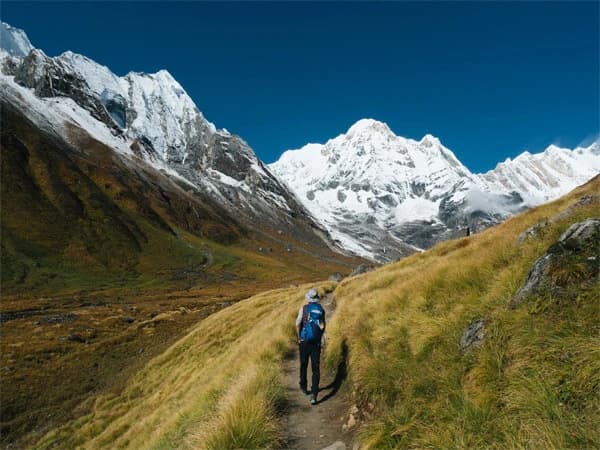
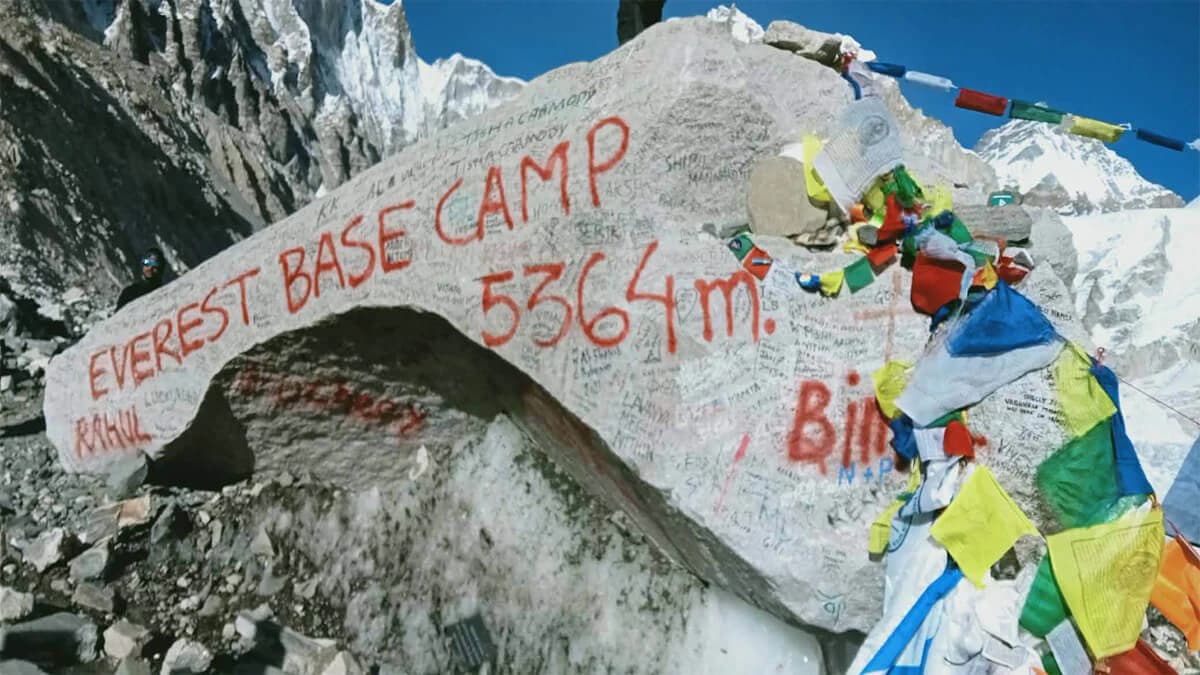
The Gokyo Chola Pass EBC Trek with Helicopter Return is an extraordinary trekking adventure in the Khumbu Region of Nepal. This Everest trek combines the thrill of crossing a high Himalayan pass with the serene beauty of the turquoise Gokyo Lakes and the iconic experience of standing at Everest Base Camp.
What makes this trek unique is its perfect balance of adventure and comfort. You explore remote valleys, glacial lakes, and challenging high altitude trails with stunning views of Everest, Lhotse, Makalu, and Cho Oyu. The helicopter return tour saves time and reduces physical strain on the descent.
This trek is ideal for trekkers wanting an adventurous journey without retracing the same route back. This is a 15 day high altitude trek and is a challenging route in Nepal. It is suited to trekkers who are comfortable with long days of walking and want to take on Cho La Pass, Gokyo Ri and Kala Patthar in one trip.
Gokyo Cho La Pass EBC Trek Helicopter Tour Highlights
- Fly into Lukla and start walking through the Sherpa villages of the Khumbu
- Spend time beside the turquoise Gokyo Lakes and the Ngozumpa Glacier
- Climb Gokyo Ri at about 5,357 metres for a broad view of Everest, Lhotse, Makalu and Cho Oyu
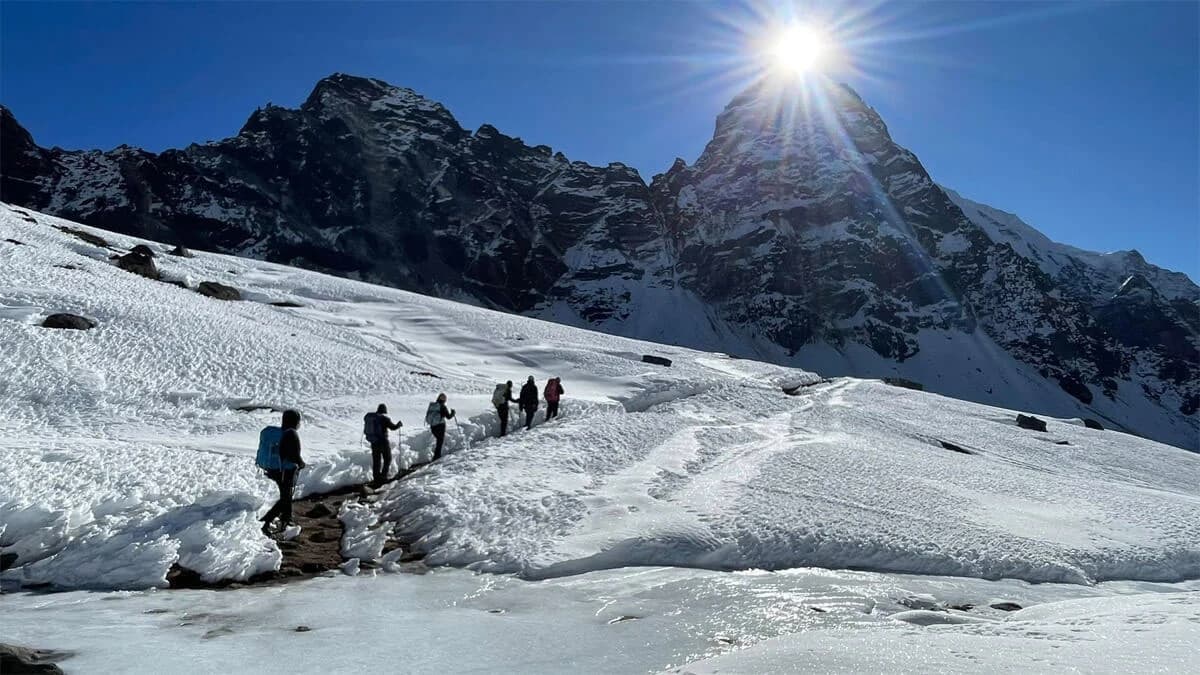
- Take on Cho La Pass at around 5,420 metres, the highest and most demanding crossing of the trek
- Leave the Gokyo Valley behind and continue through Dzongla before joining the Everest Base Camp trail
- Reach Everest Base Camp and see the Khumbu Glacier up close
- Get an early start for Kala Patthar, one of the best viewpoints for Everest and the surrounding peaks
- Finish the trek at Gorakshep and fly by helicopter directly to Kathmandu, instead of walking back to Lukla, weather permitting
Gokyo Chola Pass EBC Trek with Helicopter Return Itinerary
The Gokyo Cho La Pass EBC trek 15 day Itinerary starts in Kathmandu and takes you into the Everest region by flight to Lukla. This Nepal trekking begins with a scenic flight to Lukla and continues through Phakding. Then the trail continues to Namche Bazaar before moving towards the Gokyo Valley. You then walk through Machhermo and reach the Gokyo Lakes, followed by an early morning hike to Gokyo Ri.
After Gokyo, the route heads to Thangna and across Cho La Pass before reaching Dzongla. You then join the Everest Base Camp trail at Lobuche and continue to Gorakshep. After the early morning hike to Kala Patthar, you return to Gorakshep and take a helicopter directly to Kathmandu, depending on the weather.
The helicopter brings you from Gorakshep to Kathmandu, where you have the rest of the day to relax before your departure from Nepal. The flight depends on weather, visibility and operating conditions, so the timing can change.
Note: This trek can be done in either direction. You can start with Gokyo, cross Cho La Pass, and continue to Everest Base Camp, then take a helicopter from Gorakshep to Kathmandu. You can also start with Everest Base Camp, cross Cho La Pass, reach Gokyo, and take a helicopter from Gokyo.
If you want to reduce the cost, the helicopter can take you only to Lukla, followed by the regular flight from Lukla to Kathmandu. This saves the cost of a longer helicopter transfer while also avoiding the walk back to Lukla. The helicopter arrangement depends on the route, weather, availability, and the operator’s schedule.
Gokyo Cho La Pass EBC Trek with Helicopter Return Cost
When researching the cost of the Everest Base Camp Trek, you may find different prices across travel agencies due to differences in included services and itinerary quality. The 15 day Gokyo Cho La Pass EBC Trek with Helicopter Return costs USD 2,775 per person for one traveler, USD 2,550 per person for 2 to 5 travelers, and USD 2,400 per person for groups of 6 to 20 travelers. The price depends on the number of people travelling together.
You can book the trek with a 10% deposit, and the quoted price is for the 15 day itinerary. Private arrangements or additional services outside the standard trek package may cost extra.
Gokyo Chola Pass EBC Trek Cost by Group Size
- 1 traveler: USD 2,775 per person
- 2 to 5 travelers: USD 2,550 per person
- 6 to 20 travelers: USD 2,400 per person
The group size affects the per person price, with the lowest listed rate applying to groups of 6 to 20 travelers. If you are travelling alone, the listed rate is USD 2,775 per person.
Best Season for Gokyo Chola Pass EBC Trek with Helicopter Return
The best time for Gokyo Chola Pass EBC Trek with Helicopter Return is spring and autumn. March to May and September to November are generally the better months for crossing Cho La Pass, visiting Gokyo Lakes and Gokyo Ri, and reaching Everest Base Camp. If I had to choose, I would go in October, with April, May and early November also being good options.
Gokyo Chola Pass EBC Trek in Spring Season
March, April and May are the spring trekking months in the Everest region. March can still bring snow around Cho La, especially in the first part of the month, so late March is a safer choice. April is a particularly good month for the Gokyo Cho La Pass Trek, with generally favourable trail conditions and good chances of seeing the surrounding peaks. May is also suitable, especially during the first half of the month.
Spring brings flowers to the villages and trails at the lower elevations, while the landscape around Gokyo and Cho La remains rocky, snowy and alpine. This is a good time to combine Gokyo Lakes, Gokyo Ri, Cho La Pass and Everest Base Camp in one trek without dealing with the coldest winter conditions.
Gokyo Chola Pass EBC Trek in Summer and Monsoon Season
June, July and August are the monsoon months in Nepal. I would not choose this period for the standard Gokyo Chola Pass EBC Trek with Helicopter Return unless these are the only months available for your trip.
The Khumbu region receives less rain than many other parts of Nepal, but rainfall can still affect the journey to Lukla, trail conditions and views of the mountains. Cloud can cover the peaks for much of the day, while rain or fresh snow can make the Cho La crossing less pleasant. The helicopter return is also dependent on flying conditions, so delays are possible when visibility is poor.
There are fewer trekkers during these months, which some people may prefer. For a first attempt at this route, however, I would choose spring or autumn instead.
Gokyo Chola Pass EBC Trek in Autumn Season
September, October and November are the main autumn trekking months. Early September can still have some rain, so the latter part of the month is generally a better choice.
October would be my first choice for this high altitude trekking in Nepal route. The weather is often favourable for the Cho La crossing, and the trails around Gokyo and Everest Base Camp are usually busy with trekkers. November is also a good option, particularly during the first half, although the mornings and evenings become noticeably colder.
You should expect more people on the trail during autumn, especially around Namche Bazaar, Gokyo and the Everest Base Camp section. That is the trade off for travelling during the most popular trekking period.
Gokyo Chola Pass EBC Trek in Winter Season
December, January and February are the winter months in the Everest region. Snow and ice can make Cho La much harder to cross, while temperatures around Gokyo, Dzongla, Lobuche and Gorakshep can become extremely cold.
Experienced trekkers can travel during winter when the route is open and conditions are suitable, but I would not suggest it for most first time trekkers attempting the Gokyo Cho La Pass EBC Trek. Snow at the pass can change the nature of the crossing, and poor weather can also affect Lukla flights and the planned helicopter return.
If I were planning this trek myself, I would choose October, followed by April, May or early November. Late March and late September can work too, but I would keep some flexibility in the schedule in case conditions around Cho La are not suitable.
Note: Off trekking seasons like monsoon (June to August) and winter (December to February) have their own advantages, such as fewer crowds and lush green or snowy landscapes, but trekkers must be prepared for heavy rain, muddy trails, cold weather, and limited services along the route.
Helicopter Return from Gorakshep to Kathmandu
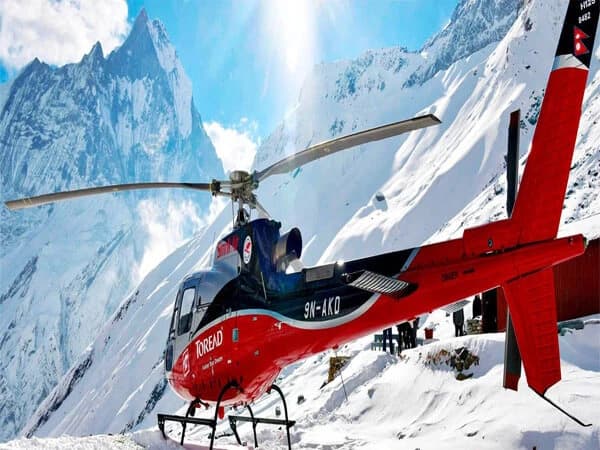
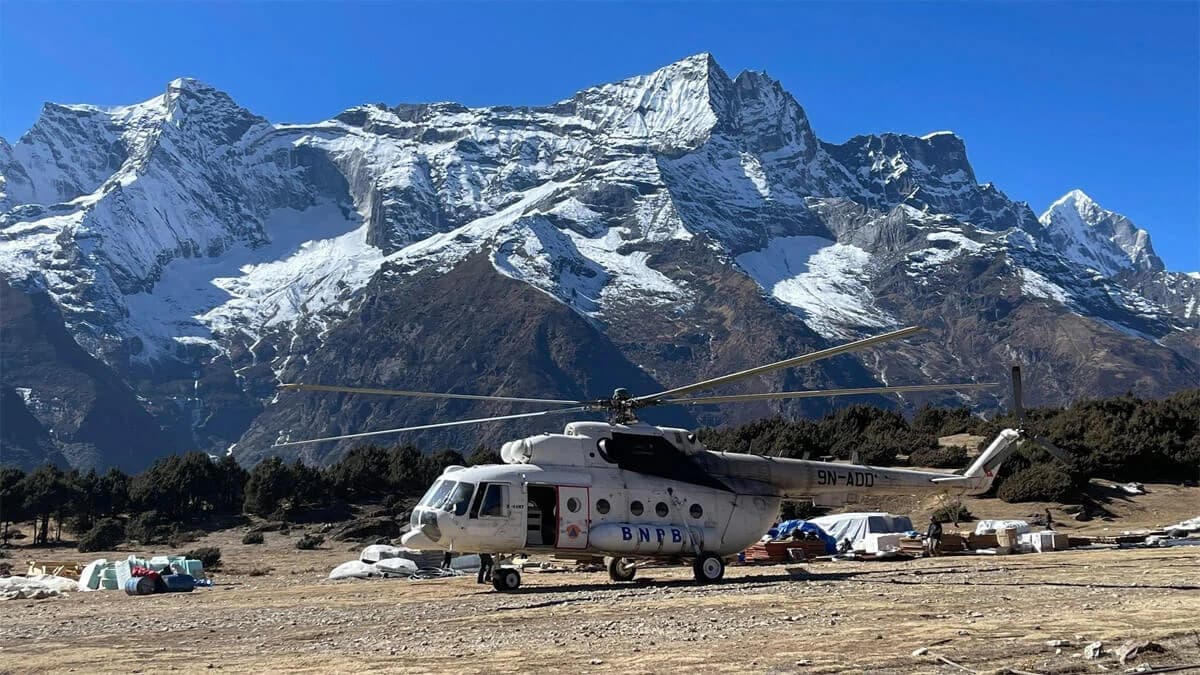
After the Kala Patthar hike, you return to Gorakshep and take a helicopter directly to Kathmandu. This means you do not have to walk back through Lobuche, Dingboche and Namche before leaving the Everest region.
The flight also gives you a different view of the places you have just walked through, including the Khumbu Glacier, valleys and Sherpa villages. It is a practical way to finish the trek after reaching Everest Base Camp.
The flight depends on weather and flying conditions at Gorakshep. Poor visibility, strong wind or other operating restrictions can delay the departure. The actual flight time and departure time therefore cannot be fixed in advance.
Why Choose a Helicopter Return from Gorakshep?
The main advantage is that you finish the trek without walking back to Lukla. After Everest Base Camp and Kala Patthar, the helicopter takes you from Gorakshep straight to Kathmandu. It saves several days on the return route and makes sense for trekkers who want to complete the Gokyo Cho La Pass EBC Trek without adding the full walk back through the Everest region.
Gorakshep to Kathmandu Helicopter Flight Route and Duration
The helicopter flies from Gorakshep directly to Kathmandu when conditions allow. The actual flight time can vary with the weather, route and landing conditions, so it is better not to promise an exact duration.
The flight takes you out of the high Khumbu after the Everest Base Camp and Kala Patthar section of the trek. Weather at Gorakshep can change quickly, so the departure time is confirmed on the day.
Safety and Weather on the Gokyo Cho La Pass EBC Trek
The weather around Cho La can change a lot during the day. Snow and ice can cover parts of the trail, while strong wind or cloud can make the Cho La Pass crossing harder. Your guide will check the conditions before leaving Gokyo or Thangna, especially when the pass has fresh snow.
Once you reach Gokyo, you are already at a high elevation, and the route gets higher as you move towards Cho La and Everest Base Camp. Cho La reaches 5,420 metres and Kala Patthar reaches 5,555 metres. Headache, nausea, dizziness or unusual tiredness can be signs of altitude sickness in Nepal, so tell your guide if you start feeling unwell.
At Namche Bazaar and Gokyo, there are days built into the route before the highest parts of the trek. Drinking enough water, eating properly and avoiding alcohol are useful habits during high altitude trekking in Nepal. Your guide can also keep track of how you are doing as the trail gets higher.
Good Everest Base Camp trek safety also means being prepared for changes in the weather. Flights to Lukla and the helicopter return from Gorakshep can be affected by poor visibility or strong winds. The exact flight schedule therefore depends on the conditions on the day.
Luggage Limitations on the Cho La Pass EBC Trek with Heli Return
Due to the high altitude nature of the flight, helicopters have strict weight restrictions, usually allowing 10 to 15 kg per person. Trekkers need to pack light and only bring essential items for the return flight, leaving extra luggage safely at teahouses or in Kathmandu.
Pack only what you actually need for the trek and keep your helicopter luggage within the limit given by the operator. Extra bags can usually be stored in Kathmandu through the trekking agency.
Environmental & Cultural Responsibility on the Everest Region
Trekkers in the Everest region are encouraged to follow Leave No Trace principles to protect the fragile mountain environment. This includes carrying all waste back, avoiding plastic use wherever possible, staying on marked trails, and respecting wildlife and natural resources. Simple actions like using refillable water bottles and proper disposal of trash help preserve the beauty of the Himalayas for future generations.
Respecting local culture and traditions is equally important while trekking through Sherpa villages and monasteries. Dressing modestly, asking permission before taking photos, and following local customs show cultural sensitivity. Supporting local communities by staying in teahouses, hiring local trekking guides and porters, and purchasing local products helps strengthen the regional economy and ensures that tourism benefits the people who call the Himalayas home.