Mera Peak Climbing Base Camp Service

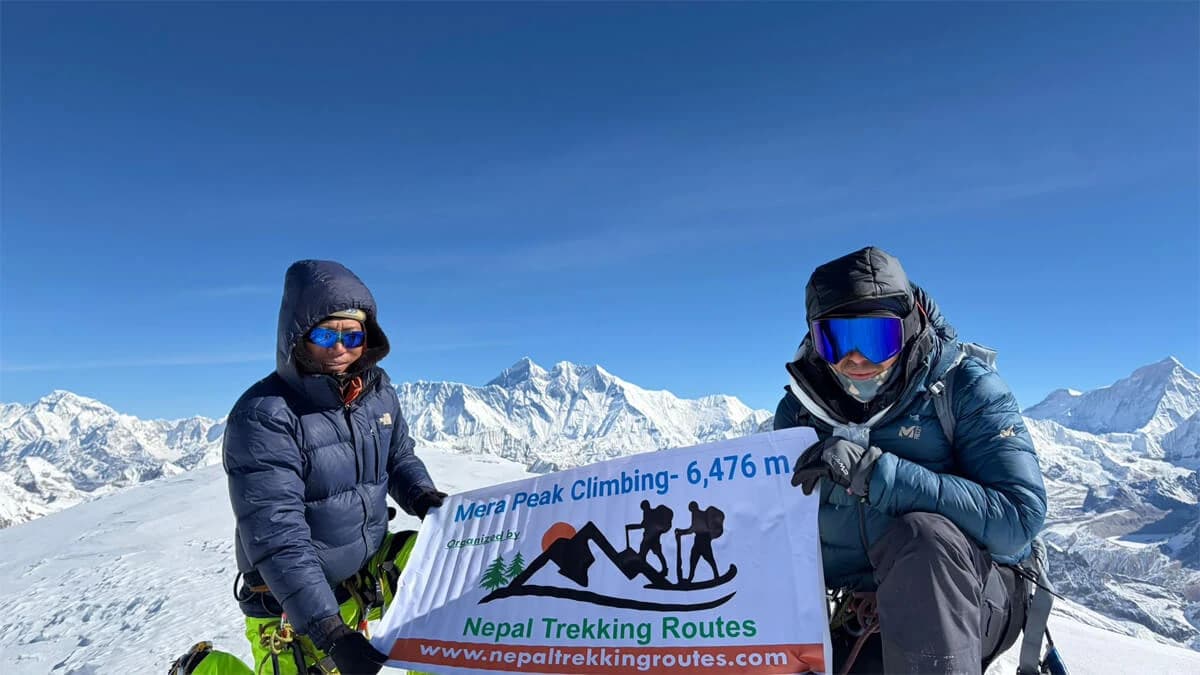
Don’t want to book a whole Mera Peak trip? No worries, we’ve got you covered with our Mera Peak Climbing Base Camp Package that gives full support from base camp to the summit. Standing on top of Mera Peak is a feeling you won’t forget.

With our Mera Peak Climbing Base Camp Service, the hard work at base camp is taken care of. Guides and porters set up tents, prepare meals, and make sure all your climbing gear is ready. This way, you can focus on trekking, trying out ropes and glaciers, and making your way safely to the summit of the famous Mera Peak. It’s a real, hands on peak climbing experience in Nepal that lets you enjoy every moment without worrying about the small stuff. 

Where exactly is Mera Peak located?

Mera Peak is in the Everest region of Nepal, in the Solukhumbu district, surrounded by the Hinku and Hongu valleys. It stands at 6,476 meters, making it the highest trekking peak in Nepal. The climb usually starts from Lukla, followed by a trek through villages like Khare and Thangnak, passing high altitude landscapes, glaciers, and moraines before reaching base camp.

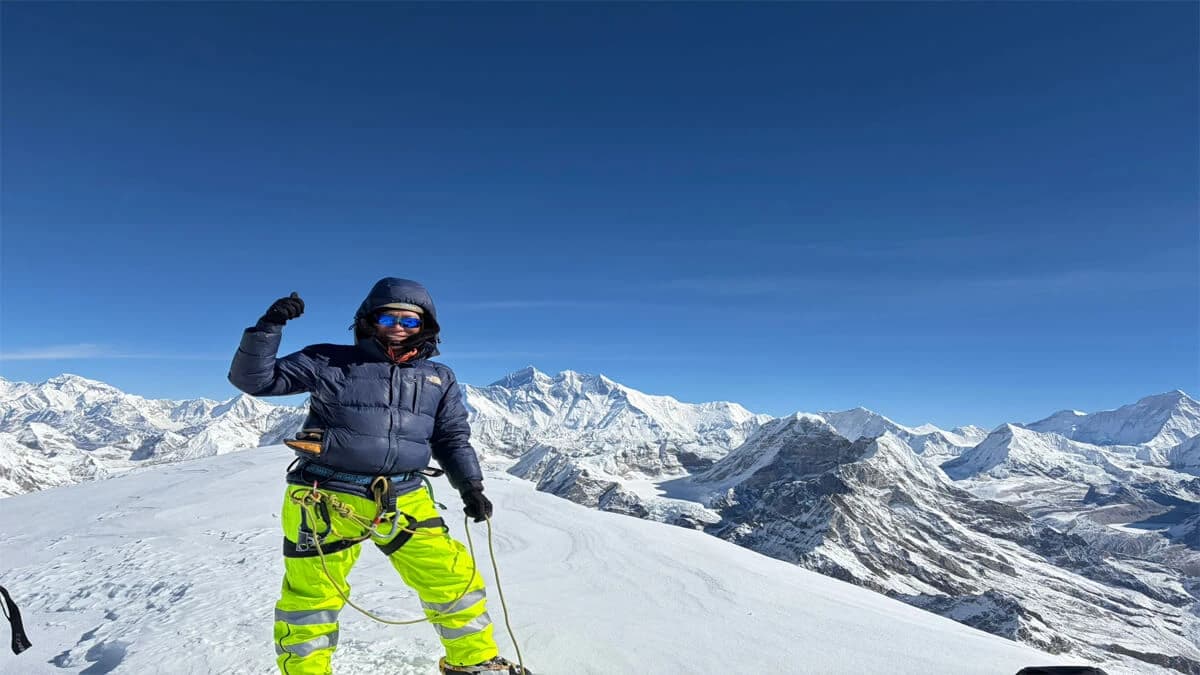
From the summit, you get one of the best extended views in the Himalayas, including Mount Everest, Lhotse, Makalu, and Cho Oyu. It’s a peak that combines technical climbing with sceneries just like a painting, which is why it’s so popular among trekkers looking for their first high altitude summit.

What does Mera Peak Base Camp Service mean?

It’s really simpler than you think. When you get to base camp, the guides and porters are there to take care of the tents, meals, and climbing gear so you don’t have to worry about all that stuff. You’ll get a chance to practice on ropes and the glacier, get ready for the climb, and then just focus on moving toward the summit of Mera Peak.

This doesn’t cover the trek from Lukla or everything before base camp, but trust us, when you have people to handle the tricky parts at base camp, it makes the whole climb way easier and way more fun.

Mera Peak Base Camp Service Highlights 

  • Guides who know every twist of the trail and keep the trek safe and enjoyable
  • Porters who carry the heavy gear so climbers can focus on the views and the experience
  • Comfortable tents and hot meals waiting at base camp after each day of trekking
  • All permits and paperwork handled, so the journey stays smooth from start to finish
  • Daily plans designed to help the body adjust to higher altitudes naturally
  • Step by step guidance from the starting point all the way to base camp
  • Assistance in preparing for the summit with tips and local knowledge
  • Opportunities to explore remote villages and witness authentic Himalayan life
  • Stunning landscapes, glaciers, and beautiful mountain views along the way

Why Choose a Mera Peak Base Camp Service Instead of Going on Your Own?

Climbing Mera Peak is straightforward in the trekking section, but once you reach base camp the situation changes a lot. From there you are on snow and glacier terrain, and the final climb is where most people actually need help.

A base camp service is mainly for that climbing part. You get a guide who knows the route on the glacier, how to use ropes, crampons, and how to move safely on summit day. Without that, even fit trekkers can struggle because it is not just walking anymore.

Weather also becomes a real factor up there. Some days you can see clear summit views in the morning and by afternoon everything is whiteout. In those conditions, having someone experienced makes a big difference because decisions need to be quick on the Mera Peak expedition.

At base camp, the team also helps you prepare for the summit push. Gear check, timing, and small adjustments are done there before you go higher. If something feels off physically, you also have people who understand altitude and will adjust the plan.

Most people don’t choose a Mera Peak climbing base camp service because it is fancy. They choose it because the upper part of the mountain is simply not something you want to handle alone.

Permits Required for Mera Peak Base Camp Climbing Service

Climbing Mera Peak is split into two parts. First is the trek to base camp which requires permits like Makalu Barun National Park Entry Permit and Khumbu Pasang Lhamu Rural Municipality Permit, and then the actual mountaineering section from base camp to the summit. This package only focuses on the climbing part from base camp onwards, where glacier travel, rope work, and summit push begin.

Even though your trek to base camp is arranged separately, this is the permit you need to understand for the climbing section:

Mera Peak Climbing Permit

This is the main mountaineering permit for the summit attempt. It is issued by the Nepal Mountaineering Association and is required for anyone climbing above base camp. It covers the actual expedition part of Mera Peak.

Important note about this service

This is a base camp climbing support service only, meaning we assist you from base camp to the summit and back. Trekking arrangements, flights, and permits for reaching base camp are not included in this package.

If you want a completely stress free experience, we also offer a full Mera Peak climbing expedition package. That includes everything from Kathmandu, permits, trekking logistics, and full support from start to summit.

Why Base Camp Service Matters While Climbing Mera Peak 

Why Base Camp Service Matters While Climbing Mera Peak

Once you reach base camp, the nature of the climb changes. You are no longer on trekking trails. From here it is snow slopes, glacier walking, and slower movement that takes more effort than people expect.

A Mera Peak base camp service matters because this is the point where the technical part actually begins. You are moving on rope sections, using crampons, and following a fixed route that can change slightly depending on the condition of the ice.

Weather also becomes a real factor here. Sometimes the plan changes at the last minute because the wind picks up or visibility drops. Most climbers don’t decide summit timing alone at this stage because it is easy to misjudge conditions at that altitude.

Even simple things feel different up there. Walking pace slows down, rest breaks become longer, and you have to think more about saving energy for the summit push instead of rushing.

In short, base camp support is what helps you handle the climb properly once trekking ends and the real mountain section starts.

Mera Peak Climbing Base Camp Service Cost

For our Mera Peak climbing base camp service cost, it is usually around:

  • USD 600 to USD 800 per person

This is for the climbing part from base camp to the summit and back on Mera Peak.

We provide a licensed climbing guide, rope support when needed on glacier sections, and help during the summit push. Nothing fancy, just proper support where it actually matters on the mountain.

This cost does not include the trek to base camp, flights, hotels, or permits needed before reaching base camp. Those are separate or included only in our full Mera Peak climbing expedition package.

If you want everything handled from Kathmandu, including permits, trekking, and full logistics, then the full package is the easier option.

How does the Mera Peak Base Camp Service Work

Once you reach base camp of Mera Peak, that is where our work starts.

We usually take the first part of the day easy. Gear is checked properly one by one. Boots, crampons, harness, everything. Many climbers don’t realize at first that a slightly loose boot or wrong crampon fit can cause real trouble later on the ice, so we fix all that before anything else.

After that, we don’t push hard training or anything like that. You just move around a bit on snow, get used to how it feels, and rest. Some people adjust quickly, some need more time, and that is completely normal at this stage.

Then we wait for the right weather window. On this mountain, you don’t really “choose” summit day freely. You just go when conditions look right and your body feels ready enough.

On summit day, the guide goes first on the glacier route and you follow slowly, step by step. It is quiet, slow climbing, nothing rushed.

After the summit, we come back down to base camp the same way and wrap everything from there.

That’s basically how it works. Simple routine, but everything depends on patience and timing once you’re at that altitude while peak climbing in Nepal.

2 Day Mera Peak Base Camp Service Itinerary

This is a 2 day Mera Peak climbing base camp service itinerary for Mera Peak, starting from Khare and finishing back at Khare after the summit. On Day 1, you walk uphill from Khare to High Camp, taking about 5 to 6 hours as the trail slowly changes from rock to snow, with breaks in between before staying in basic tents at around 5,800m.

On Day 2, you start very early in the dark and climb steadily over the glacier to the summit at 6,476m, stay for a short time, then descend all the way back to Khare on the same day, which is long and tiring but feels good once it’s done.

Who Should Consider Mera Peak Base Camp Service

A Mera Peak climbing base camp service on Mera Peak is mainly for trekkers who are already comfortable getting themselves up to base camp and then want proper support only for the climb above it.

Most people who choose this setup are not beginners in trekking, they have already done long hikes in Nepal or similar places, but they have never been on snow or glacier terrain before. That is usually the main gap.

It also works for climbers who want to reduce the Mera Peak climbing cost a bit by skipping a full expedition package, but still don’t want to take risk on the summit section where rope work and crampons are needed.

To be honest, we usually see independent trekkers choosing this option. They manage the journey to base camp themselves and then join the team when things start getting technical.

If someone wants everything arranged from Kathmandu like flights, hotels, permits, and full support from day one, then a full Mera Peak climbing expedition package makes more sense than just base camp service.

In simple terms, this service is for people who are okay handling the trek part on their own, but want experienced support when the mountain actually becomes a climb.

Why Book with Nepal Trekking Routes 

If you book the Mera Peak climbing base camp service on Mera Peak with Nepal Trekking Routes, you’ll be with a local Nepalese team who actually spend time on these mountains every season. We are based here in Nepal, so things are kept simple and real, not overcomplicated. At base camp we help you with the climbing part, like checking gear, moving on ice, and getting ready for the summit when the weather feels right. It’s just straightforward support from people who know the mountain well and do this regularly.

Itinerary

This is a 2 day summit itinerary for the final climb from Khare on Mera Peak, covering the move to High Camp and the summit push to 6,476m before returning back to Khare. It is a simple and direct climbing plan used for most Mera Peak expeditions in Nepal.

Nepal Trekking Routes can also change this plan if needed. We adjust it based on your pace, how you are feeling, and the weather during the trip.

Trip PlanExpand All

You start from Khare after breakfast and begin climbing straight up the slope. There is no easy walking section here, it is mostly uphill from the start.

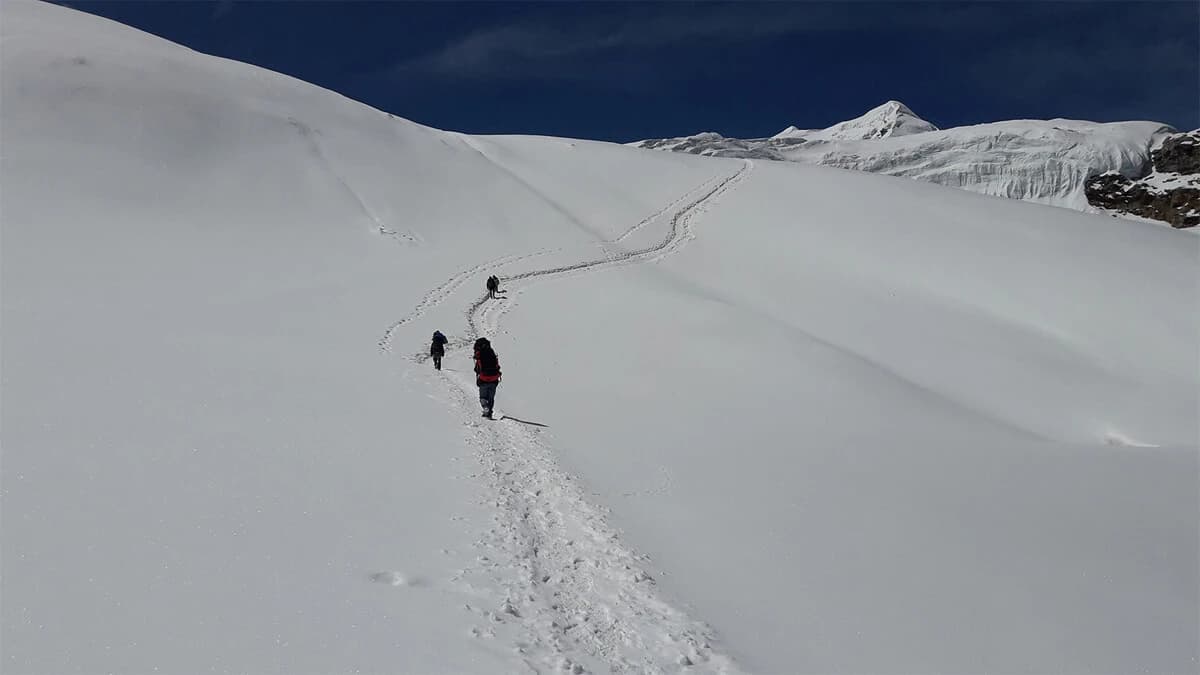
The trail first goes over rocky ground, then slowly turns into snow as you gain height. It is not a technical climb, but the altitude makes you move slowly and take regular breaks just to catch your breath.

It usually takes around 5 to 6 hours to reach High Camp, depending on weather and how strong the group feels that day.

High Camp is very basic. Just tents placed on snow. You arrive, melt snow for water, eat something simple, and rest. Nights are cold and sleep is often light because of wind and altitude.

Max Altitude: 5045-5800m

You leave High Camp very early, usually around midnight or early morning. You walk in a line with headlamps, following your guide up the glacier.

The slope is long and steady, not very steep, but it feels hard because of the altitude. After 6,000m, every step becomes slow and heavy, so the pace stays steady without rushing.

You continue like this until you reach the summit of Mera Peak at 6,476m.

After a short stop at the top, you start descending the same way back down to High Camp and then continue all the way to Khare.

It is a long day, usually 8 to 12 hours in total, and sometimes longer depending on weather and group pace. When you reach Khare, you are completely tired, but it is also the most memorable part of the climb.

Max Altitude: 6476 m
Plan An Amazing Private and Tailor-Made HolidaysNot satisficed with this itinerary? Share your idea with our travel Expert. We make your dream come true.
Customize Trip
Essential Information

Best Time to Climb Mera Peak and Seasons for Mountaineering in Nepal

Climbing Mera Peak is not only about fitness. Timing matters just as much. We usually see strong climbers struggle in the wrong season and average trekkers do well when the weather is on their side.

Mera Peak climbing base camp service in spring (best time to climb Mera Peak)

Spring is what most teams pick for the best time to climb Mera Peak in a mountaineering in Nepal expedition. Snow conditions are usually more settled and mornings feel stable enough to move without too much stress.

From what we see on the ground, most summit pushes happen in this window because the rhythm of the mountain is more predictable. You still get cold nights, but the climbing hours feels fine if you pace yourself properly.

This is also the season when other peaks like Island Peak and Lobuche Peak get busy. The trails feel active, but everything runs in a more organised way.

Mera Peak climbing base camp service in autumn

Autumn feels different. After the monsoon, the air clears and visibility becomes one of the best of the year. You can actually see the route, which makes people feel more confident during the climb.

We often notice climbers doing well here because they don’t feel rushed. The mountain feels open, and the weather windows are usually fair if you plan properly.

This is also a popular time for trekkers doing the Everest Base Camp trek, so the Khumbu side of Nepal feels active but not chaotic.

Mera Peak climbing base camp service in winter

Winter is where people usually get surprised. It is not impossible, but the cold is sharper than expected, especially above base camp. Movement slows down naturally, and even simple tasks take more effort.

We have seen climbers underestimate how much energy cold wind takes away on summit day. The climb itself is still there, but patience becomes more important than speed.

Some experienced climbers still attempt peaks during this time, but it is not for everyone.

Mera Peak climbing base camp service in summer

Summer or monsoon season is the least reliable. The trail can feel wet, and visibility changes quickly without warning. Some days are fine, but planning becomes difficult because weather windows are short.

Even in other regions like Annapurna Circuit trekking, people adjust plans often during this time. For Mera Peak, it is usually not the preferred season unless someone is very flexible with timing.

Mera Peak Climbing Difficulty

Mera Peak climbing difficulty is not technical so you do not need real climbing experience but it is still a tough climb because of the altitude. You need good stamina because the days are long and you are mostly walking uphill on snow and glacier.

The main part of Mera Peak climbing difficulty starts after you cross 5000 meters. The air gets thin and even slow walking feels tiring. You have to keep a steady pace and take breaks often.

Summit day is the hardest. You start early, walk for many hours in cold conditions and just keep moving step by step. If you are fit and used to trekking at high altitude it is doable but the altitude is what really makes it challenging for most people.

Mera Peak Climbing Route

The Mera Peak climbing route on Mera Peak usually starts from Kathmandu to Lukla by flight. If flights are not working, some groups take a drive to Salleri and then start trekking from there. From Lukla, you just keep walking deeper into the Hinku Valley, passing small stops like Paiya, Panggom, Kothe, and Tangnag until you reach Khare. This is where most people stay for a bit to adjust before going higher during a Mera Peak climbing expedition in Nepal.

From Khare, the trail starts going up to Mera Base Camp and then High Camp, depending on weather and how your body is feeling that day. After this, everything becomes snow and ice. This is the main mountaineering in Nepal expedition section, where you use crampons and sometimes rope while crossing the Mera Glacier.

The summit push is a long steady walk on snow up to the ridge and then Mera Central. If the weather is clear, you can see Everest, Lhotse, Makalu, and Cho Oyu from the top, which is the main highlight of this Nepal peak climbing route.

Coming down is the same way back through Khare and the Hinku Valley to Lukla. It usually feels faster, but still takes time because of the long distance.

Altitude sickness and acclimatization tips for Mera Peak

Climbing Mera Peak is mostly about how slowly you go, not how strong you are. The higher you climb, the thinner the air gets, and your body needs time to understand that change.

Most people don’t feel anything serious at the start. It usually begins with small things like a light headache, low energy, or just not feeling like eating much. Sometimes sleep also feels a bit light when you reach places like Khare during a Mera Peak climbing expedition in Nepal.

What really helps is giving your body time. Staying an extra night when needed is very normal on this route. People who take it easy usually adjust better than those who try to push the pace.

Drinking water regularly helps, even when you don’t feel thirsty. Eating small meals also matters because your body still needs energy even if appetite drops a bit. And walking slowly is important, even if others move faster.

Most of the time, altitude issues come from going up too quickly. If you move at an equal pace and listen to your body, the climb usually feels much more manageable.

Gear and Equipment Recommendations for Mera Peak Climbing

Climbing Mera Peak, known as the highest trekking peak in Nepal, is not very technical, but once you go above base camp, your gear really starts to matter. Most of the time, problems we see are not because someone is unfit, but because something small like boots or crampons is not right.

Basic climbing gear (above base camp)

For a Mera Peak climbing expedition in Nepal, these are the main things you need for the summit section:

  • Crampons (make sure they fit your boots properly)
  • Ice axe (mainly for balance on snow)
  • Climbing harness
  • Helmet
  • Carabiners and rope support (usually managed by the guide in base camp service)

Crampons are one of the most important parts. If they don’t fit well, walking on snow and glacier becomes uncomfortable very quickly.

Clothing (what actually matters up there)

Clothing is something people often don’t take seriously enough. Weather changes fast above base camp.

  • Warm down jacket
  • Waterproof jacket and pants
  • Thermal layers
  • Good gloves (at least two pairs)
  • Warm hat and face cover
  • Sunglasses

Cold and wind can drain your energy faster than the climb itself, so staying warm makes a big difference.

Footwear (very important)

Boots are probably the most important part of your Mera Peak climbing gear list.

  • Insulated mountaineering boots
  • Gaiters

Regular trekking shoes are not enough once you are on snow. We often see people struggle just because their boots are not suitable or not fitted properly with crampons.

Small but important things

  • These are easy to forget but you will notice if they are missing:
  • Headlamp (for early morning summit push)
  • Backpack (30–50L)
  • Water bottles
  • Basic first aid
  • Sunscreen and lip protection

Real tip from experience

For anyone booking a Mera Peak climbing base camp service, the guide usually takes care of rope setup and safety on the route. But your personal gear is still your responsibility.

If your gear is right, the climb feels very steady. If not, even a simple Nepal peak climbing expedition like Mera can feel much harder than it should.

Guide and Porter Support for Mera Peak Base Camp Climbing

Most people don’t really think about support until they reach higher up on Mera Peak. The trek feels easy, but once you move above base camp, it starts to feel like a different kind of climb.

From what we’ve seen, most people are fine on the trek, but above base camp is where they start feeling unsure, especially on the glacier. The guide walks ahead, finds the safer line, and keeps the pace steady so no one burns out too early. It’s not about rushing to the top, it’s more about moving right.

Porters usually help only up to base camp, carrying the heavier bags so you reach there with enough energy. After that, it’s mostly you and the guide for the climb itself.

By the time you come back down, most climbers say the same thing, having someone there who knows the mountain made it a lot less stressful. It’s still your climb, but you’re not figuring everything out on your own.

Food, Accommodation, and Water at Mera Peak Climbing

On Mera Peak, life becomes very simple as you go higher. You don’t really get choices, you just take what is available and keep moving.

Food changes from place to place, but don’t expect variety. In lower villages you might get a normal mix of rice, lentils, noodles, maybe eggs. As you go higher, it slowly becomes the same few meals repeated. Most days, you eat whatever is ready in the kitchen that evening.

Accommodation is basic throughout. Small rooms, thin beds, cold air at night, and no heating once you are higher up. In places like Khare, it gets noticeably colder and you just settle in early after dark.

Water is available along the route, usually boiled or filled from safe sources. You just refill whenever you get the chance. It is cold most of the time, but you drink it anyway because staying hydrated is important at altitude.

In the end, everything is kept very basic. Nothing fancy, just enough to support the climb.

Do I need travel insurance for Mera Peak climbing?

Yes, you should have it for Mera Peak, no doubt about that.

We don’t really see people thinking about it much before the trip, but once you are up there, things are far away and simple problems can become serious quickly. If someone gets sick or injured, getting help is not easy, and helicopter rescue is the only real option in most cases.

So it’s better if your insurance already covers high altitude trekking and emergency evacuation. Normal travel insurance usually doesn’t go far enough for a Mera Peak climbing expedition in Nepal.

Most experienced trekkers we meet just get it sorted before coming, then forget about it and focus on the climb.

Other Base Camp Services and Alternatives for Peak Climbing in Nepal

Honestly, if you’re looking at base camp style climbing in Nepal, you don’t only have Mera Peak. A lot of people also end up comparing it with Island Peak or Lobuche Peak in the Everest side. It’s not like one is “better”, it’s more about what kind of climb you actually want. Island Peak feels a bit more sharp once you hit the glacier, and Lobuche just feels more serious overall compared to Mera.

On the Annapurna range side, you’ve got places like Pisang Peak and Chulu East too. The setup is kind of similar there, you trek in, settle at base camp, and then the real climbing starts with guide support.

In simple terms, the idea is the same everywhere, you reach base camp on your own trekking route and then focus mainly on the climb with support from a guide team on the mountain.

FAQs

Yes, a guide is strongly recommended once you leave base camp. The route goes over glacier and snow where navigation and safety matter. A guide helps with route finding, pace control, and safety during the summit push.

No. It is often called a trekking peak, but it is still a high altitude climb at 6,476m. You don’t need technical climbing experience, but you will feel the altitude strongly. Many people underestimate this part.

Usually 2 days from Khare. One day to reach High Camp, and the next day for summit and return. But weather or slow pace can easily make it longer.

The summit is 6,476 meters, the highest trekking peak in Nepal.

Yes. Nepal Trekking Routes can adjust the Mera Peak climbing base camp service depending on your pace, fitness, and weather. If you want full support from the start of the trek, you need to book a full Mera Peak climbing package.

You need proper mountaineering boots, crampons, ice axe, harness, helmet, and warm layers. If your boots or crampons don’t fit properly, the climb becomes uncomfortable fast. There is no shortcut for gear.

Spring (March to May) and autumn (September to November). Outside these seasons, weather is less stable and climbing conditions become more unpredictable.

The summit day. You start very early, walk slowly on glacier, and deal with low oxygen above 6,000m. It is long, cold, and tiring.

Yes. It is common because the climb goes above 6,000m. Some people feel it mildly, some more strongly. That’s why slow pace and proper acclimatization are important.

It gets very cold above high camp, especially at night and early morning. Temperatures can drop far below freezing, especially during summit push.

You can do it solo, but most people join a guided arrangement. Even solo climbers usually end up with a guide for the summit section for safety.

20 years of Adventure
Why Travel with Nepal Trekking Routes?
We Care for Your Safety
Nepal Trekking Routes always focus on safety, and satisfaction of our valued clients. Our Trekking guides are highly experienced and trained to operate various group trekking trip in high Himalaya.
Provide Financial Protection
NTR prioritize healthy financial safety for clients, ensuring proactive safeguarding of client interest. Our commitment strengthens our role as trusted partners maintaining standards with dedication and Excellence.
100% Local Guide
100% Local Guide
Traveler looking for experience authentic insights through trekking in Nepal NTE offer your 100% local guide who help you to experience unique perspective ensuring and enriched journey customize to your interest.
Personalized Service
We always provide one guide and one porter to two guests in order to meet our standard of providing standard service. Impeccable hospitality and quality services are guaranteed while traveling with us.
Know More
Book Now