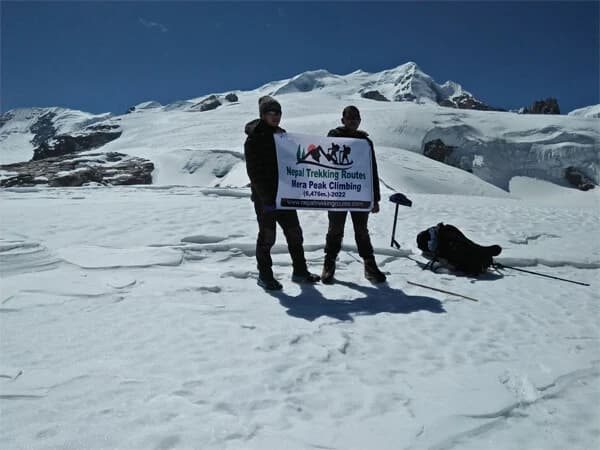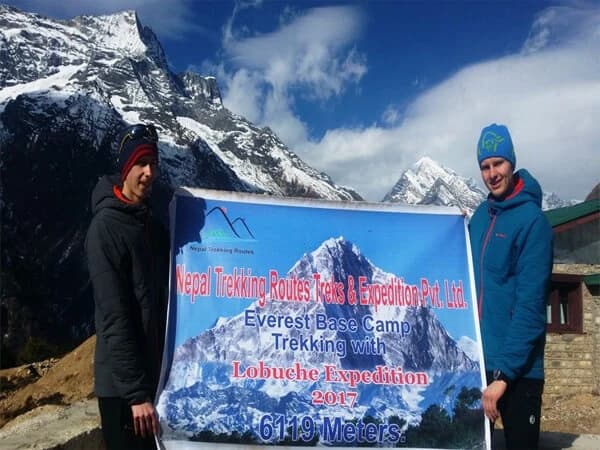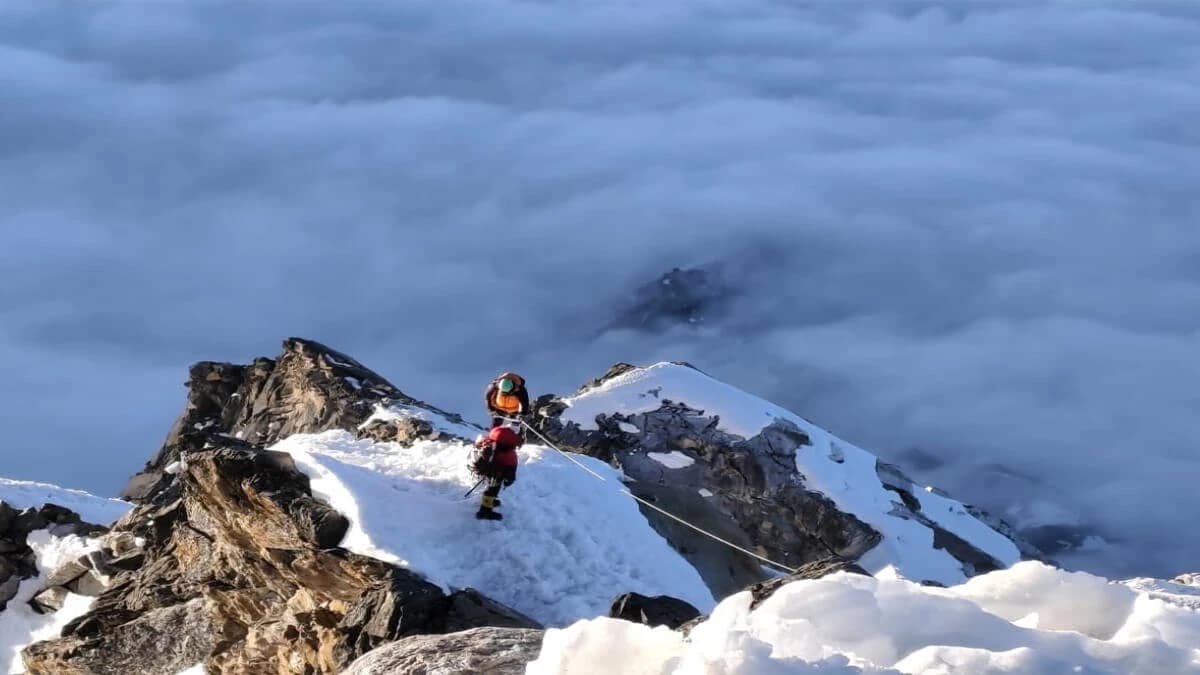
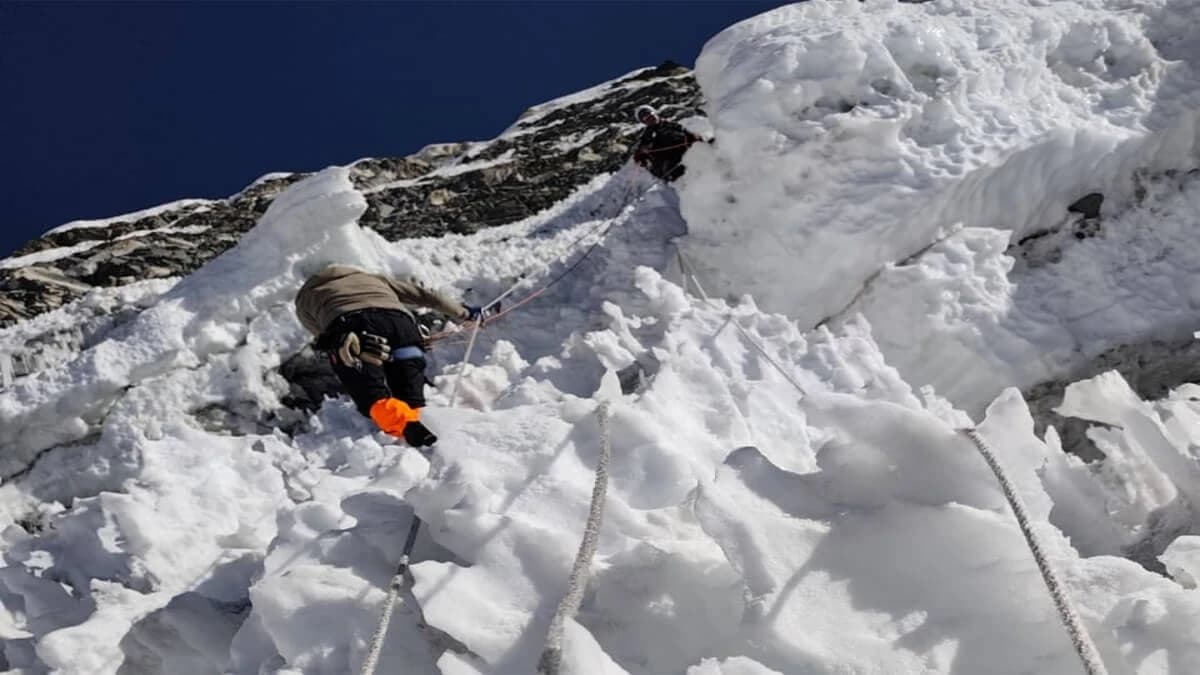
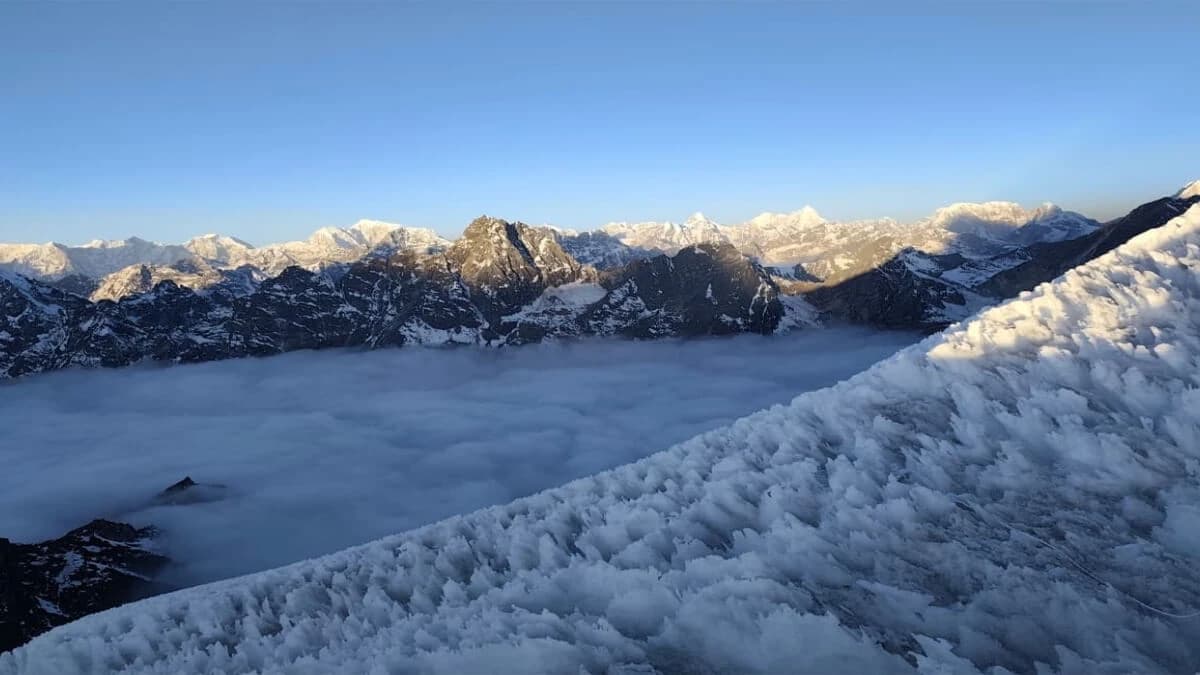
Lobuche West Peak climbing does not wait for anyone. At 6145 meters every step feels like the mountain is daring the body to quit. The air is thin, the ice is sharp, and the wind does not negotiate. Everest, Lhotse, and Nuptse loom overhead, silent but impossible to ignore.
This Nepal trekking peak does not care about selfies, rest stops, or plans. This peak climbing experince in Nepal leaves everyone who tries it sore, shivering, and strangely alive. Lobuche Peak climbing is definitely not a story that ends at the summit. It stays in the chest, the legs, and the head long after the last step is taken.
Where exactly is the Lobuche West Peak Climbing located?
Lobuche West Peak climbing is in the Khumbu region of Nepal, inside Sagarmatha National Park. It sits above the tiny village of Lobuche and the Khumbu Glacier. The peak reaches 6145 meters and is right next to huge mountains like Everest, Lhotse, and Nuptse. It is remote, cold, and unforgiving, and that alone is what makes Lobuche West Peak one of the toughest 6000 meter peaks in Nepal.
History of Lobuche West Peak Climbing in Nepal
Lobuche West Peak climbing has been testing climbers since 1955 when it was first reached via the South Shoulder. At 6145 meters in Nepal’s Khumbu Himalaya, the climb does not care how much you are suffering. It only cares if you are brave enough to put your feet on it. Unlike Lobuche East, this peak is sharper, icier, and demands more than just endurance. Every step requires skill and focus.
For years, only a handful of mountaineers attempted it because it is not a casual trekking peak. It is a proper Everest region climbing that punishes mistakes. Even now, Lobuche West climbing is respected as one of the tougher 6000 meter peaks in Nepal, and anyone who has stood on its summit knows it leaves a mark long after leaving the mountain.
Lobuche West Peak Climbing Route and how to reach it
The standard Lobuche West Peak climbing route goes up the South Shoulder, the same path used in the first recorded ascent in 1955. To reach the base, climbers start from Lukla and trek through the Khumbu region of Nepal, passing through Namche Bazaar, Dingboche, and Gorak Shep before arriving at Lobuche village. This village serves as the main base for high camps before the summit attempt.
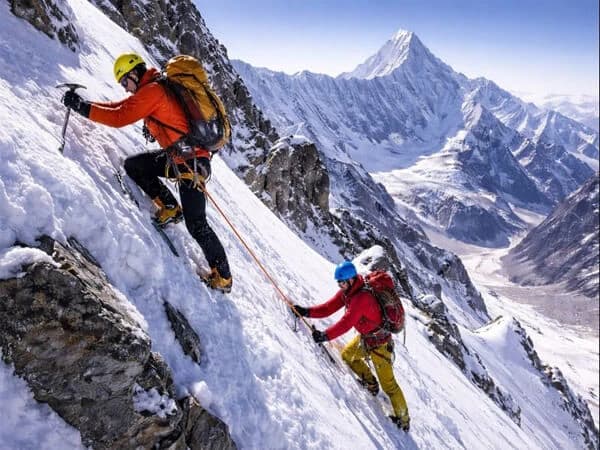
The climb involves steep snow and ice slopes, exposed ridges, and sections that require ropes, crampons, and technical mountaineering skills. With a summit at 6145 meters, Lobuche West Peak climbing demands careful acclimatization and preparation in the Everest region.
Why does Lobuche West Peak Climbing Stand Out?
Lobuche West Peak climbing stands out because it does not feel like a normal trek in Nepal. It sits in the Everest region, but the experience is very different from Everest Base Camp or Annapurna Base Camp. Those routes are long and beautiful, but this one asks for more. There is more exposure, more effort, and a lot less room to move carelessly. That alone changes the whole mood of the climb.
What really makes Lobuche West different is that it gives climbers a real summit above the Khumbu, not just a viewpoint or a famous trail. It feels quieter, more serious, and less packaged than many popular trekking routes in Nepal. With Everest, Lhotse, and Nuptse close around you, the mountain does not feel like a tourist place at all. It still feels raw, which is very rare to find now.
Lobuche West Peak Climbing Highlights
- Reaches 6145 meters in Nepal’s Everest region for a real summit experience.
- Steep snow and ice slopes with rope sections make it a true mountaineering climb.
- Close views of Everest, Lhotse, Nuptse, and Ama Dablam throughout the climb.
- Rises above Lobuche village and the Khumbu Glacier, giving a raw Himalayan feel.
- Quieter than popular treks like Everest Base Camp or Annapurna Base Camp, so the experience feels personal.
- Requires real climbing skill, more than most trekking peaks in Nepal.
- The terrain is exposed and alpine, testing focus and balance from start to finish.
- Standing on the summit feels earned, not like ticking off a trek in Nepal.
Unique Experiences on the Lobuche West Peak Climbing adventure in Nepal
Climbing to Lobuche West Peak in Nepal gives you experiences you won’t get on most other treks. You start by walking through Sherpa villages where people live simply, take care of yaks, and hang prayer flags along the trails. Visiting monasteries and seeing how locals live day to day gives a real scenario of the culture in the Khumbu region.
The climb is challenging in itself. You move from Base Camp at 4950 meters to High Camp at 5400 meters, dealing with glaciers, ice slopes, and steep sections. Living at these camps shows you what high altitude life is really like, from setting up tents to adjusting to the thin air.
Reaching the summit is unforgettable. You can see Cho Oyu, Nuptse, and other big Himalayan peaks around you. The trails are quieter than the busy Everest trekking routes, so there are times when it's just you, your team, and the mountains. Along the way, you also meet Sherpa guides and climbers who share stories and tips that make the whole journey feel personal and memorable.
Major Attractions during the Lobuche West Expedition in Nepal
If you are doing the Lobuche West expedition, the trip is way more than just reaching the top. The Sherpa culture along the way is amazing. Meeting locals, sharing tea, hearing their stories, and seeing how they live in the Khumbu region makes the whole journey feel real. Small monasteries, mani walls, and prayer wheels pop up everywhere, giving you little moments to pause and just be a part of the Khumbu Region's magic.
The side hikes to Everest Base Camp and Kala Patthar are absolute musts. Standing there, looking at the peaks around you, and realizing what you just walked through is humbling. The little things make it fun too. Laughing with fellow trekkers, kids waving in villages, wandering dogs in teahouses, and nights in tents under the stars all become part of the memory.
The summit is incredible, but the real story is everything in between. The Sherpa hospitality, culture in the Khumbu region, extra hikes, and small human moments are what make this expedition in Nepal unforgettable. You do not just climb a mountain, you live an experience that sticks with you all your lifetime.
Types of lobuche West Peak Climbing Packages in Nepal
When you climb Lobuche West Peak, you have a few ways to do it, and each comes with its own reality. Fully camping packages for Lobuche West peak climbing are the most common. You get tents at base and high camps, meals, a guide, and Sherpa support. You only carry your daily stuff, but don’t expect comfort. Nights are freezing, the wind can hit like a wall, and altitude hits everyone differently. This setup is for people who want support but know the climb will still demand focus and effort.
Then there are customized Peak Climbing packages by Nepal Trekking Routes. These let you choose how fast to move, when to rest, and how much help you want. Guides and Sherpas are there, but you make most of the decisions. It’s for climbers who have some experience and want flexibility without ignoring the risks.
Some go for trek and climb packages, which start from Lukla, pass Namche Bazaar and Dingboche, and then push for the summit. It gives you a chance to adjust to the altitude before hitting the serious climbing sections.
Finally, summit focused packages are for people who know the region and just need support for the climb itself. You carry your gear, move fast, and there is no time to waste. One mistake here can cost you hours or more.
Who Should Attempt the Lobuche West Peak climb in Nepal?
Let’s be real. Lobuche West Peak is not easy. It is high, cold, and physically demanding. Even experienced trekkers get tired, sore, and sometimes scared. If you are okay with slow, hard climbs, freezing mornings, and rough nights, this peak can be done. If you are looking for comfort or an easy walk, this is not for you.
Who should really attempt it:
- People who have done higher altitude treks in Nepal before
- Trekkers who can handle long hours on rocky, snowy, or icy terrain
- Anyone ready for early mornings, cold nights, and altitude headaches
- Climbers who can push through fatigue and sudden weather changes
In short, Lobuche West Peak climbing in Nepal is for those ready for a serious challenge in the Himalayas. It is tough, sometimes brutal, but if you are prepared, it is unreal.
Exact Permit Requirements for Climbing Lobuche West Peak in Nepal
If you are planning Lobuche West Peak climbing in Nepal, here is the reality. You need a Nepal Mountaineering Association climbing permit because this is officially an expedition peak. You also need a Sagarmatha National Park permit to enter the Everest region and a Khumbu Pasang Lhamu Rural Municipality permit to be allowed in the local area. Authorities check for these on the trail, and without them, you cannot continue toward the summit.
We at Nepal Trekking Routes handle all of this for you. We arrange the permits, file the paperwork, and make sure everything is ready before you even land in Kathmandu. That way, you can focus on walking, adjusting your crampons, sipping hot tea, and enjoying the Nepal trekking experience, instead of worrying about forms and checkpoints.
18 Days Lobuche West Expedition Itinerary
This Lobuche West Peak expedition 18 days itinerary covers the full climb and the main highlights of the Khumbu region. You start in Kathmandu, fly to Lukla, walk through Sherpa villages, visit monasteries, and do the extra hiking to Kala Patthar Mount Everest for great views before reaching Lobuche West Base Camp and the summit.
If you want more time, a 20 day Lobuche West Peak climbing itinerary is also possible, and even longer trips can be planned. The schedule is flexible and can be adjusted according to how much adventure you want from an expedition in Nepal.
Lobuche West Peak Climbing Cost
Let’s cut to the chase. Climbing Lobuche West Peak is not cheap, and you should plan for around USD 3000 to 4000 per person if you go with a guided expedition. That covers your climbing permits, Sagarmatha National Park entry, Lukla flights, guides and Sherpa support, teahouse stays on the trek, tented camping on the climb, meals, and basic logistics. You will still need some extra cash for personal gear, travel insurance, snacks, and tips.
We at Nepal Trekking Routes handle all of this for you, and we can customize the climb however you want. Want more comfort on the trek, extra support, or faster pacing? That changes the price. Want a smaller team or just a minimalist setup? That changes it too. The cost depends on the level of service and your personal needs, but either way, you don’t have to worry about any small details or permits. You just show up and climb.
Are Guides and Porters Needed for the Lobuche West Peak Climb?
Yes, you absolutely need them. Without a guide, you are guessing on icy slopes, avoiding crevasses, and hoping the weather does not turn. Porters are not just for convenience they carry your heavy gear, tents, oxygen, and food so you can actually keep moving at high altitude. We have seen climbers struggle carrying everything themselves, getting stuck in wind or snow for hours while groups with guides and porters move safely and steadily. Trying it alone will make the climb much harder and dangerous.
Why Book with Nepal Trekking Routes
We are an authentic local trekking company based in Nepal and we know how to handle the journey from start to finish. We can customize your climb with any add ons you want and make it as comfortable as possible. Safety is our top priority and we make sure every step is planned carefully. We also give real value for your money so you get the experience you came for. So the choice is yours.