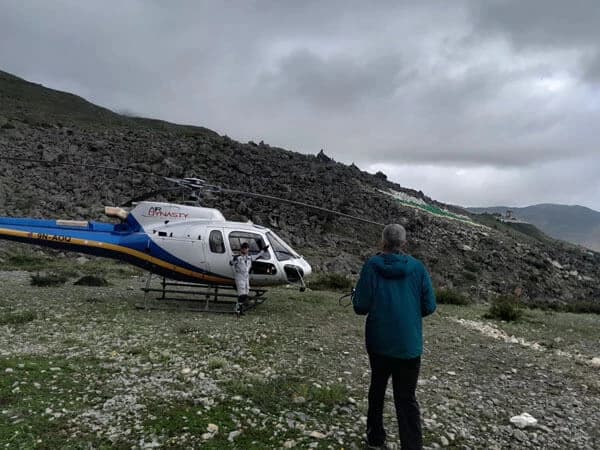
The Mount Kailash helicopter support tour is a faster way to complete the Kailash Yatra from Nepal for people who want to avoid the full overland route. It is often called a helicopter tour, but that is misleading.
Helicopters are only used on limited sections inside Nepal, depending on weather, permits, and availability. The main helicopter segment is usually between Simikot and Hilsa. There is no helicopter access to Mount Kailash or Lake Mansarovar.
Over 14 days, you move through Nepal and Tibet, crossing remote valleys, old monasteries, sacred lakes, and landscapes that genuinely do not feel real when you see them in person. There are moments where everything feels silent except the wind and you realize how isolated this part of the Himalaya really is. It is beautiful, but it is also harsh and unpredictable.
The main point is the Kailash Kora, the pilgrimage walk around Mount Kailash. This is the part that people remember for the rest of their lives. It is physically demanding, especially because of the altitude. Even fit people struggle here. But at the same time, this is the reason people come. Whether someone is religious or not, the atmosphere around Kailash affects people in a way that is difficult to explain until they are actually there.
Mount Kailash Helicopter Support Tour Overview
The Mount Kailash helicopter assisted tour is one of the faster ways to reach the sacred region of Mount Kailash and Lake Mansarovar within a limited timeframe. This 14 day journey combines flights within Nepal, limited helicopter support on the Nepal side, and overland travel through Tibet. It is especially suitable for travelers who want to avoid exhausting travel days while still experiencing the spiritual and natural beauty of Kailash.
The journey begins in Kathmandu and continues to Nepalgunj and Simikot before reaching the Tibet border using either helicopter support or short connecting transport depending on conditions. From the border, travelers continue by road toward Taklakot, Lake Mansarovar, and Mount Kailash. Along the way, you pass remote Himalayan landscapes, ancient monasteries, high mountain passes, and traditional Tibetan villages that still feel largely untouched by mass tourism. The tour also includes time for acclimatization because altitude sickness is one of the biggest challenges in this region.
The main highlight of the trip is the Kailash Kora, the sacred circumambulation around Mount Kailash. Pilgrims from different religions believe completing the Kora brings spiritual cleansing and inner peace. Even for non religious travelers, the experience feels powerful because of the isolation, silence, and the mountain scenery. This tour is not about luxury or comfort all the time. It is about reaching one of the most spiritually significant places in the Himalayas in a more time efficient way compared to the full overland route.
Major Highlights of Mount Kailash Helicopter Support Tour
- Scenic helicopter flight through the remote Himalayan region of Nepal and Tibet
- Sightseeing in Kathmandu with visits to ancient temples, monasteries and UNESCO World Heritage Sites
- A quicker and less exhausting way to reach Mount Kailash compared to the traditional overland journey
- Visit to the sacred Lake Mansarovar, one of the holiest lakes in Asia
- Complete the famous Kailash Kora pilgrimage walk
- Cross the high altitude pass, Dolma La Pass (5,630 meters)
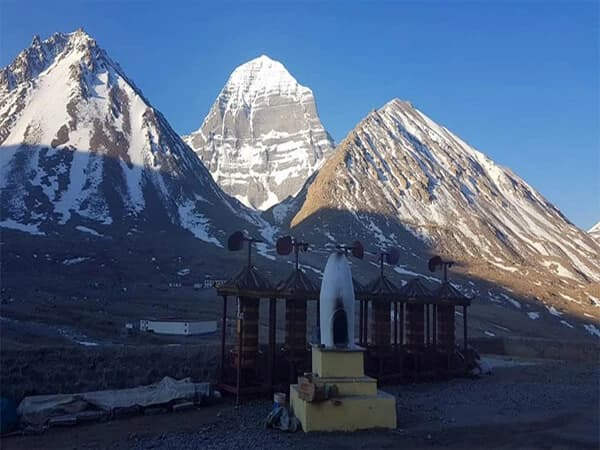
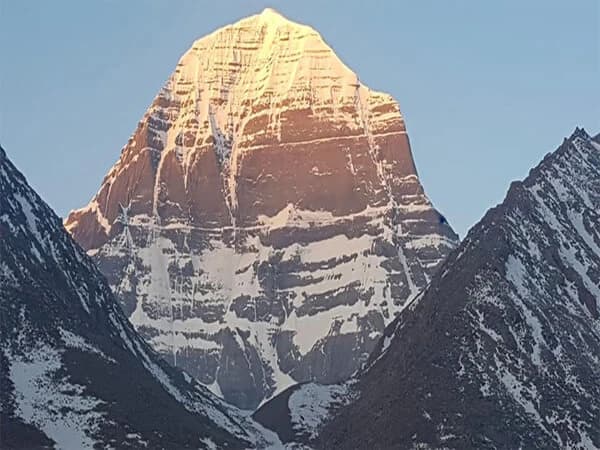
- Stunning views of Mount Kailash, considered sacred in Hinduism, Buddhism, Jainism, and Bon religion
- Drive across the vast Tibetan plateau with stunning mountain landscapes
- Experience ancient Tibetan culture, monasteries, and traditional villages
- Spiritual and personal experience far away from crowded tourist destinations
What Exactly is the Kailash Parikrama (Kora) and Why is it Important?
The Kailash Parikrama, also called kora, is the sacred walk around Mount Kailash. It is a spritual circuit completed with devotion. The full route is roughly 52 kilometers and usually takes about three days to complete, depending on weather and physical condition.
In Hindu, Buddhist, Jain, and Bon traditions, Mount Kailash is not seen as an ordinary mountain. It is considered a sacred center of the universe or the home of divine energy. Because of this belief, walking around it is seen as a deeply spiritual act. Many believe that completing one Kora can wash away negative karma and help bring spiritual purification or renewal.
There is also a strong mythological layer behind it. In Hindu belief, Kailash is the abode of Lord Shiva. In Buddhism, it is associated with Demchok, representing supreme bliss. Jain tradition sees it linked to Rishabhadeva, the first Tirthankara, attaining liberation, while Bon tradition considers it a sacred mountain and spiritual center of the world. These overlapping beliefs are what make the Kora so important across different cultures.
Mount Kailash Helicopter Support Tour Packages
Not every traveler wants the same level of comfort during the Kailash journey. Some people just want to complete the Mount Kailash pilgrimage tour in the most affordable way possible, while others prefer better hotels, private support, and a smoother overall experience. That is why most Mount Kailash helicopter support tour packages are offered in Budget, Standard, and Luxury options.
Budget Mount Kailash Helicopter Support Tour Package
The budget package is for travelers who want to experience Mount Kailash without spending too much money. Accommodation is simple, transportation is shared, and facilities throughout the Tibet portion of the journey are basic but something that a human can manage. You still visit the same sacred places, complete the Kailash Kora, and experience the full spiritual journey. This package is popular among solo travelers and pilgrims who are willing to trade comfort for a lower overall cost.
Standard Mount Kailash Helicopter Support Tour Package
The standard package is the most balanced and commonly chosen option. It provides comfortable hotels in Kathmandu and better accommodation during the journey whenever possible. Transportation, permits, accommodation, and overall logistics are handled more efficiently, making the overall trip less stressful. This package is ideal for travelers who want reasonable comfort without turning the trip into a luxury holiday.
Luxury Mount Kailash Helicopter Support Tour Package
The luxury package is designed for travelers who want maximum comfort during one of the toughest journeys in the Himalayas. It usually includes premium hotels in Kathmandu, upgraded accommodation where available, additional support, and more personalized travel arrangements.
While Tibet still has limited luxury infrastructure because of the remote location, this package helps reduce many of the logistical challenges and improves comfort wherever possible, although the altitude and physical demands of the journey remain the same. It is often chosen by senior travelers, private groups, families, and those looking for the highest level of comfort available on a Kailash journey.
Can Mount Kailash Helicopter Support Tour Itinerary Be Customizable?
Yes, it can be customized. Mount Kailash is in a restricted region, and the route, permits, and entry rules are controlled by the authorities in Nepal and Tibet. So the core journey stays the same. You cannot randomly change the main route or skip required checkpoints.
But within that structure, there is still a good amount of flexibility. Some travelers choose to add extra days in Kathmandu before departure or after returning from Kailash. Extra acclimatization time can sometimes be included, although the schedule inside Tibet is usually more fixed because of permits, transport arrangements, and group travel logistics. The helicopter return option already saves a lot of time, but how you use those days can still be adjusted.
Another common customization is adding extra experiences in Nepal before or after Kailash. Kathmandu sightseeing tour, short cultural tours, or even side trips to places like Pokhara or Muktinath are sometimes included depending on time and interest. So the honest answer is this. You cannot change the core Kailash route itself, but you can often adjust certain parts of the experience, including accommodation preferences, additional acclimatization time, and activities before or after the pilgrimage. That is where customization actually matters.
How much does Mount Kailash Helicopter Support Tour Cost in 2026?
The cost of a Mount Kailash Helicopter Return Tour in 2026 falls between USD 2,800 to USD 6,000 per person which totally rely on the level of service, travel season, and group size.
Most travelers choose between budget, standard, and luxury options based on how comfortable they want the journey to be, but the route, permits, and core experience remain the same for everyone.
Helicopter operations are one of the main reasons for the price variation, and the flights themselves can take a big part of the total cost since routes depend heavily on weather and limited flying windows in the Himalayas. At Nepal Trekking Routes, we try to keep the pricing transparent and match travelers with the right package based on their comfort level and expectations.
What about the Permits and Travel Insurance for Mount Kailash Helicopter Support Tour?
Permits
A lot of people think once they book the Mount Kailash Mansarovar tour with helicopter support, everything becomes simple after that. It really does not. The permit process is one of the most important parts of planning a Mount Kailash tour because travel in Tibet is strictly regulated for foreign visitors. You cannot just enter the region on your own like a normal trip. For this tour, travelers usually need several different permits together.
- Chinese Group Visa: Travelers entering Tibet from Nepal require a Chinese Group Visa, which is arranged through the tour operator rather than through an individual visa application. This alone can take around four to five working days in Kathmandu, which is why many travelers spend that waiting time doing sightseeing around places like Kathmandu city, Bhaktapur, or Chandragiri.
- Tibet Travel Permit: Apart from the visa, there is also the Tibet Travel Permit, which is required to enter Tibet at all.
- Alien's Travel Permit: Then comes the Alien’s Travel Permit because the Kailash region falls under restricted areas.
- Military Permit and Foreign affairs Permit: Since the route is close to sensitive border regions, authorities may also require a Military Permit and Foreign Affairs Permit. Most travelers do not even realize how many layers of approval are involved until they actually start preparing for the trip.
- Nepal side Permits: Depending on the itinerary, permits required on the Nepal side may include the Humla Restricted Area Permit and other local travel permissions related to the Simikot and Hilsa route. These are normally arranged by the tour operator as part of the package, so you don’t apply for them yourself. It’s a simple process compared to the Tibet Kailash tour permits, but it still needs to be arranged in advance.
This is also why choosing the right agency matters more than people think. If one document gets delayed or rejected, the whole itinerary can suddenly shift. Tibet travel is heavily controlled, and things do not always move according to plan there.
Travel Insurance for Kailash Mansarovar Heli Support Tour
The most challenging part of the Mount Kailash journey usually begins as the route reaches higher elevations near the Nepal Tibet border and continues throughout Tibet. Many travelers underestimate how remote the region actually is until they experience it themselves. Medical facilities are very limited, the altitude is serious, and if something goes wrong, rescue operations are not as quick or easy as they are in places like Kathmandu or even popular trekking regions in Nepal.
This is exactly why having the right travel insurance matters so much for Kailash tours. A basic insurance plan is often not enough for this kind of trip. Travelers should carefully check that their policy covers high altitude travel, emergency medical treatment, medical evacuation, and any altitude limits that may apply to the Kailash region. It may seem like an additional expense, but in a remote region where medical assistance and transportation can be complicated, adequate insurance can be extremely valuable during an emergency.
What can Travelers Expect from the Mount Kailash Helicopter Support Tour?
Travelers can definitely expect basic conditions, high altitude challenges, and a remote journey throughout the Mount Kailash helicopter support tour. Take a look at the experiences you will gather through your Kailash Manasarovar journey:
Aerial Helicopter Experience
Helicopter support is mainly used on the Simikot to Hilsa sector, depending on weather, permits, and flight conditions. You fly over remote Himalayan valleys, river systems, and scattered settlements that quickly disappear into high mountain terrain. The ride is short but very dependent on visibility, so delays are common. It is not a luxury flight, it is a practical transfer through difficult geography.
Remote Nepal Travel Experience
After Kathmandu, everything becomes basic very quickly. Nepalgunj is hot and flat, used only as a transit city. Simikot is a small mountain town with limited hotels, unstable electricity at times, and very basic food options. Flights here often get delayed due to weather, so travelers usually end up waiting longer than expected. Hilsa is even more basic, mainly just a border point with immigration offices and minimal facilities.
Entry into the Tibetan Plateau
Once you cross from Hilsa into Taklakot (Purang), the landscape changes completely. You enter a high altitude plateau with wide open land, strong winds, and very thin air. Taklakot is a small town with Chinese managed hotels and simple restaurants, mostly serving Tibetan and Chinese style food. From here onward, movement is controlled by permits and Mount Kailash group travel rules, so you cannot move freely.
Lake Mansarovar Experience
Lake Mansarovar is located at around 4,590 meters and is one of the most important spiritual points of the journey. There are basic guesthouses and small lodges nearby, nothing luxurious. Most travelers visit Chiu Monastery, located on a small hill overlooking the lake. The monastery is simple but important, with prayer halls and a strong spiritual atmosphere. People usually spend time here quietly, doing rituals, resting, or just sitting by the lake. The place feels extremely isolated because there is nothing commercial around it.
Kailash Kora Experience
The Kora starts from Darchen and passes through Dirapuk and Zuthulphuk. Dirapuk Monastery is a basic stone lodge area at the base of the north face of Mount Kailash. From here you get the closest view of the mountain, and many pilgrims stop for prayer despite the cold and altitude. Zuthulphuk Monastery is a simple settlement on the final stretch of the route, mainly used for overnight stay before completing the circuit. The most difficult section of Kailash Mansarovar tour is Dolma La Pass at 5,630 meters. It is steep, cold, and physically draining, with loose rocks and thin oxygen making every step harder. Medical support on the kora route is very limited, so travelers mostly depend on guides, support staff, and their own condition.
Cultural Experience in Tibet
Tibet along this route is not a tourist setup. You see working monasteries like Chiu Monastery near Mansarovar, Dirapuk Monastery at Kailash base, and Zuthulphuk Monastery on the return route. These are simple Buddhist sites with prayer flags, butter lamps, chanting halls, and monks continuing daily rituals. Along the road, you also pass small Tibetan settlements where life is slow and traditional. People still follow old customs, and the atmosphere is quiet and minimal. There is no staged cultural performance, it is everyday life in a remote high altitude region where traditional customs and religious practices are still strongly present.
Who the Mount Kailash Heli Support Tour is Suitable for?
The Mount Kailash Mansarovar yatra with helicopter support is mostly suitable for people who are drawn to Kailash for spiritual reasons but do not want to spend extra days on the full overland route. It also suits travelers with limited time, usually around two weeks, who still want to complete the journey without taking the full overland route from Nepal to Tibet.
It also suits travelers who are comfortable with basic accommodation and possible delays or changes in schedule during the journey, but still wants a more direct way to experience Kailash, Lake Mansarovar, and the Kora. Even with helicopter support, this is not a luxury or comfortable trip, so it is better for people who are mentally prepared for altitude, simple living, and changing plans rather than a fixed, comfortable holiday.