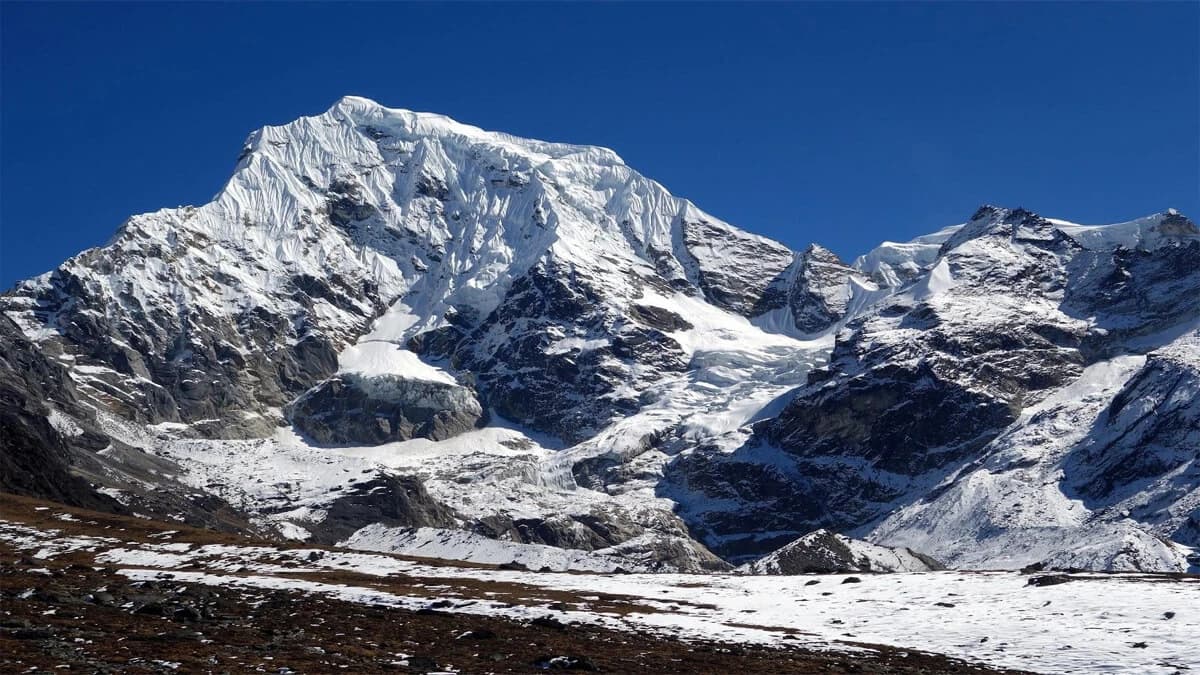
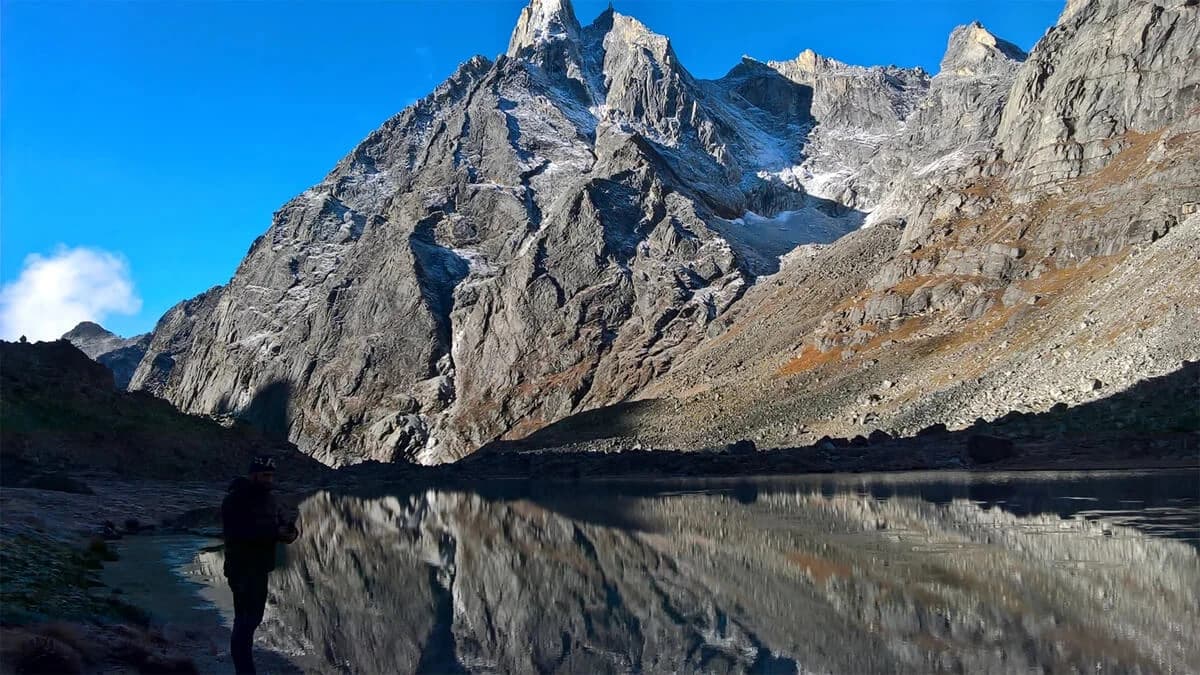
Have you ever looked up at a mountain and thought, no way anyone is getting to the top? That’s Kyajo Ri. From the base, it looks intimidating, sharp, and way taller than it seems from a distance. Kyajo Ri Peak climbing is one of those challenges that makes the Khumbu Valley feel tiny and every step count. The peak doesn’t care how strong or brave someone thinks they are. It just waits, sharp and towering, like it’s saying, “Good luck, you’re gonna need it.”
Parts of the climb make legs scream and lungs feel like they forgot how to breathe. Some slopes are so steep it honestly feels like the mountain is trying to trip people on purpose. Then someone looks up and sees the other peaks all around and can’t help but laugh a little at how ridiculous it is to actually be there. It’s hard, it’s scary, but it’s also kind of addictive.
The view from the top after the Kyajo Ri climb hits like nothing else. The Khumbu Valley looks so tiny, the Himalayas go on forever, and for a second it feels like the whole world is upside down. Every step that felt impossible suddenly makes sense, and the air up here is harsh but somehow alive. Standing there, it’s impossible not to feel amazed, shake your head, and think, wow, that was insane.
Kyajo Ri Climbing Overview
Kyajo Ri is one of those peaks in the Everest region that barely anyone climbs. At around 6,186 meters above the Khumbu Valley, it’s not Everest or Ama Dablam, so there aren’t crowds blocking the way. That also means it feels like the mountain is mostly just waiting for whoever is crazy enough to take it on.
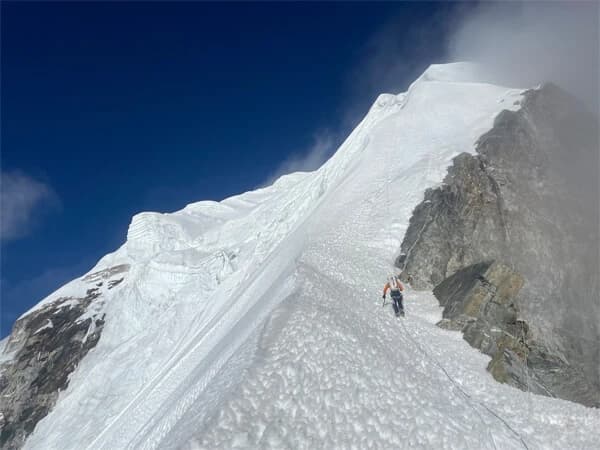
The climb itself goes over glaciers, ice slopes, and some rocky sections. It’s not super technical, but altitude makes it a real challenge. Some parts are steep and slippery, so crampons, ropes, and proper high-altitude gear are needed. Step too fast and the lungs complain, step too slow and the cold starts troubling you. Looking down, the Khumbu Valley looks like it's slowly shrinking, and the nearby peaks pop up around like they’re checking who’s climbing. It’s definitely exhausting, sometimes nerve wracking, and honestly kind of exciting all at once.
Kyajo Ri climb doesn’t get many visitors so the mountain mostly feels all yours. The path keeps changing with ice, rocks, and steep steps, so it’s always keeping you on your toes. For anyone into Nepal climbing or a high-altitude mountain adventure, this peak is tough but in a way that makes finishing it feel really good. Not many people make it here and that’s part of why it’s so worth the effort.
Climb Highlights
- Kyajo Ri climb barely sees visitors, so most of the trail feels like it’s all yours
- The peak sits at around 6,186 meters, so every step is a proper high altitude challenge in Nepal
- Glaciers, ice slopes, and rocky patches keep the climb tricky and unpredictable
- There are no crowds like on Everest, which makes the climb feel personal and quiet
- Breathing gets hard up here, so pacing and acclimatization are essential for Nepal Peak climbing
- Reaching the summit gives stunning mountain views that make the effort feel worth it
- It’s a climb that tests both stamina and focus, giving a real mountain adventure on one of the least climbed peaks in Nepal
Cost of the Kyajo Ri Peak Climbing Trip with Nepal Trekking Routes
At Nepal Trekking Routes, we like to be upfront about costs. A typical Kyajo Ri Peak climbing package with us ranges from 3000 to 5000 US dollars depending on how long you want to trek, whether you choose a private guide, the level of support, and if you need to rent any climbing gear. The Peak Climbing package includes all permits, experienced guides, porters, meals, and accommodation on the trek, so most of what you pay goes directly into your safety, comfort, and a smooth climbing experience.
Any personal extras like snacks, drinks, or souvenirs are on top, so it is good to plan a little extra. With Nepal Trekking Routes, you get value for money, proper support, and a trip that is planned carefully to make the climb safe and enjoyable. Going cheaper somewhere else usually means cutting corners on guides, gear, or food, and that is not something you want when you are in the mountains.
17-day Kyajo Ri Peak Climbing Itinerary
The Kyajo Ri Peak climbing trip is a 17 day Peak Climbing adventure that takes you from Kathmandu to the Everest region and up to the summit of Kyajo Ri Peak at 6186 meters. You start with a short flight to Lukla and then trek through Phakding, Namche Bazaar, and Mende, which gives your body time to get used to the altitude.
Along the way, you’ll pass Sherpa villages, walk through suspension bridges, glaciers, and some seriously amazing Himalayan views. When you reach the summit, the views of Everest, Cho Oyu, Ngozumpa Glacier, and Gokyo Lakes are totally worth the effort. The whole Kyajo Ri Peak Expeditions itinerary is paced with trekking, climbing, and rest days so you can enjoy it without burning out.
Permits Required for the Kyajo Ri Peak Climbing in Nepal
Before heading for Kyajo Ri Peak Climbing, climbers need three permits. The main one is the Kyajo Ri Peak climbing permit, which is issued by the Nepal Mountaineering Association (NMA). Since the route lies inside the Everest region, climbers also need the Sagarmatha National Park Permit and the Khumbu Pasang Lhamu Rural Municipality Permit.
These permits are a normal part of peak climbing in Nepal, and they are usually arranged before the climb starts. Most guided Kyajo Ri expeditions include them in the trip, including ours, so climbers don’t have to run around sorting each one on their own. It’s a small part of the journey, but one that needs to be taken seriously from the beginning.
Do You Need a TIMS Card for the Kyajo Ri Peak Climbing in Nepal?
A lot of people still ask about the TIMS card for Kyajo Ri Peak Climbing, mostly because some older travel websites still mention it. But for the Everest region, that’s no longer the permit climbers need. These days, the Khumbu Pasang Lhamu Rural Municipality Permit is the one that matters, and it covers entry into the local area for both trekkers and climbers.
So if someone is planning a Kyajo Ri climb, there’s no need to worry about getting a separate TIMS card. What actually matters is having the correct local and climbing permits in place before the trip starts. It’s one of those things that still causes confusion online, especially when old blog posts are still floating around and acting like it’s 2018.
Best Kyajo Ri Peak Climbing Packages in Nepal
Kyajo Ri climbing packages in Nepal can be confusing at first because there are different options for different types of climbers. Some trips take care of everything, including the Kyajo Ri climbing permit, Sagarmatha National Park permit, guides, accommodation, meals, and summit support. Other packages are more basic and leave a lot of the planning to the climber.
The most common choice is a fully guided Kyajo Ri climbing package in Nepal. These usually cover all the essentials for a safe climb including guides, the necessary permits, meals, and local accommodation. There are also private Kyajo Ri climbing packages for climbers who want more control over their schedule and pace. Private packages give freedom but also require climbers to be more responsible for their own timing and planning on the mountain.
Group expeditions are another option for climbers who want a lower-cost Kyajo Ri Peak expedition and don’t mind joining other climbers. Nepal Trekking Routes offers custom Kyajo Ri climbing packages, letting climbers add extra acclimatization days, training, or side treks in the Everest region. The right choice of Kyajo Ri climbing package in Nepal depends on how much support someone wants, the time available for the climb, and how focused they are on reaching the summit safely.
Major Attractions of the Kyajo Ri Peak Climbing in Nepal
The Kyajo Ri Peak climb is full of amazing experiences. On the way, you’ll pass Sherpa villages and get a taste of Sherpa hospitality, with locals welcoming you to tea houses and sharing stories of life in the Himalayas. The suspension bridges over rivers add a little thrill, and seeing yaks carrying loads is always fun.
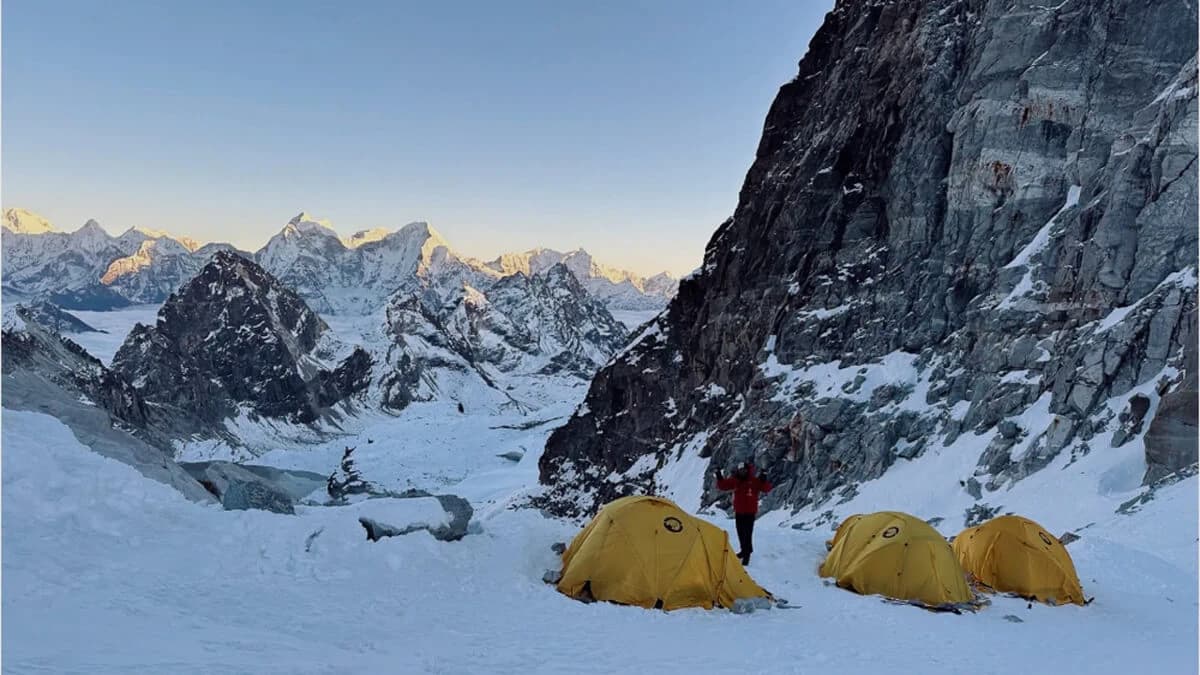
Higher up, the scenery gets even more stunning. Ngozumpa Glacier flexes endlessly, and Kyajo Ri Base Camp gives incredible views of the surrounding peaks. Camp One and Camp Two bring you closer to the mountains and glaciers, making every step feel like a real adventure.
The summit of Kyajo Ri at 6186 meters is the highlight. From here, you get breathtaking views of Everest, Cho Oyu, and Gokyo Lakes. It’s tough and tiring, but the sense of achievement ofmountaineering in Nepal makes it completely worth it.
Which high altitude treks in Nepal are best to do before climbing Kyajo Ri Peak?
Before attempting Kyajo Ri Peak climbing, many climbers choose to do a higher elevation trek in Nepal such as Everest Base Camp trek, Gokyo Ri trek, or even the Everest Three Passes trek. These treks help with acclimatization for high altitude climb and make the body better prepared for the challenges of peak climbing in Nepal.
Keep in mind that doing a longer trek first will extend the overall trip duration and cost, but it also gives you more time so that you can adjust to the altitude, which is very important for safety while doing mountain expeditions in Nepal.
Who Can Actually Handle Kyajo Ri Peak
Let us be real. Kyajo Ri is tough. It will test your legs, your lungs, and your patience. This climb is not for someone who just wants a pretty view or an easy walk. You need to be okay with long, hard days, steep slopes, and air so thin your lungs feel like they’re on fire.
If you like challenging Himalayan treks, are willing to train for a couple of months, and do not mind a bit of suffering for a real summit feeling, then this is for you. We know because we have been there. Every step hurts until it doesn’t, and the only way it feels amazing is if you actually push yourself and make it to the top.
Why should Nepal Trekking Routes be the one you travel with?
If you are thinking about climbing Kyajo Ri or trekking in the Himalayas, we at Nepal Trekking Routes are the people you want by your side. We are a genuine Nepalese travel agency, and we focus on making your trip practical, safe, and exactly how you want it. We care about the environment and local communities, and we make sure you get real value for your money. We handle all the complicated stuff, so you can focus on making memories without worrying about the details.