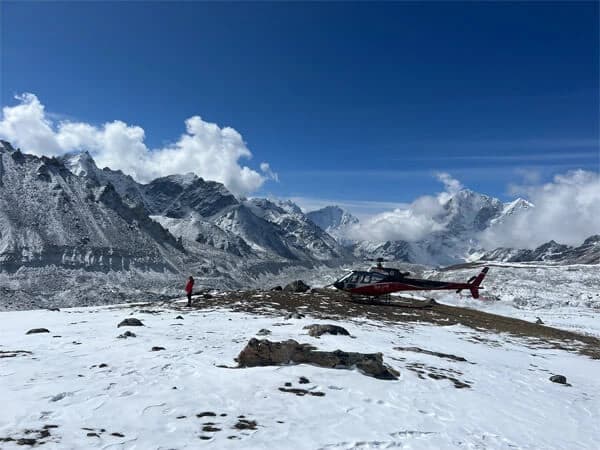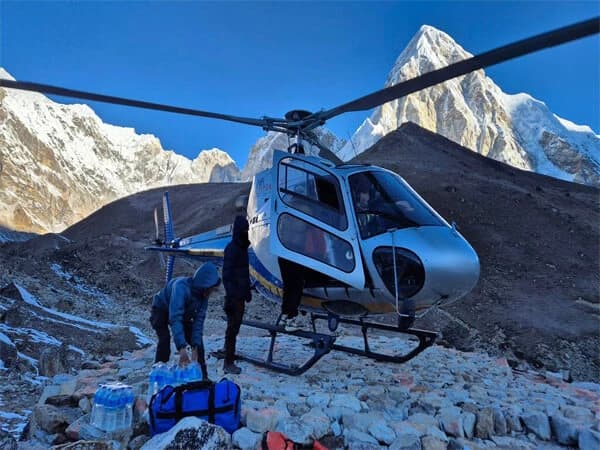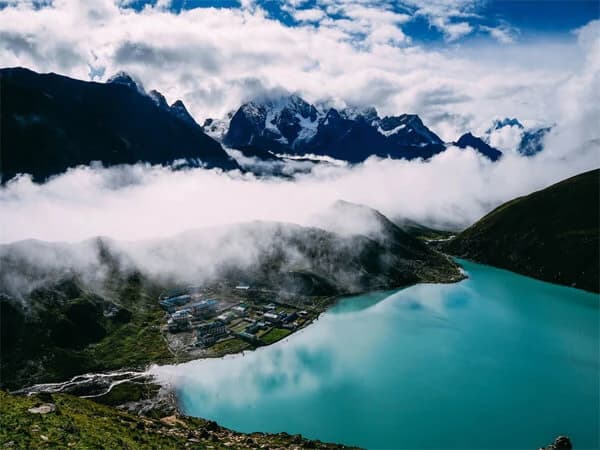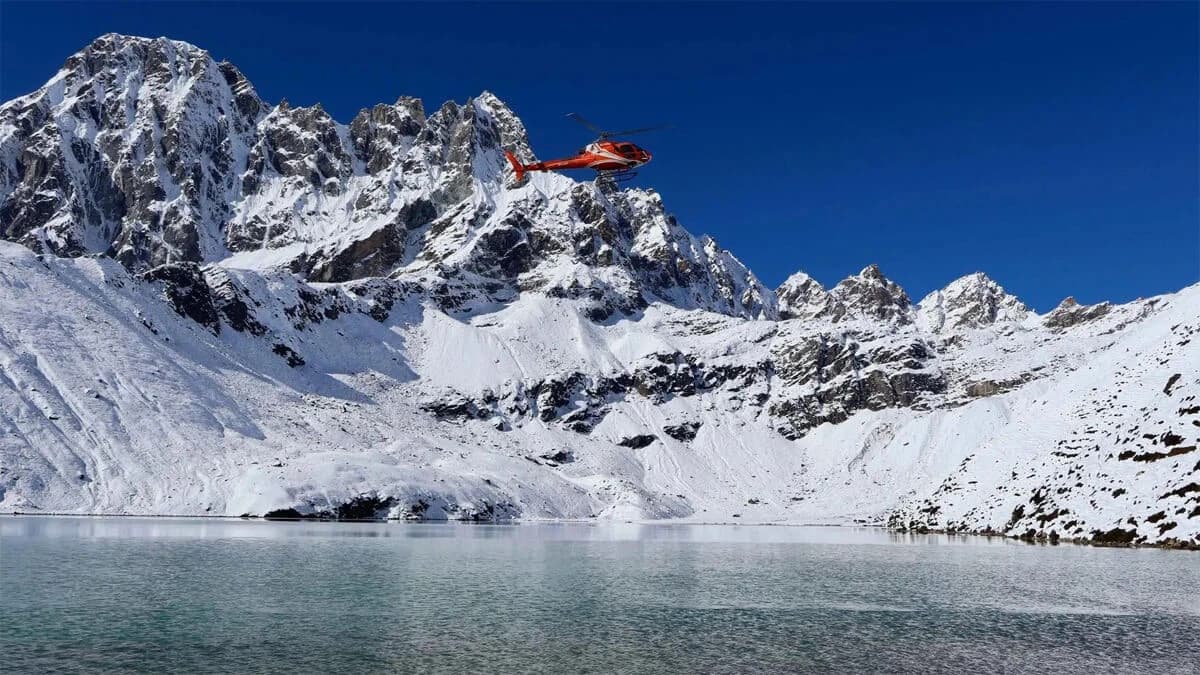
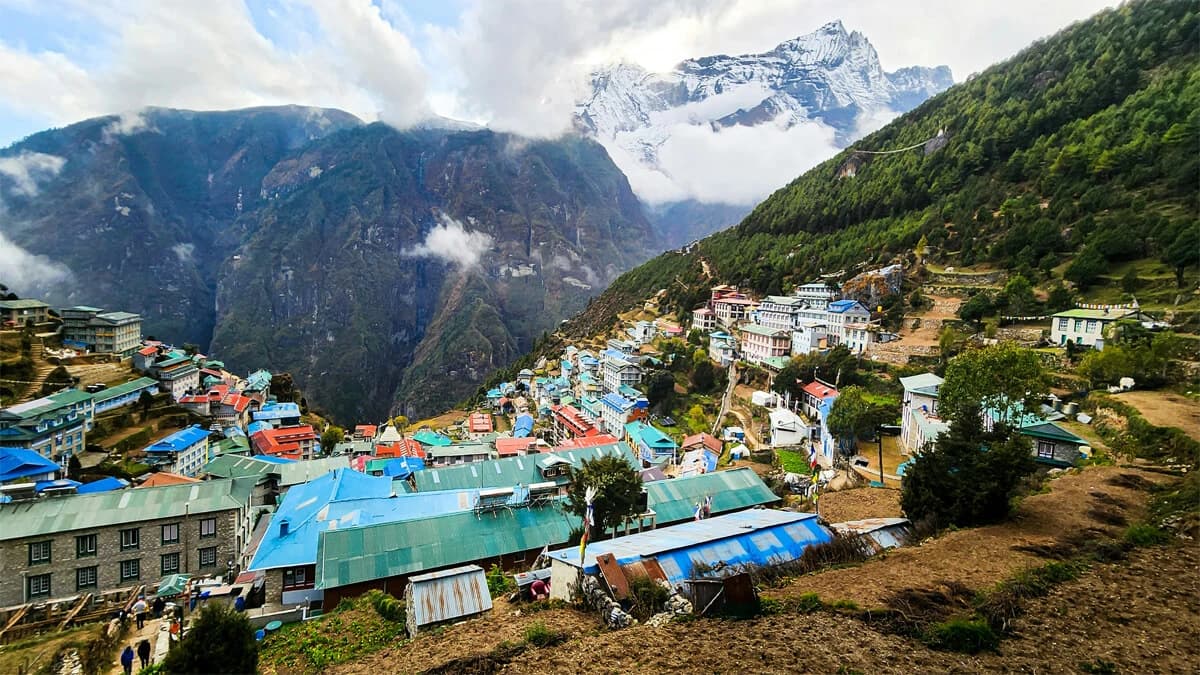
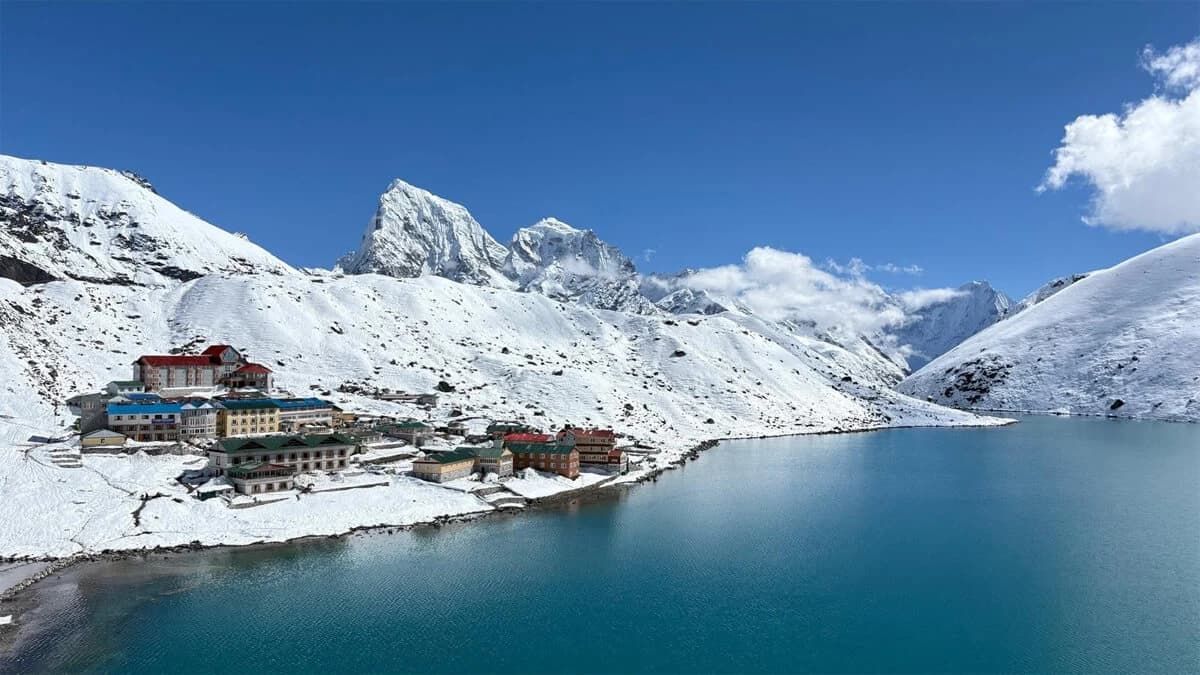
The Renjo La Pass Gokyo Lake Trek with Helicopter Return is one of those journeys that gives you the best of both worlds, real trekking adventure and a smooth, scenic exit from the mountains. The route takes you deep into the Everest region, passing quiet Sherpa villages, suspension bridges, and dramatic alpine landscapes before reaching the stunning Gokyo Lakes. These high altitude lakes, sitting inside Sagarmatha National Park, are known for their deep blue color and peaceful surroundings that instantly make you slow down and just take it all in.
Along the way, you alsocross Renjo La Pass, a challenging but incredibly rewarding high pass that opens up wide views of Everest, Cho Oyu, and other Himalayan giants and Connect with Popular Everest three Pass trekking. It’s the kind of place where you stop not because you need to, but because you want to. And then comes the twist. Instead of walking all the way back for days, you return by helicopter. In just a short flight, you're flying over the same valleys,glaciers and trails that you just trekked, seeing everything from completely new angle.
It’s a perfect option if you want the full trekking experience without repeating the long return journey. Walk into the mountains, soak in the adventure, and fly back with a view that feels just as unforgettable as the trek itself.
Renjo La Pass Gokyo Lake Trek with Helicopter Return Highlights
The Renjo La Pass Gokyo Lake Trek with Helicopter Return is packed with some of the most unforgettable moments in the Everest region tour. It’s a journey that mixes adventure, scenery, and a unique way of returning from the mountains.
- Walk through peaceful Sherpa villages, prayer flags, and traditional mountain trails in the Everest region.
- Explore the stunning Gokyo Lakes, famous for their deep turquoise color and calm alpine setting.
- Cross the adventurous Renjo La Pass at 5,360 meters, one of the most scenic high passes with incredible Himalayan views.
- Enjoy panoramic sights of Everest, Cho Oyu, Lhotse, Makalu, and Ama Dablam from high vantage points.
- Experience the beauty of glaciers, icy rivers, and wide Himalayan valleys along the trail.
- Reach Gokyo Ri for one of the best sunrise or sunset views in the entire Everest region.
- Save days of return trekking by flying back via helicopter, enjoying a dramatic aerial view of the landscapes you just explored.
- Get a perfect mix of adventure trekking in Everest and comfortable luxury return by Helicopter in a single trip.
Renjola Pass Gokyo Lake Trek with Helicopter Returns Cost
The Renjola Pass Gokyo Lake Trek with Helicopter Return costs between USD 2,000 and USD 3,000 per person. The final cost is influenced by whether you book a group joining trek, a private trek, or a luxury trekking package, as each includes a different level of service.
Compared to a standard Gokyo Lakes Trek 13 days, this package costs more because it includes a helicopter flight from Gokyo to Kathmandu instead of the return trek to Lukla. The total price can also change depending on what is included, such as permits, domestic flights, guide and porter services, accommodation, meals, and your hotel in Kathmandu. Before confirming your booking, compare the package inclusions rather than the price alone, as two Everest region trekking packages with similar prices may include very different services..
Permits Required for Gokyo Lakes Renjo La Pass Trek with Helicopter Returns
For the Gokyo Lakes Renjo La Pass Trek with Helicopter Return, you need two important permits before starting your journey.
Sagarmatha National Park Entry Permit
The first and most important is the Sagarmatha National Park Entry Permit. This is required for all trekkers because the route goes through Sagarmatha National Park, including areas like Gokyo and Renjo La. It can be obtained in Kathmandu or at the Monjo checkpoint, and the fee costs NPR 3,000 per person.
Khumbu Pasang Lhamu Rural Municipality Permit
Next is the Khumbu Pasang Lhamu Rural Municipality Permit, which is required for trekking in Khumbu region, including Namche, Gokyo Valley, and surrounding areas. It is issued in Kathmandu or Lukla and and also costs NPR 3,000 per person. This permit also helps with local management and conservation efforts.
Renjola Pass Gokyo Ri Trekking Route
This journey begins in Kathmandu with arrival and preparation for the trek, followed by a scenic flight to Lukla and an easy start to the trail toward Phakding. The route gradually leads you to Namche Bazaar, where you spend a day acclimatizing before moving deeper into the Everest region.
From Namche, the trek continues through quiet mountain villages like Thame and Lungden, slowly gaining altitude as you approach the high Himalayas. The highlight of the journey comes when you cross Renjo La Pass and reach the beautiful Gokyo Lakes, surrounded by stunning glacier and mountain views.
You also hike up to Gokyo Ri for one of the best panoramic views in the Everest region before ending the adventure with a scenic helicopter flight back to Kathmandu, turning the return journey into a memorable aerial experience.
Renjo La Pass Gokyo Lake Trek with Helicopter Return Packages
You can choose this trek in different package styles depending on your time, budget, and comfort level. Some travelers prefer a fully organized journey with all meals and services included, while others like a more flexible plan where certain expenses are handled on their own. The trek is also available in both shorter and longer versions, allowing you to adjust the itinerary based on your schedule and experience level. And of course, the highlight remains the helicopter return, which adds comfort and saves days of trekking while giving you a stunning aerial view of the Himalayas.
Standard Renjo La Pass Gokyo Lakes Trek Helicopter Return Package
The Standard Renjo La Pass Gokyo Lakes Trek Helicopter Return is the regular version of this trek, following a fixed itinerary with scheduled departure dates and standard lodge accommodation in the Everest region.
It offers the complete trekking experience without optional upgrades or customized services, making it the package most travelers choose. Depending on the trekking company, the package typically includes permits, guide service, accommodation, ground transfers, domestic flights, and a helicopter flight from Gokyo to Kathmandu. Since departures follow a planned schedule, daily walking distances and overnight stops remain the same for everyone in the group.
Private Renjo La Pass Gokyo Lakes Trek Helicopter Return Package
A Private Renjo La Pass Gokyo Lakes Trek Helicopter Return is arranged for a single traveler or a private group without adding other participants to the booking. It is a common choice for couples, families, friends, and solo trekkers who prefer to travel with their own guide and follow a departure date that matches their itinerary.
Compared to a standard group departure, this package offers more choice when planning the trek, including the travel date, group size, and additional services requested before the trip begins. The trekking route, acclimatization days, and helicopter return remain the same, but the experience is shared only with your own group. Since the trip is not divided among multiple participants, the cost is higher than joining a group departure.
Group Joining Renjo La Pass Gokyo Lakes Trek Helicopter Return Package
The Group Joining Renjo La Pass Gokyo Lakes Trek Helicopter Return is a shared departure where individual travelers, couples, and small groups book the same trek and travel together from the first day until the helicopter flight back to Kathmandu. Instead of arranging a separate trip, everyone joins a confirmed departure and follows the same itinerary under the guidance of the assigned trekking team.
This package is commonly chosen by solo travelers and anyone looking to reduce the overall cost of the trek without giving up the support of a guide. Expenses such as guiding and other shared trekking services are divided among the participants, which makes the price lower than a private booking. Since every participant joins the same departure, the itinerary and travel dates are fixed before the trek begins. The helicopter return from Gokyo is also planned for the group, although every mountain flight remains subject to weather and visibility.
Luxury Renjo La Pass Gokyo Lakes Trek Helicopter Return Package
The word luxury can be misleading in the Everest region. Choosing a Luxury Renjo La Pass Gokyo Lakes Trek Helicopter Return does not mean every lodge has premium rooms, attached bathrooms, hot showers, or modern facilities. Once you leave Namche Bazaar, the standard of accommodation depends entirely on what each village has. Remote places such as Lungden and Gokyo have a limited number of lodges, and even the best available room may be quite basic.
What makes this package different is the level of service before the trek begins and wherever better facilities exist along the route. It generally includes a higher category hotel in Kathmandu, private airport transfers, and the best available accommodation at each overnight stop whenever possible. The trekking route, guide, permits, and helicopter return tour remain the same as the standard package.
This Everest trekking package is chosen by travelers who appreciate extra comfort where it is realistically available and understand that conditions become simpler as the trail climbs higher into the mountains.
Custom Renjo La Pass Gokyo Lakes Trek Helicopter Return Package
The Custom Renjo La Pass Gokyo Lakes Trek Helicopter Return is a good option if the standard itinerary does not match your travel plans. At Nepal Trekking Routes, we can customize the departure date, Kathmandu hotel, guide and porter services, and other package details before the trek starts.
The mountain trekking route itself is not fully customizable. The itinerary is planned according to altitude, weather, and the time needed for proper acclimatization. The helicopter flight from Gokyo also depends on flying conditions. We customize the parts of the trip that can be changed while keeping the trekking schedule suitable for the Everest region.
What can Travelers Expect from Renjo La Pass Gokyo Lake Trek with Helicopter Return?
Travelers can expect a full Himalayan experience that mixes adventure, culture, and incredible mountain views in a simple and rewarding way. The journey starts with a flight to Lukla and then continues on foot through small Sherpa villages, forest trails, rivers, and suspension bridges. It’s a gradual walk where the scenery keeps changing as you move higher into the mountains. As you gain altitude, the surroundings become more open and dramatic. You’ll reach Namche Bazaar, a lively mountain town where you rest and adjust to the altitude before heading further into quieter and more remote areas.
One of the main highlights is the beautiful Gokyo Lakes. These lakes are known for their calm blue water and peaceful setting, surrounded by glaciers and big Himalayan peaks. It’s a place where everything feels quiet and far away from busy life. Another big moment is crossing Renjo La Pass. It’s a tough climb, but the views from the top are worth it, you can see Everest, Cho Oyu, and many other snow-covered mountains all around you.
Along the way, you also get small cultural experiences, walking through Sherpa villages, seeing prayer flags, monasteries, and meeting locals who live in these high mountains. At the end of the trek, instead of walking all the way back, you take a helicopter to Kathmandu. This makes the return easy and gives you one last amazing view of the valleys, glaciers, and trails from above.
Daily Walking Duration and Altitude
| Day | Route | Walking Duration | Approx.Altitude |
| Day 1 | Arrival in Kathmandu | - | 1,400 m |
| Day 2 | Kathmandu valley Sightseeing | - | 1,400 m |
| Day 3 | Kathmandu - Lukla - Phakding | 3 to 4 hours | 2,800 m |
| Day 4 | Phakding - Namche Bazaar | 5 to 7 hours | 3,440 m |
| Day 5 | Acclimatization (Namche) | 2 to 3 hours (Short hike) | 3,440 m |
| Day 6 | Namche - Thame | 5 to 6 hours | 3,750 m |
| Day 7 | Thame - Lungden | 5 to 6 hours | 4,500 m |
| Day 8 | Lungden - Gokyo via Renjo La Pass | 7 to 9 hours | Upto 5,446 m, down to 4,750 m |
| Day 9 | Gokyo Ri Hike & Explore Gokyo Lakes | 3 to 5 hours | around 4,750 m |
| Day 10 | Helicopter Return to Kathmandu | - | 1,400 m |
Whom This Trek is Suitable For?
The Renjo La Pass Gokyo Lake Trek with Helicopter Return is suitable for trekkers who want a real Himalayan adventure with a bit of comfort at the end. It’s a good choice for people who enjoy walking for several days in the mountains and are okay with moderate to challenging trekking conditions. Since the route goes above 5,000 meters, it is best for those who are physically fit and comfortable walking 5 to 7 hours a day on uphill and rocky trails.
This trek sits in a nice middle ground compared to other popular Everest region routes. It is more challenging than easier options like the Everest View Trek. But not as demanding as the full Three Pass Trek, which involves multiple high passes and longer, tougher trekking days. Because of this, it attracts trekkers who want something adventurous but still achievable with proper preparation.
This trek is also ideal for travelers who want to experience the beauty of the Everest region without doing the full return trek. The helicopter return makes it a great option for those who are short on time or prefer to avoid long downhill walks after reaching high altitude. It suits adventure lovers, nature photographers, and anyone who wants to see the Himalayas from both land and air. Even if you are an experienced trekker or doing a high altitude trek for the first time, this route offers a balanced mix of challenge, scenery, and convenience.
Why Choose the Gokyo Lakes Renjo La Pass Trek with Helicopter Return?
The Gokyo Lakes Renjo La Pass Trek with Helicopter Return is a good option for trekkers who want to complete the full route without returning to Lukla on foot. After reaching Gokyo and visiting Gokyo Ri, the trek ends with a helicopter flight to Kathmandu instead of several more days on the trail.
This keeps the overall itinerary shorter while still covering Renjo La Pass, the Gokyo Lakes, and the villages of Thame and Lungden. It is a practical choice for anyone who wants to make the most of their time in the Everest region without leaving out some of its best known places.