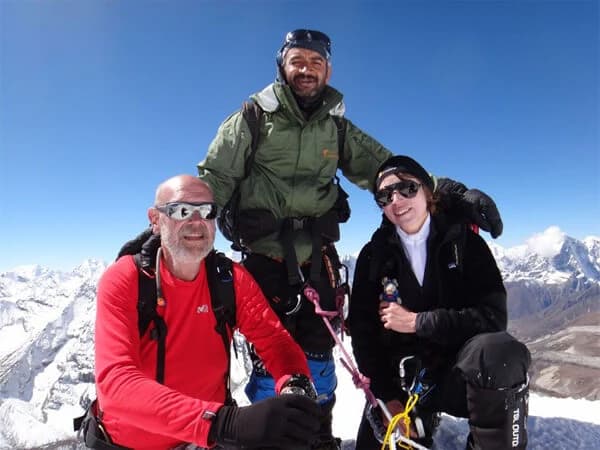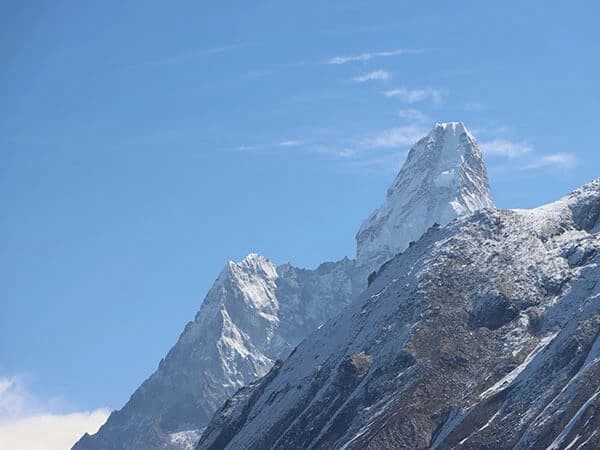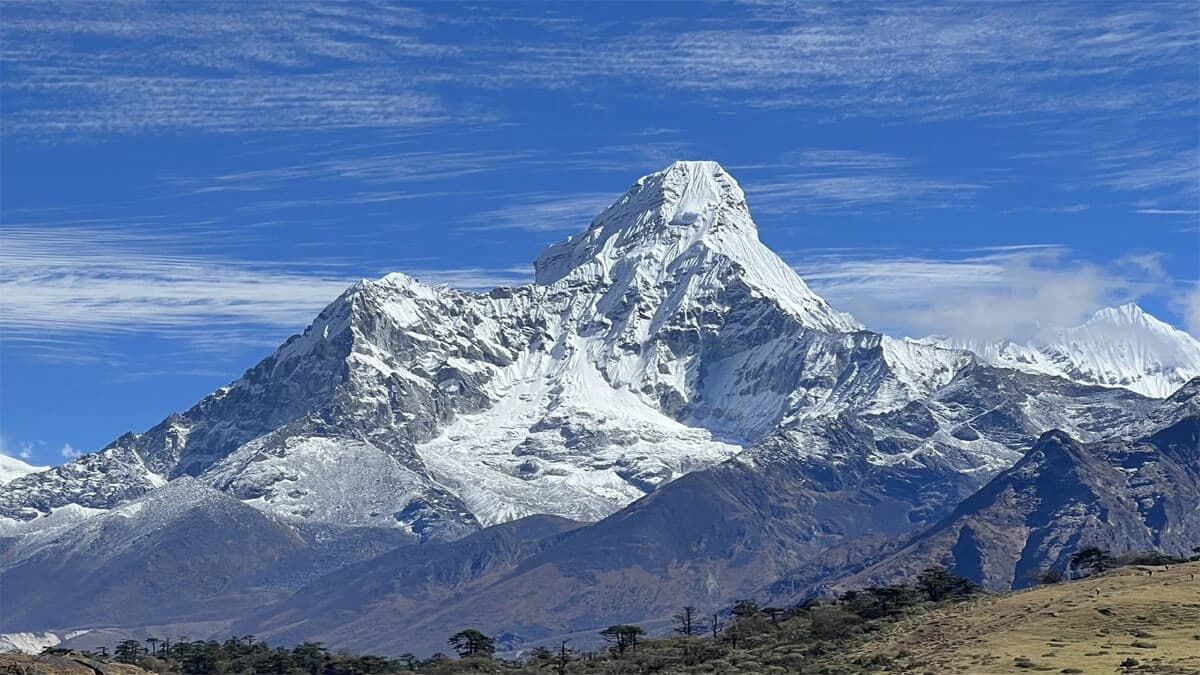
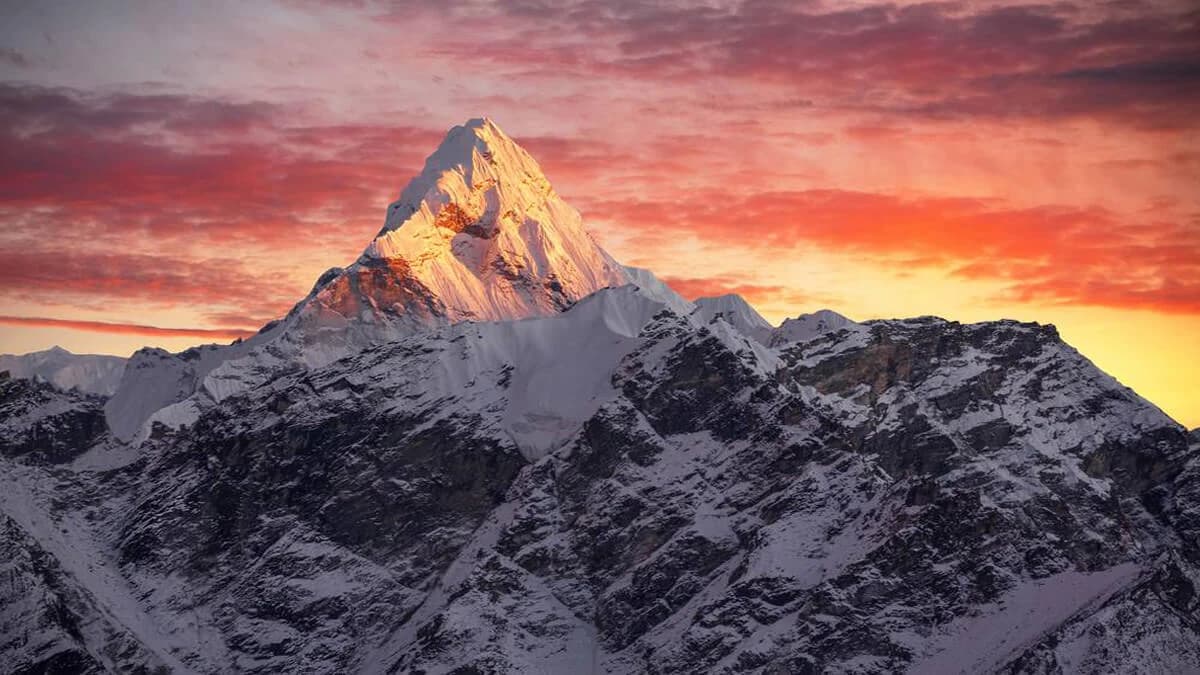
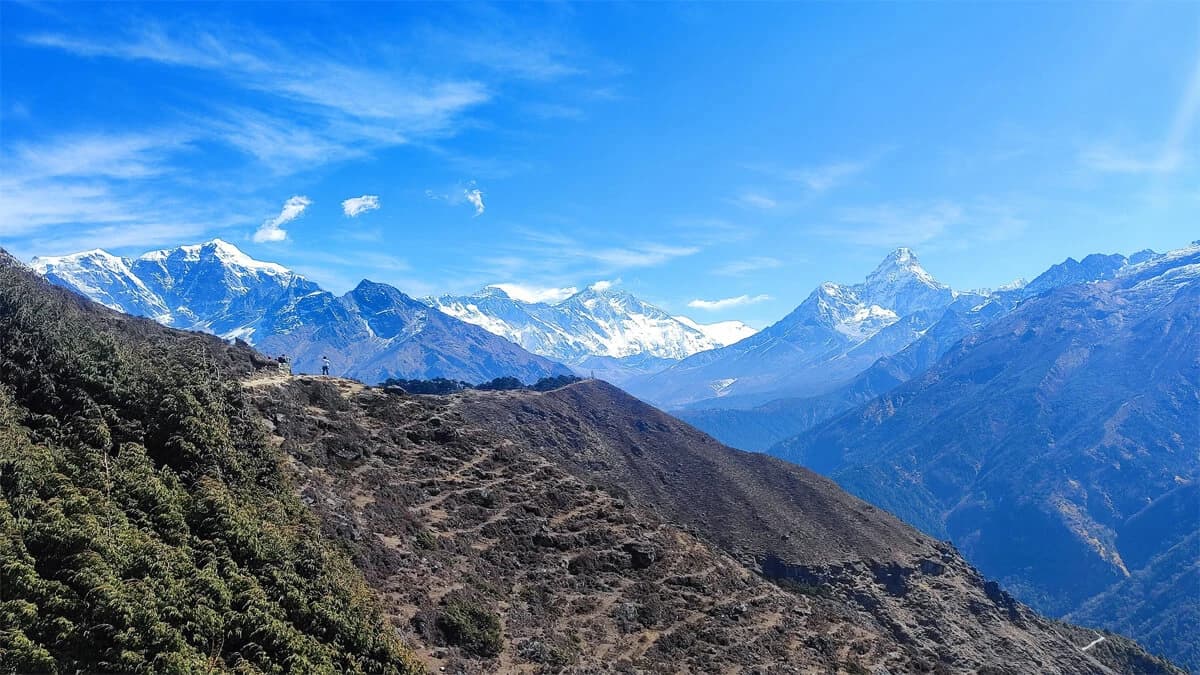
If you came to Nepal looking for comfort, Ombigaichen will personally show you the exit. Honestly, Ombigaichen peak climbing in Nepal is pure chaos in the most beautiful way. From the moment you start walking, everything hits you. The peaks full of snow, flowing streams, forests that feel like they belong in a fairytale, and this silence that makes you suddenly notice every tiny sound. You feel tiny, alive, and completely out of your usual world all at once.
The hike to Ombigaichen Base Camp is full of real Nepal trekking challenges. You climb rocky ridges, cross frozen rivers, and follow narrow trails that test your skills and balance. Sherpa guides are essential for this peak climbing expedition. They help with altitude acclimatization, lead safe routes, and make the high altitude trekking experience manageable for all adventure seekers.
Each campsite offers clear mountain views, perfect for trekking blogs, adventure photography, and anyone planning extreme mountaineering or high altitude expeditions. Every step on this mountain shows why Nepal is one of the best countries for Himalayan adventure trekking.
Peak Climbing Overview
Ombigaichen Peak is a quiet mountain in the Everest region that many trekkers pass without noticing, but climbers know it well. It is located in the Khumbu region of Nepal, near Ama Dablam, and reaches a height of 6,340 meters. The peak sits on the ridge toward Baruntse, surrounded by some of the most well known mountains in the area. While Island Peak,Mera Peak, and Lobuche Peak are more popular, Ombigaichen is a lesser known peak but important name for anyone interested in mountaineering in Nepal and Everest region peak climbing.
The mountain is also called Puma Dablam, an older name recorded in climbing history. Some references describe it as “Daughter Dablam,” but the official name today is Ombigaichen. In the Himalayas, names can vary depending on local use or early expedition records, so it is common to see different versions. Knowing both names is useful when researching Nepal mountaineering peaks or planning a climbing expedition in Nepal.
Ombigaichen was first climbed in 1960, giving it a place in the history of Himalayan mountaineering. It is not just another hidden mountain in Nepal but a real Himalayan peak with historical significance. For anyone interested in Everest region climbing, or exploring peaks near Ama Dablam, Island Peak, or Baruntse, Ombigaichen is a name worth noting for its quieter presence in the region.
Climb Highlights
- Ombigaichen Peak sits in the Khumbu region of Nepal near Ama Dablam, right in the heart of the Everest climbing area.
- At 6,340 meters, it gives you a real Himalayan summit experience without the crowds you find on Island Peak or Mera Peak.
- The mountain is also called Puma Dablam, first climbed in 1960, and has a quiet but meaningful place in Nepal’s mountaineering history.
- From the higher camps, you really notice Baruntse, Island Peak, Mera Peak, and Lobuche Peak, which makes the climb feel connected to the bigger Himalayan landscape.
- The climb is less crowded than other Everest region peaks, so you get a more personal experience and a chance to enjoy the mountain itself.
- Walking through Namche Bazaar and the Ama Dablam area on the approach is already part of the adventure, and it gives a real sense of being on the classic Everest trekking and climbing routes.
- For anyone looking for less climbed Himalayan peak in Nepal, Ombigaichen is the best option that still delivers the full Everest region mountaineering experience.
Ombigaichen Peak Climbing Cost
The Ombigaichen Peak climbing cost ranges from USD 3,000 to 5,000 per person, covering permits, guides, porters, food, accommodation, flights, and basic gear. Factors that affect the climbing price include season, expedition support, altitude sickness precautions, extra acclimatization days, and emergency evacuation. Cutting corners may lower costs but increases risks and reduces chances of summiting this Himalayan peak safely.
15-Day Ombigaichen Peak Climbing Itinerary
If you are planning to do the Ombigaichen Peak climbing 15-day itinerary in Nepal will take you from Kathmandu to Lukla and through the Everest region. You will pass through Namche Bazaar, Khumjung, Tengboche Monastery, see views of Ama Dablam, and finally reach the summit of Ombigaichen Peak at 6,340 meters. The trek is tough. Trails are steep, nights are freezing, and the air is thin, but the views and the villages along the way make it totally worth it.
This plan includes rest and acclimatization days so your body doesn’t throw a tantrum at high altitude. You will walk through various changing landscapes of Nepal. Lodges and tents are basic but safe. The summit day is exhausting, honestly, and you will question why you signed up for this, but standing on top and seeing the mountains makes you forget every sore muscle.
Nepal Trekking Routes can also adjust this itinerary to fit your pace or style. You could even extend it into an 18-day Ombigaichen Peak climbing itinerary or add extra rest days. The mountains don’t care about your schedule, but this plan makes sure you survive, have a guide to yell at you if needed, and still get the full high altitude experience.
Best Ombigaichen Peak Climbing Packages in Nepal
When you look for Ombigaichen Peak climbing packages in Nepal, you’ll notice there are a few main types designed for different climbers. The first is the Comfort Package, which includes your Kathmandu to Lukla flight, teahouse stays on the approach, meals, climbing permits, and experienced guides who know Himalayan peak climbing in Nepal. This package is ideal if you want support with all the logistics and can focus entirely on the climb.
The second option is the Budget Package, which covers climbing permits, basic guide support, and essential gear, but with simpler teahouse stays and less support. This works well for climbers who have experience on other Himalayan peaks and are confident moving through the Khumbu region with minimal assistance.
The third type is the Expedition Package, which is the most complete. It includes lead guides, assistant guides, base camp support, proper acclimatization planning, and clear safety arrangements. This package gives the full Himalayan climbing experience, letting you take on Ombigaichen while having a professional team to guide you. All packages provide a chance to climb a realEverest region peakand experience the mountain in a quieter way than more popular climbs like Island Peak, Mera Peak, or Lobuche Peak.
Permits Required for the Ombigaichen Peak Climb
Before the climb begins, there are a few necessary and legal permits that need to be arranged for your journey. For Ombigaichen Peak climbing in Nepal, you will need several permits before entering the Khumbu region. The main one is the Ombigaichen Peak Climbing Permit, which gives you official permission to climb the mountain. Since Ombigaichen is a registered climbing peak in Nepal, you cannot legally climb it without this permit.
You will also need the Sagarmatha National Park Entry Permit, because the mountain lies inside the wider Everest region. On top of that, climbers also need the Khumbu Pasang Lhamu Rural Municipality Permit, which is the local permit used for entering the Khumbu through the usual route from Lukla and Namche Bazaar. These are standard permits for most Everest region trekking and climbing trips.
There is also a refundable garbage deposit, which is part of the climbing process and helps support better waste management in the mountains. Most climbers do not arrange these things on their own, and honestly, there is no real reason to. Nepal Trekking Routes can handle the entire permit process for you, so you do not have to worry about sorting everything out on your own. So contact us now.
Major Attractions of Ombigaichen Peak Climbing
Planning to climb Ombigaichen Peak? Here’s why it is special. From quiet paths and great mountain views to friendly Sherpa villages and clean nature, this climb has a bit of everything. Take a look at these attractions:
Trails That Actually Feel Like Mountains
The trails to Ombigaichen are quiet, which is a blessing if the idea of dodging selfie sticks is not your thing. The route goes through forests, rivers, and open ridges with plenty of space to breathe and actually enjoy the Himalayan landscape. It is the kind of trek where the air is so clean that taking a deep breath feels like hitting the refresh button on life.
Small Monasteries Along the Way
On the route to Ombigaichen Peak, there are a few small Buddhist monasteries. They are simple stone buildings with prayer flags outside and are not fancy or big. Sometimes monks can be seen praying or chanting. These monasteries give a quiet and peaceful stop on the climb and a glimpse of local Sherpa traditions.
Views That Make You Stop and Wonder
Once the higher camps are reached, the mountains start showing off. Ama Dablam, Lhotse, Nuptse, and Baruntse dominate the skyline like they own the place. The summit gives a full panorama of the Everest region peaks. The views are impossible to ignore, and no matter how many photos are taken, it never gets old.
Sherpa Villages and Warm Hospitality
The climb passes through Sherpa villages where the locals are incredibly welcoming. A cup of tea or a warm meal after a long day is priceless. The villages show life in the Khumbu region, with houses located on ridges, prayer flags everywhere, and guides who can somehow carry loads heavier than some small cars. This is a chance to see real Sherpa culture up close and feel part of the community, not just a visitor passing through.
A Summit Experience That Feels Real
Ombigaichen summit day is calm and personal. There are no lines or chaos like on some busier peaks. The climb focuses on acclimatization, safety, and real mountain skills. Reaching the summit gives a genuine Himalayan climbing experience in Nepal, and standing on top, surrounded by the massive peaks, makes it clear why people come to this part of the world.
Nature That Reminds You Who Is Boss
This part of the Himalayas is largely untouched. Wildlife, seasonal flowers, and wide open spaces make it clear that the mountains run the show. If you are lucky, the silence will be broken only by the sound of the wind or the occasional yak judging you for moving so slowly uphill. But that's the part of the fun.
Who Is Ombigaichen Peak Climbing Best For?
Honestly, Ombigaichen Peak is not for total beginners. You should have some experience in the mountains or at least done high-altitude trekking before. If you’ve been on Island Peak, Mera Peak, or even done tough treks in the Everest region, this climb will feel right for you.
It’s great if you like being in smaller groups and don’t mind fewer comforts. You actually get to feel like you are on a real mountain instead of being stuck in crowds of tourists. Along the way, you’ll see peaks like Ama Dablam and Baruntse, which makes it feel like you’re part of the mountains, not just passing through.
If you want a Himalayan climbing experience in Nepal that’s quiet, real, and rewarding, this is a good choice. It’s not flashy, it’s not busy, but if you like serious mountains and fewer people, you’ll love it.
Why Should Travelers Choose Nepal Trekking Routes?
We are a local Nepalese trekking company, so we really know the mountains. Our guides are from the area and understand the trails, villages, and weather. We make sure your Ombigaichen Peak climbing or trekking experience is safe, real, and worry free, so you can focus on enjoying the adventure instead of worrying about the details.