Bokta Peak Climbing will make you question every life choice that led you here. You will get tired, your legs will ache, and the trail will push you in ways no gym ever could. Along the way you will pass through remote Himalayan villages where people still live like they have for generations and walk trails that few travelers ever see. The guided himalayan trek makes sure you are safe, but the effort is all yours. By the time you reach the summit during Bokta Peak climbing, you will have a mountaineering experience in Nepal that makes every hassle worth it, a real story you can tell, not just a photo.
Where exactly is Bokta Peak climbing located in Nepal?
Bokta Peak sits in the eastern corner of Nepal, in the Taplejung District of the Kanchenjunga region. If you are thinking it’s somewhere easy to reach, think again. This isn’t near Kathmandu or the tourist heavy Everest or Annapurna trekking trails. To get there, you’ll either take a small local flight or a long, bumpy drive to Taplejung town. From there, the trek starts through areas where life still feels untouched. It’s tough, sometimes exhausting, and completely worth it for anyone seeking a real peak climbing and trekking experience in Nepal.
Why Bokta Peak Climbing Stands Out
Bokta Peak climbing stands out because it gives you more than just another mountain trip in Nepal. One of the best things about this climb is that it combines trekking and climbing in Nepal in a way that feels natural. You get to enjoy the journey, experience the rhythm of the mountains, and see parts of Nepal that most travelers never get to. It is a great choice for anyone who wants to try peak climbing in Nepal without anything feeling forced or rushed.
That is what makes Bokta Peak climbing a really good choice for people who want to step into mountaineering in Nepal while still enjoying the adventure of the trek itself.
A big part of what makes this trip special is the people and the experience. You pass through villages where life moves slowly and locals still live close to the land. The mountains feel quiet, the surroundings feel genuine, and it never feels staged for tourists. It just feels real.
And then there is the climb itself. Bokta is a peak you earn the right to reach. As you get closer to the top, every step matters and the moment you stand at the summit makes the journey worth it.
For trekkers who want to step into mountaineering in Nepal, Bokta Peak is a smart choice. It gives you the adventure, the challenge, the mountain atmosphere, and the satisfaction of reaching a real Himalayan summit without feeling like you accidentally signed up for a survival documentary.
At the end of it, what makes Bokta special is pretty simple. It feels less crowded, more personal, and way more memorable than the usual “nice view, took photo, went home” kind of trip.
Bokta Peak Climbing Highlights
- Villages where people are just living their lives and you actually get to see it
- Trekking that slowly turns into proper climbing without surprises or fake setups
- The summit actually hits you and you feel every step you took
- Mountain views so big you cannot stop staring and not just taking selfies
- Trails mostly empty so you are not following a crowd
- Real local life with simple food, friendly faces, and everyday routines
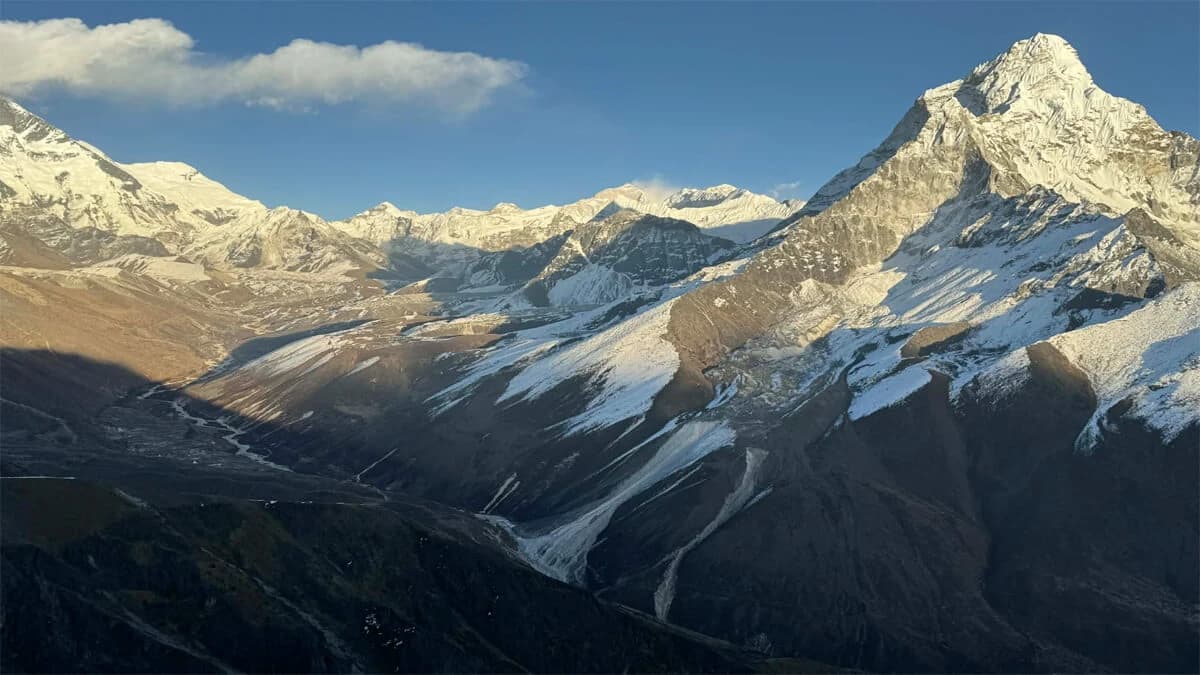
- Glaciers, ridges, and open views that make you feel tiny in the best way
- A proper taste of mountaineering in Nepal that does not pretend to be easy
Unique Experiences on the Bokta Peak Climb
One of the best parts of the Bokta Peak climb is that the trip starts feeling special long before you get anywhere near the summit.
The lower route takes you through remote Himalayan villages where life is just happening around you. People are farming, carrying loads, cooking, fixing things, and getting on with the day while you are out there trying to feel like a serious mountain person. You pass yaks on the trail, old stone houses, prayer flags and hillsides that make most busy Nepal trekking routes feel overdone.
As you go higher, the whole trip starts to change. The trail gets rougher, the air gets thinner, and it slowly stops feeling like a normal trek and starts feeling like actual peak climbing in Nepal. That shift is a big part of what makes Bokta Peak climbing so rewarding. You are not just walking for views. You are working your way into a proper mountaineering in Nepal experience.
And summit day? That is where the mountain usually stops entertaining your confidence.
It is cold, slow, tiring, and a lot less glamorous than people imagine when they say they want “adventure.” But that is also why it feels so good when you finally get there. Reaching the top after a real Himalayan climbing route like this hits a lot harder than some comfortable trek with a viewpoint and a biscuit break.
This mountain climbing journey is the kind of experience that keeps playing in your mind even when you’re back at your office, sitting at your desk, wishing you were back in the mountains.
Who Should Attempt Bokta Peak Climbing in Nepal
Bokta Peak climbing in Nepal is for people who want more than just an easy mountain walk with good photos at the end.
It is a better fit for trekkers and climbers who are okay with long days, rough trails, high altitude, and a trip that asks something from you physically. If you like the idea of a mountain journey feeling a bit raw, quiet, and hard-earned, this climb makes a lot of sense.
It is a good choice for:
- trekkers with some high altitude experience
- people who want to move from trekking into peak climbing in Nepal
- travelers who want a less crowded Himalayan route
- anyone curious about more serious mountaineering in Nepal
At the same time, it is probably not the right trip for someone looking for a very easy first trek, luxury comfort, or a quick “summit photo” experience.
If your idea of a good trip is something that feels physical, honest, and memorable long after you get home, Bokta Peak climbing is the one for you.
21-Day Bokta Peak Climbing Outline Itinerary
Day 1: Kathmandu to Bhadrapur flight and to Taplejung (1,820 m)
Day 2: Taplejung to Sekathum (1,500 m) to Aamjilasa (2,400 m)
Day 3: Aamjilasa to Gyabla (2,750 m)
Day 4: Gyabla to Ghunsa (3,430 m)
Day 5: Acclimatization Day in Ghunsa
Day 6: Ghunsa to Khambachen (4,050 m)
Day 7: Rest Day in Khambachen - Visit Jannu Base Camp
Day 8: Khambachen to Lonak (4,800 m)
Day 9: Lonak to Pangpema/North Base Camp and Return to Khambachen
Day 10: Khambachen to Ghunsa (3,430 m)
Day 11: Ghunsa to Selele Camp (4,480 m)
Day 12: Selele Camp to Tseram via Mrigen La & Sinen La (4,646 m)
Day 13: Tseram to Oktang Viewpoint (4,900 m) and Back to Tseram
Day 14: Trek from Oktang to Bokta Peak Base Camp (5,100 m)
Day 14 to 16: Summit Preparation and Acclimatization
Day 17: Summit Bokta Peak (6,143 m) - Return to Tseram
Day 18: Tseram to Yarsang (2,144 m)
Day 19: Yarsang to Helok (1,740 m) and Drive to Taplejung
Day 20: Taplejung to Birtamod
Day 21: Birtamod to Kathmandu
Short Bokta Peak Climbing Itinerary description
The 21-day Bokta Peak Climbing starts in Kathmandu and takes you deep into eastern Nepal, ending at the summit of Bokta Peak. The first week moves through villages like Sekathum, Aamjilasa, Gyabla, and Ghunsa, giving your body time to adjust to higher altitudes. You stay mostly in teahouses on this part of the route.
The middle section takes you over high passes like Mirgin La and Sinion La, with more remote stops at Selele and Tseram. From here, the trek shifts from teahouses to tents as you reach Base Camp. The summit climb is demanding, above 6,000 meters, and requires careful pacing, proper gear, and attention to your body’s limits.
After the summit, the trek descends through Yarsang, Helok, and Taplejung before returning to Kathmandu. The trail combines the comfort of teahouses in the lower sections with basic camping higher up, giving a true sense of remoteness, rugged terrain, and high-altitude adventure.
Bokta Peak Climbing Cost
Bokta Peak Climbing cost usually around $3,500 to $4,500 per person for a standard package. This includes your permits, guide and porter support, teahouse stays along the lower trail, and basic meals. A full camping package, where tents and meals are provided at Base Camp and higher sections, can cost a bit more, around $4,500 to $5,500 per person.
Flights to and from Taplejung, personal gear, travel insurance, and extra snacks or drinks are usually not included. The price might change depending on group size, season, or any customizations you want.
It is not a cheap trek, but the cost reflects how remote this mountain is, the logistics involved, and the support you need to climb safely.
Types of Packages for Bokta Peak Climbing
Bokta Peak climbs can be organized through different packages depending on the level of support, comfort, and experience you want. Each package is built for a specific type of climber.
The Standard Climbing Package is perfect for climbers who want the essentials. It includes a licensed guide, porter support for heavy luggage, basic accommodation in teahouses or tents, meals on the trail, and all required climbing and restricted region permits. This package covers everything needed for a safe ascent without extra comforts.
The Premium / luxury Climbing Package is for climbers who want a more comfortable experience. Accommodation is better where available, meals are slightly more varied, and guide and porter support is included. Some agencies also provide sleeping bags or additional gear. This package is practical for those who want reliability and convenience without overcomplicating the trek.
The Full Camping Package is for those who want the climb in its rawest form. You do not stay in teahouses and camp at every stop. Your gear is carried by porters or you carry what you need. Each camp has a tent, sleeping bag, and mat so you have your own space. Nights are cold and the setup is basic, but it works. Meals are provided along the way, but do not expect fancy food.
Most days it will be dal bhat, noodles, porridge, and simple snacks to keep you going. Guides make sure the tents are set up safely, water is available, and all permits are sorted for the restricted region climb in Nepal. This package is physically demanding, but it gives privacy, freedom to move at your own pace, and a chance to really feel like you are in the wilderness on one of the less crowded trekking peaks in Nepal.
Permits and Regulations for Bokta Peak Climbing
Before starting your Bokta Peak climb, you need a few official permits. Having them ready means you can focus on the climb instead of worrying about rules.
Kanchenjunga Conservation Area Permit (KCAP)
You need this to legally enter the Kanchenjunga region. Authorities check it at checkpoints, and without it, the trek cannot start. It also helps support local safety and conservation.
NMA Climbing Permit
The Nepal Mountaineering Association issues this for registered peaks, including Bokta Peak. This is the official Bokta Peak climbing permit you need. It tracks climbers, ensures legal access, and covers safety oversight. You don’t need any other climbing permit for this peak.
TIMS Card
The Trekkers’ Information Management System card is mandatory for trekking in remote areas of Nepal. It helps authorities know who is on the trails, assists in emergencies, and is generally arranged by your guide.
Restricted Area Permit
Bokta Peak lies in a restricted region in Nepal, so a restricted region permit is required. Authorities are strict about this, and entry without it is impossible. Guides and trekking agencies usually arrange it before the trek begins.
Environmental/Garbage Deposit
Climbers are expected to take responsibility for their trash. The deposit is often included in the NMA climbing permit fee. Leave garbage behind, and you risk losing the deposit or facing restrictions on future climbs. This is enforced to keep the mountain clean for everyone.
Why should you book with Nepal Trekking Routes?
We are a local trekking agency in Nepal, and we provide authentic, reliable service you can trust. We handle all permits, guides, porters, and logistics so you can focus on the trek. We can add extra options or side trips based on your preferences, and we always put the safety of our guests and team first. Our guides are experienced and friendly, giving you expert advice and support every step of the way.