Kathmandu Valley Multi Day Sightseeing Tour

The Kathmandu Valley is one of those places where an extra day genuinely changes the experience. A quick Kathmandu Valley tour lets you visit the major landmarks, but it rarely provides enough time to understand how they relate to one another or why they remain important today.

Kathmandu, Patan, and Bhaktapur served as the capitals of three independent Malla kingdoms from the late fifteenth century until Prithvi Narayan Shah conquered the valley in the eighteenth century.

That centuries long rivalry encouraged remarkable achievements in architecture, religious art, urban planning, and craftsmanship, many of which continue to define the Kathmandu Valley UNESCO World Heritage Sites and make this one of the most rewarding places to explore in Nepal.

Why Spend More Than One Day Exploring Kathmandu Valley?

Kathmandu Valley is easy to rush and surprisingly difficult to understand in a single day. Although the main attractions lie within a relatively small area, time disappears quickly once you begin exploring palace courtyards, temple complexes, museums, monasteries, and traditional neighborhoods. Road traffic can also be unpredictable, making an ambitious one day itinerary far more limiting than many first time visitors expect.

A longer itinerary allows you to experience the valley beyond its most recognizable monuments. You can join local devotees completing their morning kora, the clockwise ritual walk around Boudhanath Stupa, spend time studying centuries of religious sculpture inside the Patan Museum, wander through hidden bahals, the traditional monastery courtyards of the Newar community, or just pause in an old square and observe daily life unfolding around you.

Those moments reveal as much about Kathmandu Valley as its famous monuments because they show that the valley remains a living cultural landscape rather than an open air museum.

By the final day, the differences between Kathmandu, Patan, and Bhaktapur become much easier to appreciate. While they share a common Newar heritage, each city developed its own architectural character, artistic traditions, civic identity, and religious institutions during the Malla period. Exploring them over several days reveals how these former kingdoms influenced one another while preserving their own distinct traditions.

5 Day Kathmandu Valley Tour Itinerary

This five day Kathmandu Valley itinerary has been planned by grouping nearby attractions together, allowing more time to explore each destination instead of travelling repeatedly across the valley. Every day introduces a different aspect of the region, from former royal capitals and sacred pilgrimage sites to traditional Newar settlements and panoramic viewpoints. Rather than presenting the valley as a series of unrelated attractions, the itinerary gradually explains how its history, religion, architecture, and local communities are connected. 

7 UNESCO World Heritage Sites Kathmandu Itinerary

Short on time? You can also explore all 7 UNESCO World Heritage Sites in Kathmandu Valley in a shorter itinerary. It covers Kathmandu Durbar Square, Patan Durbar Square, Bhaktapur Durbar Square, Swayambhunath, Boudhanath, Pashupatinath, and Changu Narayan. While it is possible to visit them in less time, a 5 day itinerary gives you more time to explore each place without any hassle.

Best Places to Visit in Kathmandu Valley

From historic city squares and sacred temples to Buddhist monasteries and hilltop viewpoints, Kathmandu Valley offers far more than a single sightseeing stop. Here are the places included in this itinerary and what makes each one worth visiting.

Swayambhunath Stupa

Swayambhunath is one of Nepal's oldest and most revered religious monuments, occupying a hill on the western edge of Kathmandu that has served as a place of worship for many centuries. Local Buddhist tradition associates the site with the ancient lake that, according to legend, once filled the Kathmandu Valley, while historical evidence confirms that Swayambhunath was already an established religious center during the Licchavi period. Several hundred stone steps climb to the main stupa from the western entrance, although roads also reach the summit from other directions.

The white dome symbolizes the earth, while the gilded spire rising above it represents the stages of spiritual awakening described in Buddhist tradition. Prayer wheels, monasteries, chaityas, shrines, and smaller temples surround the main stupa, reflecting centuries of devotion by both Buddhist and Hindu communities.

Unlike monuments preserved primarily for tourism, Swayambhunath continues to function as an active place of worship where monks, pilgrims, local families, and visitors share the same sacred space throughout the day. The hilltop also provides one of the broadest views across Kathmandu Valley, helping visitors appreciate the geography that shaped the region's history.

Kathmandu Durbar Square

Kathmandu Durbar Square served as the political, ceremonial, and royal center of the Kingdom of Kantipur until Prithvi Narayan Shah conquered Kathmandu in 1768 during the unification of Nepal. Much of the palace was developed during the Malla period, when the valley's three kingdoms competed to commission increasingly elaborate temples, palace courtyards, and public squares that reflected both political authority and artistic achievement. Following the conquest, the palace remained an important royal and administrative complex under the Shah rulers, although the political landscape of the valley had fundamentally changed.

Today, Kathmandu Durbar Square brings together palace courtyards, pagoda temples, shrines, and finely carved wooden buildings that represent some of the finest surviving examples of traditional Newar craftsmanship.

Within Kathmandu Durbar Square is Kumari Ghar, the home of Nepal's Living Goddess Kumari. The Kumari is a young girl chosen according to a centuries old Newar tradition and is regarded as a living manifestation of the Hindu goddess Taleju. Visitors can enter the courtyard of Kumari Ghar, and if they are fortunate, they may catch a brief glimpse of the Living Goddess Kumari at one of the windows. Her appearances are not scheduled, and photography of the Kumari herself is not permitted. This is an interesting event to look for. 

Although several monuments were damaged during the 2015 Gorkha Earthquake, conservation and restoration work continues across the complex while daily worship, religious festivals, local businesses, and community life remain part of the square's character. Rather than functioning solely as a historic monument, Kathmandu Durbar Square continues to serve many of the social and religious roles it has fulfilled for centuries.

Chandragiri Hills

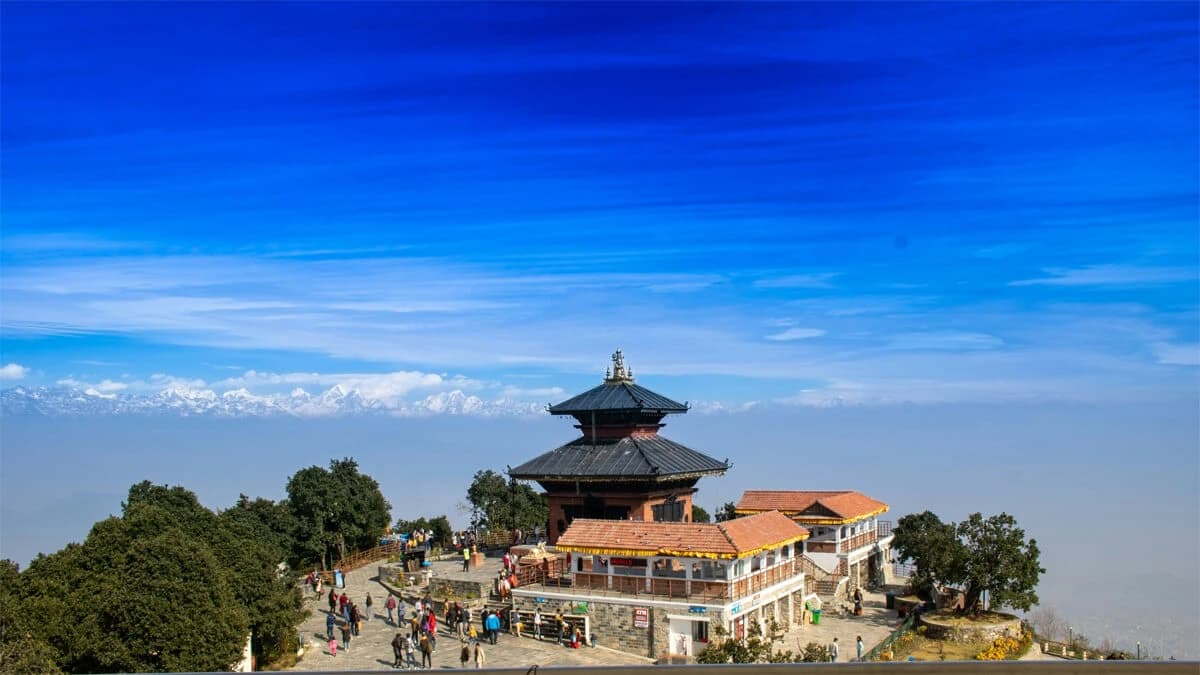
Standing at an elevation of 2,551 meters, Chandragiri Hills forms the southwestern rim of Kathmandu Valley and provides one of the valley's widest viewpoints. Today it is best known for its cable car, but the hill also occupies an important place in local history.

According to long standing tradition, Prithvi Narayan Shah viewed the Kathmandu Valley from Chandragiri before beginning the campaign that eventually brought the three Malla kingdoms under his rule. Although this cannot be verified through contemporary historical records, it remains closely associated with the hill and is widely shared in local historical narratives.

The cable car reaches the summit in about ten minutes, where visitors can look across the valley toward Kathmandu, Patan, and Bhaktapur. During the post monsoon and winter months, clear weather may also reveal Himalayan peaks extending from the Langtang range toward Ganesh Himal and, on exceptionally clear days, even more distant mountains.

At the summit stands Bhaleshwor Mahadev Temple, an active shrine dedicated to Lord Shiva that attracts devotees throughout the year. The combination of beautiful scenery, religious importance, and historical associations makes Chandragiri a natural contrast to the valley's urban heritage sites.

Boudhanath Stupa

Boudhanath Stupa is one of the world's largest spherical stupas and the most important center of Tibetan Buddhism in Nepal. For centuries, it stood beside one of the trade routes linking Kathmandu with Tibet, where merchants and pilgrims stopped to offer prayers before continuing their journey across the Himalaya. Following the arrival of thousands of Tibetan refugees after 1959, the area surrounding the stupa developed into a vibrant community of monasteries, schools, traditional businesses, and cultural institutions that remains central to Tibetan Buddhist life today.

The monument is rich in symbolism. Its white dome represents the earth, while the square tower above bears the painted eyes of the Buddha looking in all four directions. Rising above the tower are thirteen successive levels that symbolize the stages leading toward enlightenment in Buddhist philosophy.

Throughout the day, monks, pilgrims, and local residents perform kora by walking clockwise around the stupa while turning prayer wheels and reciting mantras. Rather than functioning as a monument preserved for visitors, Boudhanath continues to serve as a living center of religious practice where daily worship remains the heart of the site.

Pashupatinath Temple

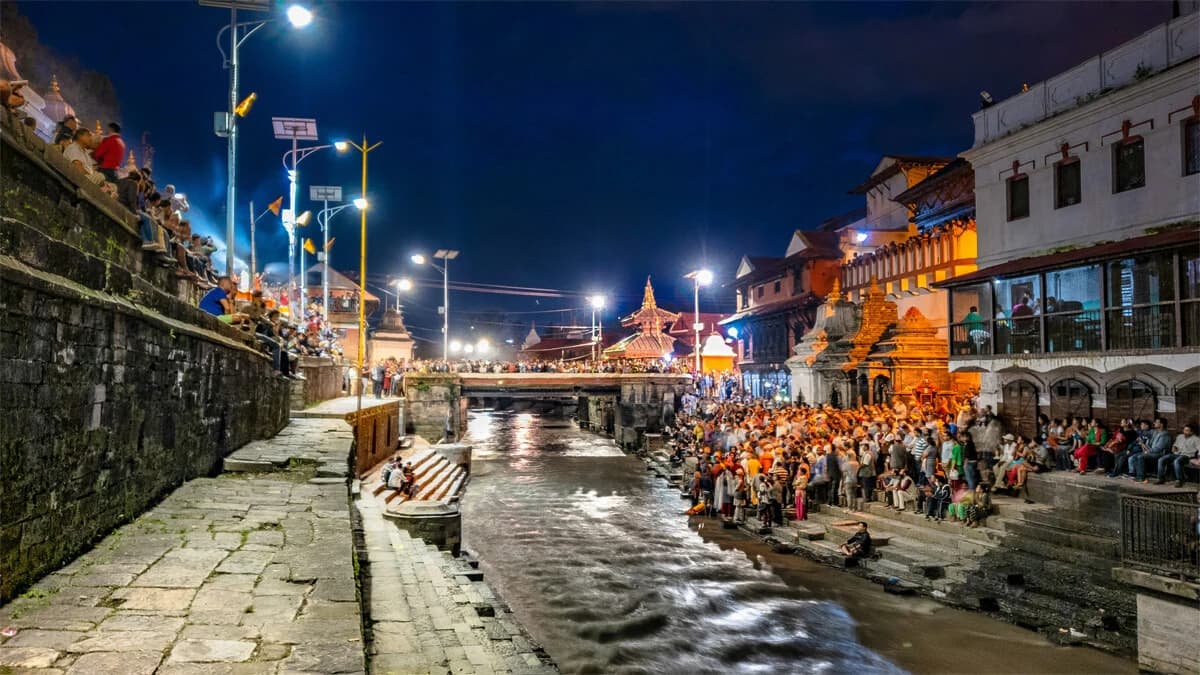
Pashupatinath Temple is Nepal's most important Hindu temple dedicated to Lord Shiva and one of the country's oldest continuously worshipped religious sites. Although the present pagoda style temple was rebuilt during the seventeenth century, historical records and inscriptions indicate that worship at Pashupatinath began many centuries earlier. Over time, the site expanded into a vast sacred place containing hundreds of temples, shrines, sculptures, monasteries, and cremation ghats spread across both banks of the Bagmati River.

Entry to the main temple is reserved for practicing Hindus, while visitors of other faiths may explore much of the surrounding from designated areas. Along the river, Hindu funeral rites continue to take place each day according to traditions that have remained largely unchanged for generations.

The Bagmati River itself holds deep religious significance because it eventually joins the Ganges, one of Hinduism's holiest rivers. More than a historic monument, Pashupatinath remains an active pilgrimage destination where worship, festivals, religious study, and everyday devotion continue throughout the year.

Kopan Monastery

Located on a hillside north of Boudhanath, Kopan Monastery has become one of Nepal's best known centers for Tibetan Buddhist study and meditation. Established in 1971 by Lama Thubten Yeshe and Lama Zopa Rinpoche, the monastery developed from a small teaching center into an internationally respected institution that welcomes students from around the world to study Buddhist philosophy, meditation, and ethics.

Unlike many religious sites that are visited primarily for their historic monuments, Kopan functions first as a working monastery. Resident monks and nuns follow a structured daily routine of prayers, study, and meditation, while visitors are encouraged to explore the grounds respectfully outside residential and teaching areas. Throughout the year, the monastery hosts meditation retreats and educational programs ranging from introductory courses to advanced Buddhist studies. 

Patan Durbar Square

Patan Durbar Square forms the historic heart of Lalitpur, a city that has been associated with craftsmanship, religious learning, and artistic excellence for centuries. During the Malla period, Patan developed into one of the Kathmandu Valley's leading centers for bronze casting, metalwork, wood carving, and stone sculpture.

Many of those traditions continue today, with family workshops across the old city still producing religious statues, ritual objects, and architectural carvings for temples, monasteries, and private collections in Nepal and abroad.

The square is arranged around the former royal palace and contains an exceptional concentration of temples, shrines, courtyards, and traditional Newar architecture within a relatively compact area. Unlike larger palace complexes where visitors tend to move quickly between monuments, Patan encourages slower exploration, rewarding those who take time to notice the carved windows, stone water spouts, hidden courtyards, and smaller shrines woven into the historic streets.

The nearby Patan Museum adds another layer to the experience by explaining the religious meaning, symbolism, and craftsmanship behind many of the sculptures and artworks found throughout the valley, making it one of Nepal's most respected museums.

Khokana Village

Khokana is one of the beautiful traditional villages in Nepal and provides a perspective that differs greatly from the former royal cities. Rather than developing around royal courts or large temple complexes, the village grew as an agricultural settlement where farming, community life, and local religious traditions shaped everyday life. Its narrow brick streets, traditional houses, communal courtyards, and neighborhood temples still reflect the historic layout of a Newar village despite the gradual expansion of modern Kathmandu around it.

For generations, Khokana was known for producing mustard oil using large wooden presses powered by buffaloes, a craft that supported much of the local economy before mechanical production became widespread. Although only a small number of traditional presses remain in use today, the village continues to preserve customs, festivals, and architectural features that have disappeared from many other parts of the valley.

In recent years, Khokana has also become an important example in discussions about balancing infrastructure development with the conservation of Nepal's cultural heritage.

Bhaktapur Durbar Square

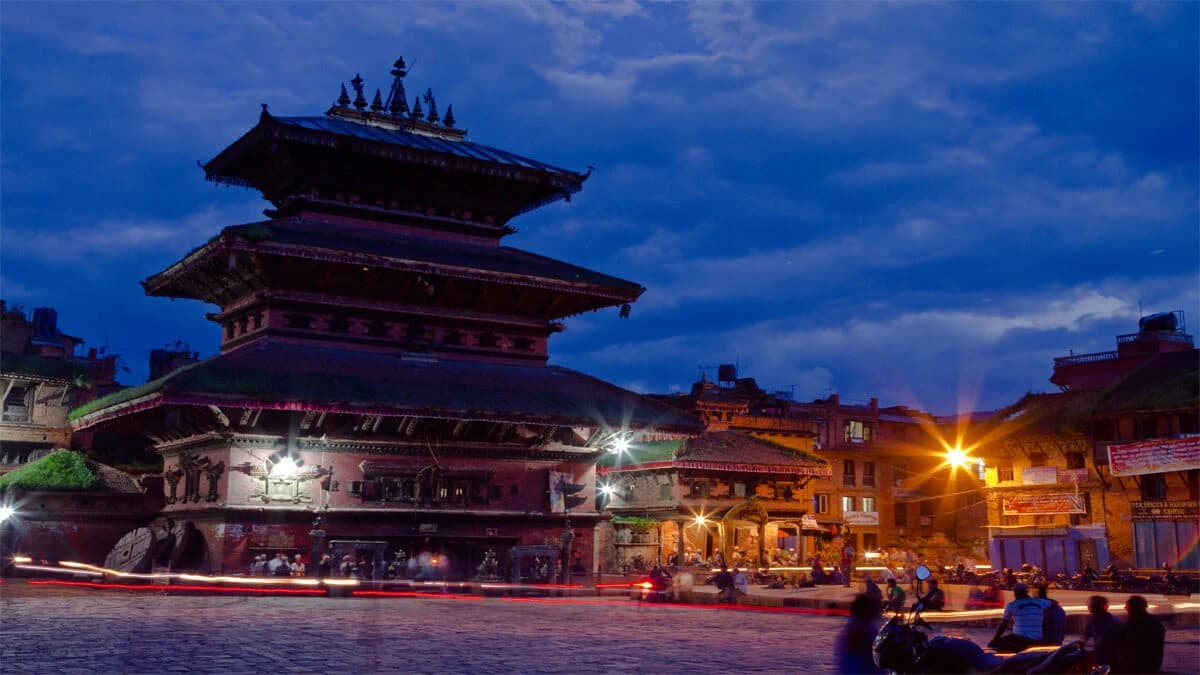
Bhaktapur Durbar Square stands at the center of a city that preserves one of the most complete historic urban environments in Nepal. As the capital of the former Kingdom of Bhaktapur, the city flourished during the Malla period, when its rulers commissioned temples, public squares, palaces, and civic spaces that reflected both political ambition and extraordinary artistic skill.

Buildings including Nyatapola Temple, the 55 Window Palace, Bhairavnath Temple, and Vatsala Temple remain among the finest surviving examples of traditional Newar architecture.

What distinguishes Bhaktapur from many historic cities is that its heritage extends well beyond the main square. Pottery workshops, carved wooden houses, neighborhood shrines, and traditional courtyards remain part of the city's daily rhythm, allowing visitors to experience a place where historic architecture continues to serve an active community.

Although the 2015 Gorkha Earthquake damaged several important monuments, extensive restoration has helped preserve much of the city's historic character while maintaining its role as a living cultural center rather than a collection of isolated monuments.

Changu Narayan Temple

Located on a hill east of Bhaktapur, Changu Narayan is generally regarded as the oldest surviving temple site in the Kathmandu Valley dedicated to Lord Vishnu. While the present temple reflects reconstruction carried out after fires and earthquakes over many centuries, the site itself dates back to the Licchavi period and has remained an important place of worship for well over a thousand years.

Changu Narayan is especially valued for its remarkable collection of early stone sculptures depicting Vishnu in different forms, many of which remain in their original setting rather than being displayed in museums. The temple is also home to the famous stone inscription of King Manadeva, dated to 464 CE, which is widely regarded as one of the oldest dated inscription found in Nepal. It provides valuable insight into the country's early history, politics, and society during the Licchavi period.

Beyond its archaeological importance, Changu Narayan continues to function as an active temple where daily worship takes place alongside the preservation of one of Nepal's most significant heritage sites.

Which Season is Best for Kathmandu Valley Sightseeing Tour?

Unlike trekking in Nepal, a Kathmandu Valley tour is not limited to one particular season. The valley can be explored throughout the year and each season offers different weather, festivals, and views. If you are planning a multi day Kathmandu Valley sightseeing tour, take a look at which season suits you the most.

Kathmandu Valley Sightseeing in Spring Season

Spring marks the transition from the cool months to warmer days and is one of the most popular seasons for sightseeing in Kathmandu Valley. March brings clear mornings and comfortable daytime temperatures and makes it easy to spend several hours exploring palace squares, temples, and monasteries without the cold of winter. By April, jacaranda trees bloom in different parts of the valley, adding purple flowers to streets, gardens, and historic surroundings.

As the season moves into late April and May, warmer temperatures can create more afternoon haze, so distant Himalayan views are better earlier in the season than later. Spring is also one of Nepal's busiest travel periods because it coincides with the trekking season in Nepal, so well known attractions may receive more visitors than at other times of the year.

Kathmandu Valley Sightseeing in Summer and Monsoon Season

The monsoon arrives during summer, bringing the highest rainfall of the year. Rain is most frequent from late June through August, although it rarely falls without interruption throughout the day. Mornings are the best time for sightseeing, while showers become more common later in the afternoon or evening.

Although this is considered the off season for many visitors, there are advantages to travelling during the monsoon. The hills surrounding Kathmandu turn green, gardens become more vibrant, and visitor numbers at many heritage sites are lower than during autumn. Roads can be slower after heavy rain, so you should plan a flexible itinerary. Carrying a light rain jacket or umbrella is enough for most days, and many temples, museums, and palaces remain open throughout the season.

Kathmandu Valley Sightseeing in Autumn Season

Autumn is considered as the best time to visit Kathmandu Valley. Once the monsoon has ended, the air is much cleaner because weeks of rainfall have washed dust from the atmosphere. This creates some of the year's clearest mountain views, especially from Chandragiri Hills and other viewpoints around the valley.

Daytime temperatures are comfortable for walking, humidity falls, and the weather remains stable for much of the season. Autumn is also when Nepal celebrates its two biggest festivals, Dashain and Tihar. Visitors travelling during these months have the chance to see homes decorated with lights and flowers, families gathering for celebrations, and temples filled with worshippers. Because this is the busiest travel season in Nepal, booking accommodation and tours in advance with Nepal Trekking Routes is recommended.

Kathmandu Valley Sightseeing in Winter Season

Winter is cooler than many first time visitors expect, especially during the early morning and after sunset. Daytime temperatures are still suitable for sightseeing, and sunny afternoons make it comfortable to explore Kathmandu, Patan, and Bhaktapur on foot. We recommend you to wear warm clothes for mornings, evenings, and visits to higher places such as Chandragiri Hills.

Winter also brings some of the clearest conditions for photography and mountain views, although air pollution can occasionally become trapped over the valley during calm mornings before gradually improving later in the day. Visitor numbers are lower than during autumn, giving a quieter experience at many of the valley's most popular heritage sites.

Who Is This Kathmandu Valley Tour For?

This itinerary is a good choice if you want to experience more than just the main attractions in Kathmandu. It suits first time visitors, families, couples, solo travellers, and anyone interested in Nepal's history, architecture, and local culture. It also works well as a family tour in Nepal or as a short trip before or after a Himalayan trek.

If you are looking for the best things to do in Kathmandu without planning everything yourself, this itinerary brings together the valley's most important cultural and religious sites in a route that is practical and easy to follow.

Itinerary

This is a 5 day Kathmandu Valley tour itinerary that covers the valley's most important cultural, religious, and historical sites. It is suitable for first time visitors as well as anyone who wants to explore Kathmandu beyond a quick city tour.

During the tour, you will visit Kathmandu, Patan, and Bhaktapur, along with well known places such as Chandragiri Hills, Boudhanath Stupa, Pashupatinath Temple, Nagarkot, and Changu Narayan. Each day has been planned to make the journey practical while giving you enough time to explore each destination.

If you would like to change the itinerary or have any questions before booking, Nepal Trekking Routes is always here to help. Feel free to contact us, and we will be happy to customize the trip according to your travel plans and interests.

Trip PlanExpand All

Your Kathmandu Valley tour begins when you arrive at Tribhuvan International Airport. After completing the arrival process, our representative from Nepal Trekking Routes will meet you at the airport and take you to your hotel.

The first day is mainly for settling in after your flight. On the way to the hotel, you will get your first view of Kathmandu, from its busy streets and local shops to the combination of traditional houses and modern buildings across the valley.

Once you reach the hotel, you can rest and prepare for the sightseeing days ahead. If you arrive early and feel like exploring, you can take a short walk around the nearby area, visit a local cafe, or just enjoy your first evening in Kathmandu before the tour continues the next day.

After breakfast, your guide will meet you at your hotel at around 8:00 AM to begin the day's sightseeing. The first destination is Chandragiri Hills, located on the southwestern edge of Kathmandu Valley. After a short cable car ride to the top, you will have time to enjoy the views across the valley and, if the weather is clear, the distant Himalayan range. You will also visit Bhaleshwor Mahadev Temple, a sacred Hindu temple situated at the summit. Most visitors spend around 2 hours here, including the cable car ride.

The journey then continues to Swayambhunath Stupa, which usually takes 45 minutes to 1 hour, depending on traffic. You will have time to walk around the stupa complex, visit the surrounding shrines and monasteries, and observe the daily activities of monks, pilgrims, and local worshippers. As you explore, your guide will share the history of Swayambhunath and explain why it remains one of the most important religious sites in Kathmandu Valley.

Afterwards, you will head to Kathmandu Durbar Square, around 20 to 30 minutes from Swayambhunath. Here, you can explore the former royal palace complex, temples, and traditional courtyards while your guide explains the history of the old royal city, the Malla rulers, and the remarkable Newar craftsmanship that still defines the square today. Most visitors spend around 1.5 to 2 hours exploring the area.

Once the sightseeing is complete, you will return to your hotel in the late afternoon.

After breakfast, your guide will meet you at your hotel at around 8:30 AM for another day of sightseeing. Today's route explores three of Kathmandu's most important religious sites, each offering a different perspective on the valley's Buddhist and Hindu traditions.

Boudhanath Stupa

Your first stop is Boudhanath Stupa, where you will spend around 1.5 to 2 hours exploring the area. Walk around the stupa alongside local devotees performing kora, visit nearby monasteries, and experience the everyday rhythm of one of Nepal's most important Tibetan Buddhist centres. Your guide will explain the symbolism of the stupa and its importance to the local community.

Pashupatinath Temple

A drive of about 10 to 15 minutes brings you to Pashupatinath Temple, Nepal's most important Hindu pilgrimage site dedicated to Lord Shiva. You will spend around 1.5 hours exploring the temple complex, viewing the Bagmati River from the designated visitor areas, and learning about the religious traditions and ceremonies that continue here every day. Your guide will also explain the history and significance of the temple while respecting the sacred nature of the site.

Kopan Monastery

After lunch, you will continue to Kopan Monastery, a drive of around 25 to 40 minutes, depending on traffic. You will have about 1 to 1.5 hours to walk around the peaceful monastery grounds, observe the surroundings, and learn about the monastery's role as an important centre for Tibetan Buddhist study and meditation. On clear days, there are also pleasant views across parts of Kathmandu Valley.

You will return to your hotel in the late afternoon, bringing another rewarding day of sightseeing to an end.

After breakfast, you will head to Lalitpur, one of the oldest cities in Kathmandu Valley. The day focuses on Patan’s artistic heritage and Khokana’s traditional Newar villages. The sightseeing almost takes around 6 to 7 hours, including travel time between the places.

Patan Durbar Square

The first stop will be Patan Durbar Square, where you can explore the old palace area, temples, courtyards, and streets filled with traditional Newar architecture. Our guide will explain the stories behind the carvings, religious symbols, and craftsmanship that made Patan famous as a centre of art and metalwork. You will have enough time to look around the square rather than only passing through the main buildings.

Patan Museum

After exploring the square, you will visit Patan Museum, located inside the former royal palace. The museum gives more background about the sculptures, deities, and artistic traditions seen throughout the valley. A visit usually takes less than an hour but adds more meaning to the things you have already seen outside.

Khokana Village

Later, you will continue to Khokana, a traditional Newar village located away from the busy city areas. Walking through the narrow lanes, old houses, and local courtyards gives you a chance to see a quieter side of Kathmandu Valley. Our guide will share information about the village’s traditional mustard oil production and how local customs have continued over generations.

After visiting Khokana, you will return to your hotel. The evening is free for you to relax or explore nearby places on your own.

Your final day starts early with a drive to Nagarkot, which usually takes around 1.5 to 2 hours from Kathmandu. Leaving before sunrise gives you the best chance of enjoying clear morning views. On favourable weather days, the viewpoint offers a wide panorama of the surrounding hills and distant Himalayan peaks.

Nagarkot

Spend some time enjoying the morning scenery before continuing towards Changu Narayan. Early morning is usually the quietest time to visit Nagarkot, making it a relaxing start to the final day of the tour.

Changu Narayan Temple

From Nagarkot, you will drive for about 30 to 40 minutes to Changu Narayan Temple. As you walk through the temple complex, our guide will explain the history of the site, the significance of the Licchavi period stone inscription of King Manadeva, and the intricate sculptures that have survived for centuries. You will have enough time to explore the temple and the traditional surroundings before continuing to Bhaktapur.

Bhaktapur Durbar Square

The journey then continues to Bhaktapur Durbar Square, about 20 to 30 minutes from Changu Narayan. You will explore the former royal square as well as the surrounding streets, where traditional Newar houses, temples, and local workshops remain part of everyday life. Along the way, the tour guide will share the history of Bhaktapur, explain the importance of its monuments, and introduce you to the city's long tradition of pottery, wood carving, and craftsmanship. If time allows, you can also stop to try Bhaktapur's famous Juju Dhau before returning to Kathmandu.

After completing the day's sightseeing, you will drive back to your hotel. And here comes the journey to an end. Hope you had a good time.

Plan An Amazing Private and Tailor-Made HolidaysNot satisficed with this itinerary? Share your idea with our travel Expert. We make your dream come true.
Customize Trip
Essential Information

Entrance Fees for Kathmandu Valley UNESCO World Heritage Sites

Most UNESCO World Heritage Sites in Kathmandu Valley require an entrance ticket. Admission fee is different by nationality, with separate rates for Nepali citizens, SAARC nationals, and other foreign visitors. The prices below were correct at the time of writing, but they may change if revised by the relevant authorities.

Heritage Sites  Foreign Nationals SAARC Nationals Nepali Citizens
Kathmandu Durbar Square NPR 1000 NPR 500 Free
Patan Durbar Square (including Patan Museum) NPR 1000 NPR 500 Fee applies for Nepali visitors
Bhaktapur Durbar Square NPR 1800 NPR 500 Free
Swayambhunath Stupa NPR 200 NPR 50 Free
Boudhanath Stupa  NPR 400 NPR 100 Free
Pashupatinath Temple NPR 1000 NPR 1000 Free
Changu Narayan Temple NPR 400 NPR 100 Free

Kathmandu Valley UNESCO World Heritage Site Entrance Fees and Visitor Tips

  • Entry to the main shrine of Pashupatinath Temple is reserved for practicing Hindus. Visitors of other faiths can explore the surrounding temple complex with an entrance ticket.
  • Indian nationals can enter the Pashupatinath Temple complex free of charge. Other SAARC nationals pay the standard SAARC admission fee.
  • Children below the age specified by each site are admitted free at several heritage sites. The age limit is displayed at the ticket counter.
  • Tickets are purchased at the entrance of each heritage site. Carrying Nepali Rupees is essential as payment options may be different between locations.
  • Some Kathmandu Valley sightseeing tours include entrance fees in the package price, while others list them separately. It is worth confirming this before booking.

Local Etiquette for Visiting Temples and Monasteries in Kathmandu Valley

Many temples and monasteries included in a Kathmandu Valley sightseeing tour remain active places of worship, with local people visiting every day for prayers, offerings, and religious ceremonies. A few simple customs will help you avoid awkward situations and show respect while visiting.

  • Walk clockwise around Buddhist stupas such as Swayambhunath and Boudhanath. This is the traditional direction followed by worshippers while turning prayer wheels.
  • Remove your shoes before entering temple buildings or monastery prayer halls where footwear is not allowed. If you are unsure, follow the signs or see what local visitors are doing.
  • Wear clothing that covers your shoulders and knees when visiting temples and monasteries. While there is no strict dress code at most sites, modest clothing is considered appropriate.
  • Ask before taking close up photographs of people. Many monks, worshippers, and sadhus are happy to be photographed, but asking first is considered respectful. Photography may also be restricted inside some temple buildings.
  • Observe cremation ceremonies quietly at Pashupatinath Temple. Visitors can watch from the public viewing areas, but funeral rituals should never be interrupted or treated as a tourist attraction.
  • Speak quietly inside monasteries and avoid entering areas marked as private or reserved for monks and nuns.

What to Wear for Exploring Kathmandu Valley

You do not need any special clothing for visiting Kathmandu Valley, but what you wear can make temple visits and long hours outside easier. Light clothes are suitable during warmer months, while a warm jacket is useful on winter mornings and evenings.

For places like Pashupatinath Temple, Swayambhunath, Boudhanath, and Changu Narayan, it is better to wear clothes that cover your shoulders and knees as modest clothing is appreciated at active religious sites.

A good pair of walking shoes is more useful than heavy footwear. Many old areas have uneven brick paths, stone steps, and narrow lanes where comfortable shoes with good grip make a difference.

If you visit during the monsoon, carrying a small umbrella or rain jacket is helpful. For Chandragiri Hills, bring an extra layer as the hilltop is cooler than the city below. 

How Much Walking Is Required During a Kathmandu Valley Trip?

A Kathmandu Valley trip involves some walking, but it is not physically challenging like trekking in Nepal. The main challenge is the old city environment, where heritage areas include brick lanes, courtyards, steps, and uneven surfaces.

Comfortable shoes are important when exploring Kathmandu, Patan, and Bhaktapur on foot. Visitors who need a slower itinerary can still enjoy the valley by reducing walking time, taking breaks, and using transport between major sites.

Transportation Around Kathmandu Valley

The main thing to consider when travelling between Kathmandu Valley attractions is traffic. Kathmandu, Patan, and Bhaktapur are not far apart, but busy roads can significantly affect travel time, especially during the daytime.

For most visitors, a private vehicle with a driver is the easiest way to visit several places in one day. Taxis are useful for shorter routes, while walking is the best option inside historic areas where narrow streets and old courtyards are easier to explore on foot.

If you want more details about transport options and travelling around Nepal, you can also check our blog on Nepal Transport Guide.

Must Try Foods in Kathmandu Valley

Beyond temples, old cities, and mountain views, food gives another way to experience Kathmandu Valley. The valley's food culture has been shaped by Newar traditions, Tibetan influences, and everyday Nepali cooking, creating a mix of dishes that are easy to find while travelling around Kathmandu, Patan, and Bhaktapur.

No visit to Kathmandu Valley is complete without trying momo. These steamed or fried dumplings are found almost everywhere, with fillings such as buffalo meat, chicken, vegetables, or cheese. They are one of the most popular foods in Nepal among both locals and visitors.

For a traditional taste of the valley, try Samay Baji, a Newari platter commonly prepared for festivals, celebrations, and gatherings. It often includes beaten rice, bara, black soybeans, meat, pickles, and other local items.

Around Boudhanath, do not miss trying Laphing, a Tibetan style cold noodle dish that has become especially popular among young locals and visitors. Made from wheat starch, it is served with chilli sauce, garlic, soy sauce, and spices, giving it a unique combination of spicy and refreshing flavours.

If you enjoy sweet flavours, Juju Dhau from Bhaktapur is a must try. This famous buffalo milk yogurt is traditionally set in clay pots and is known for its thick texture and rich taste.

A meal of Dal Bhat offers a simple introduction to everyday Nepali food. Served with rice, lentil soup, vegetables, pickles, and sometimes meat, it remains a common meal across Nepal.

For local snacks, look for Chatamari, a Newari rice flour dish topped with eggs, minced meat, or vegetables. Around Boudhanath, Thukpa is another popular choice, especially when the weather is cooler. And those who enjoy spicy food should try Chhoila, a grilled and seasoned Newari meat dish traditionally served with beaten rice. 

Things To Know Before Visiting Kathmandu Valley 

Kathmandu Valley is easy to enjoy once you understand a few small realities. The streets, traditions, and daily routines here work differently from many places, and knowing these details beforehand can save time and make your visit more comfortable.

  • Carry some Nepali cash: Larger hotels and restaurants commonly accept cards, but local cafes, small shops, heritage site ticket counters, and short taxi rides sometimes may require cash.
  • Allow extra time for road travel: Kathmandu, Patan, Bhaktapur, and other nearby areas may look close on a map, but traffic can make journeys much longer than expected.
  • Start sightseeing early when possible: Morning visits give you more time to explore temples, squares, and old neighbourhoods before the day becomes busier.
  • Respect active religious spaces: Many temples and monasteries are still part of daily worship. Ask before photographing people, especially monks and worshippers.
  • Look beyond the main attractions: Small courtyards, local markets, hidden shrines, and traditional streets reveal the everyday side of Kathmandu Valley that many visitors miss.
  • Keep small essentials with you: Water, sun protection, and some tissues can be useful during longer sightseeing hours, especially when exploring areas with fewer facilities nearby.
  • Learn a few local words: A simple “Namaste” or “Dhanyabad” can make everyday interactions warmer and is appreciated by many locals.
  • Leave some room in your schedule and enjoy the uncertainty that the day brings, you will enjoy the journey more.
FAQs

Yes, but it depends on how much time you have. A one day Kathmandu tour covers only a few of the major sites, while a 5 day itinerary gives you enough time to explore them without rushing. It also leaves room to visit places such as Chandragiri Hills, Nagarkot, and Khokana that are often left out of shorter tours.

No, you don't. Most places in Kathmandu Valley are easy to visit on your own. However, if you want to understand the history, religious traditions, and stories behind the temples and palace squares, having a licensed guide is worth it. Without one, it's easy to walk past important details without knowing why they matter.

Maybe, but don't expect it. You can visit Kumari Ghar in Kathmandu Durbar Square, but the Living Goddess Kumari does not appear on a public schedule. If you happen to see her during your visit, remember that photography of the goddess is not allowed.

Mostly, yes. The temples and palace squares are generally open every day, but some museums may close on certain days of the week or during public holidays. Opening hours can also change during major festivals, so it's always worth checking in advance.

Yes. Many entrance tickets, small shops, and street food stalls still prefer cash. Cards are accepted at many hotels and larger restaurants, but carrying some Nepali Rupees will make your day much easier.

Not without permission. Flying a drone near UNESCO World Heritage Sites and many religious places requires approval from the relevant authorities. If you are planning to bring a drone to Nepal, check the latest regulations before your trip.

Yes, absolutely. Many people arrive in Nepal for trekking and spend very little time exploring Kathmandu Valley. If you're interested in history, local culture, traditional architecture, or religious sites, the valley is a destination in its own right and easily deserves a few days of your trip.

No. Entry to the main temple is reserved for practicing Hindus. However, they can still explore much of the surrounding temple area, walk along the Bagmati River, and view the main temple from the eastern side of the river.

Yes, in most cases. Major heritage sites such as Kathmandu Durbar Square, Patan Durbar Square, Bhaktapur Durbar Square, Swayambhunath, Boudhanath, and Changu Narayan all charge an entrance fee for foreign visitors. It is a good idea to carry some Nepali Rupees, as smaller ticket counters may not always accept card payments.

No, it's not recommended. Bottled water, filtered water, or boiled water are the safest options for visitors. Many hotels, cafes, and restaurants also provide filtered drinking water, making it easy to refill a reusable bottle during your trip.

Kathmandu, Patan, and Bhaktapur all feel quite different. Kathmandu is the busiest of the three, with a combination of old heritage sites, traffic, shops, and everyday city life. Patan feels more artistic and refined, with beautiful courtyards, temples, and a long tradition of metalwork. Bhaktapur is the most traditional of the three, with quieter streets and preserved old buildings that give you a better feel for Newari culture.

20 years of Adventure
Why Travel with Nepal Trekking Routes?
We Care for Your Safety
Nepal Trekking Routes always focus on safety, and satisfaction of our valued clients. Our Trekking guides are highly experienced and trained to operate various group trekking trip in high Himalaya.
Provide Financial Protection
NTR prioritize healthy financial safety for clients, ensuring proactive safeguarding of client interest. Our commitment strengthens our role as trusted partners maintaining standards with dedication and Excellence.
100% Local Guide
100% Local Guide
Traveler looking for experience authentic insights through trekking in Nepal NTE offer your 100% local guide who help you to experience unique perspective ensuring and enriched journey customize to your interest.
Personalized Service
We always provide one guide and one porter to two guests in order to meet our standard of providing standard service. Impeccable hospitality and quality services are guaranteed while traveling with us.
Know More
Book Now