You might have heard Island Peak’s name in the “easy peak climbing in Nepal” list, but let me break that idea for you right away. Island Peak gets thrown around a lot with “Island Peak climbing difficulty” searches like it is some light adventure after trekking, but that is not how it feels in real conditions.
When you start moving towards this Everest Region expedition, it honestly feels normal at first. Like nothing special. You walk, you breathe fine, you even start thinking people overhyped it a bit. “Is this it?” kind of thought crosses your mind. Then later it just changes on its own. You don’t really notice when, it just gets heavier, slower, and suddenly it’s not that easy feeling anymore.
Let’s actually figure out how hard Island Peak Climning really is, based on what it’s like out there in the Everest Region, written by Nepal Trekking Routes.
Where is the Island Peak Located in Nepal?
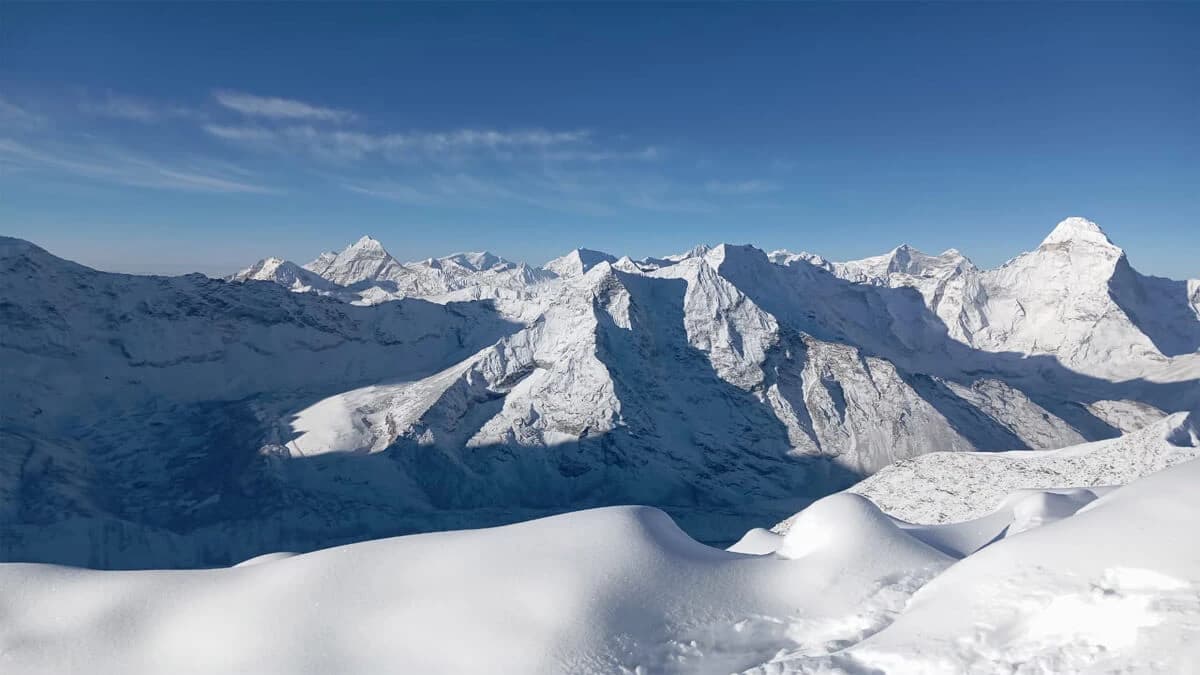
Island Peak is in the Everest Region in eastern Nepal. It’s up the Imja Valley, above Chhukung, and still a bit further on from Dingboche. You don’t get there by any road or anything like that. It’s all on foot after Lukla, just walking up through the Khumbu valley for days until the landscape turns more empty and cold till you reach the summit.
Island Peak Climbing Difficulty Explained in Simple Terms
Island Peak is not an extreme technical climb, but it is still a serious high altitude peak in the Everest Region. It sits above 6000 meters and that alone changes how your body reacts to everything.
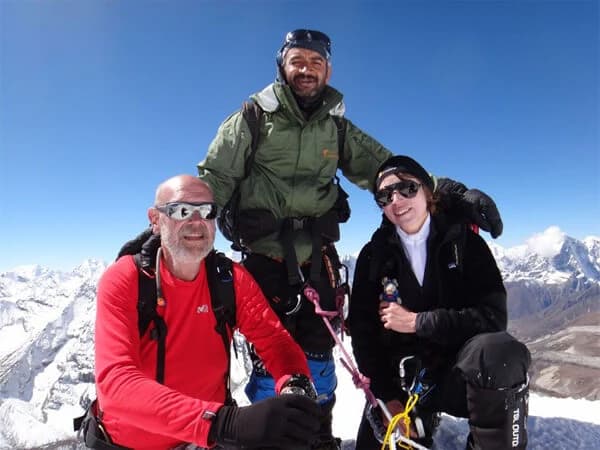
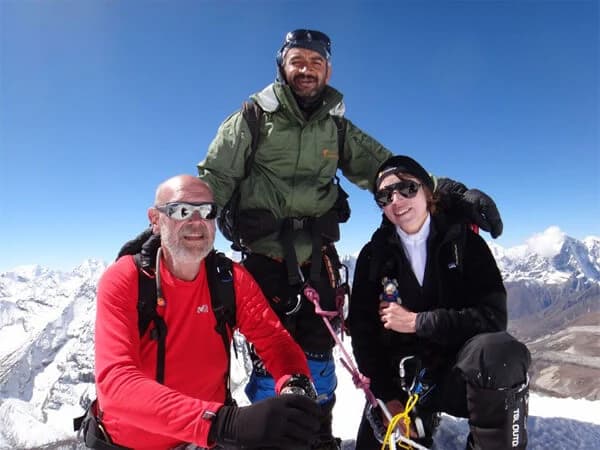
It is not just trekking. You are moving on glacier terrain, crossing crevasses, and then dealing with a steep section near the top where fixed ropes are used. Basic use of crampons, harness, and ice axe is needed. Most people learn or refresh these skills before the summit, but it still feels different once you are actually on the ice.
What you need to understand is, Island Peak difficulty is not about one hard section. It is the way everything adds up. Thin air, cold conditions, and long hours moving slowly. Even simple walking starts feeling heavier as you go higher, and that is what most people underestimate before they go.
Why is Altitude the Real Problem in Island Peak Climbing?
Island Peak in the Everest Region is not one of those climbs that beats you with technical tricks. It gets you in a much simpler way. The altitude.
Above 5000 meters your body just stops behaving the way it does at home. You walk a bit and suddenly feel like you ran. You stop for a break and still feel tired. Breathing gets louder for no real reason. It is not scary or dramatic, it is just constant.
And the funny part is most people do not expect that. They think climbing is the hard part, but it is usually the opposite. You can know all the techniques and still feel weak up there because your body is working with less oxygen. Headache, no appetite, low energy, it all shows up at some point for a lot of people. Some handle it fine, some struggle, but nobody really ignores it.
That is why altitude becomes the real issue on Island Peak. Not because it looks dangerous from far away, but because it slowly takes away your usual energy and makes everything feel like extra effort.
Things That Make Island Peak Hard
Island Peak in the Everest Region is not hard because of one single thing. It is more like several small things that slowly wear you down as you go higher.
Altitude Above 6000 Meters
The air gets thin and you feel it quickly. You are walking and suddenly you are breathing more than you expect at such a slow pace. You stop more often, not because you want to, but because your body asks for it.
Long Walk Before the Climb
You don’t just show up and climb. You walk for days through Namche, Dingboche, and Chhukung. It starts to feel normal until you realize you are already a bit tired before the actual climb even begins.
Ice and Glacier Sections
The route turns into ice and snow. There are hidden cracks in some places, so you stay roped in and move carefully. It is not complicated, just something you have to stay focused on the whole time.
Final Steep Section
Near the top there is a steep icy slope with fixed ropes. This is where people slow down a lot. Not because it is impossible, but because you are already at altitude and everything feels a bit heavier.
Cold Weather
It stays cold the whole time. No obvious change in the weather, just constant cold that slowly makes everything feel more tiring than it should.
Long summit day
The summit day starts very early, mostly in the dark. You just keep going for hours and hours. It is more about constant movement than anything else.
How Fit Do You Need to Be for Island Peak Expeditions?
Island Peak climbing in Nepal is not a journey where you fake fitness and hope for the best. Your body gets tested just by existing at that height.
Most days, you will have to walk for a whole day. You wake up, you walk, you rest, you walk again. Just that. If you already get tired quickly on long hikes or avoid uphill walking, you will feel it more here after a few days.
If you are used to regular trekking in Nepal, full day walking with a backpack, you will manage better. If not, it will start feeling heavy because there is no way around the long hours on your feet.
People who do well are not the strongest. They are just the ones who can keep going without stopping too often or running out of energy too fast. So train a bit before going. Long walks, uphill hiking, stair climbing, jogging, squats, lunges, step ups. That’s enough to get your body ready for Island Peak in the Everest Region.
Summit Day Reality on the Island Peak Climb
Summit day on Island Peak Nepal starts in the dark. You just wake up, put gear on, eat something quick if it goes down, and step out. No big talk, everyone is half awake anyway.
It is not like Mera Peak climbing in Nepal where it feels more like long snow walking with very little going on technically. Not like Lobuche East climbing either, where the harder bit shows up more directly near the top and then it’s over quicker. Here it just drags on longer.
You are just walking in the dark with a headlamp. Same pace, no change, for hours. Snow underfoot, rope in front sometimes, then more walking. Nothing to figure out, just keep moving.
Breathing gets heavier at some point. You notice it when you stop for a second and realise you are actually working harder than you thought. Legs too, they don’t feel tired in one moment, they just feel slower the higher you go.
There is a steeper icy part near the top where fixed ropes are used. One person at a time, clipped in, up and over. It’s not confusing, just slow because of the altitude and conditions.
Coming down feels longer than expected. Same route, same steps, just heavier legs. People don’t really talk much on the way back, just follow each other down and get it done.
Why Climbers Fail to Summit Island Peak in Nepal
You might think peak climbing in Nepalhas a full success rate but that is not true. Not everyone who gets excited for the Island Peak expedition in the Everest Region actually makes it to the top. There are failed attempts too, and most of the time it is not because of one big reason.
Sometimes it starts with timing. Summit day is planned in a way where you have to be up early and keep moving, and if things slow down on the route, the return time becomes fixed. People have to turn around even if they feel okay.
Then there is the rope section near the top. From far it looks simple, but when you are actually there, clipped in, tired, and waiting your turn, it feels different. Some people just slow down a lot there or decide it is not their day.
Sleep is another thing that gets ignored. High camps are not comfortable. It is cold, windy, and you do not always sleep properly. So you already start summit day a bit tired without realising it.
Group speed also plays a role. You are not climbing alone. If the group is slow or someone is struggling, everything moves at that speed. Sometimes that alone changes whether the summit happens or not.
And then there are small things that add up over the days before. Not eating enough because you don’t feel hungry, not drinking enough water, or just saving energy too much. At that altitude, all of it shows later.
Island Peak Climb Vs Other Peaks in Nepal in Terms of Difficulty
Let’s place Island Peak in context with a few other popular climbing peaks in the Everest Region so it’s easier to understand what you are actually getting into on the ground.
Island Peak Climbing vs Mera Peak Climbing
Mera Peak is higher in altitude, but the climb itself is mostly long snow walking. You go up gradual slopes for a long time, and the technical part is very limited.
Island Peak feels more active. You are on glacier terrain, using ropes in sections, and there is a steeper climb near the top. Even though it is lower than Mera Peak, it feels more technical during the actual climb.
Island Peak Climbing vs Lobuche East Peak Climbing
Lobuche East is close to Island Peak in overall effort.
Lobuche East has shorter but steeper climbing sections. The upper part feels more direct and physically demanding in a short span of time.
Island Peak spreads the effort over a longer period. You spend more time moving on glaciers and snow, and the summit push takes longer, so it feels like a longer day rather than a short hard push.
Island Peak Climbing vs Ama Dablam Expedition
Ama Dablam Expeditions is a completely different level of climbing.
It involves long technical routes, exposed sections, and advanced rope work. It is a serious expedition where climbing skill and experience matter a lot more.
Island Peak is much simpler in comparison. It still has ice and rope sections, but they are shorter and more controlled. It is often used as an introduction to real climbing in Nepal.
Island Peak Climbing vs Yala Peak Climbing
Yala Peak expeditions is one of the easier peaks in Nepal and is often done as a beginner climb.
Compared to that, Island Peak feels more demanding because you spend more time on the glacier and the final section is steeper and longer.
Is Island Peak Climbing Worth It
Island Peak Expedition in Everest Region is not something you can answer with a simple yes or no. People search questions like is Island Peak climbing worth it, expecting a clear answer, but it really depends on what you are looking for.
If you are thinking about peak climbing in Nepal for the first time, then yes, it usually makes sense. You are not just walking anymore. There are a few sections where you use ropes, and you move over snow and ice, which feels quite different from normal trekking routes like Everest Base Camp, where it is mostly walking to viewpoints.
But if you are expecting something easy or something that feels like trekking with a slightly tougher day at the end, then it won’t feel like that. The days are long, and everything takes time. Summit day especially takes effort from start to finish. That is just how Island Peak in the Everest Region is.
When people later talk about Island Peak cost vs experience, most don’t focus on how tiring it feels. They usually remember it as their first real climbing experience without going into very serious expeditions like Ama Dablam.
So the honest answer is simple. If you want something between Nepal trekking and proper climbing, it fits well. If you are expecting something light, it won’t feel like that.
Does season affect the difficulty of the Island Peak Climbing?
Yes it does, that is why we always tell people to pick the rightseason for Island Peak.
In the Khumbu region, the climb itself doesn’t change, but off season just makes everything feel more tiring and less predictable.
In winter, the cold is what people feel the most. Your hands slow down, simple things like handling ropes or clips take longer, and you don’t really move as comfortably as you would in peak months like Spring and Autumn. Wind can also show up suddenly higher up and slow the whole group down without much warning.
Monsoon is a different kind of issue. You don’t always see what’s ahead clearly which can become the main issue and can cause accidents. Lower down you deal with wet and slippery trails, and higher up clouds can come and go fast, so sometimes you just pause and wait because there is no point moving in bad visibility.
So off season peak climbing in Nepal is still the same route, same climb, but it just feels heavier on the body and more uncertain in how the day will go.
Why Island Peak Climbing in Nepal Looks Easy but Isn’t
Most people hear Island Peak and assume it is just another long trek in Khumbu region with a nice summit view at the end. That is where expectations usually don’t match reality.
It is called a trekking peak in Nepal, and that label makes it sound lighter than it is. You are not only walking day after day. There are parts where you are clipped onto ropes, moving over ice, and wearing gear that changes how you move compared to normal trekking.
People often compare it with trekking routes like Annapurna Base Camp or Manaslu. That comparison doesn’t really hold. Trekking contains walking mostly on clear trails. Island Peak adds climbing sections, especially higher up, where the climbing speed naturally slows down and each step takes more effort and focus.
It also looks easier because many first time climbers choose it. But that doesn’t make it easy. It just sits below bigger expedition peaks like Ama Dablam, so people assume the experience will be similar to trekking until they are actually there.
So the name sounds simple, but once you are in the Khumbu region, it becomes clear that it is more than trekking and asks for more than most people expect from the description.
Treks To Do Before Island Peak Climb to Make it Easier
Before the Island Peak expedition in Nepal, the main thing to understand is, do not show up with zero trekking experience. Your legs will thank you later.
The obvious one is the Everest Base Camp trek. It is long, and there are days where you just keep walking and looking at the same mountains thinking it should be close by now, but it isn’t. That kind of patience actually helps a lot for Island Peak because the climb is also long and slow in its own way.
Annapurna Base Camp is another good one. Not as long as Everest Base Camp, but still enough days on your feet to make you understand what tired legs feel like without stopping every hour.
Even something like Langtang Valley trek works. It is more on the chill side, you eat well, walk, sleep, repeat. But it still gets your body used to being out for days instead of just doing short hikes.
None of these treks will magically make Island Peak feel easy. You will still feel it when you actually start climbing in the Khumbu region. But at least you won’t be completely surprised when your legs start asking questions halfway through the day.
Who should not climb Island Peak?
Island Peak in the Everest Region is not for everyone.
- If this is your first ever trek, this is not a good place to start.
- People who already struggle with long walking days will feel it more here.
- Heights and rope sections can feel uncomfortable on summit day if you are not used to them.
- And if you expect comfort, proper sleep, and easy days, this trip will feel heavy.
Most people who turn back are not weak. They just were not ready for how it actually feels at altitude.
How to Train for Island Peak Climbing
You do not need a complicated plan for Island Peak. You just need your body ready for walking for long days and high altitude conditions in the Everest region.
Six to eight weeks of basic preparation is usually enough for most people doing Island Peak expeditions preparation.
Walk or hike a few times a week. Start short, then slowly build up until you can handle around five to six hours on your feet without needing long breaks. This matters more than anything else.
If you have hills or stairs, use them. They help you get closer to the real landscape you will face in the Khumbu region.
Add simple strength work like squats, lunges, and step ups to support your legs.
You should be able to walk for hours without feeling completely drained early in the day. That’s the main goal.
Island Peak Success Rate Reality
The success rate on Island Peak is around 70 to 85 percent in normal seasons in the Everest region.
Most people who do not make it are not stopped by climbing skills. It is mostly altitude. Above 5000 meters, people start feeling headaches, nausea, or just low energy that does not go away.
Weather can also change things. Strong wind or poor visibility near the upper part often forces teams to turn back.
Sometimes it is also just timing. If the group moves slowly on summit day, there may not be enough time to go up and come back safely.
So in simple terms, most people reach the top, but it is not guaranteed. Altitude and weather are what decide it more than anything else.
Island Peak Climbing Gear Checklist
For Island Peak, the right gear matters a lot because of cold temperatures, ice sections, and a long summit day in the Everest region.
Boots are the most important item. If they don’t fit well, the whole climb becomes uncomfortable very quickly.
Crampons are used on icy slopes and it is very important as well.
Technical gear like a harness, helmet, ice axe, and ascender is also needed. This is usually included in guided trips or available on rent, so most climbers do not have to buy it.
A proper down jacket is needed for higher sections, especially during the summit push when temperatures drop a lot.
Warm gloves are important because your hands get cold fast when you are using ropes. A headlamp is required since summit day starts in complete darkness.
Most of this gear can be rented in Kathmandu or arranged through local trekking companies like Nepal Trekking Routes. Many climbers prefer renting since they only use this equipment for a short period.
Best Season for Island Peak Climb
For Island Peak, the best season for Island Peak climbing changes the whole experience in the Everest region. The route stays the same, but weather affects how hard the days feel.
Island Peak climbing in spring
Spring (March to May) is the most common and the best season for Island Peak climb in Nepal. Most expeditions are planned in this period.
Conditions on the mountain are usually more consistent compared to winter, and this is why many first time climbers choose spring for Island Peak climbing in Nepal.
Island Peak expedition in autumn Season
Autumn (September to November) is another strong option for Island Peak expedition Nepal.
This is also part of the best season for Island Peak climb because most monsoon effects are gone and trekking activity in the Everest region picks up again.
It feels colder than spring, especially at higher camps, but many teams still prefer this time for summit attempts.
Island Peak climbing in winter Season
Winter (December to February) is a less popular time for Island Peak climb in Nepal.
The main challenge is extreme cold at higher altitude, which slows movement and makes summit attempts harder. Only experienced climbers usually attempt it in this season.
Island Peak in monsoon season
Monsoon (June to August) is the least preferred time for Island Peak climbing in Nepal.
Rain affects lower trekking routes, and clouds often block mountain views in the Everest region. Because of this, most expeditions avoid this period.
Conclusion: Island Peak Climbing Difficulty
Island Peak Climbing in Nepal is not a trek and not a full technical climb either. It sits in between, and that is where most people feel the difference. For Island Peak, altitude decides most of the experience. Even fit people can struggle once they go higher.
Most prepared climbers reach the summit in normal seasons, but it is not something to take lightly. With proper training and realistic expectations, it is possible. Without that, it becomes much harder than it looks.