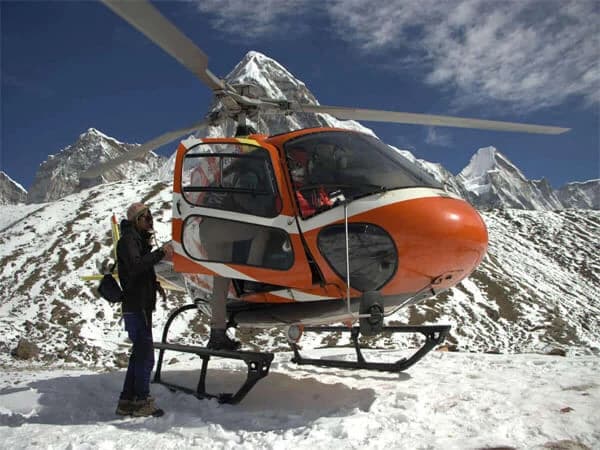
Nepal’s mountain geography makes transportation challenging in many areas. Reaching remote trekking regions, mountain villages, and high altitude locations is not always possible by regular road transport. This is where helicopter services in Nepal provide a practical solution for travel, rescue, and transportation.
For travelers, helicopter tours in Nepal offer a faster way to experience destinations like Everest, Annapurna, and other Himalayan regions without long trekking days. Beyond sightseeing, helicopter rescue services in Nepal, medical evacuations, and private charter flights support people and organizations in remote areas.
Many travelers also choose Nepal helicopter tours for destinations like Everest Base Camp, Annapurna Base Camp, and other Himalayan regions when they have limited time but still want to experience the mountains.
Helicopter Services in Nepal Overview
Helicopter services in Nepal are used for many different purposes, from mountain sightseeing and private travel to rescue operations, medical support, and cargo transportation. In many remote areas, helicopters provide a faster way to connect places that are difficult to access by road.
From flying trekkers to Lukla and Everest Base Camp to transporting medical supplies after natural disasters, helicopters serve many different purposes in Nepal. In remote mountain districts, they are often the quickest and sometimes the only reliable way to move people and essential goods.
Types of Helicopter Services in Nepal
The main types of helicopter services in Nepal include helicopter sightseeing flights, emergency rescue, private charter flights, and cargo services. Each service has a different purpose, whether it is helping travelers explore the Himalayas or supporting remote communities.
Mountain Sightseeing Flights
Mountain sightseeing flights are among the most popular helicopter experiences in Nepal. They are suitable for travelers who want Himalayan views without committing to a long trekking itinerary. Most sightseeing flights leave early in the morning, when mountain weather is generally clearer and visibility is at its best.
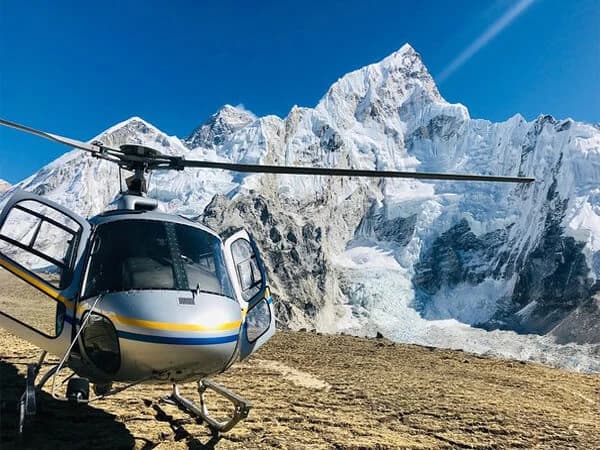
- Everest Base Camp Helicopter Tour: EBC Helicopter Tour is the most famous heli tour in Nepal. It is also one of the most popular luxuryhelicopter tours in Nepal, especially for travelers who want to explore the Everest region in a single day. It starts from Kathmandu or Lukla and flies into the Khumbu region. Along the way, you pass deep valleys, glaciers, and Sherpa villages before reaching near Everest Base Camp or landing at Kala Patthar (depending on weather). From here, you get an incredible close view of Mount Everest along with peaks like Lhotse, Nuptse, and Ama Dablam.
- Annapurna Base Camp Helicopter Tour: Annapurna Base Camp Heli Tour flies into the Annapurna Sanctuary near Pokhara, surrounded by peaks like Annapurna I, Machhapuchhre, and Hiunchuli. It’s one of the easiest and quickest ways to experience the Annapurna range up close.
- Langtang Valley Helicopter Tour: Langtang Valley Helicopter Tour flight takes you north of Kathmandu into the beautiful Langtang region. The valley is surrounded by snow covered peaks, glaciers, and traditional Tamang villages. It is a shorter Himalayan flight option compared to longer trekking routes in Everest and Annapurna regions.
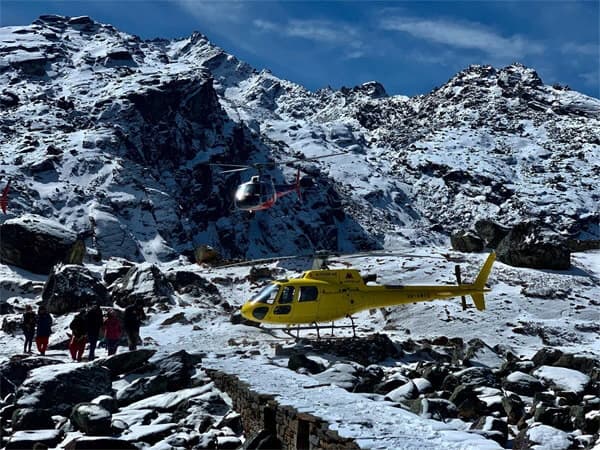
- Gosaikunda Helicopter Tour: This tour flies you to the sacred alpine lake of Gosaikunda, located in Langtang National Park. The lake is surrounded by rugged mountains and is an important pilgrimage site for Hindus and Buddhists. It’s a mix of natural beauty and spiritual significance, making it a unique helicopter experience.
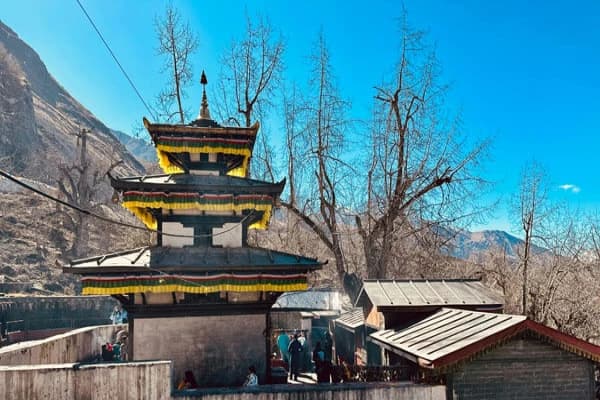
- Muktinath Helicopter Tour: This popular tour takes you to Muktinath Temple in the Mustang region. The temple is both a religious and scenic destination, located in a high altitude desert landscape with views of the Annapurna and Dhaulagiri ranges. It’s especially popular among pilgrims and cultural travelers.
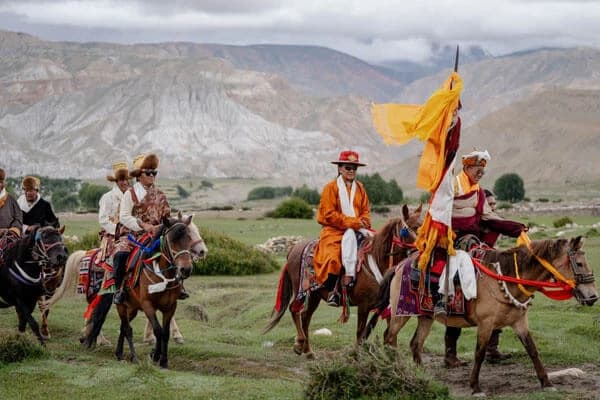
- Upper Mustang Helicopter Tour: This flight takes you into one of the most remote and unique regions of Nepal. Upper Mustang Heli Tour looks like a desert surrounded by mountains, with ancient caves, monasteries, and Tibetan style villages. From the air, you can see dramatic cliffs, dry valleys, and the walled city of Lo Manthang.
Rescue and Emergency Services
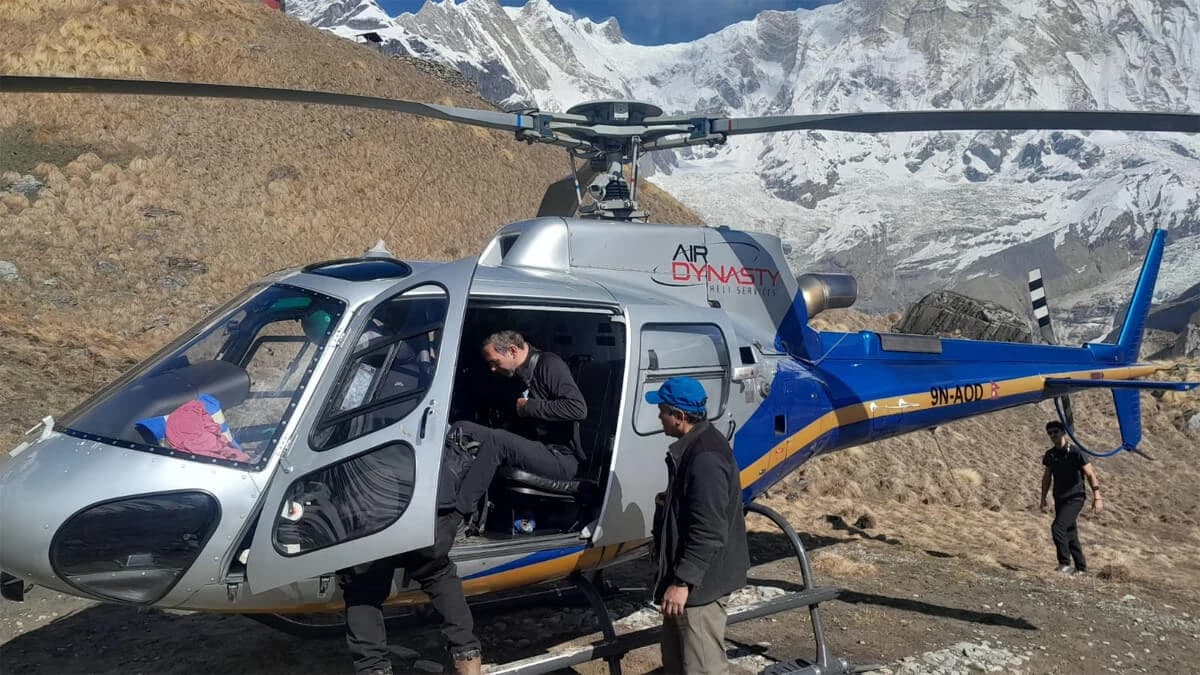
Many trekking routes in Nepal pass through areas where medical facilities and road access are limited. In situations like altitude sickness, injuries, or serious health problems, helicopter evacuation in Nepal helps transfer trekkers to safer locations or medical facilities.
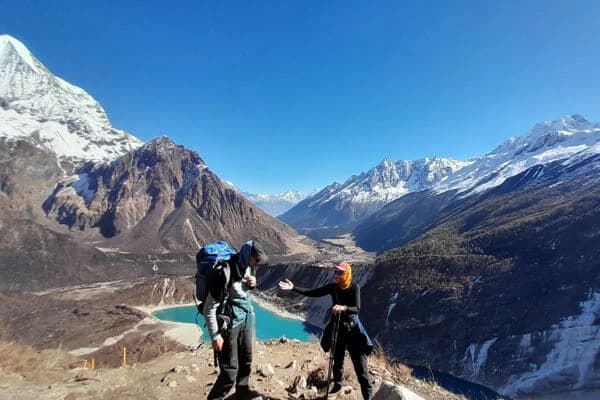
On routes like Everest Base Camp, Annapurna, and other remote trekking areas, helicopters are commonly used for emergency evacuations. They help bring trekkers to safer locations or medical facilities when walking down is not possible or would take too long.
Helicopters also support climbing expeditions and people living in remote mountain areas. In places where access is limited, they provide a practical way to reach those who need urgent assistance.
Nepal Helicopter Charter Services
The helicopter charter rate in Nepal depends on factors such as flight duration, destination, helicopter type, passenger numbers, and whether the booking is private or shared.
Private Travel for Individuals and Groups
Families, couples, and small groups choose private helicopter flights in Nepal to save time, avoid long road journeys, and reach destinations that are difficult to access by regular transport.
Business and Special Travel
For business trips, private journeys, or time-sensitive travel, helicopter charters offer a faster way to move between different parts of Nepal. They are especially useful when reaching mountain regions or remote locations quickly is important.
Filming and Photography Flights
Nepal’s mountains, valleys, and remote landscapes make helicopter flights a valuable option for photographers and film crews. Aerial shoots allow them to capture places that are difficult to reach with traditional filming methods.
Cargo and Supply Flights
Away from the tourism industry, helicopters also keep remote mountain communities supplied throughout the year.
- Supplying remote villages: Many Himalayan villages rely on helicopters to bring essential items like food, medicine, fuel, and construction materials. In winter or during bad weather, when roads are blocked, these flights become even more important.
- Support for trekking lodges and expeditions: Trekking lodges and mountaineering teams often need supplies in high altitude areas. Helicopters help deliver gear, food, and equipment directly to those locations, making life and expeditions possible in remote zones.
- Emergency logistics support: When landslides, floods, or heavy snowfall block road access, helicopters step in to deliver urgent supplies. They’re often used to move critical goods quickly when ground transport isn’t an option.
Advantages of Helicopter Travel in Nepal
Helicopter travel in Nepal is all about saving time, comfort, and reaching places that are otherwise difficult to access. In a country where roads can be long and mountain trails can take days, helicopters offer a much faster and more direct way to travel. What might take a week of Nepal trekking or long hours on rough roads can be done in just a short flight, making it a great option for travelers with limited time.
Many of Nepal’s most beautiful and remote places, like high mountain regions, hidden valleys, or pilgrimage sites, don’t have proper road connections. Helicopters make it possible to reach these locations easily, without going through physically demanding journeys. This is especially helpful for older travelers or those who may not be able to trek long distances.
Comfort is also a key reason people choose helicopter travel. Instead of dealing with altitude fatigue, basic lodges, or unpredictable travel conditions, you get a smooth and more relaxed experience. At the same time, the aerial views are something you simply can’t get from the ground. Flying over mountains, glaciers, rivers, and villages gives you a completely different perspective of Nepal’s landscape.
Finally, Nepal helicopter travel adds flexibility. You can plan trips based on your own schedule, avoid delays from road traffic or flight cancellations, and even customize your route. Whether it’s for a quick mountain experience, a return from a trek, or a special trip, helicopters make travel in Nepal faster, easier, and more convenient.
Limitations of Helicopter Services
Even though helicopter travel in Nepal is fast and convenient, it’s not always perfect. One of the biggest limitations is the weather. Mountain weather can change very quickly, and if visibility is poor or winds are strong, flights can get delayed or even canceled. This can affect travel plans, especially in high-altitude regions like Everest or Annapurna.
Another factor is cost. Nepal Helicopter services price are much higher compared to regular flights, road travel, or trekking in Nepal. While they save time, they may not be suitable for every budget, especially for longer routes or private charters.
There are also weight and capacity limits. In high-altitude areas, helicopters cannot carry too much weight due to thinner air. This means fewer passengers per flight or restrictions on luggage, which can sometimes lead to multiple shuttle flights instead of one direct trip. Noise and environmental impact are also worth considering. Helicopters can disturb the natural quiet of mountain areas and may affect wildlife or the peaceful experience that many trekkers look for.
Lastly, flexibility can sometimes be limited despite being a private option. Even charter flights depend on landing permissions, weather windows, and fuel stops, especially in remote regions. So while helicopters offer speed and access, they still come with a few practical challenges that travelers should be aware of.
Booking Process for Helicopter Services
Booking a helicopter service in Nepal is usually simple, but it helps to understand how it works so you don’t run into last-minute issues. Most people book either through a travel agency or directly with a helicopter company, depending on what kind of trip they want.
First, you choose the type of service, whether it’s a mountain sightseeing tour, a private charter, or a transfer to a trekking destination like Lukla or Annapurna Base Camp. Once you decide, you’ll need to check availability for your preferred date and time, especially during peak seasons when flights fill up quickly. Most companies offer different Nepal helicopter tour packages depending on the destination, flight duration, landing options, and inclusions.
After confirming availability, you’ll be asked to share basic details like number of passengers, body weight (important for flight balance), passport details (for permits), and your preferred departure location. Based on this, the company will provide a final cost and flight plan.
To secure the booking, you usually need to make a payment, either partial or full, depending on the company’s policy. Payments can be done online, through bank transfer, or sometimes in cash if you’re already in Nepal.
Before the flight, the operator will reconfirm the schedule, often a day in advance, because helicopter flights depend heavily on weather conditions. On the day of the flight, you’ll need to arrive early at the helipad or airport for a short briefing and weight check.
Overall, the process is pretty straightforward, but flexibility is important. Weather changes can affect timing, so it’s always good to keep an extra day in your plan just in case.
Best Time for Helicopter Flights in Nepal
Clear weather makes all the difference when flying in the Himalayas. The best time for helicopter flights in Nepalmainly depends on weather and visibility. In general, spring (March to May) and autumn (September to November) are considered the ideal seasons. During these months, the skies are usually clear, the views of the Himalayas are sharp, and flight conditions are more stable. This is when most mountain tours, including Everest and Annapurna flights, operate smoothly.
Spring is especially nice because the weather is warmer and you can also see blooming rhododendrons in lower regions, which adds more color to the landscape. Autumn, on the other hand, offers the clearest mountain views after the monsoon season, making it perfect for photography and scenic flights.
Winter (December to February) is also possible for helicopter tours, and in some ways, it can be a great time because the skies are often clear. However, it can be very cold at higher altitudes, and weather conditions can still affect flights occasionally.
Monsoon season (June to August) is usually the least preferred time. Heavy rain, clouds, and poor visibility can lead to frequent delays or cancellations, especially in mountain areas.
Cost of Helicopter Services in Nepal
The helicopter tour price in Nepal depends on several factors, including the destination, flight duration, season, number of passengers, and whether you choose a shared flight or private charter. The helicopter ride price in Nepal also varies depending on the route, helicopter type, landing location, and whether you book a shared or private flight.
For popular mountain tours, prices are usually offered either per person on a shared flight or per helicopter for a private charter. A shared helicopter tour in Nepal is a budget friendly option where travelers share the cost with other passengers heading to the same destination. It is commonly chosen for routes like the Everest Base Camp helicopter tour and Annapurna Base Camp helicopter tour.
The helicopter tour cost for a couple depends on the type of experience you choose. Couples who want privacy usually book a private helicopter charter, while shared flights are a more affordable option.
The Everest helicopter sightseeing tour cost usually starts around $1,150 to $1,400 per person on a shared flight, while a full private charter can go anywhere from $4,500 to $6,000 for the whole helicopter. Travelers looking for a more affordable option often choose a shared helicopter tour in Nepal, which reduces the overall price while still offering the same Himalayan views.
Other destinations are slightly cheaper. Annapurna Base Camp tours price usually range from $500 to $1,100 per person, while places like Langtang or Gosaikunda can cost around $450 to $950 per person, depending on the package and departure point.
If you’re booking a helicopter just for transport (like Kathmandu to Lukla), the cost is usually charged per flight, around $2,500 to $3,500, which can be shared among 4 to 5 passengers to reduce the price per person.
Rescue and emergency helicopter services are usually the most expensive because of urgency and difficulty. These can cost anywhere between $3,500 to $7,500, depending on the location and situation.
A few main factors affect the final price:
- Type of flight (shared vs private)
- Destination and distance
- Season (peak vs off-season)
- Landing permits and airport fees
- Number of passengers and weight limits
Factors Affecting Helicopter Tour Price
The cost of helicopter tours in Nepal depends on several factors. Here’s a simple breakdown:
- Destination and Distance: The farther and more remote the destination, the higher the cost. Flights to places like Everest Base Camp are more expensive because they take longer and require more fuel compared to shorter routes like Annapurna Base Camp.
- Shared vs Private Flight: Shared flights divide the cost among passengers, making them more affordable. Private charters are more expensive since you’re booking the entire helicopter, but they offer flexibility and a more personal experience.
- Season and Demand: Prices are usually higher during peak seasons like spring and autumn when more people are traveling. In off-season months, prices can be slightly lower, but weather conditions may not always be ideal.
- Flight Duration and Landing Time: Tours with longer flight times or multiple landing stops (like Kala Patthar or Everest View Hotel) tend to cost more because they use more fuel and time.
- Helicopter Type: Different helicopters have different capacities and operating costs. Larger or more advanced helicopters, especially those used for high-altitude flying, can increase the overall price.
- Permits and Landing Fees: Flying into protected areas like Everest or Annapurna requires permits and landing charges. These costs are usually included in the package but still affect the total price.
- Weight and Passenger Limit: In high altitude areas, helicopters carry fewer passengers for safety reasons. If the flight isn’t fully shared, the cost per person can increase.
Travelers looking for the cheapest helicopter tour in Nepal choose shared flights instead of private charters. Shorter routes and off season departures can also help reduce the overall cost.
Safety Measures and Regulations
Flying a helicopter in Nepal’s mountains requires careful planning because Himalayan weather, altitude, and terrain are very different from normal flight conditions. Helicopter operators in Nepal follow regulations set by the Civil Aviation Authority of Nepal (CAAN), including aircraft maintenance, regular inspections, and operational safety checks before every flight.
Experienced mountain pilots play an important role in helicopter safety in Nepal. Flying in areas like Everest and Annapurna requires knowledge of high altitude conditions, changing weather patterns, and challenging landing areas. Helicopters used for mountain flights are equipped with navigation systems and safety equipment designed for these conditions.
Weather is one of the biggest factors affecting helicopter flights in Nepal. Mountain conditions can change quickly, especially at high altitudes. If visibility is poor, winds are strong, or flying conditions are unsafe, flights may be delayed or canceled. These decisions are made to protect passengers and crew.
Weight and balance are also important parts of helicopter operations in Nepal. Helicopters have strict limits on how much weight they can carry, especially at higher altitudes where the air is thinner. Passengers are usually asked to provide their body weight in advance, and seating is arranged accordingly to keep the helicopter balanced during flight.
Helicopters also operate through approved landing areas and follow specific flight procedures, especially in protected regions and high altitude destinations. These measures help maintain safe operations while allowing travelers and rescue teams to access remote parts of Nepal.
Tips Before Booking a Helicopter Tour
Book your flight in advance
Booking your helicopter tour in advance is a good idea, especially during the busy trekking seasons of spring and autumn. Popular routes like the Mount Everest Base Camp helicopter tour can fill quickly, so early booking gives you more options for dates and flight schedules.
Compare different operators and packages
Helicopter companies in Nepal offer different packages, even for the same destination. Some operators also provide a helicopter tour discount during the off season or for shared flights, so comparing different packages can help you find better value. Before booking, compare what is included, such as landing stops, airport transfers, permits, and additional services. This helps you choose a reliable operator and understand the actual cost of your flight.
Keep at least one extra day in your itinerary
Mountain weather can change quickly, and helicopter flights may be delayed due to visibility or wind conditions. Keeping an extra day in your itinerary gives you flexibility if your flight needs to be rescheduled.
Choose a licensed and experienced operator
Choosing the best helicopter company in Nepal means checking its operating license, safety record, and experience with mountain flights. A trusted operator should follow Civil Aviation Authority of Nepal (CAAN) regulations and provide clear information about flight conditions.
Understand weight limits and seating arrangements
High altitude helicopter flights have strict weight limits because thinner air affects helicopter performance. Passengers are usually asked for their weight before departure so the crew can arrange seating and balance properly.
Be prepared for changing flight schedules
Even confirmed helicopter flights can change because of mountain weather conditions. Being flexible with timing helps avoid unnecessary stress during your trip.
Pack light and travel smart
Carry only essentials like a camera, sunglasses, warm layers, and personal items. Heavy luggage is not allowed on helicopter flights, so keep your belongings minimal. This also makes boarding and weight management easier.
Follow the safety briefing carefully
Always follow the crew’s instructions during boarding, takeoff, and landing. Simple safety steps like wearing a seatbelt properly help ensure a smooth flight.
Be mentally prepared for a short but intense experience
Helicopter tours in Nepal are usually short, but every minute offers changing views of mountains, valleys, and glaciers. The experience feels fast, so keeping your camera ready and simply enjoying the flight makes it more memorable.
Frequently Asked Questions About Helicopter Tours in Nepal
How much does a helicopter tour in Nepal cost?
The cost usually ranges from $450 to $1,400 per person for shared sightseeing flights. Private charters are more expensive and can cost around $4,500 to $6,000 per helicopter, depending on the destination, flight duration, and services included.
What is the cheapest helicopter tour option in Nepal?
Shorter sightseeing flights to destinations like Langtang and Gosaikunda are usually more affordable than longer Himalayan routes. Travelers can also reduce costs by choosing a shared flight instead of booking a private helicopter.
How much does an Everest Base Camp helicopter tour cost?
An Everest Base Camp helicopter tour generally costs around $1,150 to $1,400 per person on a shared flight. A private charter can cost approximately $4,500 to $6,000 for the entire helicopter, depending on landing options and the package selected.
How much does a helicopter tour cost for a couple?
The price for a couple depends on the type of experience they choose. Shared flights are a budget friendly option, while private charters provide more privacy, flexibility, and a personalized experience.
Is a helicopter tour in Nepal worth the money?
For travelers with limited time or those who want to avoid long trekking days, a helicopter flight can be a worthwhile experience. It provides incredible views of the Himalayas and access to destinations that are difficult to reach by road or on foot.
How many passengers can fly in a helicopter at one time?
Most helicopters used for sightseeing flights carry around 3 to 5 passengers, depending on the helicopter model, passenger weight, altitude, and weather conditions. High altitude flights require careful weight management for safety.
How can I choose the best helicopter company in Nepal?
A reliable helicopter company should have experienced mountain pilots, properly maintained aircraft, aviation approval, and experience operating in high-altitude regions. Safety standards and flight experience should be considered before choosing an operator.
Can a helicopter land on top of Mount Everest?
No. Helicopters generally do not land on the summit of Mount Everest during commercial flights. Although specially equipped helicopters have landed on the summit in rare test missions under exceptional conditions, Everest helicopter tours do not land there. Most tours instead land at places like Kala Patthar or Everest View Hotel, where passengers can safely enjoy close views of Mount Everest.
Do helicopter tours operate all year in Nepal?
Yes, helicopter tours operate throughout the year, but flights are always subject to weather conditions. Spring and autumn are considered the best seasons because they offer better visibility, and more stable flying conditions.
What should I wear for a helicopter tour in Nepal?
Wear warm, layered clothing, comfortable shoes, sunglasses, and sunscreen. Even when the weather is pleasant in Kathmandu or Pokhara, temperatures at higher elevations can be much colder.
How far in advance should I book a helicopter tour?
It is recommended to book several days or weeks in advance, especially during the busy spring and autumn trekking seasons. Early booking provides more flexibility and improves your chances of securing your preferred travel date.
Conclusion
Helicopter services in Nepal have become an important part of travel, rescue, and transportation, especially in areas where roads cannot reach. From Everest Base Camp helicopter tours to emergency evacuations in remote mountain regions, helicopters make access to Nepal’s high altitude destinations much easier.
Whether you choose a shared helicopter flight in Nepal, a private charter, or a luxury helicopter tour, knowing the price, safety details, and booking process helps you make the right choice. For many travelers, a helicopter flight is simply the easiest way to see more of Nepal when time is limited.