What would it take for a kingdom to survive for centuries in a place where the land is dry, the winters are harsh, and the nearest centers of power lie beyond some of the highest mountains on Earth?
Lo Manthang, in Upper Mustang, Nepal, was once the capital of the Kingdom of Lo, founded by Ame Pal around 1380. Its location along ancient Himalayan trade routes connected the kingdom with Tibet, bringing merchants, religious influences, and cultural exchange across the mountains. Behind the city's earthen walls, generations of rulers governed a territory whose identity was tied to Tibetan Buddhism and the wider Tibetan world.
Mustang eventually came under the authority of the Nepali state, yet its hereditary monarchy continued for centuries. In 2008, Nepal abolished the remaining royal titles, bringing the official status of Mustang's last king, Jigme Dorje Palbar Bista, to an end.
The old palace, historic monasteries, and narrow lanes of Lo Manthang still bear witness to the kingdom's royal past. Its distinctive architecture and living traditions also reveal how closely local life has remained connected to its Tibetan cultural heritage. But the end of a monarchy does not necessarily mean the end of the identity it helped shape. What happened to the Kingdom of Lo when its rulers lost their throne, and how much of that ancient kingdom survives in Lo Manthang today?
Where is Lo Manthang Located in Nepal?
Lo Manthang is located in Upper Mustang, in the northern part of Mustang District, Gandaki Province, northwestern Nepal. The ancient walled city lies at approximately 3,800 metres (12,467 feet) above sea level, near the border with Tibet, China. Lo Manthang is the historic capital of the Kingdom of Lo and lies north of Jomsom, the main town and transport hub of Mustang. Its remote location in the Himalayas has helped preserve the area's Tibetan cultural influences, traditional architecture, and historic monasteries.
Travelers visiting Lo Manthang, Nepal, mostly travel from Pokhara to Jomsom and then north through Kagbeni and other villages of Upper Mustang. The journey follows the Kali Gandaki region toward the Tibetan border, passing dry valleys, rocky hills, and traditional villages along the way. Lo Manthang is part of the trans Himalayan region, which lies in the rain shadow of the Annapurna and Dhaulagiri ranges. Its location, altitude, and historic links with Tibet make it one of the most distinctive destinations in northern Nepal.
What is Lo Manthang Famous For?
Lo Manthang is famous for its ancient walled city, royal palace, historic monasteries, and mysterious cliff caves. Built in the 15th century, the medieval city preserves the architectural legacy of the Kingdom of Lo, with earthen walls, narrow lanes, traditional mud brick houses, and a palace that once served as the residence of Mustang's rulers.
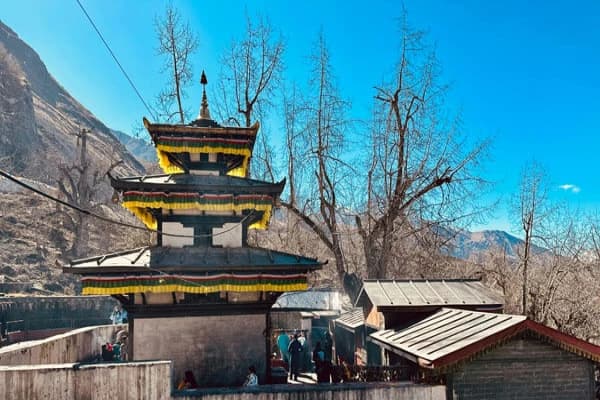
The Lo Manthang Royal Palace and the monasteries of Jampa Lhakhang and Thubchen Lhakhang are among its most important historical landmarks. Their centuries old Buddhist murals and religious artwork offer a rare glimpse into the artistic traditions of Tibetan Buddhism in Nepal.
Beyond the walled city, the Chhoser caves in Upper Mustang are among the region's most intriguing archaeological sites. Carved into towering cliffs, these multi level cave dwellings have yielded evidence of past human occupation, including remains, artifacts, and Buddhist paintings. Their exact origins and original uses remain uncertain.
Lo Manthang is also known for Chode Monastery, the annual Tiji Festival in Mustang, traditional Loba culture, and its historic links with Tibet. Together, these sites and traditions make the city a central highlight of the Upper Mustang Trek, where the history of the ancient Kingdom of Lo can be explored through its surviving buildings, religious practices, and surrounding archaeological sites.
Historical Trade and Political Rivalries in Mustang
The history of the Kingdom of Lo was closely connected to trade between Tibet and the regions to the south. For centuries, merchants carried Tibetan salt across the Himalayas and exchanged it for grain and other goods. This commerce brought wealth to Lo and gave its rulers an important source of income through trade duties. The Lo Manthang ancient trade routes also connected the region with neighboring Himalayan powers, making control of trade a source of political rivalry.
Mustang’s position brought opportunities, but it also attracted powerful neighbors. From the 16th century onward, the rulers of Jumla increasingly challenged Lo’s authority and sought control over important trading points. By the mid 17th century, Jumla had gained considerable influence over Mustang, limiting the independence of its rulers. These struggles are an important part of Lo Manthang medieval history, showing how trade and regional politics shaped the fortunes of the ancient kingdom.
By the late 18th century, the expanding Gorkha state had brought Lo under Nepalese authority. The change did not immediately end the local royal line, which continued to hold a position in Mustang for generations. Although the kingdom lost much of its former political independence, its local customs, Tibetan language traditions, and Buddhist institutions continued to shape life in the region. This history helps explain why Lo Manthang, the former capital of the Kingdom of Lo, remains important to the study of Mustang’s past and its cultural connections with Tibet.
Why is Lo Manthang Known as the Walled City of Mustang?
Lo Manthang is known as the Walled City of Mustang because a defensive earthen wall surrounds its historic settlement. The wall stands approximately 6 metres high, with square towers, locally called dzong, at its corners. The city was established in the 15th century as the capital of the Kingdom of Lo, and its fortifications helped define and protect the royal settlement.
The wall is reported to measure 856 metres long and 1 metre thick, although these dimensions are not confirmed in UNESCO’s published description. It was constructed using local earth, and local folklore claims that yaks helped compact the mud during construction. This story remains unverified.
Inside the walls, the former royal palace stands alongside historic monasteries, including Jampa Lhakhang and Thubchen Lhakhang, both dating to the 15th century. The compact arrangement of religious buildings and traditional houses makes Lo Manthang a distinctive example of medieval architecture in Nepal and the traditional architecture of Upper Mustang.
The walled settlement is also an important part of Lo Manthang’s cultural heritage and the history of the Loba people, whose traditions are closely connected to Tibetan culture and Buddhism. UNESCO included the Medieval Earthen Walled City of Lo Manthang on its World Heritage Tentative List in 2008. It has not yet been inscribed as a World Heritage Site.
The preservation of the wall matters because it is part of a historic settlement, not an isolated fortification. Protecting it also helps conserve the traditional buildings and cultural heritage that distinguish Lo Manthang from other settlements in the Himalayas.
Geography and Landscape of Lo Manthang
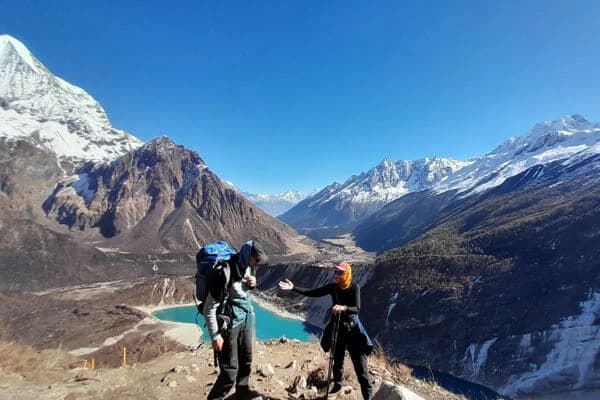
Lo Manthang lies at approximately 3,840 metres above sea level in Upper Mustang, Nepal. The Lo Manthang altitude and its position near the Tibetan Plateau contribute to its cold, dry environment. The Upper Mustang landscape is characterized by wind swept barren terrain, red and yellow eroded cliffs, deep canyons, colorful rock strata, and dramatic ridges rather than lush forests.
The high altitude desert landscape results largely from the rain shadow of the Annapurna and Dhaulagiri ranges, which block much of the moisture carried by summer monsoon winds. This Upper Mustang rain shadow creates conditions for sparse natural vegetation. However, irrigated farmland supports hardy crops such as barley, while Himalayan poplar trees grow near water sources.
The cliffs contain natural caves and ancient human made caves, often called the sky caves of Upper Mustang. These openings are among the region's most intriguing archaeological features. Researchers have found evidence of past human activity in some caves, although their origins and original uses are not fully understood.
The Lo Manthang climate is cold and semi arid, with strong winds, intense sunlight, and considerable temperature changes between day and night. Winter brings freezing conditions and possible snowfall, while summer is generally drier than in much of Nepal. This makes Upper Mustang summer trekking an appealing option for travelers seeking a Himalayan destination during the monsoon season, although weather conditions can still change.
Travelers interested in exploring the wider region can also consider the Jomsom Muktinath Trek, which follows the Kali Gandaki Valley through Lower Mustang to the sacred Muktinath pilgrimage site. This route offers a different experience from Upper Mustang, with its own landscapes, villages, and cultural traditions.
The Tiji Festival and its Cultural Significance
The Tiji Festival, also known as Tenchi, is a three day Buddhist ceremony held annually in Lo Manthang, Upper Mustang, according to the Tibetan lunar calendar. Its name comes from Tenpa Chirim, referring to the benefit of Buddhist teachings for all sentient beings.
The ceremony centres on sacred Vajrakila rituals performed by monks of Chode Monastery. Masked Cham dances portray the defeat of destructive forces, a theme also associated with the legend of Dorje Jono and the protection of Mustang from drought and misfortune. Religious chants, ceremonial instruments, and ritual offerings form part of the observance.
For the Loba people, Tiji is an important expression of local religious identity and Tibetan Buddhist heritage in Nepal. The festival preserves ritual traditions passed down through generations and brings people together in Lo Manthang's historic royal courtyard. It is a living religious observance, not simply a cultural performance for visitors.
Traditional Lifestyle of the Loba People
The Loba, also known as Lopa or Lowapa, are the Indigenous people associated with Lo Manthang and the former Kingdom of Lo. Their traditional way of life developed around Tibetan Buddhist beliefs, farming, livestock rearing, trade, and a distinctive system of family and community responsibilities. The traditional lifestyle in Lo Manthang reflects the demands of agriculture at high altitude as well as social customs passed down through generations.
Agriculture and Livelihood
Farming has traditionally been central to the life in Lo Manthang, Nepal. The short growing season allows only one main crop cycle each year. Barley, buckwheat, potatoes, and selected vegetables are cultivated using limited rainfall and irrigation water from local sources. Wooden ploughs and traditional farming methods were used alongside shared labour between relatives and neighbours.
Families raised sheep, goats, yaks, and other animals for milk, butter, meat, wool, and household needs. The combination of farming and animal husbandry helped families obtain food in a region where growing conditions restricted the range of crops available.
Historically, Loba merchants exchanged grain and other goods with communities to the south and traded across the Himalayan region, including with Tibet. Salt and grain were important commodities in these exchanges. Cross border trade declined sharply after political changes and border restrictions during the twentieth century. Tourism, wage employment, migration, and modern commerce have since changed how many households earn their income.
Traditional Houses and Domestic Life
Traditional Loba houses in Lo Manthang are built mainly from stone and earth. Many have flat roofs finished with carefully laid stone slabs, while small roof structures and prayer flags reflect religious customs. Houses were traditionally built close together, which helped create a compact community in a location exposed to strong winds and cold winters.
Household organization was also tied to land ownership and inheritance. The traditional dhongba system maintained ancestral property within a family, with inheritance generally passing to the eldest son. This helped keep farmland and other family resources together across generations. A household's land, livestock, and ability to contribute to community obligations influenced its economic position.
Family Structure and Social Customs
Loba society historically had distinct social groupings connected to ancestry, occupation, property, and political authority. Research on the community identifies groups including the Kutak, associated with the former ruling family and its relatives, the Phalwas, and occupational groups collectively described as Ghara. Pastoral communities also formed part of the wider social structure. These categories should not be treated as identical to Nepal's wider caste system, as their origins and local roles differed.
Fraternal polyandry, in which a woman married two or more brothers, was practised in some Loba families. The arrangement helped preserve ancestral land by limiting the division of family property among separate households. It has declined as family preferences, education, migration, and legal and social changes have altered household life. It should therefore be understood as a historical custom rather than a practice followed by every Loba family today.
Community cooperation also played a role in farming and public life. Local leadership traditionally helped coordinate agricultural activities, including the timing of sowing and harvesting. Some households had customary responsibilities to support monasteries, religious ceremonies, and community festivals through labour, food, and other contributions.
Tibetan Buddhism and Everyday Traditions
Tibetan Buddhism has a central place in the cultural life of Lo Manthang. Monasteries, household religious observances, ritual ceremonies, and the Tibetan lunar calendar have long influenced community life. The annual Tiji Festival is an important example, bringing religious ceremonies and masked dances into the historic centre of the city.
Food and hospitality also express social relationships. Roasted barley flour, known as tsampa, butter tea, dairy products, and locally produced grains have traditionally formed part of the local diet. Sharing food with relatives and guests is an established expression of hospitality, while communal feasts accompany important religious and seasonal occasions.
Changes in Modern Loba Life
The traditional lifestyle of the Loba people has changed through migration, education, improved transport, tourism, and access to goods from outside the region. Trade no longer holds the same position it once did, and some families now combine farming with business, wage employment, and tourism related work. At the same time, Tibetan Buddhist observances, family ties, traditional architecture, and community festivals remain important markers of local identity.
The Loba people of Upper Mustang are not defined only by customs inherited from the past. Life in Lo Manthang continues to evolve, with families balancing modern opportunities against the agricultural practices, religious traditions, and social relationships that have shaped the community for generations.
Administrative Status of Lo Manthang
Lo Manthang is the administrative centre of Lo Manthang Rural Municipality in Mustang District, Gandaki Province, Nepal. The rural municipality was established in 2017 by combining the former village development committees of Lo Manthang, Chhoser and Chhonhup. It covers an area of 727 square kilometres and is divided into five wards.
The present administrative area extends beyond the historic walled town. Although Lo Manthang once served as the capital of the Kingdom of Lo, it now forms part of Nepal’s local government system. Its historical role as a royal capital is distinct from its current administrative function.
Lo Manthang is also a principal destination in Upper Mustang, where road access connects the history with surrounding villages. An Upper Mustang Jeep Tour commonly includes the town as part of a wider regional journey. These modern transport connections provide access to the area, while the old walled settlement retains its significance as a centre of Mustang’s historical heritage.
Population and Demographic Change in Lo Manthang
According to Nepal’s National Population and Housing Census, Lo Manthang Rural Municipality had 1,899 residents in 2011 and 1,430 in 2021. This represents a decrease of 469 people, or approximately 24.7 percent, over the decade. These figures apply to the entire rural municipality, including settlements outside the historic walled town, and should not be interpreted as the population of Lo Manthang city alone.
The census records a decline in the municipality’s population but does not, by itself, explain the reasons for the change. Migration, employment, education and changing livelihoods may be relevant subjects for further research, but their effects should not be presented as established causes without supporting evidence. Separate settlement level data would be needed to determine how the population of the walled town itself has changed.
Lo Manthang’s connections with the wider district also place it within a region visited for its historical settlements and Himalayan landscapes. A Mustang Jeep Tour may include destinations elsewhere in Upper Mustang, while the Lower Mustang Trek explores a different part of the district. A Mustang Helicopter Tour offers another way to view parts of the region, depending on the operator, weather and permitted routes. These activities relate to tourism across Mustang and should be distinguished from census data about the resident population.
Conclusion
Lo Manthang, Nepal, was once the capital of the Kingdom of Lo, but its history is preserved in more than its former royal status. The walled villages, ancient monasteries and traditional buildings reflect centuries of connections with Tibet and the development of a distinct local culture. Its historic architecture and religious traditions remain central to the identity of Upper Mustang.
Today, Lo Manthang remains an important part of cultural tours in Nepal. The survival of its old city offers a valuable record of Himalayan history, while its continued use by local communities connects that past with the present. Understanding Lo Manthang means looking beyond the lost kingdom to the place and people who have carried its traditions forward.


.webp&w=1200&q=75&dpl=dpl_4U3CaZUV3Y5iKdBNPJmVMATJy3AB)