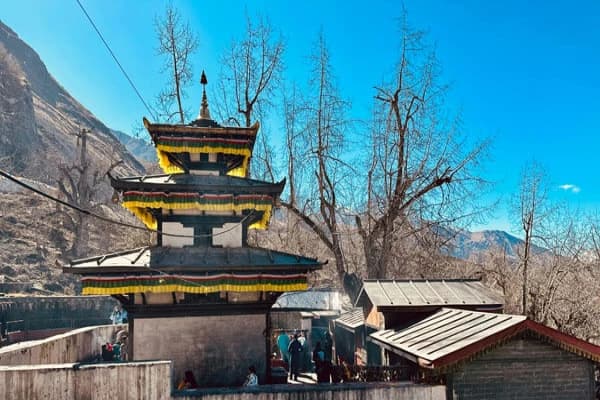
If you’re stuck between the Manaslu Circuit and the Annapurna Circuit, you’re basically choosing between two completely different versions of Nepal.
Both are long walks in the mountains with strong views and high passes. That part is similar. What is not similar is everything that happens in between.
Manaslu is arestricted trekking route in Nepal, so you need a guide and special permits. That already changes the whole experience. There are parts where things feel far from developed trekking routes.
Annapurna is more open and easier to deal with. It runs through the Annapurna Conservation Area and is also one of the most well established trekking routes in Nepal.
This is not a case of one being better than the other. It is about what kind of trek you want to spend days on, because the experience on the ground is very different once you actually start walking.
Manaslu vs Annapurna: The Real Difference on the Trail
You start noticing the difference between these two pretty early once you’re actually on the trail.
Manaslu feels less busy most of the time, and there are long parts where you don’t really see many other trekkers. Villages are small and simple, and the whole setup feels basic and not very developed.
Annapurna is one of themost popular trekking routes in Nepal and you can meet other trekkers more often, especially in peak season, and villages feel more active with more food and lodging options available.
Food and accommodation also show the difference clearly. Manaslu is more limited, so you usually just take what is available. On Annapurna, you have more choice and things are easier to manage.
In simple terms, Manaslu feels more restricted and raw, while Annapurna feels more open and easier for day to day trekking.
Manaslu vs Annapurna: Which Trek Is Actually Harder?
If you talk to people who have done both treks, they usually don’t give a straight answer. Both are hard, just in different ways.
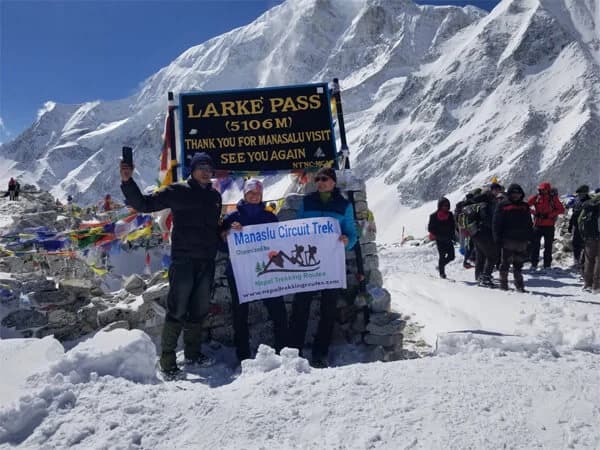
Both routes have a big high pass. On Annapurna it is Thorong La Pass. On Manaslu it is Larkya La Pass. Either way, you are walking at high altitude where breathing feels heavier and even short climbs take more effort than expected.
Annapurna is still tough, but it feels easier to deal with day by day. You trek through more villages, so you have more places to stop, fuel yourself, and rest properly. If you feel tired, you have options.
However, Manaslu asks more from you. It lies in a restricted region, so you need a guide and the setup is more fixed. Villages are farther apart, and you don’t get as many chances to adjust your plan once you are on the trail. You just keep going.
So in simple terms, Annapurna is physically long but easier to handle. Manaslu is not just about fitness, it also feels more difficult because of how remote and structured it is.
Manaslu vs Annapurna Cost and Budget in 2026
Cost is the first thing that makes people pause when they’re choosing between the Manaslu Region Trek and the Annapurna Region Trek.
The Manaslu Circuit Trek cost in 2026 is not cheap. Not because it’s aluxury trek in Nepal, but because it’s locked behind rules. You need a licensed guide, permits, and most of the time you’re going through an agency just to make it work. So before you even see a mountain, money is already gone.
The Annapurna Circuit Trek cost in 2026 feels different. You still spend money, obviously, and most people do take guides these days anyway, but you’re not forced into a fixed setup from the start. You can plan it your way, change things, keep it lighter or more comfortable depending on what you want.
That’s where the Manaslu vs Annapurna cost gap really shows up.
On Manaslu, once you’re in, everything is kind of limited. Food is basic, choices are small, and prices slowly climb because you’re deep into the remote trekking region in Nepal where everything has to be carried in. You really don’t get to sit there and compare menus. You just have to take what’s available and move on.
Annapurna, on the other hand, doesn’t feel like that. There’s more going on in the villages, more teahouses, more food options. You still spend money every day, but it doesn’t feel as tight or forced. You’ve definitely got breathing space with your budget.
Even small stuff like charging your phone, wifi, or a hot shower on Manaslu trek is kind of hit or miss. Sometimes it’s there, sometimes it’s not. On Annapurna, you don’t really think about it as much because it’s more common along the way.
Manaslu just needs more money upfront and more planning before you even start. Annapurna feels easier to deal with as you go. You can spend more one day, less the next, and it doesn’t really mess up your plan.
That’s pretty much the difference people notice when they talk about cost.
Food and Tea houses on Manaslu and Annapurna
On Manaslu, you end up eating dal bhat most of the time, and that’s why most of the trekkers learn the phrase “Dal Bhat power 24 hour”. Noodles, soup, and fried rice is one of the most asked meals as well. In a few places they serve you Tibetan bread or pancakes as well.
The Manaslu Round Trekruns through a more remote trekking route, so the places you stay are not as facilitated as the popular teahouse treks in Nepal. You get a basic bed and blanket facility in your room.
On Annapurna, there’s a bit more going on with food. Still the same trekking meals, but in bigger villages you’ll also find pasta, pancakes, potatoes, porridge, sometimes bakery stuff depending on where you stop.
Along the Annapurna Round Trek, there are more tea houses, so you don’t end up with just one or two options. More places to stop, more people around, more movement compared to Manaslu.
Manaslu vs Annapurna: Which Trek Has Better Scenery in 2026/027
This is the part where most people expect a clear winner, but it does not really work like that. Both treks look incredible, just in very different ways.
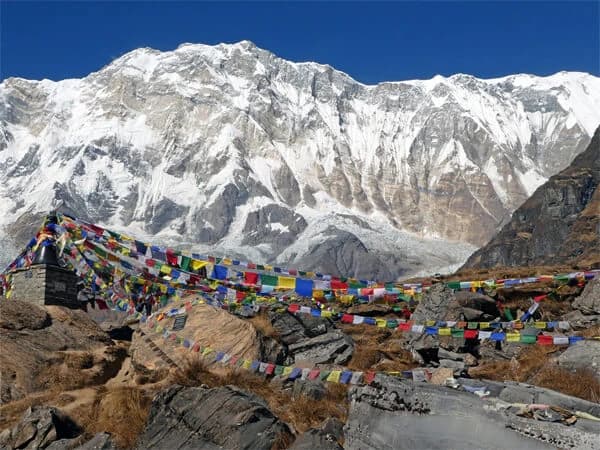
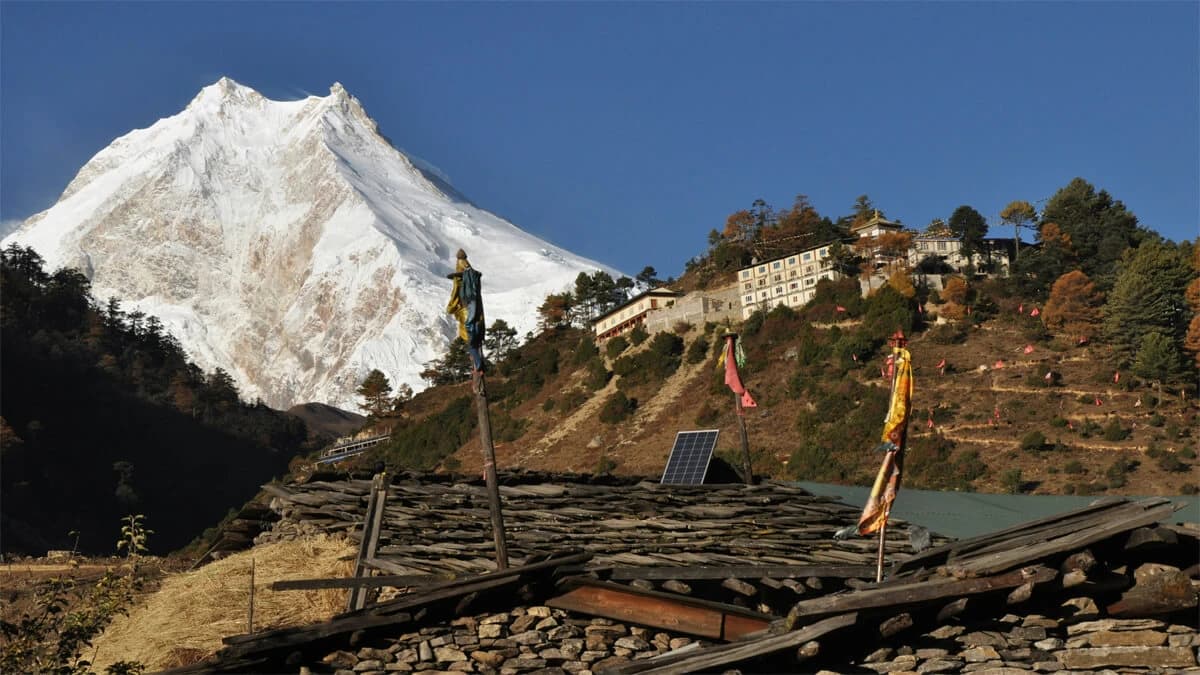
Manaslu is mostly about being surrounded by big mountains for long parts of the trail. You walk through narrow valleys and the peaks stay close the whole time. It feels like you are deep inside the mountains, not just passing by them.
The scenery also does not change that fast as you would expect it to. You stay in the same kind of mountain setting for longer and the change happens slowly as you go higher.
Annapurna is the opposite. It keeps changing a lot. One day you are in green villages, the next you are in dry valleys that look completely different. It never really stays the same for long.
The views are also more open. You can see far into the distance and the mountains feel spread out instead of closing in on you.
So it really comes down to this:
- Manaslu feels more constant and mountain heavy the whole way.
- Annapurna gives you more variety and changing scenery.
If you want different landscapes as you go, Annapurna trekking works better. If you want constant mountain surroundings, Manaslu stands out.
How Crowded is the Manaslu Circuit Trek Compared to Annapurna?
There is a pretty clear difference here once you are actually on the trail.
Manaslu is not crowded. You will see trekkers here and there, but most of the time it is just you walking. Even in peak season it does not feel packed. Some days can feel almost empty.
On the other hand, The Annapurna Circuit Trekking in Nepal is one of Nepal’s most popular treks, so you are going to run into people most of the time. In busy months you are rarely alone for a long time . Some villages feel busy from morning to evening, with trekkers coming and going all the time.
So yeah, it is pretty obvious that:
- Manaslu is quiet most of the time.
- Annapurna has people around regularly, especially in peak season.
If you want space and a bit of silence on the trail, Manaslu is better. If you do not mind other trekkers around and sometimes even like that social side, Annapurna makes more sense.
How much does the Manaslu Trek cost?
The Manaslu Trek 14 days cost is expensive compared to most other treks in Nepal, and there is no real way to make it very low budget.
The price range for this restricted region trek looks something like USD 1200 to 2000, sometimes more depending on how you do it and how comfortable you want things to be.
The main reason is the rules for this region. You need restricted area permits, and you must have a licensed guide. You can go as an individual trekker, but you cannot do the route independently without a guide. Most people arrange everything through an agency like Nepal Trekking Routes because everything is easier to deal with.
Once you are on the trail, the daily cost isn't that high. Food and rooms are simple. Most of the money is spent before the trek begins.
How much does the Annapurna Circuit Trek cost?
Annapurna Circuit Trek 15 days cost does not have a fixed price. The total cost depends on how you plan the trek, if you want luxury along the route, and whether you hire a guide or go independently.
In 2026, most trekkers complete the trek around USD 700 to 1500 per person for the full circuit.
You can do it cheaper if you keep everything basic. That means no guide, simple food, and standard teahouse rooms. But if you add a guide, porter, better accommodation, and less stress on planning, the cost goes up fast.
If someone claims it can be done for extremely low prices, it clearly means they are not counting everything like transport, permits, food, or daily expenses properly.
Permits Required for Manaslu Region Trek
In Manaslu Circuit Trek permit regulation is stricter than most treks in Nepal.
You need the Manaslu Restricted Area Permit (MRAP) and the Manaslu Conservation Area Permit (MCAP). Since the route exits into the Annapurna region later on, an Annapurna Conservation Area Permit (ACAP) also comes into play near the end.
A licensed guide is compulsory here, and everything is arranged through a registered agency. You cannot just plan and walk in on your own, even if you are experienced.
Permits Required for Annapurna Circuit Trek
Annapurna circuit trek permit system is much more open in comparison.
You mainly need the Annapurna Conservation Area Permit (ACAP), and sometimes a TIMS card depending on the rules at the time you go.
A guide here is optional, and solo trekking is still allowed on this route. Most people just manage permits in Kathmandu or Pokhara and start the trek without much trouble.
Best season for Manaslu and Annapurna Circuit Trek
Manaslu Circuit Trek and Annapurna Circuit Trek are both done in the same two seasons for a reason. Not because blogs say so, but because outside of those windows things just get unreliable.
Spring and autumn are when people go because the timing is more suitable. That matters more than anything when you’re trying to cross high passes. You don’t want to be guessing conditions at that altitude.
Autumn is usually the safer bet. The air and visibility is very clear, and the trail conditions are more suitable for trekking overall. Spring is also good, just slightly less consistent with visibility sometimes, but it’s still a solid time to go.
Annapurna and Manaslu trek in winter is slightly inconvenient. It’s not impossible, but once you get higher, the cold is real and snow can slow you down or block the pass completely for a while. It turns into more of a gamble.
Monsoon season is the one most people avoid. Trails get messy, landslides happen, and you spend days not seeing much because of cloud cover. On Manaslu especially, that becomes more of a problem because it’s more remote.
If you just want things to work without overthinking, go in the autumn season. If that doesn’t fit your timing, spring season still does the job.
Which Trek Suits You Better in 2026/027?
We know, it’s confusing to make a choice. Manaslu Circuit Trek 14 days and Annapurna Circuit Trek 15 days are both solid treks, but they don’t really suit the same kind of traveller.
Manaslu is for people who want things to be more restricted. You need a guide, permits are tighter, and there isn’t much flexibility once you’re on the route. It feels less noisy, but also more basic in several sections.
Annapurna is easier to move through in comparison. There are more food and stay options, and you’ve got more room to adjust things as you go. You also run into more trekkers, especially in peak season.
If you want something simpler to manage while you’re on the trail, Annapurna fits better. If you want something more raw, Manaslu makes more sense.
Can Beginners do the Manaslu Circuit Trek?
This is a common question, and the honest answer is that it depends on what kind of “beginner” you are.
If you have never done any long trekking before, Manaslu can feel like a lot. Also you cannot just go alone, so the whole thing is already structured before you even start.
If you’ve done a couple of multi day treks before and you know how your body handles walking for hours every day, then it can be done. You don’t need technical skills, just stamina and the mindset for a simple setup.
It’s not about difficulty in a climbing sense. It’s more about how long you stay out there and how basic things feel once you are inside the region.
So, beginners can do it, but it’s not really the “first time trek in Nepal” type of route.
Can beginners do the Annapurna Circuit Trek?
Yes, beginners do it. You’ll actually meet a lot of people on their first big trek here.
It’s not a casual walk in the park though. You’re on your feet most of the day and once you start gaining altitude, even normal walking feels different than what most people are used to.
Still, it’s one of the more manageable long treks in Nepal for someone starting out. You keep passing through villages, so you’re not isolated for a long time. If you need to slow down or take a break, there are places along the way where you can do that.
It’s also easier to follow compared to more remote routes. You’re not figuring everything out alone.
So yes, beginners can do it. Just don’t treat it like a short hike.
Getting to the Manaslu Circuit starting point
Reaching Manaslu already takes effort before the trekking even begins.
Most people leave Kathmandu and drive towards Soti Khola or Machha Khola. The road is long, and a lot of it is not smooth driving. It’s the kind of journey where you sit for hours, slow movement, stops, then more driving again.
There is no clean entry point where everything feels set. You arrive in stages, switch vehicles sometimes, and slowly end up at the start of the walking route.
Most trekkers go by jeep arranged through an agency because public transport is available but not really something people choose unless they have to.
Getting to the Annapurna Circuit starting point
Annapurna Circuit Trek is easier to get into.
From Kathmandu or Pokhara, you can reach places like Besisahar or further up the road depending on how much walking you want to skip. The road still has its rough patches, but the whole process feels more connected and less complicated.
You have more transport options, more frequent vehicles, and fewer long waiting gaps between connections.
Most people just pick a jeep or bus and keep moving towards the trail without thinking too much.
Mobile network and connectivity on Manaslu Circuit Trek
Mobile network on the Manaslu Circuit Trek 14 Days is patchy from the start and gets worse as you go higher. In the lower villages you might catch Nepal Telecom or Ncell here and there, but it comes and goes. You don’t really get steady coverage you can rely on for long conversations or anything important.
WiFi is not something you should expect. A few teahouses offer it, but it’s slow, usually paid, and often barely usable. Most people stop bothering with it after a point.
Charging is available in most stops, but it’s not free and it’s not always convenient. It usually depends on solar power or limited electricity, so sometimes you are told to charge at specific times or wait until power is available.
After a certain point on the trek, you’re basically offline for the most part of the journey. That’s just how it is on Manaslu, especially once you move deeper into the route.
Mobile network and connectivity on Annapurna Circuit Trek
Annapurna is better than Manaslu when it comes to signal, but it’s still not something you can fully depend on.
In lower and mid sections of the trek, Nepal Telecom and Ncell both show up in a lot of villages. You can get signals often enough to check messages or make calls, but it’s not constant.
As you go higher, especially near Thorong La and the surrounding areas, the signal drops again or disappears completely.
WiFi is available in more teahouses compared to Manaslu, especially in busy stops, but it is still slow and usually paid. It works for basic use, not for anything heavy.
Charging is easier to find because more lodges offer it, but it still depends on local setup and availability.
So overall, Annapurna gives you more chances to connect, but you are still not staying online the whole way through.
Altitude sickness and acclimatization on Manaslu Circuit Trek
On Manaslu, altitude doesn’t really feel like a big topic when you start out around Soti Khola at roughly 700 meters. It feels normal at first, almost too normal.
Then you move through places like Machha Khola around 900 meters and Namrung at about 2630 meters, and somewhere around there things slowly start to change. Nothing sudden. You just notice your body reacting a bit differently while walking and sleeping.
By the time you reach Samagaon at around 3530 meters, it’s already clear you’re not in the low area anymore. Breathing takes a bit more effort, and even simple movement feels slightly heavier than it should.
The problem on this route is you don’t really get many easy ways to step back once you’re in it. The trail just keeps pushing forward towardsLarke La Pass at 5160 meters, and by that point you’re not adjusting anymore. You’re just dealing with it.
Altitude sickness and acclimatization on Annapurna Circuit Trek.
On Annapurna, things start much lower around Besisahar at roughly 760 meters, so the beginning feels easy enough that people don’t think much about altitude at all.
Then the climb starts building as you move up towards places like Manang at around 3540 meters. This is usually where people first properly feel it, even if they were fine before that. It doesn’t hit everyone the same way, but it’s noticeable.
After that, the route keeps changing altitude and giving you breaks in between, so it doesn’t feel like one long continuous push upwards all the time.
Thorong La Pass at 5416 meters is where everything comes together. That final climb is heavy for most people regardless of experience. You just go slow and get through it, that’s it.
Final thoughts Manaslu Circuit vs Annapurna Circuit
People try to compare these two like there’s a clear winner. There isn’t.
Manaslu feels more like a hidden land. Once you’re in, you stay in that kind of setting till the end. There are not many options and changes in how things run day to day.
Annapurna feels more mixed. Some parts busy, some parts quiet, and overall easier to move through without overthinking every small detail.
Both are good. Both are tough in their own way.
We’ve given you the real picture of how both treks actually feel on the ground. After that, it’s on you to decide which one matches what you’re looking for.


.webp&w=1200&q=75&dpl=dpl_4U3CaZUV3Y5iKdBNPJmVMATJy3AB)