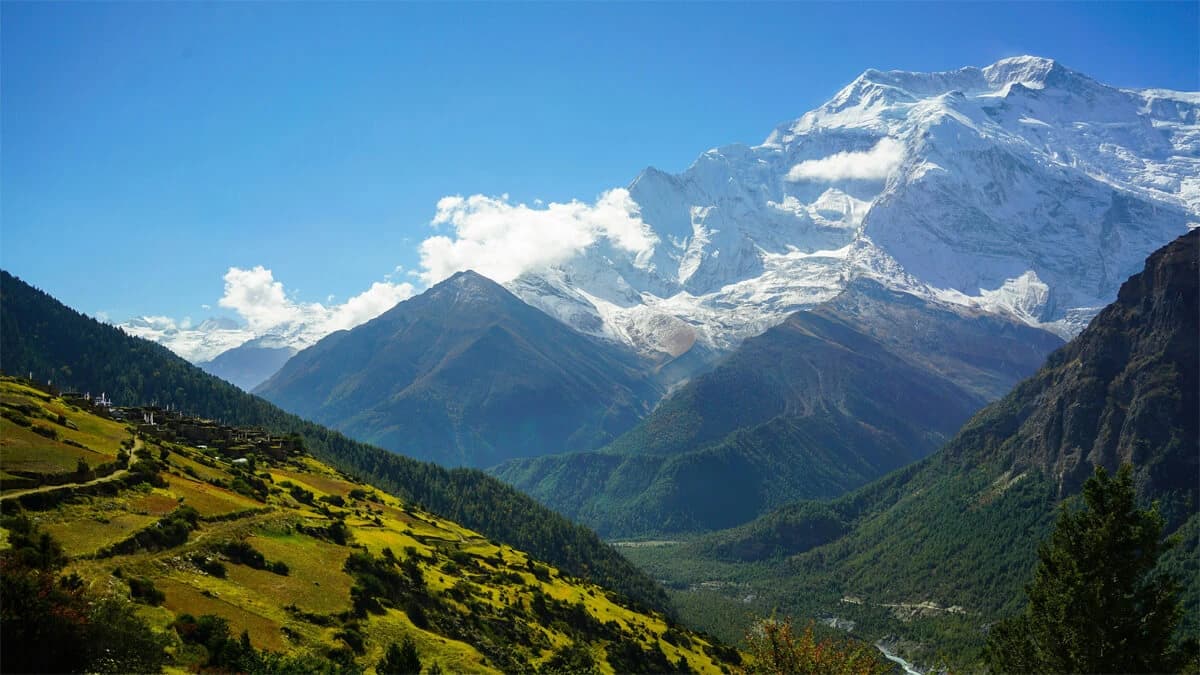
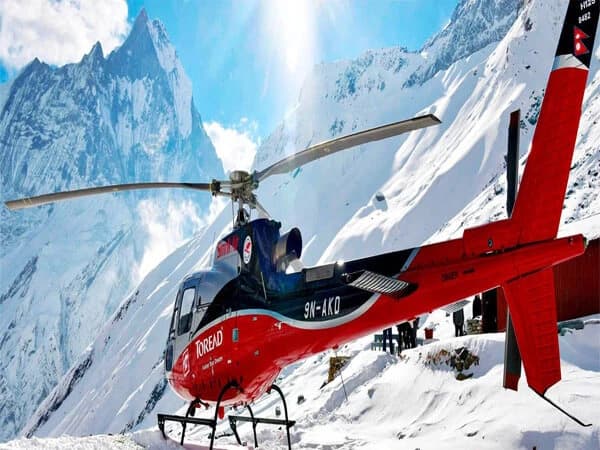
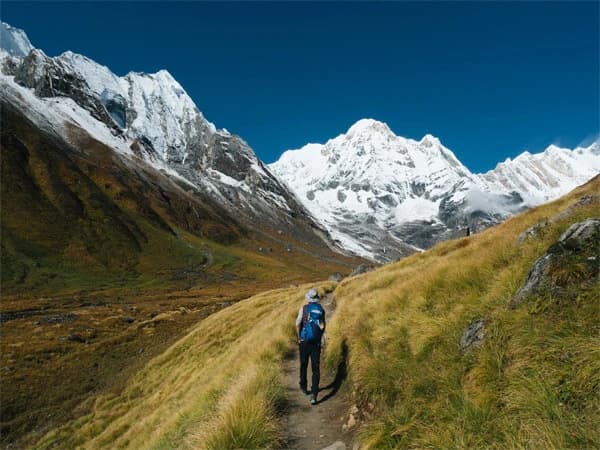
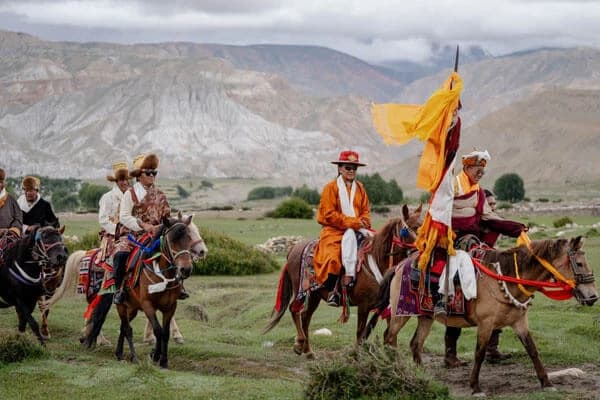
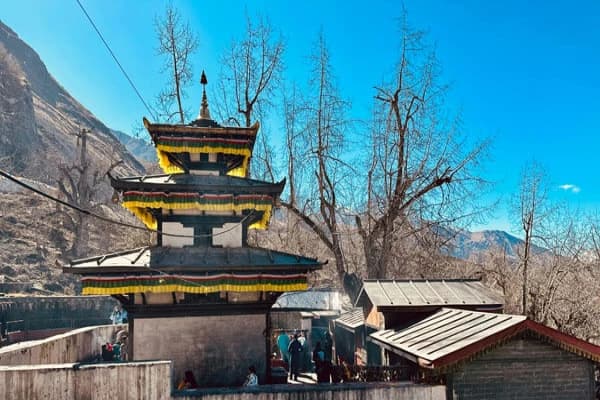
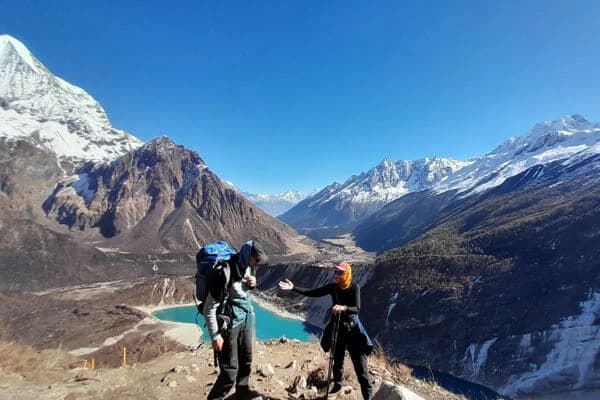
Most people arrive in the Annapurna region in Nepal already halfway convinced they know what it will feel like. They have seen the same mountain shots enough times for it to feel familiar before they even land in Kathmandu. Snow peaks, clean skies, prayer flags, and that one perfect frame everyone tries to recreate.
And it is not only about the famous routes people talk about first. Annapurna trekking in Nepal is a whole region of different trails. Some are busy, some are less used, but they all sit under the same weather, the same mountains, and the same conditions that do not really stay stable for anyone.
After Annapurna Base Camp blew up on social media, especially with younger trekkers, it turned into something people chase for content. That perfect frame matters more in their head than the actual trail.
Also, the Annapurna Round and ABC Trek are not hidden routes anymore. They are some of the most walked trails in Nepal, with busy seasons, basic facilities, and conditions that change in ways most first time trekkers do not really expect.
At some point, what you thought it would be and what it actually feels like stop matching.
This blog is about that part of Annapurna trekking in Nepal. Keep reading to find out!
Annapurna Is Not One Trek
What people get wrong about Annapurna hiking in Nepal is thinking it is one single trail. It is not. It is a whole region with different routes that do not feel the same once you are actually on them.
You go through some parts where you are walking right past daily life. Houses, fields, small shops, people outside doing their normal work. Other parts don’t feel like that at all.
That’s because Annapurna is not one route. It is a region with completely different trekking paths inside it.
Annapurna Base Camp and Annapurna Circuit get mixed up a lot, but they are not the same thing. One goes straight into a mountain basin surrounded by peaks. The other moves through valleys and crosses a high pass after days of climbing and changes in elevation. The way they feel on the ground is different too. The timing, the effort, even the kind of places you pass through.
Then you have shorter routes like Ghorepani Poon Hill. That one is quicker and feels more like a short mountain trip than a long journey.
Even the paths themselves don’t stay consistent across the region. Some parts run close to roads, some stay on older walking tracks, some pass through villages that are close together, others go for long gaps without anything in between. There are many more treks.
So when people say they are doing Annapurna trekking, it doesn’t really mean one thing. It depends completely on which route they picked, and those routes are not similar once you are actually on them.
The Stairs No One Talks About on the Annapurna Trail
One thing people do not tell you about trekking in the Annapurna region is how many stairs you end up climbing. Not a few here and there, but long stone staircases that you see again and again through the whole route.
You walk thinking it’s a normal trail, then it turns into stone steps going up. After a bit it flattens, you start relaxing, then it turns into more stairs again after a village or a bend.
Locals move on it like it’s nothing. Carrying gas cylinders, sacks, groceries. They don’t stop. And the funny thing is you will end up stepping aside a lot, just watching them pass while you catch your breath.
Some steps are fine, some feel too high, some are uneven so you can’t really switch off while walking. You are always watching your feet.
There are small moments in between that stick with you. A tea shop right after a long climb feels like luck. A dog suddenly walking with you for no reason, which is so beautiful to watch. Someone sitting on the steps just talking while you pass.
By the end of the day, your legs already know what’s coming next. More stairs.
Tea Houses Run the Whole Annapurna Trekking Journey, Not Just Accommodation
In the Annapurna region you slowly realise something that is not obvious at the start. You do not really decide where the day ends. You walk until you find a tea house and that becomes the stop for the night.
After a few days you start noticing the same places coming up again and again. Different people, same stops. At first it feels random, later it does not.
Tea houses are not all the same. Some are just family homes with a couple of rooms opened for trekkers. In other places there are more people coming in and out and it feels a bit more alive because of that.
Plans do not really stay fixed on the trail. People ask each other what places still have space, what places are full, and decisions change while walking. You just go with it and keep moving.
Some months change everything. Certain places close, and suddenly the way people move between villages is not the same as what you read online before coming.
What looks like simple rooms and food is actually what keeps the whole trekking route working every day.
The Weather You Plan For vs The Weather You Actually Get
In the Annapurna region you can look at a clear sky in the morning and still not really know how the rest of the day will go. It might stay clear, or it might not.
Some days you start walking in sunlight and later find yourself inside fog where everything around you slowly disappears. Other times it begins covered and then opens up again like nothing happened.
Before coming, a lot of people think the trekking season means things stay more or less stable. In reality it just means you have a better chance of good days, not a guarantee. Even in peak months, you still get days where visibility drops or rain shows up in places that looked fine earlier.
You also see how it affects people on the trail. Some keep moving, some wait longer inside tea houses, some decide to stop earlier than they planned. It is not a big discussion most of the time, people just adjust based on what is happening outside.
A place can feel different depending on the sky. A village that feels open and active in one kind of weather can feel very still when clouds come down and everything turns grey. That’s when the places you saw online don't match in reality.
There are moments when you are walking in warm light and then suddenly step into cold wind or mist. It becomes normal after a while, just part of how the day shifts.
The Crowds Nobody Mentions in Annapurna Trekking
You expect silence in the mountains, but what you actually hear most of the time is footsteps behind you and people catching up ahead.
There are moments when you stop for water and realize you’ve seen the same group three times already without even planning to. Same places, different villages.
At some point it just becomes normal to step aside when someone faster comes from behind or to slow down without really deciding to. You notice it later, not while it is happening.
Sometimes you walk behind the same person for a long time without saying anything, then end up passing them again somewhere else later in the day. It happens more than you expect.
Even breaks feel similar in different places. You sit down, others sit nearby, everyone doing the same thing at different times without much planning.
The trail stays the same, but the way people move through it keeps shifting everything around you.
Road Building Has Changed Annapurna Trekking More Than People Admit
A lot of the Annapurna region is not fully trekking trails anymore. Roads now cut through many parts of it.
You walk, then a jeep passes. Then the trail joins the road again. Then it splits off for a while and comes back to it later. It keeps happening.
A lot of the older trekking rhythm is gone on the main routes. Distances feel different now since roads reach deeper into valleys and connect villages more directly.
What people imagine before coming is a long, uninterrupted mountain trail. On the main routes, that is not really what you get anymore. You are still in the Himalayas, but you are sharing a lot of the route with road access and traffic in between. This is the reality that the internet rarely tells you.
The Strange Way Time Starts Feeling on the Annapurna Trail
After a few days in the Annapurna region, time does not really feel the same like it does back home.
You stop thinking about dates properly. It turns into smaller things instead, like getting to the next village before it gets dark or finding a place to eat without waiting too long.
Mornings start early because everything around you is already moving. Doors opening, bags being packed, boots on stone steps. You don’t really decide it, you just end up going with it.
During the day, it’s mostly basic things you think about. Walking, water, weather, where to stop later. Even simple things like a hot drink or dry clothes start to feel more important than they normally would.
Days also start blending a bit. You still remember what happened, but not always when it happened or which village it was in. It gets mixed in a strange way.
Then when you leave the trail and come back to roads and constant phone noise, it takes a bit before everything feels normal again.
Underrated and Less Known Treks in Annapurna Region Nepal
Most people stick to the main Annapurna trekking routes because that’s what they hear about first. But there are other trails in the same region that don’t get as much attention. You still get the same mountains and villages, just with fewer people and a calmer feel on the walk. Let’s take a look at these treks:
Mardi Himal Trek (4,500 meters)
Mardi Himal Trek 7 Days is less crowded compared to the popular trekking routes in Nepal. It still gives close views of Machapuchare and the Annapurna range, but you don’t see as many trekkers on the trail compared to the more talked about routes.
Khopra Ridge Trek (3,660 meters)
Khopra Ridge Trekking in Nepal moves away from the busier trekking flow and connects smaller villages along the way. It is less visited, even though the ridge viewpoint opens up wide mountain views in every direction.
Mohare Danda Trek (3,300 meters)
Mohare Danda Trek is a community based route that often gets less attention than nearby Poon Hill. The walk stays calm most of the time, and you pass through local villages that don’t see heavy trekking crowds.
Nar Phu Valley Trek (Kang La Pass 5,320 meters)
Nar Phu Valley Trek is one of the most remote trekking routes in this region. Nar and Phu villages feel far from regular trekking flow, and the route to Kang La Pass at 5,320 meters is much less traveled compared to other major trails.
Tilicho Lake Trek (4,919 meters)
Tilicho Lake Trek is one of the most well known high altitude lake treks in Nepal. It is also popular among domestic trekkers. The lake sits at 4,919 meters and the route attracts people looking for something beyond the usual trekking spots.
Panchase Trek (2,500 meters)
Panchase Trek is a short and easier route that stays at lower altitude. It doesn’t see as many trekkers as the main viewpoints and high mountain trails, but it still offers wide views of the surrounding mountains.
Khayar Lake Trek (4,660 meters)
Khayar Lake Trek is reached through the Khopra Ridge route and is not as commonly visited as other trekking paths. The lake area is higher up and fewer trekkers continue all the way compared to the main walking routes nearby.
If you are planning to explore any of these routes, it is worth looking into proper itinerary details on our website.
Interesting Facts About Trekking in the Annapurna Region
- Permits get checked in some places and completely ignored in others depending on the route and timing, so it never feels the same throughout the trek.
- Mobile networks come and go without a clear pattern. Sometimes a lower village has no signal while a higher point catches a weak connection.
- Prices change a lot between villages as a room or simple meal can cost more just a few hours away, mostly because everything depends on supply and transport.
- Charging phones is not always available in the room. In many tea houses you wait for shared electricity and use it when it is offered.
- You often share the trail with mules carrying supplies. Local transport and trekking paths overlap in several sections, so movement is not only for trekkers.
- Walking the same route in the opposite direction feels different because the order of villages and climbs changes the experience.
- Tea houses do not stay open all year in the same way. Some close or reduce activity outside peak trekking months.
- People living in the villages are mostly farmers and workers first. Nepal Trekking just passes through their daily life.
- Culture is not identical everywhere. Food, clothing, and daily habits change slightly from one village to another.
- Porters often take different connecting paths that are easier for carrying loads compared to the main trekking route.
- Children in villages are used to seeing trekkers and continue their normal routine without paying much attention.
One Thing People Don’t Expect on Annapurna Trails
After a few days on Annapurna Hiking routes, small decisions don’t feel fully planned anymore.
Where to stop often depends on what is already happening ahead. If a place has a few groups staying, more people prefer to stay there too. If it looks empty, most people keep walking even if they are tired.
On busy parts like Annapurna Round Trek, this happens more than you think. Lodges fill at similar times, so groups end up in the same places without anyone really planning it together.
Walking speed also changes without anyone saying anything. People slow down when the group ahead slows down. If someone speeds up, a few others follow for a while. It just happens while everyone is trying to finish the same day.
This part of the journey is something that is not put out for the world to know but it is definitely something you’ll see happening most of the time.
Hygiene Conditions on Annapurna Trails That Shock First Time Trekkers
Cold water is common in a lot of places along Annapurna routes in the Annapurna Region, but hot water is not rare either. It depends on the lodge, the village, and sometimes fuel or electricity. Some places provide it easily, some do not, and sometimes it costs extra.
In colder areas, people skip showers for a couple of days. The water is freezing and after a full day of walking, most people don’t go for it.
If you plan to wash your clothes, be very careful as they don’t always dry the way you expect. You hang them up at night and check again in the morning, but in many places the air is too cold or damp for them to fully dry. People still wear them even if they are not completely dry because there is no spare set.
Bathrooms change at every stop. There is no single standard across the route. You just use whatever is there and move on.
Wet wipes help a lot on this kind of walk as they are useful when showers don’t happen or when you just want to feel a bit clean during the day.
Don’t expect for things to behave according to you at all. Make sure to carry your hygiene supplies well.
The Most Crowded Viewpoints and High Passes in Annapurna Region That People Don’t Expect
Poon Hill, the famous viewpoint in Annapurna, is packed at sunrise during peak season. People start walking before it gets light and reach the top to very little open space. Everyone is standing around waiting for the sun, so they can get a photo or see the view properly.
People also stop at little open spaces on the way up when the view suddenly shows up in front of them. These are not official viewpoints. They just turn into photo points when the trail is busy, so groups pause there for a bit, take pictures, then move on for the next people coming behind.
Thorong La Pass is not like that, but it is not empty either in the crossing season. You see other groups on the way, sometimes close, sometimes far ahead. At the top, a few people stop for a short time to rest or take photos, then move on because the cold and thin air don’t let people stay long.
Sarangkot is a short hike near Pokhara and it is known for sunrise views. Early morning gets busy with people coming up from different paths where everyone is heading to the same open area.
Chhomrong and Ulleri also get busy in peak months. Most trekkers pass through them, so tea houses fill up and people keep moving through the villages throughout the day.
What Nobody Tells You About the First Days on Annapurna Trails
Your first day on this Himalayan journey in Nepal starts with a normal feeling. It feels like any other travel day at the beginning. Then the road journey ends and then you will start walking properly. That change does not come in loudly, but you notice it soon after.
After a while you stop paying attention to anything except where you are putting your feet. Stone steps keep coming, ground keeps changing, and you just get used to it.
The first night in a tea house feels different too. You can hear people around you clearly, moving, talking, and settling in. Everything feels close and you can even hear people’s conversation, even though you are not really involved in it.
By the next day, city habits do not fit the situation anymore and you eventually stop comparing things to normal travel life because it does not match what you are doing.
This is where the untold part actually begins. The change starts from the very first day and stays like that through the whole trek.
Why People Still Come Back to Annapurna Treks?
When you talk to people on the trail, you notice something quickly. Some of them are doing the Annapurna region trek for the second time or even more. That alone makes you wonder why people visit Annapurna or why trekking to Annapurna is so popular.
Most people finish the trek thinking they are done with it. Then after a few days, it comes back in bits and you want to feel the presence of the fascinating Annapurna again.
Even when the trek feels tough while it is happening, many people still end up looking for another route in the Annapurna region later. Long days of walking, changing weather, and simple living feel intense in the moment, but they are often what people remember the most after leaving.
Trying a different route inside the same mountain area also changes things. One trail feels completely different from another, even under the same range, and that is usually enough reason for people to return.
Even with roads in some parts, and basic conditions in many villages, the region still leaves a strong impression on people and slowly pulls people back.
Conclusion:Untold Truths of Annapurna Region Trek
After Annapurna trekking, it is hard to describe everything properly. You can talk about the places, but it never feels the same as being there. It is not perfect and it is not easy, but it stays in your mind after you leave.
These are the untold truths people usually notice only after doing the trek, not before. Nepal Trekking Routes are always here to make your trek in Nepal successful. Do not hesitate to reach out!