Have you ever landed in a new country, reached for your charger, and realized it doesn't fit the wall socket? It's a small mistake that can leave your phone, camera, or laptop without power when you need them most. If Nepal is your next destination, taking a minute to find out whether you need a Nepal traveladapter and understand the country's plugs and voltage can save you a lot of frustration later.
Nepal uses Type C, Type D, and, in some places, Type M power plugs with a standard 230V electricity supply at 50Hz. Whether you need a travel adapter for Nepal depends on the plug your electronics use and whether they're compatible with Nepal's voltage. In the sections below, you'll find everything you need to know about the Nepal plug type, Nepal power sockets, and how to keep your devices charged throughout your trip.
Do you need a Travel Adapter for Nepal?
Yes, most international travelers will need a Nepal travel adapter. Whether you need one depends on the country you're traveling from and the type of plug your charger uses. Travelers from the United States, Canada, the United Kingdom, Australia, and Japan will usually need a travel adapter for Nepal, while many visitors from Europe can use some of Nepal's power sockets without one. Because Nepal uses more than one socket type, a universal travel adapter is often the most practical choice.
What Plug Types Are Used in Nepal?
Nepal uses three plug types: Type C, Type D, and Type M. Type C and Type D are the most common, while Type M is much less common. Because more than one Nepal plug type is used across the country, you may come across different Nepal power sockets depending on where you stay.
The Type C plug has two round pins and is widely used across Europe and many other countries. If your charger already uses a Type C electrical plug, it will fit compatible Nepal electrical outlets without an adapter.
The Type D plug has three round pins arranged in a triangular pattern. It remains widely used across Nepal and can be found in homes, hotels, guesthouses, and many other buildings, making it one of the most common Nepal power plugs you'll come across during your trip.
The Type M plug also has three round pins but is larger than Type D and is made for higher current electrical connections. Most travelers won't need it, although you may occasionally find Type M sockets in some buildings.
Since Nepal uses different socket designs, travelers carrying multiple devices often prefer one adapter that works with different plug shapes. This is useful whether you are staying in Kathmandu, Pokhara, or using electronics during a mountain stay.
What Voltage Does Nepal Use?
Nepal uses 230V electricity with a 50Hz frequency. For most travelers, this works well with modern electronics such as smartphones, laptops, tablets, and cameras, as many chargers are made to handle different voltage systems.
Before you leave, check the label on your charger or power adapter. If it says 100V to 240V, your device is compatible with Nepal's electrical system. This is common with USB chargers, USB C chargers, mobile phone chargers, and laptop chargers.
The main thing to understand is that voltage and plug shape are two different things. A plug adapter helps your charger fit into the outlet, but it does not change the voltage. A voltage converter is only needed for devices that cannot handle 230V electricity, such as some older or high powered appliances from countries with a lower voltage supply.
If your charger supports Nepal’s electrical system, everyday devices such as phones, cameras, and laptops can be used without any extra equipment.
Can You Use US, UK, European, or Australian Plugs in Nepal?
Your charger may work in Nepal, or it may need an adapter first. The difference comes down to the shape of the plug you are carrying and whether it matches the Nepal electrical outlets. Travelers arriving with a different plug design will need the right adapter to connect their phones, laptops, cameras, and other electronics.
US Plugs in Nepal
US plugs use flat pins, which do not match the round pin design used by most Nepal power outlets. Visitors from the United States will need a Nepal plug adapter to use their chargers and other electronic devices during their trip.
UK Plugs in Nepal
UK plugs use three rectangular pins, making them different from the Nepal socket type. Travelers from the United Kingdom will need an adapter to connect their devices to Nepal's electrical system.
European Plugs in Nepal
Many European countries use the Type C plug, which is also used in Nepal. Some European chargers may fit compatible Nepal power sockets, but this is not something every traveler should depend on because socket designs can be different between buildings. If you are carrying several devices with different plugs, a universal travel adapter can make charging easier by reducing the need to carry separate adapters.
Australian Plugs in Nepal
Australian plugs have angled flat pins, so they are not designed for Nepal's round pin sockets. Travelers from Australia will need an adapter to use their chargers and other electronics in Nepal.
A travel adapter for Nepal is a practical choice for visitors carrying multiple devices or traveling through different areas of Nepal. It reduces the need to carry separate adapters and works across a wide range of plug designs.
Where Can You Charge Your Devices in Nepal?
Charging your electronics is not difficult in Nepal’s main tourist areas, especially in cities like Kathmandu and Pokhara. Hotels, guesthouses, cafes, and restaurants commonly provide access to power outlets where you can charge your phone, camera, laptop, and other personal devices.
Outside major tourist areas, charging availability depends more on your accommodation and location. Smaller guesthouses may have fewer charging points in Nepal, and some accommodations keep sockets in shared spaces rather than beside every bed. This is something to consider if you carry several devices, such as a mobile phone charger, camera battery charger, and laptop charger.
A Nepal power outlet works with your device once the plug connection matches the socket. You should bring a USB charger or multi port charger if you need to charge multiple electronics from one outlet instead of bringing separate chargers.
A power bank is most useful during long journeys, Kathmandu sightseeing days, and visits to places where you may not have access to an outlet for several hours. It can keep your phone available for maps, communication, photos, and important travel information when you are away from a charging station.
Charging equipment is an easy thing to forget while preparing your Nepal packing list. A suitable adapter, the right cables, and a backup battery take up little space but can be valuable throughout your trip.
Charging While Trekking in Nepal: Electricity, Tea Houses, and Power Banks
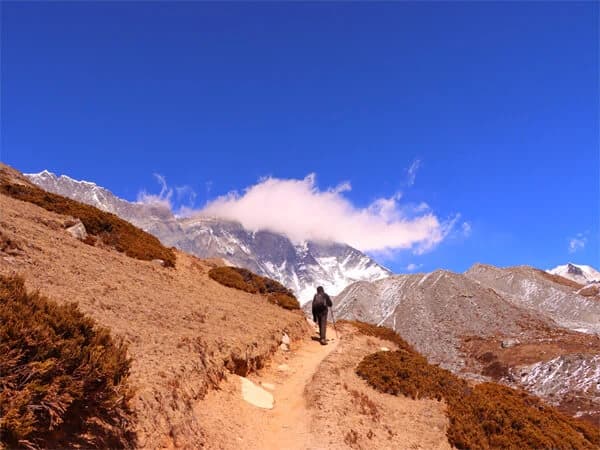
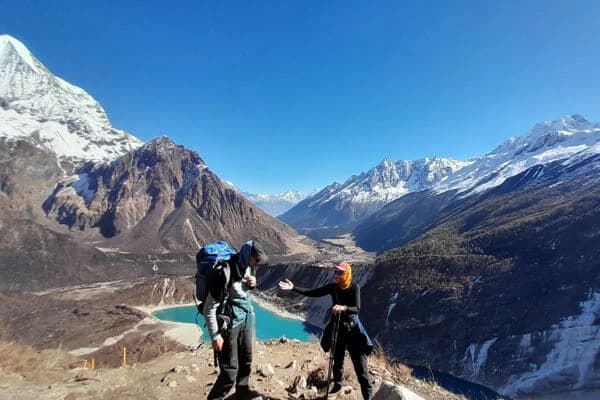
Charging works differently when you are trekking in Nepal compared to staying in cities because access depends on the lodge, route, and available electricity supply. On popular routes like Everest Base Camp and the Annapurna Circuit, many tea houses and lodges have electricity, but access to power becomes more limited as you move farther into remote areas or get involved in lesser known treks in Nepal.
Charging in Tea Houses During Nepal Treks
Tea house charging in Nepal is available on many established trekking routes, although the setup depends on the lodge and location. Some tea houses have sockets in dining rooms or shared areas rather than inside each room.
A few things to keep in mind:
- Some tea houses charge an additional fee for using electricity.
- Charging points may be shared between several trekkers during busy seasons.
- Remote stops may have fewer options compared to larger villages.
Everest Base Camp and Annapurna Circuit Charging
Everest Base Camp charging is available along the route, but trekkers should not expect the same access they have in Kathmandu or Pokhara. As the altitude increases, charging opportunities can become less convenient, which makes battery planning more important.
The situation is similar during Annapurna Circuit charging. The availability of electricity depends on the village, accommodation, and local power supply.
Keeping your devices powered is useful for:
- Using maps and navigation apps.
- Taking photos and videos throughout the trek.
- Staying connected when mobile signals are available.
- Charging camera batteries during longer journeys.
Electronics to Carry for Nepal Trekking
For Nepal trekking, carrying the right charging equipment can save space and reduce unnecessary weight in your bag.
Useful items include:
- A reliable power bank for backup charging.
- A USB C charger for compatible devices.
- Spare batteries if you plan to use a camera frequently.
- The correct cables for your phone, camera, or other electronics.
A power bank for Nepal trekking is especially useful because long trekking days may leave you away from a charging point for several hours.
Frequently Asked Questions About Nepal Travel Adapters
Do I need a travel adapter for Nepal?
Most visitors need an extra adapter because the plug on their charger may not match the sockets used in Nepal. Whether you need one depends on the charger you bring, so if you check your plug type before your trip, it may be the easiest way to avoid any charging problems in Nepal.
What plug adapter do I need for Nepal?
The right adapter depends on your charger’s plug design. Travelers carrying flat pin or rectangular pin plugs will need an adapter to connect their devices to Nepal’s outlets. Some Type C chargers may work with compatible sockets, but carrying a suitable adapter is the safer option when traveling with important electronics.
Can I use US plugs in Nepal?
No, US plugs do not fit directly into most Nepal electrical outlets. US chargers use flat pins, while Nepal mainly uses round pin socket designs. Travelers from the United States should carry a suitable adapter for devices such as a mobile phone charger, laptop charger, or camera charger.
Can I use UK plugs in Nepal?
UK plugs are not directly compatible with the Nepal electrical plug design because they use a different pin shape. A plug adapter is needed to connect UK chargers to Nepal’s electrical system.
Can I use European plugs in Nepal?
Some European Type C plugs may work with compatible Nepal sockets, but the fit is not guaranteed in every location. If you are carrying several devices, an adapter that works with different socket designs can make charging easier throughout your trip.
Do I need a voltage converter for Nepal?
Most visitors do not need a voltage converter in Nepal. Common electronics used in Nepal, such as phones, cameras, tablets, and laptops, usually come with chargers that support 100V to 240V input.
Before your trip, check the label on your charger or power adapter. If it shows an input range of 100V to 240V, your device can handle Nepal’s electrical system without a converter. A voltage converter is only needed for devices that are not compatible with the local power supply.
Can I charge my phone in Nepal?
Yes, phone charging in Nepal is possible in hotels, guesthouses, cafes, and many trekking lodges. A mobile phone charger with the correct plug connection can be used normally if it supports Nepal’s electrical system.
A power bank is useful when you are away from regular charging points, especially during long travel days or trekking routes where access to electricity is more limited.
Do tea houses have electricity in Nepal?
Many tea houses on Nepal trekking provide electricity for charging devices. Charging may be available in shared areas, and some lodges charge a small fee depending on their location and power supply. Cities and popular trekking routes have better access, while remote areas may have lesser charging options.
Can I charge my phone during the Everest Base Camp trek?
Yes, Everest Base Camp charging is available at many tea houses along the route. However, charging options become more limited at higher elevations, so carrying a power bank is useful for keeping your phone available for maps, photos, and communication.
For trekkers, a backup battery is one of the more practical travel essentials when spending several days away from regular charging access.
Final Thoughts: Staying Powered During Your Nepal Trip
The type of charging setup you need in Nepal depends mostly on where you are going and what devices you carry. A phone charger for a city stay and a camera setup for Nepal trekking may require different levels of preparation.
Once your plug type matches the available sockets, most everyday electronics can be used normally throughout your trip. Adding the right adapter, cables, and backup battery to your Nepal packing list is a small step that can prevent unnecessary problems later.