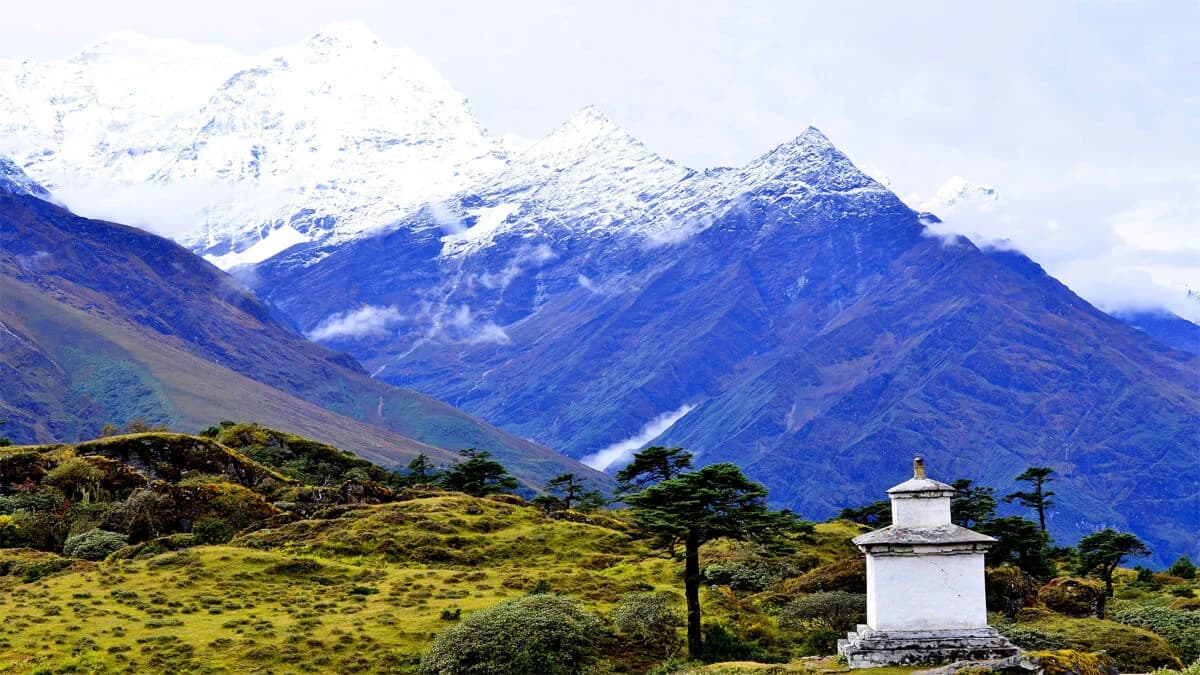
Everest region, the most talked about trekking region in the world. You have probably already seen it in photos, videos, blogs, all the usual stuff. Still, none of that really prepares you for how normal it looks when you first get there, and how fast it starts to feel like it is playing by its own rules instead of yours.
Here is the thing nobody really says straight. Most people think it begins when the shoes hit the dirt. It does not. It starts earlier in Kathmandu. Plans depend on weather, timing, and most importantly, luck. Flights to Lukla come and go when they want. Days get shaped around waiting, checking, rechecking, then just accepting whatever happens next.
The trail has its own magic and consequences. And it is not just about the Everest Base Camp trek. People talk about EBC like that is the whole Everest region, but it is really only one part of it. Everything around that route has kind of been pushed into the background. Gokyo, Three Passes, other routes that sit in the same mountains, same altitude, same weather, just not the same crowd.
Most people do not really realize how many different ways there are to move through the Everest region until they are already there. Everything gets pulled toward one name, one ending point, one photo, and the rest just fades into the side even though it is right there.
What the First Day of the Everest Base Camp Trek Actually Feels Like
The first day does not feel like anything special at the start (yes that’s true). It is just walking out from Lukla and following the trail with everyone else. There is no immediate sense of difficulty, which is exactly why it is easy to misread it.
Day one starts after Lukla and goes up to around 2,600 to 2,800 meters.
At the start, people often act like it is nothing. Walking fast, talking normally, like it is just another hike. But that does not really last.
Even on the first day, breathing might feel heavy even on small climbs. There are more short stops without planning them. The body does not move as freely as it did at the start.
It is not pain or sickness for most people. It is just effort starting to feel different at that height, even if nobody really says it.
The Everest Region Is Not Just The Everest Base Camp Trek
Most people think the Everest region is only Everest Base Camp. That is what dominates online content.
And when its name starts showing up everywhere in photos, videos, and blogs, it starts to feel like that is the whole place.
It is not.
And honestly it isn’t even the fault of the flow of tourists that want to visit there. The main Everest trekking content that gets pushed out is the EBC trek and naturally, people get drawn to that.
Once you are there, you hear other names as well. Gokyo Valley, Everest Three Passes trek and other routes that do not get mentioned as much online in comparison to the popular base camp trek. But you get the same mountains and same area, just the different paths and guess what? An even smaller crowd.
Some routes have more people on them most of the time. Some do not. On some trails you keep meeting other trekkers. On others you walk for a long time without seeing anyone ahead or behind.
Even distance feels different depending on the route and how many people are on it.
But most attention still stays in one place.
Everest Base Camp becomes the main point everything connects to. Even when you are not walking that route, you keep hearing it, like everything else is compared to it.
From outside, it looks like one clear trek with one destination.
Inside it, it is not like that. So the next time you think of trekking to the Khumbu region, make sure you pay attention to these routes as well.
Everest Region Trekking Never Follows Your Plan
If you are trekking to Mount Everest, this is the one thing you need to prepare yourself for even more than your backpack.
You go with a plan, of course you do. Everyone does. Days written out, places already in order, where they will sleep, how long it should take, when they think they will reach places like Namche Bazaar and beyond.
Lukla is the first point where the mood starts to fade a bit.
Once you start walking, the plan in your head slowly starts to lose its importance. Some days you think you will reach a certain place early, but it takes longer than you expected without any particular reason. Other days you arrive somewhere and think that stopping there is better than continuing the journey for the day.
This is how it goes in every Everest trekking trail, whether it is Everest South Base Camp trek, the route towards Gokyo Lakes trek, or even the lesser known Everest region treks like Pikey peak trek.
The paths are all there, the stops are known, but the way each day actually happens is never exactly how you pictured it before starting out. So take your time and enjoy the beauty of one of the most famous trekking trails in Nepal.
The Walk From Lukla to Namche Bazaar Hits Different
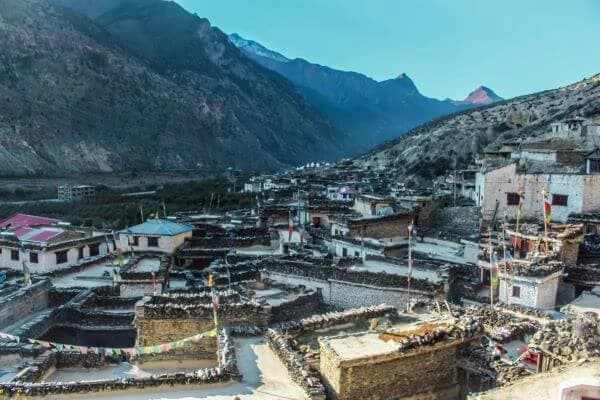
Lukla feels like you got dropped into something that was already going on without you. People are moving, porters are moving, trekkers are moving, and then you become a part of that process as well.
There is no moment when you sit and decide that the official trek has begun. You just start walking and follow other groups who are going the same way.
Suspension bridges come early. They sway as you cross and there is usually a line of people and yaks moving through at the same time. You end up stopping, waiting, and stepping aside more than you think you would.
Porters pass you without slowing down. That is usually the first moment people realize the pace is different here and you are moving slower than you thought.
As you get closer to Namche Bazaar the climb starts to wear on you. You find yourself stopping more than you usually do and focusing just on breathing and putting one foot in front of the other.
Extreme Dry Air in Everest Region Trekking That No One Really Warns You About
Most people search for things like Everest Base Camp trek difficulty or altitude sickness, but one of the most consistent problems starts way earlier and barely gets mentioned.
You feel like you have prepared well for your trek and then boom everything starts to feel dry. Lips crack even if you keep using balm. Nose feels dry and can even turn into a wound when you breathe in. Throat feels rough in the morning even if you drink water a million times.
Water is always in your hand after that. Not even because you are thinking about it. The mouth just feels dry again and again. Tea and soup help a bit when you get them, then it goes back to the same feeling.
If you ignore it, it gets uncomfortable after a few days. Lips start getting worse. Your throat starts to feel more irritated. Cold air feels sharper when you breathe, especially early morning or late evening.
However, it does not stop you from trekking. It is just there the whole time and keeps bothering you until it completely heals.
Inside Sagarmatha National Park, it becomes part of daily life on the trail. Everyone is dealing with it, so nobody really talks about it much but every trekker should know about this.
Sleeping In Teahouses In The Khumbu Region
By the time evening comes around, most people are too tired to care much about the room until they actually get inside it. Then you notice how basic everything is. Two small beds, thin mattress, pillow, blankets that may or may not feel warm enough depending on the night. The rooms themselves are not heated either, so once the dining hall starts emptying out and people go upstairs, the cold gets to you very fast.
Places like Lukla and Namche Bazaar feel a bit more comfortable compared to the smaller villages further ahead, but the setup stays mostly the same throughout the trek with thin walls, wooden floors, doors that never fully block sound. You hear people talking in nearby rooms, footsteps in the hallway, someone coughing somewhere in the building almost every night.
Sleeping properly becomes harder especially if you are a light sleeper. Sometimes it is the cold, sometimes the altitude, sometimes just the noise around you. You wake up randomly during the night, fix your sleeping bag, try sleeping again and that loop continues.
Trekking Routes In The Everest Region Most People Miss
The region splits into different routes and they do not feel like variations of the same trek. They feel like different places altogether. Let's take a look at them.
Gokyo Lakes Trek
Gokyo comes in after Namche when the trail turns away from the main Base Camp direction.
You start noticing the change in how the trail behaves. It is not just direction. It is how often you see other groups. Sometimes you walk without anyone in front for a while and then suddenly meet a cluster near a turn or a climb.
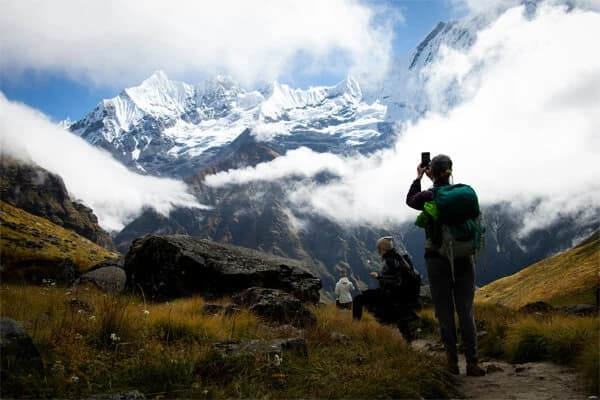
The lakes themselves sit under heavy ice walls. Everest is there in the distance but it is not the only thing you keep looking at.
Everest Three Passes Trek
Kongma La, Cho La, Renjo La. That is the structure, but the experience is not really that clean.
You go up one side, come down the other, then end up climbing again somewhere else that feels unrelated at first. After a couple of days, you stop thinking in a straight route. It turns more into moving between high points and lower ground without expecting consistency in between.
Some days are just about one pass. Other days you barely register what the day was supposed to be, you just know you kept moving.
Hinku Valley Trek
Hinku Valley leaves the main Everest trail early after the lower Khumbu area. The direction shifts and you are no longer on the usual Everest Base Camp movement.
The trail follows the river for a long part of the route. After that it starts rising into higher ground where the weather feels colder and the land opens up more.
You do not keep meeting trekking groups here. At times you walk without seeing anyone for a while. That changes how the day goes because you are not reacting to other people on the trail.
It still belongs to the Everest region, but it does not connect much with the main route most people know.
Pikey Peak Trek
Pikey Peak sits in the lower part of the Everest region.
The walk starts from lower areas and moves upward in steps. Villages, paths, and ridgelines come one after another before reaching higher ground.
Everest is not visible for a good part of the walk. Later it shows up in the distance along with a long line of peaks. It comes into view as you gain height.
This route does not link into the main Everest Base Camp trail. It starts separately and follows its own direction from the beginning.
How Altitude Starts Affecting You While You Are On the Everest Trekking Trail
Most people expect something obvious to happen when they go higher. Altitude doesn't work like that but there are certain changes that people notice.
Even short movement feels like it asks for a bit more effort than it should. Food also starts behaving differently for people where you complete your meal one day but start struggling the other day.
Headache starts to show its effect in most of the trekkers which can differ from mild to the severe ones. These are probably the things you are already prepared for but the altitude does not show mercy at all. No matter how prepared you think you are, it will sneak up on you and might create problems during your Everest trekking.
Walking slower helps a lot and your fitness doesn’t really define how well you will behave during the trek. Conversations become shorter. Some people even get emotional for no reason. Some get irritated over tiny things. These are the problems that are talked less about.
Social Media Leaves Out The Uncomfortable Parts
People trekking in Nepal, just post the mountain views. They rarely post the dust, the bad sleep, the dizziness, or the moments where they wonder why they signed up for this in the first place.
Sometimes you may never see the mountains you came for, due to clouds and unfavorable weather. Sometimes your body feels terrible. Sometimes the trail feels endless. And strangely, most people choose to show this side of the trek very less.
You Will Probably Get Attached To Complete Strangers
Yes, you heard that right. You meet someone at tea one night and don’t think much of it. Then suddenly you see them again in the next village. And again after that. It keeps happening until it feels normal, like everyone is just drifting along the same invisible line.
You don’t even properly know people’s full names sometimes, but you know they snore, or they always order garlic soup, or they walk a bit faster than you in the morning.
And it’s weird how fast you stop doing small talk during the Everest trekking experience. Everyone’s tired, cold, a bit out of breath most of the time, so people just end up saying things more honestly without even thinking about it.
What Nobody Tells You Before You Try Island Peak, Mera Peak, and Chulu East Peak Climbing
You might have heard these famous peaks in the Khumbu region already quite a few times. Most blogs talk about them in a very neat way. Height, difficulty, season, route, all of that. When you are reading it from somewhere comfortable, it feels like something you can understand and plan easily.
But what you may not know is how different it starts to feel once you are actually there and not just reading about Island Peak, Mera Peak, and Lobuche East climbing like it is information on a screen.
The moment you are there, the whole conversation around you changes. People stop talking like trekkers and start talking like climbers. Crampons, rope fixing, ice walls, summit push, weather window are the words that you will get to hear. At first you just listen because you don’t really have anything to add. It doesn’t fully click yet how serious those words actually are.
Island peak is the one most people underestimate. It doesn't look threatening from a distance, so your brain fills in the gaps and assumes it is just a tougher hike. Then you get closer and realize that assumption was wrong. It is not about fear or drama. It is just the moment you understand this is a different category completely. If you are not prepared for basic alpine climbing, you are in trouble for sure.
Mera Peak is not that complicated in comparison to the Island Peak Climbing but it is long and repetitive. You need to walk for several days, and your body starts to feel it right away. Sleep gets worse. Appetite drops. Energy doesn’t come back properly even after resting and things start to wear you down bit by bit.
Lobuche East lies between the two but leans on the technical side in places where you actually need to pay attention. You can feel okay one moment and then realize this peak isn’t forgiving anymore. It hits in your mind that mistakes here are not casual.
What most people don’t say clearly is that a big part of these expeditions in Nepal is not the climbing itself. It is everything around it. Weather delays that change plans without warning. People dropping their summit attempts at the last minute. Groups splitting up. Your own plan changing more than once because conditions decide for you, not the other way around.
And yes, people turn back and it is normal there because nothing is bigger than your life. It happens often more than people expect before they go. So keep these points in mind before you go and experience the real peak climbing adventure in Nepal.
Mistakes That People Make Before Starting Their Trek To Everest
Most people only realize these things after the trek is already over. Read this and do not repeat the mistakes that other trekkers make.
- Thinking gym fitness will carry you through it (it won’t once the altitude hits)
- Bringing way too many clothes and still ending up cold at night.
- Shoes that looked fine at home suddenly becoming a problem on day 2 or 3
- Underestimating how cold nights actually get in teahouses
- Ignoring the importance of hydration until altitude symptoms begin
- Assuming that the mobile network works consistently everywhere. It doesn’t.
- Expecting every day to feel like a scenic walk when most of it is just tiring movement
- Not carrying enough cash for food, charging, and small expenses
- Thinking altitude sickness only happens to inexperienced trekkers
- Not keeping extra days for weather delays
Panch Pokhari Trek, A Hidden Lake in Solukhumbu Few People Know About
Most people don;t go looking for Panch Pokhari. It is not the usual trek that comes up in normal trekking conversations, so many only hear about it much later, or not at all while planning trekking in Solukhumbu.
Panch Pokhari trekking is in the lower Solukhumbu side of the wider Everest region and also falls inside Makalu Barun National Park area, but it is not connected to the main EBC trail. It lies away from the usual trekking flow, hidden from the crowd which is why it does not appear in most standard itineraries or popular route discussions.
You can reach it by trekking, but the route is not the same kind of well used trail as the popular areas. It feels more local instead of a fixed or busy trekking line.
When you reach the lake, it is just there with its still calmness and mountains around it. You can witness this lake in its purest and raw form as there is not much build up around it. It stays very simple, almost untouched in how it feels when you are actually there.
Most of the tourists never expect a place like this to exist in Solukhumbu, and probably just pass through the region without even knowing it is there.
Hidden Facts About the Khumbu Valley Most Trekkers Don’t Realize
Look at these facts and it might change how you see the Khumbu Valley. Most of these things are not obvious and might blow your mind.
The Everest Base Camp does not show Everest clearly
Shocking right? A lot of people imagine standing at the Base Camp and seeing Everest right in front of their eyes. That doesn’t really happen. The peak is blocked by other mountains around it, so the view you see is more about the glacier and surrounding peaks than Everest itself.
Everest is slowly changing in height
Thinking about it makes people wonder how a mountain can grow in size? But let us tell you, Everest is not a fixed peak. It is still being pushed up a little at a time because the ground underneath is always moving. The previous height of Mount Everest was 8848 meters and now its height is 8848.86 meters. So don’t get shocked when you hear the mountains in Nepal are growing!
The Himalayas were once under the sea
It is strange to think about, but this whole mountain range was once under an ocean. Some of the rocks you see along the trail still carry traces of that ancient sea, even though you are now walking at some of the highest points on Earth.
Kala Patthar is where Everest becomes visible
If there is one place where Everest actually shows itself clearly, it is Kala Patthar. This is why people wake up early and climb up in the dark sometimes. The light hits the mountain in a way that makes it stand out properly for a short period of time.
There are two Everest Base Camps
If you have read carefully, we mentioned EBC by Everest South Base Camp in the blog and it was done intentionally. Everest actually has two base camps. One is in Nepal on the south side and the other one is in Tibet on the north side. They are both used for climbing the same mountain, but the routes, landscape, and experience feel completely different from each other. However, the most popular EBC route lies on the Nepal side.
Wildlife is there but almost never seen
Snow leopards, red pandas, and other animals live in this region, but they stay far away from trekking paths. Most people go through the entire trek without seeing any wildlife at all.
The 2 PM rule in the mountains
In the Khumbu valley, most trekkers try to finish walking and reach their stop before 2 pm. It is not an official rule but this is something people actually follow.
After lunch time the weather starts changing. Clouds come in, the trail gets super windy, and it can even turn into rain or snow without much warning. So most people start early in the morning and try to reach their tea house by early afternoon, just to avoid getting stuck in changing weather.
Ending Note
If there is one thing that comes out of all this, it is that the whole region of Everest never really matches the picture most people carry in their head before they arrive. It feels familiar in name, but the experience is a bit different when you are actually there.
A few moments surprise you, a few don’t feel like what you expected at all. In the end, it is all about knowing that the region has more to give, you just have to be flexible and interested enough to explore it.