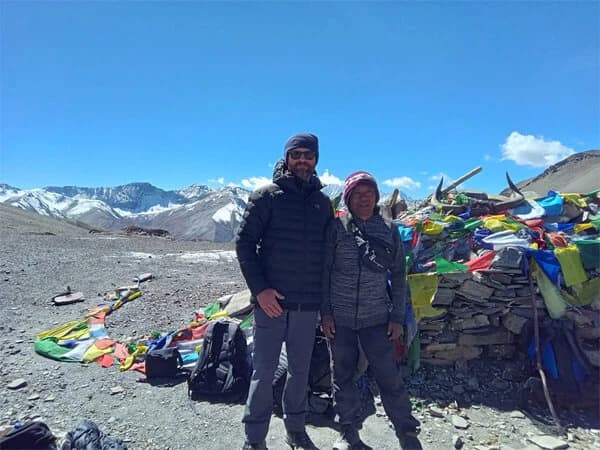
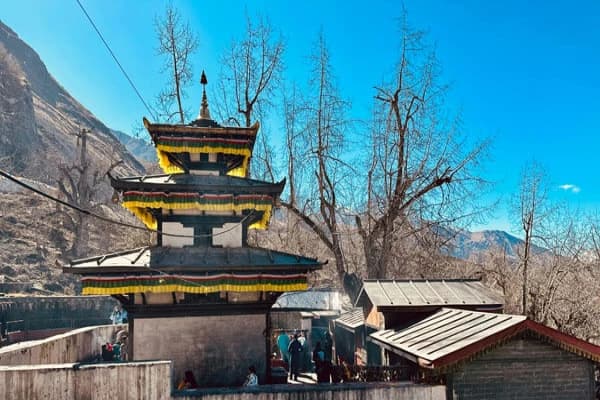
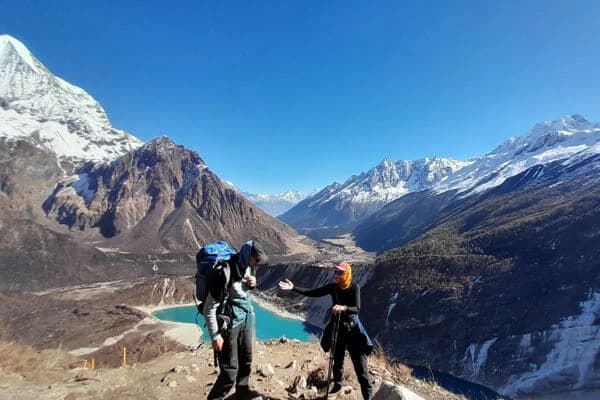
Most people think trekking in Nepal is only about mountains, viewpoints, and reaching some famous destination. That is true to a point, but it misses a huge part of what makes the country interesting. Some of the most memorable moments happen when you arrive in a village and you can witnesses a festival. The trail is full of people in traditional clothing, monasteries are crowded, music fills the air, and the entire atmosphere feels different. You are not just passing through a place anymore. You are seeing how people actually live.
The Top Himalayan festivals in Nepal are not tourist shows created for visitors. Most of them existed long before trekking became popular. Festivals like Mani Rimdu in the Everest region, Tiji in Upper Mustang, and Yartung in Mustang and Manang are deeply connected to local religion, history, and community life. Villagers may spend weeks preparing for these celebrations. Monks perform rituals, families gather from distant settlements, and entire communities come together in a way that you rarely see during ordinary days on the trail.
If you have flexibility in your travel dates, planning a trek around a festival is worth considering. It might mean dealing with busier teahouses or adjusting your itinerary, but the experience can be far more rewarding. Many trekkers finish a trip talking about the mountains. The ones who happen to witness a local festival often remember the people, the celebrations, and the culture just as much as the scenery.
Why Should you Combine Trekking with Himalayan Festival?
The biggest reason to combine trekking with festivals is simple. It gives you context. Trekking shows you landscapes, but festivals show you life. You start to understand why monasteries matter, why people dress a certain way, why rituals are still followed in places that are so remote. Without that, you are just passing through scenery. With it, the whole region feels more alive and human.
It also changes the way you experience the trek itself. Instead of just moving from one tea house to another, you end up walking into moments that were not planned for you. A horse race in Mustang, masked dances in the Everest region, or monks performing rituals in a quiet courtyard. These are not staged experiences and you happen to be there at the right time.
If your trekking dates align, you get something extra without any extra efforts. And often, those unexpected cultural experience while trekking in Nepal stay in your memory longer than any viewpoint or summit.
Cultural Symbols You'll Notice on the Trail
And before you even reach the actual festival grounds, you already start noticing small cultural elements that set the tone of everything happening around you.
- Mani walls and carved stones: These are long stone walls carved with Buddhist mantras. You see them along trails and village edges. They are not just decoration. Locals walk around them, not over them, as a form of respect, especially during festival days.
- Prayer flags everywhere in the landscape: Strings of colorful flags are tied across roofs, cliffs, and paths. In Mustang, they are already part of the environment, but during festivals they feel more active. New flags are added and the wind carrying them feels like part of the ceremony itself.
- Khata (white ceremonial scarves): These are simple white scarves offered during greetings, blessings, or visits to monasteries. During festivals, you see them exchanged more often, especially between villagers, monks, and guests. It is a small gesture but carries respect and goodwill.
- Butter lamps inside monasteries: You will notice rows of small lamps burning with yak butter inside monastery spaces. They are not for decoration. They are offerings. During festivals, the number of lamps increases and the atmosphere inside monasteries becomes warmer and more focused.
- Burning juniper incense (sang): Locals burn juniper branches to produce thick aromatic smoke, especially near monasteries and homes. It is believed to purify the space. During festivals, this smoke spreads through village courtyards and becomes part of the overall atmosphere.
In Mustang, Festivals Feel More Social and Open
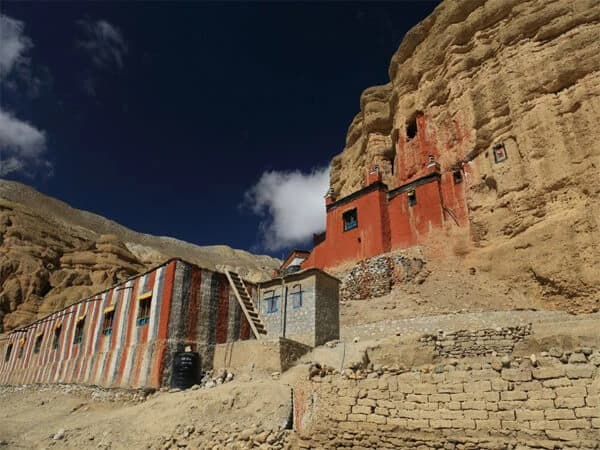
Once you move towards Mustang region, especially places like Lo Manthang and the surrounding villages, the energy changes completely. The landscape is still harsh and dramatic, but the way people gather during festivals feels more open, expressive, and community driven. Life here is shaped by distance and isolation, so when something like a festival happens, it becomes a shared release for the whole village.
Events like Tiji and Yartung are not only about religion or ritual. They are also about people coming together after long periods of work and quiet rural life. You will notice more noise in the courtyards, more movement between villages, and more interaction between people who normally live fairly spread out. Festivals here don’t stay inside monastery walls. They spill into open squares, rooftops, and village paths.
All of these things is a part of theCultural Insights of Upper Mustang Trek, where you don’t just see traditions explained, you actually see them happening in real time through daily life and festival gatherings.
Tiji Festival
The Tiji Festival is a Tibetan Buddhist festival celebrated in Upper Mustang, and it’s all about the victory of good over evil. The word Tiji comes from “Tenchi,” and the festival is believed to have started more than 300 years ago. It is rooted in the story of Dorje Jono, a deity who defeated a demon that caused suffering, drought, and hardship in the region. The festival usually takes place from 14th to 16th May and runs for three days.
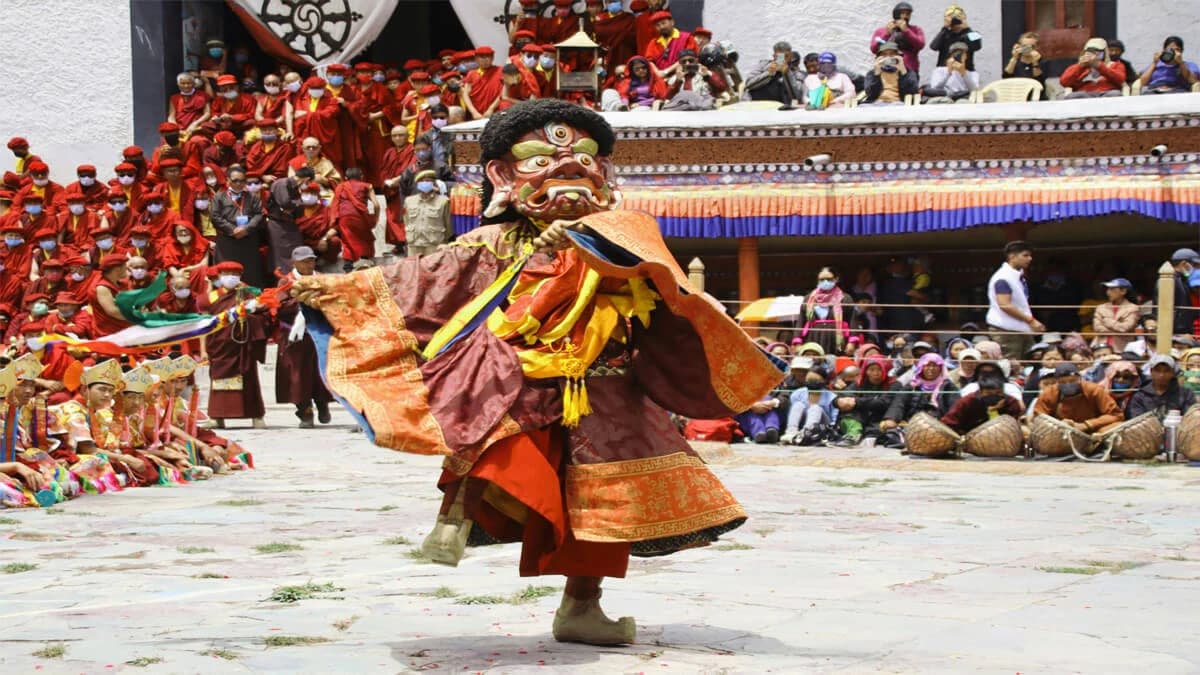
On the first day, the main attraction is the masked dance called Tsa Cham. This performance tells the story of Dorje Jono and his victory over evil forces. Monks wear detailed masks and costumes, and the whole thing feels like a living storytelling ritual rather than just a performance.
The second day continues with Nga Cham, where monks perform deeper ritual dances connected to Dorje Jono’s attempt to send the demon back to the Buddha realm. This day also includes appearances by female performers dressed in traditional clothing and heavy jewelry, gathering in the main square, adding a strong cultural layer to the celebration.
The final day features Rha Cham, a more intense and energetic masked dance. This performance symbolizes the final defeat and removal of evil. By the end of it, the festival atmosphere shifts to celebration which marks the completion of the spiritual story and the return of peace to the community.
Yartung Festival
If you happen to be trekking in Mustang or Manang during August or September, there is a good chance you might come across the Yartung Festival. The name Yartung basically means the end of summer, and that is exactly what the festival marks. It is celebrated in places like Lo Manthang, Muktinath, and several villages across Mustang and Manang. Unlike many Himalayan festivals that are centered around monastery rituals, Yartung feels more like a community celebration where people come together to have fun after months of work.
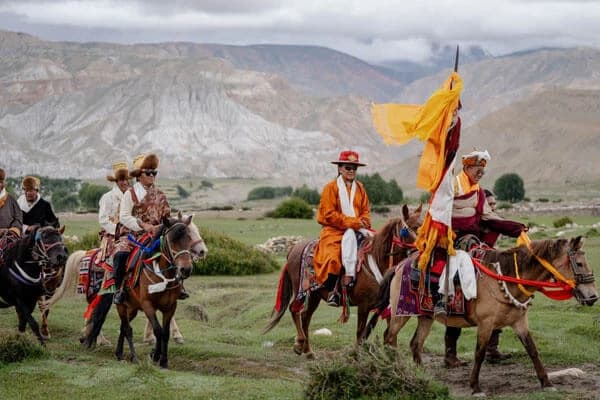
The biggest attraction of this festival is the horse racing. In these mountain regions, horses have always been important for transportation and daily life, so, horse racing is the main point of celebration. Riders from different villages compete while locals gather around the race grounds cheering for their favorites.
People also dress up in traditional clothing that you do not usually see on an ordinary trekking day. People wear colorful outfits, traditional jewelry, and garments that are often saved for special occasions. There is music, dancing, singing, and a lot of of socializing. One thing you will notice is "Chang", a traditional barley beer that is commonly shared during festivals. Families gather together, and meals are shared throughout the celebration. The festival lasts for three days, and by the end of it, is about bringing the community together before summer ends and starts preparing for the colder months ahead. For trekkers, Yartung shows a side of Mustang and Manang that most guidebooks cannot fully explain. You get to see how people celebrate, connect, and keep old traditions alive in some of Nepal's most remote mountain regions.
In the Everest Region, Festivals Feel More Religious
If you are trekking in the Everest region, festivals here feel quieter and more spiritual compared to other parts of the Himalayas. Places like Tengboche, Namche, Khumjung, and nearby villages are deeply influenced by Tibetan Buddhism, so most celebrations are tied to monasteries and religious practice rather than public entertainment.
Festivals like Mani Rimdu, Dumji, and Gyalpo Lhosar are not really events you “go to” in a planned way. They are more like moments where traditional himalayan village life and monastery life overlap. You will see monks taking the lead, rituals happening inside courtyards, and locals participating in a very natural, respectful way. Even when there are dances and music, the atmosphere still feels serious and grounded.
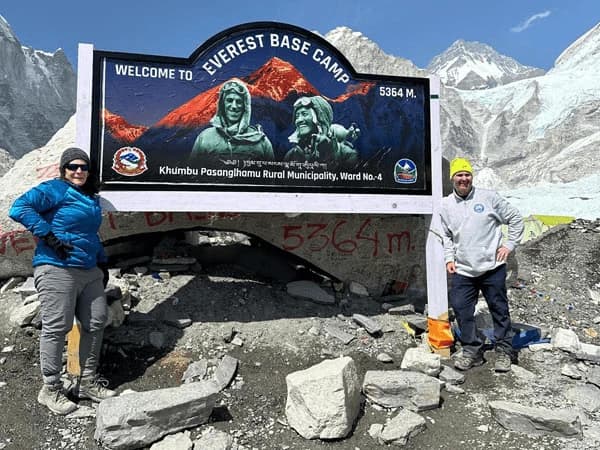
It is the kind of place where you don’t feel like a visitor watching a show. You feel like you just happened to arrive at something that has been happening for generations and that's also where you notice cultural highlights of ebc trek becomemore visible.
Mani Rimdu Festival in Tengboche Monastery
Mani Rimdu in the Everest region is not really a festival in the way most people imagine it. It is a long Buddhist ritual that takes place at Tengboche Monastery over 19 days, starting around October 8 and ending on October 26. Most of it is not open to visitors at all. Monks stay inside the monastery doing prayers, rituals, and preparation work. Nothing interesting happens in the beginning. It is quiet, serious, and very internal. The public only gets to see the last three days.
The whole thing is tied to Tibetan Buddhism and the story of Guru Rinpoche, but for Sherpa people it is less about stories and more about identity. This is something that has been passed down for generations in the Khumbu region. It holds the community together in a place where life is already harsh and isolated. So when people show up thinking it is a “show,” they usually misunderstand it. It is not made for tourists. Tourists are just allowed to witness a small part of it.
On the final days, the monastery courtyard opens and you see the masked dances, blessings, and fire rituals. Monks wear heavy masks and perform symbolic dances that represent the fight between good and bad, but it is still very much a religious practice, not entertainment. Locals come in traditional dress, sit quietly, and take part in prayers and offerings. If you are trekking in the Everest region at that time, Mani Rimdu does not feel like an event you attend. It feels more like something you accidentally step into, and then quietly observe without really interrupting it.
Gyalpo Lhosar
Gyalpo Lhosar in the Everest Region is basically the Tibetan New year celebration which usually falls somewhere in February or March. The celebration can last for nearly two weeks, but most of the main important part is the last three days. It is celebrated by Sherpa and Tibetan influenced communities across the Khumbu region which includes villages around Namche Bazaar and nearby settlements. Food is a part of the celebration and you will see dishes that only witness during special occasions.
You will see things like Guthuk, which is a kind of noodle soup, Khapse which are deep fried festive pastries, and Changkol, a traditional drink made during celebrations. People share food freely with neighbors and guests, so you do not really eat alone during this time. On the second day especially, villages feel alive with music and traditional Syabru dance. The sound of the "Tungna", a local string instrument, plays in the background and sets the mood.
Dumji Festival
This festival is held to honor Guru Rinpoche, also known as Padmasambhava, who is believed to have brought Buddhism to the Himalayan region. But for Sherpa communities, the reason goes deeper than religion alone. Dumji is also a way of maintaining balance in village life. People believe the rituals help protect the community from misfortune, illness, and negative forces. That is why families don’t just attend, they actually contribute, sponsor parts of the rituals, and take responsibility for making sure everything is done properly.
Dumji is a Sherpa Buddhist festival celebrated mainly in villages like Namche, Khumjung, and Khunde in the Everest region. It does not have one fixed date like a national holiday. Instead, it follows the Tibetan lunar calendar and is organized locally by each village monastery. This is why Dumji in one village can happen on slightly different days than another. The whole thing usually takes place between late spring and early summer when village life is active and people are not dealing with heavy winter conditions.
The celebration happens mainly inside the monastery courtyard, but it is not limited to monks alone. Monks perform long prayer sessions and masked dances that represent spiritual stories and protection rituals. At the same time, local Sherpa men and women join in with traditional dances, music, and gatherings that go on in open village spaces.
In Dolpo, Festival Becomes More Pilgrimage Like
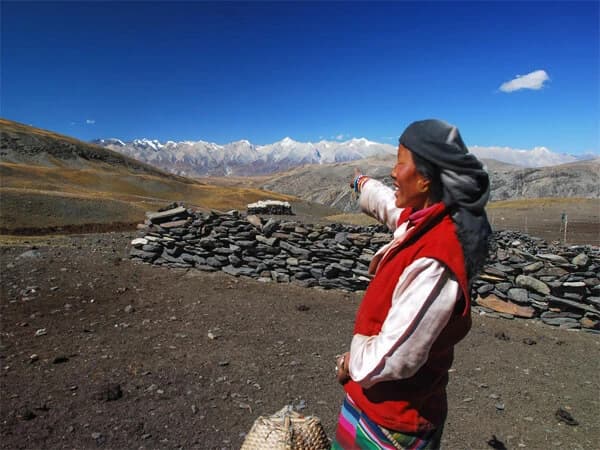
Dolpo is remote, difficult to reach, and still deeply connected to ancient traditions that haven’t changed much over time. Because of that, festivals here feel less like celebrations and more like pilgrimages.
In places like Shey Gompa, everything revolves around devotion and spiritual purpose. There is no sense of performance or public display. People travel long distances just to be part of prayers, rituals, and blessings. Even the setting itself adds to the feeling, with isolation, silence, and a strong sense of sacred space. Much of the Tibetan Culture of Dolpo feels deeply personal and inward. You are not watching a festival here. You are witnessing belief in its purest form.
Shey Festival
The Shey Festival is celebrated in the remote Upper Dolpo region of Nepal, mainly around Shey Gompa. This is one of the most isolated parts of the Himalayas, so the festival does not follow a fixed yearly public schedule like more accessible regions. It is organized based on Buddhist tradition and local monastery timing.
The festival is connected to the belief that Shey Gompa is a sacred place blessed by Guru Rinpoche. Because of this, it is seen as a spiritual site where people come to gain blessings and take part in religious rituals. It is not a cultural show or tourist event. The main focus is religious practice inside and around the monastery, where monks and pilgrims gather for prayers and rituals. People travel specifically to reach the site, and participation itself is considered the purpose of the festival.
During the festival, the activities are simple but meaningful. Monks perform chanting, prayers, and basic rituals inside the monastery, while pilgrims take part by making offerings and joining the ceremonies. There are no large performances or entertainment elements. Everything is focused on devotion, spiritual cleansing, and respect for the sacred nature of the place.
How to Plan a Trek Around a Himalayan Festival?
Planning a trek around a festival in the Himalayas sounds simple, but in reality it takes a bit of luck and a bit of flexibility. These festivals don’t follow tourist calendars. They follow lunar cycles, monastery schedules, and local decisions. So the first thing you need is not a fixed itinerary, but an flexible one. If your dates are too tight, you will most likely miss it even if you are in the right region.
The second thing is timing your trek with the right season. Most Himalayan festivals happen either in spring or autumn. Spring works well for the Everest region, especially for festivals like Dumji and Gyalpo Lhosar. Autumn is even better because the weather is clearer and major festivals like Mani Rimdu in the Everest region and Yartung in Mustang and Manang usually happen around this time. If you are serious about catching a festival, autumn gives you better chances overall.
You also need to plan your route around where the festival actually happens. This sounds obvious, but a lot of trekkers get it wrong. For example, Mani Rimdu is only meaningful if you are near Tengboche Monastery during the public days. Yartung is only worth it if you are passing through Mustang or Manang villages at the right time. Being in the wrong valley by a day or two means you will miss everything.
One more thing people don’t think about is flexibility on the trail. Festivals can shift slightly depending on the lunar calendar and local decisions. So you cannot plan it like a flight schedule. You need buffer days in your itinerary. That way, if things move by a day or two, you still have a chance to be there.
What You Should Keep in Mind When Step Into a Himalayan Festival?
If you happen to come across one of these festivals during your trek, the first thing to understand is that you are watching something that belongs to the local community. These festivals were not created for visitors. Most of them existed long before trekking became popular. Because of that, it is worth taking a little time to understand what is happening instead of treating it like a performance.
Photography is usually fine in many places, but that does not mean every moment should be photographed. Some rituals are deeply religious, and constantly putting a camera in someone's face can feel disrespectful. Sometimes it is better to put the camera away and simply watch. You will probably remember the experience more clearly anyway.
It is also a good idea to be flexible with your expectations. Festivals in the Himalayas do not always run on a strict timetable. Things may start later than expected, ceremonies may take longer, and plans can change. That is normal. If you go in expecting everything to work like a scheduled event, you will probably end up frustrated. If you just go with it, you will enjoy it much more.
Most importantly, remember that the festival is not there for you. You are just lucky enough to witness it. The more respectful and curious you are, the more meaningful the experience becomes. Often the best part is not the dance, the ritual, or the celebration itself. It is seeing how a community comes together and keeps traditions alive in places where they have been practiced for generations.
Conclusion: Top Himalayan Festivals to Experience While Trekking in Nepal
A trek in Nepal is not only about reaching a viewpoint or crossing a mountain pass. The mountains are incredible, but the people and traditions are what give these places their character. When a festival happens during your trek, you get to see a side of the Himalayas that most travelers miss.
From the lively celebrations of Mustang to the monastery rituals of the Everest region and the spiritual gatherings of Dolpo, every festival trekking in Nepal provide something different. If your travel dates happen to match one of these events, take the opportunity to slow down and experience it. Years later, you may not remember every trail or teahouse, but you will probably remember the people, the celebrations, and the feeling of being part of something that has existed in these mountains for generations.