A lake that large should not feel this empty.
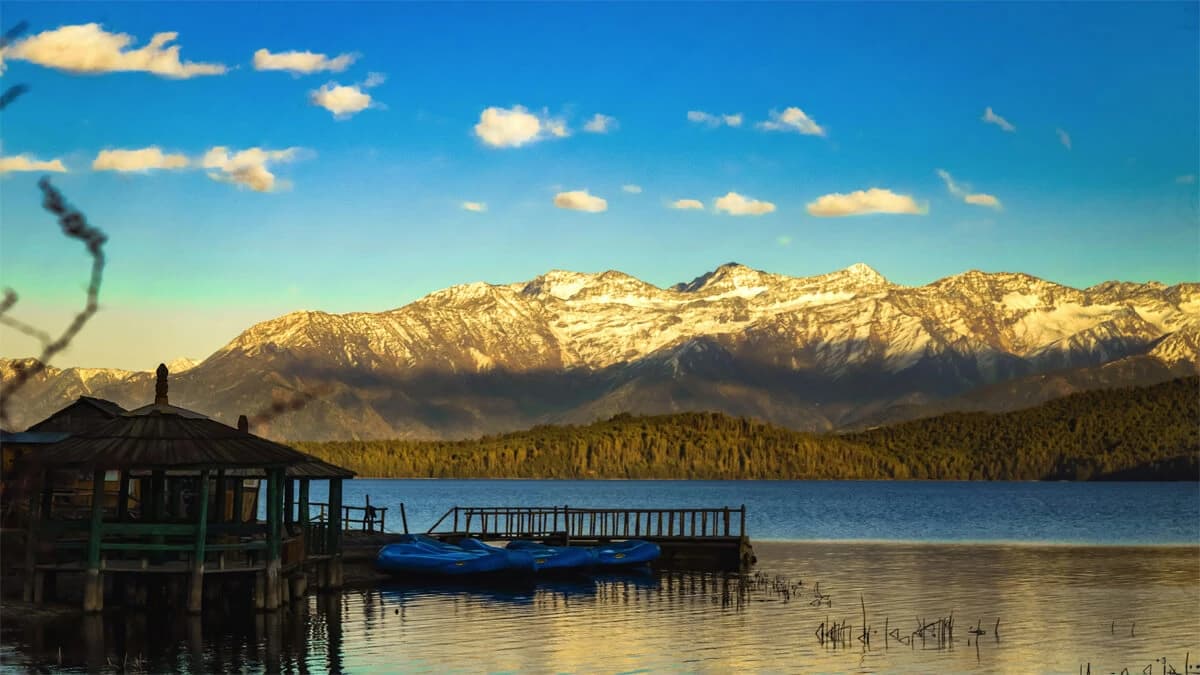
That is usually the first thing people notice when they finally reach Rara Lake. The water is wide and still, surrounded by forest and hills, with the Himalayas sitting in the background, silently judging every move of yours. Nothing about the view feels lacking. If anything, it feels unreal in how undisturbed it is.
But getting there does not match what the photos suggest.
Most people searching how to reach Rara Lake Nepal quickly realize the same thing. Flights into the Karnali region depend on weather more than schedule. Some days they run, some days they do not. Roads from the south are long and uneven in places, and the drive does not feel like a single journey. It breaks into waiting, driving, and then waiting again.
When people talk about Rara Lake travel Nepal, it comes down to two parts. The lake itself, which is wide and clear. And the journey, which takes time and feels long because of road conditions and limited transport.
This blog is about both. How to reach Rara Lake Nepal, what the trip is like, and why Rara Lake tourism is still less developed compared to places like Pokhara or the Everest region.
Where is Rara Lake and Why is it so remote?
Rara Lake is in Mugu, far to the northwest of Nepal. Not the kind of place you pass on the way to somewhere else. You have to decide to go there.
There is no direct connection that takes you all the way. The route breaks into parts. Travel usually goes toward Nepalgunj first, then deeper into the Karnali region, and then closer to the lake depending on what transport is available at that time.
Flights do not follow a fixed routine, and road travel takes time. Even when things are running normally, the journey does not feel simple because each step depends on the next one working out.
By the time you reach the area, you understand why fewer people come this way. It takes effort to get there, and the trip itself becomes a big part of the experience.
How to Reach Rara Lake?
Rara Lake is not connected by any direct route from Nepal’s main cities. You do not reach it in one simple trip. The journey comes in parts.
Most people travel from Kathmandu to Nepalgunj first. From there, everything depends on timing and weather. The flight to Talcha Airport operates when conditions are clear, and it is often delayed or cancelled.
From Talcha, the lake is still some distance away. People continue either on foot or by jeep where it is available, moving toward the lake area inside Rara National Park.
Another option is the Rara Lake trek from Jumla. The Jumla to Rara Trek takes a few days on foot and passes through remote trails before reaching the lake. It is a common way people experience a full Rara Lake trekking journey.
There is no single direct route to Rara. The trip moves in stages, and each stage depends on transport, weather, and what is actually running at the time.
What Rara Lake looks like when you arrive
Rara Lake shows up without any clear break between travel and arrival. The route just ends and the water is there.
The first thing you notice is the size. It is wider than expected, and the water stays still most of the time. The colour keeps shifting with light, sometimes darker, sometimes lighter, even within a short time.
Inside Rara National Park, trees come close in some areas and then open out again, leaving long open edges around the water.
There is not much sound. Wind and water mostly. People are there, but it does not feel crowded or active.
Reasons Why Fewer People Go To Rara Lake
Rara Lake gets very few visitors compared to other places in Nepal, and it is not because it lacks interest. It is because the place sits far from the usual travel flow in the country and does not connect easily with popular routes.
Searches like remote places in Nepal, offbeat destinations in Nepal, and Rara Lake tourism all point to the same pattern. Most tourists stay within areas that are easier to combine in one trip, like Pokhara, Annapurna, or Everest routes. Rara does not fit into that kind of loop.
Inside Rara Lake and the surrounding area in Rara National Park, there is not much built around tourism. You find small local stays and basic food options, nothing more than what is needed for people passing through.
The trip takes time as well. It is not something most people plan for a short visit, so it often gets left out in favour of places that are easier to fit into a normal itinerary.
That is mostly why the number of visitors stays low. Distance, time, and the lack of a proper travel setup all play a part.
Why Rara Lake Is Worth Visiting
Rara Lake is the largest lake in Nepal. That alone is part of the reason people go, but the real thing is how it feels when you are actually there.
Inside Rara National Park, it is not built up like other popular trekking destinations in Nepal. You are mostly just around the lake, with enough space that nothing really competes for attention.
It is also different from places like Pokhara or the Everest region. Those places have more movement around them, more things happening all the time. Here, it is the opposite.
After reaching, people just stay around the lake for a while. Walking, sitting, looking at it, then doing the same thing again.
That is usually enough reason for people to come all the way here.
Things To Do In Rara Lake
Rara Lake does not have a long list of activities, and most people end up keeping things very local to the lake area inside Rara National Park.
One of the common things people do is a short hike near Rara Lake to Murma Top. It is the main viewpoint above the lake, and the walk from the nearby area is not very long. From the top, the lake looks completely different because you see its full shape at once.
Walking along parts of the lake edge is another thing people spend time on.
Boating is sometimes available on the lake depending on local arrangements, but it is not something that is always running.
Fishing is also seen in limited form in nearby areas, mostly done locally, and visitors come across it while staying around the lake.
Most of the time still goes into just sitting near the water or walking without any fixed plan. People take photos wherever they stop because the view keeps changing slightly with light and angle.
That is how time goes there, a few small things mixed with a lot of time just staying around the lake.
Best Season For Rara Lake Tour
Rara Lake looks the same in photos, but it doesn’t feel the same every time you see it. The season changes what stands out and what gets lost in the view.
Rara lake in Spring season (March to May)
If Rara Lake is visited in spring, the first thing that stands out is how the hills slowly start turning green again. It does not happen in one go. One side looks alive, another side still holds onto the dry look from winter.
The lake itself does not change much, it just stays there. Most of the time is spent standing or sitting nearby without any reason to move. The surroundings feel less empty compared to colder months, and everything looks like it is settling into a better shape again.
Rara Lake in autumn season (September to November)
If the visit happens around autumn, the view feels more complete. The sky opens up more often and the lake is not hiding behind weather for long periods.
From Murma Top, the full shape of the lake comes into view at once. No gaps, no half-covered sections. Everything sits in place clearly, and nothing really gets in the way of it.
Rara Lake trek in monsoon season (June to August)
Monsoon makes things less consistent. At one moment the lake is visible, then clouds move in and cover parts of it without warning.
The entire region turns green. The hills and valleys keep changing how they look depending on rain and mist. Visibility keeps shifting, so the view does not stay fixed for long.
Plans do not stay fixed in this season either. Things change as the weather changes and we personally recommend you not to travel during monsoon due to heavy rain.
Rara Lake in winter season (December to February)
Winter brings a quieter version of Rara Lake. Fewer people are around, and the whole place feels more still.
Cold stays throughout the day. Snow appears in patches and changes how the edges of the lake look compared to other times of the year.
How many days does it take to reach Rara Lake from Kathmandu
Kathmandu to Rara Lake takes a few days. It is not a direct trip.
First is a flight from Kathmandu to Nepalgunj. From Nepalgunj, there are two ways people move further. One is a flight to Talcha Airport when weather allows it. The other is a long road journey from Nepalgunj toward Mugu by jeep or local vehicle, which takes several days and depends on road and weather conditions. After reaching closer to Rara, there is still a walk to the lake inside Rara National Park.
From Kathmandu, the full trip and return takes around 5 to 7 days. It can take more if flights are delayed or if the road journey takes longer than expected, which is common in this region.
If the trip starts from places closer to Rara like Jumla, the number of days becomes less because the journey is done more on foot through trekking routes instead of going through long flight and road connections.
Most people spend around 1 to 2 days at the lake itself. The rest of the time goes into travel, waiting, and moving between places.
Cost of Rara Lake Tour from Kathmandu
Kathmandu to Nepalgunj is around NPR 9,000 to 14,000 one way, roughly 70 to 110 USD. Nepalgunj to Talcha is similar, sometimes a bit more, around NPR 10,000 to 18,000, about 80 to 135 USD.
Jeep option from Nepalgunj side exists too but there’s no fixed rate for that. It depends on how it is arranged, how far it goes, and how many people are sharing. Sometimes it feels cheaper, sometimes not much difference from flying, just much longer on the road.
Near Rara National Park, rooms are not that well facilitated like the ones you get in popular trekking destinations in Nepal. NPR 1,000 to 3,000 a night, roughly 8 to 25 USD. Food is simple. Dal bhat mostly. Around NPR 300 to 800, about 2 to 6 USD.
Full trip from Kathmandu, flights plus stay plus food, ends up somewhere around NPR 35,000 to 70,000+, roughly 250 to 550 USD. It goes up if flights get delayed or things don’t line up.
Rara lake Trek Itinerary from Jumla
If the idea is to see Rara Lake in a more remote way, the trek from Jumla is what people go for. This is where the journey feels longer and more connected to the land instead of just getting dropped near the lake.
A Rara Lake trek itinerary from Jumla takes around 4 to 6 days to reach the lake. That timing is for the walking part one way. Some days go faster, some days slower, and it depends on how the route feels and how long the stops are.
There are parts where you pass places where people live. Then there are long quiet parts where it is just the trail and whatever is around it. That switch keeps happening until the lake comes into view.
If that feels like too much time on foot, people take the flight to Talcha instead. That is the easier Rara Lake access route from Nepalgunj and it cuts out most of the walking days.
Same lake at the end either way. The difference is just how the Rara Lake trek itinerary plays out and how you get there.
Permits for Rara Lake
To be honest, there is not much drama with permits for Rara.
The main one is the entry permit for Rara National Park. That is the only thing that actually matters once you enter the Rara National Park area near the lake.
TIMS gets mentioned a lot online, but for this route it is not always checked on most trips now. It is more part of the general trekking system in Nepal rather than something specific you keep getting checked for on the way to Rara.
The park permit is handled through us, Nepal Trekking Routes, so you don't have to worry about anything before the trip starts. It can also be sorted in Kathmandu or Nepalgunj depending on how the plan is set.
What To Pack for Rara Lake and Remote Himalayan Trekking in Western Nepal
Packing for Rara changes a bit depending on how the trip is done, but the main idea stays the same. It is a remote Himalayan lake trek in western Nepal, so access to shops and facilities is limited once the journey moves closer to the lake.
If you are trekking from Jumla or other trekking routes:
- Shoes should be proper trekking ones. The trail involves long hours on uneven ground and normal shoes start feeling off quickly.
- Warm clothing is needed even if the lower parts of the journey feel fine. The temperature drops once you gain height and mornings feel colder than expected.
- A rain jacket helps because weather changes while you are already on the trail, and there is no quick shelter everywhere.
- A backpack that sits comfortably makes a big difference since it stays on your back for long periods.
- Cash is required because card payments do not work in most remote sections of western Nepal.
- A power bank helps since charging depends on where you stop, not on any fixed availability.
- Basic medicine is something people end up using or sharing on the way. Headache tablets, stomach relief, and bandages are enough.
- Some snacks like biscuits or energy bars help during long walking hours when food stops are not close.
If you are going by flight to Talcha:
- Warm clothing is still needed since Rara stays colder than the cities people come from.
- A jacket is enough for most of the time near the lake.
- Comfortable walking shoes are fine because there is no long trekking section from Talcha.
- Cash is still needed for food and stay around the lake area.
- A power bank is useful since charging is not always available when needed.
- A small bag is enough because there is no multi day carrying involved.
Where to stay near Rara Lake (Rara Lake accommodation guide)
Around Rara National Park, places to stay are scattered near the lake area and a few nearby trail points. There are few lodges and homestays where you can spend your night.
Inside the rooms, there is just what is needed to get through the night. A bed, blankets, and space to rest after walking.
There are not many options in the area, so most people take what is available when they arrive or book through their trip plan. In busy months, it fills up faster than expected because the number of stays around the lake is small.
Food is the same story everywhere. Mostly local meals, and dal bhat shows up again and again.
Most people just stay close to the lake so they can walk out and be there without thinking about anything else. That’s how the accommodation is in this remote region of Nepal.
Travel Tips for Rara Lake
Traveling to Rara Lake takes time and effort, and everything there is basic. You will need cash, patience, and simple expectations because the area inside Rara National Park is remote and has limited facilities. Here are some travel tips:
- Getting to Rara Lake takes real effort. You go from Kathmandu to Nepalgunj, then catch another flight to Talcha, and even after that you still have to walk for a few hours before you actually reach the lake. Nothing about the trip feels quick or direct.
- Flights to Talcha are not something you can fully rely on. When the weather changes, flights get delayed or cancelled without much notice, so it is better not to plan your whole trip around exact timings.
- From Talcha Airport, the walk to the lake is unavoidable. It is not a technical trek, but it does feel tiring if you are carrying a backpack, especially because of the uphill and uneven paths.
- You need a permit for Rara National Park and you get it at the entry point. It is simple to get, just make sure you have your ID and enough cash with you.
- The places you stay near the lake are very basic. The rooms and beds are okay, and nights can get quite cold, so do not expect comfort or heating like in cities.
- Food options are limited to whatever is available locally, mostly dal bhat, noodles, eggs, and tea. After a while, you just eat whatever is there because there is not much choice.
- There are no ATMs anywhere close to Rara. If you run out of cash, there is no way to withdraw more, so carrying enough money from Kathmandu or Nepalgunj is important.
- Mobile networks are weak or missing in many areas around the lake. The internet is not trustworthy as well.
- Winter becomes very cold and snow can make movement harder, while monsoon season brings rain that makes trails slippery and travel less predictable.
- There is no proper hospital nearby, so it is better to carry basic medicines for common issues like headache, fever, or motion sickness.
- Everything takes longer than expected in this region. Even short distances feel slow because of the landscape and the way transport works there.
Ending Note
Rara Lake in Rara National Park is far and takes real effort to reach. Travel plans mostly change on the way and the route is not always smooth. When you finally reach there, the lake feels wider and more open than expected, and it takes a moment to witness the beauty of Rara. We hope this gives a clear idea why Rara stays away from most popular treks and tours in Nepal and why you should visit it.