Nepal is one of the cheapest trekking destinations in the world, but most people still walk into it with the wrong expectations. Online blogs often make it sound like you can move through the Himalayas for almost nothing, sleeping anywhere, eating cheap meals, and spending very little from start to finish. That is not accurate once you are actually on the trail in places like the Annapurna region or Langtang Valley.
In this blog we will be talking about what the actual cheapest treks in Nepal are, how much you really spend on different routes, and what budget trekking in Nepal looks like in 2026 without the usual exaggerated claims. It also breaks down real costs, how prices change once you are on the trail, and what kind of trekking routes actually stay affordable from start to finish.
How Much Does Trekking in Nepal Cost in 2026/027
This question gets asked a lot when Nepal trekking becomes an idea in people’s mind, but let us tell you, there isn’t one fixed answer and nobody can actually give you the exact pricing of how much trekking in Nepal costs in 2026. You will basically be paying as you go, bit by bit, mostly for food, a place to sleep, and whatever small thing you end up needing that day.
In 2026, daily spending is around 20 to 55 USD for most trekkers. Some spend less by keeping meals simple and staying basic. Some spend more by ordering extra food, using hot showers often, or staying in better rooms where available. It just adds up day by day.
You stay in tea houses on most trekking routes. They are small family places. You get a bed and food, that is it. That setup is what keeps trekking in Nepal affordable in the first place.
Nepal Trekking Cost Breakdown 2026/027
Believe it or not but most of your money on atrek in Nepal goes into food. Every meal is eaten at the tea house you are staying in, and the menu stays more or less the same across most trekking routes. Dal bhat is what most people stick to because it is filling and often comes with refills. If you start picking other options like noodles, fried rice, eggs, or Western style meals, the price goes up without you really getting anything better out of it.
Tea houses also take a chunk of your whole trek budget. It is cheap compared to cities, but paying for it every night still adds up in your trekking in Nepal cost.
Daily extras also take more money than people expect. Hot showers, charging, wifi in some villages, snacks, and drinks are small costs on their own, but they repeat every day duringbudget trekking in Nepal, so the total increases by the end. We already broke this down in more detail in our blog on hidden costs of trekking in Nepal, since that is usually where most people get surprised.
Transport and permits are not daily costs. You pay once you get to the start of the trekking trail and once to the start of the return, and permit fees also change depending on the region like the Annapurna or Manaslu region.
By this time you might have understood how cheap treks in Nepal actually work. Simple choices keep the Nepal trekking cost low, extra comfort makes it higher.
Cheapest Treks in Nepal
If you are searching for budget friendly treks in Nepal that still show you the best natural side of the country, these are the routes that make the most sense. They do not demand complicated travel plans or long expensive itineraries, but they still give you real mountain views, beautiful trails, and a proper trekking experience without making the Nepal trekking price too high.
Langtang Valley Trek
Langtang Valley trek 10 days is one of the cheapest trekking routes in Nepal that still gives a full Himalayan trekking experience without flight costs or complicated logistics. It stays popular among people looking for budget treks in Nepal because the total expense stays lower compared to Annapurna or Everest regions.
One of the biggest advantages of Langtang is its location. The trek starts within driving distance of Kathmandu, which removes the need for domestic flights and keeps the overall trekking cost lower than many other Himalayan routes.
The walk mostly follows the Langtang river. Some parts are uphill, some are flatter, and it keeps changing like that. You pass through a few small places where you can stop for food or tea, then keep going.
After a few days you reach Kyanjin Gompa. Most people stay there for a night or two. It is the last main stop in the valley, so people either rest there or explore around before heading back.
There is a short hike above the village called Kyanjin Ri. People go there for the view and come back the same day. It is a hard walk up, but nothing technical.
The trek takes around 7 to 10 days depending on how fast you walk and how many stops you take on the way.
Cost stays lower compared to many othertrekking routes in Nepal because there are no flights involved and the permits are simple. Most of the money goes into food, rooms in tea houses, and the bus or jeep from Kathmandu to Syabrubesi.
Poon Hill Trek
Poon Hill trek 3 days is a name almost every person who has researched trekking in Nepal has heard at some point. It shows up everywhere for a reason. It is short, easy to reach, and gives you mountain views without needing a long trip.
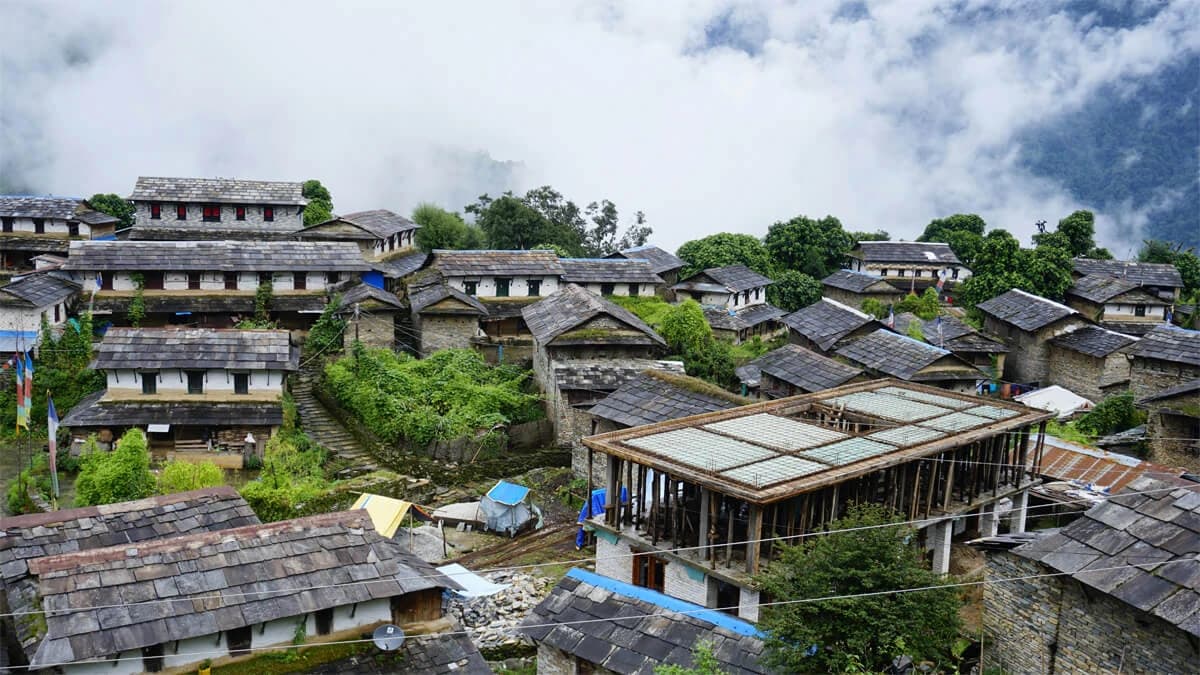
Most people reach the starting point after a short drive from Pokhara to Nayapul or nearby road heads. From there, the walk begins and it does not take long before the road is left behind and the trail turns into stone steps and village paths.
The steps are a big part of this trek. Some stretches feel endless on the way up, especially if you are not used to climbing for long periods. There is no way around it, you just keep going until the trail levels out again.
The main reason people come here is the sunrise from Poon Hill. You leave before dawn, walk in the dark with a headlamp, and reach the viewpoint before the sun rises. Waiting there in the cold is part of the experience, then the mountains slowly start appearing once the light hits them.
The trek takes around 4 to 5 days in most cases. Because it is short, the total cost stays lower compared to longer hiking routes in Nepal. No flights are involved and everything connects through Pokhara, which keeps planning simple.
Tea houses are available along the route for food and rooms. Prices are a bit higher than quieter trails because this route gets a lot of visitors, but it does not add up too much since the trek is short.
Ghorepani Poon Hill trek is mostly the first trek people do in Nepal. It is easy to organize, does not take much time, and still gives proper mountain views without going deep into the Himalayas.
Mardi Himal Trek
Mardi Himal Base Camp Trek is a route people often pick when the main Annapurna trekking trails feel too busy but they still want proper mountain views without going into a remote expedition setup.
From Pokhara, the road goes up into the hills and the walk starts not long after that. There is no long buildup, it just begins.
The first part of the journey includes forests and hill paths with a few small tea stops here and there.
After a while, things space out. Fewer places to stop, longer walking between breaks. You start spending more time just on the trail itself.
Machhapuchhre stays in front almost the whole time when you reach the higher parts of the trail. The view becomes sharper and closer, and there is not much blocking it anymore.
Most people take around 5 to 7 days for this trek depending on how far they go and how often they stop along the way.
Khopra Danda Trek
Khopra Danda trekking in Nepal is one of those underrated treks in Nepal that doesn’t get as much attention as other popular treks in the Annapurna region. It is still a proper mountain trek, just with fewer people on the trail.
From Pokhara, it takes a road journey into the hills and then the walking starts from village areas above the valley. The trail includes passing through villages and climbs up toward the ridge at Khopra.
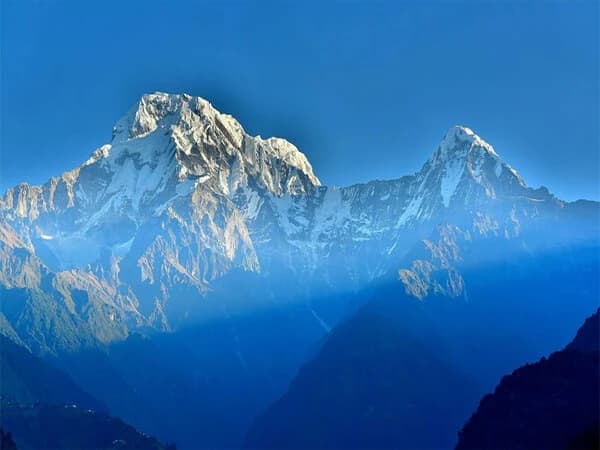
From the top, you see Annapurna and Dhaulagiri. On clear days, the mountains stay in view for most of the time you are there.
Some people also go to Khayer Lake which takes more days and the whole trek cost gets higher as well.
The trek almost takes you around 5 to 8 days depending on the route.
Helambu Trek
Helambu Circuit Trekking in Langtang region is probably one of the least talked about budget treks in Nepal, which is surprising considering how close it is to Kathmandu.
One thing worth mentioning is that Helambu is not really a single trek. Helambu is a region, and there are several trekking routes that pass through it. The exact itinerary depends on where you start, where you finish, and how many days you want to spend on the trail.
For people trying to keep costs down, that flexibility is actually one of its biggest advantages. You can put together a shorter itinerary if you are on a tight budget or extend it if you have more time available.
Most routes begin after a short drive from Kathmandu, which immediately removes one of the larger expenses found on many trekking trips in Nepal. There are no domestic flights involved and reaching the trailhead is relatively uncomplicated compared to places like Everest or even some parts of Annapurna.
The hiking route moves through a chain of villages rather than focusing on a single destination. Places like Chisapani, Kutumsang, Thadepati, Tarkeghyang, and Sermathang are common stops depending on the itinerary. Most trekkers spend their nights in tea houses along the way before continuing to the next village the following day.
The trek mostly takes around 4 to 7 days. Because it is shorter than many of Nepal's well known trekking routes, the overall cost stays lower. Fewer days on the trail means fewer meals, fewer nights in tea houses, and less money spent on daily expenses.
Helambu is not the trek people choose for extreme high altitude mountain scenery. People usually choose it because it is accessible, affordable, and easy to fit into a shorter trip. If your main goal is finding one of the cheapest multi day treks in Nepal, Helambu deserves far more attention than it gets.
How Much These Treks Actually Cost in Nepal
There is no fixed price for trekking in Nepal, even though a lot of articles try to present it that way. Two people can do the same route and end up with completely different totals just based on how they eat, where they sleep, and how long they stay on the trail.
Helambu is one of the cheaper options because it is close to Kathmandu and does not take many days to complete. Poon Hill also lies in a similar category since it is short, easy to reach, and does not involve long travel or extended time on the trail.
Langtang comes out a bit higher in total cost because the trek takes more days. Once you add extra nights and meals, the budget increases in a very direct way.
Mardi Himal and Khopra Danda depend a lot on how the trip is planned. A shorter itinerary with basic tea houses keeps the journey affordable, while adding side trips like Khayer Lake or extending the route increases the total just by adding more days on the trail.
Most of the spending across all these treks comes from the same basics. Food takes the biggest share, followed by tea house accommodation, and then small daily costs like charging devices or occasional hot showers. Nothing is actually hidden, it just builds up gradually over time.
Transport is another part that changes the final budget more than people expect. Local buses are cheap and widely used by trekkers, while private jeeps and arranged transfers cost more but save time and effort.
Permits are required for these treks, but they are not what decides whether a trek feels cheap or expensive. The main factor is still how many days you stay on the route.
There is no single cheapest trek in Nepal. Helambu and Poon Hill are usually on the lower end because they are short. Langtang sits in the middle due to duration. Mardi and Khopra vary depending on how long the itinerary is and whether extra sections are added.
Cheapest Trekking Routes in Nepal Ranked by Cost
If spending as little as possible is the main concern, Helambu and Poon Hill are the easiest choices. Helambu is cheaper mainly because it is close to Kathmandu and does not need many days. Poon Hill is similar, although some places along the route charge slightly more since it gets a lot of trekkers.
Langtang needs a higher total budget, mostly because of the number of days involved rather than anything being expensive on the trail.
Mardi Himal and Khopra Danda are better when you have more time and are fine with spontaneous plans as you go depending on how the trek feels once you are there.
That is really how the choice plays out in practice. It is more about how much time you actually want to spend walking.
Cost Comparison of Budget Friendly Treks in Nepal
These are realistic 2026 cost ranges for independent trekkers. However, the actual spending differs based on food choices, accommodation type, transport, and how many days are spent on the trail.
| Trek |
Duration |
Estimated Cost in USD |
| Helambu Trek |
4 to 7 days |
180 to 400 |
| Poon Hill Trek |
4 to 5 days |
250 to 600 |
| Langtang Valley Trek |
6 to 9 days |
400 to 800 |
| Mardi Himal Trek |
5 to 7 days |
300 to 650 |
| Khopra Danda Trek |
5 to 9 days |
300 to 700 |
How To Save Money On Treks in Nepal
Most people think saving money on a trek in Nepal needs some clever planning or insider tip. It really does not. Once you are out there, it becomes more about small everyday choices than anything else. We have seen people on the same route end up with very different totals for no big life changing reason, just different habits.
If you talk about food, dal bhat saves you a lot of money rather than trying a different dish which will not fill your stomach properly.
Tea house rooms do not change much in price across these popular trekking routes. The difference takes place in how the days are handled. More stops than planned means more nights paid for and that changes the plan mid route also adds extra days without it feeling like a big change at first.
The bus from Kathmandu or Pokhara is not exactly enjoyable, but it keeps the cost of the journey affordable. Jeeps are faster and easier, so people go for them, and that is usually the first place where money starts going out before the trek even properly begins.
Then there are the small things that do not feel like spending in the moment. Charging a phone, taking a hot shower, using wifi when it is available. None of it feels important on its own, but when it becomes a daily habit, you notice it later in the total.
Even simple snacks picked up along the way cost more than expected because everything has to be carried into the mountains and it becomes another addition to the total. So while you are traveling from the city area, make sure you carry enough snacks so that you will not be paying for the same goods at double the price while you are on your trek.
If these small things are kept in mind during the trek, it can actually save a noticeable amount of money without really changing anything about the experience. The route stays the same and nothing important gets missed, but the total at the end does not end up higher than it needs to be.
Who Is This Guide For?
This is mainly for people trying to figure out what Nepal trekking actually costs without getting lost in all the mixed information online. A lot of the time the numbers you see are either too optimistic or just not based on real experience on the trail.
It works best for first time trekkers, people comparing a few routes before deciding, or anyone trying to keep the trip within a certain budget. The idea is to get a clear sense of what different treks actually demand in terms of money and time once you are there.
Final Thoughts
There is no single budget trek that fits everyone the same way. What actually decides the cost is how the trip is done once it starts, because that is where most of the spending happens.
If the plan is kept realistic and the day to day choices are handled without overthinking small extras, it is possible to keep the whole trek within a reasonable budget without it turning into something close to the expensive treks in Nepal.


.webp&w=1200&q=75&dpl=dpl_4U3CaZUV3Y5iKdBNPJmVMATJy3AB)
.webp&w=1200&q=75&dpl=dpl_4U3CaZUV3Y5iKdBNPJmVMATJy3AB)