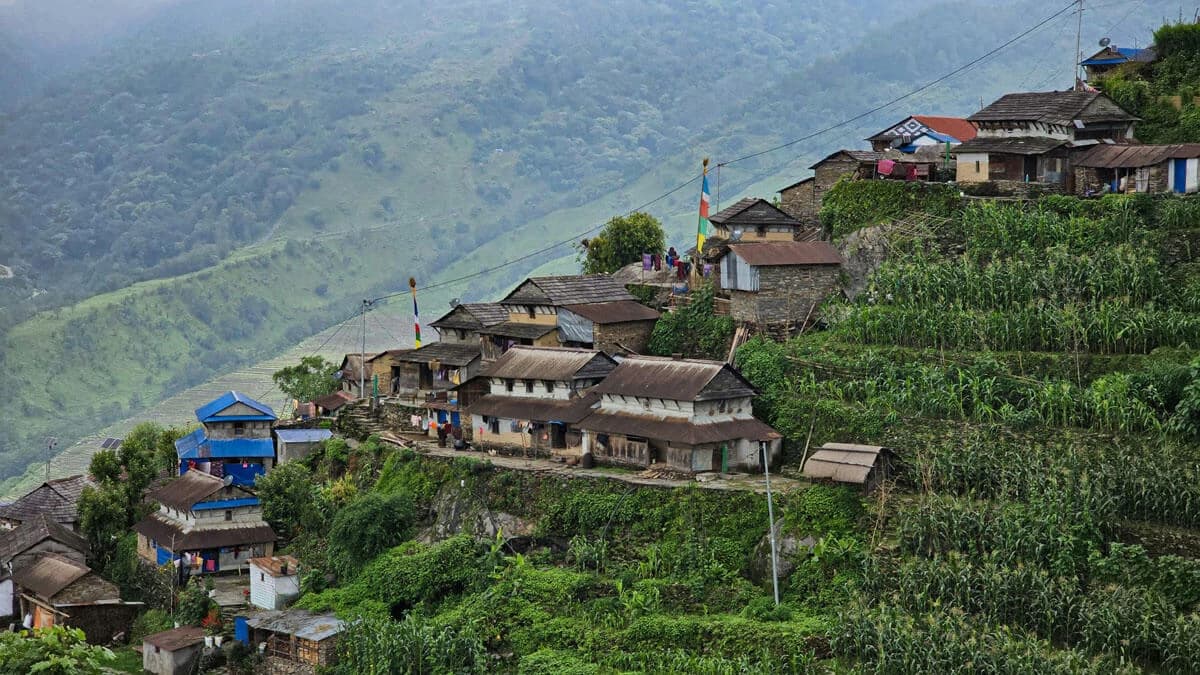
How can internet reach a village when a road cannot even reach it? Go far enough into the mountains of Nepal and you can find people making video calls, sending WhatsApp messages, using social media and getting online from places where bringing supplies can take hours on foot. Internet connectivity in Nepal has reached many places far from the main cities, but where does that connection actually come from?
A phone can connect to the internet in a Himalayan village, but what brings that connection there? A fiber optic cable? A mobile tower on a ridge? A wireless or microwave link? In some places, a satellite connection? How does internet reach remote villages in Nepal when getting a road there is already such a challenge? The answer depends on what infrastructure can reach that particular place.
How Does Internet Reach Remote Villages in Nepal?
Internet access in a remote village in Nepal can come through several different types of network. Depending on the location, the connection may arrive through fiber optic cable, a microwave or wireless link, or, where terrestrial networks are difficult to build, a satellite connection. Once it reaches the village, it can be shared through a mobile network, WiFi or a local network serving homes, schools, businesses and community facilities.
Kathmandu is a major center for internet services in Nepal, while Pokhara has also played an important role in connecting mountain communities. The Nepal Wireless Networking Project, founded by Mahabir Pun, used long distance WiFi to connect Nangi with Pokhara and later extended its network to other remote villages.
Fiber optic cables are used where physical connections can be built, while microwave and wireless links can carry the connection between locations where cables are difficult to install. Nepal Telecommunications Authority has supported rural broadband projects using both optical fiber and microwave technology.
The connection carrying internet traffic from the wider network toward a remote community is known as backhaul. The last mile is the part that connects the service to the actual users. Depending on the village, that final connection may involve a 4G mobile tower, local WiFi, fiber, a wireless link or VSAT.
How Do Mobile Towers Connect People to the Internet?
A mobile tower does not create an internet connection by itself. It provides the radio link between a phone and the mobile network. When someone uses mobile data, the phone communicates with a nearby base station, and the data is carried through the operator’s network to the wider internet.
Mobile networks are an important part of rural internet access in Nepal, especially in places where fixed broadband connections are difficult to install. Nepal Telecom operates 4G LTE on the 800 MHz and 1800 MHz bands. According to the company, the 800 MHz Band 20 is used in lower density rural areas because it provides coverage over longer distances, while the 1800 MHz Band 3 is used in areas with higher population density.
The tower itself still needs a connection to the wider telecommunications network. That connection can be provided through fiber optic cable, microwave transmission or another transmission link. Nepal Telecommunications Authority has supported rural broadband projects using optical fiber and microwave technology, while separate projects have also focused on microwave backbone networks in remote provinces.
This is why a village can have 4G service without having a fiber optic cable running to every house. The mobile site may receive its network connection through another transmission link, while phones connect to the site wirelessly. Nepal Telecom reports 4G/LTE coverage across all 77 districts of Nepal. This does not mean every village or every point within those areas has a usable signal. Terrain, distance from a mobile site and the location of the user can all affect mobile internet in Nepal.
What If a Village Has No Mobile Signal?
A village can have internet even when mobile phones have no signal. A connection can reach a school, community center, hotel, or another local point and then be shared through WiFi or a local network.
Khunde and Khumjung near Everest provide a good real world example. In 2022, the villages had patchy mobile coverage and an unreliable ADSL connection. A community project first brought internet to the villages through a wireless link from Hotel Everest View, where fiber connectivity ended. In May 2023, a fiber network was extended into the villages, giving homes and lodges access to a much better connection.
Some places cannot be connected easily by fiber, mobile networks, or terrestrial wireless links. In such locations, VSAT can provide internet through a satellite connection. Nepal Telecommunications Authority records include VSAT services in remote locations such as Solukhumbu, Manang, Gorkha, Jumla, and Bajura.
The key point is that mobile coverage and internet access are not the same thing. A phone may have no mobile signal while a nearby building, school, lodge, or home is connected to the internet through a different network.
Why Can Internet Be Slow in Remote Villages?
Internet service in rural Nepal can be slow when available bandwidth is limited or many users are using the same service at the same time. A local connection serving a school, lodge, health post or nearby homes can experience lower speeds during periods of heavy use.
The quality of internet infrastructure also affects performance. Equipment needs a reliable power supply, while faults can interrupt internet services in remote areas. In isolated villages, repairs may take longer because technicians and replacement equipment have to travel from other locations. Nepal Telecommunications Authority has identified maintenance and service continuity as challenges in some rural broadband projects.
The difference becomes obvious when several people are using the same connection for video calls, streaming, online classes or large downloads. A network that works well for messages and basic browsing may feel much slower when demand rises.
What Makes Internet Access Difficult in Remote Nepal?
Getting internet to remote parts of Nepal is difficult mainly because of the landscape, the cost of building networks, and problems with electricity. Many villages are far from existing infrastructure, have small populations, and are difficult for technicians and equipment to reach.
- Difficult geography makes network construction harder in isolated mountain villages. Equipment, cables and other materials may need to be carried along trails when roads do not reach the settlement.
- High installation costs are a major problem for broadband infrastructure in sparsely populated areas. A provider may need to invest heavily in equipment and network connections for a relatively small number of users.
- Unreliable electricity can interrupt internet service. Network equipment needs a dependable power supply, and some remote locations may need backup or alternative sources of electricity.
- Repairs can take longer in villages far from towns. When equipment fails, technicians and replacement parts may have to travel a long distance before the service can be restored.
- Maintenance and technical support can be difficult. Remote networks need people who can install, repair and replace equipment, but technicians and spare parts may be far from the village. When something fails, restoring the connection can take longer than it would in a town.
- The cost of getting online can be high for households. A family may need to pay for a smartphone, computer, internet connection or regular mobile data, which can be difficult for people with limited income.
- Remote area internet connectivity also depends on regular maintenance. A network may work well after installation but become unreliable when equipment needs repair or replacement and support cannot reach the village quickly.
Does Every Remote Village in Nepal Have Internet?
No. Internet has reached many remote parts of Nepal, but access is not the same in every village. One village may have WiFi at a lodge and usable mobile data, while another may have a weak connection or no practical internet access at all. Internet in mountain villages in Nepal can vary considerably from one place to another.
A connection in the village also does not mean that every family can use it. The school, health post, hotel or a few houses may have internet, while other families may rely on mobile data or go somewhere else to get online. The cost of a smartphone, computer and data can also be too much for some households.
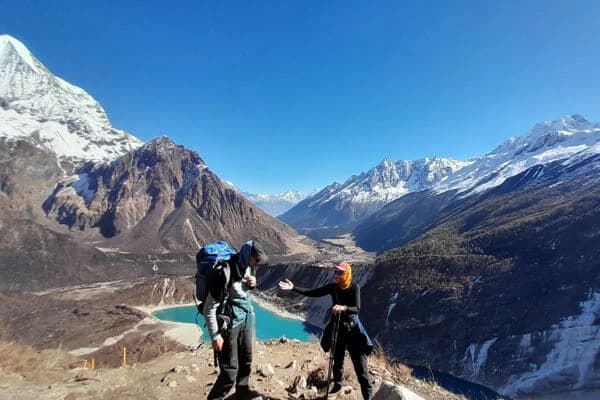
The same variation can be seen on Nepal’s trekking routes. Popular trails such as the Everest Base Camp Trek, Annapurna Circuit Trek and Manaslu Circuit Trek pass through villages with different levels of mobile and WiFi access.
On routes such as the Upper Mustang Trek, Dolpo Trek and Kanchenjunga Trek, finding a connection can be harder. You might use WiFi at one lodge and find no usable service at the next village.
Saying that a Himalayan village “has internet” therefore does not tell you very much on its own. It could mean WiFi at one building, mobile data for some residents, or a connection that reaches many homes. Internet access in Himalayan villages needs to be looked at in terms of who can actually use the service and how often they can depend on it.
Where Has Internet Reached in Nepal’s Mountains?
Nangi in Myagdi became an early mountain community connected through Mahabir Pun’s wireless networking project.
In Manang, Nepal Telecom added 4G service in Pisang, Dawal, Tanki Manang and Khangsar in 2025. The expansion brought mobile connectivity to these mountain communities.
Can I use the internet while trekking in Nepal?
Yes, on many popular trekking routes, but there will be places where you have no connection. Internet is common in many larger villages, lodges and hotels along established routes. Once you leave a settlement, mobile data and WiFi can disappear until you reach the next connected place.
For trekkers, that means using mobile data or WiFi when they reach a connected village and expecting gaps between villages. It is a different story if you need to be online for work every day. In that case, internet access should be one of the things you consider when choosing your route and overnight stops.
Which Nepal trekking routes have better internet access?
The Everest, Annapurna and Langtang regions offer more opportunities to find internet because they have more established villages, lodges and tourism businesses. That does not mean continuous coverage along the entire trail.
On less travelled routes such as Dolpo and Kanchenjunga, connected places can be harder to find. Even on the busier routes, service can vary from one village to another, so trekkers should not treat a route as having one consistent level of connectivity.
Can I work online while trekking in Nepal?
You can work online from some trekking areas, but you should not expect an office quality connection throughout the trek. Email, messaging and small online tasks can be handled from places with working internet. Daily video meetings, large file uploads and jobs that require constant connectivity are much harder.
This matters for anyone planning to combine remote work with Nepal trekking. If you have an important meeting or need to send a large file, do it from a place with a connection you have already tested. Reaching a lodge with WiFi does not guarantee that the service will be good enough for your work.
Can I rely on WiFi in trekking lodges?
No. Lodge WiFi is useful, but its quality can differentiate a lot. Many lodges on established Nepal trekking trails offer WiFi, sometimes for an additional fee, but the service depends on the connection reaching the lodge, the available bandwidth and the number of people using it.
A connection that handles messages and email may struggle with a video call. Power interruptions and equipment problems can also take WiFi offline. If you need to make an important call or send work files, use a good connection when you find one instead of leaving the task until later.
What should I prepare before trekking if I expect to lose internet?
Save anything you may need while offline before starting the trek. Download maps, accommodation details, permits, transport bookings, emergency contacts and important documents to your phone.
This is especially useful on longer Nepal trekking routes where the next connected village may be several hours away. Keep the information stored on the device rather than relying on an email or website that needs an internet connection. Offline maps and saved documents can remain useful even when your phone has no mobile data or WiFi.
Final Thoughts
Internet access has reached many parts of Nepal that were once difficult to connect, including remote mountain communities. But connectivity is still uneven. One village may have mobile data or WiFi, while another nearby settlement may have little or no usable service.
For trekkers, residents and local trekking companies in Nepal, knowing how uneven that connectivity can be is useful when planning travel or communicating from the mountains. Internet can be available in one village and disappear on the trail between two settlements. In Nepal’s Himalayas, staying connected is possible in many places, but being prepared to spend some time offline is still part of travelling through remote areas.