While much of Nepal was beginning an ordinary Wednesday morning, families in the mountains were waking to a tragedy that would leave scars far beyond the floodwaters.
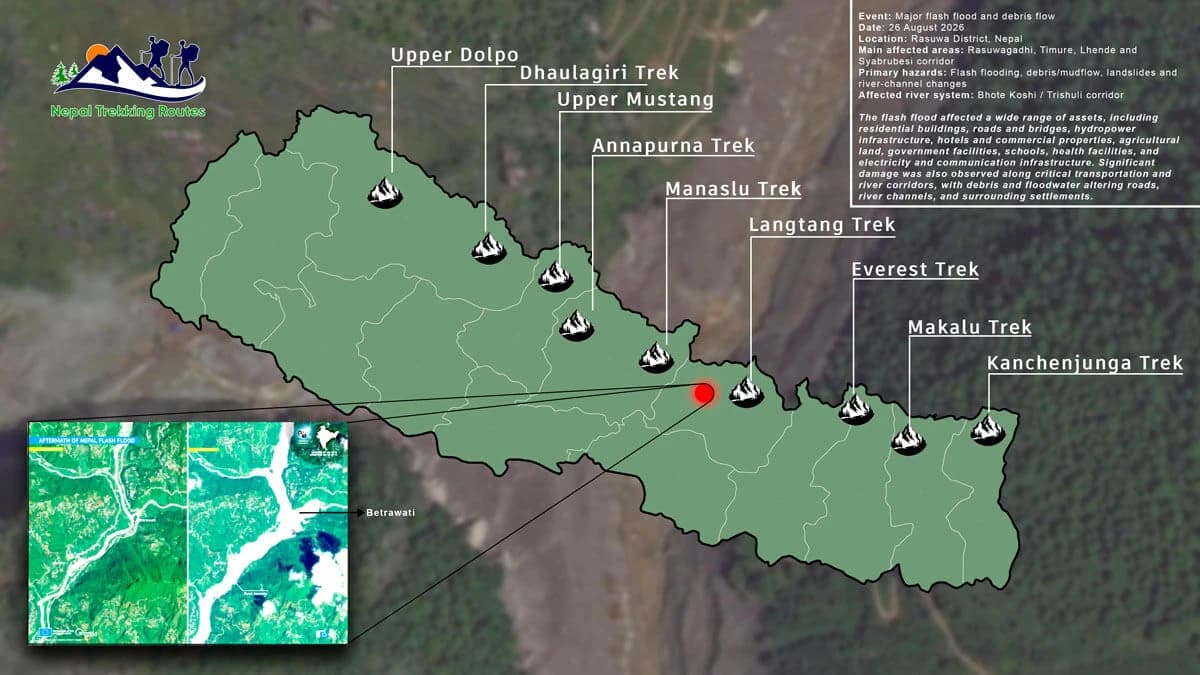
On August 26, 2026, a catastrophic flash flood tore through the Nepal Tibet border area, devastating parts of Rasuwa and the Bhote Koshi corridor. Lives were lost. Homes, bridges, roads and businesses were swept away. Families were separated, communities were cut off, and places built over generations were suddenly left buried beneath water, mud and debris.
For the people of Rasuwa, this is more than a natural disaster. It means lost homes, broken livelihoods, damaged communities and loved ones who may never come home. As of September 3, 2026, the latest figures from Nepal’s disaster authorities put the number of recovered bodies at 1,252, with 4,216 people still unaccounted for. Rasuwa alone has recorded 127 deaths. Behind these numbers are families waiting for news and communities facing the loss of homes and livelihoods. The mountains trekkers visit for their beauty and adventure are, first and foremost, home to the people who live there.
While the country is mourning and rescue and recovery efforts continue, travelers are understandably asking: Is Nepal safe for trekking after the Nepal Tibet border flash flood?
The answer is not an obvious yes or no. Nepal is a large country, and the impact of the flood has been concentrated in particular areas. If you are planning trekking in Nepal in 2026, this guide will help you understand what has been affected, what remains uncertain, and what you should check before heading into the Himalayas.
What Happened in the Nepal Tibet Border Disaster?
The flash flood that struck the Nepal Tibet border on August 26, 2026, followed a major mountain failure high in the Himalayas. Scientists and satellite analysts believe the event was linked to a large slope failure involving glacier ice in the Lirung massif, near Langtang Lirung. The collapse sent ice, rock and other debris into the Lhende Khola, contributing to the destructive flow that moved downstream through Rasuwa and the Bhote Koshi and Trishuli river corridors. The exact sequence of the initial collapse is still being studied.
In the first hours after the disaster, there was uncertainty about what had triggered the flood. An earthquake was initially suspected after a seismic signal was recorded during the event. Later analysis showed that the magnitude 5.2 signal came from the massive glacier and rock collapse itself, rather than from a tectonic earthquake. A glacial lake outburst flood was also considered in early reports, but the available evidence does not establish this as a confirmed GLOF.
There is still an unanswered question on what made the mountain fail. Experts have discussed glacier instability, recent melting of snow and ice, warmer temperatures and changes in frozen ground as possible contributing factors. These factors may have contributed to the instability, but scientists have not identified one confirmed cause for the collapse.
The 2026 Nepal flood was concentrated along particular mountain and river corridors, especially around Rasuwa and the Nepal Tibet border area. It does not mean that every trekking region in Nepal has been affected in the same way. Before planning trekking in Nepal after the flood, travelers should look at the condition of the specific trekking route, road access, bridges, trails, weather and information from local authorities and trekking agencies.
Which Trekking Destinations in Nepal Are Affected by the 2026 Flood?
For trekking, the most serious disruption is in Rasuwa, where the disaster affected key access routes for Langtang, Gosaikunda and the Tamang Heritage Trail.
Langtang Valley Trek
The Langtang Trek after the flood is affected mainly at the access points rather than in the upper valley.
The usual journey from Kathmandu goes through Dhunche to Syabrubesi. That connection has been badly damaged. Roads and bridges were swept away, including the connection between Dhunche and Syabrubesi. Parts of Syabrubesi and nearby trails were also damaged.
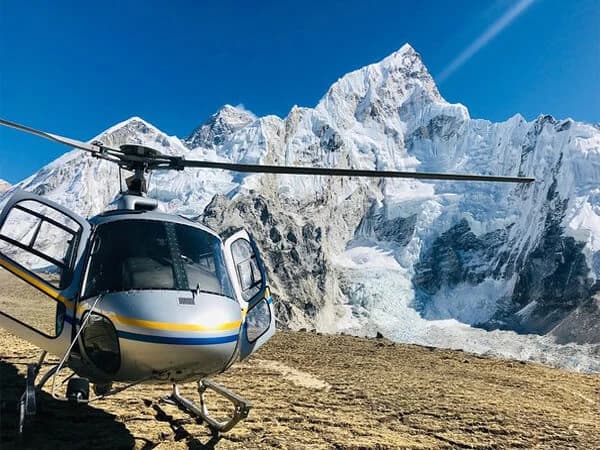
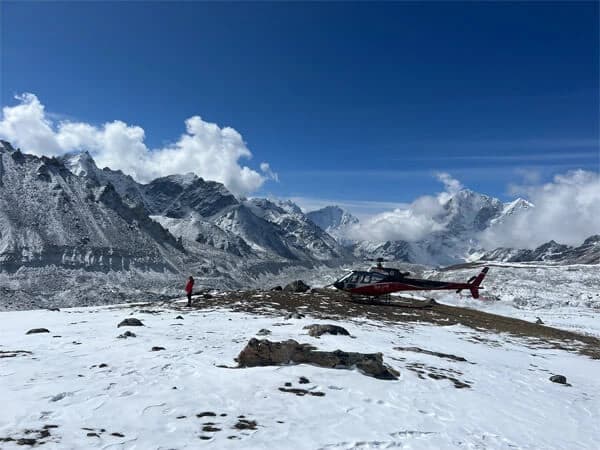
The usual drive to the Langtang trailhead therefore cannot be made as before. Langtang Valley itself was not directly hit by the flood, but getting in and out has become the main problem. Trekkers already in the valley have required helicopter evacuation, while a route from the Sindhupalchok side has been identified as another possible way into Langtang.
Gosaikunda Trek
The Gosaikunda Trek is affected mainly on the Rasuwa side.
Dhunche is one of the traditional gateways to Gosaikunda, but the road network serving the area has been damaged. Regular movement of supplies towards Gosaikunda has also been interrupted. Some tourists stranded in the Langtang and Gosaikunda area had to be evacuated through Dupcheshwar in Nuwakot.
There is no evidence that Gosaikunda Lake itself was destroyed by the flood. The bigger concern is access to the lake. Trekkers considering the route should therefore check the current access from their chosen starting point rather than relying on the usual Rasuwa itinerary.
Tamang Heritage Trail
The Tamang Heritage Trail is more directly tied to the villages affected by the disaster.
Syabrubesi, Thuman and Briddim were among the Rasuwa areas affected by the disaster. Syabrubesi is particularly important because it serves as a gateway for trekking in this part of the district.
The usual Tamang Heritage itinerary cannot currently be followed as normal. The main concerns are reaching Syabrubesi, travelling between affected villages and confirming whether accommodation and trail sections are operating normally.
Damage is not the same across the entire trail, so individual villages and trail sections need to be assessed before the route is reopened to regular trekking.
Where the Trekking Access is Affected?
For a trekker, the disruption can be narrowed down to a few important points.
- Kathmandu to Dhunche: major road damage has affected the usual journey into Rasuwa.
- Dhunche to Syabrubesi: the normal road connection has been cut by bridge and road damage.
- Syabrubesi: parts of the settlement, roads and trails were damaged.
- Langtang Valley: the upper valley was not directly hit, but its normal connection with the outside has been severely restricted.
- Gosaikunda: the main concern is access through the Rasuwa side and the interruption of normal transport and supplies.
- Tamang Heritage Trail: Syabrubesi, Thuman and Briddim have been affected, so the standard itinerary needs to be checked before it is used.
A trekking destination may be untouched even when the road, bridge or trail needed to reach it has been damaged. In Rasuwa, access is currently a bigger concern than the trekking destinations themselves.
Can You Still Do the Everest Base Camp Trek After the Flood?
If you are sitting at home watching the international news and wondering whether your Everest trip will still happen, that concern is completely understandable. The images coming out of northern Nepal have been disturbing.
The disaster in Rasuwa is geographically separate from the Everest Base Camp route in the Khumbu region. Everest trekking takes place in the Khumbu region, away from the Rasuwa and Bhote Koshi rivers where the disaster occurred. There is currently no indication that the flood has damaged the main trail to Everest Base Camp or the villages along it.
For an Everest trekker, the things worth checking are the ones that actually affect the journey to Everest: flights to Lukla, weather, the trail ahead and the latest information from people on the ground. The Rasuwa disaster should not, by itself, be a reason to abandon an Everest Base Camp Trek.
The Rasuwa disaster alone is not a reason to cancel an Everest Base Camp Trek, although the latest flight, weather and trail information should still be checked before departure.
Trekking Regions Outside the Flood Affected Area
The August 26 flood was concentrated in specific parts of northern Nepal. Many major trekking regions were outside the affected area. Everest has already been discussed above. Annapurna, Manaslu, Kanchenjunga, Makalu, Dolpo, Rara and several western Nepal destinations can still be considered for trekking.
Annapurna Region
The Annapurna region offers several established trekking routes, including Annapurna Base Camp, Poon Hill, Mardi Himal, Manang, Mustang and the Annapurna Circuit. The region also has good transport connections from Pokhara, although road travel can be affected by heavy monsoon rain.
Mustang lies in the rain shadow of the Annapurna and Dhaulagiri ranges, giving the area a much drier landscape than the southern side of the mountains. Upper Mustang is therefore one of the better known destinations for trekking during the wetter months.
Manaslu Circuit Trek
The Manaslu Circuit follows the Budhi Gandaki valley through mountain villages, forests, high alpine landscapes, and crosses Larke Pass at 5,106 metres. Tsum Valley is another important trekking area nearby, with traditional villages, monasteries and strong Tibetan Buddhist influences.
The trek requires proper preparation because of its altitude, length and limited services in the higher sections. Transport to the trailhead should also be checked before departure, especially during the monsoon season.
Kanchenjunga and Makalu
Kanchenjunga Base Camp and Makalu Base Camp are among Nepal’s longer Himalayan treks. Both routes travel deep into the eastern Himalayas, crossing high valleys and rugged mountain terrain.
These areas were outside the reported flood impact. Trekkers still need to arrange the required permits and guide services and should check flights, roads and local information before starting the journey.
Dolpo
Dolpo lies in northwestern Nepal and includes the famous Shey Phoksundo area. The route moves from forested lower valleys into high passes and the dry mountain country around Shey Phoksundo.
Travel in Dolpo requires careful planning because transport and facilities are limited in many places. Permits, domestic flights, accommodation and food supplies should be arranged well before the trek begins.
Rara and Far Western Nepal
Rara Lake is one of western Nepal’s best known trekking destinations. The journey commonly involves flights through Nepalgunj and Talcha, followed by a walk to the lake. Jumla also provides access to the region.
Trekkers interested in lesser visited areas can also consider Humla, Saipal, Khaptad, Badimalika and Api Himal. Transport is less frequent in these areas and accommodation is limited outside the main settlements, so arrangements need to be made before the trek begins.
The flood has caused immense destruction in the affected areas, but trekking has not stopped across the rest of Nepal. What matters now is knowing exactly what is happening on the route you intend to take.
What Should Trekkers Check Before Their Trek?
Before leaving, four things deserve a final check.
- Check your route status: Ask your trekking agency or guide about the current status of your chosen route and any recent changes.
- Check transport and trail access: Make sure the roads, flights, bridges and trails needed for your trek are open before you leave.
- Check the weather: Look at the latest forecast for your trekking area. Heavy rain can affect mountain trails, river crossings and road travel.
- Get local information: Speak with your guide or trekking agency shortly before departure. They can tell you about recent changes that may not yet appear in older travel information.
Should You Cancel Your Nepal Trek?
No, not automatically. The main question is whether your planned itinerary can actually operate as booked.
Postponing makes sense when your trek depends on damaged infrastructure or when reliable local information cannot confirm that the route is operating. In some cases, changing the itinerary can solve the problem without scrapping the entire trip.
This is especially relevant for people who booked their trek well in advance. An itinerary prepared months ago may list transport links, accommodation and trail access that have since changed. A route check shortly before departure can tell you whether the transport, accommodation and trail access listed in your original itinerary are still available.
Your trekking guide or agency should also be able to confirm the latest situation before you travel. Ask what has changed on the route, whether any sections are closed, and if the planned transport and overnight stops are still available.
How Will the 2026 Autumn Trekking Season Be Affected?
Every trekking season in Nepalseems to bring something new. Last spring, the war and regional tensions created uncertainty for travel. Then the Gen Z movement disrupted tourism in September 2025, right when the autumn season was beginning. This year, Nepal is dealing with the August 26 flood and its serious impact on several districts.
Nepal has been through difficult periods before. Tourism has taken hits from earthquakes, political unrest, the pandemic and natural disasters, but people have always found a way to start again. That is happening now too. Trekking companies, guides, hotels and local communities outside the affected areas are preparing for the 2026 autumn season. Nepal’s tourism industry is still operating in many parts of the country.
Rasuwa, Nuwakot and Dhading face a very different autumn. Roads and bridges were damaged, businesses were lost and many communities are still dealing with the aftermath. Langtang also needs careful attention because its usual access through Rasuwa has been badly affected.
September may see fewer trekkers than a normal autumn season. Some travelers will wait and see how the recovery develops. October and November are likely to bring more activity if recovery continues and travel confidence improves, particularly in trekking areas outside the disaster zone.
Nepal trekking after the flood will therefore look different from one area to another. Many routes will operate normally, while affected areas will need more time and regular updates before normal trekking activity returns.
Final Verdict
Nepal has taken a hard hit, but the country has not stopped. In the affected communities, people are working hand in hand, from local residents and rescue teams to government agencies, volunteers and organizations from Nepal and abroad. That combined effort is helping relief work move faster and giving affected families much needed help during these difficult days.
No one can magically heal the loss, rebuild a home overnight or take away what families are going through. Recovery will take time, step by step, village by village. But Nepal is getting back on its feet, and its people are already rebuilding what they can.
We are ready. We are recovering. Visit Nepal and be a part of this recovery.