If Everest is hidden from Kala Patthar, what exactly are you climbing 5,545 metres for?
You can be closer to Everest than almost anyone reading this article will ever get, and still not see the mountain at all. Cloud can hide the summit almost as quickly as it appears, leaving you with a very expensive pile of rock and a lot of questions about why you woke up so early.
Kala Patthar is one of the best known viewpoints on the Everest Base Camp Trek, but much of its reputation comes from the view toward Everest. When Mount Everest disappears behind cloud, the usual advice to “go anyway” starts to sound a bit thin. You have already made it to Gorakshep and climbed to 5,545 metres. Is the Kala Patthar viewpoint still worth the effort if the main mountain is missing?
Everest can be hidden while Pumori, Nuptse, Lhotse and the Khumbu Glacier remain visible. A small layer of cloud around the summit is very different from poor visibility across the whole Kala Patthar area. So, is Kala Patthar worth climbing if Everest is covered by clouds? Sometimes it is. Sometimes, honestly, I would skip it.
What Can You See From Kala Patthar If Everest is Covered by Clouds?
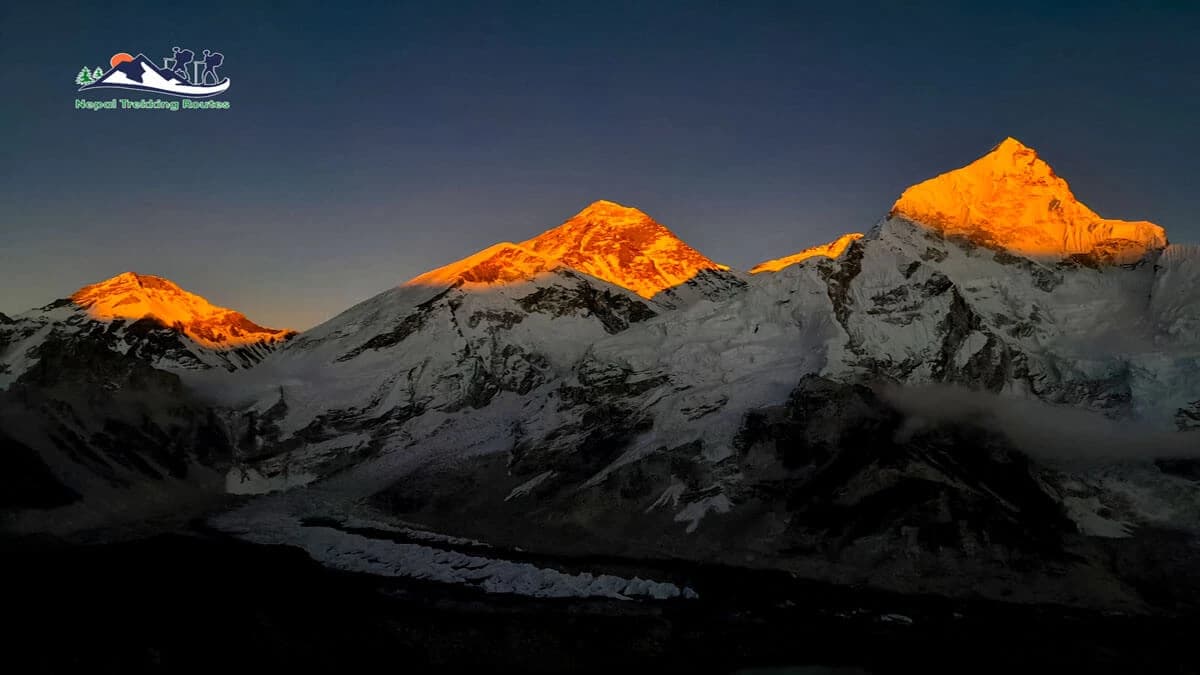
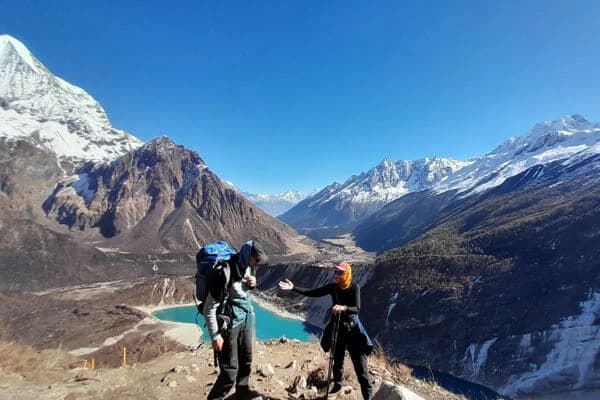
The view does not end with Everest. From the Kala Patthar viewpoint, you can look across the Khumbu Glacier toward Nuptse and Lhotse, with Pumori rising close behind the viewpoint. On a clear day, these mountains form the setting around the main Everest view from Kala Patthar.
The angle also makes a difference. Everest Base Camp is surrounded by the Khumbu Glacier and Nuptse, so the Everest summit is not visible from the camp itself. Kala Patthar gives you a different position above Gorakshep, which is why the classic close view of Everest comes from here rather than from Base Camp.
If you are wondering can you see mountains from Kala Patthar in cloudy weather, you may still have Pumori, Nuptse or parts of the glacier in view. If the cloud has covered those as well, there may be very little to see.
For Kala Patthar sunrise, that distinction matters even more. Sunrise does not guarantee an Everest view. If the summit is behind thick cloud when the light arrives, you may get the changing light without seeing Everest itself.
So the answer to what can you see from Kala Patthar on a cloudy day depends on how much of the upper Khumbu remains visible. Everest being hidden is one thing. The whole landscape being hidden is another.
Should You Climb Kala Patthar If the Weather Is Cloudy?
The view from Gorakshep is a better guide than a forecast you checked the night before. If the mountains are still visible around the village, there is at least a reason to make the Gorakshep to Kala Patthar climb and see what the sky looks like higher up. If cloud has already swallowed the surrounding peaks, expecting a clear Mount Everest view at the top is wishful thinking.
What matters more than the forecast from the night before is what the sky actually looks like around Gorakshep. If the surrounding peaks are still visible, there is a reasonable chance that conditions could improve higher up. If cloud has already covered everything around the village, expecting a clear Everest view from Kala Patthar is unrealistic.
At more than 5,500 metres, the conditions also matter beyond the photograph. Strong wind, freezing temperatures and poor visibility can make the short climb from Gorakshep a very different experience from the same trail on a clear morning. The commonly cited Kala Patthar altitude is 5,545 metres, although a higher point on the ridge is sometimes given as about 5,644 metres.
Before leaving Gorakshep, look at the surrounding mountains and the cloud cover above them. If Pumori, Nuptse or parts of the Khumbu Glacier are visible, the climb can still offer something. If the whole area is covered in thick cloud, there may be little reason to continue higher.
Does the Time of Day Change Your Chances of Seeing Everest?
Yes. The time you reach Kala Patthar can make a real difference to what you see.
The 6:00 AM to 9:00 AM window is the one to aim for if seeing Everest is the main reason for climbing Kala Patthar. The mountain is often easier to see in the morning, before daytime heating leads to more cloud and haze around the Khumbu peaks. This is one reason the Kala Patthar climb is normally done early rather than later in the day.
An early start improves the opportunity, not the guarantee. Cloud can already be around Everest before sunrise, and conditions can change while you are at the viewpoint. A clear mountain at 7:00 AM can be partly hidden later in the morning.
For Everest photography tour from Kala Patthar, early morning has another advantage. The first sunlight reaches the higher peaks while much of the surrounding valley is still in shadow, which gives Everest and the nearby ridges more definition. If your main goal is the Mount Everest view from Kala Patthar, waiting until late morning is generally not worth the gamble when you already have the chance to see it earlier.
So, what is the best time to see Everest from Kala Patthar? Aim to be there in the early morning, with 6:00 AM to 9:00 AM being the practical window to keep in mind. It gives you a better chance of seeing Everest, not a promise that the clouds will move away.
Is Kala Patthar Worth Climbing If You Have Already Been to Everest Base Camp?
If you have already walked to Everest Base Camp, you might wonder why you should climb Kala Patthar the next morning. You have reached Base Camp, taken your photos and spent time around the Khumbu Glacier. Do you need another climb?
If you want a proper view of Everest, yes.
Everest Base Camp and Kala Patthar give you very different views. If you are curious about what Everest looks like from the camp itself, see our guide on Can You See Mount Everest From Everest Base Camp? The answer explains why reaching Base Camp does not always mean getting the famous Everest photograph.
Kala Patthar is around 5,545 metres and is one of the main places trekkers go for Everest photography from the south. Everest, Pumori, Nuptse, Lhotse and the Khumbu Glacier come together in the same view when the sky is clear.
Base Camp and Kala Patthar give you very different experiences. Base Camp puts you among the Khumbu Glacier and surrounding peaks, while Kala Patthar gives you the elevated viewpoint associated with the classic Everest photograph. If seeing Everest from that angle is important to you, the additional climb has a clear purpose.
The Everest View Trek, Gokyo Lakes Trek and Three Passes Trek all give trekkers other ways to see the Everest region, but they are separate experiences. They do not make the Kala Patthar climb redundant if the classic Everest view is what you came for.
How Long Should You Stay at Kala Patthar?
There is usually little reason to spend a long time at the top. Around 30 to 45 minutes gives enough time for photos, looking across the mountains and waiting briefly if the cloud is moving.
The Kala Patthar temperature can be well below freezing in the early morning. The wind at Kala Patthar can make it even harder to stand still for long, especially on the exposed ridge. Once you have finished taking photos and looking around, continuing to stand there for another hour does not add much to the experience.
From Gorakshep, the climb to Kala Patthar can take around 1.5 to 2 hours, followed by the descent. The summit itself does not require a long stay, especially when the temperature is below freezing and the wind is strong.
What If the Clouds Clear After You Leave Kala Patthar?
If the cloud cover breaks after leaving Kala Patthar, Everest may come into view later. If you are still close to the viewpoint and Everest suddenly appears clearly, going back may make sense. If you are already well down the trail, climbing back to 5,545 metres for a brief opening in the cloud is a different matter.
The Gorakshep to Kala Patthar route leads to a viewpoint at about 5,545 metres, known for its views of Everest. If Everest visibility improves while you are still close to the viewpoint, going back may be worth considering. If you have already descended a long way, climbing back to that altitude for a brief opening in the cloud is a different matter.
So, can you see Everest from Kala Patthar after clouds begin to clear? Yes. Everest summit visibility does not require completely cloudless skies. A break in the cloud can expose part or most of the mountain for a short time.
If Everest becomes visible during the descent, stop and enjoy the view from the trail. It will not give the same perspective as Kala Patthar, but there is no need to turn the rest of the trek into a second climb just because Everest has appeared.
Is Kala Patthar Worth It If You Cannot See Everest?
If you cannot see Everest at all, Kala Patthar loses its main attraction. That is the blunt answer, because the viewpoint is famous for the close perspective it gives toward Everest during the Everest Base Camp trek in Nepal.
Pumori, Nuptse and Lhotse still dominate the surrounding landscape, with the Khumbu region stretching across the horizon. They are impressive in their own right, but they do not replace Everest when the mountain is the reason for making the climb.
Is Kala Patthar worth it without an Everest view? There is still a reason to reach the viewpoint if completing the route matters to you. But for trekkers who have made the climb specifically for the view, poor visibility changes the experience considerably.
If part of Everest appears through the cloud, even briefly, the climb can still deliver the view you came for. If Everest and the surrounding peaks are all hidden, Kala Patthar offers much less visually.
The Bottom Line on Kala Patthar
Kala Patthar is famous for the Everest view, but a clear summit is never guaranteed. Some mornings deliver the full panorama, while others leave Everest hidden behind cloud.
That does not make every cloudy morning a wasted climb. If Pumori, Nuptse, Lhotse and the Khumbu Glacier remain visible, the viewpoint still gives you a substantial Himalayan landscape. But when Everest and the surrounding mountains are all buried in cloud, the reason for climbing to 5,545 metres becomes much weaker.