If you’re planning a Kanchenjunga Base Camp Trek, one question comes up sooner or later: should you head to the North Base Camp or the South Base Camp? After all, both routes take you to the same remote corner of eastern Nepal and both promise incredible views of the world’s third highest mountain.
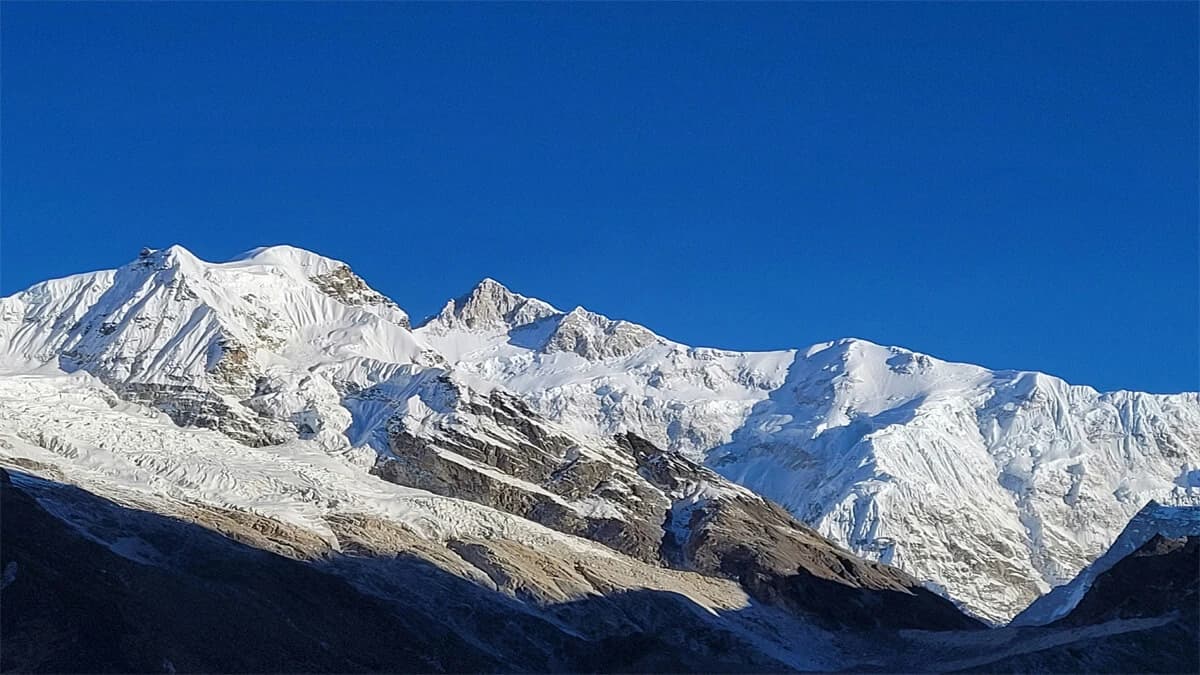
The north side leads you towards Pangpema. The higher you go, the more raw it feels. You are surrounded by glaciers and massive mountain walls, with Kanchenjunga standing right in front in a very direct way. The South side feels different from the very start. The Kanchenjunga South Base Camp Trek feels like it starts far away from the mountains even though you are already in the same region and the landscape begins to open up only later, and Kanchenjunga slowly comes into view until you reach Yalung Base Camp right below the south face.
This guide takes you through the route, difficulty, cost, and what the experience actually feels like on both sides, so you can decide which Kanchenjunga Base Camp Trek makes sense for you.
Where Kanchenjunga North and South Base Camp Are Located
Both the North and South Base Camp treks are part of the same protected region in eastern Nepal called the Kanchenjunga Conservation Area. They are connected in the sense that they sit around the same mountain massif, but the actual trekking routes do not follow one single split point in a simple way.
Most people start from around Taplejung, which is basically where everything for the Kanchenjunga region begins in the Kanchenjunga Conservation Area. From there, it’s not like a single clear split on day one or anything like that. It just slowly starts to drift in different directions depending on which base camp you’re aiming for.
If you head north, you kind of notice the change without anyone telling you. Villages start thinning out, the walks between places feel longer, and the whole thing gets quieter in a way that’s hard to explain until you’re actually there. At some point it just becomes this raw, cold mountain space with glaciers showing up more and more.
The south side feels different straight away once you start gaining height. You still go through forests and villages early on, same as the north, but later it opens up in a way that makes it different from the other trail. You reach places like Oktang and suddenly the whole wall of Kanchenjunga is just there in front of you. It’s wide, very open, almost overwhelming if the weather is clear.
Even though both routes lie in the same general area and start from the Taplejung region in Taplejung, they don’t really feel like two versions of the same trek. You come back with completely different impressions depending on which side you went.
Kanchenjunga North Base Camp Experience
The North Base Camp trek begins in the lower valleys of the eastern side of Nepal where life is still very present in the villages along the way. As you move forward, places like Ghunsa feel like an important turning point on the route, almost the last place where things still feel familiar before the trail starts getting less crowded.
Beyond Ghunsa, the landscape really starts to change. The trees become less dense, the air feels light, and the trail becomes more open. Small villages like Kambachen and Lhonak feel calm and spaced out, and more time is spent walking through valleys surrounded by mountains on all sides.
Closer to Pangpema, the scale of mountains becomes the main focus (which is exactly what you came for). The north face of Kanchenjunga appears more clearly as you move. The whole experience feels like a slower flip into a more open mountain world as the trail moves closer to the base camp.
South Base Camp Experience
The Kanchenjunga South Base Camp trek has a different rhythm compared to what people expect when they think of big Himalayan routes. It does not throw you into harsh alpine landscapes right away. It starts in lower hill country where the trail still feels tied to small villages. Life is present along the way, and the mountains do not feel close at the beginning.
As the days go on, the character of the walk starts to change. You notice fewer places to stop, longer distance between places to stay, and more time just moving through open hillsides. At this point, you genuinely start to change your focus from where you are staying each night to how far you are moving each day.
There are moments on this route where there’s no traffic, no constant activity, just the sound of your steps and landscapes around you. Then, without much warning, the south face of Kanchenjunga begins to appear in pieces between ridges. However, it doesn’t feel like a single reveal. It feels more like the mountain has been there all along and is only now becoming visible as the trail allows it.
North vs South Kanchenjunga Trek Route Comparison
The difference between the Kanchenjunga North trek and Kanchenjunga south trek becomes clear when you look at how each route actually moves through the mountains, not just what they lead to.
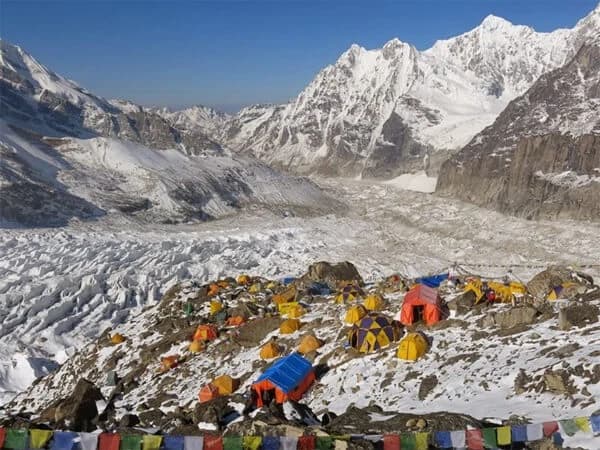
The north route feels more committed from early on. The trail starts to become remote once you move beyond Ghunsa. After that, places like Kambachen and Lhonak become main stops before you reach Pangpema. The walk between the places starts to feel long, and there is a noticeable drop in how often you come across anything along the way. As you get to Pangpema, Kanchenjunga starts taking over the view with high snow slopes filling most of the horizon.
The south side takes a different kind of time to build up. You will stay in lower hill areas for longer, and the change into higher parts of the country does not happen all at once. Even as you move further, it feels gradual, step by step, until you finally reach Yalung Base Camp and the south face of Kanchenjunga becomes the main thing in front of you.
Both routes are remote in their own way. The main difference is that the north side reaches that high mountain feeling earlier and keeps it for longer. The south side takes more time to get there, but the final view feels like it has been there the whole time.
Kanchenjunga North vs South Base Camp Difficulty Comparison
Both the North and South Base Camp treks inside the Kanchenjunga Conservation Area are hard. There is no version of this trek that you can treat casually.
The north side is harder overall. You walk longer each day and once you are deeper in the route there are fewer places to stop in between. Your days will feel full of walking from start to finish.
The south side is still hard, but the effort is more noticeable when you climb toward higher viewpoints like Oktang. The demanding parts come more during those climbs.
At higher altitude on both routes, walking gets slower, breaks become more frequent, and even small climbs take more effort.
Between the two, North Base Camp is more difficult overall.
Kanchenjunga North vs South Base Camp Cost Comparison
North Base Camp costs more than South Base Camp in most cases.
The main reason is the number of days on the trail. The north route takes longer, which means more nights in teahouses, more meals, and more days paying for a guide and porter if you are using support. When everything is added together, the difference becomes noticeable.
Both routes fall inside the same restricted region, so permit costs stay the same for both. Transport to Taplejung and the further journey into the trekking area also remains similar whether you are heading north or south.
If you book through a trekking agency, North Base Camp packages come with a higher price because the itinerary is longer and logistics take more effort to manage. South Base Camp packages come in slightly lower because the trek takes fewer days.
Neither trek is cheap by Nepal trekking standards. The region is remote, services are basic, and even reaching the starting point takes time, planning, and money before the actual trekking begins.
South Base Camp works better for people trying to keep the total cost a bit lower while still staying in the Kanchenjunga region and getting close mountain views. North Base Camp requires more time on the trail and a higher overall budget.
Kanchenjunga North Base Camp vs South Base Camp Which One Is More Scenic
North Base Camp feels like you are slowly leaving everything behind and just walking into pure mountain space. You are mostly surrounded by rock, ice, and wide open space with very little else competing for attention.
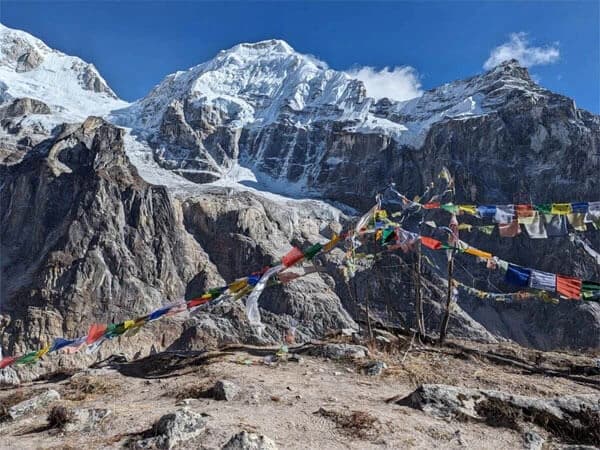
At Pangpema, Kanchenjunga’s north face is right there in front of you. It feels close and very direct. The first reaction is usually just silence for a few seconds because it is bigger than what you expect even after days of walking toward it.
South Base Camp gives a different kind of moment at the end. When you reach Oktang, the view opens up and the south face of Kanchenjunga fills the entire front. It is not just one solid wall. You can make out different parts of the mountain at once, with Yalung Glacier sitting underneath it. It feels more open visually, like you are seeing the whole mountain at once instead of one side of it.
North feels more raw, with very little around except high mountain surroundings. South feels clearer to take in, with a wider view that shows more of the mountain in one frame.
Both stay in your memory, just in very different ways depending on which moment hits you more.
Kanchenjunga North vs South Base Camp Trek Duration and Itinerary
The Kanchenjunga North Base Camp Trek takes around 16 to 22 days. The exact length depends on the route plan, acclimatisation days, and how transport is arranged in and out of the Taplejung region. It is longer mainly because the distance through the Ghunsa Valley is significant and the ascent toward Pangpema is done in small, spaced out stages.
A typical north itinerary starts from the Taplejung side and moves through the lower villages inside the Kanchenjunga Conservation Area before reaching Ghunsa. From there the trail continues to Kambachen, then Lhonak, and finally Pangpema Base Camp. Each of these places is a full day apart in most schedules, and the return follows the same path.
The Kanchenjunga South Base Camp Trek takes about 12 to 18 days. It also begins in the Taplejung region and follows the southern approach of the Kanchenjunga Conservation Area, moving through lower forested sections before reaching Cheram and Ramche. From Ramche, the trail continues to Oktang Viewpoint above the Yalung Glacier, which faces the south side of Kanchenjunga.
The main difference in time comes from distance and how the routes are laid out. The north side spends more days moving through the Ghunsa Valley before reaching Pangpema, while the south side reaches Oktang in fewer days once the higher routes begin.
Which Kanchenjunga Base Camp Trek Should You Choose?
This choice really comes down to time and what you want from the trek. Both routes are remote and both take effort, so it is not a case of easy versus hard. It is more about how long you want to be on the trail and how you like the experience to unfold.
You should go for the Kanchenjunga North Base Camp Trek if you:
- Are ready for a longer journey in the mountains
- Do not mind spending more days at higher altitude
- Are okay with long walking days between stops
- Want a less noisy route that goes deeper into the Ghunsa Valley side
- Want to reach Pangpema Base Camp at 5,143 meters
You should go for the Kanchenjunga South Base Camp Trek if you:
- Want a shorter overall trek in the same region
- Prefer reaching the main viewpoint in less time
- Like having more variety in what you see along the way
- Want the clear view of Kanchenjunga from Oktang Viewpoint at around 4,730 meters
- Are planning your first or second serious trek in eastern Nepal
Both routes are still demanding in their own way. The north takes more time and distance to complete. The south takes less time, but still involves a proper climb to reach Oktang before the main view appears.
Kanchenjunga Circuit Trek North and South Base Camp Combined Route
There is a longer option in the Kanchenjunga region called the Kanchenjunga Circuit Trek. It goes around the Kanchenjunga Conservation Area and links both the north and south sides of the mountain through high passes.
Most itineraries include both Pangpema on the north side and Oktang Viewpoint on the south side, but it depends on the plan, weather, and how much time is available. Some trips focus more on one side and still cross over to the other.
The Kanchenjunga Circuit Trek takes around 21 to 26 days. The length changes depending on acclimatisation days, the pass crossing used, and transport in and out of the Taplejung region.
The route moves through the Ghunsa Valley on the north side first, then crosses over to the southern side through a high mountain pass section before continuing toward Ramche and Oktang. From there, the journey heads back down toward the lower villages in the Taplejung region.
It is a full expedition style trek inside the Kanchenjunga region. Compared to doing just one base camp, it takes more time and more energy, but it gives both sides of the mountain in one continuous journey.
Can Beginners Do The Kanchenjunga North Base Camp Trek?
Yes, beginners can complete the Kanchenjunga North side, but that does not automatically mean it is a good choice for every beginner.
The trek reaches Pangpema at 5,143 meters and takes between 16 and 22 days. You will be spending a lot of time on the trail, dealing with high altitude, changing weather, and a level of remoteness that is very different from more popular trekking regions in Nepal.
The biggest challenge is not the trail itself. The route does not require technical climbing skills. The real challenge is the combination of altitude, distance, and isolation. Once you move beyond Ghunsa, villages become smaller, facilities become more basic, and there are fewer options if something goes wrong.
A beginner who is physically fit, follows a good acclimatisation plan, and has realistic expectations can successfully reach North Base Camp. Many first time trekkers have completed the route. However, it is not the kind of trek where you can rely on motivation alone. You need to be comfortable spending several hours a day on the trail while gaining altitude.
For beginners who have never trekked above 4,000 meters before, the South Base Camp route is often an easier introduction to the Kanchenjunga region. It is shorter, reaches a lower elevation, and requires fewer days on the trail.
If your goal is simply to experience Kanchenjunga for the first time, South Base Camp is often the better choice. If you specifically want to stand at Pangpema and see the north face of Kanchenjunga up close, then North Base Camp is possible as a beginner trek, but only if you prepare properly and understand what you are signing up for.
Is The Kanchenjunga South Base Camp Trek Suitable For Beginners?
Yes, beginners can do the Kanchenjunga South Base Camp Trek, but it depends on their fitness and experience.
It is not an easy trek in Nepal, so people with no trekking experience may find it more difficult than expected. The route starts in lower hill villages and gradually goes toward higher altitude areas where basic teahouse facilities are available and walking distances between stops can feel long.
Many first time trekkers still complete this trek. What is important is being able to walk for several hours on uneven mountain paths and staying in simple accommodation during the trek.
However, the Kanchenjunga South Base Camp Trek is considered more suitable for beginners compared to the North Base Camp trek because it is shorter and reaches a lower maximum altitude.
If someone is new to trekking in Nepal, this trek is possible, but it is better to understand that the Kanchenjunga South side trek is still a challenging high altitude trek and not a casual hike.
Permits Required for Kanchenjunga Treks
The Kanchenjunga region is a restricted area in Nepal, so you cannot just go there without permits.
For both the North Base Camp Trek and South Base Camp Trek, you need two permits. One is the Kanchenjunga Restricted Area Permit (RAP), which is checked along the trail. The other is the Kanchenjunga Conservation Area Permit (KCAP), which is required for entering the region.
Independent trekking is allowed in terms of planning your own trip, but you cannot go without a licensed guide and a registered trekking agency like Nepal Trekking Routes. This is a rule for the whole Kanchenjunga region.
The permit process is the same for both the North and South routes. What changes the total cost is the number of days you spend on the trek, not the permits themselves.
Best Time for Kanchenjunga North Base Camp and South Base Camp Trek
Thebest time for Kanchenjunga Base Camp Trek is spring and autumn. Both North and South routes follow the same seasons.
Kanchenjunga trek in spring from March to May is a good period to go. The lower trails have flowers, and the weather is suitable for trekking most days.
Kanchenjunga trek in autumn from September to November is the best and most popular time for trekking in Nepal. After the monsoon, the air is fresh and mountain views are more likely on both the North and South routes.
Kanchenjunga trek in summer and monsoon from June to August is not recommended. It rains frequently, it gets difficult to walk on, and travel to Taplejung can also get delayed. August is fully inside this rainy period.
Kanchenjunga trek in winter from December to February is possible but is very cold. Snow can affect parts of both routes, and the situation may not work in your favor as you gain altitude.
How to Reach Kanchenjunga Base Camp Starting Point
Both the north and south routes start from the Taplejung side in eastern Nepal. The beginning part is the same for both.
From Kathmandu, most people fly to Bhadrapur in Jhapa. After that, it’s a long road journey up to Taplejung. Some people also do the whole trip by road, but it takes a lot more time and can feel tiring.
Once you reach Taplejung, the trek starts. From there, the trail goes in different directions depending on whether you are heading north or south.
Final Thoughts
At the end of the day, both the north and south sides of Kanchenjunga give you something real. The north takes more time, goes deeper into the mountains, and feels more remote as you keep walking. The south takes less time and slowly opens up before giving you a wide view of the mountain at Oktang. There is no real winner here. It just comes down to how much time you have and what kind of trek you want. Either way, it is a serious trip in a remote part of Nepal, and it stays in your head long after you finish.