Peak climbing in Nepal, especially Larkya Peak climbing has been a dream for many, and the first thing that usually comes to mind is simple: how much doesLarkya Peak climbing cost in 2026, because that one factor often decides whether the plan even moves forward or not.
The Larkya Peak climbing cost in 2026/027 is not fixed and it changes based on permits, guide and porter services, accommodation, food, gear, and transportation in the Manaslu region. Since it lies in a restricted area, the total budget depends a lot on how you travel and what level of support you choose during the trek.
About Larkya Peak Climbing in Nepal
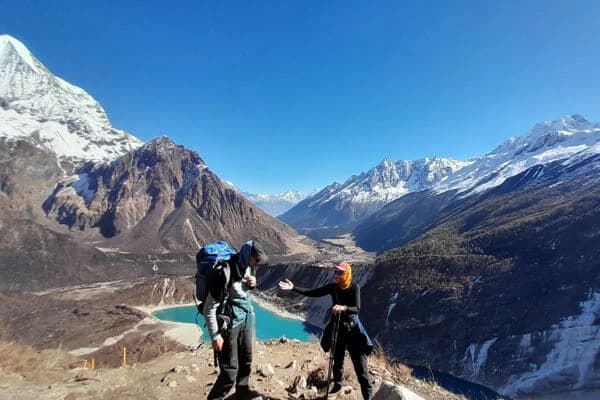
Larkya Peak is in the Manaslu region of Nepal and is basically one of those trekking peaks people choose when they want something tougher than a normal trek but not a full mountaineering expedition. It is not a commercialized peak, so the whole experience feels more raw and less crowded compared to the usual trekking routes in Nepal.
In simple terms, it is a trekking peak in Nepal, which means you don’t need advanced climbing skills, but you also can’t treat it like an easy hike. The Larkya Peak climbing in Nepal requires basic fitness, proper acclimatization, and a licensed guide, especially because of the altitude and changing landscape as you move up.
Larkya Peak Climbing Cost in 2026 Overview
On average, the total cost sits between USD 2,500 to USD 4,000 per person. Most people booking a standard guided Peak Climbing trip end up somewhere in the middle. You’ll come across cheaper deals, but those usually mean bigger groups or more basic arrangements. On the higher end, you’re paying for smaller groups and a setup where things are handled more smoothly.
Most Larkya Peak climbing packages include the main parts of the trip like permits for the Manaslu region, a licensed Climbing guide, porter support, food, accommodation, and transportation from and back to Kathmandu. But even with all that, you’ll still spend extra along the way. Small things like snacks, charging, tips, or last minute gear always add up more than people expect.
In the end, the actual cost to climb Larkya Peak in Nepal comes down to a few practical things. Group size makes a difference, the season can push prices up or down, and the local trekking agencyyou choose matters more than it looks at first. At the end of the day, the price reflects how the trip is run and how much guidance you want while you’re out there.
Permit Costs for Larkya Peak Climbing
A big part of the cost comes from permits, and you can’t skip them because the Manaslu region trek is restricted. No permits means no entry, simple as that.
You’ll need the Manaslu Conservation Area Permit (MCAP) and the Annapurna Conservation Area Permit (ACAP). Both are usually around USD 22 each for foreign trekkers. These are fixed fees and don’t really change much.
The bigger cost is the Restricted Area Permit (RAP) for Manaslu. This one sits at about USD 100 per week in peak season (September to November) and roughly USD 75 per week during the rest of the trekking months. The first week is charged as a full block, and if you stay longer, extra days are counted separately.
You can’t apply for this on your own either. A registered trekking agency in Nepal like Nepal Trekking Routes handles it. In most climbing packages, these permit costs are already included in the total Larkya Peak trekking cost, but it’s still good to know what and how much you’re actually paying for.
Why does the Larkya Peak permit cost change depending on the season?
The permit cost changes mostly because the Manaslu region doesn’t see the same flow of trekkers throughout the year.
In peak season (September to November), this is when the Manaslu route sees the most activity because most trekkers naturally pick this period of time. The route is active, groups are everywhere, and guides are often fully booked. Because of that demand, the Restricted Area Permit (RAP) goes up to around USD 100 per week.
Outside that window, things slow down a bit. From December to February, the weather gets very cold at higher altitudes, and from June to August, monsoon makes travel less practical for many people as people don’t get what they are looking for. Fewer trekkers choose these months, and some parts of the route barely see activity. During this period, the permit price usually drops to about USD 75 per week.
So it’s really just demand. More people going in means higher cost. Fewer people, lower cost. Which season would you actually prefer?
Guide and Porter Cost for Larkya Peak Climbing
Another major part of the cost goes to guides and porters. In the Manaslu region trekking, you need a licensed guide for the entire trek. There’s no way around that requirement.
A guide costs around USD 30 to 40 per day, which for a 10 to 14 day trip comes to roughly USD 300 to 560. This usually includes their food, stay, and insurance, so nothing additional is added for that.
A porter is optional, but most trekkers still take one because the load gets heavy as you keep moving. The cost is around USD 20 to 25 per day, and they carry about 20 to 25 kg. For the full trek, that’s roughly USD 200 to 350.
Put together, most people spend somewhere between USD 500 to 900 on guide and porter support. The exact figure depends on how long you stay and which agency you book with, but this is the realistic range for Larkya Peak climbing 2026.
Food and Accommodation Cost on the Larkya Peak Trek
You might wonder how much food and accommodation actually takes on this restricted region climb, but once you’re on the trail, this is where money quietly goes every day, without you even having a second thought.
You sleep in small teahouses with just a bed, a thin mattress, and a blanket that sometimes does the job, sometimes doesn’t. Lower down, a few places feel a bit more comfortable, but once you start climbing higher into the Manaslu side, it gets colder and more basic. That’s when trekking in Nepal gets real.
Food is basic but repeats throughout the trek. Mostly dal bhat, noodles, rice, soups. That’s it. You’ll see the same things again and again. And the funny part is, the higher you go, the more you pay for the same plate because everything is carried up.
Most people end up spending around USD 25 to 40 a day for food and a place to sleep. It doesn’t feel like a big deal while you’re Nepal trekking, but after the trip you realize it quietly took a decent chunk of the Larkya Peak climbing cost in 2026, usually around USD 300 to 500 overall, depending on how long you stay and how much you eat.
There’s no real way around it either. Once you’re there, this is just part of the routine until the climb and trek finishes.
Hidden Costs of Larkya Peak Climbing (What Most Trekkers Forget to Budget)
This is the part of the total peak climbing budget that most people don’t really take seriously at the start. You plan the big numbers, lock in the permits, sort the guide, maybe even calculate food and rooms. The reality is, once you start walking in the Manaslu region, there are small payments that slowly become part of your daily routine.
Travel insurance is the first one. It is required for high altitude trekking and must include emergency evacuation. Most people spend around USD 100 to 200 for proper coverage. It is not something you think about often, but it becomes important the moment anything goes wrong in remote areas. So this is a must have.
Then there are the small things you keep paying for without really planning them:
- Charging phone or power bank: USD 2 to 5 each time, depending on the village and power source
- Hot shower: USD 3 to 7, and sometimes people skip it when water gets too cold higher up
- Wi-Fi in a few villages: USD 2 to 5, slow and not always reliable
- Bottled drinks or extra water: USD 1 to 4 each, and it gets more expensive as the altitude increases
None of these feel like big expenses on their own. The thing is, after a long walking day, you don’t really think twice before paying for a warm drink or charging your device.
Tipping is another part people don’t fully include in the first budget. Guides and porters are usually tipped at the end of the trek. There is no fixed rule, but most trekkers set aside around 10 to 15 percent of the total guide and porter cost.
There is also simple personal spending that happens along the way:
- Snacks during long trekking days: USD 50 to 100 total
- Extra tea, soups, or meals outside the package
- Small gear fixes or forgotten items picked up during the trip
One thing many trekkers only realize later is that prices don’t stay the same throughout the route. A bottle of water or a snack that feels normal in lower villages can cost double or more higher up. It is not random pricing, it is just the reality of everything being carried manually into remote areas.
When everything is added together, these hidden costs usually come to around USD 200 to 500 extra on top of the main Larkya Peak climbing cost in 2026.
It is not one big payment you notice at once. It is a series of small, everyday expenses that only make sense when you look back after the trek is over and maybe that’s why it’s named as hidden cost.
Gear Cost for Larkya Peak Climbing (Buy vs Rent)
Gear is where a lot of people either spend too much or don’t think it through properly.
Most people don’t carry everything from home. They just rent in Kathmandu, especially around Thamel where every second shop is selling or renting trekking gear.
Renting is cheaper, and for a one time climb like Larkya Peak, it usually makes more sense.
Renting gear in Kathmandu
Prices change from shop to shop, but this is roughly what you’ll end up paying:
- Boots: around USD 4 to 7 per day (or weekly rates in some shops)
- Crampons: USD 2 to 4 per day
- Ice axe: USD 2 to 4 per day
- Harness and helmet: USD 2 to 3 per day
- Sleeping bag (for cold conditions): USD 2 to 3 per day
- Down jacket: USD 2 to 4 per day
If you’re doing the full trip, it usually ends up somewhere around:
USD 200 to 400 total
Sometimes a bit less if you negotiate well, sometimes more if you don’t.
Buying gear for your Peak Climbing Journey
Buying only really makes sense if you plan to use it again.
New gear is expensive:
- Boots: USD 150 to 400
- Down jacket: USD 100 to 300
- Sleeping bag: USD 80 to 250
- Basic climbing gear set: USD 150 to 300
You can easily go past:
USD 600 to 1,000+
And that’s just normal mid range stuff, not high end brands.
What you actually need for Larkya Peak
It’s not a technical climb, but it’s not just walking either.
Basic required gear includes:
- Proper insulated trekking or mountaineering boots
- Crampons and ice axe for the summit section
- Warm layered clothing for freezing temperatures
- A sleeping bag rated for sub zero conditions
- Basic climbing safety gear (harness, helmet)
Lower altitude trekking gear won’t be enough once you move above base camp.
Simple truth
- Renting is the most practical option for most climbers doing this once
- Buying only makes sense for people who will reuse the gear
- Gear quality matters more than saving a small amount of money
Types of Larkya Peak Climbing Packages in 2026
Same peak, same permits, same route. What changes is how many people you’re with and how much attention you get on the way.
Budget climbing package (USD 2200 to 2800)
This is the cheapest option you’ll realistically find from a proper company.
You’re usually in a bigger group. One guide is handling multiple people at once. Porters are shared in a standard setup. Everything runs on a fixed plan from start to finish, so there isn’t much room to change anything once it’s set.
Teahouses are basic. Food is basic. It’s all kept simple to keep the price down.
This is for people who just want to reach the summit without spending more than needed.
Standard climbing package (USD 2800 to 3500)
This is what most people end up choosing.
Groups are smaller compared to budget trips, so it doesn’t feel crowded. The guide has more control over how the days go, especially when it comes to altitude and in which speed to walk. Things are handled better when the trail gets tough.
It’s still not luxury or anything close to it. It’s just more organised and less chaotic than the cheapest Larkya peak Expedition option.
Luxury Larkya Peak climbing (USD 3500 to 5000 plus)
This is private or very small group climbing.
You don’t join a fixed group. It’s usually just you or a very small team with a guide. The schedule is not locked. If you need more time for acclimatisation or move at a different pace, the plan is adjusted.
The higher cost is not because of better hotels or food. You still stay in basic teahouses and use normal camping setups like everyone else on this route. The main difference is the support. There are fewer climbers per guide, and everything is handled more directly and personally.
People choose this option mainly for privacy and to avoid depending on group timing.
What actually changes the cost
These are the main things that contribute to change of the price, and most of the difference you see in packages comes from here.
- Group size matters a lot. More people means the cost per person goes down because everything is shared. Smaller groups cost more since you’re splitting less.
- Season also affects price. In peak months, it costs more because demand is high and things get booked early. Off season can be a bit cheaper, but conditions are not always the same.
- Guide setup changes the cost. Some trips have one guide for a bigger group, others keep fewer people per guide. Fewer people per guide costs more because you get more attention.
- Trip length matters too. Even a few extra days means more food, more places to stay, and more staff pay, so the total goes up.
- What the package includes also makes a difference. Some companies include basic gear or transport, others don’t, and that changes the price.
- Transport is another factor. Shared transport is cheaper. Private jeep or arranged rides cost more.
- Small daily expenses also add up. Extra food, drinks, charging, and small purchases don’t feel like much, but they increase the total over time.
How to reduce Larkya Peak climbing cost
The price doesn’t really change because of one big thing. It’s more about small decisions you make before the trek and how you set things up. Once you’re on the route, most costs are already locked in.
- Going through a Nepal based trekking agency directly usually keeps the cost lower. If there are middle agents involved, the price often goes up a bit without adding anything useful to the actual trek.
- Booking early helps you avoid higher last minute pricing. As the season gets closer, choices become limited and agencies don’t really adjust rates much.
- Fix your group size before you confirm anything. Once the cost is split per person, changing the number later can easily shift the total.
- A normal trekking peak climbing package is usually enough. Asking for custom changes sounds good, but it usually brings extra charges without changing the climb itself.
- Carry gear from Kathmandu if possible. In small villages along the route, basic trekking and climbing items cost more and you don’t get many options.
- Before paying, check what is actually included in your trekking package in Nepal. Sometimes transport or small services are not clearly broken down, and that can affect your final spending later.
Larkya Peak Climbing Transportation Cost
To give you the real scenario, the cost of transport depends on the type of transport and group size.
Getting from Kathmandu to the start of the Larkya Peak route is done by road, usually toward Machha Khola or Soti Khola depending on the trekking itinerary set by the agency. The drive takes around 7 to 10 hours, and road conditions can change the travel time.
There are three common options used on this route. A local bus is the cheapest, costing roughly USD 10 to 25 per person, but it is slow and less comfortable on rough roads. A shared jeep is the most used option for trekking peak climbing in Nepal like Larkya Peak, costing around USD 25 to 50 per person. A private jeep is the most expensive, usually around USD 150 to 220 per vehicle for this section, and the cost is shared within the group.
Return transport works in a similar way, but the exact cost depends on where the Larkya Peak expedition ends and how your trekking agency arranges pickup from the trail.
So finally is the Larkya Peak Expedition cost worth it?
If you are thinking this is going to feel like a comfortable holiday trek, it probably won’t. And that’s the first thing to be clear about.
A lot of the money goes into things you don’t really think about at the start. Getting into the Manaslu region is not simple. Everything has to be arranged, carried, or paid for on the way. That’s guides, porters, permits, food, places to sleep, all of it stacked together.
Once you are on the trail, comfort is not really part of the setup. Rooms are basic, food is repetitive, and the higher you go, the more you just adjust to it instead of expecting more.
But then there’s the other side of it. You are getting access to a proper Himalayan peak in a remote area without going into full technical Larkya Peak expedition territory. That’s not something you get for cheap anywhere.
So the cost is not really about luxury or extra comfort. It’s more about paying to reach a place that is not easy to reach, and having the support needed to actually get there and come back safely.
Final thoughts on Larkya Peak climbing cost
The cost of Larkya Peak Expedition is not just a random package number. It is built from everything you have already seen in this blog, permits, guides, porters, transport, food, accommodation, and all the small daily expenses that slowly add up during the trek.
Nothing about it is luxury and nothing is hidden as a bonus. It is simple logistics in a restricted and remote region where everything has to be arranged from scratch and carried in along the route.
In the end, the Larkya Peak climbing cost only starts to make sense when you look at it as the total price of access and support needed to complete a Peak Climbing in Nepal Manaslu region, not just the summit itself.