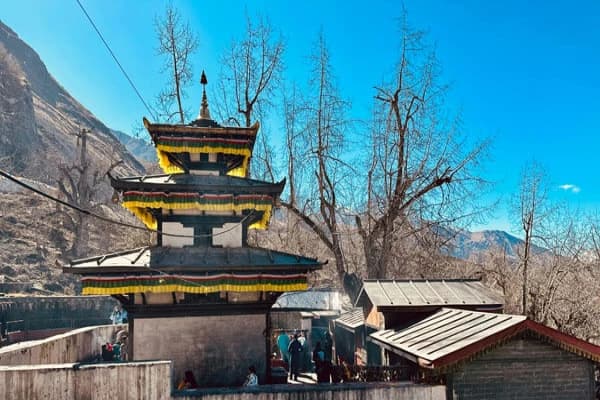
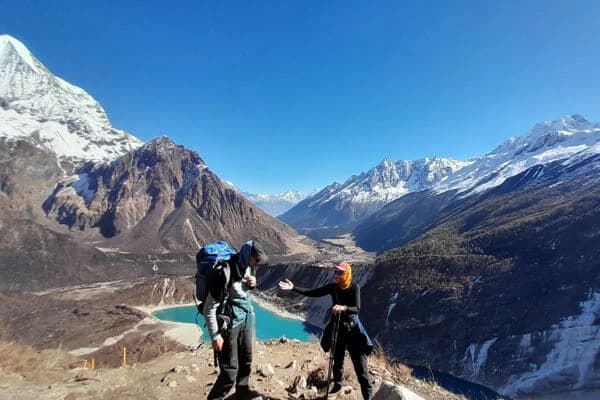
Most people planning theEverest Three Passes Trek 19 days hear the same thing. Go in spring or autumn. It sounds easy, but it is not that simple when you are actually on the trail. The timing changes everything here, especially once you start crossing high passes.
This is not an easytrek in the Everest region. You are out there for days at high altitude, and things do not stay the same for long once you leave the valleys. The three passes, Kongma La, Cho La, and Renjo La, are where that really shows. Some days they feel fine, other days the weather turns them into something completely different.
There is no season that makes this trek easy. Some months give you clearer skies and fewer issues on the passes. Other months bring snow, fog, flight delays, and long waits in teahouses. When you go matters more than people admit.
Best season for Everest Three Passes Trek
The best time for the Everest Three Passes Trek is spring and autumn. That is the simple answer, and it comes from how the route actually behaves in real conditions across the Everest region of Nepal.
If you are trying to figure out the Everest Three Passes Trek best time, you are basically choosing between Everest Three Passes Trek in spring and Everest Three Passes Trek in autumn. These two periods give you the highest chance of crossing all three passes without major disruption.
Everest Three Passes Trek in spring Season (March to May)
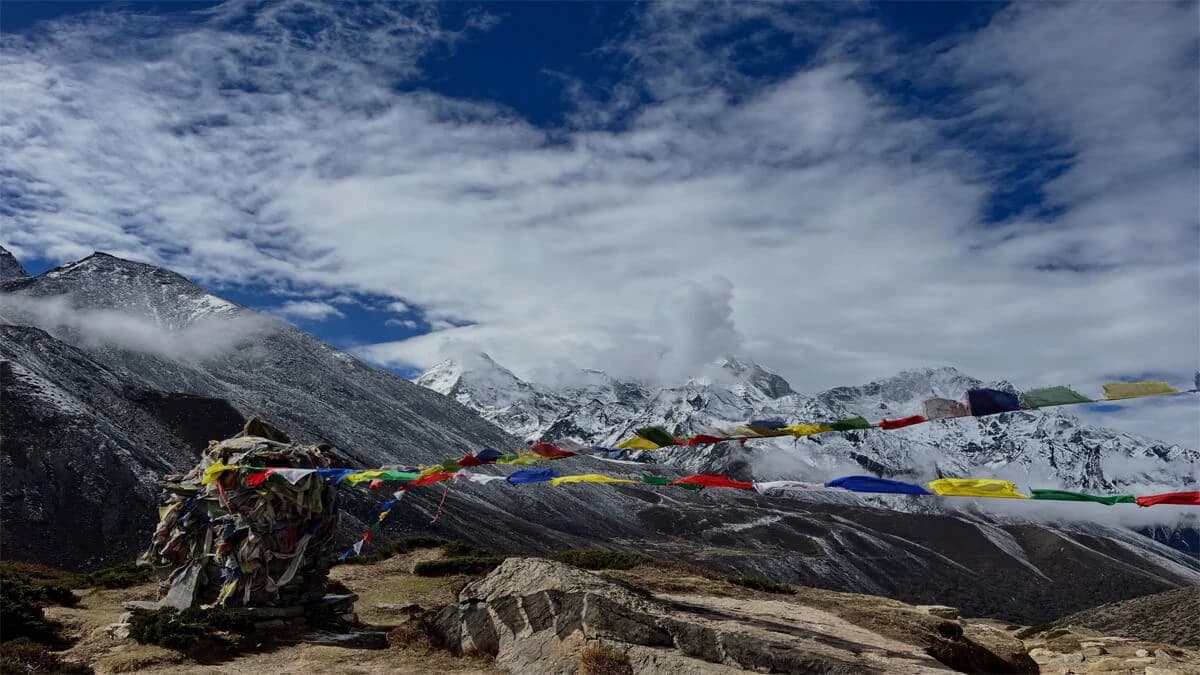
Spring is one of the main seasons people pick for this trek. March still feels like winter once you move higher. Cho La and Kongma La can still hold snow and that changes how the day goes.
April is where most people show up. The trails open up more, visibility is better on most days, and things feel less stuck compared to earlier in the season. You still see snow in places, especially after fresh falls.
May starts fine but it shifts later in the month. You notice more cloud building up in the afternoons and things feel less predictable.
Spring feels like this:
- Clearer mornings in the Everest region
- Snow still sitting in shaded sections up high
- Steady flow of trekkers through Namche and toward base camp
- Temperatures slowly rising lower down, but still cold above 4000 meters
It works. It’s just not always smooth.
Everest Three Passes Trek in autumn (late September to November)
Autumn is the season most people aim for. If you ask around about Everest Three Passes Trek best time, this is usually what comes up.
October is the main month. Trails are dry, the sky is often open, and you can get long views across the valleys. But it is busy in a way you notice quickly. Lodges fill up, especially in Namche Bazaar and Gokyo, and you sometimes end up planning your day around availability instead of distance.
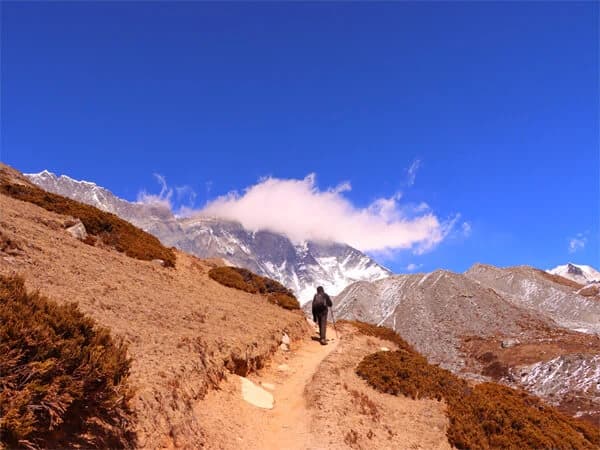
Higher up, the passes like Renjo La and Cho La are usually in better shape compared to other times of the year. Still, it gets cold fast once the sun drops.
Autumn feels like this:
- Clear mornings that can change later without warning
- Dry ground on most of the Everest Three Passes Trek route
- Crowded tea houses in the main stops
- Cold nights that hit harder the higher you sleep
- October sits in the middle of all this.
Everest Three Passes Trek Spring vs Autumn Comparison
Spring is a bit mixed. Some days go fine, some days you run into snow higher up and just deal with it as it comes. You don’t really know from one week to the next how it will feel on the passes.
Autumn is easier in that sense. Most days you can keep walking without much getting in the way. You still feel the cold at night, especially as you move up, but the weather does not interrupt your plan as much.
In spring, things change more while you are already on the trail.
In autumn, things tend to go the way you expect more often.
That is really the main difference. Same trek, same difficulty, just how often the weather gets in the way.
Most people still pick autumn. Spring works as well, if you are fine with things changing while you are out there.
Seasons To Avoid During Your Everest Region Trek
There are two parts of the year most people skip for the Everest Three Passes Trek in Nepal. They are not impossible, just more annoying to deal with in different ways.
Everest Three Passes Trek Monsoon Season (June to August)
Monsoon is not a great time for this trek for most people.
It rains a lot in the lower parts and everything stays wet. Trails get slow and a bit tiring to walk on.
Higher up you don’t see much. Clouds sit over the mountains and you just miss the views most days.
Flights to Lukla also get delayed a lot. Sometimes you just end up waiting without doing anything, which throws plans off before the trek even starts.
You can still go in monsoon, but it does not feel like what people usually imagine when they think of the Everest region.
Everest Three Passes Trek Winter Season (December to February)
Winter is different again.
Snow builds up on the high passes like Cho La and Kongma La. Some days they are open, some days not, and you only figure it out when you get there.
It gets very cold at night once you are high up. Even daytime walking feels slower just because of the temperature.
Some tea houses higher on the route are closed or running with fewer options, so you don’t always have many places to stop.
You can still do the trek in winter, but you have to be more flexible with everything while you are on the trail.
Note: These are the two seasons most people avoid when they think about the Everest Three Passes Trek best time. Spring and autumn are what most people go for. The rest of the year just brings more unknowns than people expect.
What Actually Decides the Best Time for the Everest Three Passes Trek
There isn’t really a perfect time for this trek. People say spring or autumn, but once you are there it comes down to what you actually get on the day.
Up at the passes like Kongma La, Cho La, and Renjo La, things can change with a bit of wind or fresh snow. You might wake up planning to cross and then just wait a bit at the base because it doesn’t feel right yet. Other days you just go without thinking much about it.
Flights to Lukla also mess with plans more than people expect. If it gets delayed, everything after that shifts around. You just deal with it as it comes.
October has a lot of people. You feel it in Namche, in Gokyo, even on the trail in between. April also brings trekkers, just not quite as many.
Spring still has snow hanging around in higher sections. Sometimes you are walking normally and then suddenly it slows down for a while without much warning.
Winter is just cold and a bit uncertain with the passes. Some days they are fine, some days not, and you only really know when you are standing there looking at them.
So it’s less about picking a perfect month and more about going and seeing how things take place while you are already out there.
Month by Month Conditions of the Three Passes Trek in the Everest region
This is just a straight look at how each month generally feels on the route. Conditions at Kongma La, Cho La, and Renjo La decide most of it anyway, and they don’t really follow a perfect pattern.
- January: January is proper winter across the whole route. It stays cold all day and snow often stays on higher parts for a long time. Not many people attempt the full Three Passes Trek in Everest Regions during this period.
- February: February is not much different. Cold mornings, snow still covering higher areas, and only a few better days that you cannot really plan around.
- March: March starts to shift a little. Lower villages feel easier to move through, but higher up snow is still there in patches, so it is not fully open yet.
- April: April is when things start picking up again. More trekkers come through and the route becomes active. There is still some leftover snow in places, but this is one of the first proper windows for crossing all three passes.
- May: May usually starts off fine. As it moves toward the end of the month, afternoons feel a bit different with more cloud building and weather changing more often than earlier in the season.
- June: June is when the monsoon season in Nepal starts. Rain shows up in the lower valleys and the trails get wet and heavy underfoot. Mountain views are often blocked for long parts of the day.
- July: July is a deep monsoon period. Wet trails, low visibility most days, and Lukla flights can get delayed more than people usually expect.
- August: August feels similar to July. Still wet, still cloudy, and conditions do not change much across the region.
- September: September slowly starts improving. The early part still feels like monsoon, but later in the month clearer days start showing up again and conditions get better.
- October: October is the main trekking month. Trails are dry and there are more people on the route, especially around Namche and Gokyo.
- November: November is still a good time for trekking in Nepal. There are fewer trekkers, colder air, but overall conditions stay fine for crossing all three passes.
- December: December moves back into winter again. Snow starts building up higher and nights get cold quickly once the sun goes down.
Downsides of Trekking in Peak Season on the Three Passes Route
Peak season for the Everest Three Passes Trek falls in April and October. These are the months most people aim for because the weather behaves better and the mountains are more visible. It makes sense on paper. In reality, it just means more people are trying to move through the same places at the same time.
The route through the Everest high passes is never simple, and peak season does not remove the usual challenges. It just changes the type of challenge you deal with.
More People on the Route
Once you are on the trail in peak months, you notice the difference quickly. Villages like Namche Bazaar, Gokyo, and Lobuche feel active from morning to evening.
You end up walking around other groups more often. On narrow parts of the trail, the movement becomes steady and shared. It does not change the difficulty of the trek, but it does change the feel of it. There is less empty space between villages, less silence on long stretches.
Tea Houses Fill Up Early
Finding a room is still possible, but timing matters more than people expect. In places like Namche Bazaar and Gokyo, arriving late in the day can limit your options.
Most trekkers reach the same stops around similar hours, so lodges fill up in waves. Once that happens, you take what is left and adjust your plans around it. Meals also take longer during busy hours since kitchens are handling more guests at once.
Lukla Flights Affect the Schedule
Flights to Lukla do not fully settle even in the main trekking months. Small changes in weather can shift flight schedules, and that affects everyone waiting to start or finish the trek.
When delays happen, multiple departures are affected together. It automatically means waiting in Kathmandu or Ramechhap without a clear timeline, which pushes the rest of the itinerary back.
Viewpoints Feel Crowded at Sunrise
Sunrise viewpoints like Kala Patthar and Gokyo Ri attract a lot of trekkers in peak season, especially early in the morning.
You still get the views, and they are still worth the effort, but the experience is shared with many others. People arrive around the same time, take photos, then slowly move on. It is not a quiet moment, more a collective one.
The Trek Feels More Structured
The difficulty of the Three Passes route stays the same no matter the season. What changes in peak months is the flow of the day.
Groups mostly move at similar times, rest in the same places, and reach the same villages together. You just have to adjust your rhythm around that without really thinking about it.
Costs and Availability Tighten
Peak season brings more demand for accommodation and support services along the route. Rooms, guides, and porters are easier to arrange in advance but harder to adjust at the last minute.
Prices also move slightly higher compared to quieter months, especially in popular villages along the main trail.
Weather Still Changes During the Day
Even in the best trekking months, conditions shift from morning to afternoon. Mornings are often clearer, which is why most trekking plans start early.
Around the passes, wind and cloud cover can change how the day feels. Crossings still depend on short term conditions rather than the month alone.
Direction of the Everest Three Passes Trek
People ask if the Everest Three Passes Trek is done clockwise or anticlockwise. In reality, there is no fixed direction. It is a loop in the Everest region, and the order depends on the itinerary, weather, and decisions made during the trek.
Most trekkers follow a similar route. You start around Namche Bazaar, then move through Dingboche and Lobuche, and reach the Everest Base Camp Trek 15 days section. After that, the trail links the high passes. First Kongma La Pass, then down toward Cho La Pass, which connects into the Gokyo Lake Trek 13 days side. From there, you spend time around Gokyo Lakes and Gokyo Ri before crossing Renjo La Pass and returning toward Namche.
This route works well because it gives time for acclimatization. The body adjusts step by step before reaching higher sections of the Everest Three Passes Trek. It also connects the Everest Base Camp Trek and Gokyo Valley Trek in a smooth way.
Some trekkers start from the Gokyo side instead. This depends on weather, timing, or how the itinerary is planned by guides. The order can change while you are already on the Everest Three Passes Trek.
Cho La Pass is usually the main factor that affects timing. If conditions are not safe, the plan changes. This can also change the order between the Everest Base Camp Trek section and the Gokyo Lake Trek section.
Advantages of Trekking in Off Season in Nepal
We know it might sound like there is no real advantage of trekking in the off season in Nepal, but that is not fully true. The Everest Three Passes Trek in the Khumbu region feels different when things are not at their busiest, and that changes how the whole journey unfolds.
In places like Namche Bazaar, Dingboche, and Gokyo, you don’t run into the same rush for rooms. You can sort out a place to stay without thinking too far ahead. That alone makes the plan feel less tight compared to peak months on the Everest Three Passes Trek route. And you also get some cheaper deals on the accommodation, tell me what’s better than that?
On the trail, you also get moments where it is just you and the landscape for a while. Between villages, especially around the Gokyo Valley Trek side or sections that connect toward the Everest Base Camp Trek route, the walk feels more open. Gokyo Ri at sunrise is another example. In peak season it gets busy early. Off season is a totally different scene.
Kala Patthar on the Everest Base Camp Trek is similar. You still meet people there, but it is not packed as much as the best seasons.
However, you need to know that it is not smooth every time. Weather can shift without warning. In winter, some tea houses close or reduce services. In monsoon, rain can slow the walk and Lukla flights can get delayed. That part needs flexibility more than anything else.
Still, a lot of people choose off season trekking in the Khumbu region because the Everest Three Passes Trek feels more open in a simple way, especially around the main villages and viewpoints.
Conclusion: Best Season for Everest Three Passes Trek
Spring and autumn are the times when the Nepal Everest Three Passes Trek brings in a lot of travel enthusiasts. The weather is generally better in these months, and views of the Everest region feel clearer. Crossing passes like Kongma La, Cho La, and Renjo La also fit more easily into the plan during this period.
Off season trekking has its own perks too. The trail feels more open in many places, but there are also some hazards you need to be careful about. Weather can shift your plans, some tea houses may not be fully open, and getting in and out of the region can take extra time.
In the end, it really depends on what kind of trip you want and how much change in plans you are okay with while you are on the Everest Three Passes Trek.