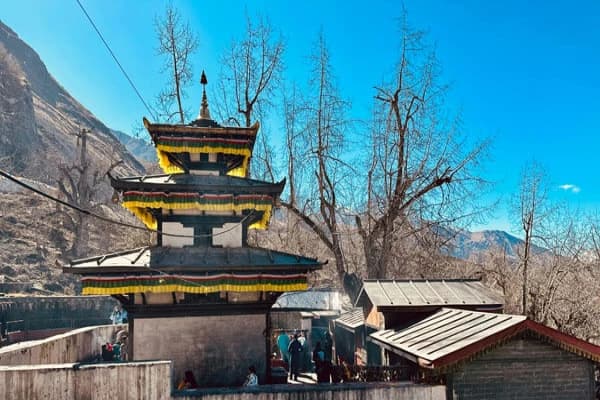
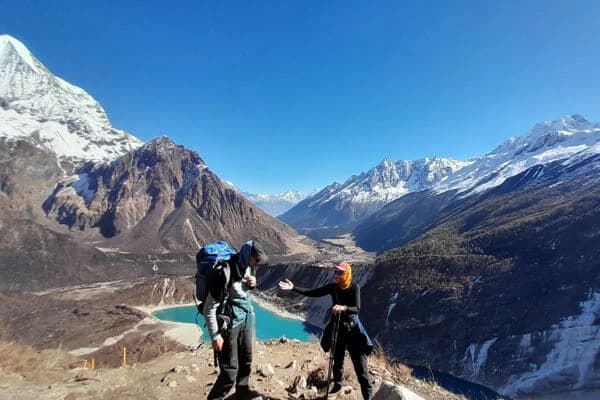
Nepal, being the land of mountains, has several peak climbing destinations, and it’s completely natural to feel confused about which one to choose. Two of the most talked about options are Larkya Peak in Manaslu region and Island Peak in Everest region, both popular in the Nepal trekking peaks climbing category.
They might sound similar, but they are actually quite different when it comes to difficulty, cost, route, and overall experience.
Larkya Peak is in the Manaslu region and the trek is long and remote with very few villages on the way. Island Peak is in the Everest region and feels very different. It has more technical climbing sections, more people on the route, and a more organized climbing setup because it is a popular peak.
This guide explains both so you can clearly understand how they are different and decide which one fits your plan better.
Larkya Peak Location vs Island Peak Location: Access and Route
Larkya Peak is in the Manaslu region of Nepal near the Tibetan border. It is a restricted trekking area, so permits and a guide are required. From Kathmandu, you drive to Soti Khola and then start trekking on foot. You go through several landscapes and take several days before you even get deep into the Manaslu side.
Island Peak is in the Everest region of Nepal in the Khumbu Valley. You fly from Kathmandu to Lukla and start trekking from there. The Island Peak climbing route goes through places like Namche Bazaar, Dingboche, and Chhukung before reaching the Island Peak side valley.
Larkya Peak vs Island Peak Difficulty
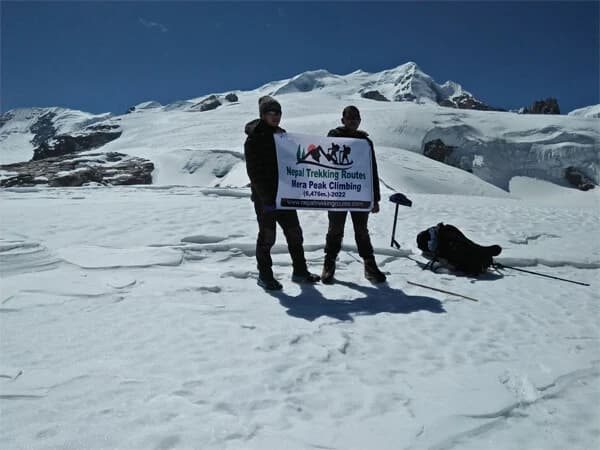
Larkya Peak climbing difficulty is moderate to challenging. It is in the Manaslu region and reaches about 6,249 m. Larkya Peak climbing is not very technical, but it becomes hard because of high altitude, remote location, and changing weather conditions in the mountains. The main challenge is the long time your body stays above high elevation, which makes it physically tough.
Island Peak climbing difficulty is also moderate to challenging, with a summit of about 6,189 m. The approach in the Everest region follows a well used trekking route up to Chhukung. After that, the climb becomes technical with ice slopes, rope sections, and glacier travel. You need basic climbing skills or a guide for a safe ascent.
Larkya Peak is more about endurance at high altitude in the Manaslu region, while Island Peak involves more technical climbing in Everest region near the summit. So the choice is actually yours.
Larkya Peak vs Island Peak Cost Comparison
Larkya Peak usually costs more.
It is in a restricted region, which means extra permits. A guide is mandatory. Logistics are harder because the area is remote, and supplies are not as easily available.
The Larkya Peak Climbing package costs USD 3150 with us, which fits the general pricing for this region.
Island Peak is a lil less expensive.
The Everest region has better access, more competition between operators, and a more developed trekking system. That keeps prices lower.
You can find your Island Peak package at USD 1990 in Nepal Trekking Routes.
In simple terms:
Larkya Peak costs more because it is remote and restricted.
Island Peak costs less because it is easier to access and more commercial.
Larkya Peak Permits and Requirements
Larkya Peak is in the Manaslu region of Nepal, which is a restricted trekking area. You need a Manaslu Restricted Area Permit to enter this region. You also need an ACAP permit for the conservation area section of the route. A licensed guide and an NMA climbing permit is also required.
Island Peak Permits and Requirements
Island Peak is in the Everest region of Nepal inside Sagarmatha National Park. You need a Sagarmatha National Park permit, Khumbu Pasang Lhamu Rural Municipality Permit, and an Island Peak climbing permit issued through the Nepal Mountaineering Association (NMA). A guide is also required, especially for the climbing section where ropes and ice sections are there.
Larkya Peak Climbing Experience
Larkya Peak climbing experience is more about being at high altitude in the Manaslu region. The climb is not very technical, however it’s not as easy as trekking in Nepal is. You move over rock and snow depending on the season, and most of the time it all depends on how comfortable you are moving at that height.
There are no fixed rope sections in most cases, so it feels closer to trekking, just at a higher level where your body starts to feel the altitude more clearly.
Island Peak Climbing Experience
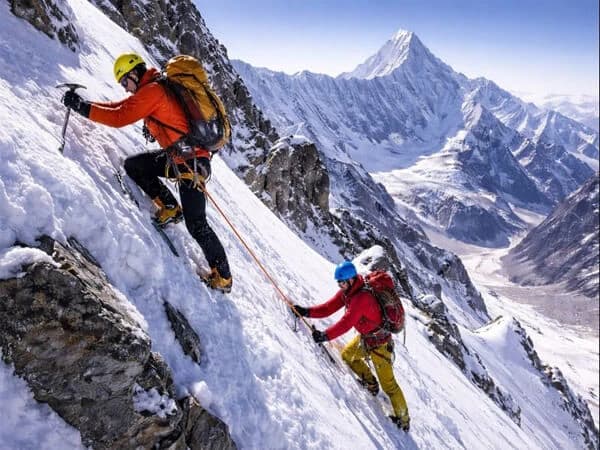
Island Peak climbing experience is more focused on actual climbing. The Everest region trek route feels normal up to base, but once the climb starts, it changes. You deal with glacier sections, ropes, and ice slopes.
You use gear like crampons and a harness, and the route is set for the summit attempt. It feels like a proper climbing setup compared to Larkya Peak.
Scenery and Views: Larkya Peak vs Island Peak
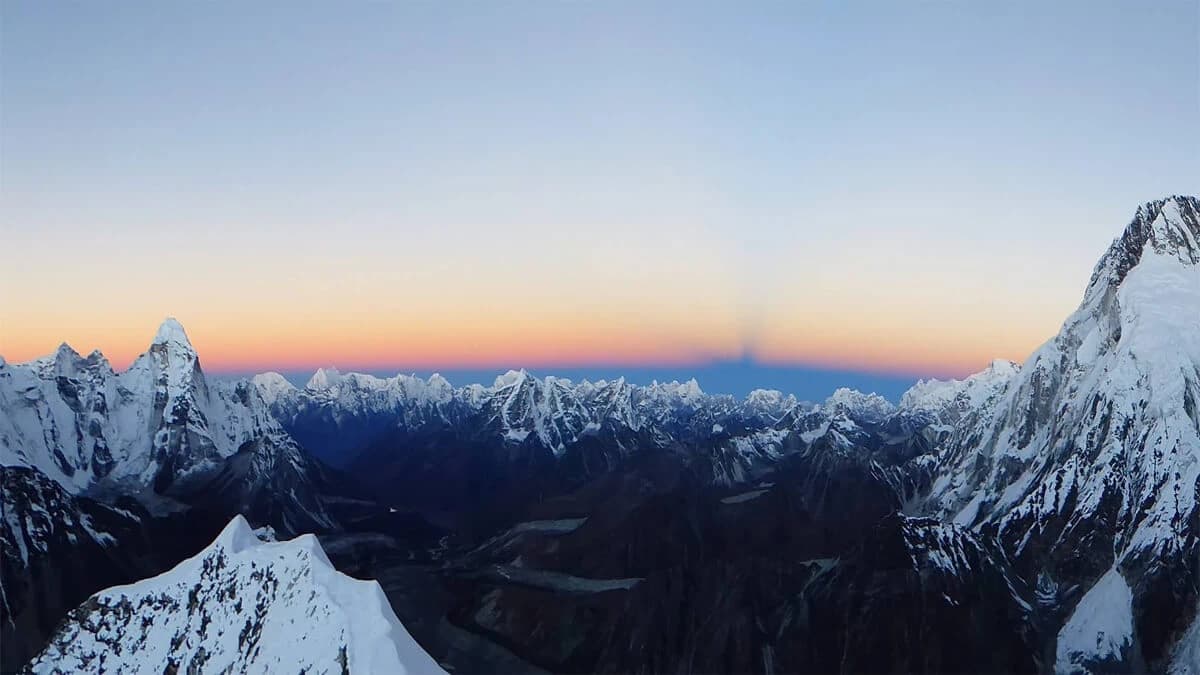
Larkya Peak is in the Manaslu region. You see Mt. Manaslu and other surrounding peaks along the way. The mountains are there in the background for most of the trek, and the view keeps changing as you gain height. There are not many people on this route, so it feels open and calm.
Island Peak is in the Everest region. You get clear views of peaks like Lhotse and Ama Dablam. The mountains look closer because the whole route runs deep inside the Khumbu Valley. There are more trekkers on this trail, and the views stay sharp once you are higher up.
Larkya Peak feels more spread out and isolated. Island Peak feels closer and more direct when it comes to mountain views.
Best Time to Climb Larkya Peak and Island Peak
Despite all the differences, one common thing you will notice on both these trekking peaks is that most expeditions in Nepal for Larkya Peak and Island Peak are done in spring and autumn.
Larkya Peak expeditions in Nepal are mostly organized in spring (March to May) and autumn (September to November). These are the main climbing windows in the Manaslu region when most teams move towards higher camps.
Island Peak expeditions in Nepal also follow the same timing. Spring and autumn are the main seasons for climbing in the Everest region, with most groups planning their Island Peak climb during these months.
Outside these periods, both Larkya Peak and Island Peak are less preferred for expeditions because winter brings heavy cold at altitude, and monsoon makes travel and climbing less reliable.
Is Larkya Peak or Island Peak Better for First Time Climbers?
If you’re doing your first peak in Nepal, most people will just tell you Island Peak. And honestly, they’re not wrong.
Island Peak is in the Khumbu region so it kind of has a set up for people trying climbing for the first time. You still go through proper glacier sections and use gear like ropes and crampons near the top, so it’s not the casual climb you think it is. But the whole thing is guided in a way where you learn as you go, which is why a lot of first timers end up here.
Larkya Peak is a different kind of tough. It’s in the Manaslu region, and it feels more like a long high altitude walk than a climbing lesson. You’re mostly dealing with altitude, cold, and just keeping yourself moving in a remote part of the mountains. It doesn’t really give you that same hands on climbing setup you get on Island Peak.
So if you’re trying to actually learn basic climbing, Island Peak makes more sense. If you just want something harder, not so crowded, and more in a remote part of Nepal, Larkya Peak is that kind of trip.
Altitude on Larkya Peak vs Island Peak: What to Expect and How to Acclimatize
Altitude is the main challenge on both Larkya Peak climbing and Island Peak climbing in Nepal. Both go above 6000 meters, so it should not be taken lightly at all. After around 3000 meters, most people already start to notice changes in their body. Heavy breathing, lighter sleep, and low energy can be seen. It is different for everyone, but it becomes more clear as the height increases.
On Island Peak, acclimatization is part of the Everest Base Camp route, with stops like Namche Bazaar and Dingboche. On Larkya Peak, the adjustment is slower because the trek on the Manaslu side is longer and more remote. Height is gained slowly over many days, which gives the body more time to adjust.
Even with a planned peak climbing itinerary, altitude sickness can still happen. Headache, tiredness, nausea, and loss of appetite are common signs. If ignored, it can get worse.
Every year, some trekkers on both peaks have to stop and go back down. A few also need emergency helicopter rescue because altitude was not taken seriously. This happens more often than most people expect.
The main thing you need to focus on is to keep your movement slow, drink enough water, and notice how the body is reacting. This matters in high altitude trekking and any easy expedition in Nepal.
How Are the Tea Houses and Food Actually on Larkya Peak and Island Peak Expeditions?
Tea houses on both Larkya Peak climbing and Island Peak climbing in Nepal are simple. That is the reality.
In the Everest region, places like Namche Bazaar and Dingboche feel more developed compared to what comes later. You get a proper bed most of the time and food options like rice, noodles, soups, sometimes even pasta. Once you start moving closer to Island Peak base camp, everything becomes more limited. Rooms feel colder and food choices drop, but there is still some variety because this route is busy with trekkers.
On the Manaslu side of Larkya Peak, it is simple from the beginning itself. Rooms are basic, sometimes shared, and nothing really changes much as you move higher. Food is mostly the same type of meals repeated in different villages. Near higher sections, there is not much choice at all.
No one really goes on these routes expecting comfort. Food is just for getting through the next day of walking or climbing.
Common Mistakes on Larkya Peak and Island Peak Climbs in Nepal
Take a look at these common mistakes people make so you can be extra prepared for your peak climbing journey in Nepal.
- A lot of people go for Island Peak thinking it’s just a long trek. It starts that way, but the final part is where things change and many don’t expect it.
- Early altitude signs get ignored more than they should. Headache, poor sleep, low energy, and loss of appetite are usually brushed off until it becomes harder to continue.
- Cost is another big factor people focus on too much. Larkya Peak and Island Peak are very different trips, so comparing only price doesn’t really make sense.
- Some try to stick to a faster plan than their body allows. At high altitude, that usually backfires.
- Weather is often underestimated. In both regions, it can change quickly and affect how the day goes.
- On Island Peak especially, basic climbing gear is not optional. Without it, the upper part becomes much more difficult than expected.
Most of the problems come from preparation before the trek, not from the mountains themselves.
Gear Difference Between Larkya Peak and Island Peak in Nepal
Gear is one of the clearest differences between Larkya Peak climbing and Island Peak climbing in Nepal, and it shows how different these two experiences actually are. They both need proper mountain equipment. Neither of them is something you do with just normal trekking gear.
Island Peak (Imja Tse) in the Everest region is slightly more technical. The climb near the top is why you need full gear like crampons, harness, helmet, ice axe, and rope with the guide. Without this, you simply don’t go ahead.
Larkya Peak in the Manaslu region is less technical, but that doesn’t mean it’s simple. You still need crampons, harness, helmet, and other basic climbing gear depending on snow and weather. Some days you use it, some days you don’t, but you carry it because conditions change. It is still a proper high altitude climb, not just a trek.
Island Peak gear:
- Crampons
- Harness
- Helmet
- Ice axe
- Rope (used with guide)
Larkya Peak gear:
- Crampons (often needed depending on snow)
- Harness
- Helmet
- Ice axe (sometimes needed)
- Warm trekking layers
- Trekking boots
- Sleeping bag
- Trekking poles
Island Peak is more technical when you actually start climbing. Larkya Peak is less technical, but it is still serious in terms of altitude and conditions. Neither should be treated casually.
Island Peak (Imja Tse) and Larkya Peak Peak Climbing Itinerary in Nepal
Island Peak, also known as Imja Tse, is around 16 to 20 days for most trips. The route follows the Everest Base Camp trail, so places like Namche Bazaar, Dingboche, and Chhukung naturally come in before base camp. After reaching base camp, teams wait for a weather window and then go for the summit.
Larkya Peak takes around 18 to 22 days or more. The route is longer and goes through more remote areas with fewer facilities, so travel between villages takes more time. The schedule can also change depending on weather and trail conditions.
In simple terms, Island Peak is a shorter and more set itinerary, while Larkya Peak takes more days because the trail is longer and less developed.
Risk and Safety on Larkya Peak and Island Peak in Nepal Trekking
Both Larkya Peak climbing and Island Peak climbing are part of Nepal trekking peaks, and both involve real risk even though they are well known routes. Most problems usually start from altitude or lack of proper preparation.
Once you go above 5000 meters, the body reacts in ways that are not always predictable. Headache, low energy, and loss of appetite are common. Some people continue without adjusting properly, and that is where things can become serious.
Island Peak has more risk during the final climb. It requires correct use of climbing gear and careful movement in exposed sections. For someone attempting their first trekking peak in Nepal, even small mistakes with equipment or timing can cause problems.
Larkya Peak feels different because of the route itself. It is more remote, and once you are deep in the trail, there are fewer places to rely on if something goes wrong. Weather or health issues take longer to deal with simply because help is not nearby.
Helicopter evacuation in Nepal is easier to arrange on the Everest side because access points like Lukla and Namche Bazaar are established and commonly used. On the Manaslu side, access is limited, and flights depend more on weather and location, so reaching help is not always quick.
How to Prepare for Larkya Peak and Island Peak
Don’t assume you will just adjust once you reach there. That usually doesn’t go the way people expect.
If you are doing either of these peaks, you should already be used to walking uphill for a few hours with a backpack. If a normal hill hike already leaves you tired too quickly, it will feel more tough once you are higher up. Having done at least one trek in Nepal before helps a lot because your body already knows the feeling of moving at altitude.
Another way to prepare is just to walk more. We know it might sound very casual but it’s true. Use stairs when you can, go for uphill walks, carry a small backpack sometimes so your shoulders and legs get used to it. Squats or step ups at home also help. You don’t need a complicated training plan, just repeat the basics for a few weeks.
For Island Peak, there is one extra thing. You should be okay with wearing gear like crampons and a harness. You won’t be figuring it out alone, the guide handles the route, but the last part is not regular walking. So prepare well for that and follow instructions step by step.
Larkya Peak is more about staying consistent over a longer route where things don’t change much in terms of comfort.
Both peaks will show pretty quickly how your body reacts in mountain conditions. The people who do fine are usually not the ones who trained the hardest, but the ones who are already used to just walking for long stretches without making it complicated.
Who Should Not Attempt Larkya Peak
Larkya Peak is not for someone who is expecting a smooth or easy trekking trip in Nepal. The route goes through a remote part of the Manaslu region where villages are far apart and facilities stay basic throughout. Between stops, there is very little support, so you are mostly relying on what you carry and what is available at each stop.
People who need comfort in accommodation or expect different food options every day usually find this route difficult to adjust to. Things stay simple from start to finish, and there is no real change in standard as you go higher.
Altitude is another important factor. If someone has never spent time above 4000 to 5000 meters, the effect of elevation can feel stronger once the days start adding up. Weather delays can also happen, so the plan does not always stay fixed.
Who Should Not Attempt Island Peak
Island Peak is not just a long walk in the Everest region. At the upper part, the route changes and you start using climbing gear, and that shift is where many people either adapt or realize it is not what they expected.
If someone is not open to using equipment or following a climbing setup, it is not a suitable choice. Even with a guide, you are expected to be comfortable wearing gear and moving in a controlled way during the summit section.
It also does not suit people who have no experience at high altitude. The climb is not very long, but the final part can feel more demanding because of the height and reduced oxygen level.
So analyze yourself, and see if you fit into this category of climbing any peak in Nepal without any what ifs.
So Which One Should You Choose Realistically? : Larkya Peak or Island Peak
If you just want a clear answer, it all depends on what kind of trip you actually want.
Larkya Peak climbing in Nepal is for people who are more into trekking and want something tough but not technical. It’s in the Manaslu region, and most of the time you’re just dealing with altitude and the effort of moving through a remote mountain route. It’s less about using ropes or learning climbing skills and more about whether your body can handle the altitude and keep going.
Island Peak climbing in Nepal is different because it actually turns into climbing near the top. You are in the Everest region, and once you get higher up, you start using gear like ropes and crampons. That part isn’t just walking anymore, and it feels more like a real climb even if it’s still considered an entry level peak in Nepal.
Between the two, Larkya Peak feels more like a serious high altitude trek, while Island Peak feels more like your first proper climbing experience in Nepal. You can choose what kind of adventure you eventually want to get into.
Final Thoughts
Larkya Peak and Island Peak are both serious peak climbing in Nepal, just in different ways.
One is longer, more remote, and feels tougher because of the distance and conditions. The other is more organized, with a clear climb at the end where you actually use gear and move on technical ground.
Neither is easy, and neither should be treated lightly.
We hope this comparison was helpful enough to pick based on what you actually want to deal with on a mountain, not just the name. Just let Nepal Trekking Routes know, we will make it happen for you.