You’ve probably seen Nepal all over Instagram and YouTube. Now here’s the flip side of that story. Tourist Traps in Nepal are weirdly ignored online. You’ll see endless videos of Nepal Mount Everest flights, aesthetic cafes in Kathmandu, luxury stays with Himalayan views, and shopping streets packed with souvenirs, though almost nobody talks about the part where tourists get overcharged, end up buying fake trekking gear, or spend money on experiences that look far better on Instagram than they do in real life.
Nepal is still one of the most unforgettable countries you can visit, though first time travelers end up wasting money on the exact same overrated experiences just because every guide on the internet keeps recommending them.
And no, this is not one of those ‘Nepal is overrated’ articles written by someone who spent two days in Kathmandu and got stuck in traffic. A lot of these places are genuinely worth visiting. You just need to know the reality before going. So before planning your trip, here are 10 tourist traps in Nepal first time visitors should genuinely know about.
Why Tourist Traps in Nepal Happen for First Time Visitors
When people talk about tourist traps in Nepal, it sounds bigger and more intentional than it actually is. On the ground, it's messier and less organized than that. Especially in places like Kathmandu, Pokhara, and Nepal trekking starting points where first time visitors in Nepal mix with everything happening at once.
Walk around Thamel for a bit and you’ll notice it. Same kind of shops, same kind of products, but different prices every few steps. Nothing is clearly labeled in a way that helps a first time visitor figure out what’s normal. You just kind of find out as you go.
Nepal also has this condition where proper tourism businesses and very informal setups sit side by side. Licensed guides, registered hotels, and proper agencies exist, but so do freelance drivers, small shop owners, and seasonal sellers who all operate differently. If you’ve just landed, you don’t really have a reference point, so everything feels a bit inconsistent.
Then there’s how quickly tourism built up in certain places. Trekking routes like Everest and Annapurna, and city areas like Kathmandu and Lakeside Pokhara, got popular fast. But the flow of information to visitors didn’t really grow in the same clean, structured way. People still arrive and figure things out on the spot.
Most of the confusion also comes from expectation and when it doesn’t match, that’s when people start calling things tourist traps in Nepal.
Overpriced Airport Taxis in Kathmandu
The first place a lot of people feel is a tourist trap is right outside Tribhuvan International Airport in Kathmandu. You walk out, see the line of taxis waiting, and it looks normal at first.
There is an official prepaid taxi counter inside the airport. Most people just use that and leave. Outside that, it fully depends on the negotiation. One driver says one price, another says something different for the same route. If it’s your first time in Nepal, it’s even difficult for one to understand what the reasonable price actually is. For someone just landing, that is where the main confusion comes from.
Fake or Overpriced Trekking Gear in Thamel
After the airport, most first time visitors in Nepal end up in Thamel at some point. It is loud, packed, and full of shops that all seem to sell the same trekking gear.
You see jackets hanging outside almost every store, shoes lined up on the floor, backpacks stacked in corners, sleeping bags rolled and tied up. It might look similar at first. Only after a bit of walking, you start noticing that not everything feels the same in terms of quality.
A lot of people just buy things as they go. It feels easy because everything is right there in one place. One shop tells you something is waterproof, another says the same about the different brand, and it gets confusing quickly if you are not already familiar with trekking in Nepal.
People who have done treks before mostly don’t treat Thamel as a one stop decision. They already know what they are looking for and they spend more time comparing instead of buying on the spot. Some of them even skip buying major gear here completely.
Thamel still works for trekking preparation, but it is one of those places where rushing decisions is what leads to regret later, especially once you are actually on the trail.
Choosing a Trekking Guide Based on Price Alone
Planning a trek in Nepal starts months in advance, but surprisingly, many travelers leave one of the most important decisions until the very last minute. Spend a few hours in Thamel and you’ll quickly notice how many trekking offers are floating around. One guide quotes one price, another gives you a different number, and before long it becomes tempting to focus on whichever option looks cheapest.
That approach makes sense on the surface. Treks are expensive enough already, and most travelers are trying to keep their budget under control. The problem is that a price alone doesn’t tell you much about the person you’ll be spending days with in the mountains.
Two guides can charge different rates for reasons that aren’t obvious during a short conversation. Experience, local knowledge, communication skills, and professional training can create the difference quite a bit. For someone visiting Nepal for the first time, those differences are hard to spot before the trek actually begins.
Most travelers spend weeks comparing trekking routes, watching videos, and reading blogs about Everest Base Camp, Annapurna Base Camp, or the Manaslu Circuit Trek 14 Days. Then they arrive in Kathmandu and choose a guide after a handful of conversations. Considering how much time you’ll spend with that person on the trail, it’s one of the biggest decisions of the entire trip.
Guides help to manage changes in weather, customize the plan when needed, explain local culture, and keep an eye on how trekkers are coping with altitude and long days on the trail. Looking for value is part of traveling. Most people do it. But the actual mistake is assuming that every trekking guide offers the same experience and that price is the only thing worth comparing.
Overpriced Souvenir Shops Around Tourist Areas
Souvenir shops are not hard to find in places like Thamel and around Patan and Bhaktapur Durbar Square. They are just there as you walk, one after another, selling the same kind of things. Pashmina scarves, thangka paintings, singing bowls, and small wooden pieces are all over the place.
The way things are described changes from place to place. You’ll hear detailed stories about how something is made or where it comes from, and those explanations can sound convincing in the moment. From a visitor’s point of view, there is no real way to confirm how much of it reflects the actual process behind the item, especially when everything is being presented in a sales setting.
Prices are not consistent either. One shop will quote something, then a few minutes later another place will say something completely different for the same type of item. And this hence proves that the location plays a big role here. Busy lanes with more tourists sell their items in a much costly way compared to the less busy streets just a short walk away.
These are the things worth paying attention to, especially the way items are presented, the stories attached to them, and how easily the same type of product can be described in completely different ways depending on where you stop.
‘Free’ Cultural Tours That End Up Costing More
Around Patan Durbar Square, Bhaktapur Durbar Square, and other heritage sites in Kathmandu valley, it is pretty common to get approached by someone offering to show you around and explain that place. It starts very casually with no fixed price and even claims like they will do it for free or ‘I’ll tell you the history while we walk’.
It obviously feels like a good deal at first. You are already there to see temples, courtyards, wood carvings, all of it. Having someone explain things sounds better than just looking around on your own.
But the walk does not always stay focused on the heritage sites. In a lot of cases, you end up spending time inside souvenir shops or handicraft stores that are located in those areas. Pashmina shops, small art places, things like that take place. Sometimes there is commission involved, sometimes it is just part of the routine they follow with visitors.
The even bigger issue is what you actually learn along the way. Patan and Bhaktapur are not simple places. There is a real history behind them, architecture that goes back centuries, and details you miss if you do not know what you are looking at. When the explanation is shallow or mixed with wrong details, you might leave thinking you understood the place when you really only got a basic version of it.
Not everyone doing this is trying to mislead anyone. Some people are genuinely helpful and just enjoy talking to visitors. Licensed guides also work in these areas who focus properly on the history indeed of turning the visit into something else. If most of the time is spent inside shops instead of around the monuments, it stops feeling like a cultural tour so be aware of that.
Everest Mountain Flights That Don’t Always Match Expectations
A lot of people come to Kathmandu with one thing already in mind, seeing Everest from the air. It gets sold as one of the easiest ways to experience the Himalayas without trekking, so it ends up on many first time itineraries.
The experience depends heavily on weather conditions at the time of the flight. Visibility changes with cloud cover, haze, and seasonal patterns, and there is no guaranteed clear view of Everest on any given day. Some flights offer sharp views of the mountain range, while others have limited visibility for large parts of the route.
Nobody really prepares you for how ordinary it can feel when the visibility isn’t great. The plane doesn’t turn around or pause for better conditions, it just continues the route like any other flight, and you’re still sitting there hoping the mountains appear in the gaps.
A lot of disappointment or surprise comes from expectation. The images people see before coming to Nepal are mostly taken on the clearest days of the year, when everything lines up perfectly. That is not what every flight looks like. And two people can take the same trip and walk out with completely different stores, and everything eventually comes down to something as simple as how clear the sky decided to be that day.
Tourist Menu and Restaurant Pricing
Around the main tourist areas of Kathmandu, you don’t really need to look hard to find restaurants. They are everywhere, and most of them serve a similar list of food. Momo, dal bhat, fried rice, pasta, pizza, all sitting on the same kind of menus because that’s what most travelers like to eat anyway.
Prices feel higher than what you’d normally see in more local parts of the city. It makes sense when you think about where you are. These places are built around constant visitor flow, higher rent, and short stay customers who are not really coming in with time to explore cheaper options elsewhere.
Most visitors coming fortours in Nepal feel like it’s normal restaurant pricing until later when you realize the same meal could cost less a few streets away outside those main areas.
Food is mostly fine, sometimes even really good. The main thing that changes is not the food itself, but the fact that you’re eating in a place designed around tourists, and that always shows up in the bill at the end. In short, prices for locals and tourists differ way more than people actually think.
Temple Donation Pressure Around Tourist Sites
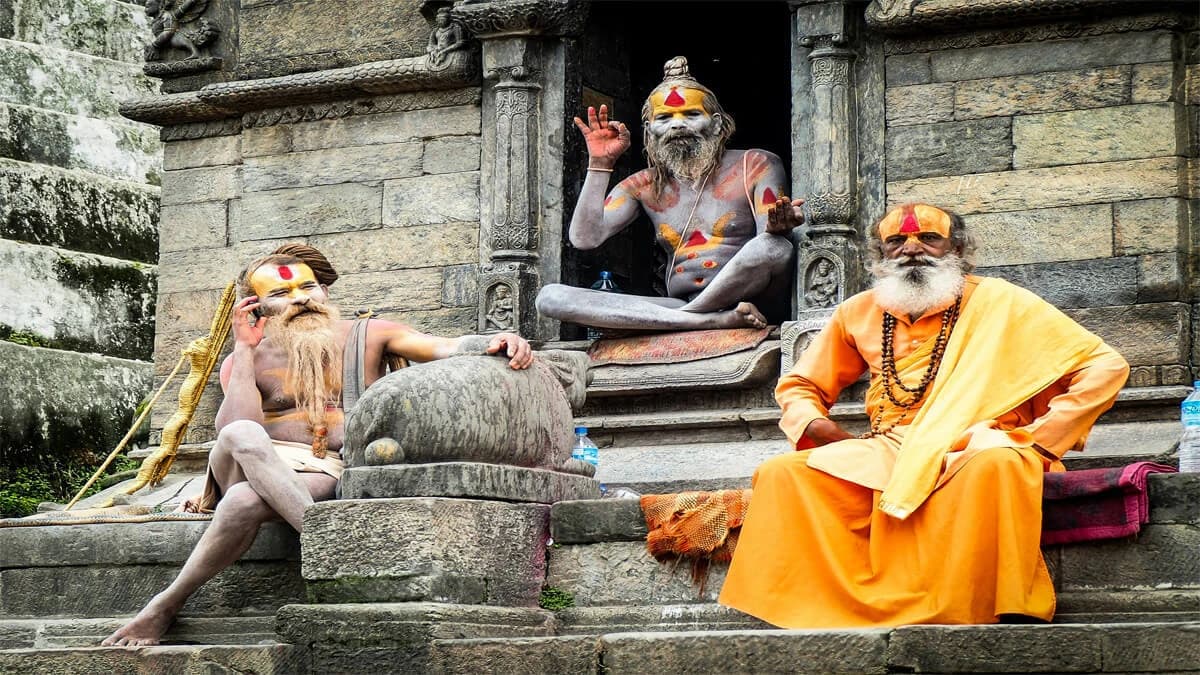
In places like Pashupatinath, Swayambhunath, and Boudhanath, you’ll see people near entrances and walkways asking for donations. It happens right where you naturally stop to look around or take photos.
They say it is for the temple, religious work, or maintenance. There is no fixed amount and nothing official about it, but it can still feel uncomfortable when you are just trying to move through the site.
This activity happens mostly in crowded areas where many visitors are passing through at the same time. Sometimes it happens once, sometimes again a bit further inside the same area depending on how busy it is.
Official donation boxes and proper channels are inside these temple areas as well, and that is the normal way to contribute if someone wants to. The rest are informal requests around the edges of the site.
Most people just say no and keep walking. We suggest the same.
Tour Packages Advertised With Huge Discounts
Those big discount banners are hard to miss when you are looking for a trek, a city tour, or pretty much any tourist activity in Nepal. A Tour package advertised at 40% off naturally grabs more attention than one sitting beside it at full price.
The thing worth paying attention to is not the discount itself but what the price actually covers. A lot of packages that look similar at first glance can include completely different things. One may cover permits and transport, another may not. One may include a guide throughout the trip, another may charge separately for it.
This is where some visitors get caught out. They compare the headline price, book the cheaper option, and only later realize they weren’t comparing the same package at all.
Before paying for any tour, ask for a full breakdown of what is included and what isn’t. The percentage on the advertisement matters far less than the final amount you will actually spend.
Currency Exchange Counters That Take Advantage of Tourists
Most visitors don't think much about exchanging money when they arrive in Nepal. The nearest exchange counter feels like the easiest option, especially in airports or busy tourist areas.
The issue is that these places often offer slightly worse rates than what can be found elsewhere in the city. It is not usually anything obvious or suspicious. The rate is just not very good, and that difference is easy to miss at the moment.
It does not seem like much when exchanging a small amount. But once the total gets bigger, the loss becomes noticeable. That gap can end up covering meals, taxis, or small day to day expenses during the trip.
There is also a common assumption that all official exchange counters give almost the same rate. In reality, there are differences between them, and they are not always small enough to ignore.
Informal money changers also appear in tourist areas offering exchange on the spot. Some are fine, but others are unreliable, especially when it comes to counting or clarity of the transaction. Even if the rate looks slightly better, it often comes with unnecessary risk.
The irony is that this tourist trap is completely avoidable. Spending five minutes comparing rates at a few authorized exchange centers can often result in a much better deal. Most experienced travelers quickly learn that patience pays off, while rushed decisions benefit the exchange counter rather than the customer.
Exchanging currency without comparing rates may not be the most dramatic tourist trap in the country, but it is one that quietly costs visitors money every single day.
How to Avoid Tourist Traps in Nepal
The truth is that most tourist traps in Nepal do not look like tourist traps when they happen. There is usually no obvious warning sign and nobody standing there announcing that something is overpriced. Most of the time, people only realize it afterwards when they compare prices, talk to other travelers, or spend more time in the country and get a better sense of how things work.
A lot of it comes down to the fact that Nepal does not operate in a perfectly standardized way, especially in areas built around tourism. The same taxi ride can be quoted differently by different drivers. The same souvenir can have completely different prices in shops a few minutes apart. Even trekking packages that look almost identical on paper can end up including different things once the details are examined properly.
What catches many first time visitors off guard is that convenience usually costs money. The closest exchange counter, the first taxi outside the airport, the souvenir shop in the busiest part of Thamel, or the tour package advertised directly in front of a hotel will often be among the easiest options available. They are not necessarily bad options, but they are rarely the only ones.
Spending a little time comparing prices goes much further in Nepal than many people expect. It does not mean turning every purchase into a negotiation or spending an entire afternoon looking for the cheapest possible deal. It simply means not assuming that the first price seen is automatically the normal price.
Tourism in Nepal also operates through a lot of personal recommendations, referrals, and informal networks. That is not automatically a problem, but it does mean that not every recommendation is completely neutral. Sometimes a driver recommends a shop because he knows the owner. Sometimes a guide suggests a particular business because they work together regularly. That does not mean the service is bad, but it helps to understand that these relationships exist.
The same applies to Nepal trekking, tours, and outdoor activities. Many travelers spend weeks researching routes and destinations before arriving in Nepal, then make decisions about guides or agencies after only a few conversations. The cheapest option is not always a bad one, and the most expensive option is not always the best. Looking beyond the price usually tells a much more useful story.
Perhaps the easiest way to avoid disappointment is to keep expectations realistic. Some experiences look incredible in travel videos because they were filmed on the clearest day of the year or edited into a few perfect seconds. Nepal is an extraordinary country, but real travel still comes with weather, crowds, delays, changing conditions, and occasional frustrations. Expecting everything to look exactly like a social media post is often what creates disappointment in the first place.
Most visitors who leave Nepal feeling satisfied are not the ones who avoided every tourist area or spent the entire trip hunting for bargains. They are usually the people who took their time, asked questions when something felt unclear, and understood that paying a little extra for convenience is sometimes different from falling into a tourist trap.
Final Thoughts
Most tourist traps in Nepal are not the kind of scams people imagine before visiting. In many cases, they come down to paying more than necessary, choosing the wrong service, or expecting an experience to look exactly like it did on social media. Nepal is still one of the most rewarding countries to travel through, and none of the things on this list should stop anyone from visiting.
A bit of research, some patience, and a willingness to compare options can save money and prevent a lot of frustration. The goal is not to avoid Nepal’s most popular places, but to understand them before spending time and money on them.