Finding family friendly treks in Nepal sounds simple until you start comparing recommendations. You'll find plenty of lists claiming that almost every famous treks in Nepal is suitable for children. That sounds reassuring until you look closer. A trek that feels easy to someone who hikes every weekend can be frustrating for a family with younger kids, especially when the trail is nothing but steep stone steps or long days at altitude.
The reality is, not every trekking in Nepal is enjoyable for families, even if it’s advertised that way. A route that suits experienced trekkers can be tiring for younger children or anyone who is new to hiking in Nepal. That’s why this guide isn’t based on popularity alone. Every Mountain trek included here has been chosen because it offers a rewarding experience without expecting everyone in the family to hike like seasoned mountaineers.
Instead of ranking trails by popularity, this list focuses on what families care about once they're actually on the trail. Can children enjoy the walk instead of rushing to the next village? Are the daily distances realistic? Is there a comfortable place to stay at the end of the day? Those questions matter far more than how often a trek appears on social media or in travel brochures.
You’ll find family holiday treks Nepal that combine impressive mountain views, beautiful traditional villages, comfortable teahouse treks, and walking days that leave enough time to enjoy the journey itself. More importantly, you will also find honest advice about who each trek is suited for, where families may face challenges, and which Nepal trekking routes are genuinely worth considering for your next trip.
10 Best Family Friendly Treks in Nepal
The best trek for your family depends on more than mountain views. The age of your children, the number of days you have, and how much walking everyone is comfortable with all make a difference. Some of the routes below are ideal for a first trekking experience, while others are better suited to families who want to spend a little longer in the Himalayas. Rather than choosing the biggest names, start with the trek that feels right for your family.
Ghorepani Poon Hill Trek
The Ghorepani Poon Hill Trek 5 days is probably the most recommended family adventure Nepal, but I don't think it's the right choice simply because it's popular. Its biggest advantage is that it introduces first time trekkers to the Himalayas. To the families planning their first trekking holiday in Nepal, it offers a balance that many other routes struggle to match.
One mistake many families make is choosing this route because it's described as easy. The distance covered each day is reasonable, but the terrain is more physically demanding than many first time trekkers expect.
The climb between Tikhedhunga and Ulleri is the best example. It gains elevation quickly and includes thousands of stone staircases, which can be tiring for both adults and children despite the trek never reaching extreme altitude. Fitness matters here more than technical hiking ability.
One of the biggest advantages of this teahouse trek in Nepal is how well established it is. Accommodation and meals are available throughout the route, which makes it easier for families to travel without carrying camping equipment or worrying about where they'll stay each night.
The trek also begins within easy reach of Pokhara, which makes planning much simpler than some of Nepal's more remote trekking destinations.
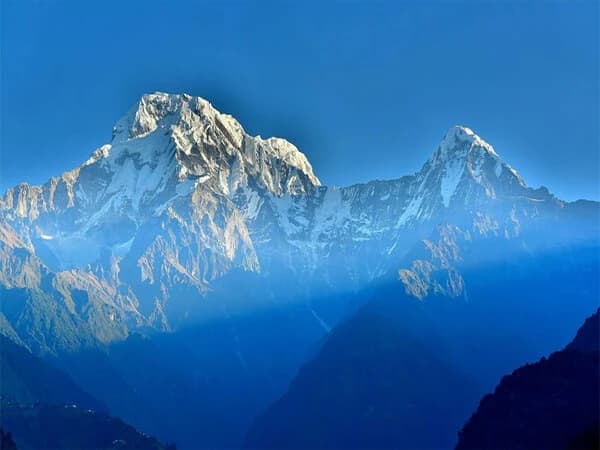
Poon Hill is, of course, the reason many people choose this trek. The sunrise view across the Annapurna and Dhaulagiri ranges has become one of the most photographed scenes in Nepal, but reducing the trek to that single viewpoint misses the bigger picture. The days leading up to it are what give the viewpoint its meaning. By the time you reach the top before sunrise, you've already earned the view, and that's something a short roadside viewpoint can never replace.
Quick Facts
- Region: Annapurna Conservation Area
- Duration: 4 to 5 days
- Highest Point: Poon Hill (3,210 m/10,531 ft)
- Daily Walking Time: Around 4 to 6 hours
- Difficulty: Moderate
- Best Seasons: March to May and late September to November
- Accommodation: Teahouses are available in every overnight stop.
- Permit: Annapurna Conservation Area Permit (ACAP)
- Recommended For: Families with older children, first time trekkers, and travellers looking for a classic teahouse trek in Annapurna region.
Ghandruk Village Trek
Ghandruk is often neglected because many visitors continue past it on the way to Ghorepani or Annapurna Base Camp. That is exactly why it deserves more attention from families. If your goal is to spend time in the mountains rather than cover as much distance as possible, stopping at Ghandruk makes more sense than choosing a longer itinerary, especially for trekking in Nepal with kids.
The village lies at around 2,000 metres, which keeps altitude concerns to a minimum for most visitors. Reaching Ghandruk doesn’t require nearly as many days as other Annapurna trekking routes, making it easier to fit into a family holiday without feeling rushed. It also works well for people who want to see whether trekking in Nepal is something they enjoy before planning a longer trip in the future.
Quick facts
- Region: Annapurna Conservation Area
- Duration: 3 to 4 days
- Highest Point: Ghandruk (2,012 m)
- Difficulty: Moderate
- Best Seasons: March to May and late September to November
- Accommodation: Teahouses and guesthouses
- Permit: Annapurna Conservation Area Permit (ACAP)
- Recommended For: Families with younger children, first time trekkers, and travellers with limited time.
Dhampus Australian Camp Trek
The Dhampus Australian Camp Trek is one of the shorter walking routes near Pokhara, which is why many families include it in their Nepal trip. It usually takes one or two days, so it fits easily into an itinerary without requiring a separate long trekking plan.
The trail goes up and down throughout. It is a proper walk, not a short one, and the pace depends on the group. Children can do it, but they may need more breaks.
Most families do this route for the overnight stay above Pokhara and the chance to spend time in the hills without getting into expensive treks in Nepal.
Things to know before choosing this trek
It is close to Pokhara and does not require long travel to reach the starting point
It is usually done as part of a short trip rather than a standalone trekking plan
Weather conditions affect how much can be seen from Australian Camp
At a Glance
- Region: Annapurna Conservation Area
- Duration: 1 to 2 days
- Highest Point: Australian Camp (2,060 m)
- Daily Walking Time: 2 to 4 hours
- Difficulty: Moderate
- Best Seasons: March to May and September to November
- Accommodation: Lodges and teahouses
- Permit: Annapurna Conservation Area Permit (ACAP)
- Recommended For: Families looking for a short trek near Pokhara
Helambu Trek
Helambu Trek is one of the easier multi-day trekking routes near Kathmandu. It is mainly chosen by families who want a longer trekking experience but do not want to travel to remote parts of Nepal or deal with flights.
The trail walks you through a chain of villages where each day ends with a place to stay. That makes the trek easier to manage, especially for families or groups that want treks with shorter walking days. Most of the route stays at a moderate altitude, so altitude is less of a concern than on many other child friendly trekking in Nepal.
The villages along the way are home to Hyolmo, Tamang, Sherpa, and other local communities. Their homes, farms, and daily life are part of what you see on the trail. This gives the trek a local feel from start to finish, even though it does not rely on one major viewpoint or a single big highlight.
Compared to short Himalayan treks around Pokhara, Helambu feels more like a continuous journey rather than a short hiking loop.
Things to know before choosing this trek
The trek is commonly done as a point to point route starting from areas north of Kathmandu
It is better suited for a full week style itinerary rather than a weekend plan
Weather changes can affect views more than the walking itself
Quick Facts
- Region: Langtang National Park region
- Duration: 5 to 7 days
- Highest Point: Around 3,600 m depending on route
- Daily Walking Time: 4 to 6 hours
- Difficulty: Moderate
- Best Seasons: March to May and September to November
- Accommodation: Teahouses
- Permit: Langtang National Park permit
Royal Trek
Royal Trek gets its name from Prince Charles who walked this route in the 1980s. The name stayed, but there is nothing ceremonial about the trail today. It is a beginner family trekking route near Pokhara used mainly for short walking trips.
People living along this route are mainly from Gurung communities, with daily life centered on farming and livestock. There is little tourism setup compared to more popular trekking routes in Nepal, so the experience stays connected to normal village life rather than commercial stops.
The main reason families choose this route is that the view towards the Annapurna range remains clear. It definitely suits families looking for easy treks in Nepal without any restriction or remoteness. It does not lead to a major destination, so the value comes from the walk itself and the changing views along the way.
Quick Facts
- Region: Annapurna region
- Duration: 3 to 4 days
- Highest Point: Around 1,730 m
- Daily Walking Time: 3 to 5 hours
- Difficulty: Easy
- Best Seasons: March to May and September to November
- Accommodation: Teahouses and local lodges
- Permit: Annapurna Conservation Area Permit (ACAP)
- Recommended For: Families looking for short Himalayan treks without high altitude trails
Panchase Trek
Panchase is a ridge area sitting above the Pokhara valley, not a single village or a defined trekking destination. It does not get much attention because it does not lead to a famous endpoint. That also makes it less crowded, which is the main reason families pick it.
There is a religious side to it that most Nepal trekking blogs barely mention. The main religious site here is the Panchase Bhuvaneshwor Temple, also called Panchase Temple. It is a small shrine dedicated to Shiva in the form of Bhuvaneshwor. The place has local religious importance and sees more visitors during Hindu festivals and special religious days when people come for worship. Outside those times it stays quiet and is visited mostly by trekkers and nearby villagers.
Compared to Royal Trek or Dhampus Australian Camp, this one requires more effort near the end of the trek. That difference is what sets it apart from the easier routes around Pokhara.
Things to know before choosing this trek
Clear weather is needed for mountain views from Panchase Hill
It involves more climbing than other short treks in Annapurna region
Basic lodges are available, especially in the higher part of the route
Quick Facts
- Region: Annapurna regionDuration: 3 to 4 days
- Highest Point: Around 2,500 m
- Difficulty: Easy to moderate
- Best Seasons: Spring and Autumn
- Accommodation: Basic lodges
- Permit: Annapurna Conservation Area Permit (ACAP)
Langtang Valley Trek
Langtang Valley Trek 10 days is a longer trekking route north of Kathmandu that goes into a high mountain valley near the Tibetan border. It is sometimes included in family trek lists, but it is better suited to people who are ready for a full trekking experience rather than a short tour in Nepal.
The route climbs through the Langtang valley and finishes at Kyanjin Gompa, which is where most itineraries turn back. The walking days are similar in length, but the effort builds as the altitude goes up. That is what sets this trek apart from other family adventure holiday Nepal.
Kyanjin Gompa is the main stop for most trekkers before they return the same way to the starting point.
Things to know before choosing this trek
The road to Syabrubesi can be rough, especially during and just after the monsoon, so travel time is often longer than maps suggest.
Kyanjin Gompa is where almost everyone ends the trek. Some hikers continue to Kyanjin Ri or Tserko Ri for higher views, but those climbs are optional and are usually skipped by families with younger children.
Red pandas live inside Langtang National Park, although seeing one is extremely rare. You are much more likely to spot Himalayan birds, yaks, and blue sheep along the route.
Quick Facts
- Region: Langtang National Park region
- Duration: 7 to 10 days
- Highest Point: Around 3,870 m at Kyanjin Gompa
- Daily Walking Time: 5 to 7 hours
- Difficulty: Moderate
- Best Seasons: March to May and September to November
- Accommodation: Teahouses
- Permit: Langtang National Park permit
Everest View Trek
Not every family dreaming of the Everest region wants to spend nearly two weeks hike to Everest Base Camp, and they shouldn't feel like they're missing out because of that. The Everest View Trek exists for exactly that reason.
It gives you the chance to experience theKhumbu region, spend time in Namche Bazaar, and stand in front of Mount Everest without turning the holiday into one of Nepal's longest trekking expeditions.
The biggest attraction is Hotel Everest View at 3,880 metres. Despite its name, people do not come here just to see a hotel. They come because it offers one of the most accessible views of Mount Everest without continuing deeper into the Khumbu region.
On a clear morning, Everest, Ama Dablam, Lhotse, Thamserku, and several other Himalayan peaks are visible from the area, which is exactly what many families hope to experience when they plan an Everest region trek in Nepal.
Altitude is the part people often care less about, but it matters here. Yes, this trek is shorter than Everest Base Camp, but it still reaches enough height to be felt. Most well planned itineraries include a rest day in Namche Bazaar, and for a family outdoor adventure in the Everest region, that extra day is usually worth keeping.
Things to know before choosing this trek
The flight to Lukla is one of the most weather dependent flights in Nepal, so keeping an extra day in your travel plan is a sensible precaution.
Hotel Everest View stands at 3,880 metres, making it the highest point of the standard Everest View Trek.
If your family has extra time, Tengboche Monastery can be added to the itinerary, although this increases both the distance and the overall duration of the trek.
Quick Facts
- Region: Everest Region
- Duration: 5 to 7 days
- Highest Altitude: 3,880 m at Hotel Everest View
- Daily Walking Time: 4 to 6 hours
- Difficulty: Moderate
- Best Seasons: Spring and Autumn
- Accommodation: Teahouses
- Permit: Sagarmatha National Park Entry Permit and Khumbu Pasang Lhamu Rural Municipality Permit
- Recommended For: Families looking for an Everest region trek, first time visitors to the Khumbu region, and travellers who want Himalayan views without trekking to Everest Base Camp.
Mardi Himal Trek
Mardi Himal Trek is not the first route I would recommend for families with young children. It is a better choice for families with older children or teenagers who already enjoy hiking and want something more challenging than Ghorepani Poon Hill or Ghandruk.
The main reason people choose this trek is the close view of Machhapuchhre and the Annapurna range. Unlike many short treks in Nepal, the mountains feel much closer as you gain altitude, especially from High Camp and Mardi Himal View Point.
Things to know before choosing this trek
The final climb to Mardi Himal View Point is optional and many trekkers finish at High Camp instead.
This is one of the higher family vacation in Nepal, reaching about 4,200 metres.
Weather changes quickly at higher elevations, so mountain views are never guaranteed.
Quick Facts
- Region: Annapurna region
- Duration: 4 to 6 days
- Highest Altitude: Around 4,200 m at Mardi Himal View Point
- Daily Walking Time: 5 to 7 hours
- Difficulty: Moderate
- Best Seasons: March to May and September to November
- Accommodation: Teahouses
- Permit: Annapurna Conservation Area Permit (ACAP)
- Recommended For: Active families with older children and teenagers who want a more challenging short trek in Nepal.
Nagarkot Chisapani Trek
I usually recommend the Nagarkot Chisapani Trek to families who are unsure whether they will enjoy trekking in Nepal. It answers that question without asking you to spend a week in the mountains. Two or three days are enough to understand what walking in Nepal actually feels like, which is why many local guides suggest it before longer Himalayan treks.
Unlike routes that require long drives or domestic flights, getting here is easy from Kathmandu. That makes a noticeable difference if you're traveling with children. Less time in transport means more time outdoors, and if someone in the family decides trekking is not for them, it is still easy to change plans without wasting much of the trip.
Things to know before choosing this trek
Many people search for the Nagarkot Chisapani Trek cost because it is one of the more affordable trekking routes in Nepal. Transport, accommodation, and meals usually make up most of the budget.
This route stays below 2,200 metres, so altitude sickness is not normally a concern.
Clear weather makes a big difference because Nagarkot is known for Himalayan sunrise views.
Quick Facts About Chisapani Nagarkot Trek
- Region: Kathmandu Valley
- Duration: 2 to 3 days
- Highest Altitude: 2,175 m at Nagarkot
- Daily Walking Time: 4 to 6 hours
- Difficulty: Easy
- Accommodation: Teahouses and local lodges
- Permit: Shivapuri Nagarjun National Park Entry Permit
- Recommended For: Families, beginners, and travellers looking for a short trek near Kathmandu.
Which Family Trek in Nepal is Best for Children Under 10?
For most families, Ghandruk Village Trek is one of the best choices for children under 10. It is shorter than many popular trekking routes, stays at a relatively low altitude, and has comfortable teahouses along the way.
The Nagarkot Chisapani Trek is another good option if you are looking for an easy trek near Kathmandu.
Keep in mind that every child is different. A shorter trek that your child enjoys is usually a better choice than a longer route that feels exhausting for the whole family.
Is Nepal Safe for Trekking with Children?
Yes, but choosing the wrong trek causes far more problems than Nepal itself.
Families mostly assume the famous routes are the best ones. But that’s not the complete truth. A child who enjoys a three day trek will remember the holiday far more positively than one who spends a week struggling the uphill climb. Pick the route around your family, not around social media photos.
Do Children get Altitude Sickness in Nepal?
Yes. Children get altitude sickness just like adults, and sometimes they are worse at explaining it.
Do not expect a child to clearly mention that they have altitude sickness. A younger child may just stop eating, become quiet, complain of a headache, vomit, sleep badly, walk more slowly, or refuse to keep going. If a child starts acting differently after gaining altitude, take it seriously.
You cannot ignore altitude sickness by any means. If the symptoms are mild, stop going higher and rest. If they get worse, go down. Trouble walking, confusion, repeated vomiting, or unusual sleepiness are warning signs.
The best way to avoid this problem is by choosing a trek with a sensible altitude gain and not pushing children to keep going just because the adults want to finish the route.
How Much Does Family Trekking in Nepal Cost?
A short and easy family trek near Kathmandu or Pokhara starts at about USD 200 to 500 per person for 3 to 5 days if you are booking a basic guided package. A 5 to 7 day trek such as Ghorepani Poon Hill is mostly around USD 400 to 900 per person. Everest region treks are in a different bracket altogether, usually USD 1,000 to 2,500 or more per person because flights, permits, and extra trekking days push the cost up quickly.
For a family of four, that can mean roughly USD 800 to 3,600 on easier routes and much more on Everest. These are only rough estimates, so always check exactly what the quote includes before you compare prices.
Do You Need a Guide for Family Trekking in Nepal?
Yes, on many trekking routes foreign trekkers now need a licensed trekking guide.
Even where it is not strictly required, I would still recommend one for families. A guide makes the trip easier, helps with accommodation and transport, and is useful if the weather changes or a child gets tired or unwell.
Which Family Trek has the Best Mountain Views?
That depends entirely on which mountains you came to Nepal to see.
Choose Ghorepani Poon Hill for Annapurna and Dhaulagiri.
Choose Everest View Trek if your goal is Mount Everest.
Choose Mardi Himal if your family has older children and wants one of the closest views of Machhapuchhre.
There is no point choosing an Everest trek if your family really wants to see Annapurna.
What is the Minimum Age For Trekking in Nepal?
There is no official minimum age for trekking in Nepal. Some children finish short treks before they start primary school. Others lose interest after the first hour. Age is only one part of the decision. Fitness, attitude, weather, and the route matter far more.
Can Beginners Trek in Nepal with Children?
Yes, but beginners tend to pick the wrong trek for the wrong reason: the famous one. If this is your first family trek, start with Ghandruk village trek, or Dhampus Australian Camp trek. They are easier, shorter, and far less likely to turn the trip into a struggle.
Final Thoughts
The best family trekking package in Nepal is the one your family can enjoy from start to finish. Choosing a route that matches your time, fitness, and experience will always lead to a better than choosing the most famous trek.
Hopefully, this guide has helped you compare some of the best family treks in Nepal and made it easier to choose the right one for your next adventure.


.webp&w=1200&q=75&dpl=dpl_4U3CaZUV3Y5iKdBNPJmVMATJy3AB)