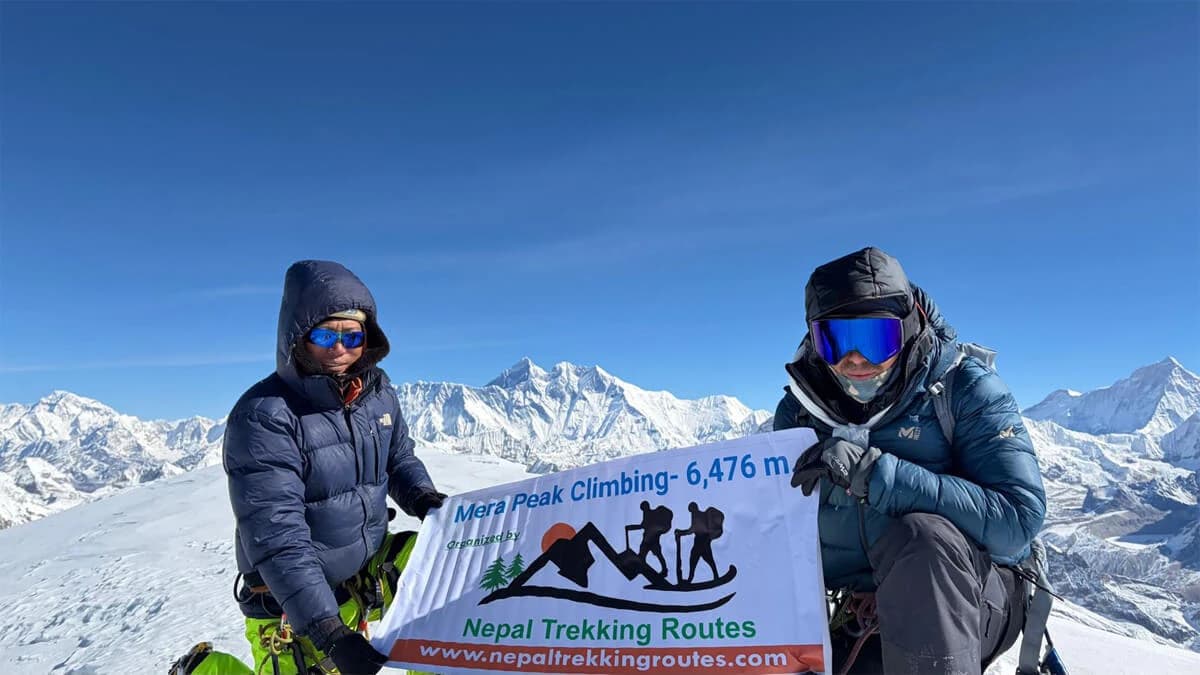
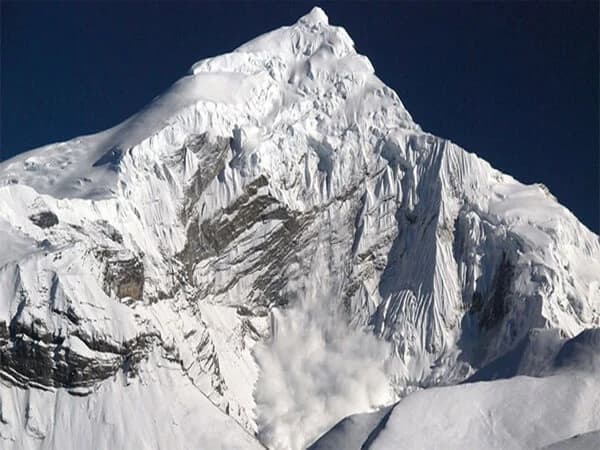
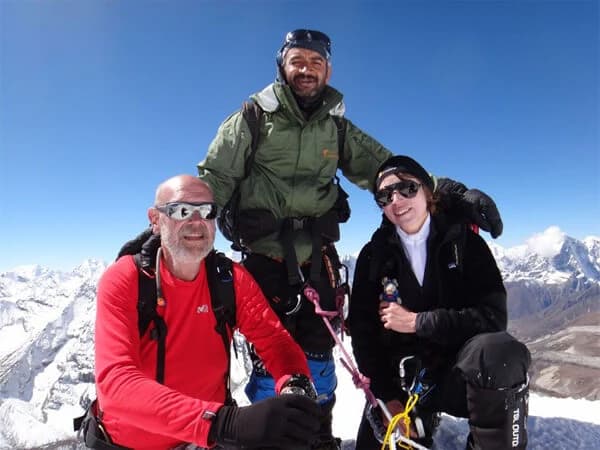
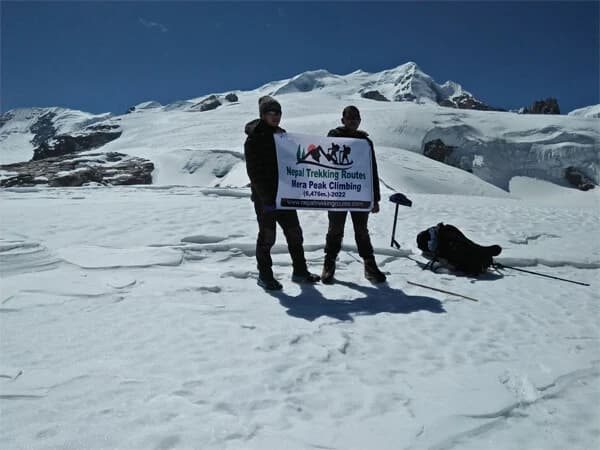
Standing at 6,476 meters above sea level won’t be easy, obviously. Hearing the height might scare you at first, and that’s completely normal. However, with proper preparation and the right mindset, climbing Mera Peak is achievable for many trekkers. Although it is one of the highest peaks in Nepal, Mera Peak is classified as atrekking peak in Nepal, meaning it does not involve the highly technical challenges of advanced mountaineering. You won’t encounter vertical rock climbs or dangerously exposed ridgelines.
That said, high-altitude trekking comes with its own set of challenges. At this elevation, thinner air can make breathing more difficult and significantly impact your energy levels. You won’t face vertical cliffs, but you will cross glaciers and icy slopes.This is why basic mountaineering skills such as using crampons, handling an ice axe, and wearing a harness are essential for safe movement. A Mera Peak Climbing guide can make these sections far less daunting and help you focus on enjoying the journey rather than worrying about safety.
The Mera Peak expedition in Nepal experience is as much mental as it is physical.You’ll face long days of trekking, uphill trails, and moments when your body feels like it’s had enough. But pushing through these challenges builds strength, patience, and confidence. Every step from quiet Sherpa villages to icy ridges prepares you for the ultimate reward. And when you finally reach the summit, surrounded by giants like Everest, Makalu, and Cho Oyu, the sense of achievement is overwhelming, a moment of awe and pure happiness that makes every step worth it.
Before you decide, it’s essential to understand the Mera Peak safety tips, necessary equipment, and other key advice that will help you stay safe and make the journey more enjoyable. In this blog, you’ll learn everything you need to prepare, protect yourself, and make your Mera Peak climb a rewarding adventure.
Mera Peak Climbing Profile
Mera Peak rises to 6,476 meters, making it one of the highest trekking peaks in Nepal and a favorite for adventurers looking to experience high-altitude climbing without technical mountaineering training. The full journey usually takes 18 days, which includes the trek from Lukla, several acclimatization days, and the long summit push. While the peak is classified as non-technical, the final ascent is challenging, featuring steep snow slopes, ice, and rocky sections that require the use of crampons, ice axes, and sometimes ropes. Proper preparation, training, and respect for the mountain are crucial for a safe climb.
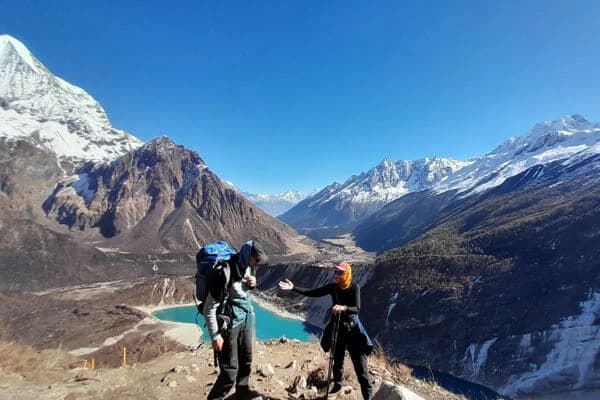
The trek itself is a beautiful scenic himalayan journey through the heart of the Himalayas. Daily walks range from 7-15 km, winding through remote Sherpa villages, rhododendron forests, high-altitude meadows, and glacial streams. Summit day is the most demanding: trekkers gain about 1,200 meters over 8-12 hours in thin air, navigating icy ridges and snow-covered slopes. The journey is designed with key acclimatization stops, including Khare, Mera La Pass, and high-altitude villages above 5,000 meters, which allow the body to adjust gradually to low oxygen levels and reduce the risk of altitude sickness.
Beyond the physical climb, Mera Peak is a journey of discovery. Each day offers new landscapes: serene valleys, rugged ridges, shimmering glaciers, and panoramic mountain views. By the time you reach the summit, every step of the trek from the gentle trails to the steep snowy slopes, culminates in a rewarding panorama: towering peaks like Everest, Makalu, Cho Oyu, Lhotse, and Kanchenjunga stretching across the horizon. The experience is as much about the journey and the high-altitude Himalayan life as it is about standing on the summit itself.
Who Can Climb Mera Peak?
Mera Peak trekking is often called one of Nepal’s most accessible Nepal mountaineering expedition, but accessible doesn’t mean easy. The climb is achievable for anyone with reasonable fitness and some trekking experience, but it still demands stamina, patience, and mental strength. Trekking for hours at high altitude can be exhausting, especially as the thin air reduces oxygen and makes even simple steps feel heavier.
Preparing your body ahead of time makes a huge difference. Cardio exercises, leg-strength workouts, and multi-hour hikes with a backpack help condition your muscles and lungs for the journey. Mental preparation is just as important, staying calm, pacing yourself, and maintaining focus can be the difference between a smooth climb and a struggle. With proper acclimatization, sensible pacing, and respect for the mountain, almost anyone who is fit and motivated can experience the thrill and reward of reaching Mera Peak’s summit. If you will follow the Mera Peak altitude sickness tips for your Mera peak hiking is not bigger deal for traveler.
Conditions to Avoid
While Mera Peak is more forgiving than technical mountains, certain health conditions make climbing unsafe. If you fall into any of these categories, it’s strongly advised to avoid attempting the peak:
- Sickle Cell Disease - high altitude Climbing in Nepal can trigger a dangerous crisis
- Pulmonary Hypertension or Severe Heart Conditions - the stress on the heart and lungs is significant
- Early Pregnancy - reduced oxygen at high elevations can pose serious risks to both mother and baby
Attempting the climb with these conditions can be life-threatening, so it’s best to consider alternative treks orlower-altitude adventures instead.
Conditions to Take Precautions
Other medical conditions don’t automatically prevent the climb, but they require careful planning, monitoring, and sometimes special equipment:
- Diabetes - extreme cold and high altitude can affect blood sugar readings, so frequent monitoring is necessary
- High Blood Pressure or Arrhythmia - ascend slowly, take extra rest days, and have your doctor’s guidance
- Asthma or Mild COPD - supplemental oxygen may be helpful at higher camps
- Obesity or Anemia - these can increase fatigue and affect your performance, so proper acclimatization is essential
Consulting your doctor, guide, and travel agency ensures that your health needs are addressed, and the climb stays safe and enjoyable.
Age Considerations for Mera Peak Climbing
Climbing Mera Peakis open to a wide range of ages, but there are a few important guidelines. Climbers younger than 12 are generally not allowed to attempt the peak, while older individuals can join as long as they have good fitness and overall health.
Even experienced older climbers should take extra precautions, pace themselves carefully, and monitor their health closely. For anyone who may struggle with long days or carrying heavy gear, hiring a porter can make the climb safer and less exhausting. With proper preparation, pacing, and support, climbers across many age groups can successfully reach the summit and enjoy the experience.
Do you Need a Guide or Porter for Mera Peak Expedition?
Technically without a guide, climbing to Mera Peak is possible, but not always recommended, especially for first-timers or those unfamiliar with high-altitude trekking. Because a guide brings expertise and experience, who helps you navigate glaciers, icy slopes and areas with fixed ropes. They also monitor your acclimatization, pacing and overall health which makes sure you avoid altitude sickness or overexertion. On summit day, having a guide’s support can make the difference between a safe, successful climb and unnecessary risk.
Likewise, a porter is optional but highly beneficial cuz’ they carry heavy backpacks, tents, cooking gear and supplies which allows you to focus more on the trail, save energy and maintain a steady pace. This is especially helpful for families, older adults or anyone new to high-altitude trekking. With a porter, you can better enjoy the journey rather than worrying about physical strain.
Even experienced trekkers often hire at least one of these services for peace of mind. In high-altitude environments like Mera Peak, this additional support can significantly improve your chances of reaching the summit safely while keeping the experience enjoyable.
Possible Risks and Health Hazards for Mera Peak
Mera Peak Climbing in Nepal is not just a trek, it’s a journey that pushes your body and mind in ways you might not expect. Even though it’s called a trekking peak, the high altitude, freezing temperatures and long exhausting days can feel overwhelming at times. Sometimes as basic as walking uphill or catching your breath can suddenly become a real challenge as you go higher.
Your body is constantly adjusting to the environment; the thin air, harsh winds, and changing terrain can test your energy, patience, and endurance. Some days may feel smooth, while others can feel surprisingly tough, even for experienced trekkers. That’s why understanding these risks beforehand is so important. With the right preparation and awareness, what seems difficult at first becomes something you can handle step by step, making the entire journey safer and more manageable.
Altitude Sickness
Altitude sickness is the biggest challenge on Mera Peak, and it can affect anyone, no matter how fit you are. As you climb higher, the air gets thinner, and your body has to work harder just to keep up. You might feel headaches, dizziness, loss of appetite, or extreme fatigue, even after a short walk.
What makes it tricky is that it can come on slowly or suddenly. One moment you feel fine, and the next, even simple tasks feel exhausting. That’s why going slow, taking rest days, and listening to your body is so important. Ignoring early signs can turn a manageable situation into a serious one.
Weather and Terrain
The mountain weather can feel unpredictable and unforgiving. Clear skies can quickly turn into strong winds, snowfall, or freezing temperatures, especially as you get closer to the summit. Nights can be extremely cold, and even during the day, the chill can drain your energy faster than expected.
The terrain adds another layer of difficulty. You’ll be walking on rocky trails, glaciers, and icy slopes, where every step needs attention. A small slip can be risky, especially on narrow or frozen sections. That’s why proper gear and careful movement are essential throughout the climb.
Physical Strain
Mera Peak is physically demanding in ways that can surprise you. Walking for 6-8 hours a day at high altitude, often on uphill trails, slowly builds fatigue. By the time you reach higher camps, even basic movement can feel tiring.
Summit day is the real test, it can take 10-12 hours in cold, thin air, pushing both your strength and endurance to the limit. Along the way, you may deal with sore muscles, knee strain, blisters, and overall exhaustion. Managing your pace, taking breaks, and staying fueled becomes crucial to keep going.
Emergency Precautions
In such remote and high-altitude areas, help is not always nearby, so being prepared is essential. If something goes wrong, options are limited, and in serious cases, helicopter evacuation may be the only way out.
Having the right insurance, basic first aid, and guidance from experienced staff can make a huge difference. More importantly, knowing when to stop, rest, or descend is one of the most important safety decisions you can make. Being cautious and prepared ensures that even unexpected situations can be handled safely.
How Difficult is Mera Peak Climbing?
Mera Peak difficulty is often described as one of the easier high-altitude peaks in Nepal, but that doesn’t mean it’s easy. The climb is more about endurance than technical skill, yet the altitude alone makes it a serious challenge, especially for first-time climbers.
At 6,476 meters, the biggest difficulty comes from the thin air. As you go higher, your body gets less oxygen, which can slow you down, drain your energy, and make even short walks feel tiring. Simple tasks like climbing a small slope or carrying your backpack can suddenly feel much harder than expected.
Technically, the climb is not very demanding. There are no steep rock faces or vertical climbs, but the final ascent involves snow slopes, glaciers, and fixed ropes. You’ll need to use basic gear like crampons, harnesses, and an ice axe, which requires some basic training and guidance.
The physical challenge builds up over time. You’ll be trekking for 12-16 days, walking several hours each day, often on uphill trails. By the time you reach higher camps, fatigue can set in. Then comes summit day, which is the toughest part, long hours in cold temperatures, pushing your strength and endurance to the limit.
Weather also adds to the difficulty. Strong winds, freezing temperatures, and sudden changes in conditions can make the climb more demanding than expected. Even in the best seasons for Mera Peak, the mountain can be unpredictable.
In the end, Mera Peak itinerary is challenging but achievable. With proper preparation, good fitness, and the right mindset, many trekkers successfully reach the summit. It’s not the technical difficulty that tests you the most, but your patience, endurance, and ability to adapt to high altitude.
How to get Physically Ready for the Mera Peak Expeditions?
Getting ready for Mera Peak isn’t just about being “fit”, it’s about preparing your body for long days, high altitude, and continuous physical effort. The climb will test your endurance more than anything else, so building strength and stamina beforehand makes the entire journey smoother and more enjoyable.
Start with cardio training, as your lungs will be working harder in thin air. Activities like running, hiking, cycling, or stair climbing help improve your stamina and breathing capacity. Try to train at least 3-4 times a week, gradually increasing your intensity. If possible, include hikes with a backpack to simulate real trekking conditions.
Equally important is leg strength and endurance. The trail involves long uphill and downhill sections, which can put pressure on your knees and muscles. Exercises like squats, lunges, step-ups, and hill walking help build the strength needed to handle steep climbs and descents. Strong legs will not only make trekking easier but also reduce the risk of injury.
You should also focus on endurance training. Mera Peak is not about short bursts of energy, it’s about being able to keep going for hours. Try doing long walks or hikes (5-7 hours) to get your body used to continuous movement. This helps you understand your pace and how your body reacts over time.
Don’t ignore core strength and balance either. Walking on uneven trails, rocky paths, and glaciers requires stability. A strong core helps maintain balance and reduces fatigue. Simple exercises like planks, stretching, and yoga can improve flexibility and prevent muscle stiffness during the trek.
Lastly, give your body time to rest and recover during your training period. Overtraining can do more harm than good. Combine your workouts with proper nutrition, hydration, and sleep to build overall strength. The goal is to arrive at the mountain feeling strong, confident, and ready, not exhausted before the climb even begins.
Technical Skills You Must Know for Mera Peak Climbing
Even though Mera Peak is classified as a trekking peak in Everest Region trek, the final ascent requires more than just walking. There are snow slopes, icy ridges, and glacier sections where having basic mountaineering skills is essential for safety and confidence. Knowing how to handle yourself in these conditions can turn a stressful climb into an enjoyable challenge.
One of the first skills to master is walking on snow and ice with crampons. It may feel awkward at first, but learning the proper technique helps prevent slips and keeps your movements efficient. Similarly, understanding how to use an ice axe for stability and self-arrest is crucial when navigating steep sections. Even a small misstep can become dangerous if you don’t know how to stop a slide quickly.
Rope skills are another important aspect. On the summit push, fixed ropes are often in place, and knowing how to clip in safely with a harness ensures security on exposed ridges. This also includes basic rope etiquette, like maintaining distance from the climber ahead and moving steadily without sudden pulls on the line.
Finally, glacier awareness is key. Crevasses, hidden snow bridges, and uneven ice require careful observation and cautious steps. Learning to read the terrain, place your feet deliberately, and move confidently on uncertain surfaces can prevent accidents and increase your comfort on the climb.
By practicing these technical skills before the trek, even beginners can approach the summit with confidence, knowing they have the tools to stay safe while tackling the mountain’s icy challenges.
Mentally Prepare for the Challenges of Mera Peak
Mera Peak climbing is not just about physical strength, it’s equally a mental challenge. There will be moments when your body feels tired, the air feels too thin, and the summit still seems far away. How you handle these moments mentally often decides how far you go.
Long trekking days, cold temperatures and high altitude can test your patience. Some days may feel slow, and progress might seem minimal, but completely normal. Learning to stay calm, patient and focused helps you move forward one step at a time. Instead of thinking about the entire climb, breaking the journey into smaller goals like reaching the next village or rest point, which makes it feel more manageable.
It’s also important to accept that not everything will go as planned. Weather can change, your body may react differently to altitude, and delays can happen. Being mentally prepared for these uncertainties helps you adapt without frustration and keep a positive mindset throughout the journey.
Confidence plays a big role as well. Trust your preparation, your guide and your pace. Avoid comparing yourself with others on the trail, everyone moves differently at high altitude. Staying positive and believing in your ability can make even the toughest days feel achievable.
In the end, the climb becomes a journey of self-discovery. The challenges you face along the way build resilience, patience, and inner strength. And when you finally stand on the summit, it’s not just the height you’ve conquered, it’s the doubts and limits you’ve pushed beyond.
Which is the Most Suitable Season to Climb Mera Peak?
Choosing the right season can make a huge difference in your Mera Peak experience. While the mountain is there all year round, the weather, visibility, and trail conditions change a lot depending on the time you go.
The best seasons to climb Mera Peak are spring (March to May) and autumn (September to November). During these months, the weather is generally more stable, the skies are clearer, and the views are at their best. In spring, you’ll also see blooming rhododendron forests at lower altitudes, adding color to your journey. Autumn, on the other hand, offers crisp air, excellent visibility, and comfortable Nepal trekking conditions, making it a favorite for many climbers.
Climbing during the winter months (December to February) is possible, but it comes with extra challenges. Temperatures can drop extremely low, especially near the summit, and snow can make the trail harder to navigate. Only well-prepared and experienced trekkers usually attempt the climb during this time.
The monsoon season (June to August) is generally not recommended. Heavy rainfall can make trails slippery, increase the risk of landslides, and affect flights to and from Lukla. Clouds often block mountain views, which can take away from the overall experience.
No matter the season, mountain weather can always be unpredictable, especially at higher altitudes. That’s why it’s important to stay flexible with your itinerary and include a few extra days in case of delays. Choosing the right time to climb not only makes the journey safer but also allows you to fully enjoy the beauty of the Himalayas.
What to Expect on Summit Day?
Summit day is the moment you’ve been working toward from the very beginning, and it’s easily the most demanding part of the entire Mera Peak journey. You’ll likely start in the early hours of the morning, when the world is quiet, cold and dark. The temperature can drop far below freezing, and even simple tasks like putting gloves on or adjusting your gear can feel slow and clumsy in the biting cold. Your headlamp lights the narrow path ahead as you move step by step, following a steady rhythm with your breath. At this altitude, even a small incline can feel demanding, and you’ll quickly learn the importance of pacing yourself.
As the climb continues, the darkness slowly begins to fade, and the first light of dawn starts to touch the surrounding peaks. This is often one of the most beautiful moments of the entire journey. The sky shifts from deep blue to shades of orange and pink, revealing the vast Himalayan landscape around you. But even with this incredible view, the challenge is far from over. The air is thinner than ever, and each step requires focus, patience, and controlled breathing.
The terrain on summit day is mostly snow and ice, and you’ll be walking with crampons, often roped in for safety. The slope can feel long and relentless, especially as you gain elevation. There may be sections where you need to rely on fixed ropes, using your harness and ascender to move upward safely. It’s not technically extreme, but at this altitude, even simple movements can feel exhausting. This is where your preparation, both physical and mental, truly comes into play.
As hours pass, your legs may feel heavy, your pace starts to slow down and difficulty in breathing, this is a moment, your journey actually feels worthwhile at the end. As hours pass, your legs may feel heavy, your pace slows, and even breathing can feel like a challenge. This is often the point where the climb truly tests you, not just physically, but mentally as well. It’s easy to feel tired or even question how much farther you can go. But this is also where your determination starts to take over. Step by step, breath by breath, you keep moving forward.
Eventually, the slope begins to ease, and the summit ridge comes into view. That final stretch can feel both exciting and exhausting at the same time. And then, almost suddenly, you’re there, standing at the top of Mera Peak. At 6,476 meters, the world opens up around you in a way that’s hard to describe. Towering himalayan giants stretch across the horizon, and in the distance, you can see peaks like Everest, Makalu, Cho Oyu, Lhotse, and Kanchenjunga rising above the clouds.
The feeling at the summit is more than just reaching a destination. It’s a mix of relief, pride, and pure awe. Every early morning, every long trekking day, every moment of doubt, it all leads to this single point. But even in this moment, it’s important to remember that the journey isn’t over yet.
Descending safely is just as important as reaching the top. Fatigue, changing weather, and slippery terrain can make the way down challenging. Staying focused, moving carefully, and conserving your remaining energy are key to completing the climb safely. With patience and awareness, you make your way back down, carrying not just the memory of the summit, but the entire experience with you.
Packing Tips for Mera Peak
Packing smart is one of the most important parts of preparing for Mera Peak. The right gear keeps you safe, comfortable and ready to handle changing conditions, while overpacking can slow you down and drain your energy.
Temperature from lower villages to the summit can vary drastically, so you must wear multiple layers to adjust easily. A good base layer keeps you dry, an insulating layer retains warmth, and a waterproof outer shell protects you from wind and snow. Down jackets are essential for higher altitudes, especially during summit night.
Also, footwear is also as important as others. Sturdy, well-broken-in trekking boots with good ankle support are a must. On summit day, you’ll need mountaineering boots compatible with crampons. Warm socks, gaiters and proper gloves help protect you from freezing conditions.
Don’t forget essential climbing gear. This usually includes crampons, an ice axe, harness, helmet, and carabiners. Most of these can be rented if you don’t own them, but it’s important to know how to use them before the climb.
Other essentials include:
- A high-quality sleeping bag rated for extreme cold
- Headlamp with extra batteries (especially for summit push)
- Sunglasses and sunscreen to protect against strong UV at altitude
- Reusable water bottles or hydration system
- Energy snacks for quick fuel during long trekking days
Conclusion: Safety Tips for Mera Peak Climbing
Mera Peak Climbing in Nepal is more than just a climb, it’s a journey that challenges your body, tests your mindset and rewards you with experiences you’ll never forget. From quiet mountain villages to icy summit slopes, every step teaches you something new about endurance, patience and resilience.
Reaching the Mera Peak summit is an unforgettable moment, but what truly stays with you is the entire journey, the people you meet, the landscapes you witness, and the limits you push beyond. And long after the climb is over, those memories remain, reminding you of what you’re capable of when you take on a challenge like Mera Peak.