If your idea of Kathmandu begins and ends with Thamel, you have seen only the part of the city that has learned how to introduce itself to foreigners. Thamel is useful, lively, packed with places to eat, and impossible to ignore. It is also very good at keeping you inside a tourist bubble.
If you walk a little farther, Kathmandu starts behaving differently. Shopkeepers stop selling souvenirs and start selling things people actually use. Courtyards open behind unremarkable doorways, small temples appear around old neighborhoods, and the food gets more local. If you are looking for non touristy things to do in Kathmandu, this is where you should start.
And I do not mean another list of famous sights with “hidden gem” slapped onto the title. Some of the places here are well known to people who live in Kathmandu. Tourism is not the reason they exist. People shop at the markets, visit the temples, eat Newari food and spend time in these neighborhoods because they are part of everyday life.
If you want to see Kathmandu beyond Thamel, these 10 stops and experiences give you plenty to work with. Some fit easily into a first trip. Others need a little more time or planning, but that is part of the point. This is not a list of monuments to tick off before you leave.
Explore Asan and Indra Chowk When Kathmandu Is Actually Shopping
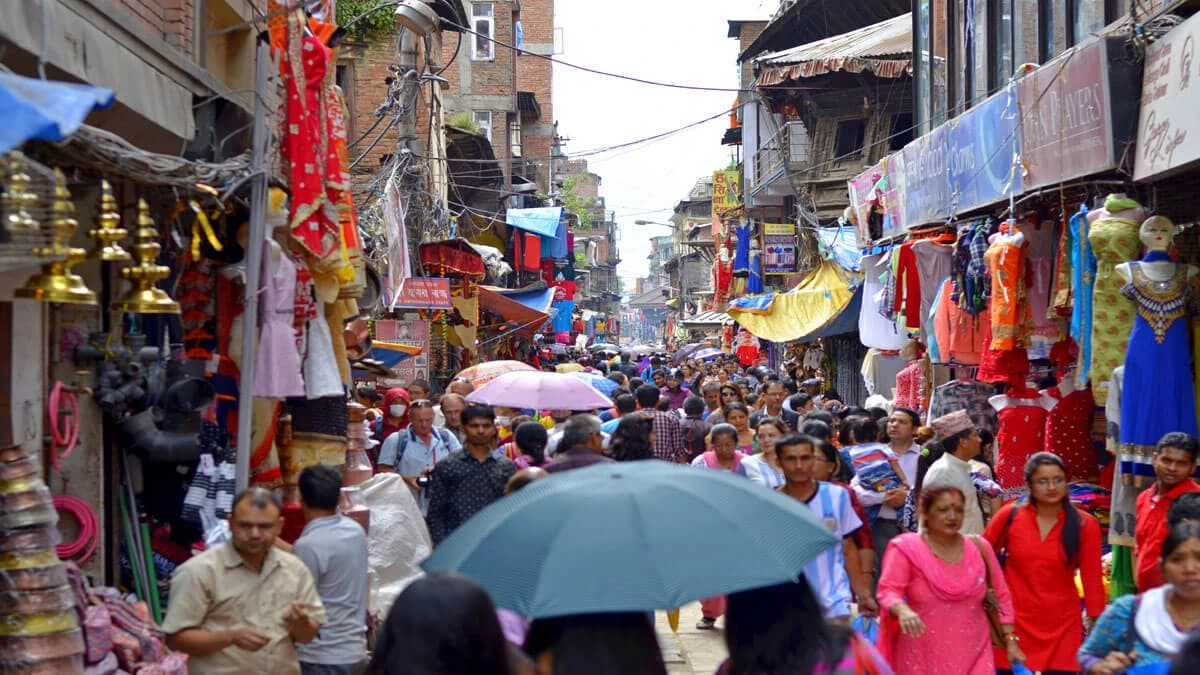
Asan is a market first. Six roads meet at the square, and the shops around them deal in spices, vegetables, groceries, clothes, kitchenware, hardware and religious goods. The three storey Annapurna Temple stands at the center, dedicated to Annapurna, the goddess of grain.
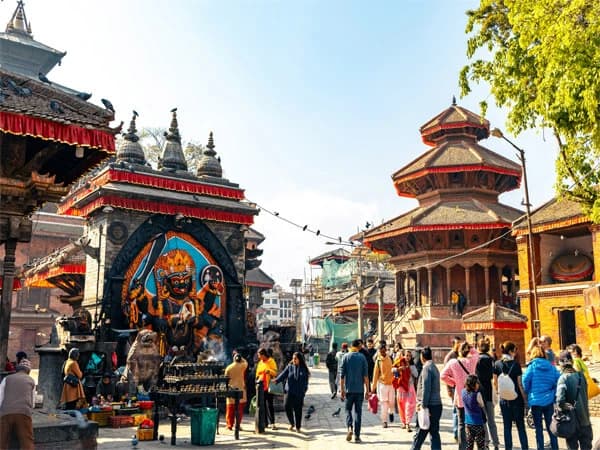
Walk from Asan toward Indra Chowk and the shopping changes. You will come across fabric and bead shops, religious items and plenty of small businesses serving local customers. Akash Bhairav Temple stands prominently at Indra Chowk, right among the shops and traffic.
This is one of the non touristy things to do in Kathmandu where the attraction is simply the place itself. Look at what people are buying, follow the narrow lanes, stop at the temples and pay attention to the small details that are easy to miss when you are moving from one major sight to another. Look at what people are buying, follow the narrow lanes, stop at the temples and pay attention to the small details that are easy to miss when you are heading from one major sight to another.
Go in the morning if you want to see the market at its busiest. Fresh produce and other goods are brought in early, and the area fills up quickly.
It can also be a lot. The lanes are narrow, pedestrians share them with motorbikes and handcarts, and there is rarely much room to stand around without being in someone's way. If you are looking for somewhere quiet, skip this one. If you want to see old Kathmandu doing what it has always done best, shopping and trading, give it an hour or two.
Visit Itum Bahal in Kilagal
In Kilagal, between Thamel and Kathmandu Durbar Square, Itum Bahal is situated in the old streets of Kathmandu. The entrance on Kilagal Street is easy to miss. Walk through it and you reach a large rectangular courtyard surrounded by traditional Newar buildings. Itum Bahal, also known as Keshchandra Mahavihar, is one of the largest Buddhist bahals in Kathmandu.
The main courtyard leads into smaller spaces, including Saraswati Nani and Tara Nani, with shrines and chaityas around them. Look up at the old timber details and carved windows, but also look at the layout itself. Itum Bahal is not just one old courtyard. It is a whole cluster of religious spaces connected by narrow lanes.
The Guru Mapa story is probably the detail you will remember. Four brass plaques show the demon taking a child and later being offered food to stop the attacks. The story is still connected to an annual buffalo sacrifice and feast during Holi.
There is also the Itumbaha Museum, which opened in 2023. It displays historic objects from the monastery's collection, including religious and cultural pieces that were previously kept in storage. The museum came out of a long local effort to preserve objects found during restoration work at the monastery.
For lesser known places in Kathmandu, Newari culture, Buddhist heritage in Kathmandu and old Kathmandu architecture, Itum Bahal is a more interesting stop than it first appears. Give the courtyard a proper look, check the smaller spaces around it and leave the camera alone if people are carrying out religious activities. This is still a working monastery, not a heritage display made only for visitors.
Walk Kirtipur Without Following the Usual Temple Checklist
Kirtipur gets recommended so often that calling it a hidden gem would be ridiculous. The better reason to go is to forget the usual sightseeing checklist for a while and spend some time walking through the old town itself.
Beyond Bagh Bhairab and the other well known temples, the streets are filled with red brick houses, tiled roofs, small bahals, shrines and courtyards that are part of the town rather than attractions created for visitors. Some old buildings have been restored, some show their age, and newer construction has found its way into the historic area too. That is why I would spend the time walking rather than treating Kirtipur as another stop between temples.
Food is another good reason to make the trip. Kirtipur has a strong Newar food tradition, with local eateries serving dishes that rarely get much attention on the usual Kathmandu travel itinerary. If you have already eaten around Thamel, this is a good place to try something different.
Kirtipur is well known, so I would not put it on this list as some secret corner of the Kathmandu Valley. I would include it because you can spend several hours walking through an old Newar town, eating local food and seeing how the historic area is used today. You actually get to see how the old town works when nobody is trying to show it to you.
Go to Khokana for Its Mustard Oil Heritage
Khokana is one of the more unusual places to visit around Kathmandu because its identity is closely tied to traditional mustard oil production. The old Newar settlement still has its historic lanes, courtyards, shrines and Rudrayani Temple, but the traditional oil presses are what give the village its particular character.
The old mustard oil presses are what I would look for first. Khokana’s traditional layout includes courtyards, narrow lanes, drainage channels, chaityas and the Rudrayani temple, but the oil making gives the village a story that goes beyond old brick houses. If you happen to find a press operating, watch the process. If not, the old equipment and the village’s connection with mustard oil are still worth noticing.
Bungamati is close enough to include in the same Kathmandu day trip, but it has a different story. The village has a major connection with Rato Machhindranath, one of the most important deities in the Kathmandu Valley, and is traditionally regarded as his birthplace. Its annual festival is tied to the chariot procession of Rato Machhindranath.
Khokana and Bungamati make more sense as a Kathmandu Valley day trip than as quick stops squeezed between city attractions. They take you into an older side of the valley, where Newar traditions, farming and religious life are still closely connected. They are known destinations, but they take you into farming history, Newar traditions and a side of the valley that you will not get from another afternoon around Thamel.
Watch a Nepali Play
If you are not a club person, you do not have to spend every evening in Thamel. Kathmandu has a small theatre scene, and checking what is playing at Mandala Theatre in Thapagaun or Shilpee Theatre in Battisputali can give you a very different kind of evening. Both venues regularly put on theatre and other live performances.
Most Nepali plays are performed in Nepali, and the subjects can range from family and relationships to politics, social issues, mythology and stories drawn from life in Nepal. You will miss some of the dialogue if you do not speak Nepali, but you can still follow the acting, the mood and the way the audience responds. The subjects can be surprisingly close to everyday life, from family and relationships to politics, social issues and stories drawn from Nepal's past.
The programme changes, so check what is actually running during your visit. Do not pick a show just because it happens to be on. Read what it is about first and choose something that sounds like your kind of evening.
If clubs are not your thing, this gives you another nightlife option in Kathmandu without having to spend the evening in a bar.
Get Your Hands Dirty in Thimi
If you would rather make something than spend another afternoon looking at old buildings, Thimi is a good place to do it. The town has a long pottery tradition, particularly among the Prajapati community, and pottery is still part of everyday work in parts of Madhyapur Thimi.
The best time to walk through the pottery areas in Thimi is when the work is happening. Clay is shaped on large wheels, left out to dry and then fired into pots, storage vessels, flowerpots and other everyday items. You may also come across stacks of finished pieces or rows of clay drying in the open, depending on the season and what is being made that day.
Thimi Pottery Square is one of the main areas associated with the craft. There are also pottery workshops where visitors can try working with clay, although it is better to arrange that in advance rather than assume you can walk in and start making a pot.
What I like about Thimi is that the pottery is still tied to the town itself. You see clay drying beside houses, finished pieces stacked around courtyards and workshops where people are still making things by hand. You see clay drying beside houses, finished pots stacked around courtyards and workshops where the work is still being done by hand.
Eat Something You Probably Won’t Recognize
Newari food gets easier to find around Kathmandu once you know what to look for. Chhoila, bara, chatamari and samay baji are already familiar names, but they are only a small part of Newari cuisine in Nepal.
Look beyond those dishes and the menu can get much more interesting. Bhuttan is a preparation of fried buffalo offal, which can include intestines and liver. Sapu mhicha is a small pouch made from buffalo stomach lining and filled with bone marrow, traditionally prepared for special occasions and feasts.
Takha is another dish that can surprise you, a cold jellied buffalo meat dish served with spices. These are not foods to order because someone told you they are must try dishes. You might love them, or you might decide very quickly that they are not for you.
You get more out of a Newari food experience once you stop worrying about recognising everything on the plate. Ask what has been served, try a little, and let whoever is with you argue about which dish is the best. The food is closely connected with Newar feasts, festivals and family gatherings, so there is more to it than the familiar restaurant menu suggests.
You will also find plenty of lentils, beaten rice, vegetables, pickles and fermented foods alongside the meat dishes. That gets overlooked when traditional Newari food is reduced to a few famous names on a tourist menu.
The first plate may be familiar. The second one is where you start wondering what exactly you have been handed.
See What Kathmandu’s Artists Are Doing Now
There is more to Kathmandu’s art scene than paubha paintings, handicrafts and the galleries around the tourist areas. At Taragaon Next in Boudha, the programme changes throughout the year, with exhibitions, film screenings, music, workshops, talks and other events.
Its exhibitions and events change, so what you see depends heavily on when you visit. The programme can include contemporary art, architecture, heritage, film, music, talks and workshops. It is a useful introduction to contemporary art in Kathmandu, especially if most of what you have seen so far has been centuries old.
It is more than a conventional art gallery in Kathmandu. There are guided tours, workshops, an amphitheatre and a sculpture garden, while the event programme brings in people working across different parts of the arts and culture scene. What you find depends on the date, so checking the programme before going is important.
The Boudha location makes it easy to combine with time around the stupa. For things to do in Boudha, that is a fairly good change of subject.
Check what is on before you go. One visit might give you an exhibition, while another could mean a film, workshop, music or a discussion. That is a lot more interesting than turning up expecting the same gallery experience every time.
Learn to Cook the Food You Have Been Eating
By this point, you may have eaten enough momo to think you know what you are doing but making them yourself is a different story. Get a piece of dough in your hand and folding one properly suddenly seems much harder than it looked on the plate.
A Nepali cooking class in Kathmandu puts you on the other side of the plate for a change. Depending on the class, you might make momo, dal bhat, bara or chatamari, then sit down and eat what you have made. Some classes include a visit to a local market or shop for ingredients, while others start straight in the kitchen, so check what is included before booking.
The market visit can be more interesting than you might expect. Once you know what you are cooking, the piles of herbs, spices, vegetables and other ingredients around you start making more sense. You are no longer just looking at unfamiliar things in a market. You are choosing what will end up in your lunch.
If you do not want to spend several hours cooking, a momo making class in Kathmandu is an easier option. You learn how the filling is prepared, try your hand at folding the dumplings and cook them yourself. Some classes offer vegetarian or vegan choices as well, although that depends on the operator.
You are not going to leave knowing everything about Nepali cuisine, and that is not really the point. What stays with you is knowing what went into the food you kept ordering during the trip and having a recipe or two that you can attempt again at home.
See Kathmandu When a Jatra Takes Over
There are days when Kathmandu's old streets barely resemble themselves. When a jatra is underway, chariots move through the neighbourhoods, musicians fill the streets and crowds gather around places that can seem quiet on any other day.
Indra Jatra, Seto Machindranath Jatra and Rato Machindranath Jatra are some of the major ones. Their dates change from year to year, with many following the lunar calendar, so check the Kathmandu festival dates for the year you are travelling. Show up outside the festival period and you will miss it.
There are smaller local festivals in Kathmandu as well, often tied to a particular neighbourhood or Newar community. You are unlikely to encounter many of these on a standard Kathmandu sightseeing tour, and some last only a few days.
If you join the crowd, remember why everyone else is there. Stay clear of the procession and religious activity, and ask before taking close photographs. The people around you are there to take part, not to watch a show.
Final Thoughts
You do not have to go far from the centre of Kathmandu to find something different. Follow a market lane, sit down for a plate of Newari food, watch a play, make something with your hands or get caught up in a jatra. You may end up remembering one of those afternoons more than another famous sight in your Nepal tour journey.