You may have heard the name Tengboche somewhere along your journey to Everest. You may have even walked past Tengboche Monastery on the Everest Base Camp Trek, taken a few photographs, and carried on. But did you ever stop long enough to wonder what this monastery actually means to the people who call the Khumbu home?
For generations, Tengboche Monastery has been part of religious life in the Khumbu Region. Founded in 1916, it belongs to the Nyingma tradition of Tibetan Buddhism and has a close connection with the Sherpa community. The monastery has also lived through difficult chapters, including the 1934 earthquake and the fire that destroyed it in 1989.
Every year, Mani Rimdu brings monks and local communities together at Tengboche for prayers, rituals and masked dances. Walk into the monastery, look at the paintings and religious objects, and you begin to see a side of the Everest region that a trekking itinerary rarely explains.
So the next time you pass through Tengboche, look beyond the trail and the mountains. There is a much older story waiting inside those walls.
Where Is Tengboche Monastery?
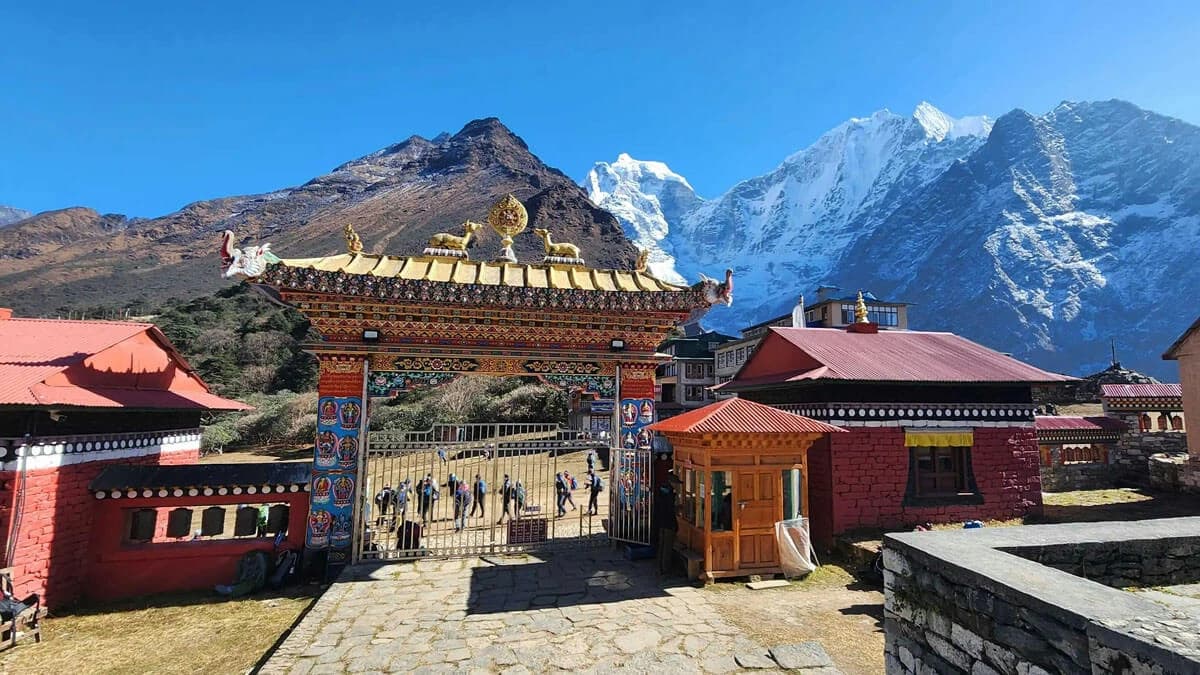
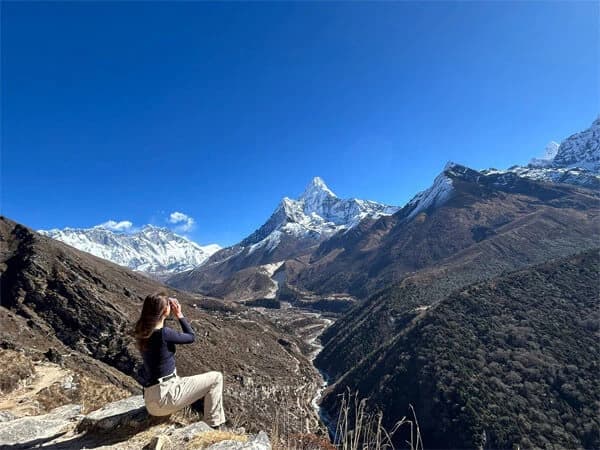
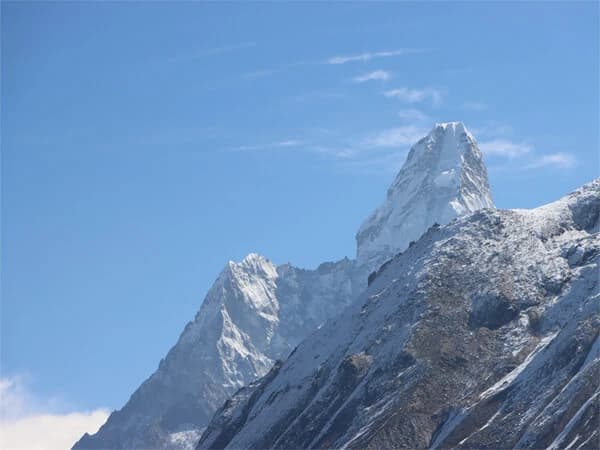
Tengboche Monastery is located in northeastern Nepal, inside Sagarmatha National Park in the Everest region. It lies near Tengboche village above the Dudh Koshi Valley, with views toward Everest, Ama Dablam, Lhotse and Nuptse.
The monastery lies on the route from Namche Bazaar toward Dingboche, which makes Tengboche on the Everest Base Camp Trek a well known stop for trekkers. Its location also places it among the important cultural and religious sites of the Everest region.
The History of Tengboche Monastery
Tengboche Monastery was founded in 1916, although Buddhism had already been part of life in Khumbu for generations. Tengboche was not the first monastery in the region. Pangboche Monastery and other older Buddhist sites were already established among the Sherpa communities.
The founding of Tengboche is closely associated with Lama Gulu. Historical accounts connect his decision to establish a celibate monastery with guidance from Zatul Rinpoche, a Tibetan Buddhist teacher. Lama Gulu then sought financial support from Karma, a wealthy Sherpa figure. Kusang and Gembu Tsepal also became important sponsors of the project.
Construction began in 1916, and the monastery was formally consecrated in 1919. Local Sherpas also contributed labour to the construction. From its early years, Tengboche developed as a religious institution serving the Buddhist life of the Sherpa communities of Khumbu.
The monastery's history has also been marked by destruction and rebuilding. The 1934 earthquake destroyed the main temple. Khumbu villagers helped rebuild it through donations and labour. For more than five decades, the rebuilt monastery continued its religious role before another disaster struck.
On 19 January 1989, an electrical short circuit caused a fire that destroyed the monastery. Religious materials and artworks, including scriptures, statues, murals and wood carvings, were lost. The monastery was rebuilt again with support from the local Sherpa community and people and organisations from outside the region.
The building visitors see today is therefore a reconstruction. The physical structure has changed, but Tengboche's place in Sherpa Buddhist life and the religious history of Khumbu has continued.
Tengboche and Sherpa Buddhist Culture
Only a small proportion of Sherpa men traditionally entered monastic life, while most Sherpas remained householders. Tengboche belongs to this monastic tradition, with monks living under celibate vows and devoting themselves to Buddhist study, prayer and ritual practice. Families across the region have their own religious customs and call upon lamas for prayers, blessings and ceremonies.
Much of Sherpa religious life takes place outside the monastery. Mani walls, chortens, prayer wheels, household shrines and village ceremonies are found throughout Khumbu. Religious services are also performed for important family occasions. Monks and lamas from Tengboche have traditionally provided prayers and blessings for people from surrounding communities.
The Mani Rimdu Festival at Tengboche Monastery is the monastery's best known annual religious ceremony. Preparations begin before the public ceremonies, with monks performing prayers and other ritual practices. The festival includes a sand mandala, chanting, offerings, Buddhist teachings and blessings. The masked dances form part of the religious ceremony, with monks wearing elaborate costumes and masks representing Buddhist figures.
The name Mani Rimdu Festival comes from two parts. Mani refers to part of the mantra of Chenrezig, the Buddha of Compassion, while Rimdu or Rildu refers to the small red pills that are blessed during the festival and distributed during the blessing ceremony.
The tradition was passed down from Rongbuk Monastery in Tibet and became established at Tengboche. Mani Rimdu is also celebrated at Thame Monastery in Khumbu and Chiwang Gompa in Solu, although the timing and details of the ceremonies differ between communities.
The festival continues alongside changes in Khumbu society. UNESCO records that local participation has declined compared with earlier periods as younger generations leave for education and employment, while tourism has brought a much larger outside audience to the ceremonies. The religious rituals themselves continue to be performed.
Buddhist practice is visible throughout Khumbu, from village monasteries and chortens to mani walls and household religious traditions. The Everest Base Camp Trek, Gokyo Lakes Trek and Three Passes Trek all reach communities where these traditions remain part of local life. Tengboche is one of the major monastic centres within that wider Sherpa Buddhist landscape.
Inside Tengboche Monastery: Murals, Statues and Sacred Objects
The Tengboche Monastery interior centres on the Dokhang, the main prayer hall. A large image of Shakyamuni Buddha rises through two levels, with Manjushri, associated with wisdom, and Maitreya, the future Buddha, beside it. The hall also contains volumes of the Kangyur, the Tibetan Buddhist canon.
The murals and paintings have also been shaped by the monastery's history. The 19 January 1989 fire destroyed many of the older scriptures, statues, murals and wood carvings. Some books and paintings were rescued, and the monastery was subsequently rebuilt with support from Nepal and abroad.
The Tengboche Monastery statues are concentrated around the main shrine, where each figure has a specific place within Buddhist iconography. The religious objects at Tengboche Monastery, including its scriptures, belong to the religious activities carried out by the monks. The Buddhist art in Tengboche Monastery is therefore part of the monastery's worship and teaching environment, rather than a collection assembled for display.
The present Tengboche prayer hall dates from the monastery's rebuilding rather than the original 1916 structure. Much of the earlier interior was lost in the 1989 fire, so the paintings, statues and scriptures seen today belong to a later chapter in the monastery's physical history.
How to Visit Tengboche Monastery
Visitors mostly go inside during the afternoon, when monastery tours are available. The building is still used for religious activities, so access can depend on what is happening that day. If monks are engaged in prayers or a ceremony, visitors should follow the instructions given at the monastery and avoid interrupting the activity.
The prayer hall contains the main shrine, paintings and scriptures and is the main part of the interior open to visitors. Shoes are removed before entering where requested, and permission should be sought before taking photographs inside or during a religious ceremony. The monastery sightseeing does not take long, but there is enough to see inside to make stopping worthwhile.
Nyingma Buddhism and Tengboche
Tengboche follows the Nyingma school of Tibetan Buddhism, one of the four major schools of Tibetan Buddhism. The Nyingma tradition has deep roots in the Himalayas and is closely associated with the early transmission of Buddhist teachings to Tibet.
This religious affiliation helps explain Tengboche’s place in the Buddhist culture of Khumbu. The monastery remains an active Nyingma institution where monks carry out religious practices, rather than functioning only as a historic site for visitors.
The influence of this tradition extends beyond the monastery walls. Buddhist beliefs are reflected in the religious customs, monasteries, chortens and sacred sites found across Khumbu. Tengboche is one part of that wider religious landscape, with its own role in the spiritual life of the communities around it.
The Role of Lamas in Sherpa Religious Life
Sherpa religious life has never been limited to monks living inside monasteries. Alongside monastic communities, Khumbu villages have traditionally had religious practitioners who conducted ceremonies, recited sacred texts and guided families during important religious occasions. Some were married householders, while monks followed celibate monastic life.
This distinction helps explain the Sherpa religious traditions found across Khumbu. Monasteries provided places for formal Buddhist study and practice, while village based lamas served religious needs within local communities. Together, these traditions connected Buddhist teachings with everyday life among the Sherpa people.
Tengboche became one part of this larger system rather than existing separately from village life. Its religious importance developed alongside the communities around it, which is why understanding the Sherpa spiritual traditions of Khumbu adds another dimension to what visitors see while trekking in Nepal.
Tengboche Monastery: More Than a Stop on the Everest Trail
The monastery is part of a tradition that has continued through destruction, reconstruction and major changes in life across the Everest region. The walls and interior visitors see today are not the same monastery that stood in the early twentieth century, yet the religious practices carried out there remain connected with the Sherpa communities who have supported Tengboche for generations.
That continuing connection is central to the significance of Tengboche. As an active Nyingma Buddhist monastery, it remains part of the religious traditions that have shaped life in the region. Its place along a major trekking route within Sagarmatha National Park brings thousands of visitors to its doors, but the monastery's importance does not come from tourism. It comes from the people, practices and traditions that have kept Tengboche part of Sherpa religious life for generations.