Namche Bazaar lies at 3,440 metres, yet many trekkers pass through it only on their way to Everest Base Camp. Is reaching base camp really necessary to experience the Everest region? Not everyone has two weeks to spare, wants to trek above 5,000 metres or needs another demanding high altitude challenge. The Namche Bazaar Trek offers a different choice which is to explore the heart of Sherpa country, visit mountain villages in Khumbu region, experience the trading town of Namche and enjoy views of Everest and Ama Dablam without having to do the full base camp journey. Sometimes, choosing where to turn back makes for a better trip than chasing the highest destination.
Namche Bazaar Trek Highlights
Take a look at these highlights that you will encounter on your trek to Namche Bazaar:
Namche Bazaar and its Saturday Market
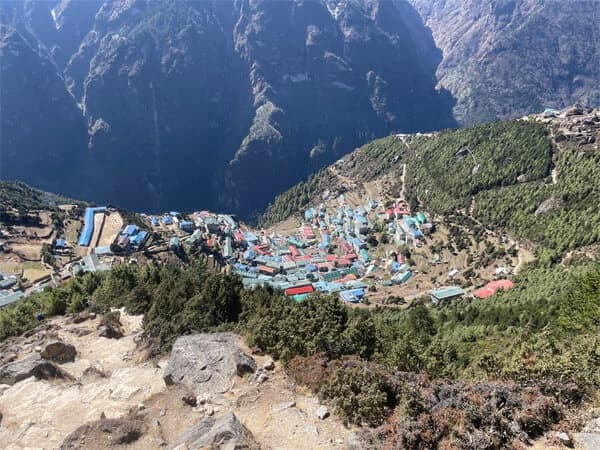
Namche Bazaar is built into a curved hillside above the Dudh Koshi Valley. Its narrow lanes, stone steps and closely packed houses lead to a market area where local trade continues throughout the week. The Saturday market is particularly interesting, bringing traders from neighbouring villages and the surrounding valleys to sell food, clothing, household supplies and other goods.
Namche also has a long history of trade with Tibet through the Nangpa La route. This connection helped shape the town long before trekking and mountaineering brought visitors from around the world. Visiting the Saturday market is one of the most distinctive experiences of the Namche Bazaar Trek Nepal.
Khumjung Village and the Sir Edmund Hillary Visitor Centre
Khumjung lies beneath Khumbila, a mountain considered sacred by the Sherpa community. Its traditional stone houses, walled fields and monastery make it one of the most recognisable villages above Namche Bazaar. The main historical attraction is the Sir Edmund Hillary Visitor Centre, housed inside the original aluminium school building constructed by Sir Edmund Hillary in 1961.
The building was transformed into a visitor centre and opened to the public on 29 May 2023, marking the 70th anniversary of the first successful Everest ascent. Its exhibits tell the story of Khumjung School, the Himalayan Trust and the work carried out in the Khumbu. Khumjung Monastery is also known for a relic traditionally presented as a yeti scalp.
Khunde Village and the Historic Khunde Hospital
Khunde is another traditional Sherpa village located above Namche Bazaar, close to Khumjung. Its most notable landmark is Khunde Hospital, established by Sir Edmund Hillary's Himalayan Trust in 1966. The hospital was built when modern medical services were almost absent from the Khumbu. Overseas volunteer doctors worked there for decades before management passed to local medical professionals. Today, it continues to provide healthcare to people in the surrounding mountain communities. The walk between Khumjung and Khunde makes it possible to visit both villages during the same Namche Bazaar hiking excursion.
Syangboche, Hotel Everest View and Mountain Scenery
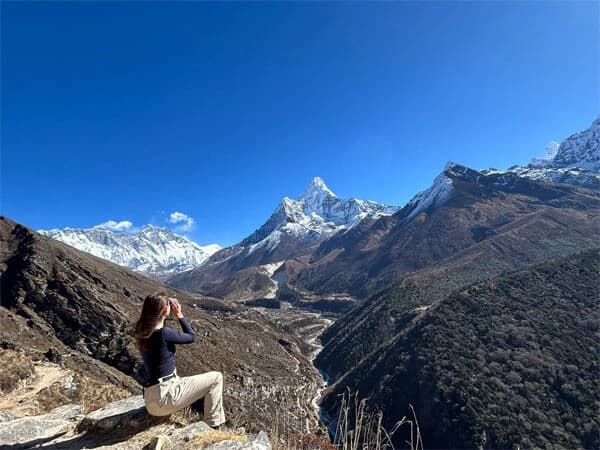
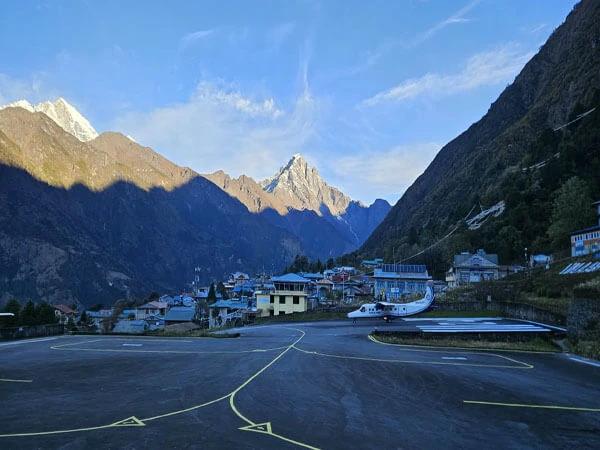
The trail above Namche towards Syangboche offers a different perspective of the Everest region. On clear days, the surrounding peaks include Mount Everest, Lhotse, Ama Dablam, Thamserku and Kongde Ri. Hotel Everest View, located above Namche, is known for its elevated position and views towards Everest. Syangboche is also recognised for its high altitude airstrip.
The walk towards this area is a popular choice during Namche Bazaar Acclimatization and gives trekkers an opportunity to explore the hills above town. These viewpoints are among the highlights of the Everest View Trek and Everest Panorama Trek.
Sherpa Culture Museum and Everest Documentation Centre
Sherwi Khangba in Namche houses the Sherpa Culture Museum and Everest Documentation Centre. The museum occupies a traditional style Sherpa house, displaying household objects and artefacts that illustrate how Sherpa families lived before tourism became a major part of the local economy.
The Everest Documentation Centre focuses on Sherpa mountaineering history, with photographs and records of climbers who have reached the summit of Everest. Its collection includes figures such as Tenzing Norgay Sherpa and Ang Rita Sherpa. For visitors interested in the people behind Himalayan expeditions, this is a worthwhile stop during the Namche Bazaar Trek.
Thame Monastery and the Historic Nangpa La Route
Thame is a traditional Sherpa village in the Bhote Koshi Valley, west of Namche Bazaar. Its monastery, Thame Gompa, is an important Buddhist site for the local community. The valley also connects with the historic route towards Nangpa La, the high mountain pass once used for trade and travel between Nepal and Tibet. Thame is associated with several well known Sherpa mountaineers, including Apa Sherpa. Reaching the village requires an additional walk from Namche, so it is best included when the Namche Bazaar Trek itinerary allows extra time. Its religious and trading history makes it an interesting excursion beyond the main Everest trekking trail.
Yak Cheese, Butter and Sherpa Food Traditions
Namche Bazaar is known for its homemade yak cheese and butter, both closely connected with traditional food production in the Khumbu Valley. These dairy products have long been part of life in the high mountain villages, where yak herding plays an important role in local livelihoods. Visitors can also find potato based dishes and Sherpa meals alongside the familiar food served in trekking lodges.
Trying locally produced yak cheese is a small but worthy part of the Namche Bazaar Trekking experience. It also offers a taste of the food traditions that existed in the region long before Nepal trekking became an international industry.
Namche Bazaar Trek Difficulty
The climb to Namche Bazaar is the toughest part of the trek. Leaving Phakding, the trail follows the Dudh Koshi River through Benkar, Monjo and Jorsalle. After the entrance to Sagarmatha National Park, the route continues towards the Hillary Suspension Bridge. Once across the bridge, a long ascent through the forest leads to Namche Bazaar, at approximately 3,440 metres. This climb takes several hours and becomes harder as the altitude increases. For many trekkers, reaching Namche is the most physically challenging day of the journey.
The Namche Bazaar Trek Difficulty is different with fitness, walking experience and how well someone responds to altitude. People accustomed to hill walking generally find the route more comfortable than those who rarely walk uphill. The trail also carries regular traffic from yak and mule trains supplying the villages, lodges and shops above Monjo. During busy trekking periods, walkers share narrow sections with these animals.
For the Namche Bazaar Trek for Beginners, the climb from Phakding deserves proper preparation. Regular hill walks and stair climbing can help build the leg strength needed for the ascent. The return journey has its own challenge, with a lengthy descent towards Lukla that can be uncomfortable for anyone with knee problems. Trekking poles may help on the downhill sections.
Namche's altitude of 3,440 metres also deserves attention. Some trekkers experience headaches, nausea, dizziness or loss of appetite after arriving. An acclimatization night in Namche is important before continuing to higher ground. Anyone whose symptoms worsen should not continue ascending and should inform their guide.
A Namche Bazaar Short Trek avoids the additional days and higher elevations involved in reaching Everest Base Camp, but the climb from Phakding is still part of the journey. Allow enough time for the ascent, an acclimatization night and the return walk. The Namche Bazaar Trek Duration should be planned around these walking days rather than shortened simply to fit a tight holiday schedule.
How Many Days Do You Need for the Namche Bazaar Trek?
The Namche Bazaar Trek takes 5 to 7 days from Kathmandu, including the Lukla flights and return journey. Five days covers the basic route to Namche and back, while six or seven days allows time to visit Khumjung, Khunde, Syangboche and Thame.
A five day Namche Bazaar Trek itinerary can look like this: fly from Kathmandu to Lukla, walk to Phakding, continue to Namche Bazaar the following day, spend a day exploring the area and return to Lukla before flying back to Kathmandu. However, this schedule leaves little room for flight disruptions.
We recommend six days if you want to explore beyond Namche's main market. The additional time is useful for visiting Khumjung Village, Hotel Everest View and the surrounding Sherpa settlements. More importantly, do not remove the acclimatization night in Namche just to shorten the itinerary. At 3,440 metres, altitude deserves proper consideration.
For a seven day Namche Bazaar Trek, you can include an excursion to Thame or spend longer exploring the Khumbu villages. Keep an additional buffer day in Kathmandu if your international departure is fixed. Lukla flights highly depend upon weather, and missing a flight connection can disrupt your onward travel.
Namche Bazaar Trek Distance, Elevation Gain and Walking Hours
The Lukla to Namche Bazaar trekking route covers approximately 13.5 to 19 km, with an elevation gain of around 600 metres between the two towns. The distance is not long by trekking standards, but the elevation profile makes a difference. Phakding lies at approximately 2,610 metres, while Namche Bazaar is at 3,440 metres.
Expect 3 to 4 hours from Lukla to Phakding and 5 to 7 hours from Phakding to Namche. The part of the journey between Jorsalle to Namche is the hardest part of the walk from Phakding. From the Hillary Bridge, it is a long climb all the way to Namche.
The Namche Bazaar Trek Distance increases if you include Khumjung, Khunde or Hotel Everest View. These are separate excursions and are not the part of the standard Lukla to Namche walking distance. The Namche Bazaar Trek Elevation Gain and additional walking should therefore be considered when choosing a trekking package or planning daily walking hours.
For the return journey, leave approximately 4 to 5 hours from Namche to Phakding and another 3 to 4 hours from Phakding to Lukla.
Namche Bazaar Trek Cost
The Namche Bazaar Trek costs USD 900 to USD 1,500 per person, depending mainly on group size, accommodation preferences and the services selected. The lower priced trekking package is suitable for trekkers who are comfortable with standard teahouse accommodation and shared arrangements. The higher priced option is good for those who prefer premium hotels in Namche Bazaar, private transport and a more comfortable trekking experience.
The biggest difference in price often comes down to accommodation and the way the trek is organised. A standard teahouse room costs less than a room in a premium Namche hotel. Private guides, porter arrangements and smaller group sizes can also increase the per person cost. Flight arrangements matter too, particularly when traveling through Ramechhap requires an additional road transfer before the Lukla flight.
Before booking, check whether your quoted price includes:
- Return flights between Kathmandu and Lukla.
- Road transfers to and from Ramechhap, if required.
- Accommodation in Kathmandu and along the trekking route.
- Breakfast, lunch and dinner during the trek.
- Licensed trekking guide and porter services.
- Required trekking permits and government taxes.
- Airport transfers and other scheduled ground transportation.
Personal expenses such as snacks, drinks, hot showers, WiFi, charging and tips are generally separate. For a precise Namche Bazaar Trek quote, your group size, travel dates and preferred accommodation standard will determine the final price.
Namche Bazaar Trek Itinerary
Namche Bazaar hike itinerary can be extended or shortened according to your preference. If you are short on time, you can book the classic 5 day Namche Bazaar Trek in Nepal, which will give you a short experience of trekking in the Khumbu region. Another alternative is the 7 day Namche Bazaar Trek with Tengboche extension where you can take your trek to another level by including Tengboche Monastery visit in your itinerary.
If you want a different experience overall, you can try the 5 day Namche Trek with helicopter return, where instead of trekking all the way back to Lukla, you engage in a return journey by a helicopter. It is a good way to add both aerial and trekking experience in your trip. However, the cost of Namche Trek with Helicopter Return will be more than the normal package that you find online.
Namche Bazaar Trek Permits and Entry Fees
The Namche Bazaar Trek requires two entry permits: the Sagarmatha National Park Entry Permit and the Khumbu Pasang Lhamu Rural Municipality Entry Permit. Both are compulsory for foreign trekkers visiting Namche Bazaar and the surrounding Khumbu villages.
The Sagarmatha National Park Entry Permit costs NPR 3,000 per person for foreign nationals and NPR 1,500 for SAARC nationals. Nepali citizens pay NPR 100. Children below 10 years are exempt from the park entry fee.
The second requirement is the Khumbu Pasang Lhamu Rural Municipality Entry Permit, commonly known as the Khumbu entry permit. Foreign nationals pay NPR 3,000, while SAARC and Chinese nationals pay NPR 2,000. This permit is issued at the designated counter in Lukla.
For foreign visitors, the total Namche Bazaar Trek permit cost is NPR 6,000 per person for both entry fees. Keep the permit receipts during the trek, as officials check them at designated checkpoints.
The standard Namche Bazaar Trek does not require a restricted area trekking permit from the Department of Immigration. The two entry permits mentioned above are sufficient for the usual Lukla to Namche Bazaar route.