What comes to mind when you hear “Khumbu Valley”? Everest Base Camp? Namche Bazaar? Maybe a long line of trekkers heading toward the world’s highest mountain.
But what is Khumbu actually like beyond the famous trekking route? This high Himalayan valley is home to the Sherpa people, centuries old Buddhist traditions, remote mountain villages, vast glaciers, and some of Nepal’s most recognizable peaks. Everest gets much of the attention, but life in Khumbu has a history that reaches well beyond modern mountaineering.
How did the Sherpa people build communities at such high elevations? Why do monasteries, prayer flags, mani walls, and Buddhist customs remain so deeply connected to daily life? And how did this remote region become one of the most famous mountain landscapes on earth?
The answers are found in the geography, history, culture, and people of Khumbu Valley.
Where is Khumbu Valley in Nepal?
Khumbu Valley is in Solukhumbu District of northeastern Nepal, in the high Himalayan region around Mount Everest. Much of the region lies within Sagarmatha National Park, with the Tibet Autonomous Region of China to the north.
The Khumbu region includes well known settlements such as Namche Bazaar, Tengboche, Pangboche, Dingboche and Lobuche, along with Everest Base Camp and several major Himalayan valleys and mountain passes.
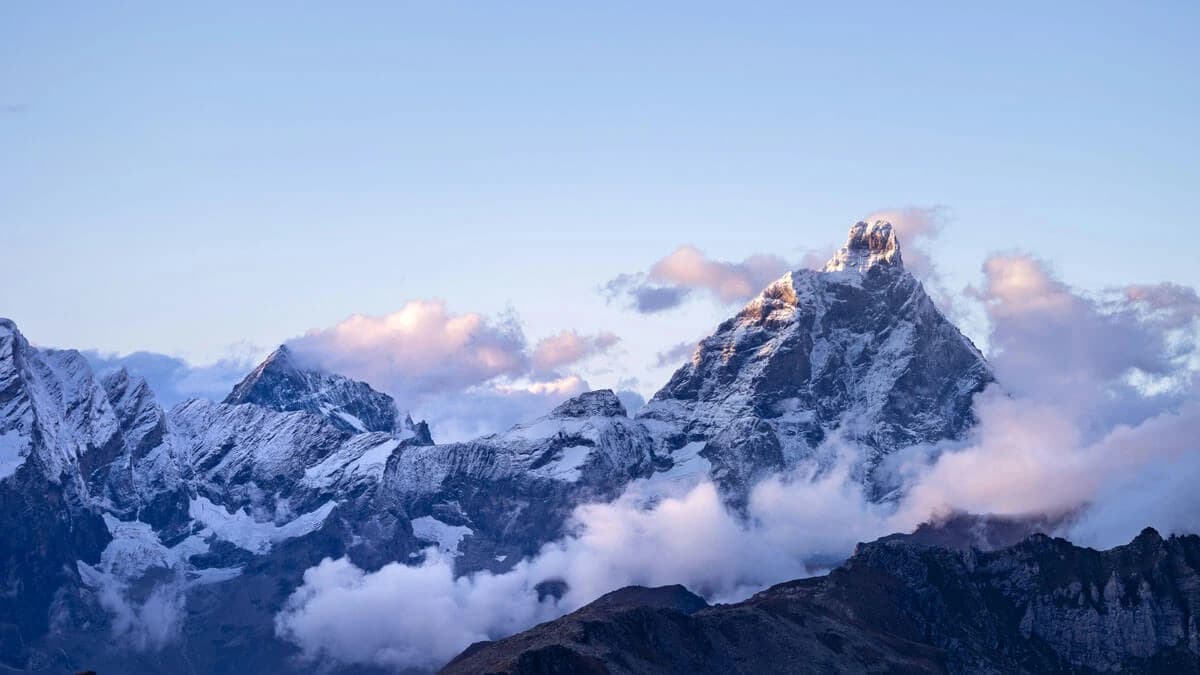
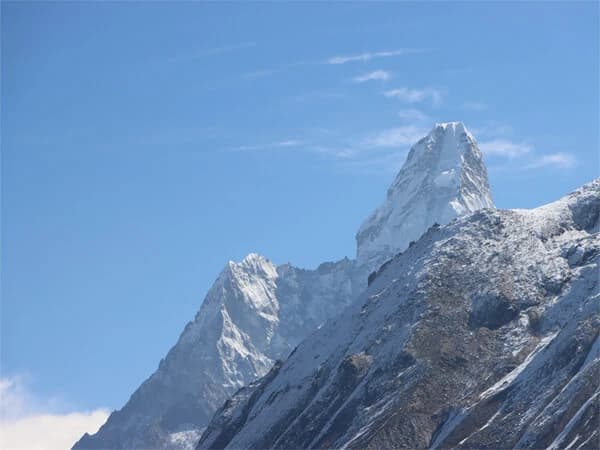
Mount Everest, locally called Sagarmatha in Nepali, is the most famous landmark in the region. Khumbu also includes Lhotse, Nuptse and Ama Dablam, along with glaciers and high altitude villages.
Khumbu is the traditional homeland of the Sherpa people. It is much more than the route to Everest Base Camp, with its own villages, Buddhist traditions, Sherpa heritage and long history of mountain life.
What is Khumbu Valley Famous For?
The Khumbu Valley is famous for Mount Everest, Sherpa culture, high mountain villages and the trekking routes of the Everest region. Everest, known as Sagarmatha in Nepali, is the centre of international attention, but Khumbu has plenty of landmarks and traditions of its own.
The region is home to Ama Dablam, Lhotse, Nuptse and Pumori, as well as the Khumbu Glacier and Khumbu Icefall. The Everest Base Camp Trek passes through several historic Sherpa villages during their journey of reaching the base of Everest, while routes to Gokyo Valley, Renjo La and the Three Passes take trekkers into other parts of the region.
Khumbu is also known for its Buddhist heritage. Tengboche Monastery, along with monasteries at Khumjung, Pangboche and Thame, remains closely connected to Sherpa religious life. Sagarmatha National Park, established in 1976 and listed as a UNESCO World Heritage Site in 1979, protects the region's glaciers, mountains, wildlife and cultural landscape.
For a region that became famous through Everest, Khumbu has a surprisingly deep identity of its own. The mountain attracts the world, but the villages, monasteries, Sherpa traditions and high Himalayan landscape give Khumbu its character.
Khumbu Valley Geography and Elevation
Khumbu region of Nepal covers a huge range of elevation, from 2,845 metres at Monjo to 8,848.86 metres at Mount Everest. The landscape changes from forests and mountain villages to alpine grassland, and permanent snow as the altitude increases. The region forms part of Sagarmatha National Park, where several major Himalayan peaks and glaciers are found.
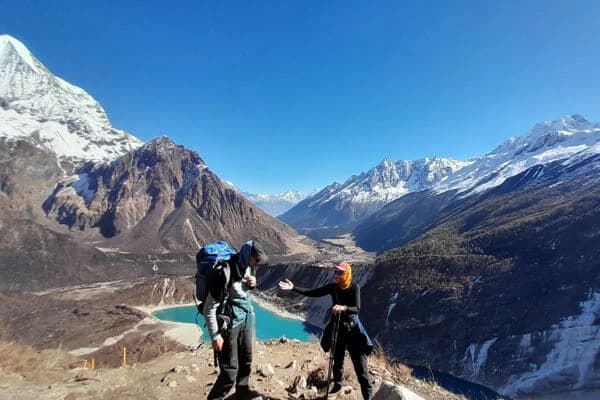
The Khumbu Glacier, Ngozumpa Glacier and Imja Glacier are among the region's major ice formations. The Gokyo Lakes lie beside the Ngozumpa Glacier, while glacial movement has carved broad U shaped valleys throughout the high country. Rivers have cut narrower channels through the mountains at lower elevations.
Plant life also reflects the altitude. Pine, hemlock, fir, birch, rhododendron and juniper grow across the forested areas, followed by alpine meadows and sparse vegetation at greater heights. Above roughly 4,000 metres, trees become increasingly rare, leaving more exposed ground, rock, ice and snow.
History of Khumbu Region
The story of Sherpa villages in Khumbu goes back around five centuries. Sherpa traditions and historical research trace their ancestry to Kham in eastern Tibet, with migration into Nepal taking place during the 15th and 16th centuries. The exact route is not settled, and historians still debate whether the first Sherpa settlements were established in Khumbu or farther south in Solu. That part of Khumbu Valley history is more complicated than the single migration story repeated on many travel websites.
Khumbu was also connected to Himalayan trade with Tibet. Sherpa traders crossed Nangpa La with yak caravans, exchanging Tibetan salt and wool for grain and other goods from Nepal. The trade was still active in the 1950s, but the closure of the Nepal Tibet border after 1959 brought the old system to an end. Some of the same mountain routes later became important for trekkers and mountaineers.
Mountaineering changed Khumbu in another major way. Nepal opened Everest to foreign expeditions in 1949, and on 29 May 1953, Tenzing Norgay and Edmund Hillary reached the summit of Everest. Employment linked to expeditions, guiding and trekking expanded after that, changing the economy of many Khumbu villages and helping shape the tourism industry that exists across the region today.
Traditional Life in Khumbu Valley
In Khumbu villages, everyday work once revolved around a short farming season, livestock and the household. Potatoes became an important crop, while barley and buckwheat were also grown. Yaks and naks supplied milk, butter, meat, wool and manure, and their wool was turned into kshara, a thick blanket still associated with Sherpa craftsmanship. Traditional Sherpa houses were built with local stone and timber, with the design suited to cold mountain winters.
The details of Sherpa food and culture are just as distinctive, which includes potatoes, buckwheat, barley, dairy products and yak meat as the part of older diets. Tsampa, butter tea, thukpa and potato dishes are familiar foods in the Everest region. The Sherpa language belongs to the Tibetan language family, and its use is an important part of cultural identity across many communities in Khumbu.
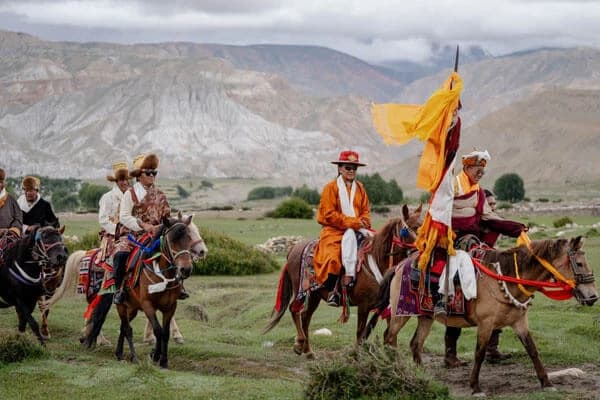
Clothing also tells you something about older Sherpa traditions and customs. Men traditionally wore long woollen robes, while women used layered clothing with woven aprons such as the pangden, particularly after marriage. These clothes made more sense for life in the mountains than the modern trekking gear seen along today's trails, although traditional dress still appears at weddings, religious events and festivals.
Several Khumbu Valley traditions are tied to the Sherpa religious calendar. Mani Rimdu at Tengboche monastery and Thame includes elaborate rituals and masked dances, while Dumje brings villagers together through ceremonies, communal meals and shared responsibilities. Lotok Bulo, associated with the Sherpa New Year period, involves groups visiting homes, receiving grain or food and gathering for singing and dancing.
Alongside these customs, the historic Nawa system gave village authorities responsibility for regulating forests, crops and grazing, making local resource management part of everyday community life.
Villages in Khumbu Region
Khumbu has far more villages than the few names that appear on the standard Everest Base Camp itinerary. The larger and better known ones include Namche Bazaar, Khumjung, Khunde, Thame, Thamo, Tengboche, Pangboche, Phortse, Dingboche, Pheriche, Gokyo, Chhukung, Lobuche and Gorak Shep, while smaller communities and seasonal hamlets are scattered between them.
Villages Around Lukla and the Lower Khumbu
Lukla, Surke, Chaurikharka, Chiplung, Ghat, Phakding, Toktok, Benkar, Chumoa, Monjo and Jorsale make up the main communities along the approach to Khumbu. Lukla has the region's airport and the largest concentration of shops and services, while places such as Phakding, Monjo and Jorsale are much smaller villages along the trail.
Namche, Khumjung and the Sherpa Heartland
Namche Bazaar, Khumjung, Khunde, Syangboche, Thamo, Thame and surrounding hamlets form an important part of historic Sherpa country. Namche developed as a trading centre, while Khumjung and Khunde are closely associated with Sherpa heritage, Khumbila and village farming. Thame and Thamo have a different history because of their connection with the old trading route towards Tibet.
Tengboche, Pangboche and the Imja Valley
Tengboche, Deboche, Pangboche, Phortse, Shomare, Dingboche and Chhukung follow the valleys leading towards Ama Dablam and Everest. Tengboche is known for its monastery, Pangboche for its long established village and religious traditions, and Phortse for its stone houses and farmland. Dingboche and Chhukung are among the important high altitude villages of Khumbu, with Chhukung lying farther into the Imja Valley.
Pheriche, Lobuche and Gorakshep
Pheriche, Duglha, Lobuche and Gorak Shep are the best known communities on the route towards Everest Base Camp. Pheriche has a longer history of farming and herding, while Lobuche and Gorakshep are much smaller and closely connected with mountaineering and trekking. Gorakshep is the last permanent village on the traditional Everest Base Camp route before the trail continues towards Base Camp and the Khumbu Icefall.
Gokyo Valley Villages
West of the main Everest route are Dole, Luza, Machhermo, Thare, Gokyo and Dragnag, along with smaller places used by herders and trekkers. Gokyo is the largest name in this group and gives access to the Gokyo Lakes and Ngozumpa Glacier, while Dole and Machhermo remain small mountain villages along the valley.
Buddhism and Religion in Khumbu Valley
Religion in Khumbu has never been confined to the walls of a gompa. Sherpa communities practice Tibetan Buddhism, with the Nyingma tradition having a strong presence in the region. At the same time, older beliefs remain part of religious life, especially the idea that mountains, forests, springs and other places can be inhabited by protective or powerful beings.
Khumbila, the mountain above Khumjung and Khunde, is one of the clearest examples. Sherpas regard Khumbu Yul Lha as a guardian deity of the country, and traditional rituals have been performed to show respect and ask for protection. This older relationship with the landscape exists alongside Buddhist teachings and monastery life rather than replacing it.
The religious world of Khumbu is also tied to the idea of beyul, a sacred hidden valley in Tibetan Buddhist tradition. Khumbu has been understood through this idea as a spiritually protected land, giving particular meaning to places that might otherwise look like ordinary mountains, forests or valleys.
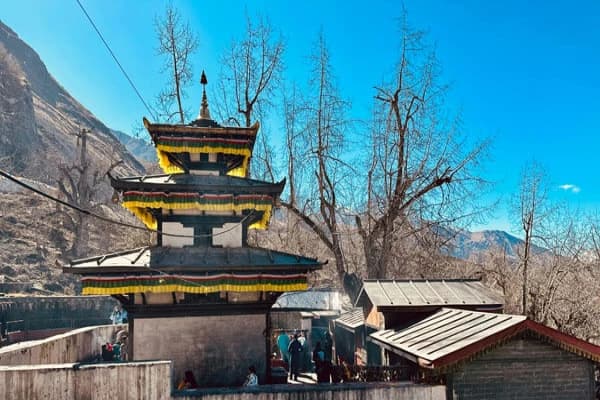
The monasteries remain the main centres for formal religious practice. Tengboche Monastery belongs to the Nyingma tradition and has become the most prominent Buddhist institution in the region, while Pangboche and Thame have their own long religious histories. Monks perform prayers and rituals there, and local families continue to visit for blessings and important ceremonies.
Mountaineering and Tourism in Khumbu Valley
The arrival of mountaineering changed work across Khumbu in ways that can still be seen in the villages today. After the first successful Everest ascent in 1953, Sherpas found growing work carrying expedition loads, preparing camps, guiding climbers and later working in trekking lodges. Today, Khumbu Valley tourism supports a much wider local economy, from family run teahouses and restaurants to transport, porters and mountain guiding.
That is also where the question of hiring a trekking guide in Nepal comes in. In Khumbu, a local guide does more than lead the trail. They know the villages, side routes, weather changes, local customs and the practical problems that can arise at high altitude. Independent trekking is possible on many established routes, but local knowledge can make a real difference, especially on longer journeys beyond the main Everest Base Camp route.
Wildlife and Natural Environment of Khumbu
The Khumbu Valley ecosystem changes a great deal with altitude, and so does its wildlife. Himalayan tahr, musk deer and Himalayan black bears occur in the region, while the higher mountain country provides habitat for the snow leopard. The red panda is also recorded in Sagarmatha National Park, mainly in the forested areas at lower elevations.
Birdwatchers have plenty to look for as well, including the Himalayan monal, blood pheasant and lammergeier. Higher ground has far less plant growth, but animals such as Himalayan tahr still manage to survive among the steep slopes and open mountain landscape.
With so much trekking and expedition activity, wildlife conservation in Khumbu is closely tied to how tourism is managed. Waste, fuel use, water sources and pressure on natural resources all matter in a place where recovery from environmental damage can take a long time. This is why sustainable tourism in Khumbu is not just an environmental slogan but a practical concern for the communities and wildlife living here.
Climate and Environmental Change in Khumbu Valley
The Khumbu Valley climate follows the Himalayan seasonal cycle, with most of the precipitation arriving during the June to September monsoon. Winter brings much colder and drier weather, while snow and ice remain across the higher parts of the region. Around the high passes, a change in weather can become important very quickly for people travelling on foot.
The Khumbu Glacier retreat and changes in other glaciers have raised serious concerns about water and glacial lakes. Khumbu depends on mountain water for villages, farming and tourism, while the Gokyo and Associated Lakes form a high altitude wetland recognised under the Ramsar Convention. The lakes are fed by glacier melt and rainfall and remain frozen for part of the year.
The danger from glacial lake outburst floods is already part of the region's recent history. On 16 August 2024, a major flood reached Thame, destroying homes and damaging a school, health post, bridge, hotels and other infrastructure. Later scientific investigation found that the disaster involved a chain of events beginning with a rock avalanche and the failure of glacial lakes upstream.
These changes are becoming an important part of life in Khumbu today, especially for villages that depend on mountain water and infrastructure built along narrow valleys. Climate change in Khumbu is now discussed alongside much more immediate concerns such as water supply, glacier loss and flood risk.
Final Thoughts
Khumbu Valley leaves a much bigger impression when you look beyond the Everest Base Camp trail. Sherpa heritage, old trade connections, Buddhist traditions, mountain villages and changing glaciers have all shaped this corner of the Himalaya.
The clearest way to understand Khumbu Valley, Nepal is through its people and the way they have lived with the mountains for generations. That history is still visible in the villages, monasteries, fields and paths that make up the Khumbu Valley heritage today.