So you are planning the Gokyo Lakes Trek, and by now you have probably read enough to know the route, the altitude, the price and the names of the villages. You know about Gokyo Lake. You know about Gokyo Ri. You know the views are supposed to be incredible.
But knowing the route is not the same as knowing the trek.
You might read that Gokyo is around 4,790 metres and Gokyo Ri is 5,357 metres and think, “Okay, noted.” But altitude is not something you can tick off a checklist. It can affect how you sleep, eat, walk and feel during the day. That matters when you are looking at a Gokyo Lakes Trek itinerary and trying to decide how many days you actually need.
And what about the parts nobody puts in the headline? The night you cannot sleep properly. The meal that costs far more than you expected. The morning you are supposed to climb Gokyo Ri but are not feeling your best. The Lukla flight that does not go according to your plan. These things are not the reason people dream about Gokyo, but they are part of planning the trek properly.
So this is not another list of reasons to visit Gokyo or another polished Gokyo Lakes Trek itinerary. It is the stuff worth knowing before you commit your time, money and legs to the Gokyo Trek.
Gokyo Ri Is Not Automatically Worth Climbing for Everyone
When you start reading about the Gokyo Lakes Trek, Gokyo Ri quickly becomes something you feel you are expected to do. Most Gokyo Lakes Trek 13 days itineraries include an early morning climb to 5,357 metres for the sunrise, and after seeing enough photos of the viewpoint, it is easy to assume that reaching the top is simply part of completing the trek. What those itineraries do not always explain is that the climb starts from Gokyo at around 4,790 metres, so you are already dealing with very high altitude before you even begin.
You might have trained well for the Gokyo Trek and arrived in Gokyo feeling fine, then wake up the next morning with a headache, poor sleep or very little energy for another climb. At this altitude, being physically fit does not guarantee that you will feel good on Gokyo Ri. Your acclimatization and how your body is responding that morning matter just as much.
Weather can also change the whole experience. You can get up before sunrise, make the climb and still find clouds covering Everest, Lhotse, Makalu or Cho Oyu. The famous Gokyo Ri viewpoint can give you an exceptional Himalayan panorama when the conditions are clear, but nobody can promise that the mountains will be visible on the morning you choose to climb.
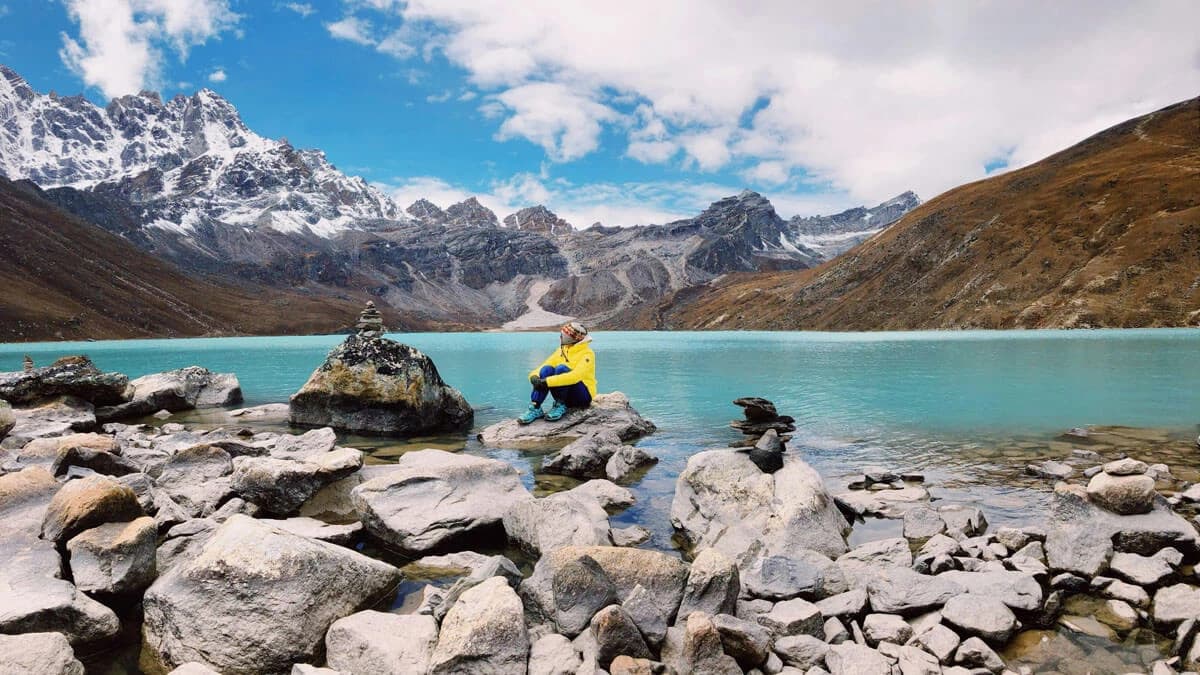
If you feel good and the weather is clear, Gokyo Ri can be one of the highlights of the entire Gokyo Valley Trek. If you do not feel up to it, however, staying around Gokyo Lake does not mean you have missed the point of the trek. You are still beside the Gokyo Lakes, the Ngozumpa Glacier and some of the highest mountains in the world, and that is worth experiencing without turning one viewpoint into a test you have to pass.
The Gokyo Lakes Are Not All You Will See on This Trek
The name Gokyo Lakes Trekking in Nepal can make the route sound like you are walking towards a group of lakes and then walking back, but the experience starts changing long before you reach Gokyo village. From the lower Khumbu villages, the trail moves away from the busy parts of the Everest region and into a landscape of forests, open valleys, stone ways and high mountain area. By the time you reach Machhermo and continue towards Gokyo, the scenery feels very different from the beginning of the trek.
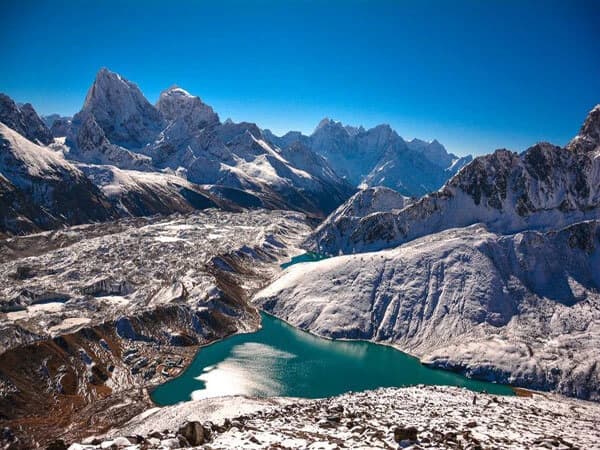
The Ngozumpa Glacier is another part of the trek that gets less attention than the lakes themselves. As you get closer to Gokyo, the glacier becomes part of the landscape rather than something you see from a distance. The trail around this area can feel rough, and the combination of rock, ice, mountains and thin air gives this part of the Gokyo Valley Trek 13 days a completely different character from the earlier days.
In many Gokyo trekking route descriptions, how much the journey itself matters gets missed. Namche Bazaar, Dole, Machhermo and Gokyo are not just overnight stops between the airport and the lakes. Each part of the route gives you a different view of the Everest region, and the change becomes more evident when you keep moving forward.
So if you choose the Gokyo Trekking in Nepal because of the turquoise lakes you have seen in photographs, remember that the lakes are only one part of what you are actually walking through. The trail, the glacier, the high valley and the mountain landscape are what turn a visit to Gokyo Lakes Nepal into a proper high altitude trekking experience.
Tea Houses at Gokyo Are More Basic Than the Photos Suggest
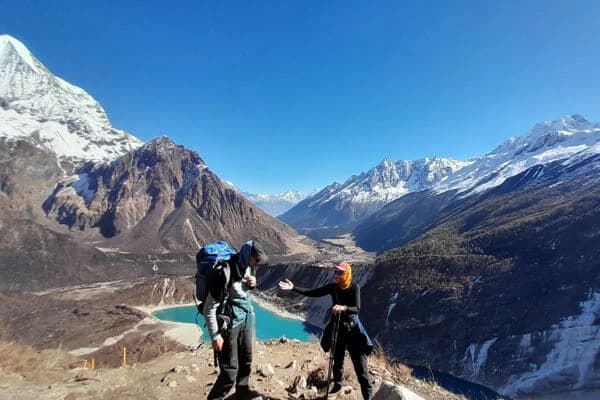
If you have mostly looked at photographs of Gokyo Lakes Trek online, you might have a slightly misleading idea of where you will sleep. The photographs usually show the lake, the mountains, colourful prayer flags and a sunny dining room with a good view. They rarely show the room you return to after several hours of walking at almost 4,800 metres.
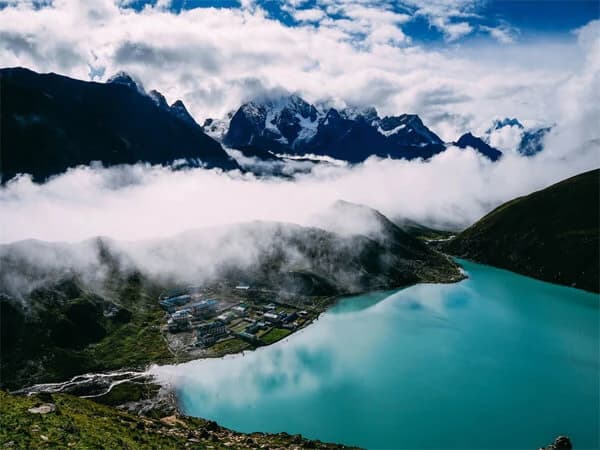
Accommodation on the Gokyo trekking route is in local tea houses and mountain lodges. The rooms are basic, with beds and shared bathrooms. Some lodges are better than others, but you should not expect hotel standards this high in the Himalayas.
Accommodation choices become more limited when you move higher and higher. Namche Bazaar has more accommodation options and better facilities, while Dole, Machhermo and Gokyo have a more basic facilities. This is part of teahouse trekking in Nepal.
Hot showers, phone charging and Wi Fi may be available at some lodges, but they can cost extra so keep that in mind. Hot water can also be limited, especially when several trekkers want to use the shower around the same time.
Your bedroom can be cold as well. Heating is focused on the shared dining room, so this is where trekkers tend to spend their evenings eating, talking and warming up. After a long day of trekking in Nepal, that dining room often becomes the most comfortable place in the lodge.
A good sleeping bag is worth having. Even if the tea house provides blankets, nights at Gokyo can be very cold, particularly outside the warmer trekking seasons.
There is also something else worth remembering. Gokyo is a remote mountain destination, so the facilities cannot be compared with what you would find in Kathmandu or Pokhara. Supplies have to reach the upper valleys, and that affects both the services available and the price.
The good side is that tea houses are also part of the Gokyo trekking experience. You get to stay in the same mountain communities used by trekkers traveling through the Everest region, meet local people and experience the simple side of Sherpa hospitality.
So, if you are expecting a private bathroom, heated bedroom and hotel style service every night, you may be disappointed. If you know beforehand that Gokyo Valley accommodation is basic but functional, you are much more likely to enjoy it for what it is.
Your Gokyo Trek Can Be Delayed Before You Even Reach the Trail
Your Gokyo Trek can start with a flight problem rather than a trekking problem.
Flights to Tenzing Hillary Airport in Lukla depend heavily on weather and visibility. Fog, wind and poor visibility can delay or cancel flights, so having a morning ticket does not guarantee that you will reach Lukla that day. Currently, Lukla flights are being delayed and cancelled because of weather.
A cancelled Lukla flight can push your Gokyo trekking itinerary back by a day. That can affect your first night on the trail, accommodation bookings and the date you planned to return to Kathmandu.
If your international flight home is on a fixed date, do not plan your return from the mountains too close to it. A delayed Lukla flight can leave you waiting in the Khumbu region when you were supposed to be back in Kathmandu.
Flights can also operate from different airports depending on the current flight schedule and aviation arrangements. Kathmandu and Ramechhap have both been used for flights serving the Everest region, so check the departure airport shown on your ticket before heading to the airport.
Helicopter flights may be available when regular flights are disrupted, but they are not guaranteed. Weather can affect helicopter operations too, and the price is higher than a regular Lukla flight.
You Can Feel Fine During the Day and Still Sleep Terribly at Gokyo
One thing that can surprise you on a high altitude trek is the night.
You can reach Machhermo feeling good, eat dinner and get into bed expecting to sleep after a long day on the trail. Then you find yourself awake again and again. You may notice your breathing more than usual, wake up thirsty or spend hours lying there without feeling properly rested.
Gokyo lies at about 4,790 metres, so sleeping at Gokyo is a very different experience from sleeping in Namche or at home. Your body is dealing with much less oxygen, and disturbed sleep is common at this elevation. You can feel strong enough to walk during the day and still have a miserable night's sleep.
This matters if you have planned a Gokyo Ri sunrise hike. Getting out of bed before dawn is one thing when you have slept well. It is another when you have spent much of the night awake and still have a climb of more than 500 metres ahead of you.
The night at Machhermo before Gokyo therefore has more importance than its position on an itinerary might suggest. At around 4,470 metres, it gives you another night at altitude before you sleep higher in the valley. It also gives you a chance to see how your body is responding before deciding whether you are ready for the next stage.
Do not confuse poor sleep with altitude sickness, but do not dismiss other symptoms either. A headache with nausea, dizziness, unusual weakness or worsening symptoms deserves attention. Having a fixed trekking itinerary is not a good reason to ignore what your body is telling you.
Being physically fit does not guarantee that you will sleep well at 4,800 metres. You can have strong legs, good trekking experience and still spend a frustrating night in a mountain lodge.
That is one of the less glamorous realities of the Gokyo Valley that you only really understand when you have to sleep there.
The Return Journey Can Feel Surprisingly Long
Reaching Gokyo can give you the feeling that the hardest part is behind you. But then you turn around and realise you still have several days before you are back in Lukla.
The route from Gokyo to Dole has a long descent through Mong La and Namche before the final trail reaches to Lukla.
Altitude on the way down doesn't affect people. It is the repetition. You are seeing some of the same villages and trails you passed earlier, but your legs are already carrying multiple days of trekking.
There is also a strange change in how the trail feels. Around Namche, more people, cafes, shops and familiar comforts return. It can feel like civilisation has suddenly appeared again. But Lukla is still another day's walk away.
So do not mentally finish the trek when you reach Gokyo Lakes. Your Gokyo to Lukla trek still has some mileage left, and those final days deserve a place in your planning.
You Can See Everest Clearly From Gokyo’s Fifth Lake
The Fifth Lake lies farther up the Gokyo Valley, beyond the better known lakes around Gokyo village, and the view towards Everest is one of the reasons the extra walk is worth considering. On a clear day, Mount Everest is visible from the Fifth Lake area, with Lhotse, Makalu and Cho Oyu also rising across the surrounding landscape.
The walk from Gokyo takes you close to the Ngozumpa Glacier and to an altitude of around 5,000 metres, so the extra distance should not be underestimated. The trail crosses rocky glacial landscape and there is little shelter once you are farther up the valley. Cloud can also cover Everest completely, particularly later in the day, so an early start gives you a better chance of seeing the mountains clearly.
This is one of the details often missed when people read about the Gokyo Lakes Trekking in Nepal. Gokyo Ri gets most of the attention, but the Fifth Lake takes you deeper into the valley and gives you another clear angle towards Everest that is very different from the view around Gokyo village.
The Gokyo Trek Costs More Than the Package Price
The Gokyo trek package price is not always your final spending. Food, hot showers, charging, Wi Fi, drinks and snacks cost extra at many tea houses, and prices rise as you go higher, leading to the hidden costs of trekking in Nepal.
Water can add to the daily cost too. You can buy bottled or boiled water, or treat refill water yourself. Carrying a purification method is useful if you want to keep this expense under control.
Keep some cash for an extra night if a Lukla flight is delayed. Tips for your guide and porter are another personal expense.
So when comparing the Gokyo trek price, check what is included rather than looking only at the number on the package.
Gokyo Is Not Always Empty
The Gokyo Lake Trek photographs can give you the impression that you will have the place to yourself. During the main trekking seasons, that is not guaranteed.
Tea houses can be busy, and you may meet other groups around the lake and on the popular trails. Gokyo is a small mountain settlement with tea houses that cater to trekkers, not an untouched place far from tourism.
If you want more time without other groups around, start early and spend some time away from the busiest spots. The experience also changes with the season. Spring and autumn generally bring more trekkers than the colder months.
The Hardest Day May Not Be the Longest
Gokyo trek difficulty is not just about how many kilometres you walk. After several days on the trail, tired legs, cold nights, poor sleep and altitude can make a shorter day feel harder than one earlier in the journey.
This matters when choosing between a short Gokyo Lake Trek and longer routes such as the Gokyo Chola Pass Trek or Gokyo Renjo La Trek. Adding a high pass means adding more time at altitude and more walking days.
Look at the whole route, not just the daily distance. A trek can look reasonable on a Gokyo ri trek map and still feel very different once you are walking it.
Final Thoughts
The Everest region is not a place where everything goes according to your itinerary. Weather, altitude, sleep, flights and your own condition can change the experience from one day to the next.
That is the part most photographs do not show. Go prepared for the real high altitude trekking experience, not just the views, and you will understand what makes the journey worthy.